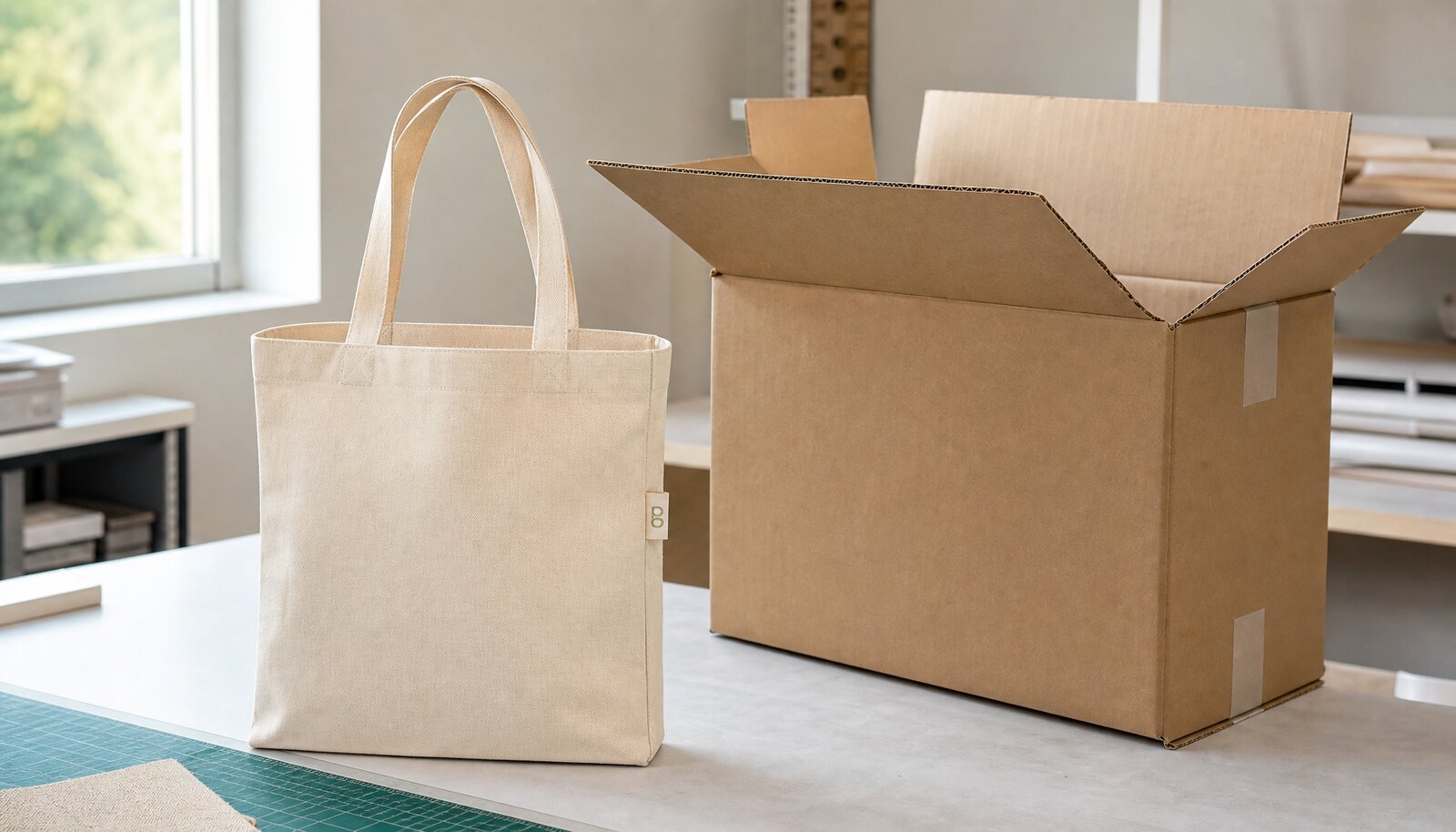
Why Carton Planning Decides the Real Cost
For museum tote programs, the bag price is only part of the bill. The real landed cost often moves on carton size, pack count, and whether the supplier can ship the bags in a form that your warehouse can receive without repacking. A tote that looks economical on the quote sheet can become expensive once it is folded too thick, packed too loose, or boxed in a way that wastes freight cube.
Museums also have a different buying rhythm from mass retail. A gift shop might reorder around exhibitions, holiday traffic, or membership campaigns, and those cycles punish weak packing decisions. If the tote arrives in awkward cartons, the back room spends time opening, sorting, and relabeling instead of selling, which is why carton planning should be treated as part of product design, not a last-step shipping note.
- Treat carton spec as part of the product spec, not a warehouse afterthought.
- Compare supplier quotes on CBM and gross weight, not unit price alone.
- Lock the pack plan before bulk production if the tote is tied to a launch date.
Start With a Tote Spec That Packs Well
The best carton plan starts with a bag that folds cleanly. For museum gift shop programs, 12 oz canvas, or roughly 400 gsm, is often the practical middle ground because it gives the tote enough body for retail value while still folding into a manageable carton count. Ten-ounce canvas can work for lighter souvenir programs, but it tends to collapse more in the hand and may look less premium on the shelf. At the other end, 14 oz to 16 oz canvas gives the bag a stronger feel, but it also increases folded thickness and reduces the number of pieces per export carton.
Dimensions matter just as much as fabric weight. A standard museum tote might be built around 38 x 42 cm with a 10 cm gusset and a 28 to 30 cm handle drop, but a wider gusset or lined construction changes the packed profile quickly. If your art sits close to the side seam or bottom panel, or if you want a large one-color print, keep the fold method simple so the printed area does not crack or show a hard crease after packing. Good factory quotes should tie the finished size to the folded size, because the freight cost follows the folded size.
- Use 12 oz canvas as the default starting point for most museum retail totes.
- Move to heavier canvas only if the retail value and repeat-use expectation justify the extra freight cube.
- Ask the supplier to state the folded thickness before you approve the carton count.
Choose the Sourcing Route That Matches the Replenishment Pattern
The sourcing route changes how much control you have over shipping cartons. A direct factory usually gives the cleanest control over folding, carton count, and carton marking, which is useful when the museum wants the same receiving experience on every reorder. A trading company can help if you need several tote programs handled by one contact, but you should expect less transparency on carton grade and pack-out unless the quote is written very tightly. Stock or semi-stock routes are faster, yet they often come with preset pack counts that were built for someone else’s freight logic.
For museum buyers, the question is not which route sounds easiest. It is which route will keep the same spec on the next reorder without surprise changes to carton size or carton count. If you buy for multiple locations, insist on one carton spec per SKU and one receiving label format across all stores. Mixed cartons, split cartons, or supplier-led packing changes can make back-room receiving slower and can distort inventory counts when different store teams unpack them in different ways.
- Use direct factory sourcing when the bag spec and carton spec need to stay fixed across reorders.
- Use a trading company only if it can commit to one factory, one pack plan, and one labeled carton spec.
- Avoid mixed-SKU cartons unless your warehouse is already set up for that workflow.
Turn Bag Count Into Carton Math
Carton planning is a simple math problem that becomes expensive when it is guessed. Start with the folded thickness of one tote, then test how many pieces fit in a carton without forcing the handles, seams, or print area. A thin 10 oz flat tote may fit at 80 to 100 pieces per carton, while a 12 oz museum tote often lands closer to 50 pieces per carton. Once you move to thicker canvas, lining, zipper tops, or gussets that hold shape, the practical count can drop to 25 pieces per carton or lower. The right count is the one that protects the bag and keeps the carton within a handling weight your warehouse can move safely.
Ask the supplier to quote carton L x W x H, net weight, gross weight, and CBM alongside the bag price. That information lets you compare offers on a true landed basis instead of a fake unit-price basis. Two factories can quote the same tote at the same bag price, but one may save money by squeezing more pieces into a carton while another uses a heavier carton and better packing that lowers damage risk. The best quote is not always the lowest bag price. It is the one that gives you the best total cost after freight and receiving time are added.
- Target a carton weight your warehouse can lift and stack without repacking.
- Use lower carton counts when the tote has a thick gusset, lining, or heavy print.
- Re-run freight math every time the carton count changes.
Print Method and Finish Affect the Pack Plan
The print method affects more than appearance. A well-cured screen print on canvas usually packs better than a heavy embellishment because it adds less bulk and tolerates flat folding more cleanly. That is why simple spot-color screen printing is still the default for many museum programs. If the brand wants a more premium look, a small woven label, a side label, or limited embroidery can work, but those options often create thicker fold points and may require a looser carton count. Full-area transfers and very dense artwork should be treated carefully, because they can mark or block if the bags are stacked too tightly after curing.
If the tote is a dark color with a light print, the ink cure needs extra attention before the bags are stacked and boxed. Under-cured prints can stick together, and over-aggressive stacking can imprint the artwork onto the next piece in the carton. A factory that understands packing will do a rub test on the first and last bags from the carton, not just on one display sample. For museum buyers, the question is not only whether the print looks good on the table. It is whether the print still looks good after folding, boxing, and a few days in transit.
- Use screen print for the cleanest balance of cost, durability, and carton density.
- Treat embroidery, applique, and thick transfer effects as pack-density risks.
- Ask for a rub test on stacked samples before bulk approval.
Sample Approval Should Include the Carton, Not Only the Bag
Many tote projects fail at the sample stage because the buyer only approves the bag itself. For museum programs, the important sample is the packed sample: one tote folded the production way, placed in the intended inner pack, and closed inside the final master carton with the real labels and marks. That is the only sample that tells you whether the line will receive smoothly, whether the carton closes without bulging, and whether the folded print survives stacking. A glossy photo can hide all of those issues.
Open the carton sample and inspect it like a receiver, not like a designer. Check the count, the fold direction, the handle tuck, the outer label, the barcode, and the corner protection. Measure the packed thickness and verify that the carton can still be sealed without forcing the contents down. If the museum sells through multiple channels, also confirm whether the bag can be opened and reshelved without leaving fold scars or printed rub marks. That is the level of sample approval that prevents complaints later.
- Approve one loose sample and one carton-packed sample before bulk production.
- Verify the fold method, carton marks, and barcode on the physical sample, not just in a file.
- Keep the approved carton sample as the reorder reference.
QC Thresholds That Keep Receiving Easy
Quality control for a canvas tote should include the carton, the fold, and the bag finish. On the bag itself, look for consistent seam alignment, clean bartacks at the handles, and no loose thread tails near the stress points. The print should land within a small tolerance of the approved placement, and the artwork should not crack when the tote is folded the production way. If the bag uses a woven label or a side label, make sure the edge is trimmed cleanly so it does not catch on neighboring bags in the carton.
On the carton side, confirm that the box grade matches the tote weight and that the carton does not swell after closure. Heavier bags, lined totes, or thick gusset constructions should not be packed into a weak carton just because the unit price looks low. Ask the supplier to state the carton grade and keep it consistent on every reorder. When receiving teams open a carton, they should see the right count, the right SKU, and a carton that can be stacked without crushed corners or broken tape.
- Set a finished size tolerance and keep it tight across the whole carton.
- Reject cartons that bulge, split at the corners, or lose their shape during sealing.
- Require clean, scannable outer labels on every carton.
Packing Formats for Stores, Web Orders, and Seasonal Drops
Museum tote programs usually fall into three packing modes. Store replenishment programs need fast receiving and simple carton counts, so flat-packed bulk cartons are usually the best choice. Ecommerce programs need cleaner presentation and often need individual polybags or tissue sleeves to prevent scuffing in pick-and-pack. Seasonal exhibit drops sit between the two, because they may move from a warehouse to multiple stores at once and need split shipments or store-specific carton counts. Each mode has a different optimal pack format, and forcing one format onto all channels usually creates avoidable cost.
Do not overpack the tote just because it feels protective. A polybag helps with dust control and print protection, but tissue, belly bands, and rigid inserts only make sense if the retail presentation pays for the extra freight cube and labor. For many museum stores, a simple flat-folded tote in a clean polybag is enough. If the tote is giftable, a small hangtag or side label can add value without destroying the pack density. What matters is that the packing format matches how the product will be sold, not how it looks in a showroom.
- Use bulk flat-pack cartons for back-room replenishment.
- Use 1 pc polybag for ecommerce or dusty retail environments.
- Do not add retail inserts unless the channel needs them.
What to Put in the RFQ Before You Compare Supplier Quotes
A usable RFQ for custom canvas tote bags for museums shipping carton planning should read like a production brief, not a marketing request. It needs the bag dimensions, gusset, handle length, fabric weight, color, print method, and expected carton count. It should also specify the target Incoterm, the carton label format, and the shipment mode. If one supplier quotes bag price only while another quotes bag plus pack-out plus carton dimensions, you are not comparing the same offer. The missing carton data is where freight surprises usually hide.
The quote sheet should also show the exact packing configuration: pieces per inner pack, pieces per master carton, carton size, gross weight, net weight, and CBM. For first-time museum programs, ask the factory to attach one pre-production carton sample photo or a short pack-out photo set. That sounds small, but it prevents a large percentage of bad assumptions. When the bags are meant for a museum gift shop, the quote should be complete enough that your receiving team can know how the goods will arrive before the first box leaves the factory.
- Ask every supplier to quote the same packing configuration.
- Require carton dimensions and CBM on the same line as the bag price.
- Make the supplier state any setup charges, sample charges, and carton print charges upfront.
Lead Time and Reorder Control
For a standard custom canvas tote, sample timing is usually faster than bulk timing, but the carton still affects the schedule. A basic pre-production sample may take around 7 to 10 days, while bulk production can run 25 to 35 days after sample approval if the fabric, print, and carton are straightforward. Add a few more days if the order includes special labels, thicker canvas, custom outer carton printing, or a tighter packing process that must be checked twice. During peak season, you need more buffer than the factory promise on paper.
The safest reorder strategy is to freeze the whole package: fabric lot, print file, fold method, carton size, and carton count. If the first order ships well and the second order changes the fold or carton count, freight and warehouse handling can shift even if the bag art stays the same. Keep one signed pack spec, one sealed carton reference, and one production photo set with the reorder file. That is what lets a museum buyer scale a tote program without rediscovering the same mistakes every quarter.
- Build extra time into seasonal launches and exhibit openings.
- Do not change the carton count without re-running freight math.
- Keep a sealed reference carton for every reorderable SKU.
Specification comparison for buyers
| Spec decision | Recommended option | When it fits | Buyer risk to check |
|---|---|---|---|
| Supplier route | Direct factory with in-house carton packing | Repeat museum program with stable art and a need to lock carton count, carton size, and print method | Carton details can change if the factory outsources packing or shifts the fold method |
| Supplier route | Trading company with a fixed packing spec from one factory | When you need a fast quote across several tote variants but still want one responsible contact | The quote may hide the real carton grade or switch factories between orders |
| Bag fabric | 12 oz / about 400 gsm canvas | Mid-tier museum store totes that need structure, repeat use, and clean screen printing | Thin fabric sags in the carton and can look cheap after shipping and shelf stacking |
| Bag fabric | 14 oz to 16 oz / about 470 gsm to 550 gsm canvas | Premium retail tote, heavy print, lined version, or a bag meant to be resold for years | Heavier canvas raises folded thickness and can reduce pcs per carton sharply |
| Packing format | Flat-folded with handles tucked and no hard insert | Most export programs where freight efficiency matters more than gift presentation | Over-tight folding can crack fresh ink or crease a woven label |
| Packing format | 1 pc polybag plus carton divider or tissue sleeve | Museum gift shop items that must stay clean, scuff-free, and easy to receive by SKU | Extra packaging adds labor and volume, so the freight quote must include it |
| Carton strategy | 50 pcs/carton for standard 10 oz to 12 oz bags, 25 pcs/carton for bulky bags | When you want a practical balance of handling weight and container utilization | Too many pieces per carton can crush handles, while too few wastes CBM |
| Freight route | FOB with buyer-controlled forwarder and carton approval before booking | Importers who consolidate museum SKUs or compare several factories on the same transport basis | If carton dimensions are not fixed, freight comparisons become unreliable |
| Quality route | Pre-production sample plus sealed carton sample approval | Programs with seasonal launches, exhibit dates, or first-time supplier qualification | A good-looking tote can still fail if the packed carton cannot pass receiving or drop tests |
Buyer checklist before sampling
- Lock the finished bag size, gusset, handle length, and fabric weight before requesting carton pricing.
- Approve the print method and cure method, then confirm the bag can be folded without marking the print.
- Ask for carton dimensions, pcs/carton, gross weight, net weight, and CBM on the same quote line.
- Set a maximum carton weight that your warehouse team can handle without repacking.
- Request one pre-production sample and one sealed carton sample with the final fold and marks.
- Confirm outer carton labels, barcode format, and SKU wording before bulk production starts.
- State whether the order ships by sea, air, LCL, or FCL so the supplier can size cartons correctly.
- Keep a signed reorder spec with fabric lot, print file, fold method, and carton count.
Factory quote questions to send
- What is the exact finished size, folded size, and packed count per carton for this tote?
- Which canvas weight are you quoting, and what is the expected folded thickness after printing and curing?
- What carton grade are you using, and can you state the carton size, gross weight, and CBM per carton?
- Which print method is included, and does the quote cover setup, curing, and any extra color charges?
- Can you supply one carton-packed sample for approval before bulk production?
- What is your standard overrun or underrun tolerance for this order size?
- How many days do you need for sample approval, bulk production, and final carton packing?
- Will the same carton spec and folding method be held on reorders, or do you change them by batch?
Quality-control points to confirm
- Fabric weight should match the approved spec within a small production tolerance, and the weave should not feel loose or thin in the hand.
- Finished bag dimensions should stay consistent across the carton, with no visible shrinkage from over-pressing or over-heat curing.
- Handle stitching should have clean bartacks, no skipped stitches, and no loose thread tails at the stress points.
- Print placement should stay aligned to the approved artwork, with no visible skew, cracking, bleeding, or set-off after folding.
- The bag should fold flat without forcing a hard crease through the print area or distorting the side gusset.
- Carton dimensions should match the approved pack-out spec so freight calculations are still valid at booking time.
- Carton weight should stay within the handling limit you set, and the carton should close without bulging.
- Outer marks and barcodes should match the PO exactly and scan cleanly on the first pass.
- Random carton opens should confirm the correct count, correct fold direction, and no mixed SKUs.
- A drop test or corner crush check should not expose handle damage, seam failure, or carton burst during normal export handling.