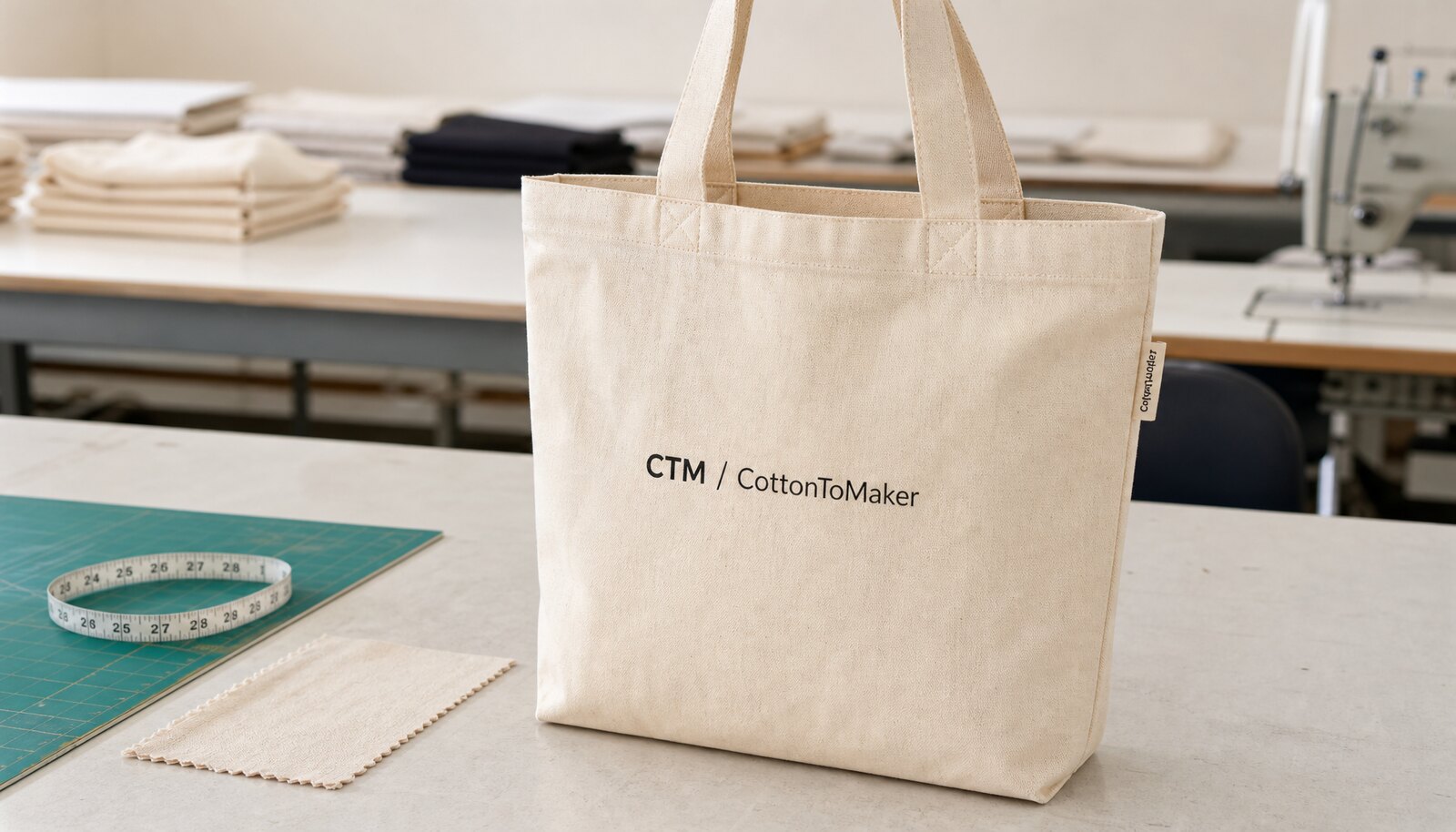
Start with the hotel use case, not the tote shape
The biggest mistake in buying custom canvas tote bags for hotels is starting with decoration instead of use. A tote handed out in a guest room, sold in a gift shop, or used as an event welcome bag needs a different spec. If the bag will carry brochures, slippers, or a water bottle, the fabric, handle reinforcement, and print area all matter more than a simple logo mockup. Write the use case into the RFQ so suppliers quote the same thing.
For hotel programs, the bag often has to do more than look good in a listing photo. It has to survive folding, repeated handling, and storage in back-of-house inventory. That means the buyer should define who receives the bag, how long it must last, and whether the bag is a one-time amenity or a retail item. Those decisions set the right fabric weight, whether the tote needs a gusset, and whether the logo can stay simple or must stand up to repeated washing and wear.
- Amenity use: lighter fabric can work if the bag is not meant for repeat carry.
- Gift shop or resale: specify a cleaner finish, stronger seams, and consistent logo placement.
- Guest welcome kits: confirm whether the tote must fit room-drop inserts, brochures, or bottled items.
Choose fabric weight, size, and construction with the real load in mind
Canvas is not one material in practice. For hotel buying, 8 oz, 10 oz, and 12 oz canvas are the most common reference points, but the right answer depends on what the bag must carry. An 8 oz canvas tote is usually fine for lightweight promotional use. A 10 oz bag is the safer middle ground for most hotel programs. A 12 oz bag gives a heavier handfeel and better shape retention, but it will raise sewing effort and cost. If the tote is expected to hold thicker inserts or be sold in a shop, the added stiffness is usually worth it.
Construction details drive perceived quality as much as fabric weight. Buyers should specify seam type, handle width, handle length, gusset depth, and whether the handle is stitched into the side seam or reinforced with a top patch. A simple open-top tote is cheaper and faster to make, but a structured bag with a boxed bottom and proper bar tacks will hold up better in guest use. If the quote does not mention these details, the supplier is probably pricing to an assumed standard that may not match your target.
- 8 oz: useful for light gifting, room drops, and low-cost campaigns.
- 10 oz: best default for most hotel wholesale orders.
- 12 oz: better for retail resale, heavier inserts, and premium brand positioning.
Compare supplier routes before you compare unit prices
A quote only makes sense when the supplier route is clear. A direct cut-and-sew factory, a trading company, a local decorator using imported blanks, and a low-MOQ workshop can all give a tote price, but they do not carry the same risk. The lowest unit price often hides a weaker control point: outsourced sewing, uneven blank inventory, or packing that is not built for export. Buyers should compare how much of the process sits in one facility and how much is handed off.
For hotel programs, a single-source factory with in-house sewing and printing is usually the cleanest route if you need repeatability. Trading companies can be useful when you are consolidating many bag types, but the buyer has to pay for the extra layer and insist on visibility into the actual factory. Local decorators are efficient for urgent small runs, yet they are less reliable when you need a stable spec across multiple reorders. The right sourcing route depends on volume, lead time, and how much variation your hotel group can tolerate.
- Ask who owns the cloth, who cuts it, who prints it, and who packs it.
- Treat a blank-plus-decoration model as a different sourcing route, not a cheaper version of the same thing.
- If the buyer expects reorders, prioritize the route that can hold the same fabric lot and construction logic.
Use the quote to expose hidden cost drivers
A useful factory quote should break out the real cost drivers instead of handing over a single number. The main ones are fabric weight, bag size, handle length, number of print colors, number of sewing operations, inner packing method, and carton configuration. If the supplier gives one all-in price without stating what is included, you cannot compare it against another offer. The result is usually a false low quote that turns into add-ons during sample approval or before shipment.
Buyers should also separate setup cost from recurring cost. Screen printing often has plate or screen charges, and embroidery or woven labels can have their own setup fees. A simple one-color logo on natural canvas is usually the most efficient route for MOQ control. Once the artwork becomes multi-color, oversized, or printed in more than one position, the quote should show the effect on the unit price and the minimum quantity. For a hotel buyer, the right question is not only what the tote costs, but what it will cost to reorder the same tote six months later.
- Request the quote in the same spec structure every time: size, fabric, print, packing, Incoterms.
- Separate setup fees, sample fees, and bulk unit price.
- Ask for a reorder price if the same fabric and print method are repeated within the same year.
Pick the branding method that fits canvas, not the artwork fantasy
Canvas tote branding should be chosen for production reality. Screen printing is usually the best option for most hotel orders because it handles bold logos, simple artwork, and repeat production efficiently. It also keeps the quote readable: one color, two colors, or a limited spot-color layout. If the brand needs a soft, tactile finish or a very premium look, a woven label or sewn patch can work well, but the buyer must accept a different cost structure and a different appearance on the bag face.
Heat transfer and digital transfer can be useful for complex logos or small runs, but they should not be the default answer for a hotel tote. On textured canvas, fine gradients and small serif text can lose clarity. Embroidery can look strong on heavy canvas, yet it adds cost and can distort on thinner fabric. For procurement teams, the decision should be made on print clarity, wash durability, and order quantity, not only on what looks attractive in the artwork file.
- Screen print: best for one to three colors and repeat orders.
- Woven label or sewn patch: useful for a premium retail feel and clear brand marking.
- Transfer print or embroidery: use only when the artwork or positioning really needs it.
Lock the sample approval around measurable points
A sample is not just a visual check. It is the place where the buyer proves whether the planned tote can be made consistently. The sample should be measured against the approved size, checked for handle symmetry, examined for stitch quality at the mouth and bottom corners, and reviewed for the exact print placement. If the logo sits too high, the handle stitch cuts into the print area, or the body width changes more than allowed, the sample should not be approved as a bulk reference.
For hotel buyers, the sample also needs to match how the bag will actually arrive at the site or distribution center. Check the fold direction, polybag presentation, carton density, and whether the bag still looks clean after packing. If the tote is intended for a premium guest-facing use, ask for a sample that reflects the final pack method, not just an unfurled hand sample. What you approve at sample stage becomes the standard the factory will defend during production, so make the approval criteria concrete and documented.
- Measure size, gusset, handle length, and handle drop.
- Inspect the first print strike for registration and opacity.
- Approve the same fold and bagging method you expect in the shipment.
Set QC thresholds before the factory starts bulk production
Quality control on hotel totes should focus on a small number of failures that matter in use. Weak handle stitching, uneven print, broken seams, visible stains, and poor carton packing are the usual problems. If the bag is too soft, it will collapse in presentation. If the seams are weak, a guest will notice it immediately. Buyers should define what counts as a minor defect and what counts as a reject, because suppliers often default to their own standards unless the order says otherwise.
A practical inspection plan uses random checks on fabric, printing, seam strength, and packaging. Many buyers use AQL tables for final inspection, but the important part is that the pass/fail threshold is in the PO or spec sheet. If the tote includes a sewn label, barcode sticker, or hangtag, those items also need acceptance criteria. It is better to reject a box of mispacked units in the factory than to find them on arrival at a hotel distribution center where rework is expensive and visible.
- Reject if handle stitches are uneven or the bar tack is missing.
- Reject if print position shifts outside the allowed tolerance.
- Reject if cartons are damaged, overpacked, or mislabeled.
Manage packing, carton counts, and shipping details like part of the product
Packing is not a side issue for hotel wholesale orders. A tote that looks fine in the workshop can arrive crushed, dirty, or mixed by size if the packing rules are vague. Buyers should specify whether each bag goes into a polybag, whether the bags are folded flat or stuffed, how many units go into an inner pack, and how master cartons are labeled. If the hotel chain needs store-ready or property-ready delivery, the outer pack must be designed to survive warehouse handling without losing presentation quality.
Carton size and count also affect freight cost. A poorly optimized carton can waste container space and increase landed cost even if the unit price looks competitive. Ask the supplier to show the carton dimensions, gross weight, and units per carton before final approval. If the shipment is going by sea, moisture control and clean packaging matter. If it is going by air for an opening date, the compactness of the fold and the carton ratio become part of the cost conversation. The quote should show the pack method clearly enough that logistics can estimate the landed cost without guessing.
- Specify inner pack count and carton count per master carton.
- Ask for carton dimensions and gross weight before approving the shipment plan.
- Include barcodes, item numbers, and shipping marks in the packing instruction.
Use lead time and landed cost to decide the real winner
Lead time is often quoted too loosely in tote sourcing. A useful timeline starts after final artwork approval, sample sign-off, and deposit receipt. Buyers should separate sample lead time from bulk lead time and should not assume that a factory that can make a sample quickly can also hold a bulk schedule. If the order is tied to a hotel opening, event date, or seasonal check-in period, the schedule risk becomes part of the buying decision. A slightly higher quote can be smarter if it gives you a more reliable window and a cleaner shipment plan.
Landed cost is where the comparison becomes real. The buyer needs to compare fabric weight, print method, packing format, shipping term, customs paperwork, and the risk of rework. A cheap quote with low spec clarity often creates extra cost in inspection, relabeling, or replacement stock. For a hotel program, the best supplier is usually the one that can repeat the same bag with the same print and pack method at a stable cost, not the one that wins on the first inquiry by shaving quality assumptions.
- Separate sample lead time from bulk production lead time.
- Compare quotes only after matching fabric, print, packing, and shipping term.
- Ask the supplier what can change the lead time after approval.
Specification comparison for buyers
| Spec decision | Recommended option | When it fits | Buyer risk to check |
|---|---|---|---|
| Direct cut-and-sew factory with in-house print | One supplier handles fabric, sewing, logo print, and packing | Best for hotel programs that need repeat orders and stable specs | Confirm that the same factory owns the sewing line and does not outsource the print stage |
| Trading company sourcing from multiple mills | Use when you need flexible material options across several bag styles | Works for buyers managing many SKUs or uncertain volume forecasts | Check whether the quoted lead time includes the actual factory booking, not only the trading office promise |
| Local decorator using imported blanks | Buy ready-made blanks and add logo decoration locally | Useful for very small runs, urgent campaigns, or domestic distribution | Verify blank quality, seam strength, and whether the tote shape matches your approved sample |
| Low-MOQ workshop | Choose for pilot hotel openings or market tests | Fits when quantity is limited and speed matters more than scale efficiency | Watch for inconsistent stitching, weak handle reinforcement, and unstable carton packing |
| Large export factory | Use a factory that already runs hotel, retail, or premium gift programs | Best for chain rollouts and buyers who need production discipline | Confirm that low price is not coming from a simplified spec, thinner fabric, or reduced inspection effort |
| Vertical factory with dyeing and printing | Good when you need a custom dyed canvas color or shade control | Fits brand-led hotel collections and repeat seasonal replenishment | Ask for shade band limits and whether the dye lot changes across reorders |
| Audit-ready supplier with packing line | Choose when resale, guest gifting, or premium amenity use is sensitive to presentation | Best for buyers who need consistent polybagging, labeling, and carton marks | Make sure packing instructions are part of the production order, not a verbal add-on |
| Sample-first prototype maker | Use a small factory or sample room to lock the design before mass production | Useful when handle length, gusset depth, or logo placement is still under review | Do not treat the sample room as proof of mass production capacity without checking the bulk line |
Buyer checklist before sampling
- Confirm the exact tote size, gusset, handle length, and acceptable measurement tolerance before requesting price.
- State the fabric weight in GSM or oz, plus whether the canvas is natural, bleached, dyed, or washed.
- Define the logo method, print area, Pantone target, and whether the artwork can tolerate slight texture loss on canvas.
- Request a pre-production sample and require approval of seams, handle reinforcement, print placement, and fold finish.
- Ask how the bags will be packed: bulk folded, polybagged, labeled, or cartonized with inner counts.
- Separate MOQ by construction and print color count so the supplier cannot hide a higher setup cost inside the unit price.
- Confirm lead time from final artwork approval, not from inquiry date or sample quote date.
- Specify QC standards for stitching, stain level, odor, print misregistration, and carton condition on arrival.
Factory quote questions to send
- What is the exact fabric weight, weave, and finish you are quoting, and can you state it in oz and GSM on the same line?
- Is the quoted price based on the bag only, or does it include print setup, sewing, folding, inner packing, and export cartons?
- How many print colors and screens are included, and what is the extra cost if the artwork changes after sample approval?
- What MOQ applies to this exact construction, and does the MOQ change if we add a pocket, zipper, lining, or custom label?
- What is the standard measurement tolerance for body size, gusset, and handle length?
- Which parts of the process are in-house, and which parts are outsourced to another workshop?
- What sample fee will be charged, what is refundable, and how long does the sample take after artwork confirmation?
- What is the lead time for bulk production after deposit and final approval, and what shipment terms are used in the quote?
Quality-control points to confirm
- Check fabric weight against the agreed spec, not just the appearance of the cloth.
- Inspect handle reinforcement, especially the top stitch, bar tack, and load-bearing seam at the bag mouth.
- Verify print alignment, ink opacity, and color match against the approved artwork or Pantone target.
- Measure body size, gusset depth, and handle drop from a random sample set, not only from the first piece off the line.
- Review odor, staining, loose threads, broken stitches, and needle damage on the visible face and inside seams.
- Confirm folding method, polybag count, carton count, and carton label accuracy before dispatch.
- If your company uses AQL, write the acceptance level into the order so the supplier cannot substitute its own default.
- Require pre-shipment photos of packed cartons, master labels, and random bag views before final payment.