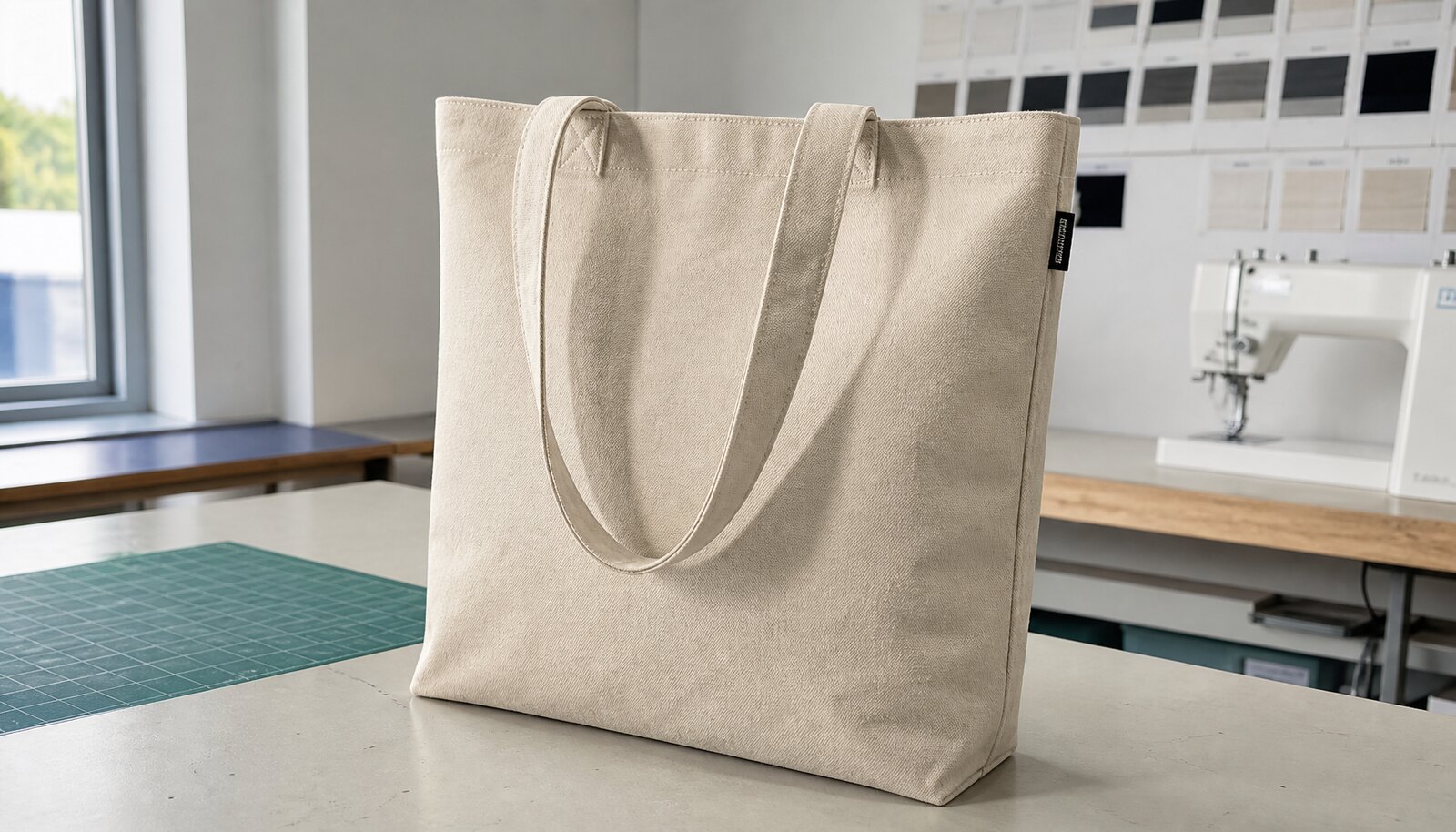
Start With the Receiving Point
For hotel tote programs, the first decision is not the artwork. It is where the cartons will be received and how they will be opened. A central warehouse, a property-level back room, and a retail receiving dock all have different rules for carton size, label placement, and handling weight. If the bags arrive in mixed cartons or loose bundles, the hotel team spends time re-sorting product before it can be issued to rooms, the gift shop, or the concierge desk.
Write the shipping plan around the destination process. State whether the order ships to one distribution center or many properties, whether the cartons must be shelf-ready, and whether the bags will be broken down by color or size after arrival. When that is clear at the RFQ stage, suppliers can quote a pack plan that matches the actual receiving workflow instead of guessing at a generic export carton.
- Central warehouse receiving can tolerate larger master cartons if a pallet is used.
- Property-level delivery usually benefits from lighter cartons with clearer labels.
- Mixed SKU cartons create counting errors unless the hotel has a repacking team.
Choose the Bag Build That Survives Carton Handling
The right canvas weight depends on how the tote will be used and how it will sit inside the carton. Around 280 GSM, or roughly 10 oz, works for lighter retail use and low-stress giveaways. Around 340 GSM, or 12 oz, is the safer middle ground for hotel welcome gifts and general branded carry bags. Heavier 450 GSM, or 16 oz, canvas is more rigid and holds shape better, but it adds bulk and can reduce the number of pieces that fit cleanly into a carton.
Construction matters as much as fabric weight. Reinforced handle ends, bar tacks, and a stable bottom seam reduce field failure, but they also change how the bag folds. A tote with a 4-inch gusset and long shoulder handles needs a different packing method than a flat market bag. If the sewing spec is loose, the bag may look acceptable in a photo and still fail once the carton is stacked for export.
- Use 10 oz or 280 GSM for lighter programs where cost and flexibility matter.
- Use 12 oz or 340 GSM when the tote needs better shape retention and fewer complaints about sagging.
- Use 16 oz or 450 GSM when the bag will carry heavier contents or needs a premium retail feel.
Choose Print That Won't Fail in Cartons
Screen print is usually the most practical choice for hotel totes because it scales well, gives clean color density, and tolerates repeat production better than many small-run decoration methods. The key is curing. If the ink is not fully cured before packing, the print can block against another bag in the same carton and leave a transfer mark. That problem is common when the supplier rushes the pack-out to protect lead time.
Heat transfer can work for small graphics or variable artwork, but it can crack if the fold line runs through the design. Embroidery gives a stronger premium impression, yet it adds thickness and makes carton stacking less efficient. Woven labels, side labels, or a stitched logo patch are often the cleaner option when the buyer wants a durable mark without making the tote harder to pack.
- Keep the logo away from the main fold line unless the packing method protects it.
- Ask how the print is cured and whether a dry-rub check is done before packing.
- For repeat hotel programs, favor decoration methods that stay stable across reorders.
Build the Carton Spec Before You Negotiate Freight
Carton planning should start from the packed bag, not from the carrier rate. The number of pieces per carton, the fold direction, and the inner pack type determine the cubic volume that later drives freight cost. A carton that is too full can crush the bag shape and wrinkle the print. A carton that is too loose wastes space and raises the per-unit shipping cost without improving protection.
A usable carton spec includes external dimensions, board grade, gross weight target, carton face orientation, and the exact marks that will appear on the box. If the quote only says export carton, that is not enough to compare suppliers. The buyer needs to know how the bag will be folded, how many go into each inner pack, whether there is tissue or polybag, and whether one carton contains one SKU only.
- Keep one SKU per carton unless the receiving team specifically accepts mixed packs.
- Set a gross weight target that the warehouse can handle without rework or injury risk.
- Make carton marks match the packing list, PO, and hotel receiving reference.
Compare Supplier Routes, Not Just Unit Price
A direct factory usually gives the best control over fabric, stitching, print curing, fold method, and carton labels. That route is strongest when the buyer can write a precise spec and wants repeatable output for a hotel chain. Trading companies can be useful when the tote is only one item in a broader program, but the packaging source and quality control often become less transparent. A local decorator or regional converter can shorten transit time, yet the textile lot, print consistency, and carton format may shift between runs.
The right sourcing route depends on what problem is actually expensive. If the risk is carton error, direct factory control matters more than a small unit-price gap. If the risk is speed, a local converter may be worth the premium. Use the comparison table as a routing tool, not as a price shopping list. The cheapest bag price can still create the highest landed cost if the cartons are oversized, mislabeled, or damaged in transit.
- Direct factories are strongest when packing instructions are written into the PO.
- Trading companies are easiest when you need one PO across several branded items.
- Local converters are best for replenishment, not for changing specs every reorder.
MOQ Logic Changes When Cartons Matter
MOQ is rarely driven by the bag alone. It is usually tied to fabric roll efficiency, print setup, carton fill ratio, and the supplier's willingness to open a new packing pattern. A factory may quote a low bag MOQ and still push back if the carton layout is inefficient or if the order uses too many colors for a small run. That is why a carton plan should be part of the MOQ conversation, not an afterthought.
For test orders, keep the structure simple. One size, one color, one print method, and one carton configuration gives the supplier a fair chance to quote accurately and gives the buyer a clean baseline for future comparison. If the first order is split across three colors and two pack methods, it becomes difficult to tell whether a problem came from the tote spec, the print, or the carton process.
- Simpler color counts usually improve quote clarity and reduce setup waste.
- Carton inefficiency becomes expensive fast on small orders.
- Reserve a small overrun only if the supplier can keep the same fabric lot and packing standard.
Sample Approval Needs More Than a Front-View Photo
A sample should represent the finished bag, not just the artwork. Ask for a pre-production sample that uses the final canvas weight, stitching style, handle reinforcement, print method, fold pattern, and carton pack. A flat strike-off or a loose stitched sample is not enough because it does not show how the bag behaves in shipping or how the logo sits after folding.
The approval process should include measured dimensions, a visual review of seam alignment, and a packing check. If the logo sits on a crease, the sample should show whether the fold can be adjusted or whether the bag needs tissue or a belly band. A carton sample matters too. The master carton should show the right marks, the right internal count, and a clean close without bulging panels.
- Measure finished width, height, gusset depth, and handle drop against the approved sample.
- Inspect one packed carton, not just the loose tote, before approving mass production.
- Reject early if the print transfers, the fold crushes the logo, or the carton closes under pressure.
Inspection Points That Catch The Expensive Mistakes
The costly defects in tote programs are usually small and cumulative. A slightly off fold width changes carton fill. A weak handle bartack turns into field complaints. A one-centimeter size drift affects warehouse counting. A label mismatch creates receiving disputes before the hotel even opens the carton. None of those problems looks dramatic in isolation, but they become expensive once the order ships.
Put acceptance thresholds into the PO so the factory knows which dimensions are critical and which are cosmetic. If the hotel distribution center uses barcode receiving, the carton mark should be machine-readable and aligned with the packing list. If the route is humid or sea freight, moisture protection should be part of the control plan. The buyer should not rely on the factory's default standard when the receiving environment is clearly defined.
- Check stitching density and handle reinforcement on random pieces from different cartons.
- Verify that carton labels match SKU, color, and quantity on the packing list.
- Review the first, middle, and last cartons from the run, not only the first-off sample.
Lead Time and Landed Cost Depend on Packing Sequence
A realistic lead time for custom canvas tote bags includes more than sewing. Fabric booking, printing, curing, packing trials, carton approval, and export booking all take time. If the carton board size is not standard, the supplier may need an extra step to source or print the right cartons. That is why a buyer can lose a week or more by changing the fold or carton format after sample approval.
Landed cost is also shaped by the carton plan. Tighter packing lowers cube only if the tote still opens cleanly after transit. Looser packing reduces crush risk but pushes freight higher. Good quote data should show the bag unit cost, decoration cost, inner pack cost, master carton cost, and the finished carton dimensions that will be used for freight quotes. Without that detail, the lowest quote is often the least reliable one.
- Sequence approval for bag, print, fold, and carton before mass production starts.
- Keep a buffer for carton rework if the packed bag does not pass the first layout test.
- Ask for freight-ready dimensions, not only finished bag dimensions.
Build The RFQ Around Packing Variables
A strong RFQ makes the supplier price the real job. Include finished bag size, fabric GSM, print method, packing unit, carton count, label format, destination type, and whether the bags are going to a hotel warehouse or direct to property. Put the carton requirement in the same spec block as the bag itself so it cannot be ignored or treated as a later discussion. If the tote is for a branded hotel program, the packing format is part of the product, not a shipping accessory.
The best quotes separate the visible bag cost from the packaging and export costs. Ask for line items for the bag body, decoration, inner pack, master carton, labels, palletizing, and any repacking. That makes it much easier to compare a factory that has already thought through freight and receiving against one that is only quoting sewing labor. A complete quote usually reveals which supplier can actually deliver a stable hotel program.
- Specify destination, receiving method, and pallet requirement in the RFQ.
- Require separate line items for printing, labels, and export packing.
- Do not let the supplier hide a carton assumption inside the bag unit price.
Specification comparison for buyers
| Spec decision | Recommended option | When it fits | Buyer risk to check |
|---|---|---|---|
| Direct factory with carton spec in the PO | Best control over fabric, print, fold method, and carton marks | Repeat hotel programs with stable artwork and shipment to one warehouse | Packing details can be omitted from the quote unless you force them into the RFQ |
| Factory plus nominated carton vendor | Use when your brand has a fixed carton board or print standard | Programs that must match an existing corporate receiving spec | The handoff between bag maker and carton supplier can create delays or mislabeling |
| Trading company bundling bag and carton sourcing | Useful for multi-item hotel kits or cross-category buys | When one buyer manages totes, pouches, and other branded items together | Unit price can hide margin and the real carton source may be opaque |
| Local decorator or regional converter | Good for replenishment and short lead-time reorders | Fast-turn hotel gift shop or property-level top-ups | Fabric shade and packing quality can drift across small repeat runs |
| Freight forwarder consolidation at origin | Works when multiple SKUs ship to several hotels or DCs | Centralized shipping into a hotel chain network | Mixed cartons and relabeling can create receiving errors if the pack plan is loose |
| Low-MOQ marketplace supplier | Only for test buys with simple print and limited risk | Pilot orders, seasonal trials, or concept validation | Carton strength, fabric weight, and sample consistency are often weak |
| Direct factory with palletized export | Best for larger ocean shipments and stacked warehouse storage | High-volume programs with predictable carton counts | Pallet dimensions and stack height must fit destination storage and unloading rules |
| Factory quote with no carton data | Never treat as a final comparable offer | Only an early screening quote | Freight math, storage planning, and claims handling cannot be validated |
Buyer checklist before sampling
- Lock finished bag size, handle length, gusset depth, and fabric GSM before asking for price.
- State whether the tote will ship to a hotel DC, individual property, or third-party warehouse.
- Define one SKU per carton unless there is a clear reason to mix sizes or colors.
- Request the carton size, board grade, gross weight, and carton marks in the quote.
- Decide whether the logo can cross a fold line or must stay fully visible after packing.
- Approve one pre-production sample with final print, stitching, and folding method.
- Set size tolerances in the PO for width, height, handle drop, and seam placement.
- Confirm whether inner packaging is polybag, kraft sleeve, strap bundle, or tissue wrap.
- Ask for carton count per pallet and the pallet footprint if ocean freight is involved.
- Keep a photo record of the sealed master carton and the finished sample before mass production.
Factory quote questions to send
- What fabric weight in GSM or ounces are you quoting, and is it pre-shrunk or washed canvas?
- What is the finished bag size, handle length, gusset depth, and stitching specification?
- Which print method are you using, how many colors are included, and how is the ink cured before packing?
- How many pieces go into each inner pack and each master carton, and what is the target gross weight per carton?
- What are the exact external carton dimensions, board grade, and carton mark text?
- Can you provide a packing photo or sample carton before mass production starts?
- What is your MOQ by color, print setup, and carton configuration?
- Which items are included in the unit price, and which are separate line items for artwork, labels, and export packing?
Quality-control points to confirm
- Finished width, height, and handle drop stay within the agreed tolerance on the approved sample.
- Handle bartacks or box stitches are dense, even, and do not distort under hand pull.
- Print is fully cured, with no blocking, offset, cracking, or sticky residue after folding.
- Seams are straight, raw edges are controlled, and no loose threads remain inside the tote.
- The folding method keeps the logo out of the main crease line unless the buyer approved otherwise.
- Carton strength matches stack height, with no crushed corners or bulging side panels.
- Carton labels match the packing list, SKU, color, and quantity exactly.
- Moisture protection is adequate for the route, especially on sea freight or humid lanes.