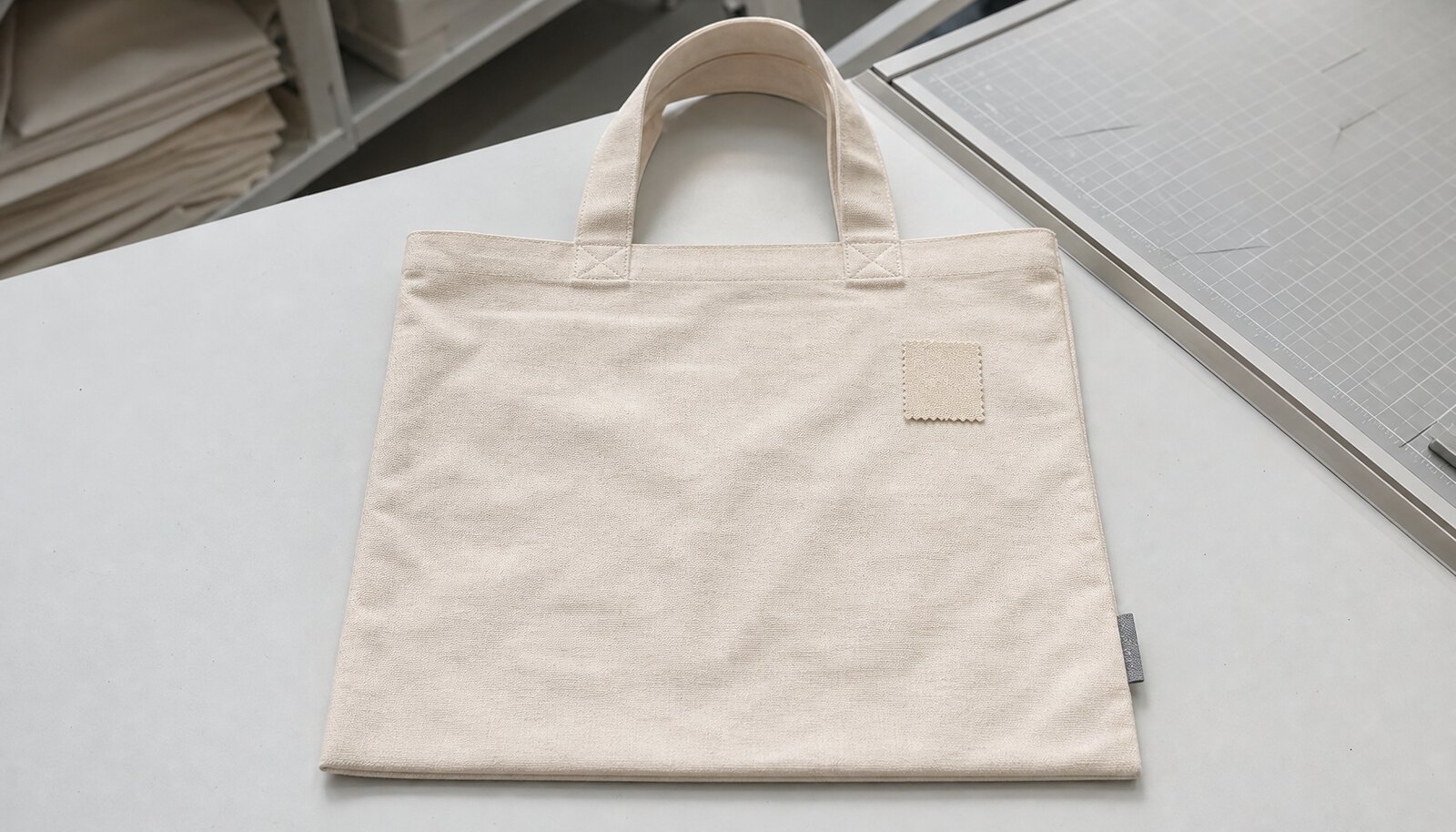
Why gift shop tote samples fail after they look fine in photos
For gift shops, the tote sample is not just a branding exercise. It has to sit neatly on a shelf, hold a mixed retail load, and survive repeated customer handling without losing shape. A tote that looks acceptable on a screen can fail in the real world because the body is too soft, the print is too small, or the handles are stitched for decoration rather than load.
Most sample problems come from vague RFQs. Buyers send a logo and a target size, then receive a sample that is technically close but commercially wrong. The factory may use a lighter canvas than expected, a cheaper print method, or a simplified handle construction because those details were never fixed in writing.
- Retail use is harsher than promotional use: the bag may carry books, candles, souvenir boxes, and impulse purchases in one transaction.
- Gift shops also care about presentation: the tote needs a clean face, stable base, and consistent folding for display and re-ordering.
- Sample approval should therefore test structure, print clarity, and packing discipline, not only logo placement.
Choose the canvas weight first, because it drives look, cost, and shelf appeal
For custom canvas tote bags for gift shops, the most common buying range is 10 oz to 12 oz canvas, roughly 280-340 GSM. That range gives enough body for retail display without making the bag excessively stiff. If the tote is intended for premium souvenirs or book-heavy use, moving toward 12 oz or a brushed finish can improve structure. If the bag is only a light gift add-on, 8 oz to 9 oz may be enough, but it will read more promotional than retail.
The wrong fabric weight creates downstream issues. Too light and the tote wrinkles, folds awkwardly, and prints may show through unevenly. Too heavy and the unit price rises, sewability slows down, and the bag may lose the soft hand that many gift shop customers expect. When comparing quotes, make sure every supplier is quoting the same finished fabric weight, not just a vague fabric description.
- Use GSM or oz on the RFQ, and specify whether the figure refers to finished fabric or raw cloth before washing or shrinking.
- If the bag will be packed flat for resale, ask for a sample that shows the actual folded thickness.
- If the design uses dark ink on natural canvas, verify opacity on the sample under strong light.
Print method should follow the artwork, not the other way around
Gift shop totes often need simple logos, destination artwork, local icons, or a one-color brand mark. For those jobs, screen print is usually the most cost-efficient and durable route, especially at medium volume. It gives strong coverage on natural canvas and handles bold art well. When the order is short or design changes are still possible, heat transfer can reduce setup pressure, but it needs careful review because some transfers can crack or sit too glossy for a gift retail product.
For premium positioning, embroidery or a woven side label can work better than a full-face print if the design is simple. These methods add perceived value, but they also add lead time and cost, and they may not suit small text or highly detailed illustrations. Do not approve a sample until the actual production method is identified; a digital mockup is not enough when color registration and stitch density will affect the final retail look.
- Screen print is usually the first choice for bold, simple graphics and repeat orders.
- Heat transfer is more flexible for short runs but must be evaluated for surface feel and wash resistance if the bag will be reused.
- Embroidery works best for small logos or monograms, not full scenic artwork.
What to measure on the sample before you sign off
A sample approval should be a measurement exercise, not a visual guess. Start with the finished body size and check both the top opening and the depth. Then measure handle length, handle width, seam allowance, and the visible drop from the top edge to the bag opening. If the tote is meant to carry boxed gifts, measure the base width too, because a few millimeters can change how the bag sits on a shelf or in a shopping basket.
Use a simple sample card with the target spec and actual measurement side by side. This prevents small changes from getting lost when the sample moves between merchandising, procurement, and operations. A gift shop buyer may accept a slightly different handle drop if the bag looks premium and feels balanced, but that tolerance should be written down before bulk production starts.
- Target finished size should include tolerance by dimension, not just by general description.
- Handle drop needs to be long enough for shoulder use if the bag will be carried with other purchases.
- The base should sit flat enough to hold boxed merchandise without tipping.
A practical sample approval checklist for gift shop buyers
Sampling should close the gap between merchandising intent and factory execution. Review the sample in daylight or under a standard light source, then compare it to the artwork file and spec sheet. Check the front and back orientation, logo centering, stitch line alignment, and how the bag folds. If the bag will be sold with a hangtag or barcode, place those items on the sample too; a tote can look right but still fail at retail packaging.
The most useful approval notes are specific and measurable. Instead of writing that the sample is too small, record that the finished width is 1.2 cm under spec and the handle drop is 2 cm short. Instead of saying the print is off, state whether it is shifted left, too low, or too light in color. These notes let the supplier fix the same issue on the first bulk run instead of sending another round of almost-correct samples.
- Verify front print placement from centerline and top edge.
- Check stitch quality at handle joins, bottom seams, and side seams.
- Confirm label position, barcode readability, and retail folding style.
- Compare the sample against the approved color standard, not against memory.
Comparison table: sourcing routes for gift shop canvas totes
The right supplier route depends on speed, customization depth, and how much production control your team needs. A domestic decorator may be faster for a small initial launch, but a factory with direct sewing and printing can lower the unit cost at scale. Trading companies can simplify communication, yet they often add margin and may hide the real production source. For gift shops, the key is not just price per piece; it is whether the route can reproduce the approved sample consistently across multiple replenishment orders.
- Use this comparison to decide whether you need speed, flexibility, or repeatability most.
- If the order will be replenished seasonally, prioritize a route with stable fabric sourcing and documented sample retention.
- If the design may change after buyer review, prioritize a supplier that can make quick strike-offs.
Packing details matter more than many buyers expect
Gift shop canvas totes are often sold as impulse items, which means the outer appearance of the packed bag affects sell-through. A flat-folded tote with a clean polybag, consistent sticker placement, and clear carton marking is much easier to receive, count, and display. If the tote is packed loosely, the print can wrinkle, the handles can twist, and the store team spends extra time preparing the product for shelf placement.
Packing also affects freight cost. The same tote can ship very differently depending on folding method, carton size, and whether inner packs are bundled by color or style. Ask the factory to quote carton dimensions and unit per carton, because a slightly lower unit price can be wiped out by inefficient packing. For mixed gift shop assortments, accurate pack-out data is part of the real landed cost.
- Flat pack is usually best for wholesale and store replenishment.
- Each inner pack should be consistent so receiving teams can count quickly.
- Carton marks should match purchase order data and style details exactly.
Lead time risks usually come from approval delays, not sewing time
A normal sampling cycle for custom canvas tote bags can be fast if the factory already has the right canvas weight in stock. Many projects need 7 to 10 days for sample making and 25 to 40 days for bulk after sample approval. The actual schedule can stretch when the buyer changes artwork, revises the size, or asks for custom-dyed fabric. In peak retail seasons, even a good factory may need extra time for print slotting and carton booking.
The safest way to manage the schedule is to treat sample approval as a hard gate. If the sample is not fully approved, do not assume bulk can start on the planned date. Ask the supplier to separate the timeline into material booking, printing, sewing, packing, and shipping handoff so your team can see where delays are most likely to occur. This is especially useful when the bags are tied to a gift shop seasonal launch.
- Approve art, size, and material together to avoid rework.
- Identify whether the supplier will hold stock fabric or source new fabric for your order.
- Build time for revision rounds if the first sample is not correct.
How to compare supplier quotes without getting fooled by a low unit price
A serious RFQ for canvas totes should compare the same base on each line item. One supplier may quote a lower FOB price because the sample was made with lighter canvas, a simpler stitch pattern, or no individual polybag. Another may include carton packing, sewn labels, and stricter QC. If those details are not normalized, the lowest quote is often the most expensive order by the time it lands in your warehouse.
To compare quotes correctly, break the offer into fabric, printing, sewing, packing, and freight assumptions. Ask whether the supplier is quoting based on the same size tolerance, the same fabric weight, and the same packing quantity per carton. If the factory gives tiered pricing, compare the breakpoints at 500, 1,000, and 3,000 pieces because MOQ logic can change the real cost structure more than buyers expect.
- Compare like-for-like on fabric weight, print colors, and packing scope.
- Watch for hidden charges such as screen setup, label sewing, or carton marking.
- Include estimated carton volume when comparing landed cost.
Buyer checklist for final sample approval and bulk release
Before releasing bulk, the buyer should have one approved physical sample, one approved spec sheet, and one quotation that matches the approved build. That sounds basic, but many errors happen when merchandising keeps a sample, procurement keeps the quote, and the factory follows an older email. The approved sample should be tagged or photographed with the date, version number, and any exception notes.
For gift shops, the final approval is also about merchandising readiness. If the bag will sit beside candles, stationery, or souvenirs, the package presentation must be clean enough to sell at first glance. A tote with the right size but poor folding or a crooked label is still a retail problem, even if it passes basic sewing checks.
- Approved sample version and date are recorded.
- Spec sheet and quote match the same fabric weight and print method.
- Packing method is fixed and shown in writing.
- Any deviation is logged as a buyer-approved exception, not left verbal.
Specification comparison for buyers
| Spec decision | Recommended option | When it fits | Buyer risk to check |
|---|---|---|---|
| Fabric weight | 10 oz to 12 oz canvas, or 280-340 GSM | Gift shops selling souvenirs, books, or premium impulse items that need structure | Too light and the bag collapses; too heavy can raise cost and reduce foldability |
| Print method | Screen print for 1-3 spot colors; heat transfer for short runs; embroidery or woven label for premium branding | Simple logos, tourist artwork, or retail logos with stable artwork files | Fine lines, gradients, and small text may blur or shift if the method does not match the art |
| Handle construction | Self-fabric handles with double stitching or cross-box reinforcement | Retail bags expected to carry catalogs, candles, or boxed gifts | Short handle drop or weak bartacks lead to customer complaints and returns |
| Base structure | Flat bottom with seam allowance or gusseted base | Gift shops that sell items with uneven shapes such as mugs, local crafts, and packaged gifts | A flat bag may stand poorly on shelves; a gusset can increase material use and price |
| MOQ route | 500-1,000 pcs for stock colors; higher for custom dye or full custom print setup | Brands testing a new store assortment or multiple gift shop locations | Low MOQs can hide setup fees; high MOQs can trap cash in one design |
| Sample type | Pre-production sample made with final fabric, print, label, and trim | Any order where color, hand feel, or retail presentation matters | Sales samples or digital mockups often miss seam, size, and print registration issues |
| Packing method | Flat-packed in polybag with size sticker and master carton mark | Wholesale distribution, ecommerce replenishment, and store allocation | Loose packing can wrinkle prints and make count verification harder at receiving |
| Lead time | 7-10 days sampling, 25-40 days bulk after sample approval | Standard factory scheduling with available materials | Custom dye, special handles, or peak-season congestion can extend the schedule |
| Quote comparison | Compare FOB price against packing spec, QC scope, and carton load, not price alone | When receiving two or more supplier offers | A low unit price may exclude labeling, carton marks, or inspection and create hidden cost later |
Buyer checklist before sampling
- Confirm finished size with tolerance, not just nominal size, and place the tolerance on the sample card.
- Approve fabric weight in GSM or oz and verify whether the quote is based on greige, bleached, dyed, or washed canvas.
- Match print method to artwork complexity and approve a strike-off or pre-production print panel before bulk.
- Measure handle length, handle width, seam allowance, and stitch pattern on the physical sample.
- Open the sample carton or polybag to verify folding, count labels, barcode placement, and retail-ready appearance.
- Write down the acceptable color range under daylight or a standard light box if brand color matters.
- Record the target bulk lead time, shipping mode, and carton dimensions so suppliers quote the same basis.
Factory quote questions to send
- What exact canvas weight, weave type, and finish are included in the quoted price?
- Is the sample made with the same fabric lot, print method, label, and thread spec planned for bulk production?
- What is the MOQ for each print method, and how does the price change at 500, 1,000, and 3,000 pieces?
- Does the quote include printing, label sewing, polybagging, carton packing, and carton marks?
- What are the size tolerance, stitching standard, and acceptable defect level for bulk acceptance?
- How many days are needed for sample approval, material booking, and bulk production, and what can delay the schedule?
Quality-control points to confirm
- Finished size tolerance should stay within +/- 0.5 cm for small totes and +/- 1.0 cm for larger body sizes unless the construction is intentionally relaxed.
- Fabric weight should be checked against supplier declaration with a simple cut-piece weigh test or mill report reference.
- Print should be centered and aligned, with no visible smearing, pinholes, or color break at fold lines.
- Handle reinforcement should survive a pull test that reflects retail use, especially if the bag will carry bottles or boxed gifts.
- Seam density should be even and secure at stress points, with no skipped stitches at handle joins or base corners.
- Packing count should match carton labels, and each inner pack should be folded consistently to avoid shelf damage.