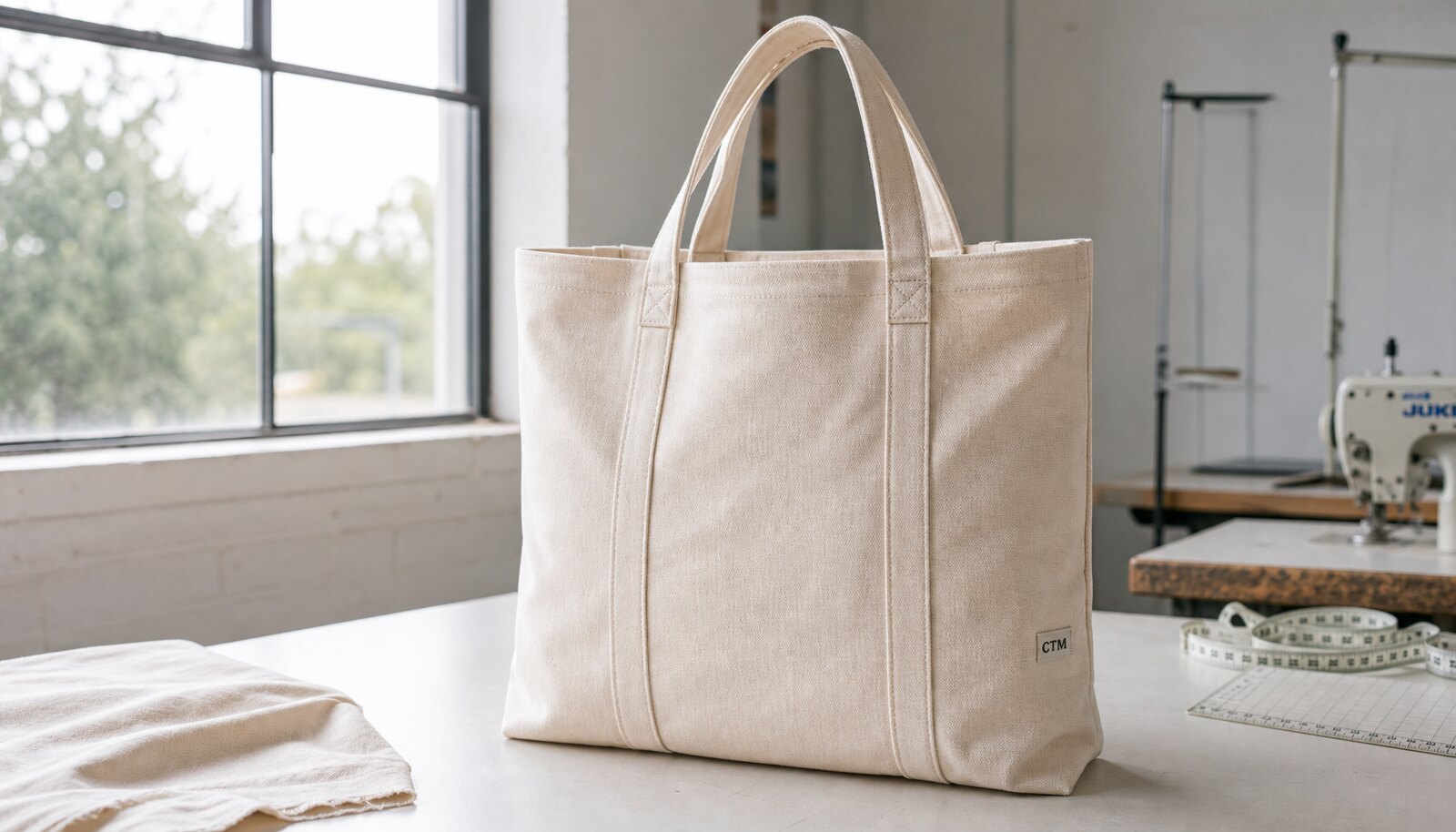
Start with the market use, not the tote price
A farmers market tote is not just a basic cotton bag. It may need to hold produce, eggs, jars, baked goods, and other mixed items while still looking presentable at checkout or on a retail shelf. Before asking for prices, define how the tote will actually be used: is it a giveaway, a retail SKU, a membership gift, a co-op shopper, or a repeat-use grocery bag? That one decision affects the weight of canvas, the feel of the handles, the amount of print coverage, and the level of inspection you need before release.
For procurement teams, the most common mistake is to compare quotes that were built for different use cases. A low-cost promo bag and a retail tote are not interchangeable if one must stay upright on a table, carry a heavier load, or survive weekly use through a market season. The bag spec should reflect the real shopping pattern: how far it is carried, whether it is likely to be set on damp pavement, and whether the buyer expects the bag to be washed or simply wiped clean. The more concrete the use case, the less room there is for vague pricing.
A good brief includes the kind of details a factory can build against: target carry load, expected fill size, preferred hand feel, print visibility, and whether the bag needs to look premium from arm’s length. That is the point where a sourcing request stops sounding generic and starts becoming comparable. Buyers do not need more adjectives; they need a spec that will produce the same tote twice.
- State the end use: giveaway, retail, membership gift, or resale.
- Define the carry load target in practical terms, not just as a vague heavy-duty request.
- Confirm whether the bag must stand upright on a table or only carry groceries in transit.
- Set the print visibility requirement early if the tote is part of the brand story.
- If the tote will be resold, require a cleaner finish and more controlled carton presentation than a promo bag.
Choose canvas weight and construction for actual carrying load
For custom canvas tote bags for farmers markets wholesale buying checklist decisions, fabric weight is the first number that matters, but it is not the whole story. In many programs, 10 oz to 12 oz canvas, roughly 340 GSM to 410 GSM, is a workable middle ground for a market shopper that needs body without becoming too stiff or too expensive. Lighter fabric can work for a lightweight giveaway, but it usually collapses more easily and gives the bag a less substantial feel. Heavier canvas, around 14 oz to 16 oz or roughly 475 GSM and above, creates a sturdier impression and better shelf presence, but it also increases sewing difficulty, bag weight, and freight cost.
Construction often decides performance more than the fabric weight does. A bag can have the right GSM and still fail at the handles if the attachment method is weak. For a farmers market program, ask for handle width, handle drop, seam allowance, stress-point reinforcement, bottom seam construction, and whether the bag is single-layer or lined. If you want the bag to open easily for produce, a gusset is useful, but it has to be sewn cleanly and aligned properly. A twisted gusset or uneven side seam will show up immediately when the tote is loaded with boxes or heavier items.
Sourcing teams also need to think about how the bag behaves after use. Natural canvas softens over time, which can be desirable, but if the bag starts to sag too early, the retail value perception drops. That tradeoff should be obvious in the spec. If a bag is intended to be reused many times, a modest increase in seam reinforcement can matter more than adding another ounce of canvas.
One useful rule is to tie construction to the items the bag will carry. Produce, bottles, and jar-heavy baskets need better handle anchoring and bottom support than a bag meant for flyers or bread loaves. If the tote is going into a membership program or sold at retail, ask for a sample that has already been loaded with a realistic weight before approval.
- Use 10 oz to 12 oz canvas for balanced cost and durability in most market programs.
- Move to heavier canvas when retail value, repeat use, or premium perception justifies the cost.
- Specify handle width, handle drop, and attachment style, not just handle length.
- If the bag will carry bottles or produce boxes, require reinforcement at stress points and the bottom seam.
- Ask whether the construction includes bar tacks, box-X stitching, or double stitching at the handle base.
Pick the print method that matches artwork and wear
Most farmers market bags are branded with screen print, heat transfer, embroidery, woven labels, or a sewn patch. Screen print is still the default for simple logos, especially when the art is one or two solid colors and the buyer wants strong opacity on natural canvas. It usually gives the best balance of price, visibility, and repeatability. If the artwork is more detailed or includes multiple color breaks, the supplier may propose another decoration method, but that should be a deliberate tradeoff, not a default assumption.
The best decoration choice depends on how the tote will age. A bag used every week will rub against counters, baskets, vehicle seats, and other bags. Large ink fields can crack if curing is weak; embroidery can distort a light canvas if the stabilizer is not chosen carefully; and woven labels can look sharp but may not carry enough brand presence if they are too small. Buyers should choose the method based on the way the tote will be handled, not just on how the proof looks on a screen.
From a cost perspective, every extra print color and every separate placement can push the quote up. That is especially true for multi-location branding or a front-and-back layout with different artwork. If a market tote needs to remain cost-effective, keep the decoration simple and use the bag shape, canvas color, and handle style to do more of the branding work. That often reduces risk as well as cost.
If the tote is a retail SKU, ask the supplier to show the decoration on fabric, not only on a flat mockup. A proof can hide ink spread, edge blur, or registration drift that will show up once the design is printed on woven canvas. The approval sample should show the final decoration in the actual fabric texture, under the actual production method.
- Use screen print for simple logos and clear brand marks on natural canvas.
- Use embroidery or woven labels for a more premium retail feel, but expect higher cost and longer lead time.
- Keep artwork simple if the tote is meant for heavy use and frequent washing.
- Require the factory to show print placement on a sample, not just on a flat art proof.
- Ask for the per-color add-on and the cost of a second print location before you lock the artwork.
Use supplier route decisions to control risk and margin
A lot of tote-buying mistakes come from choosing the wrong sourcing route for the order size. Direct factory sourcing is usually the best option when the buyer wants repeat production, tighter control over the bag spec, and a lower piece price at volume. The benefit is not just cost; it is also control over construction details and the ability to correct issues at the source. That matters if the tote is going to be reordered through the season.
Trading companies and sourcing offices can still be useful, especially when the program includes mixed SKUs, multiple packaging requirements, or a team that does not have time to manage the factory directly. The buyer should just make sure the actual factory identity, the pricing basis, and the QC responsibility are visible. Otherwise, it becomes difficult to know whether a good sample came from the same line that will make the bulk order.
Domestic decorators are a different tool. They are often the right answer when the program is small, the deadline is short, or the buyer wants to test demand before committing to a larger run. The tradeoff is that the blank bag may be standard stock, which limits control over handle length, gusset depth, and the visual finish. If the bag is only for one market event, that may be fine. If it is meant to sit in retail for a season, it may feel too generic.
A fully custom cut-and-sew program is usually the strongest choice for a tote that needs to feel proprietary. It gives the buyer control over size, pocketing, label placement, and carton pack, but it also raises the number of decisions that must be approved before production. That is acceptable if the bag is part of the brand asset. It is less attractive if the team is still testing demand and wants a low-risk launch.
- Direct factories work best when the buyer can write a complete spec and wait for samples.
- Trading companies are acceptable only if the factory source, pricing basis, and QC responsibility are clear.
- Domestic printers are strongest for speed, not for low landed cost at scale.
- Fully custom programs are worth the extra work when the bag is a retail brand asset.
- Ask every supplier to state who controls sewing, printing, packing, and final inspection.
Build the RFQ around quote data, not a one-line price
A useful RFQ reads like a production brief, not a shopping inquiry. The factory should be able to quote the bag body, print, handle construction, labels, packing, and any special handling separately. If all you get back is one rounded number, it is hard to tell whether the supplier used the right fabric weight or quietly relaxed the seam spec to hit the price. Ask for the quote to identify what is included, what is excluded, and what is charged as an add-on.
For procurement, the most important issue is comparability. Two suppliers can both quote a tote at the same unit price while assuming different fabric widths, different stitch counts, or different carton packs. That makes the lower price meaningless until the assumptions are normalized. The RFQ should state whether the MOQ applies per color, per artwork version, or across the total order. It should also say whether the order can be split across sizes or print versions without changing pricing. Those details are what let the buyer compare apples to apples.
Buyers should also ask for realistic price breaks. A quote that is only valid at a very high tier may be useless if the market only needs a small replenishment run. A more useful quote shows price bands at the quantities the buyer is likely to use. For a farmers market tote, that usually means a launch quantity, a standard replenishment quantity, and a larger seasonal run. With that information, the buyer can see where the real cost curve begins to flatten.
Finally, do not forget the small charges that become large if ignored. Tooling, plate fees, label setup, carton changes, and packaging upgrades can all move the landed cost. The best RFQs force those charges into the open before the order is approved.
- Separate body price, print cost, labeling, packing, and freight when you compare quotes.
- State whether MOQ is per color, per style, or per print version.
- Ask for price breaks at realistic order bands, not only the headline tier.
- Request photos or a specification sheet for the exact fabric and construction included in the offer.
- Have the supplier note any one-time tooling, plate, or setup fees in writing.
Set sample approval and QC thresholds before mass production
A preproduction sample should prove the whole bag, not just the decoration. It should show the actual fabric hand, seam behavior, handle attachment, print opacity, label position, and folding behavior. Buyers often make the mistake of approving a sample with loose language such as “looks good” or “approved as shown.” That creates a gap between expectation and production. If the sample is approved without measurable criteria, the factory will usually fall back to its standard tolerance, which may not be tight enough for a retail tote.
A better approach is to define acceptance criteria before the order enters bulk production. For retail and resale programs, that means setting a size tolerance, a print tolerance, and clear defect definitions. For example, a practical retail tolerance might allow width and height within ±0.5 cm, handle drop within ±0.5 cm, and print placement within ±0.3 cm to ±0.5 cm depending on the design. The numbers can change by program, but the key is that they are written down before production starts.
QC should also reflect how the product will be used. A farmers market shopper is not a fragile item, but it still needs clean visual execution because buyers can see it at a distance. Inspect stitch density at the handle base, seam alignment, loose threads, oil marks, print smears, and label placement. For a tote sold at retail, a crooked handle or off-center logo can be just as serious as a broken seam because the product is part of the brand presentation.
Use a sampling plan that catches drift. Random checks from the top, middle, and bottom of cartons will show whether the factory is maintaining consistency throughout the run. If the first cartons look better than the later ones, that is often a process-control warning, not a cosmetic issue.
- Approve a sample that matches fabric, stitch, print, and label placement in one unit.
- Use written acceptance criteria for size, print registration, and seam quality.
- Inspect random units from multiple cartons, not only the top row.
- Set a rejection standard for loose threads, oil stains, missed stitches, and print defects.
- Use an AQL-style plan for shipment inspection: general level II, AQL 2.5 major and 4.0 minor is a common retail starting point unless your program requires tighter thresholds.
Specify stitch quality, tolerances, and load points in the tech pack
Procurement-grade tote buying gets much easier when stitch details are not left to interpretation. A market tote usually fails at load points, not in the middle of the panel. That means the handle base, side seams, bottom seam, and gusset junctions deserve special attention. If the supplier is using a single-needle seam in a high-stress location, that may be acceptable for a light giveaway but weak for a bag that carries produce and bottles. Where the bag needs more durability, ask for box-X reinforcement or bar tacks at the stress points.
The tech pack should also state how visible the tote must look under normal use. Some buyers care about a softer, more natural finish with less rigid structure; others want a crisp, square opening that reads as premium retail. Those choices affect seam allowance, corner turn quality, and even how the handles sit when the bag is empty. A factory can work to either goal, but not if the brief is vague.
This is where tolerance matters. A production tolerances table does not need to be complicated, but it should exist. Width, height, gusset depth, handle drop, print placement, and label placement should all have tolerances written into the PO or approved sample sheet. That avoids disputes when a bag is technically usable but visually off. In retail, a tote that is structurally fine can still be rejected if the artwork floats too high or the handles are uneven.
The practical point: spec the bag like a simple soft good, not like a generic giveaway. The more the buyer can quantify, the less room there is for inconsistent bulk production.
- Use handle reinforcement at the base: bar tack or box-X, not just a plain seam, for heavier market loads.
- Specify seam allowance and stitch type on the main seams and gusset joins.
- Write tolerances for size, handle drop, and print placement into the approval sheet.
- State whether the bag must stand open or can relax into a softer shape.
- Tie load-point reinforcement to the expected contents, especially jars and bottles.
Pack the tote like a retail product, not a bulk textile
Packing can make a good tote look cheap by the time it reaches the store or market stall. Buyers should decide whether the bags are folded flat, inserted into a polybag, bundled with a belly band, or shipped loose in a master carton. For a farmers market program, the right pack depends on how the tote is sold. If it is going to a warehouse or a market booth, bulk pack may be enough. If it needs to sit on a retail shelf, the fold should be consistent and the carton label should make picking simple.
Packing also affects damage and returns. Define the carton count, inner pack count, carton dimensions target, and palletization if it matters to your warehouse. Add barcode or SKU label rules if your team will receive the product into a retail system. If the shipment is likely to travel through humid conditions or long ocean transit, call out moisture control, odor control, and carton strength. Natural canvas can absorb odors and compression marks, and those issues can look like quality defects even when the sewing is fine.
The packing spec should also reflect the selling channel. A direct-to-market or co-op program may accept a looser fold, while a retail store often benefits from a neat, repeatable presentation. If the tote is sold as a gift item or membership premium, the packaging might even matter as much as the bag itself. That does not mean overpack it; it means make the presentation intentional.
The best practice is to ask for a carton photo or packing mockup before shipment. That can catch folding inconsistency, count errors, and label placement problems before the freight is already on the water.
- Specify fold style and pack count per carton.
- State whether the bag needs polybag protection, a retail header, or a hanging loop.
- Require carton marks that match the PO and SKU list.
- Add moisture and odor control requirements when the shipment has a long transit window.
- Ask for carton dimension and gross-weight targets so warehouse receiving can plan space and handling.
Plan lead time around fabric, print, and seasonality
Lead time for a canvas tote is rarely one number. A better schedule separates sample time, material booking, print setup, sewing, packing, and transit. Production itself may be straightforward once the spec is locked, but delays often start earlier when the buyer is still changing size, handle, or artwork. If the tote is tied to a market opening or a seasonal retail push, the schedule should include a cushion for approval cycles and a second cushion for freight disruption.
Seasonality matters because canvas programs compete for line time with retail promotions, holiday gifts, and other cotton goods. A spring or summer farmers market rollout can be especially sensitive because the sales window is short and repeat demand may arrive quickly. If the buyer waits too long, the factory may still accept the order but push the schedule out far enough that the tote misses the main season. That is a planning problem, not just a production problem.
Air freight is sometimes the right answer, but it should be treated as a tactical exception. It can protect a launch date, yet the freight premium can damage the economics if it becomes the default. Ocean freight is usually better for replenishment once the program is proven and the reorder rhythm is stable. The right choice depends on how quickly the bags sell, how much safety stock the buyer can carry, and whether missing the first weekend would mean losing the season.
The practical takeaway is simple: treat lead time as a chain of dependencies, not a single promise. The buyer who knows where the delay is most likely to happen can plan around it.
- Separate sample, production, and transit lead times in the schedule.
- Build buffer time for artwork revisions and approval delays.
- Reserve capacity early when the tote launch is tied to a seasonal market date.
- Use air only when the deadline is more important than freight efficiency.
- Ask the supplier what can realistically be compressed and what cannot, instead of assuming every step can be rushed.
Compare landed cost, not just the factory price
For procurement teams, the real decision is landed cost per sellable tote. A lower unit price can disappear once freight, customs handling, inland delivery, packing changes, and rework are added. A slightly higher quote may still be the better commercial choice if it includes cleaner packing, fewer defects, and more consistent print quality. The question is not which supplier gives the lowest invoice price; it is which supplier delivers the lowest cost for a bag that can actually be sold.
A useful way to compare quotes is to model at least two scenarios. First, the launch scenario: lower MOQ, faster turn, potentially air freight, and a higher risk premium. Second, the replenishment scenario: larger run, ocean freight, better freight efficiency, and more predictable supply. Those two views often show why a cheaper-looking quote can be more expensive in practice, especially if the buyer has to reorder sooner because the bag quality is weaker than expected.
Here is a simple example framework. If one supplier quotes a lower factory price but requires a more expensive packing spec and a higher defect allowance, the total landed cost may exceed a slightly higher factory quote with better construction. Likewise, a cheaper ocean rate can be offset by longer transit if it forces the buyer to hold more safety stock or miss a weekend market launch. The comparison only works if every supplier is judged on the same assumptions.
For reporting, it helps to build a quote sheet with line items for unit price, tooling, packing, freight, duty, inspection, and expected defect allowance. That makes the tradeoff visible to finance and operations, not just purchasing.
- Model unit price, freight, duty, packing, and inspection together.
- Compare a launch scenario against a replenishment scenario.
- Treat rework and defect replacement as part of the landed cost.
- Use the same assumptions across suppliers so the quote comparison stays credible.
- When possible, compare a landed cost per sellable tote, not per shipped tote.
Specification comparison for buyers
| Spec decision | Recommended option | When it fits | Buyer risk to check | Typical cost / lead-time impact |
|---|---|---|---|---|
| Direct factory sourcing | Use a bag factory that cuts, sews, prints, and packs under one roof | Best for 1,000 units and up, repeat replenishment, and tighter control over fabric and stitching | Require named factory details, not just a trading address, and compare sample quality against the quote | Usually lowest unit cost at volume; lead time often 25–45 days after sample approval, plus transit |
| Trading company or sourcing office | Use when the team needs broader coordination across trims, freight, and documents | Useful if the order has mixed SKUs, multiple factories, or limited internal sourcing bandwidth | Margin can hide the real mill or sewing source; insist on an itemized breakdown and factory identity | Can add 5–15% or more depending on service scope; lead time may be similar to factory but with extra coordination steps |
| Domestic decorator on blank bags | Start here for small or urgent runs where speed matters more than cost | Works for 100 to 500 units, local events, or a launch test near the farmers market season | Blank tote quality may vary and the bag spec can be weaker than a true cut-and-sew program | Higher piece price, but often 3–10 days turnaround if blanks are in stock |
| Stock bag with custom print | Choose a stock canvas bag in a standard size and add one-color branding | Good for a pilot run, simple logo merchandising, or a quick retail test | You lose control over handle length, gusset, canvas weight, and final shelf look | Moderate unit cost; lead time often depends on blank availability and print queue |
| Fully custom cut-and-sew program | Specify size, gusset, pocket, label, and closure from the start | Best for retail resale, premium branding, or a tote that needs to feel proprietary | Higher MOQ, longer sampling, and more decision points if the buyer has not locked the tech pack | Higher development effort; sample loop often adds 1–2 weeks before production |
| Eco-claim program | Use organic or recycled content only when the claim can be documented for your market | Fits co-ops, premium grocers, or brands that sell sustainability as part of the story | Do not rely on verbal claims; define what documents, fiber content, and labeling language are acceptable | May increase fabric cost and documentation time; extra proofing may slow approval |
| Air freight launch | Use for the first delivery when the market open date is fixed and stock-out risk is high | Appropriate for small first orders, testing response, or catching a seasonal deadline | Freight can erase margin fast; compare the air scenario to a smaller ocean order plus safety stock | Can add a large freight premium; transit is fast but total landed cost may rise sharply |
| Ocean freight replenishment | Use for repeat buys, forecastable sell-through, and larger cartons per SKU | Best when the bag is already approved and the reorder window is known | Build in customs time, inland transit, and a reserve buffer so you do not miss weekend market demand | Lower freight per unit than air, but longer transit and more planning needed |
Buyer checklist before sampling
- Lock the tote size, gusset depth, handle length, and usable print area before asking for prices.
- Specify the canvas weight in oz or GSM, plus whether the fabric is bleached, natural, washed, or dyed.
- Call out stitch construction: seam allowance, handle bartacks or box-X reinforcement, and whether the bag is single- or double-stitched at stress points.
- Choose the print method based on artwork complexity, color count, and abrasion risk after repeated market use.
- State the target MOQ, split by color or print version, so the factory does not quote a number that only works on paper.
- Request a preproduction sample that shows fabric, stitching, print placement, and label position on the same unit.
- Define packing: fold method, carton count, polybag need, barcode label, and whether retail hangtags are required.
- Confirm lead time for sample, production, and port departure separately; do not accept one combined number.
- Ask for a landed-cost quote that separates unit price, tooling, packing, inland freight, and international freight.
- Ask for a defect sample photo set or QC reference sheet if the supplier has one, so acceptable finish is clear before production.
Factory quote questions to send
- What fabric weight, weave, and shrinkage range are included in the quoted price?
- Is the bag price based on one-side print, two-side print, or no print, and what is the unit add-on per extra color?
- What stitching standard is used on the handles, side seams, and stress points, and can you show a sample photo?
- What is the seam allowance, and is the bottom seam single-needle, double-needle, or overlocked plus topstitched?
- What is the MOQ per color and per artwork version, and can those quantities be mixed across the same order?
- What sample fee applies, and is it refundable against production after approval?
- What packing method is included, and how many pieces go into each inner pack and master carton?
- What is the production lead time after sample sign-off, and what risks can extend it during peak season?
- What documents are included with shipment, and who is responsible for booking freight and export paperwork?
- What tolerances will the factory hold for size, print placement, and handle drop, and can those tolerances be written into the PO?
Quality-control points to confirm
- Measure finished size against the approved spec and allow only a tight tolerance: width and height within ±0.5 cm on retail bags, gusset within ±0.3 cm, and handle length/drop within ±0.5 cm unless your tech pack says otherwise.
- Inspect stitch density and reinforcement at handle attachment points, bottom seams, and any pocket or gusset junctions; for a market tote, consistent reinforcement is more important than decorative stitching.
- Check print registration, color density, and edge sharpness on the actual fabric texture, not just on a flat proof; small text should remain readable at normal viewing distance.
- Rub-test the print by hand and inspect for cracking, smearing, or color transfer before the order ships; if ink transfers to a white cloth after moderate rubbing, treat it as a defect for retail programs.
- Verify fabric weight by spec, because a bag that feels right in hand can still be underweight on paper; if the mill certificate is available, cross-check it against a cut fabric sample.
- Confirm symmetry: handle placement, seam alignment, and opening shape should stay consistent across random samples from the carton.
- Open random cartons to make sure folding, counting, and labeling match the packing instruction and purchase order.
- Look for needle damage, loose threads, oil marks, skipped stitches, and puckering on the natural canvas surface.
- Check label placement and legal content if the bag will be sold retail or exported into a regulated market.
- Reject cartons with moisture, odor, compression damage, or visible contamination that would affect shelf presentation or fabric hand feel.