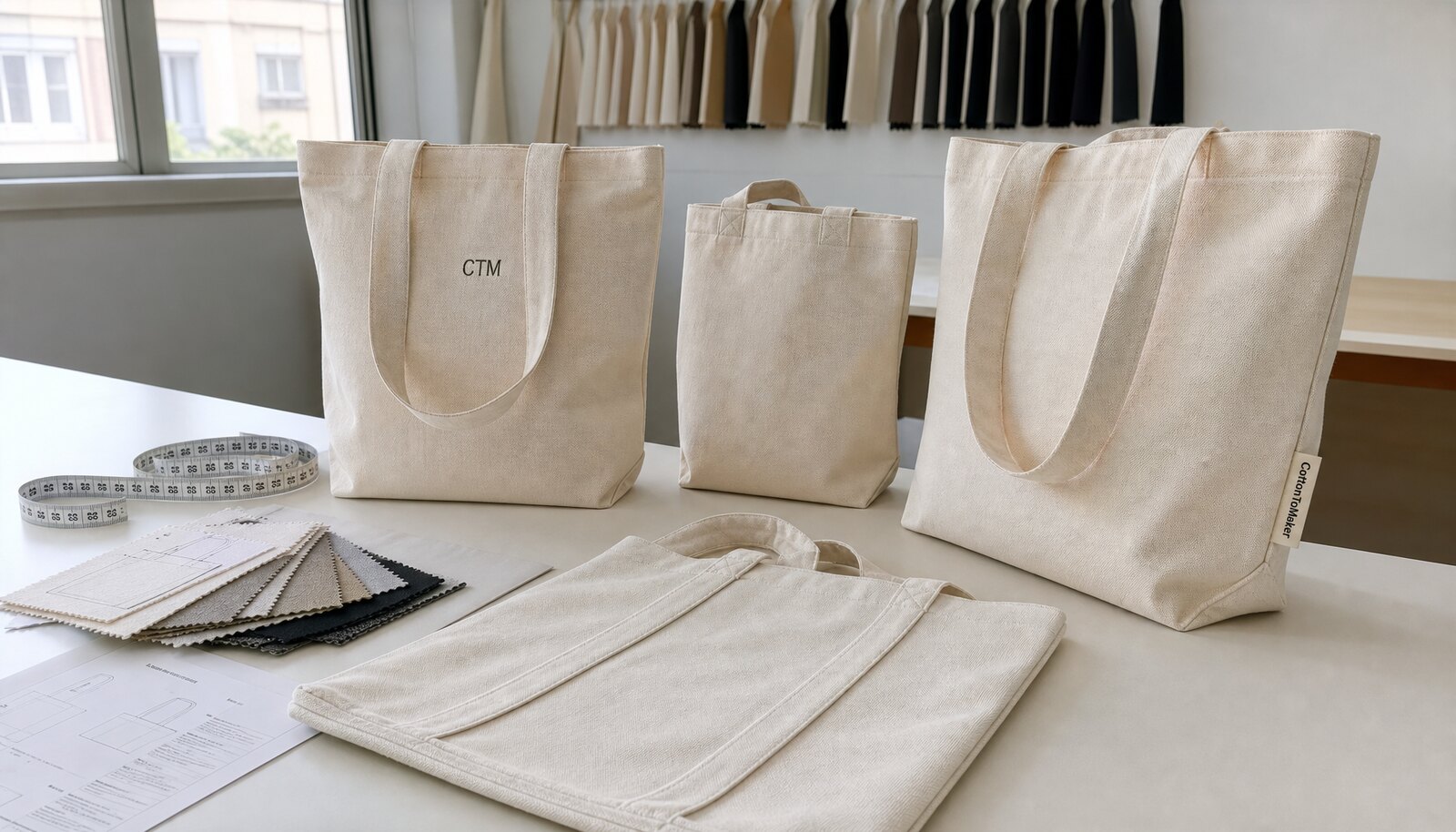
Why cosmetic brands need a different tote spec than general retail
A tote for a cosmetic retail launch is not a generic grocery bag with a logo on it. It has to support product presentation, survive repeated handling at counters and events, and fit the brand’s visual language without becoming expensive to produce. That means the spec needs to be built around the contents first: boxed skincare, sample kits, gift sets, fragrance cartons, or point-of-sale bundles. If the bag is too soft, the launch looks cheap. If it is too heavy, freight and unit cost climb quickly without adding much retail value.
Procurement teams should treat the tote as part of the product architecture, not a giveaway afterthought. The right canvas weight, handle reinforcement, print area, and packing format affect how the bag looks on shelf, how it ships in cartons, and how well it supports the retail launch plan. When suppliers quote only size and logo placement, the quote is incomplete for a cosmetic brand buyer.
- Most launch totes work best in the 10 oz to 12 oz canvas range.
- A shallow gusset usually gives enough structure without turning the bag into a heavy-duty shopper.
- The tote should match the use case: counter purchase, PR kit, seasonal promotion, or branded resale.
Choosing the right canvas weight, weave, and finish
For cosmetic brands, the most common mistake is selecting canvas by feel alone. A thick bag can look premium, but if the weave is too coarse it can distort small text, soften fine edge lines, and absorb too much ink on screen print. A lighter fabric may print cleanly, but it can collapse when filled with boxed products. In practice, 10 oz, 12 oz, and 14 oz canvas each solve a different problem. The best choice depends on how structured the launch bag must look on shelf and whether it will be reused by shoppers after purchase.
Ask the supplier to define the canvas in GSM or oz and to state whether the fabric is natural, bleached, dyed, or washed. A natural unbleached canvas gives a cleaner organic look and usually lower cost. Bleached or dyed canvas can better fit a beauty brand color story, but shade consistency becomes more important. If the brand wants a softer handfeel or a more premium finish, sample both raw and finished fabric because surface treatment can change how the logo sits on the bag.
- 10 oz: good for lighter retail bundles, lower cost, softer drape.
- 12 oz: strongest all-round option for a cosmetic launch tote.
- 14 oz: useful when the bag must stand up, but review cost and print behavior carefully.
Print method choice: what works on canvas and what causes problems
Canvas is forgiving for simple artwork and less forgiving for fine detail. For most cosmetic launch programs, one- or two-color screen print is the safest commercial option. It is cost-effective, repeatable, and readable from a distance. If the design includes a large solid area, make sure the supplier has enough curing control to avoid cracking or uneven ink density after folding. For premium retail lines, a woven label, small embroidery mark, or stitched patch can add value, but these methods should not replace a clear logo print if brand visibility matters.
Avoid choosing a print method before confirming artwork complexity. Gradient fades, tiny ingredient-style text, and thin serif fonts often look weak on textured canvas. If the brand artwork is detailed, ask for a strike-off on the exact fabric, not just a digital proof. A good supplier will show the actual print placement, ink opacity, and edge sharpness before bulk production starts.
- Screen print is the default for simple logos and launch runs.
- Heat transfer is only useful for very specific artwork; it can look plastic on canvas.
- Embroidery works best for small premium marks, not full-front designs.
How supplier route changes cost, control, and launch risk
The quote may look similar whether you buy direct from a factory or through a trading company, but the risk profile is not the same. A direct factory route usually gives better control over fabric sourcing, sewing quality, print setup, and packing sequence. That matters when the tote is part of a launch calendar and the brand needs consistent bag structure across multiple replenishment orders. A trading company can help if you are consolidating several packaging items in one shipment, but it can also add a layer that hides the real production constraints.
For a cosmetic brand, the practical question is not who is easier to email. It is who can prove the same spec will repeat. A real factory should be able to show line photos, sample room output, carton packing examples, and evidence of the same canvas weight across batches. If the supplier cannot clarify whether the fabric is reserved or sourced ad hoc, your unit price is not stable enough for a retail launch plan.
- Direct factory: better for repeat tote programs and tighter spec control.
- Trading company: useful when you need multi-item consolidation or sourcing support across categories.
- Ask who actually cuts, prints, sews, and cartons the order.
MOQ logic and how to split a launch order without creating quote noise
MOQ for custom canvas tote bags is rarely one number. It usually changes with bag size, canvas weight, print colors, and whether the design is printed on one side or both sides. A supplier may quote a low MOQ for one-color artwork but move much higher when the design needs multiple screens, multiple fabric colors, or retail packaging. Buyers should avoid comparing two quotes that use different MOQ logic because the apparent price difference is often just a different production assumption.
For a cosmetic retail launch, split the order by real selling need, not by internal department preference. If one design is going to PR boxes and another goes to store checkout, keep the artwork and packing rules separate. That lets the factory group the cutting and print work correctly and reduces the chance that a low-volume variant absorbs too much setup cost. In RFQs, always state whether the MOQ applies per artwork, per color, or per order total.
- One logo, one fabric color, one bag size is the easiest path to a controlled MOQ.
- Adding a second print color can create a separate setup charge and longer lead time.
- Mixed-SKU orders need carton-level packing rules before pricing can be trusted.
Use these sample stages before you approve bulk production
A good tote sample process should not stop at a single photo sample. For a cosmetic brand, the critical path is fabric approval, print strike-off, sewn sample, and then a pre-production sample that reflects the real order conditions. If the supplier sends a nice-looking sample on a different canvas weight or with better finishing than the bulk order, the approval is misleading. The sample must mirror the exact production route, including fabric source, print method, handle construction, and any added reinforcement.
The most useful sample check is to compare the tote against the actual product it will carry. Put boxed skincare, palettes, or bottle sets into the sample and see whether the gusset, handle drop, and opening width work. Cosmetic buyers often focus on logo placement, but the real problem appears when the tote bulges badly, tips over in cartons, or scuffs the print during packing. Approve the sample only after load testing, measuring, and confirming the look under store lighting.
- Strike-off: confirms logo size, color, and ink behavior.
- Sewn sample: confirms shape, handle strength, and seam finish.
- Pre-production sample: confirms the exact materials and packing method for bulk.
QC thresholds that matter for a retail launch
Quality control for a launch tote should be defined in measurable terms, not broad phrases like good quality or fine workmanship. The supplier should know the acceptable range for fabric weight, dimension tolerance, and print alignment before cutting starts. If you do not define these limits, the factory will use its own standard, which may be acceptable for promotional giveaways but too loose for retail packaging. For cosmetic brands, the visual standard is often higher because the tote sits beside premium product lines.
The key QC points are easy to specify in the PO: stitch density, no broken threads, no loose lint, print opacity, and no visible stains. If the bag has a lining or pocket, check that it sits flat and is secured cleanly. If the product is packed in an inner poly bag, make sure the bag surface is clean enough that the packaging does not trap dust or fibers against the print.
- Measure finished size after sewing, not cut size.
- Inspect handle anchors and top seam reinforcement on every sample lot.
- Reject visible oil marks, chalk residue, and ink smears before carton packing.
Packing decisions affect warehouse receiving and shelf readiness
Packing is one of the easiest ways to lose margin on a tote order. Retail teams often request individual poly bags by habit, but a canvas tote used for a launch may not need full retail overpack if the warehouse will repackage or distribute it with the cosmetics line. Bulk packing can reduce carton volume and simplify inbound receiving. On the other hand, if the tote is sold as a standalone accessory, it may need cleaner retail presentation and barcode labeling at the factory.
The right answer depends on where the tote enters the customer journey. If it is handed out at checkout or inserted into a beauty kit, bulk pack with clear carton labels is usually enough. If it sits on shelf or hangs near a premium display, individual packing and consistent fold size matter more. Buyers should specify how many pieces per inner bag, how many per carton, and whether the factory must include item labels, size stickers, or barcode application.
- Set carton counts by destination warehouse, not by factory convenience.
- Confirm whether folding orientation must be uniform for retail display.
- Request carton dimensions early so freight and storage can be calculated accurately.
Lead time, production schedule, and where launches usually slip
Most tote delays do not come from sewing alone. They come from artwork approval, fabric color approval, screen setup, and final packing. A factory may quote a short production lead time, but that number usually starts after all approvals are complete. For a cosmetic retail launch, the real schedule should include time for sample review, revision, and a buffer for carton marking or packing changes. If the supplier treats approval as a one-day event, the launch team often discovers too late that a missing detail has stopped the bulk order.
Build the timeline backward from the store or shipment date. If the tote is tied to a product launch, allow enough time for sample approvals before the factory buys fabric or allocates the sewing line. This is especially important when the order uses dyed canvas or branded packaging, because those items can create longer preparation windows than plain natural canvas. A realistic schedule beats a hopeful one every time.
- Lead time should separate sampling, bulk production, inspection, and packing.
- Add buffer for color approval if the tote uses dyed canvas or brand-matched print.
- Ask whether the quoted lead time starts from deposit, sample approval, or art approval.
How to compare landed cost, not just unit price
Unit price is only part of the cost story. A low quote can become expensive once you add screen charges, sample fees, packaging upgrades, carton inefficiency, and freight weight. Canvas tote bags can look simple in a quote sheet and still vary a lot in landed cost because fabric weight and packing format change the final carton count. For importers and retail buyers, the correct comparison is landed cost per sellable bag, not ex-factory price alone.
A useful way to compare suppliers is to normalize the quote. Put every offer into the same format: bag size, fabric weight, print colors, packing, carton dimensions, and freight assumption. Then compare whether the quote includes the same level of detail. If one supplier is cheaper but leaves out stitch reinforcement, label attachment, or retail packout, the apparent savings may disappear in QC rework or receiving labor.
- Compare ex-factory price, print setup, sample fees, packing, and estimated carton volume together.
- Ask for carton dimensions to estimate shipping efficiency.
- Use the same spec sheet across all suppliers before selecting a winner.
Specification comparison for buyers
| Spec decision | Recommended option | When it fits | Buyer risk to check |
|---|---|---|---|
| Canvas weight | 10 oz to 12 oz plain weave for most retail launch totes | Best balance of structure, print clarity, and landed cost for cosmetic gift-with-purchase or counter display use | Too light can look limp; too heavy raises cost and can distort small handles or stitched corners |
| Bag style | Flat tote or shallow gusset 8 to 12 cm | Works for boxed skincare, minis, and launch kits that need a clean shelf shape | Deep gussets add labor and can change carton count; confirm final insert dimensions |
| Print method | 1 to 2 color screen print for logos; woven label or small embroidery for premium lines | Best when art is simple and repeat orders matter | Fine gradients, tiny text, and large full-coverage artwork can fail on canvas texture |
| Supplier route | Direct factory for repeat launch volumes; trading company only if you need multi-item consolidation | Direct sourcing gives better control on GSM, print, and packing for one hero tote | Trading margins can hide spec drift; insist on factory name, production line, and photo evidence |
| MOQ logic | Plan MOQ by print color count, bag size, and whether one or both sides print | Useful for launch quantities with 1 to 3 SKUs | Very low MOQ can mean higher unit cost, limited inspection attention, or stock fabric substitution |
| Closure and trim | Open top with reinforced handle bar-tack or optional snap if product value is high | Ideal when bags are used for shopping, PR kits, or event redemption | Added trim increases sewing steps; test closure alignment and pull strength |
| Packing format | Bulk packed with size counts and inner poly only if retail cleanliness requires it | Fits warehouse replenishment and importer receiving efficiency | Retail-ready individual poly bags can create waste and carton inefficiency if not justified |
| Sample route | Pre-production sample after fabric, print strike-off, and trim approval | Necessary when color matching a cosmetics brand palette or launching seasonal art | Skipping strike-off often creates shade issues, logo thickness errors, or stitch inconsistency |
| Lead time model | Factory lead time plus buffer for approval and sea freight planning | Use for launch calendars with fixed store dates and influencer drops | Rushed orders often compress QC and packing time, which is where defects increase |
Buyer checklist before sampling
- Final bag dimensions, gusset depth, handle drop, and whether the bag must fit a boxed skincare set, palette, or bundle insert
- Canvas weight in GSM or oz, with fabric finish stated as bleached, natural, dyed, or enzyme washed if that affects color and handfeel
- Print artwork in vector format with exact Pantone targets, print placement, and the maximum allowable registration shift
- Handle construction detail, including handle width, length, folding method, stitch count, and bar-tack placement
- Packing requirement, including bulk pack count per carton, inner poly bag need, label position, and carton marking format
- Approval plan for strike-off, pre-production sample, and gold seal sample before bulk cutting
- Launch quantity split by SKU, colorway, and destination warehouse so the supplier can plan fabric and print runs properly
Factory quote questions to send
- What is the exact canvas weight in GSM, fabric construction, and shrinkage allowance after washing or heat setting?
- Is the quote based on full natural canvas, bleached canvas, or dyed fabric, and does the price change by color lot?
- Which print method is included, how many colors are priced, and what is the setup or screen charge per design?
- Does the MOQ apply per artwork, per color, per size, or per order, and what happens if we split the order by destination?
- What are the handle specs, seam reinforcement details, and whether bar-tacks are included at all stress points?
- Can you confirm carton size, packing quantity per carton, and whether any retail hang tag, barcode sticker, or inner poly is included?
- What sample stages are available before bulk production, and are sample charges deductible from the bulk order?
- What is the production lead time after sample approval, and what part of the schedule is reserved for cutting, printing, sewing, and packing?
- What inspection standard do you follow for print alignment, seam strength, stain level, and carton count accuracy?
- Can you provide photos or videos of the same canvas tote production line, not only product images from stock?
Quality-control points to confirm
- Canvas weight tolerance should stay within an agreed range, commonly plus or minus 5 to 8 percent depending on the weave and finishing process
- Handle stitching should show consistent stitch density, clean backtacks, and no skipped stitches at the top seam and stress points
- Print registration should stay within the approved tolerance for the artwork size; tiny text should remain legible without filling in
- Color should match the approved strike-off or lab dip within the agreed tolerance, especially for brand-specific neutrals and soft pastels
- Bag dimensions should be measured after sewing, not just from cut panels, because seam allowances can reduce internal capacity
- Inner cleanliness matters for cosmetic retail; no loose threads, oil stains, chalk marks, or visible lint should remain in finished bags
- Carton counts must be exact by SKU and size, with master carton marks matching packing list and product labels
- If a closure, lining, or pocket is specified, the component must be centered and securely fixed with no twisting, puckering, or exposed raw edges