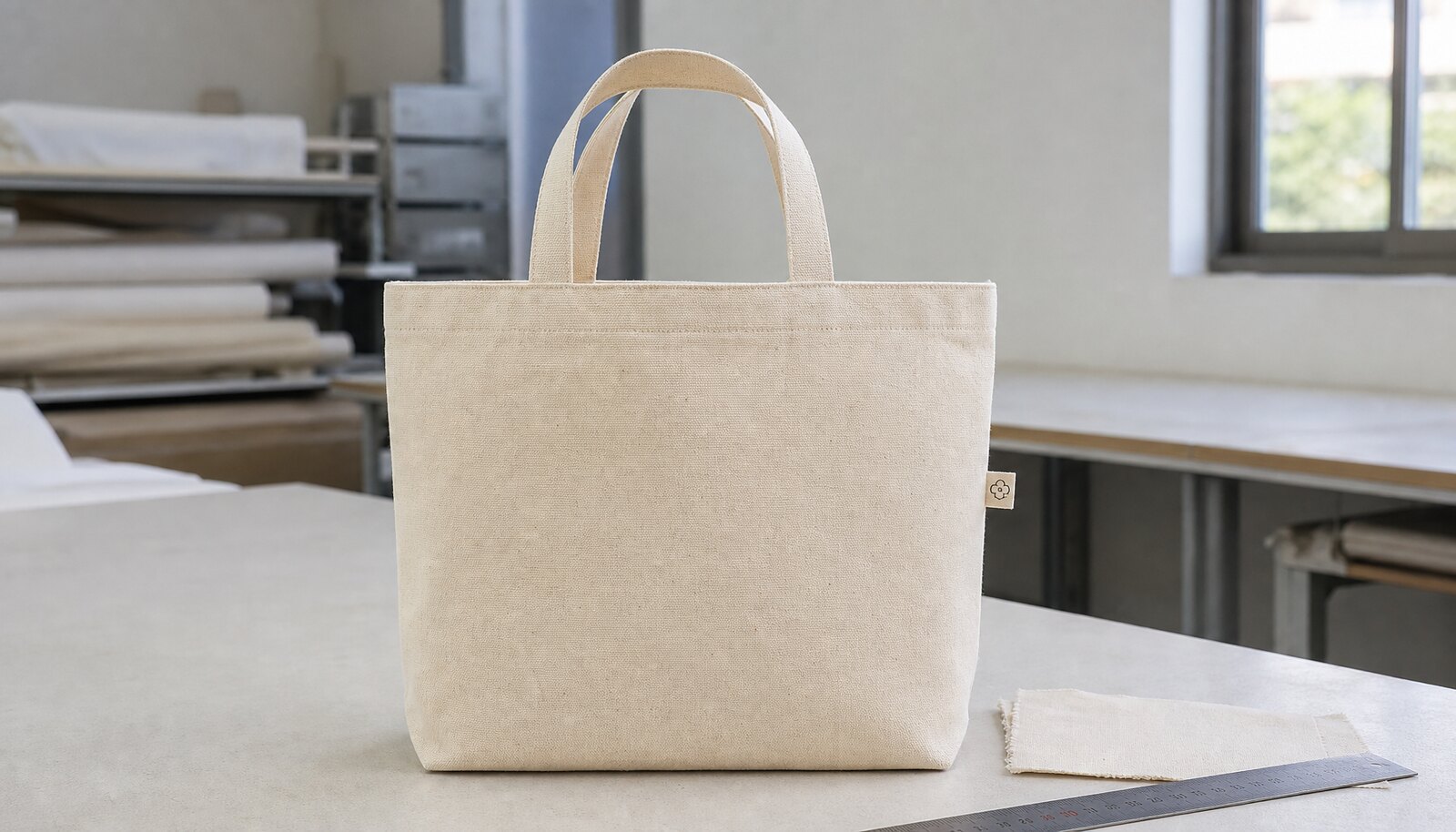
Why cosmetic brands need a different tote spec
A tote for cosmetics is not just a generic carry bag with a logo. Beauty buyers usually need it to hold boxed skincare, glass bottles, palettes, and sample sets without losing shape. That means the bag has to be spec’d for appearance and load, not just print area. If the canvas is too soft, the tote sags on retail shelves; if it is too stiff and heavy, the cost climbs and the bag may feel oversized for a gift program.
For bulk pricing, the product has to be defined by end use before you compare suppliers. A gift-with-purchase bag for a skincare launch may only need a clean brand presentation and moderate load capacity, while a retail tote for resale needs better construction, tighter stitch control, and more consistent packing. Those differences directly change fabric usage, sewing time, print setup, and carton efficiency.
- Typical cosmetic tote use cases: launch kits, membership gifts, counter purchase incentives, event packs, retail merchandise, and subscription box inserts.
- Common buyer mistake: quoting the same tote spec for both a free gift and a retail SKU, then overpaying for the wrong level of finish.
Start with the right canvas weight, not the lowest price
For custom canvas tote bags for cosmetic brands bulk pricing plan decisions, the fabric weight is the first cost lever. A practical range is 10–12 oz cotton canvas, roughly 340–410 GSM, for most beauty programs. This range gives enough structure for a premium look and enough strength for boxed products, small jars, or a mixed gift set. If your tote only carries lightweight samples, a lighter canvas can work, but the bag should still hold its shape after packing and transit.
The risk with chasing a lower price through lighter fabric is that the bag often underperforms once it reaches the buyer’s shelf or customer’s hands. Thin canvas can pucker around the print, distort under load, and show more seam waviness. On the other hand, going too heavy can create a bulky feel and raise freight costs because you are moving more weight in every carton.
- 10 oz / 340 GSM: suitable for light gift sets, promo giveaways, and single-product packs.
- 12 oz / 410 GSM: better for premium beauty sets, boxed skincare, and retail resale.
- Heavier than 12 oz: only worth it when the tote must replace a shopping bag or carry multiple full-size items.
Choose the print method around artwork complexity and volume
Most cosmetic-brand tote programs work best with one or two-color screen printing. It gives strong opacity on natural canvas, clean edges on simple logos, and better unit cost once quantities rise. If your logo has fine type or a small mark, you need a supplier that can control mesh count, ink thickness, and print registration. Ask where the logo will sit relative to the seam and whether the press area is large enough for your artwork without distortion.
Embroidery and woven labels are useful when the design needs a more premium tactile effect or when the logo is too small for a clean screen print. But these options have tradeoffs. Embroidery adds time and can pucker lightweight canvas. Woven labels work well as side branding or inside identity marks, yet they do not replace a front logo if the bag needs shelf impact. Heat transfer is an option for complex art, but it needs careful evaluation for wash resistance and crack risk if the tote is reused often.
- Screen print: strongest value for clean logos and repeat orders.
- Embroidery: better for premium positioning, but verify fabric stability.
- Woven label: useful as a secondary brand element or when the design area is small.
- Heat transfer: only when the artwork requires more detail than screen print can reliably hold.
How MOQ changes your real unit cost
Suppliers often quote a low headline price but build the real cost through MOQ structure. In canvas tote production, MOQ can be set by fabric color, print color, size, handle type, and whether the factory must cut a dedicated production run. A simple one-color natural canvas tote usually has the most efficient MOQ because the factory can spread cutting and printing setup across more units. Adding a custom dyed fabric, multiple logo colors, or special trim details increases preparation time and usually pushes the order into a higher minimum.
For procurement teams, the useful question is not only what the MOQ is, but what drives it. If a supplier can lower MOQ by using stock canvas and standard dimensions, you may get a better test run without sacrificing quality. If a quote offers a very low MOQ but adds fees for screen setup, sample duplication, packaging changes, and color matching, the true landed cost may be higher than a cleaner factory quote at a larger minimum.
- MOQ drivers: fabric color, print colors, body size, gusset depth, handle style, and packaging format.
- Lower-risk first order: stock natural canvas, one print color, standard size, bulk packing.
- Higher-cost configuration: dyed canvas, multiple artwork passes, inner pocket, zipper top, or custom hangtag system.
Supplier route comparison for cosmetic tote programs
Not every sourcing route gives the same level of control. Direct factory sourcing usually works best when the tote is a recurring item or part of a brand’s standard packaging system. You get better visibility on fabric source, stitching control, print method, and packing format. Trading companies can be useful if you are consolidating multiple accessory items into one shipment, but the buyer still needs to separate the actual factory spec from the reseller’s convenience packaging.
The best route depends on whether the tote is a core packaging item or a mixed basket purchase. If the tote is a hero accessory in a cosmetic launch, direct communication with the factory reduces interpretation errors. If the tote is one item among many, a trading route may save coordination time. The key is to compare the same construction, not just the same artwork.
- Use direct factory quotes when spec control, reorder consistency, and better cost transparency matter most.
- Use trading quotes only when the account requires mixed sourcing and you can still verify factory-level construction details.
- Request supplier evidence such as production photos, fabric swatches, and in-house QC process notes, not just a PDF price sheet.
Pre-production samples should prove construction, not just appearance
A sample is only useful if it reflects the final production process. For canvas totes, that means the same fabric weight, thread, print method, handle length, and seam finishing you expect in bulk. A random hand sample or a one-off digital proof can hide the exact issues that show up later in mass production, such as print spread, handle twist, or a body size that shrinks after sewing and pressing. The sample stage should be treated as a manufacturing approval, not a design mood board.
For cosmetic brands, sample review should include visual and functional tests. Load the bag with the actual product mix: boxed skincare, jars, samples, or a catalog insert if that is part of the kit. Then check whether the base holds, whether the handles sit evenly, and whether the print remains centered when the bag is full. If the tote is meant for retail resale, test how it folds back and whether it retains a premium appearance after handling.
- Sample should match final canvas weight, logo placement, and seam construction.
- Load test with real cosmetic items, not only empty bag inspection.
- Approve color against a physical fabric swatch or Pantone reference where possible.
- Reject samples with skewed handles, weak gusset corners, or fuzzy print edges.
Use a buyer checklist to prevent the common tote mistakes
Most tote problems happen because the order was under-defined. A buyer may specify size and logo but forget handle drop, packing method, or whether the canvas should be washed, brushed, or raw. Those missing details do not just affect appearance. They change sewing time, print consistency, carton density, and freight cost. Good procurement work starts by limiting ambiguity before the factory writes the quote.
The checklist below is designed for a cosmetic brand tote program that needs to move from sample to bulk without rework. It is not about collecting endless details. It is about the handful of controls that keep the quote comparable across suppliers and keep production from drifting after approval.
- Define end use, bag size, and expected load before requesting pricing.
- Specify fabric weight, print method, and handle construction in the RFQ.
- Request a tolerance sheet for size, placement, and stitch quality.
- Confirm inner packing and master carton count before production starts.
- Keep the approved sample, fabric swatch, and signed spec sheet together for reorders.
Packing details affect damage rates and warehouse labor
Packing is often treated as an afterthought, but it can change both cost and receiving efficiency. Canvas totes can be bulk stacked, polybagged individually, or nested in controlled bundles depending on how the customer will use them. A retail tote that goes straight to store shelves may need individual protection and a clean folded presentation. A tote inserted into a gift set may be packed in bulk to reduce labor and plastic. The right approach depends on whether you are buying for display, distribution, or kitting.
For export shipments, carton dimension and count are as important as unit price. A supplier with a neat carton plan can improve pallet fit, reduce crush risk, and speed count-in at the warehouse. Ask for actual master carton measurements, not a generic pack statement. When bags are heavily folded or over-compressed, the fabric can crease in a way that makes the tote look cheap on arrival. When the pack is too loose, the shipment wastes volume and increases freight cost.
- Bulk packing works for kitting and internal distribution if crease control is acceptable.
- Individual polybags help protect retail presentation but add material and labor cost.
- Carton count should support easy warehouse reconciliation and stable pallet loading.
- Avoid over-compression that leaves permanent fold marks on the front panel or logo area.
Lead time risk comes from fabric, print queue, and packing changes
A realistic lead time is not only the sewing schedule. For custom canvas tote bags for cosmetic brands bulk pricing plan work, production timing is usually driven by canvas availability, print queue load, sample approval speed, and how quickly the buyer confirms packaging. A simple one-color tote in stock natural canvas can move quickly, but even that schedule slips if the artwork is revised late or the buyer changes the carton marking after sample approval. The longer the order sits in approval, the more likely it is to lose its promised slot in the print or stitching line.
The best way to protect schedule is to freeze the commercial details early. That means artwork, bag size, handle style, packing format, and carton label format should all be approved before the factory cuts bulk material. If your program has a seasonal launch date, build a buffer for sample round trips and internal sign-off. The bag itself may be simple, but the coordination chain around it is rarely simple.
- Main schedule risks: late artwork changes, unavailable canvas stock, and packing rework.
- Protect the timeline by approving the sample and packaging at the same time.
- Ask whether the factory can reserve fabric once the deposit is received.
- Treat holiday launch windows as high-risk periods for any custom packaging order.
How to compare quotes on landed cost, not just unit price
A useful quote comparison starts with the same construction and the same packing assumption. If one supplier quotes a tote without polybags and another includes them, the unit price difference is not meaningful until the packaging cost is separated. The same applies to screen setup, embroidery digitizing, carton labels, and inland delivery. Procurement teams should build a simple landed-cost view that shows what is included, what is optional, and what will appear later as a separate line item.
This is especially important for cosmetic brands because the tote may be part of a larger launch budget. A small difference in unit price can be outweighed by rework, artwork corrections, or poor carton efficiency. Compare supplier quotes by the total cost to get approved goods into your warehouse, not by the first number on the page.
- Unit price should be compared only after matching fabric weight, size, print method, and packing.
- Separate setup fees, sample fees, carton charges, and inland transport from product cost.
- Ask each supplier to quote the same incoterm or at least the same freight assumption.
- Watch for hidden costs in low-MOQ offers, especially if they use nonstandard materials.
Specification comparison for buyers
| Spec decision | Recommended option | When it fits | Buyer risk to check |
|---|---|---|---|
| Fabric weight | 10–12 oz (340–410 GSM) cotton canvas | Premium cosmetic sets, reusable gift bags, tote-in-kit programs | Too light and the bag collapses when filled; too heavy and unit cost rises fast |
| Print method | 1–2 color screen print for volume; woven label or embroidery for small branding areas | Simple logo art, clean brand look, repeat orders | Fine gradients or tiny text may fill in or lose edge sharpness |
| Handle construction | Self-fabric or matching cotton webbing handles with reinforced cross-stitch | Shoppers carrying skincare bundles, jars, and boxed sets | Short handle drop can make the tote uncomfortable over outerwear |
| Body size | Approx. 10–14 in W x 12–16 in H with 3–5 in gusset | Retail gift-with-purchase, event packs, travel cosmetic kits | A bag sized only for flat brochures will fail on boxed product sets |
| MOQ route | Standard factory MOQ with one print color and one fabric color | First-time launch or controlled seasonal program | Low MOQ quotes may hide setup fees, blank inventory, or limited size options |
| Sampling path | Pre-production sample after artwork and fabric approval | Private label launches, retail programs, multi-SKU coordination | Skipping a true pre-production sample can lock in the wrong handfeel or print position |
| Packing method | Bulk polybag or nested stack packing with carton count control | Importer shipments, warehouse distribution, or kit assembly | Loose packing increases carton damage and count disputes on arrival |
| Supplier route | Direct factory sourcing for repeat volume; trading route for mixed accessories | Brands that want tighter spec control and better cost visibility | Trading quotes can look simpler but hide weaker control on print, fabric, and carton standards |
| Approval standard | Written tolerance sheet for size, shade, stitch count, and print placement | Any program where reorder consistency matters | Without agreed tolerances, reorders can drift in color, dimensions, and logo placement |
Buyer checklist before sampling
- Confirm the tote’s real use: gift-with-purchase, retail resale, event pack, or internal promotion, because the fabric weight and handle strength should match the load.
- Lock the artwork early in one-color vector format and define logo placement in millimeters, not only by visual reference.
- Set fabric weight, body size, gusset, and handle length before requesting quotes so suppliers price the same structure.
- Request a pre-production sample with the exact print method, thread color, and trim color planned for production.
- Agree on carton pack count, polybag use, and master carton dimensions before PO issuance.
- Ask for a tolerance sheet covering size, sewing density, print registration, and shade variation.
Factory quote questions to send
- What fabric weight and yarn construction are you quoting, and is the GSM measured before or after finishing?
- Is the price based on screen print, heat transfer, embroidery, or woven label, and what setup fees apply for each method?
- What is the MOQ by fabric color, print color, and size, and does the MOQ change if we add a gusset or inner pocket?
- Can you quote the tote with and without individual polybags, and what is the carton count per export carton?
- What are the sample stages included: digital proof, pre-production sample, and pre-shipment reference sample?
- What lead time applies after sample approval, and how does it change during peak season or when raw canvas is not in stock?
- What size and placement tolerances do you accept for body dimensions, handle drop, logo position, and stitch count?
- Can you provide a landed-cost breakdown showing unit price, packaging, cartonization, inland charges, and export documents?
Quality-control points to confirm
- Fabric weight should fall within the agreed 10–12 oz range unless the order spec states otherwise, and the handfeel should match the approved sample.
- All logos should sit within the approved placement tolerance and show sharp edges, even ink coverage, and no ghosting or misregistration.
- Seams at the handle joins, side seams, and gusset corners should be secure with no loose thread bundles or skipped stitches.
- Bag dimensions after finishing should stay within the agreed tolerance for width, height, and gusset depth.
- Handles should be equal in length and tension, and the tote should hang level when lightly loaded.
- Packing must match the agreed carton count, bag fold method, and labeling so receiving teams can reconcile the shipment quickly.