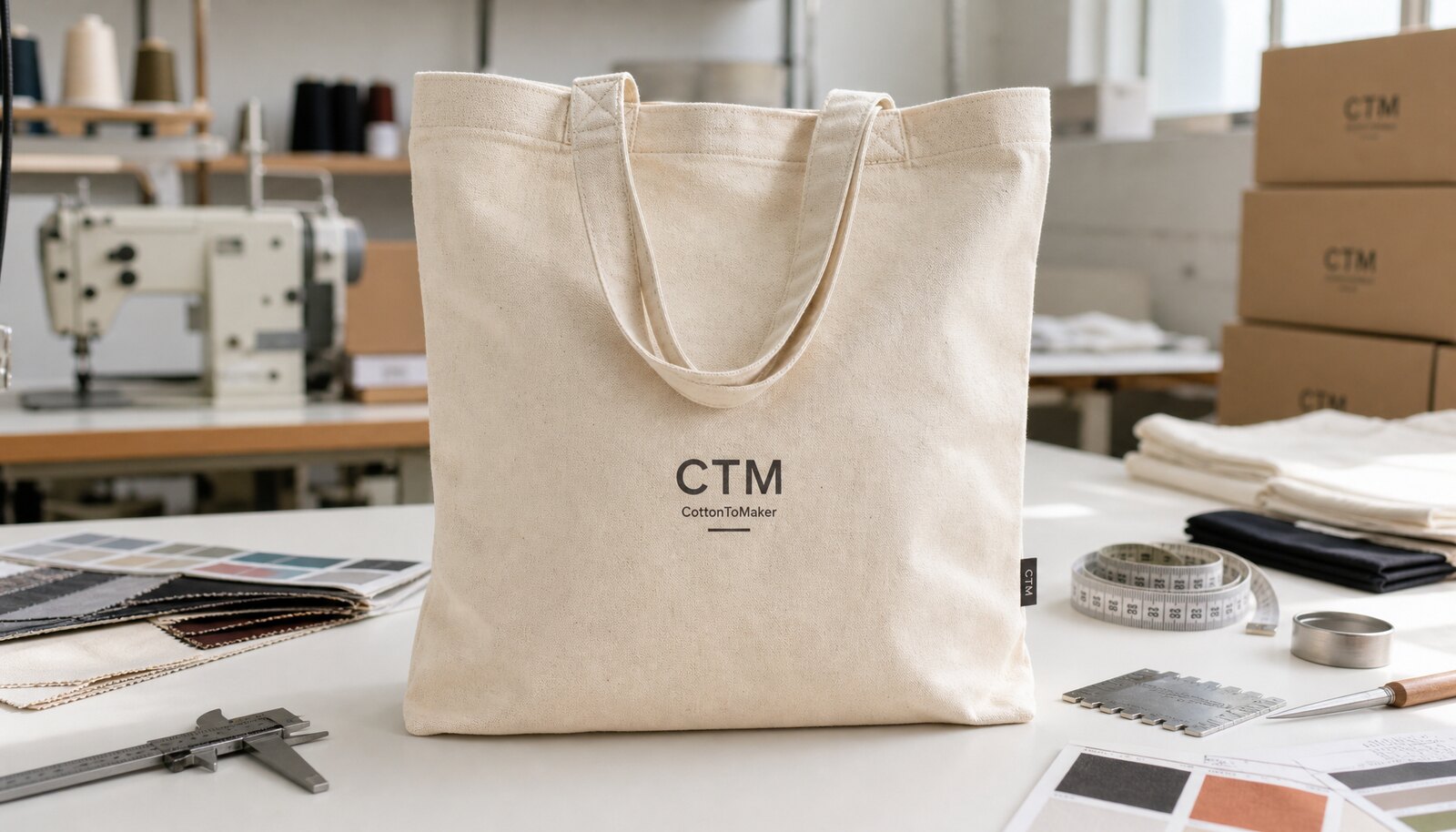
1. Start With the Event Use Case, Not the Tote Size
The right custom canvas tote for a corporate event is not chosen by logo placement first. It starts with the event format: conference kit, employee welcome pack, trade show giveaway, retail gift, or VIP handout. Each use case changes capacity, handle length, packing format, and the acceptable level of finish. A tote that looks fine on a shelf can fail once it has to carry brochures, a notebook, a bottle, a charger, and a folder through a full event day.
For procurement teams, the clearest brief is a content list plus the receiving flow. State what goes inside the bag, whether the attendee receives it at registration or at a booth, and whether the tote is meant to be reused after the event. That determines whether you need a light handout bag, a structured premium bag, or a heavier carry bag with stronger seam reinforcement. If the tote is only for one-hour distribution, do not pay for a retail-grade build unless the brand value justifies it.
A useful event brief also defines the physical environment. A bag used on a convention floor may need upright handling and quick grab access. A welcome pack sent to employees may need flatter storage and cleaner presentation. A sponsor bag handed out outdoors may need more dust protection and better packing. These small differences affect not only price, but also carton loading, lead time, and the number of rejects you can tolerate before the event date starts to feel tight.
- State the event contents in the RFQ: brochure set, notebook, bottle, sample product, or mixed kit.
- Give the target use: onsite handout, employee welcome, VIP gift, or retail-style reuse.
- Specify whether the bag should stand upright, fold flat, or survive daily reuse after the event.
- Tell suppliers if the bag must fit a registration counter tote rack or a standard carton divider.
- Note whether the event is indoor, outdoor, or hybrid, because that changes packaging and dust protection needs.
2. Choose Canvas Weight Based on Fill, Not Marketing Terms
Canvas weight is where many RFQs go vague. Suppliers may quote by ounce per square yard, by GSM, or by loose language such as heavy or premium canvas. Those words are not enough for a procurement comparison. A usable buying range for corporate events is usually 10 oz, 12 oz, or 16 oz canvas, which roughly maps to about 340 gsm, 407 gsm, and 544 gsm depending on weave and finish. If the supplier cannot state both units, you are comparing guesswork, not product.
A 10 oz bag works when cost and packing efficiency matter more than body. It is fine for lightweight inserts and short-use events, but it can look thin if the brand wants a substantial feel. A 12 oz bag is often the safest middle ground for most corporate programs because it gives better structure without overloading the budget. A 16 oz bag makes sense when the tote must feel premium, hold heavier items, or stay in use after the event. The buyer risk is not only cost; heavier fabric also affects sewing speed, carton weight, and freight.
Canvas is not only about weight. Buyers should ask whether the fabric is plain weave or duck canvas, whether it is pre-shrunk, and whether the mill or converter can state origin. If the bag will be printed on both sides, a tighter weave may reduce shadowing and improve ink definition. If the bag will carry a bottle or multiple product samples, a softer but loose weave may look acceptable yet sag after filling. The right specification balances appearance, structure, and repeated handling.
For a corporate event program, it helps to think in terms of fill and durability rather than fashion labels. If the bag needs to carry a notebook plus brochures, a 12 oz tote with a reinforced handle is usually enough. If the bag will contain a boxed gift set or heavier product sample, the same canvas weight may need stronger handles, a deeper gusset, or a wider seam allowance. The fabric alone does not determine performance; construction does.
- Ask for fabric weight in both oz/yd² and GSM, with a tolerance range.
- Request yarn count, weave description, and whether the fabric is pre-shrunk or enzyme-washed.
- If the bag will carry heavy inserts, specify reinforced handles and bartack points rather than assuming the fabric weight alone is enough.
- Ask the supplier to identify fabric origin or mill source when the claim matters to your ESG review or traceability file.
3. Compare Construction Specs: Handles, Seams, and Tolerances
The most useful procurement detail in a canvas tote quote is not the logo method. It is the build spec. A buyer should know the finished size, handle drop, gusset depth, seam allowance, top hem finish, and reinforcement points. Those dimensions determine whether the bag functions well and whether it fits the event kit. A bag that is 2 cm short in height or too narrow in gusset depth can be just as problematic as a misprinted logo.
Handle construction deserves special attention because it drives comfort and failure risk. Ask whether the handle is self-fabric, cotton webbing, or another tape, and ask for the handle width and stitch pattern. A handle with inadequate stitching may feel fine in hand but pull at the anchor points once the tote is loaded. For bags expected to carry books or bottled items, a bartack at the top edge and at the handle anchor is standard practice, not an upgrade.
Seam specification should be written in a way a factory can actually follow. It should identify the seam allowance and where reinforcement applies. If the bag has a bottom gusset, the buyer should confirm how the corners are turned and whether internal overlock or binding is used to control fraying. Thread type also matters. Polyester thread is often preferred for strength and lower moisture sensitivity, while cotton thread may be acceptable for certain natural-look programs but can behave differently in durability and cost.
For tolerance control, the approved range must be numeric, not descriptive. A supplier may say the tote is standard or acceptable, but buyers need actual width, height, and handle drop limits. This matters most when totes are packed with rigid inserts or when the bag needs to sit cleanly on an event table. If the specification is loose, the factory can technically ship within a wide band that still creates customer complaints or packing issues.
- Write finished size, handle drop, gusset depth, and seam allowance directly into the spec sheet.
- Require bartacks or equivalent reinforcement at every handle anchor point.
- Define whether seams are overlocked, bound, or turned, especially at the bottom corners.
- State the acceptable tolerance for width, height, handle length, and handle drop before sampling starts.
- Ask for the thread type and thread count or ticket size if durability is important to your program.
4. Compare Print Methods by Durability, Not Just Artwork
For corporate event totes, screen print is usually the first method to compare because it scales well and holds up on canvas. It is the best fit for simple logos, one or two spot colors, and repeat programs where the artwork does not change often. If the supplier is quoting screen print, the buyer should still define ink type, print size, placement, and curing method, because a cheap screen print that cracks or ghosts is a bad giveaway no matter how low the unit price looks.
Embroidery can work for a small logo or a premium executive program, but it adds stitch time and can distort light canvas if the design is too dense. Heat transfer is useful when the artwork changes often or the color count is high, but it is usually a weaker choice for a tote that will see regular reuse. Woven labels or side labels are worth considering when the brand wants a restrained look and does not need large front-panel graphics. For sustainability discussions, the print method matters because a longer-lasting bag is often the better environmental choice than a lower-cost bag that gets discarded sooner.
The comparison should also include compliance and production checks. Ask what ink system is used, whether there is a cure verification step, and whether the factory can provide a compliance or test document if required by your organization. For some buyers, the ink certification or material declaration is not a nice-to-have; it is a supplier qualification item. If the bag is going to a public event, the brand will be judged on appearance, but procurement still has to defend the product spec if anyone asks how the decoration was made.
When comparing print options, watch for hidden artwork assumptions. Suppliers sometimes quote a front logo only while the buyer expects front and back. Some include a maximum print area that is too small for the brand’s visual system. Others hide the cost of a second color in a later proof stage. The safer route is to lock the artwork size, placement, and total color count before you request price comparison. That gives a true side-by-side view and prevents a low quote from becoming a change order later.
- Lock the artwork size and placement before sampling, including front-only, front-back, or corner mark.
- Use one approved Pantone target if the logo is sensitive to brand color drift.
- Request a rubbing or tape test on the print if the bag will be packed tightly or handled repeatedly.
- Ask what ink system is used and whether the supplier can share compliance or test documentation when needed.
- Confirm whether the quote includes one or two sides, because that is a common source of price mismatch.
5. Sustainable Packaging Comparison: Compare Protection, Waste, and Event-Floor Usability
Sustainable packaging coverage is often too generic in tote sourcing. The real question is not whether the packaging is paper or plastic. It is how much packaging the distribution channel actually needs. A tote that will be handed out on an event floor does not need the same protection as a bag stored for retail resale or shipped through multiple warehouses. Comparing packaging options without the distribution context leads to waste that looks eco-friendly on paper but is unnecessary in practice.
The most common routes are bulk carton packing, paper banding, insert-card presentation, recycled polybagging, and retail-ready individual packing. Bulk carton packing has the lowest packaging material use and usually the lowest labor cost. It works best when the bag is opened immediately at the event or repacked by the buyer. Paper banding adds a cleaner presentation, keeps bag pairs or sets organized, and can support basic brand messaging, but it does not protect from dust or moisture as well as a sleeve. Insert cards are good when the event team wants a welcome note, QR code, or sponsor message without adding much material. Recycled polybags offer better dust protection and a cleaner retail appearance, but they add plastic and labor. Individual retail packing is the most protective and presentable, yet it usually creates the highest material use and the most packing waste.
A buyer-friendly comparison table should include function as well as material impact. For example, a bulk carton may be the best sustainability-to-cost option for an internal conference because the tote is distributed immediately and carton waste is easy to recycle at the site. A paper band may be the best compromise when attendees need a neater handout and the brand wants to avoid extra plastic. A recycled polybag may be justified when the bags travel to a satellite event, sit in a storeroom, or need to remain clean across several transfers. The wrong move is to choose an individual wrap simply because it looks premium in a photo.
There is also a protection tradeoff. Less packaging is not automatically better if the route includes long transit, humid storage, or rough handling. Canvas can pick up dust, oil, or carton scuffing. If the package arrives marked or stained, the event team may have to repack it, which creates waste, labor, and a worse sustainability outcome than a slightly more protective pack would have. The right decision is a balanced one: enough packaging to protect the product, no more than needed for the distribution method, and clear carton labeling so receiving teams can move quickly.
- Ask whether the bag needs any individual pack at all before choosing paper or plastic.
- If a paper band or insert is proposed, request the paper grade, recycled-content claim, and whether the supplier can name the material spec.
- Use bulk cartons for same-day event distribution when dust and moisture risk are low.
- Choose recycled polybags only when protection or handling justifies the added material and labor.
- Ask the supplier to state how packaging affects carton count, gross weight, and event-floor usability.
6. Read Quotes as a Set of Production Decisions, Not a Unit Price
A good tote quote should read like a production sheet, not a vague price line. It needs finished size, fabric weight, print method, color count, handle length, stitching details, packaging format, carton size, MOQ, lead time, and shipment terms. If two quotes both say custom canvas tote bag but one includes a 12 oz bag with screen print and bulk carton pack while the other quietly assumes a 10 oz blank with no inner packing, the cheaper number is not comparable.
The hidden cost drivers are usually easy to spot once the buyer team knows where to look. Custom dyeing raises risk and often pushes MOQ higher. Extra print colors add setup and registration work. A wider gusset or longer handle affects fabric consumption and sewing time. Individual polybags, insert cards, and retail cartons all change packing labor. Freight also changes with carton count and gross weight, so the lowest ex-works price is not always the lowest landed cost. A buyer should ask for pricing on the same basis across all vendors: same spec, same artwork, same packaging, same incoterm, same delivery point.
A useful RFQ also separates mandatory items from optional upgrades. That way the procurement team can see the base tote price without getting confused by decorative extras. If the supplier offers paper bands, reusable mailers, dust bags, or premium inserts, quote them as alternatives rather than folding them into the base. This makes it easier to compare sustainable packaging options and avoid paying for packaging that the event team will remove and discard immediately.
Landed cost should be the real comparison metric when the event date is fixed. It should include unit price, local freight, export packing, customs-related costs if applicable, duties where relevant, and any likely repack or emergency airfreight risk. A slightly higher ex-works price can still be the better buying decision if it avoids delays, rework, or a last-minute replacement order. Procurement teams protect margin by controlling the total program cost, not by chasing the cheapest headline quote.
If you need to negotiate, negotiate with facts. Ask for carton weight, pack-out efficiency, and what changes the supplier used when they moved from sample to production. Many price differences are not random. They come from spec assumptions that were never aligned. A good buyer catches those differences early, before the PO is issued and the supplier has already started cutting fabric.
- Compare quotes on the same basis: spec, artwork, packaging, incoterm, and delivery point.
- Separate the price for the bag from the price for optional packaging so the team can see where the spend goes.
- If the quote omits carton dimensions or gross weight, ask again before the supplier is shortlisted.
- Ask whether sample pricing is deductible from bulk, and if not, treat it as part of the development cost.
- Request the supplier’s revision policy so you know when a design change creates a new quote.
7. Set MOQ, Sample, and Revision Rules Before You Shortlist Suppliers
MOQ logic for canvas totes is usually tied to fabric type, print complexity, and packing method. A standard size with stock fabric and one-color screen print will often support a lower MOQ than a custom-dyed bag with multiple print positions and individual packing. That is normal. A supplier that claims the same MOQ for every variation is often hiding risk in setup fees, loose quality control, or a later revision to the spec. Buyers should ask why the MOQ changes, not only what it is.
Sampling needs the same discipline. A digital mockup is useful for artwork approval, but it does not tell you how the canvas behaves, whether the handle stitching holds, or whether the print coverage is stable on real fabric. The better sequence is artwork proof, pre-production sample, and then one retained golden sample before bulk. For a corporate event with a fixed deadline, treat the sample as a production gate, not a formality. If the sample is late, the bulk order is already at risk.
Revision rules matter because event briefs change. Maybe the handle color shifts, the sponsor logo changes, or the insert card gets revised. Buyers should know which changes are included in the initial sample cycle and which changes trigger a new sample charge or a new lead time. This is also the moment to confirm the supplier’s responsibility if the bulk run does not match the approved sample. Without a clear rule, a short delay or mismatch becomes a dispute after the goods are already in transit.
For procurement comparison, ask whether MOQ differs by print color count, by packaging style, and by fabric availability. Also ask whether the factory can hold a production slot once the sample is approved. A low MOQ on paper is not useful if the supplier cannot lock a build date or if fabric has to be reordered after approval. The strongest buyer position is a quote tied to a real sample path and a firm production schedule.
- Expect MOQ to change by fabric weight, print color count, and packaging choice.
- Use a pre-production sample to verify hand feel, size, seam construction, and logo placement.
- Keep one approved reference sample with the buyer team and one with the factory.
- Ask how many revision rounds are included before a new sample charge applies.
- Confirm whether the production slot is reserved only after sample approval and deposit.
8. Define QC Thresholds That Stop Rework Early
Quality control on a canvas tote is mostly about consistency. The first problem is size drift. If the bag measures too short or too narrow, the event kit may not fit and the receiving team will have to improvise. The second problem is weak reinforcement at the handle anchor points. A tote can look fine on the table and still fail the first time it is loaded with books or bottled drinks. The third problem is print quality, which often passes a quick visual check but fails after rubbing or folding.
A practical QC plan should include measurable limits. Agree the acceptable tolerance for width, height, handle length, handle drop, and gusset depth. Check seam density, bartacks, loose threads, and top hem finish. Inspect the print for color shift, bleeding, and registration drift. Review odor, oil spots, needle damage, and dust contamination before packing. For a high-visibility corporate event, one sample should be load tested at the agreed fill weight so the buyer can see whether the construction survives real handling, not just a static photo.
Procurement buyers should also ask for the supplier’s inspection plan. Is inspection done in-line, at final random check, or at a third-party warehouse? What AQL or internal defect threshold is used for major, minor, and critical defects? If the supplier does not use a formal system, ask them to state how they decide when to rework, re-inspect, or release the shipment. Even if your organization does not use AQL formally, knowing the supplier’s approach helps you compare vendors with the same lens.
The right defect thresholds for a corporate event are usually stricter than for a commodity handout. A visible logo defect, wrong color, missing bartack, or seam opening should be treated as a major issue. A small loose thread may be acceptable if it is trimmed before packing. A stain, smell, or damaged panel should not pass. Buyers should define these thresholds in writing because the event team is not buying fabric by the meter; they are buying a branded object that represents the company in public.
A good QC file also includes carton checks. Master carton marks should be legible, counts should reconcile with the packing list, and cartons should be sealed cleanly. If the shipment is going across borders or into multiple event locations, photo evidence of packed cartons and gross weight can save time later if there is a short-ship claim or a delivery discrepancy. QC is not only about rejecting bad goods. It is about preventing a distribution problem that creates a bigger operational cost later.
- Set dimensional tolerances before production starts.
- Inspect handle reinforcement and top edge stitching on every approval sample.
- Reject bags with print bleed, heavy odor, oil marks, or visible needle holes in the front panel.
- Ask for the supplier’s defect categories and thresholds for major, minor, and critical issues.
- Request carton photos and count verification before final shipment release when timing is tight.
9. Pack for Distribution, Not Just for Shipping
Corporate event bags often fail at the packing stage, not the sewing stage. If the tote is going directly to an event floor, bulk packing in master cartons may be the right answer because it reduces cost and packaging waste. If the bags will be handed out one by one at a booth, a paper belly band or a simple insert card can keep the presentation clean without overpacking each unit. The buyer should decide this early because the packing method affects labor, carton size, and freight volume.
If the buyer wants a more sustainable packaging comparison, the right question is not simply paper versus plastic. It is whether the bag needs individual protection at all. Some programs need a recycled-content sleeve or a paper wrap because the bags will sit in storage or move through retail-style channels. Others do not. The most common mistake is paying for decorative packaging that never reaches the end user because it is removed at the event entrance. In that case, bulk carton packing with clean carton labeling is usually the better commercial decision.
There is also a risk-to-ops tradeoff. Less packaging is not automatically better if the route includes long transit, humid storage, or rough handling. Canvas can pick up dust, oil, or carton scuffing. If the package arrives marked or stained, the event team may have to repack it, which creates waste, labor, and a worse sustainability outcome than a slightly more protective pack would have. The right decision is a balanced one: enough packaging to protect the product, no more than needed for the distribution method, and clear carton labeling so receiving teams can move quickly.
Procurement should ask for pack-out details just as carefully as product details. What is the inner pack quantity? Are the bags folded a certain way to preserve print quality? Is there a moisture liner in the master carton? Are cartons stacked to a specific height? Are the outer labels barcoded or plain text? These details are especially important if the event is receiving the shipment in waves or if bags will be pulled from storage in batches across multiple days.
- Define inner pack quantity, carton count, and carton marks before sampling.
- Use moisture protection only when the route, season, or storage plan makes it necessary.
- Avoid individual plastic bagging unless the bags need retail display or long storage protection.
- Ask for folding and placement instructions so the print does not crease in transit.
- Confirm whether the packing format supports quick distribution on the event floor.
10. Build the Schedule Backward From the Event Date
Lead time is where tote programs become either routine or painful. A realistic schedule starts with sample approval, then fabric readiness, then bulk sewing, print curing, packing, and transit. If the supplier says everything can be done quickly without asking about artwork changes, fabric availability, or packing style, treat that as a warning. Event orders look simple only after all the details are frozen. Before that, every change adds days.
For planning purposes, buyers need more than a bulk production promise. They need a back-scheduled timeline with buffer. If the event date is fixed, work backward from onsite delivery and add room for sample feedback, carton relabeling, customs clearance, and local distribution. The landed-cost comparison should include not only the tote unit price but also freight, duties where applicable, packing upgrades, and replacement allowance for short count or damage. A slightly higher ex-works price can be cheaper overall if it avoids airfreight, repacking, or rush labor.
This is also where the supply agreement matters. If the event is sensitive, write in the delivery date, the quantity tolerance, the remedy for short shipment, and the process for correcting print mismatch before final payment. Ask the supplier what happens if a carton count is short or if the print does not match the approved sample. Clear chargeback terms for short-ship, wrong artwork, or carton damage give procurement leverage and reduce time spent negotiating after the goods are already on the move.
A practical buyer plan includes milestones: RFQ issued, sample approved, production slot booked, pre-ship inspection completed, and goods released for dispatch. Each milestone should have an owner and a date. That keeps the project from drifting into a generic “in production” status that hides delay. For event programs, visibility is as important as speed.
- Build the schedule around sample approval, not around the first factory promise.
- Leave buffer for artwork revisions, carton corrections, and customs delays.
- Compare landed cost, not only unit price, when the event date is fixed.
- Write short-ship and print-mismatch remedies into the PO or supply agreement before deposit.
- Track milestone dates for sample, production, inspection, and dispatch.
Specification comparison for buyers
| Sourcing or spec choice | What to ask for | Best fit | Buyer risk to check |
|---|---|---|---|
| Direct factory with sewing, printing, and packing | Fabric origin, stitching spec, print process, carton spec, and one accountable QC owner | Fixed event dates, branded giveaways, and programs that need controlled quality and packaging | Risk if sewing, printing, and packing are split across vendors and no one owns final inspection |
| Trading company or sourcing agent | Factory name, audit status, fabrication route, and defect responsibility split | Multi-item programs or buyers that need one PO and one contact across several suppliers | Risk of markup, thin technical detail, and unclear claim handling when defects appear |
| Local decorator finishing imported blanks | Blank-bag spec, decoration method, and inbound blank inspection criteria | Short top-up orders or last-mile branding when the blank is already approved | Risk of limited fabric control, higher unit cost, and no visibility into bag construction |
| 10 oz canvas, about 340 gsm | Fiber content, weave density, wash/shrinkage behavior, and handle reinforcement | Light handouts, brochure kits, and low-fill event bags | Risk of thin hand feel, shadowing, or seam strain under heavier inserts |
| 12 oz canvas, about 407 gsm | Finished dimensions, seam allowance, and acceptable tolerance on weight and shrinkage | Most corporate events that need balance between cost, structure, and reusability | Risk if yarn count, weave tightness, or shrinkage limits are left vague |
| 16 oz canvas, about 544 gsm | Thread type, bartack count, handle anchor spec, and carton weight limits | Premium gifts, heavier kits, and totes expected to stay in use after the event | Risk of higher sew time, more fabric waste, and freight cost increases |
| One-color or two-color screen print | Ink type, curing method, Pantone target, print placement, and rub resistance | Large quantities and simple logos with repeatable artwork | Risk if opacity, curing, or color tolerance is not written into the quote |
| Bulk carton with paper band or no individual polybag | Carton drop expectation, dust protection plan, and event-floor distribution method | Conference handouts, internal events, and programs where bags are opened immediately | Risk of scuffing or moisture damage if carton lining and packing sequence are ignored |
Buyer checklist before sampling
- Finished size, handle length, handle drop, gusset depth, and seam allowance are written on the spec sheet, not left to the factory template.
- Canvas weight is stated in oz/yd² and GSM, with an agreed tolerance before sampling begins.
- Fiber source, yarn blend, weave type, and any recycled-content claim are identified in the RFQ.
- Stitching requirements are defined: seam allowance, stitch density, bartack locations, and thread type.
- Print method, print placement, Pantone target, and maximum number of colors are fixed before supplier comparison.
- Packaging format is defined for the event: bulk packed, paper banded, insert card, recycled polybag, or retail-ready individual pack.
- MOQ is broken out by fabric type, print color count, packaging method, and revision level so quote tiers can be compared fairly.
- Sample approval covers measurements, seam quality, print registration, odor, color, and carton packing, not just logo appearance.
- Lead time includes fabric readiness, sample approval, bulk sewing, finishing, packing, and export transit if the event date is fixed.
- The quote includes carton dimensions, gross weight, carton count, spare percentage for damage or short count, and defect-claim terms.
Factory quote questions to send
- What is the finished size, handle length, handle drop, gusset depth, seam allowance, and allowed dimensional tolerance for this tote?
- What canvas weight are you quoting in oz/yd² and GSM, and what tolerance do you allow on fabric weight and shrinkage?
- What is the fiber composition, fabric origin, yarn count or weave description, and do you have any certificate or mill declaration for it?
- What stitch construction are you using on side seams, bottom seams, and handle anchors, and how many bartacks are included per handle?
- What thread type are you using, such as polyester or cotton, and what ticket size or strength specification do you follow?
- Is the print screen print, heat transfer, embroidery, woven label, or side label, and what is the setup charge per color or position?
- What ink or decoration materials are used, and can you provide any relevant certification or compliance document if requested?
- What is the MOQ by size, fabric weight, print color count, and packaging style, and does MOQ change after a sample revision?
- What is the pre-production sample cost, sample lead time, and how many revision rounds are included before a new sample charge applies?
- What packaging is included in the unit price, and what is extra if we want paper bands, inserts, recycled polybags, or retail cartons?
Quality-control points to confirm
- Measure finished size against the approved spec and allow only the agreed tolerance, especially on width, height, handle drop, and gusset depth.
- Check seam allowance on the side seams and bottom seam; verify that stitch density and bartacks match the approved sample.
- Inspect handle anchor points for reinforcement, thread tension, and symmetry so the bag does not twist under load.
- Verify print registration, ink opacity, and cure quality so the logo does not crack, offset, bleed, or scuff during folding.
- Check fabric weight, weave density, and hand feel against the approved sample, since a lighter weave can look acceptable but fail in use.
- Confirm odor, staining, oil marks, loose threads, and needle damage before packing.
- Review carton count, inner-pack quantity, and master carton markings so event receiving teams can distribute bags quickly.
- Run a load test at the agreed fill weight to expose handle creep, seam opening, or print stress before shipment.
- Ask for photos of packed cartons, carton labels, and finished goods count before balance payment if the event date is fixed.
- Approve one production reference sample or golden sample that the factory must keep for the bulk run.