Why MOQ and lead time decide the real cost
For corporate event totes, the headline unit price is rarely the number that decides the order. The better question is whether the supplier can hit your event date with a consistent bag spec, a stable print method, and a usable MOQ. A low quote with an unrealistic production window usually ends up more expensive once you add rush freight, extra sampling, or a second print run after artwork problems. Buyers who compare only the unit price often miss the biggest cost: schedule risk.
A practical buying brief starts with the event date and works backward. You need a bag specification that the factory can repeat, a sample approval path that does not stall artwork sign-off, and an MOQ that fits the attendance count plus a small buffer. If the order is for 3,000 attendees and the factory quotes 5,000 pieces because that is their print batch, the right response is not to negotiate blindly. It is to decide whether the extra inventory has a use after the event or whether another sourcing route is more appropriate.
- Treat lead time as a production chain: fabric, cutting, printing, sewing, inspection, packing, and booking.
- Treat MOQ as a manufacturing constraint, not a sales tactic; the print method and fabric width both matter.
- Use the event date to decide whether you need a factory order, a stock-blank route, or a domestic decorator.
Set the tote spec before you compare suppliers
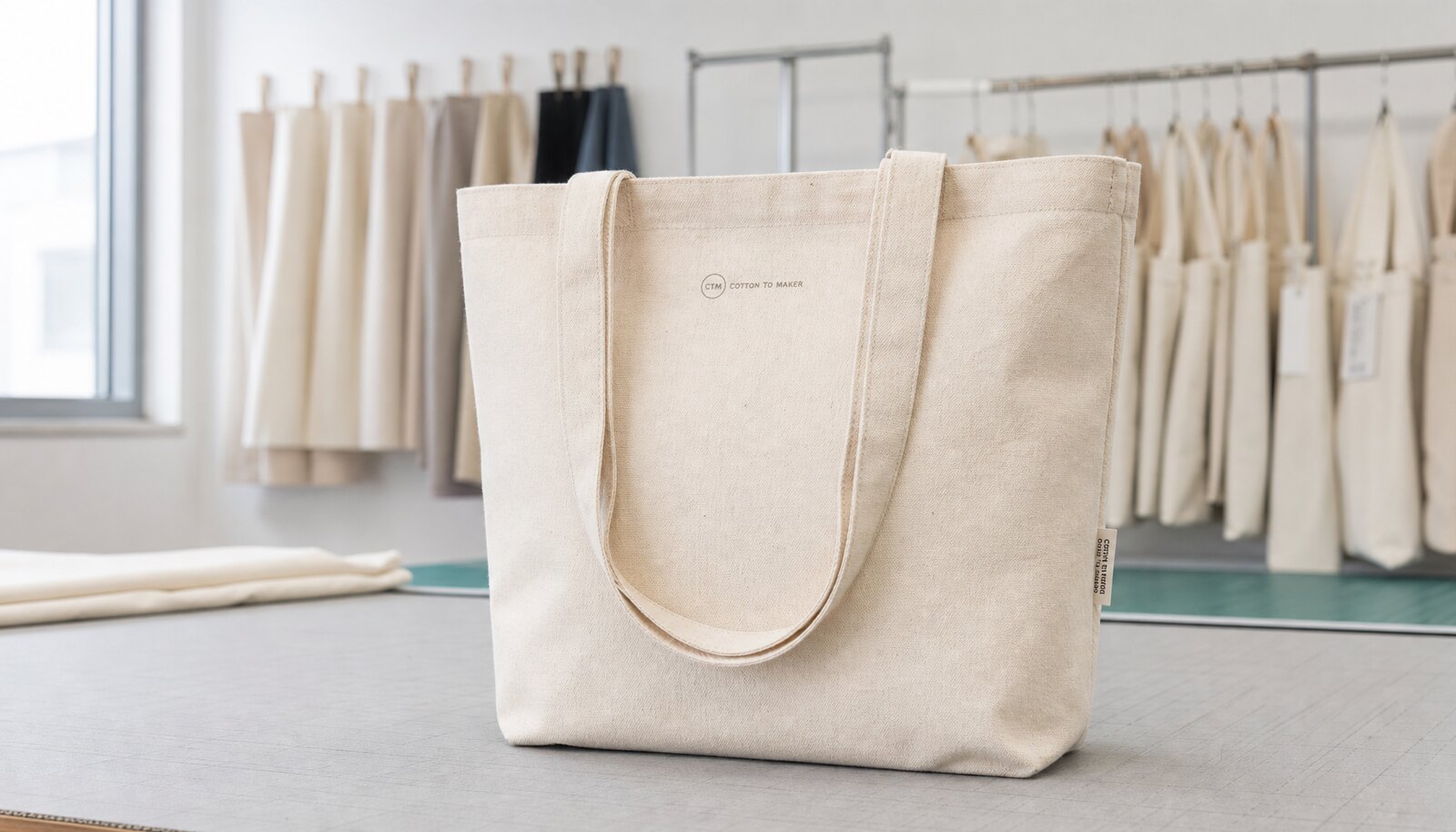
Canvas tote bags sound simple, but the spec changes the quote more than many buyers expect. A 10 oz canvas giveaway bag and a 14 oz retail-style tote are not the same product, even if the logo area looks identical. For most corporate events, 12 oz canvas is the most balanced starting point: it feels substantial, holds its shape better than lighter cloth, and still keeps sewing and freight costs under control. If the bag will carry catalogs, bottles, or boxed kits, move up to 14 oz or 16 oz and reinforce the handles and bottom seams.
Size and construction matter just as much as weight. A standard event tote might be around 38 x 42 cm with a 25 to 30 cm handle drop, but the right size depends on what the attendee must carry. If the tote is only for brochures and a small gift, a simpler open-top design is cheaper and faster. If the bag is meant to be reused after the event, add a gusset, inside binding, and bar-tacked handles. Those details increase sewing time, but they protect the brand impression when the bag is actually used in public.
- 10 oz to 12 oz: lighter giveaway use, lower cost, easier to pack.
- 14 oz to 16 oz: better for reuse, heavier contents, and a more premium feel.
- One-color print on one side is the easiest quote to compare; every extra placement adds setup and rejection risk.
- Confirm whether the factory uses screen print, heat transfer, embroidery, or woven label decoration before you review price.
MOQ logic: what actually moves the minimum
MOQ for custom canvas tote bags is usually driven by fabric width, print setup, cutting efficiency, and sewing line planning. A factory may accept a small order if the bag is simple and the artwork is one color, but the minimum rises quickly once you add multiple print positions, colored fabric, internal pockets, zippers, or premium finishing. The same supplier can quote two very different MOQs depending on whether your bag fits an existing cutting marker or requires a new one. That is why buyers should never compare MOQ as a standalone number.
The commercial question is whether your order sits inside the factory's normal production rhythm. If the design uses a standard body size and a plain logo, the factory can usually place it into a regular line with modest setup. If the order is split across several logo versions or multiple event dates, the MOQ may need to rise because the plant has to stop and change screens, threads, or cutting layouts. Buyers who understand this logic can often reduce risk by consolidating artwork versions, simplifying packaging, or accepting one standard size across several event groups.
- A single artwork version usually lowers the MOQ more effectively than pushing for a smaller quantity.
- One bag body color plus one print color is simpler than multiple body colors or mixed logo placements.
- If your event needs several versions, ask whether the factory can keep the same body spec and vary only the print.
Compare sourcing routes, not just factory prices
For event totes, the cheapest supplier on paper is not always the best sourcing route. Factory direct makes sense when the spec is clear, the order size is meaningful, and the buyer wants control over fabric, sewing, and print details. A trading company or sourcing agent is useful when the procurement team needs consolidation, multi-item coordination, or an extra layer of communication with the plant. A domestic decorator on imported blanks can be the right answer when the event date is too close for overseas transit, but that route usually gives up some control on fabric choice and cost.
The right route depends on how much of the risk sits in your artwork, your schedule, and your inventory plan. If the tote will be used once at a conference, it may be smarter to buy stock blanks and print locally. If the bag is part of a branded kit with longer shelf life, it is worth investing in a factory run with better handle reinforcement, tighter stitch control, and cleaner packing. The table below compares the main options buyers actually use, with the risks that matter in quote review.
How to read a quote line by line
A useful tote quote should separate the bag cost from the print cost, sample cost, packing cost, and any special carton or labeling charge. If the supplier gives only a single number, you cannot tell whether the good price comes from cheap fabric, a stripped-down construction, or an incomplete quotation that will change later. The most common mistake is assuming that a lower unit price means a lower landed cost. In practice, the hidden items are often the ones that push the order over budget: extra screens, special folding, carton marking, or freight because the supplier packed the bags inefficiently.
The best comparison method is to normalize the quote. Ask every supplier to quote the same canvas weight, the same size, the same handle length, the same print area, and the same packing count. Then compare setup fees, unit price, sample fee, and lead time as separate lines. If one factory is 8 percent higher on unit price but gives you cleaner packing, a faster sample, and fewer revision loops, that may still be the better buy. Procurement teams do themselves a favor when they compare total landed cost rather than chasing the lowest ex-works number.
- Ask for a separate line for print setup if the logo uses screens or plates.
- Ask whether the quote includes folding, polybag, desiccant, carton labels, or master carton marks.
- Make freight comparison easier by requesting carton dimensions and gross weight on the same sheet.
Sample approval should protect the bulk run
The sample is not just a visual approval. It is your chance to lock the construction that the factory will repeat under bulk pressure. A pre-production sample should show the final fabric weight, handle length, seam type, logo placement, and packaging method. If the sample is made from a lighter cloth, a different ink system, or a hand-sewn finish that the bulk line will not replicate, the approval is weak and the risk shifts to production. Buyers often lose time here because the sample looks acceptable but does not actually define the bulk standard.
A strong approval process checks both appearance and manufacturability. Measure the tote against the approved spec sheet, inspect the stitch line at the handle attachment points, and compare print registration on both sides if the design repeats. Look for fabric slubs, ink cracking at fold points, and shade variation between bags. For corporate events, the standard does not need to be luxury-grade, but it must be consistent. If the factory cannot keep the same logo location and handle reinforcement on the sample, do not assume the bulk will improve on its own.
- Require a signed sample or sealed reference sample before bulk cutting starts.
- Use the sample to confirm folding direction, carton pack count, and label placement.
- Reject samples that look right but use a different construction method than the planned bulk run.
QC thresholds that matter on event tote bags
Quality control for canvas totes should focus on the failure points that appear in use, not on cosmetic perfection alone. Handle stitches need enough density and bar-tack strength to survive a loaded bag being swung or set down repeatedly. Side seams should stay aligned so the tote does not twist under weight. Print alignment matters because a logo placed too high, too low, or too close to the seam looks careless even if the ink itself is fine. These are the defects that attendees notice and that brand managers remember after the event ends.
For a buyer, the QC standard should be specific enough that the factory can inspect to it and the receiving team can measure against it. State whether the bag is acceptable with minor thread ends, how much print misalignment is tolerated, and whether natural cotton shade variation is acceptable. If the order includes a premium logo treatment such as woven labels or embroidery, inspect thread tension, patch placement, and edge finishing. The goal is not to over-spec the bag into an expensive product. It is to define the failures that would make the tote look cheap or break early.
- Check handle stress points, seam consistency, and print registration on a random carton sample.
- Measure the bag body and handle drop against the approved drawing, not just the visual sample.
- Verify that bulk cartons are not overfilled, which can crease print and distort the tote shape.
Packing, carton marks, and event kitting
Packing can create avoidable cost if it is treated as an afterthought. A tote bag that looks fine in the sewing room can be damaged by a bad fold, an over-tight polybag, or a carton count that does not fit the shipping plan. For event buyers, the most useful packing method is usually simple and repeatable: the same fold, the same carton count, the same label position, and a carton size that stacks cleanly. If the bags are going straight into event kits, it may be smarter to skip individual polybags and pack by carton to reduce waste and labor. If the bags are going to retail partners or premium gift programs, individual protection may be worth the added cost.
Carton marks should support receiving, not create confusion. Put the SKU, color, size, quantity, and PO number on the master carton in a format the warehouse team can scan or read quickly. If the project includes multiple event cities or customer segments, ask the factory to pack by subdivision so the receiving team does not spend time sorting mixed boxes. This is where clear instructions save money: a slightly better carton plan can reduce labor on both ends of the shipment and lower the chance of distribution errors.
- Decide early whether individual polybags are required or whether bulk carton packing is acceptable.
- Keep carton counts consistent across the order unless freight or kitting needs a different split.
- Use carton labeling that matches the PO structure so warehouse teams do not have to re-sort the shipment.
Lead time risk: what changes the schedule
A realistic tote lead time depends on more than sewing days. The schedule can move when the factory waits for artwork approval, when screen setup takes longer than expected, when canvas stock needs to be dyed or reserved, or when the inspection team finds a problem that requires rework. For many buyers, the true risk is not the plant itself but the number of approval loops before production starts. A clean, complete RFQ reduces lead-time drift more than a late-night rush request does. If the event date is fixed, the buyer should lock the spec early and treat any later changes as schedule risk, not simple adjustments.
The safest planning method is to build lead time backwards from the event date and keep a buffer for freight or receiving. If the order needs sea freight, the production window matters, but so does port and inland timing. If the order must move by air or domestic courier to hit the date, freight cost can become the dominant part of the landed cost. Buyers who know this in advance can choose the right balance between production speed, order quantity, and shipment method instead of discovering the problem after the sample is already approved.
- Lock artwork, carton instructions, and shipment destination before the factory starts cutting.
- Build a buffer for sample approval, especially if the logo has multiple colors or exact placement requirements.
- Treat late spec changes as a schedule and cost change, not as a harmless revision.
Landed-cost comparison for corporate events
The quote that matters is the landed cost per usable tote at the event location. That number includes the bag, print, packing, inland movement, freight, duty if applicable, and any rework or rush charges caused by poor planning. Two suppliers can show similar ex-works prices and still land very differently once you account for carton efficiency and transport mode. A factory that packs 40 bags per carton instead of 25 may save freight even if the unit price is slightly higher. Likewise, a supplier with a cleaner sample process may cost less overall because it avoids a second proof cycle and a last-minute correction run.
For procurement teams, the decision should be tied to the event use case. If the tote is a mass giveaway, optimize for stable spec, predictable MOQ, and efficient freight. If the tote is a premium branded item, spend more on construction quality and sample control because the bag will stay in circulation longer and reflect the brand beyond the event. Buyers who define the use case clearly can compare suppliers on the right basis instead of chasing the cheapest quote line that does not survive the full route to the venue.
- Compare unit price, setup, packing efficiency, and freight together, not separately.
- Ask each supplier to state carton count and gross weight so landed-cost math is valid.
- Use the event date and the tote's intended use to decide whether savings or durability is the priority.
Specification comparison for buyers
| Spec decision | Recommended option | When it fits | Buyer risk to check |
|---|---|---|---|
| Factory direct for simple event totes | 12 oz canvas, 1-color screen print, standard handles | Best for repeat corporate events where price control matters and the artwork is stable | Confirm whether the factory quotes the bag, print, and carton cost separately so the unit price is comparable |
| Trading company or sourcing agent | Same 12 oz spec, but with a managed inspection and consolidation service | Useful when the buyer needs one contact for multiple factories or mixed SKUs | Watch for hidden margin layers and make sure the actual production factory is named on the quote |
| Domestic decorator with imported blanks | Stock blank canvas tote decorated locally | Fits urgent events or when the buyer needs a very low order quantity | Check blank-bag quality, print durability, and whether the blank stock can be replenished consistently |
| Heavy-duty premium corporate tote | 14-16 oz canvas, reinforced handles, bottom gusset, inside binding | Appropriate for gift kits, executive events, or reuse-heavy programs | Higher GSM changes cutting yield and sewing time; verify that the factory priced the same construction on every quote |
| Low-cost giveaway route | 10-12 oz canvas, single logo placement, no lining, no pocket | Works for large attendance events where the bag is a carry item, not a long-life gift | Do not let a cheap quote hide weak handles, thin weave, or inconsistent fabric shade |
| Complex full-color artwork | Heat transfer or digital transfer on smooth canvas | Best when the artwork has gradients, photos, or many colors | Ask for wash/rub test results and confirm the print area will not crack on folded seams |
| Sustainability-led sourcing route | Natural unbleached canvas with water-based print and minimal packaging | Fits brands that want a lower-impact look without moving to a different fiber family | Unbleached fabric can vary in shade; approve a physical shade band before bulk cutting |
| Deadline-driven event order | Stock fabric base with limited customization and consolidated packing | Use when the event date is fixed and there is little room for sample loops | Make sure the factory can lock production slots before you approve artwork and carton marks |
Buyer checklist before sampling
- Final artwork in vector format, with logo size, print position, and color reference stated in writing.
- Chosen fabric weight, usually 10 oz, 12 oz, 14 oz, or 16 oz, matched to expected load and reuse level.
- Target bag size, handle length, seam reinforcement, gusset depth, and any pocket or closure requirement.
- Agreed MOQ by color, by artwork version, and by packing format, not just one headline number.
- Sample approval method, including pre-production sample, print strike-off, and accepted tolerances for shade and stitching.
- Packing spec with polybag/no polybag decision, carton count, master carton mark, and pallet needs if relevant.
- Lead-time breakdown covering fabric purchase, print, sewing, inspection, and export booking or local delivery.
- Defect acceptance standard for stitching, print alignment, handle security, and fabric contamination.
Factory quote questions to send
- What is the MOQ by fabric weight and print method, and does it change if we use more than one logo color?
- Which cost lines are included in the unit price: fabric, cutting, sewing, print setup, packing, and carton charges?
- What is the exact production lead time after sample approval, and what parts of the schedule are most likely to move?
- Can you quote the same tote in 10 oz, 12 oz, and 14 oz so we can compare cost versus durability?
- How many sample rounds are included, and is the pre-production sample made on the same fabric and ink system as bulk?
- What carton pack count, carton size, and gross weight should we use for freight comparison?
- What defect rate or quality standard do you inspect to before shipment, and can you share the AQL level if used?
- If the event date slips, what is the factory's policy on holding goods, rescheduling sewing, or splitting shipments?
Quality-control points to confirm
- Fabric weight matches the approved spec within a reasonable production tolerance and is not substituted with a lighter cloth.
- Handle stitching, side seams, and bottom seams hold under load without skipped stitches, fraying, or crooked reinforcement.
- Print placement is centered or positioned exactly as approved, with clean edges and no bleeding into the weave.
- Color on the bag body and ink color are checked against the signed sample or reference standard, especially for natural canvas.
- Carton packing follows the agreed count, folding method, and label placement so event kits do not need rework.
- No oil marks, broken threads, needle damage, or fabric contamination appear on the visible surfaces.
- Pre-production sample and bulk production use the same construction details, not a lighter sample version and a changed bulk version.
- Carton drop and transit protection are adequate for the route, especially if the bags carry printed surfaces that can scuff.