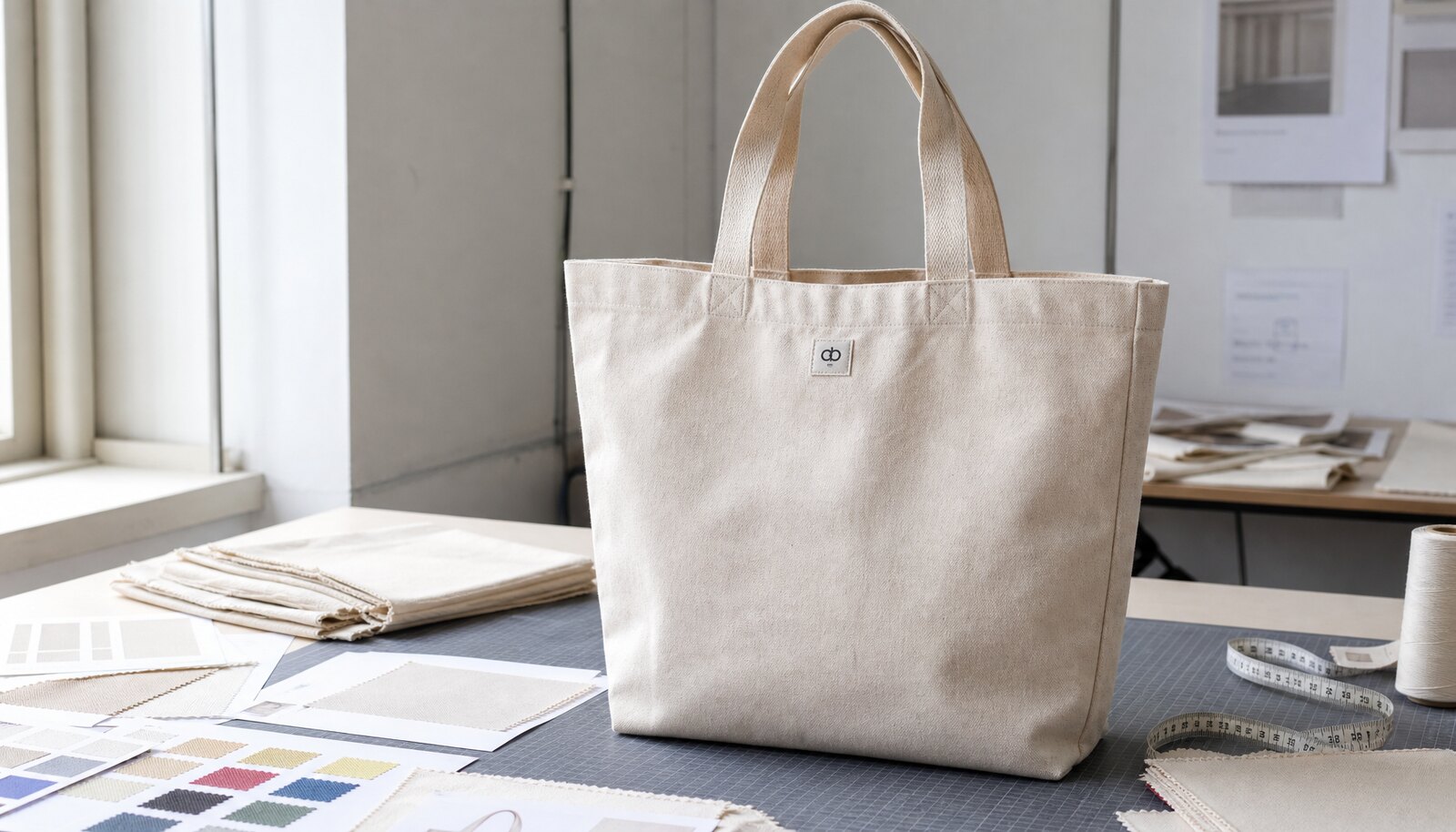
Start With the Coffee Use Case Before You Talk About Fabric
A canvas tote for a coffee brand is not a generic promotional bag. It may be used by baristas carrying retail orders, by customers buying bags of beans, by trade show visitors taking home brochures and samples, or by shoppers treating the tote as a daily carryall. Those use cases create very different requirements. A tote that is fine for a lightweight event handout may fail quickly once it starts carrying mugs, cans, or multiple coffee bags. The goal is not to buy the thickest fabric available; the goal is to buy the lightest spec that still performs for the real load and brand position.
That distinction matters because procurement teams often start with a slogan like premium canvas and then let the factory fill in the details. The result is usually an unhelpful quote spread, because each supplier interprets premium differently. One factory may mean 10 oz with a soft finish, another may mean 14 oz with reinforced handles, and a third may mean a washed fabric with a different feel and more shrinkage. Buyers should translate the use case into measurable specs: what will the bag carry, how often will it be reused, will it sit on retail shelves, and does the bag need to look structured or casual?
For coffee brands, the tote often performs a dual role. It must be useful enough to keep in circulation, but branded enough to act as a walking advertisement. That means the material decision affects not only durability but also print readability, shape retention, and how premium the product feels in hand. If the tote is part of a gift bundle, the bag may need to fold cleanly and pack efficiently. If it is sold as merch, it may need stronger seams, a better hand-feel, and a cleaner edge finish. Define the job first, then decide whether canvas is the right weight and finish for that job.
A practical internal brief should include the expected maximum load, the retail channel, and the desired life span. For example, a light in-store giveaway might only need to carry flyers and a coffee sample pack, while a retail tote might be expected to carry a 1 kg to 3 kg assortment on repeated trips. If the brand team and sourcing team do not agree on that load profile, the factory will guess, and the cheapest guess is rarely safe.
Useful buyer questions at this stage are simple and concrete: what is the bag supposed to carry on day one, what is it supposed to survive after 20 to 50 uses, and what visual standard does the brand need on a shelf or café counter? Once those answers are clear, the rest of the material selection becomes much easier to compare across suppliers.
- Retail merch: prioritize feel, shape, and print clarity.
- Event giveaway: prioritize low cost, fast production, and simple construction.
- Coffee subscription insert: prioritize flat packing and low cubic volume.
- Heavy carry tote: prioritize reinforced handles and stronger seams.
Choose Canvas Weight by Real Load, Not by Marketing Labels
Canvas weight is one of the most important procurement variables because it shapes durability, print behavior, sewing difficulty, and freight cost. Yet it is also one of the most inconsistently described. Some suppliers quote ounces, some quote GSM, and some use words such as heavy or thick without stating the actual finished fabric weight. That makes direct comparison difficult. Buyers should insist on a defined measurement basis: finished fabric weight, not just a rough description. If the supplier cannot say whether the number refers to greige fabric or finished canvas, the quote is not yet procurement-ready.
For most custom canvas tote bags for coffee brands, the practical range usually sits between 10 oz and 16 oz, with 12 oz to 14 oz covering the broadest retail needs. Ten-ounce canvas is usually easier to fold, lower in cost, and suitable for lighter merchandise, but it may feel too casual for premium retail and may show more distortion at the handle join. Twelve-ounce canvas is often the best middle ground for coffee shop retail because it has enough body to look intentional without making the tote overly stiff. Fourteen-ounce canvas adds better shape retention and a more premium presence on the shelf, though sewing time and freight weight rise with it. Sixteen-ounce canvas is more of a premium durability choice and should be justified by the product’s carrying load or retail positioning.
The key procurement question is not which weight is best in the abstract. It is which weight fits the intended load, decoration method, and merchandising channel. If the bag will mainly hold light items and needs to ship in compact cartons, a lower weight may be sensible. If it will carry bottles, ceramic cups, or multiple retail items, the buyer should move up the weight range and require stronger construction details. A bag that is too light may save a small amount on source price but create hidden costs through returns, complaints, and short usable life.
When comparing bids, ask suppliers to quote the same finished weight and the same finishing state. A washed 12 oz canvas may behave very differently from an unwashed 12 oz canvas. A factory that says 12 oz without clarifying finish, shrinkage, or weave density is giving you an incomplete spec. For buyer decisions, fabric weight should never stand alone. It needs to be paired with seam reinforcement, handle size, and packing format so the tote performs as a system rather than as a fabric sample.
- 10 oz: lower cost, softer drape, suitable for light merchandise and giveaways.
- 12 oz: balanced option for shelf-ready retail and everyday café carry.
- 14 oz: better shape retention, better perceived value, and stronger load handling.
- 16 oz: premium and durable, but heavier cartons and slower sewing.
Compare Weave, Fiber Content, and Finish as a Single Material System
A canvas tote can share the same weight on paper and still feel completely different in the hand. The reason is weave density, fiber content, and surface finish. A tighter plain weave usually gives better print clarity, cleaner panel appearance, and better shape control. A looser weave may feel bulkier but often allows more ink sink and greater visual variation. For coffee brands that care about a clean, premium presentation, the surface needs to support the artwork as much as the stitching supports the load.
Fiber content changes both performance and documentation. 100% cotton canvas is straightforward for sewing and print control and usually gives a familiar natural look. Recycled cotton or recycled blends can support sustainability messaging, but the buyer should expect more variation in shade and surface texture and should ask how the supplier defines recycled content. Organic cotton adds another layer: the supplier needs to show documentation that ties the claim to the actual lot being supplied, not just to a general catalog statement. If those documents are not available, the bag may still be perfectly serviceable, but the buyer should not build a regulated or premium claim around it.
Finish is equally important. Unwashed or lightly finished canvas usually feels crisp and ships flat, which helps efficiency and cost control. Washed or garment-washed canvas gives a softer hand-feel and a more lifestyle-oriented look, but it can introduce shade tolerance issues, fabric twisting, and shrinkage risk. That can be acceptable if the brand image justifies it, but it should be clearly approved before bulk. In other words, the finish should support the merchandising story rather than accidentally creating a quality problem.
For procurement, the safest approach is to treat weave, fiber, and finish as one system. Do not choose a recycled content route without asking about weave stability. Do not approve washed canvas without checking print coverage and shrinkage. Do not choose a natural-looking raw finish without checking whether surface lint or dust will interfere with retail presentation. The material is not just the base cloth; it is the combined behavior of the cloth, the finish, and the decoration method on top of it.
If the bag is intended for a coffee brand with a clean specialty aesthetic, the buyer should lean toward an even weave, controlled finishing, and a surface that prints sharply. If the brand wants a softer artisan feel, a washed or slightly textured canvas may be appropriate, but the acceptance criteria must be written more carefully. The material decision is ultimately a balance between appearance, consistency, and the amount of control the buyer can realistically enforce in production.
- Tight weave: better print definition and cleaner retail presentation.
- Looser weave: lower cost, but more texture variation and more ink sink.
- Recycled or organic route: better story, but higher documentation discipline.
- Washed or garment-dyed canvas: softer look, but a wider shade tolerance window.
Use a Material Comparison Table That Actually Helps You Decide
When buyers compare canvas options, the most useful comparison is not supplier model A versus supplier model B. Procurement needs a product-level matrix that shows how the material itself changes the bag’s performance. Start with three decisions: weight, weave, and finish. Then layer decoration and construction on top. That structure helps the buyer see where a small material change creates a large downstream cost or quality shift.
A useful example is the difference between a 10 oz plain canvas tote and a 14 oz washed canvas tote. The lighter bag may print easily, ship cheaply, and work well for gift use. The heavier washed bag may sell better at retail, but it can also introduce more handling variation, more shrinkage risk, and a higher freight cost. Without a structured comparison, teams often choose based on sample feel alone. A sample feels good in the hand, but the buyer needs to know what happens in a carton, on a pallet, and after repeated use.
The table below is a procurement-oriented material comparison. It is not meant to replace testing, but it does make supplier discussions more efficient because it ties the bag choice to expected performance and risk.
- Use the table to compare material behavior, not supplier names.
- Keep the same size and decoration assumptions when comparing options.
- Treat shrinkage, print definition, and freight weight as part of the material decision.
- If the brand needs claim support, add documentation status as a separate line item.
Pick the Print Method After the Fabric Is Locked
The decoration method should be selected after the material spec is established, not before. That sounds obvious, but in practice many buyers choose a print style from a design deck and then discover that the fabric cannot hold the result cleanly. Screen printing remains the most practical choice for many coffee-brand totes because it scales well, handles simple logos efficiently, and usually gives a durable finish on canvas. It is especially strong when the artwork uses one or two colors, large shapes, and clear brand marks.
The main thing procurement should check is print coverage relative to the canvas texture. A coarse or loosely woven surface can make solid blocks look uneven, especially on darker fabrics where ink opacity matters. Fine typography and small registration marks also become more sensitive on rough canvas. If the artwork relies on thin strokes, the buyer should request a strike-off or proof that is produced on the actual canvas weight, not on a different blank substrate. That proof is more meaningful than a digital image because it shows how the ink sits, how edges behave, and whether the design stays readable after curing.
Embroidery can work when the brand wants a small premium mark, but it is not automatically better. It adds stitch density, backing material, and potential puckering on lighter canvas. Woven labels or sewn labels can be excellent for minimal branding because they hold detail cleanly and create a quieter premium look. Heat transfer or DTF can be acceptable for certain short runs or more complex artwork, but buyers should check whether the finish feels appropriate for a canvas tote intended for repeated daily use. The right print method is not the one that looks best in a mockup. It is the one that survives the expected handling pattern while still matching the brand’s visual tone.
For coffee brands, the decision usually comes down to a balance between durability and brand expression. If the tote is a high-volume retail staple, keep the decoration simple and durable. If it is a limited seasonal item or a premium gift, you can afford more nuance, but you should still insist on a production-relevant proof and a clear acceptance standard for color, position, and cure quality.
- Screen print: best for simple logos, repeat volume, and durable branding.
- Embroidery: useful for small marks, but heavier and more expensive.
- Woven or sewn label: good when the design should stay subtle and premium.
- Heat transfer or DTF: acceptable only when the wear profile and hand-feel are acceptable for the brand.
Specify Construction Details That Prevent Late-Stage Quality Problems
Construction is where many tote programs succeed or fail after the fabric has already been chosen. Two bags made from the same canvas can perform very differently if one has a poor seam allowance, weak handle attachment, or inconsistent top hemming. Buyers should treat construction as part of the material specification, not as an afterthought. A tote that looks clean on a table can still fail in use if the load-bearing points are underbuilt or the gusset is cut unevenly.
The first detail to lock is the handle system. Handle width affects comfort and stress distribution; handle length affects shoulder carry and hand carry; handle attachment method determines how force is transferred into the body. For coffee-brand totes that will be used repeatedly, the join should be reinforced with a boxed stitch or a bar tack at the load point. If the supplier only says strong handle without describing the stitch structure, the buyer does not yet have a usable spec. The same logic applies to top hems, side seams, and gussets. These are not decorative details. They are the points where the bag will fail if the construction is thin.
Another important point is dimensional control. A tote that is supposed to fit a retail insert or shelf display needs to be cut and sewn with enough consistency to fit the intended pack-out. A wider gusset than expected can change the folded size and carton density. A shorter handle drop can make the bag awkward for shoppers. A loose top hem can pucker after pressing and make the whole product look less premium. Ask the supplier how they measure each critical dimension and what tolerance they use for body width, body height, gusset depth, and handle placement.
If the bag is designed for daily carry, add a load test to the approval process. The bag should be filled to an agreed weight and held long enough to show whether the handles stretch, whether the seams open, and whether the body distorts permanently. This is one of the easiest ways to separate a marketing sample from a production-ready tote. It also helps the sourcing team discuss quality with the factory in measurable terms rather than subjective language.
- Require reinforced handle attachment, not just a decorative stitch.
- State seam allowance and ask how the factory measures it during cutting and sewing.
- Check gusset symmetry so the bag stands and folds consistently.
- Include a filled-load test at an agreed weight before bulk release.
Read Supplier Quotes as a Material Package, Not a Unit Price
A quote for custom canvas tote bags for coffee brands is only useful if it shows what the supplier is actually offering. A low unit price can hide lighter canvas, weaker handles, smaller print coverage, or less protective packing. A higher unit price can still be the better buy if it includes stronger fabric, cleaner sewing, tighter inspection, and a more reliable export pack. Procurement teams should compare the full package, not just the headline number.
The easiest way to make quotes comparable is to require a line-by-line breakdown. Ask the supplier to separate fabric, cutting, sewing, printing, labels, packing, and freight assumptions. Then make sure all bidders are quoting the same finished size and the same unit of fabric weight. If one supplier gives a 10 oz fabric quote and another gives a 12 oz quote, the lower number is not actually cheaper in a useful sense. It is a different product. The same applies to decoration. One-color screen print and two-color screen print are not comparable unless the quote states whether setup charges, plate costs, and print area are the same.
This is where many coffee brands overpay later. They accept a sample that looks good, only to find that the quote omitted carton marks, inner packing, or an extra reinforcment step that appears on the bulk invoice. To avoid that, the RFQ should force the supplier to name the exact packing format and the exact QC standard. If the supplier wants to change the spec to lower the price, that change should be visible in the quote so the buyer can judge whether the trade-off is acceptable.
A good procurement habit is to treat the quote as a material and construction package with risk attached. If a supplier quotes a lower-cost loose weave and the bag requires extra inspection to remove obvious defects, the true landed cost may be higher than a tighter weave that runs cleanly. If the bag is likely to be sold at retail, buyers should also consider the cost of shelf presentation and customer perception. The cheapest tote is not always the best margin decision once returns, rework, and brand impact are included.
- Fabric weight and finish
- Number of print colors and print area
- Handle length, width, and reinforcement
- Packing format and carton count
- Lead time and sample cost
- Freight assumption and incoterm
Build the RFQ So Suppliers Quote the Same Bag
A strong RFQ removes ambiguity before the supplier starts pricing. If you send only a logo file and a target quantity, each factory will fill in the blanks differently. One may assume a lighter canvas, another may use a narrower handle, and a third may pack the bag in a simpler way than your warehouse expects. The result is a set of quotes that cannot be compared accurately. For procurement buyers, the RFQ should function like a technical spec sheet, not a marketing request.
Include the finished dimensions, the canvas weight, the weave or finish, the print method, the handle details, and the exact packing format. If the bag has a gusset, state the gusset depth and whether it must stand upright. If the bag will be sold with coffee beans or a gift set, make that load profile visible. If the brand wants a natural, unbleached look, say whether shade variation is acceptable and how much. If the buyer needs a specific color, attach a physical reference or a standard such as a lab dip target. The supplier should know what is fixed and what can be optimized.
The best RFQs also state the unacceptable outcomes. If the bag must fit inside a retail sleeve or display box, specify the folded dimensions. If the bag must not bleed ink onto adjacent fabric, state the print durability expectation. If the brand needs a clean face panel, say that slubs and visible weave distortion are not acceptable in the main print area. These instructions save time because the factory can price to the actual requirement instead of guessing at the quality level the buyer wants.
A practical RFQ structure for coffee-brand totes should include three blocks: product dimensions, material and decoration specs, and packing/QC requirements. That structure works because it mirrors how the factory actually manufactures the bag. It also makes it easier to compare quotes from different suppliers and easier to control reorders later. Once the RFQ is clear, the supplier can give a realistic price instead of a broad estimate that gets revised after sample review.
- Finished dimensions with tolerance.
- Canvas weight in oz or GSM, stated as finished fabric weight.
- Handle length, drop, width, and reinforcement method.
- Decoration method, placement, and color count.
- Carton pack count, barcode format, and export packing notes.
Approve Samples Against Measurable Tolerances, Not Just Appearance
Sample approval is where the buyer converts a design into a production standard. A sample that looks attractive is not enough if the factory cannot reproduce it at volume. The pre-production sample should be treated as the control sample for fabric, stitching, print placement, and packing. If the sample uses a different fabric lot, that must be recorded, because a lot change can affect hand-feel, color, and shrinkage. The point is not to make the sample perfect; the point is to make the bulk order repeatable.
To keep approval practical, use measurements and observations that the factory can reproduce. Measure width, height, and gusset after pressing the sample flat. Check whether the print is square to a seam reference line. Load the bag with a realistic weight and inspect handle pull, seam strain, and body deformation. If the tote is washed or steam pressed as part of your testing, note whether the fabric twists, whether the print cracks, and whether the dimensions change beyond the allowed range. These observations are far more useful than saying the sample looks better or feels nicer.
A clean approval process should also document what is acceptable and what is not. For example, slight shade variation may be acceptable on unbleached natural canvas, but panel mismatch on the face of the bag may not be. A small tolerance in print placement may be acceptable if the logo is visually centered, but a shifted print near the edge of the panel may not be. Put these points in writing before bulk cutting starts, because the factory will use the written approval as the production reference.
If the buyer wants to reduce risk further, request one more step before release: a top-of-line check on the first few dozen units or first completed carton. That early inspection catches issues before the whole lot is sewn. It is especially valuable when the bag includes a new weave, a new wash treatment, or a first-time print method. Sample approval is not just a design milestone. It is the moment when sourcing and quality control become one decision.
- Measure width, height, and gusset after pressing flat.
- Load the bag with realistic weight and inspect handle pull and seam stress.
- Compare print color against the approved reference under daylight and indoor lighting.
- Record acceptable variation in writing before bulk approval.
- Do not release production based on a photo alone.
Plan Packing So the Totes Arrive Clean, Flat, and Saleable
Packing is often treated as a logistics detail, but for canvas totes it directly affects condition on arrival and the cost to warehouse or retail the product. A tote can be sewn correctly and still arrive looking poor if it is packed loosely, compressed badly, or exposed to dust and rubbing in transit. If the bag is meant for retail shelves, the folding method, inner pack count, and carton structure all influence how the product presents when opened. For coffee brands, that matters because the tote often sits beside premium beans or gift merchandise and needs to feel consistent with the brand.
The buyer should specify the packing format in the RFQ rather than leaving it to the factory’s standard. Decide whether each tote needs a polybag, whether the bag should be folded face-in or face-out, whether an insert card is required, and how many units belong in each inner pack and master carton. If cartons will be stacked in a warehouse or shipped long-distance, ask for the carton grade and a gross weight estimate so freight and receiving can be planned accurately. Even a small change in folded dimensions can alter carton counts and pallet density.
This is also where barcode and label discipline matters. If the tote is going into a retail system or a warehouse that uses SKU-based receiving, the carton marks should match the item code, size, color, and pack quantity exactly. Mismatched carton labeling creates avoidable delays at receipt. If the product is seasonal, the buyer should also think about dust protection and shelf readiness. A simple polybag may be enough for some channels, but premium retail sometimes needs a cleaner first impression.
One practical tip is to request a carton mock-up or packing photo before the full production shipment is built. That lets the buyer confirm the fold, the placement of the print, the count per carton, and the label layout before freight leaves the factory. It is a small check that prevents a lot of warehouse frustration later.
- Specify polybag or no polybag based on retail presentation and dust risk.
- Set a folded size target if the tote must fit shelves, kits, or inserts.
- Ask for carton dimensions and gross weight before freight booking.
- Use SKU-matched carton labels and barcode placement.
- Check that packing protects the print face from abrasion.
Specification comparison for buyers
| Spec decision | Recommended option | When it fits | Buyer risk to check |
|---|---|---|---|
| Fabric weight | 10 oz to 12 oz finished canvas | Retail giveaways, coffee subscription inserts, and low-load merch | Confirm the supplier is quoting finished fabric weight, not greige weight or a broad estimate |
| Fabric weight | 12 oz to 14 oz finished canvas | Most coffee retail totes, everyday carry, and gift bundles | Check whether the heavier fabric changes seam allowance, fold size, and carton count |
| Fabric weight | 14 oz to 16 oz finished canvas | Premium retail, mugs, bottled drinks, and heavier shopping use | Verify sewing speed, carton weight, and freight cost before locking the spec |
| Weave density | Tighter plain weave with even surface | When print clarity, shelf presentation, and shape retention matter | Inspect for thin bars, slubs, broken yarn lines, and panel-to-panel texture mismatch |
| Weave density | Moderately open weave with softer hand-feel | When price sensitivity is higher and the bag will carry lighter items | Check whether the print sinks too deeply or appears uneven across the panel |
| Fiber content | 100% cotton canvas | When you need predictable sewing, print behavior, and a clean natural look | Confirm shrinkage behavior, dye lot consistency, and whether the natural color is bleached or unbleached |
| Fiber content | Recycled cotton or cotton blend canvas | When sustainability messaging matters and buyers accept some variation | Ask for claim support, lot traceability, and a clear definition of recycled content |
| Fiber content | Organic cotton canvas | When the brand needs documentable fiber claims and premium positioning | Verify certificate references, transaction records, and scope for the actual lot being supplied |
| Finish | Unwashed / raw finish | When the bag should feel crisp, ship flat, and stay cost-controlled | Check initial odor, surface dust, and whether finishing starch affects print adhesion |
Buyer checklist before sampling
- Define the use case first: retail merch, tasting-room giveaway, coffee subscription insert, or everyday shopping tote.
- Write the finished size in millimeters or inches, then add an acceptable tolerance for width, height, and gusset.
- Specify canvas weight as finished fabric weight in oz or GSM, and state whether the supplier must quote the same unit across all bids.
- Choose cotton, recycled cotton, organic cotton, or a blend only after you decide how much variation you can accept in color and surface texture.
- Require the supplier to identify the weave type, finish, and any wash treatment used on the canvas.
- Match the print method to the artwork and volume: screen print for simple logos, embroidery or woven labels for premium minimal branding, and transfers only when they are truly appropriate.
- State handle length, handle width, fold direction, top hem allowance, seam reinforcement, and any gusset requirement.
- Request production sample approval, not just a digital mockup, before cutting bulk fabric.
- Ask for the exact packing format: units per inner pack, units per carton, polybag use, desiccant use, and barcode placement.
- Collect a landed-cost quote that separates fabric, sewing, printing, packaging, inspection, and freight assumptions.
Factory quote questions to send
- What canvas weight are you quoting as finished fabric weight, and can you state it in both oz and GSM?
- What weave count or weave density can you guarantee, and how do you inspect for slubs, thin bars, or broken yarn lines?
- Is the canvas bleached, unbleached, washed, or garment-washed, and how much shade variation should we expect across production lots?
- What shrinkage range should we expect after steam pressing, handling, or washing, and what test method are you using?
- Is the bag cut and sewn from one fabric lot, and if not, how do you manage shade banding between lots?
- Which print method are you quoting, how many colors are included, and what is your pass rate for fine text or thin line work?
- What are the handle width, handle length, and handle drop, and what reinforcement do you use at the attachment points?
- What stitch density or SPI do you use on load-bearing seams, and what is your seam allowance on the body and gusset?
- What dimensional tolerances do you apply to finished width, height, gusset, and print placement?
- Can you provide a pre-production sample or size-approved sample before bulk sewing starts, and how long will approval take?
Quality-control points to confirm
- Fabric weight should match the approved sample and written spec within a stated tolerance, such as ±5% unless your program requires tighter control.
- Weave should be even across visible panels, with no obvious thin bars, weave distortion, or broken yarn lines in the retail face area.
- Finished dimensions should stay within the approved tolerance after pressing flat; if the bag is intended to stand upright, check base symmetry as well as width and height.
- Handle stitching should be straight, dense, and reinforced at the join; bar tacks or boxed reinforcement should not be frayed, skipped, or offset.
- A filled-load test should be performed at an agreed weight, and the handles should not show visible elongation, seam opening, or stitch breakage after the hold period.
- Print should be centered, aligned to the seam reference point, and free from smears, pinholes, haloing, or weak ink coverage.
- If the artwork includes fine type or thin lines, require a strike-off or sample proof under daylight and indoor lighting before approving bulk.
- Color should be checked against the approved reference under at least two lighting conditions, not only under factory lighting.
- Shading between panels should be acceptable only if it is written into the approval sheet; if not, reject obvious panel mismatch on the face of the bag.
- Top hem, gusset joins, and corner finishing should lie flat without puckering, twisting, or raw-edge exposure.