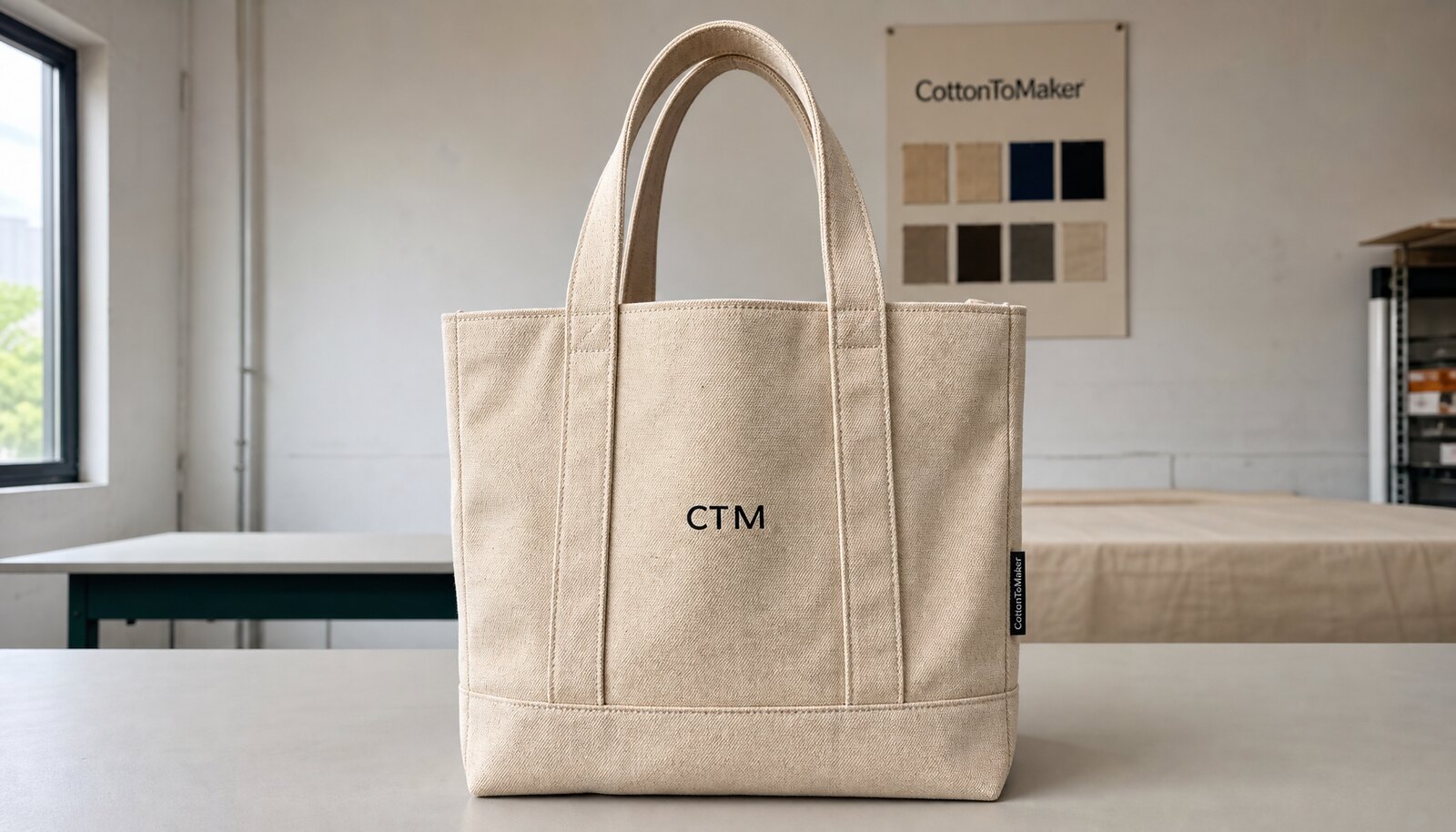
Why Charity Tote Reorders Go Wrong
A charity campaign tote is rarely a one-time purchase. The first run usually looks simple: one logo, one bag size, one event. The reorder is where teams lose time and margin. Artwork gets revised, the original supplier forgets the exact fabric, and the next quote comes back with different assumptions on print, packing, or carton size. If the buying team cannot compare the new quote to the first run, the reorder becomes a new sourcing project instead of a controlled repeat order.
The fix is to treat the tote like a controlled product, not a generic giveaway. Freeze the bag spec, keep a sample reference, and record the details that actually drive cost and quality: fabric weight, handle construction, print method, pack format, and freight method. Once those elements are locked, the reorder becomes a small number of decisions rather than a full requalification.
- Keep one approved physical sample from the first campaign and label it with date, supplier, and order reference.
- Record the exact bag size, fabric weight, handle length, and print placement in a shared spec sheet.
- Use the same artwork version for every reorder unless the buyer deliberately changes the campaign message.
Freeze the Base Spec Before You Compare Quotes
For charity campaigns, the best starting point is usually a plain cotton canvas bag in the 10 to 12 oz range, or about 340 to 400 GSM, if the goal is broad distribution and controlled cost. That level is strong enough for literature, event handouts, and small merchandise without making the bag overly heavy to ship. If the campaign has donor value, retail value, or repeated reuse expectations, move into 12 to 16 oz canvas, or roughly 400 to 540 GSM, and expect higher sewing and freight cost because the bag carries more material weight.
Do not compare supplier quotes until the bag construction is fixed. A quote for a flat tote with long self-fabric handles is not comparable to a gusseted tote with webbing handles and a boxed bottom. Those differences affect fabric usage, stitching time, scrap rate, and carton cube. If you want quote data that can actually be compared, put the same base spec in front of every supplier and require them to quote against it line by line.
- State the target GSM or oz weight and the acceptable tolerance in the RFQ.
- Define whether the bag is flat, gusseted, boxed-bottom, or reinforced at the base.
- Write the handle material, handle length, and handle drop into the spec sheet.
Choose Fabric Weight and Construction for the Campaign Use
A charity tote is judged on utility, not only appearance. If it will hold brochures, a shirt, a small bottle, and sponsor materials, a 10 oz canvas can be enough, but only if the handle stitching and seam allowance are well controlled. For heavier donor kits, book bundles, or resale at a merch table, 12 oz or above is the safer choice. Buyers often under-spec the fabric to save cents, then pay for complaints when the bag feels flimsy or loses shape after a single event.
Construction details matter as much as weight. A lighter canvas with poor stitching is worse than a slightly heavier canvas with stable seams. Ask for consistent stitching density, reinforced handle attachment, and clean cut edges that do not unravel during packing. If the bag needs to stand upright on a table or in a retail display, confirm that the base width and gusset design support that use case. The right construction reduces replacements, returns, and campaign-day failures.
- 10 to 12 oz canvas works for high-volume giveaways and mailing kits with moderate load.
- 12 to 16 oz canvas is better for retail-facing charity merchandise or donor packs.
- Ask the factory for handle pull-test logic or internal reinforcement details if the bags will carry heavier loads.
Select the Print Method Around Reorder Stability
Most charity tote orders should start with the print method, not the artwork fantasy. If the design is a simple logo or one to two solid colors, screen print is usually the most stable and cost-efficient route for repeat runs. It is easier to control on canvas, and the same screens can often be reused for later campaigns if the art does not change. For clean line art on natural canvas, screen print also gives a more predictable result than decorative methods that depend on special films or heat settings.
Complex campaign graphics can justify DTF or another transfer method, especially when the order is small or the turnaround is tight. The tradeoff is durability and hand feel. On rough canvas, low-quality transfers can lift at the edges or look glossy in a way that feels off for a charity brand. If you choose a non-screen method, force the supplier to show a sample after folding, packing, and a short handling test, because a bag that looks fine flat on a table can fail once it is distributed.
- Use screen print for stable art, repeat campaigns, and lower per-unit print cost at volume.
- Use transfer methods only when artwork complexity or time pressure justifies the risk.
- Require print placement tolerances and a cure standard in the sample approval step.
Read the Quote Like a Procurement Document
A useful quote for custom canvas tote bags for charity campaigns should be broken into the parts that move cost and risk. The supplier should state fabric weight, bag dimensions, handle construction, print method, unit packing, carton packing, and lead time after sample approval. If those items are hidden inside one line, you cannot compare two suppliers or see where a later change will add cost. In repeat campaigns, quote structure matters as much as unit price because it tells you what can be held constant across reorders.
The supplier should also specify what is excluded. Freight, customs, carton labels, barcode application, and warehouse relabeling are often left out of a quick quote. That creates false price comparison. For charity programs, the low quote often wins the first round and loses later when the team discovers extra charges for packing, revisions, or split shipments. Quote data should be usable for a landed-cost comparison, not just for a headline price review.
- Require separate lines for blank bag cost, print cost, packing cost, and freight if applicable.
- Ask whether the quote assumes first sample, pre-production sample, and bulk sample approval are included.
- Confirm whether the quoted lead time starts after artwork approval or after deposit and sample sign-off.
Use MOQ Logic Instead of Guessing the Reorder Size
MOQ should be driven by campaign math, not supplier pressure. Start with the planned event volume, add distribution loss, and then add a reserve for damaged units, late additions, and replacement requests. If you know the charity will run multiple events or regional activations, the reorder should include buffer stock or a second release batch rather than a single large shipment with no margin for error. The right MOQ is the smallest quantity that still protects the campaign from stockouts and rework.
Be careful with the break price. A lower unit price at a higher quantity may look attractive, but it becomes a mistake if the charity has no storage space or if the artwork is likely to change before the next campaign. It is usually better to buy enough for the confirmed event window plus a modest reserve than to chase a larger break and sit on obsolete inventory. For recurring campaigns, track actual issue rate from the first run and use that to set the next reorder, not a guess.
- Base reorder quantity on confirmed attendance or donor kit count, not on a round number.
- Add reserve stock only where it can realistically be used before the artwork changes.
- Ask the factory what price break occurs at the next tier and whether tooling or screen costs are reusable.
Control Samples Before You Release Bulk Production
Sample approval is where many charity bag orders save or lose the budget. A signed sample should confirm the fabric feel, bag dimensions, handle length, print placement, and general finish. If the factory cannot provide an accurate sample from the same or equivalent fabric, the reorder should stop until the substitution is clear. A hand-cut sample on unknown fabric is not a reliable proxy for bulk goods, especially when the campaign depends on a specific look or load-bearing use.
Treat the pre-production sample as the last chance to correct errors without turning the entire order into a rework. Inspect the sample under the same conditions it will face in the campaign: folded, stacked, packed, and handled. Check whether the print lines up with the seam, whether the bag closes flat, whether the handles sit evenly, and whether the fabric holds its shape. Once bulk sewing starts, those details become expensive to fix.
- Keep one signed sample and one reference photo set with front, back, side, and close-up views.
- Measure at least a few sample bags rather than accepting a visual approval only.
- Reject any sample with print shift, weak handle attachment, or obvious fabric inconsistency.
Plan Packing for the Real Distribution Route
Packing should follow the campaign route, not the factory habit. If the bags go to a warehouse, bulk packing in master cartons is often the right choice because it lowers labor and keeps the cube efficient. If the bags go straight to donor kits or retail shelves, individual polybags with barcodes and inserts may be worth the extra cost. What matters is whether the final pack format matches how the charity team will receive, count, and distribute the goods.
Packing mistakes are common on tote reorders because teams assume the factory will pack the same way it did last time. That is not safe. Define inner pack count, carton count, carton labels, and any mixed-size rules in writing. If the order contains multiple colors or sizes, ask how the factory separates them during packing and whether carton-level labeling will survive transfer, customs inspection, and warehouse receiving. A good bag can still create a warehouse problem if the pack logic is sloppy.
- State whether cartons need campaign labels, size labels, or destination labels.
- Confirm if individual polybags are necessary or if dust-free bulk packing is enough.
- Ask for carton dimensions and gross weight before freight booking.
Manage Lead Time and Buffer Stock Like a Reorder Program
For repeat charity campaigns, the lead time question is not only how fast the supplier can sew. The real schedule includes artwork finalization, sample approval, production queue time, inspection, packing, and inland freight. A reorder plan should leave room for at least one correction cycle if the sample or pre-production check fails. If the event date is fixed and the bags are part of a kit, the project should be scheduled backward from the distribution date, not from the order placement date.
Buffer stock is the best insurance against last-minute campaign changes, but only if the reserve is controllable. Keeping a small reserve at the factory can work when the same bag will be used in a later release, but it requires a written hold period and clear release instructions. If the campaign artwork changes frequently, avoid overbuying. It is better to split the order into a confirmed wave and a follow-on wave than to hold obsolete bags that no longer fit the next event.
- Schedule sample approval before the production slot is booked, not after.
- Leave time for inspection and corrective sewing if the first bulk lot shows defects.
- Use staged release only when the supplier can store finished goods under clear terms.
Use Landed-Cost Thinking Instead of Headline Price
A tote reorder can look cheap until the true landed cost is built. The buying team should add product cost, print cost, packing cost, export carton cost, inland freight, customs handling, and any local receiving or relabeling work. For charity campaigns, that full cost matters because the bag is usually part of a broader donation or event budget. If one supplier is cheaper on unit price but forces a more expensive freight cube or extra local packing, the apparent saving may disappear.
The clean way to compare suppliers is to hold the spec constant and then compare the total delivered result. If a factory offers a slightly higher unit price but includes better packing, lower defect risk, and a more stable lead time, that may be the better buying decision. Buyers should score each quote on consistency, transparency, and delivery fit, not only on the front-page number. That is the difference between a one-off purchase and a repeatable sourcing program.
- Compare quotes on total landed cost, not only ex-factory price.
- Count the cost of rework, reprint, relabeling, and delayed distribution.
- Prefer the supplier that can repeat the same spec without rewriting the whole order each time.
Specification comparison for buyers
| Spec decision | Recommended option | When it fits | Buyer risk to check |
|---|---|---|---|
| Sourcing route | Use the same cut-and-sew factory that made the first run | The charity campaign repeats the same logo, same bag size, and same packing method | Confirm the factory still has the same pattern, print screens, and approved shade reference |
| Sourcing route | Buy blank stock totes and print locally | Small reorders with a tight event deadline and no need for sewn customization | Check blank lot variation, print placement tolerance, and whether the blank bag weight is consistent across cartons |
| Fabric weight | 10 to 12 oz canvas, about 340 to 400 GSM | Large giveaway volumes where unit cost matters more than a premium hand feel | Make sure the fabric is not so thin that handles distort, seam pucker shows, or the bag collapses under literature |
| Fabric weight | 12 to 16 oz canvas, about 400 to 540 GSM | Donor kits, retail-facing merch, or reusable bags expected to carry heavier loads | Verify handle bar-tack strength, seam allowance, and whether the bag still folds flat enough for shipping |
| Print method | 1 to 2 color screen print | Simple charity logos, sponsor marks, and repeat orders where artwork stays stable | Inspect ink opacity on natural canvas and cure quality on folded or stitched areas |
| Print method | DTF or heat transfer for complex art | Multi-color artwork, gradients, variable campaign graphics, or short production windows | Watch for edge lift, glossy hand feel, and long-term durability on rough canvas texture |
| Packing route | Bulk packed by size and color in master cartons | Warehouse pick-and-pack, event distribution, or direct shipment to multiple locations | Define carton count, carton labels, inner pack counts, and whether mixed cartons are allowed |
| Packing route | Individual polybag with barcode and insert | Retail-ready charity merch, donor mailers, or kits that need clean presentation | Check bag fogging, extra labor cost, insert size, and whether polybagging changes carton cube |
| Supply buffer | Reserve finished goods at the factory for staged release | Campaigns with several event dates, regional rollouts, or uncertain donor timing | Set written release instructions, storage fees, and the maximum hold period before quality risk rises |
Buyer checklist before sampling
- Freeze the bag size, fabric weight, handle length, and print location before requesting quotes.
- Use the same artwork file version for all suppliers and confirm whether they need vector art, Pantone references, or print-ready separations.
- State the target GSM or oz weight in the RFQ and allow a tolerance band so quotes are comparable.
- Ask for a sample from the same fabric lot or a clearly stated substitute if the original lot is unavailable.
- Confirm whether quote pricing includes printing, sewing, packing, carton labels, and export cartons.
- Set the reorder quantity logic in advance: event volume, buffer stock, and any reserve for replacements.
- Require carton counts, gross weight, and carton dimensions if the bags will ship to a warehouse or fulfillment partner.
- Approve one signed sample and one pre-production sample reference before bulk sewing starts.
- Define defect tolerance for print alignment, loose threads, stains, and handle stitching.
- Lock the shipment window with enough room for production, inspection, and a small rework buffer.
Factory quote questions to send
- What fabric weight do you recommend for this artwork and carrying use, and what GSM range will you quote?
- Is the price based on blank bag sewing only, or does it include printing, packing, and export cartons?
- What MOQ applies for the exact size, fabric, and print method we need, and how does the price change at the next break?
- Can you make a pre-production sample from the same or equivalent fabric before bulk production starts?
- What is the normal lead time after sample approval, and what parts of the schedule are the usual delay points?
- What print method are you quoting, and how will you control ink opacity, cure, and placement accuracy on canvas?
- How will the bags be packed for shipment, and can you label cartons by campaign, size, or distribution center?
- Which measurements and tolerances will appear on the final spec sheet so we can use them for inspection and reorders?
Quality-control points to confirm
- Fabric weight matches the agreed GSM or oz range within the supplier's stated tolerance and is verified on a sample from production fabric, not only a lab swatch.
- Bag dimensions, handle length, and handle drop stay within the agreed measurement window across the sample set and the bulk inspection lot.
- Seams are straight, edge finishes are clean, and stress points such as handle joins use consistent bar tacks or reinforced stitching.
- Print placement matches the approved sample, with no major shift across repeated panels, and artwork is not cut off by seams or folds.
- Ink coverage is even, cured properly, and does not crack, tack, or rub off under the normal handling test you use for campaign bags.
- No visible stains, broken threads, holes, oil marks, or fabric slubs appear in the AQL sample beyond the defect level you accept.
- Carton count, inner pack count, and label data match the packing list and the campaign distribution plan.
- Master cartons are strong enough for transport, with no crushing, bursting, or loose bundles that can distort the bags before delivery.