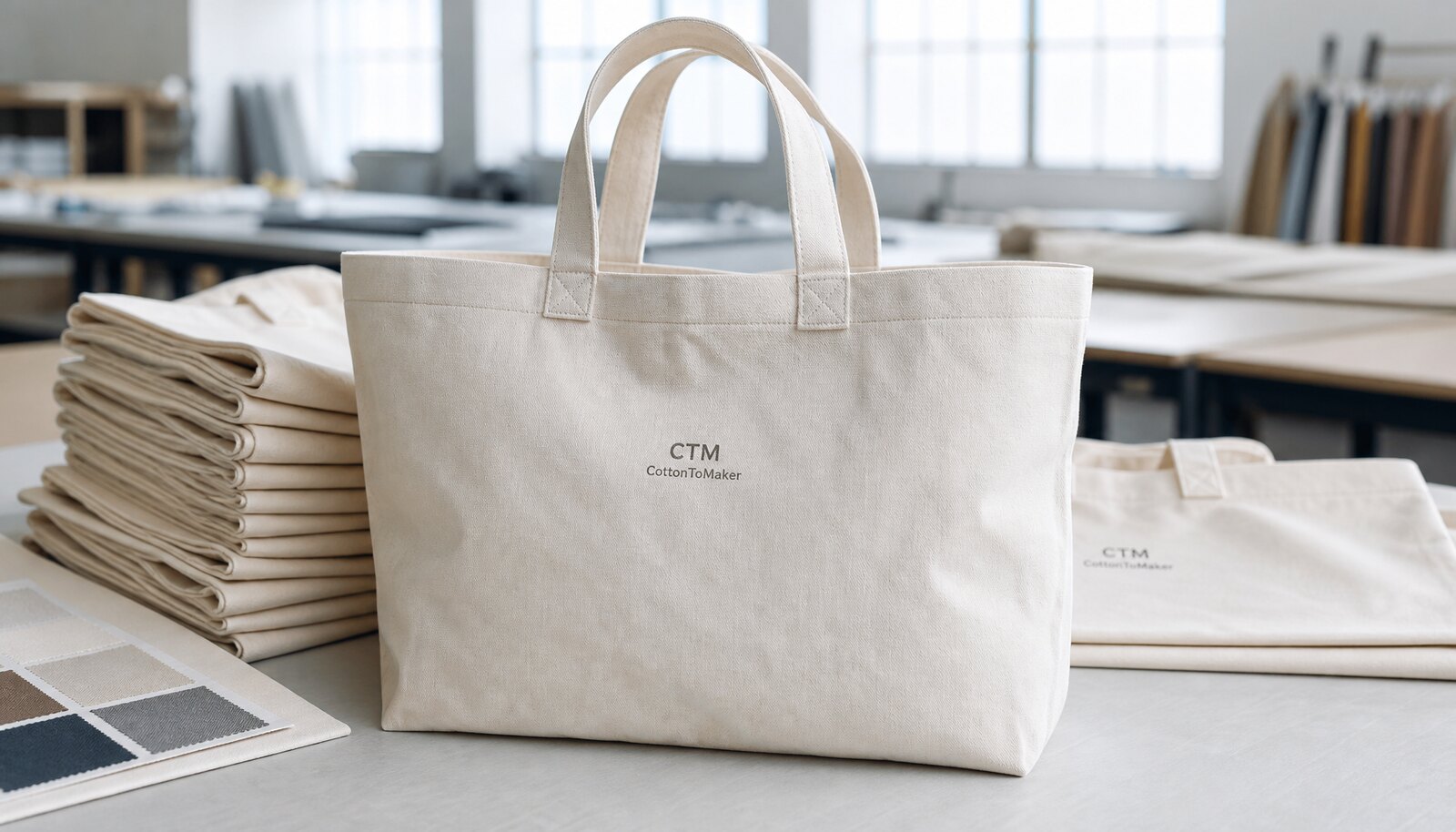
Why print method matters more on charity tote orders than many buyers expect
Charity campaigns usually look simple on paper: one tote, one logo, one message, and a deadline tied to an event or fundraising calendar. In practice, the print method affects visibility, unit cost, minimum order quantity, and the likelihood of rework. A tote that looks acceptable on screen may fail in production if the artwork is too detailed for the fabric weight or if the order size is too small for the chosen decoration route.
Procurement teams often compare quotes only on base bag price, then discover that decoration, setup, packaging, and freight change the economics completely. For this product, the most useful comparison is not "which method is cheapest" but "which method gives the required presentation at the lowest landed risk." That means matching artwork complexity to canvas surface, campaign volume to setup cost, and delivery date to production capacity.
- Simple campaign logos usually favor screen print on mid- to heavy-weight canvas.
- Photo artwork or multi-color donor messages often need transfer or DTG, but only when the fabric surface is suitable.
- Small premium runs may justify embroidery or a sewn patch when perceived value matters more than absolute unit cost.
Start with the canvas spec: GSM, weave, and finish drive print quality
For charity totes, the most common purchasing mistake is treating all canvas as interchangeable. A 10oz natural canvas bag and a 12oz washed canvas bag do not behave the same in print, sewing, or packing. On a looser weave, fine details can spread, while a very stiff finish can crack some print types if the bag is folded tightly after production. Buyers should specify fabric weight, weave tightness, and finish together, not as separate loose notes.
As a practical sourcing baseline, 10oz to 12oz canvas is the common range for campaign totes. Around 340gsm works for general donation packs and volunteer bags when budget matters. Around 400gsm or higher gives a more retail-like feel and usually supports cleaner screen printing, but the heavier fabric increases material cost, sewing load, and carton weight. If the charity wants a premium fundraising item or a resale tote, heavier canvas and reinforced handles make sense; if the order is a one-day event giveaway, a lighter but still stable cloth may be enough.
- Natural canvas is easier to quote, but batch shade variation should be expected and approved.
- Washed canvas looks softer and more premium, yet can absorb ink differently from raw canvas.
- If the artwork includes small text, specify a smoother weave or ask the factory to show a strike-off on actual production fabric.
Print method comparison: choose by artwork, not by habit
Screen print remains the default choice for many charity canvas tote orders because it is economical for one-color or two-color logos and scales well when the order size rises. It gives a dense, visible mark on natural canvas, especially on mid- to heavy-weight fabric. The tradeoff is setup: each color typically requires a separate screen and registration control, so low-volume orders can become expensive if the artwork is complex.
Heat transfer is useful when the campaign artwork needs more colors, a variable name, or a quick turnaround without rebuilding screens. It is often the most flexible option for short runs, but the buyer should pay attention to edge durability, wash resistance, and how the transfer behaves when the tote is folded in cartons. DTG can handle detailed artwork on the right fabric, but on standard canvas it is more sensitive to texture and pretreatment. Embroidery and patches lift the perceived value, but cost and lead time rise quickly.
- Use screen print for bold logos, slogan lines, and large campaign marks.
- Use transfer only when detail or variable data matters more than maximum durability.
- Use embroidery or a patch when the tote is meant to feel like merchandise rather than a giveaway.
What each decoration route means for MOQ and quote logic
MOQ is not just a factory policy; it is the point where setup labor becomes commercially sensible. Screen printing usually favors a lower print-cost-per-unit once the order reaches a workable batch size, but the screens, color matching, and curing setup still need to be spread across the run. For a charity buyer, that means a 500-piece order and a 5,000-piece order may have the same artwork yet very different unit economics.
Transfer and DTG can look attractive for smaller campaigns because they reduce setup, but the factory may protect its margin with a higher per-piece print fee. Embroidery usually carries a higher MOQ or at least a higher setup charge because thread programming, machine time, and sample approval are more involved. If a supplier is quoting a surprisingly low tote price, look for hidden charges around artwork prep, plate making, or repacking.
- Ask whether the MOQ is tied to the bag body, the print method, or the combined order quantity.
- Check if multiple artwork versions can be mixed under one order or if each version resets setup cost.
- Request a quote split: body cost, decoration cost, packing cost, and freight-ready carton cost.
How to compare suppliers without being misled by base prices
A useful quote comparison for charity totes should show the bag spec, decoration method, packing format, and production schedule side by side. Two suppliers may both quote a "12oz canvas tote with one-color print," but one may be using a tighter weave, a larger print area, and stronger handle stitching while the other is quoting a thinner fabric with a smaller logo. Those differences change both value and risk.
The strongest supplier evidence is not a polished sales deck. It is a sample that matches the intended production fabric, a documented print reference, and a clear explanation of how the factory controls color, stitch density, and packing counts. If the supplier cannot explain how they will preserve print alignment from sample to bulk, the buyer should assume some rework risk is hidden in the offer.
- Compare like-for-like GSM, not just canvas name.
- Check whether the quote includes one physical sample or only a digital proof.
- Ask for carton pack count and net/gross weight so the freight quote is realistic.
Sample approval should cover print sharpness, hand feel, and carton fit
A charity tote sample should be approved as a production reference, not as a display piece. The most common failure points are print bleed at the edges, poor logo placement relative to handles or side seams, and a hand feel that changes after the first fold. Buyers should look at the sample under normal indoor light and, if possible, compare it against the intended reference artwork at full size.
Approval should also include the packaging stage. A tote can look correct in the sewing room and still create trouble if the folded size does not fit the agreed carton count, or if the handle position causes bulk during stacking. If the factory uses individual polybags, that needs to be reflected in the approved sample so the production pack format does not quietly change later.
- Measure logo position from top edge and side seam, not just by eye.
- Check whether the print remains centered after the first fold and carton insertion.
- If the order includes a hangtag or insert card, confirm it does not hide the print or distort the fold.
QC thresholds that protect charity budgets from preventable rejects
For canvas tote campaigns, the QC standard should focus on the few defects that directly affect presentation and usability. A minor thread tail may be acceptable, but a crooked print, weak handle seam, or obvious ink strike-through is not. Since these bags are often handed out in public, visual consistency matters as much as load-bearing strength. Buyers should define what is acceptable on the first article and what counts as a reject in the bulk inspection.
It is useful to set practical limits before production starts. For example, the factory can be asked to keep dimensions within a defined tolerance, maintain uniform print placement, and remove clearly damaged pieces before packing. If the charity expects a long distribution window, also consider storage risk: a bag with poor fold memory or weak carton protection may arrive sound but show wrinkles, abrasion, or print scuffing by the time it reaches the event.
- Reject obvious print smudges, double images, or bleeding that changes logo legibility.
- Reject handle seam defects, broken stitches, or uneven bar tacks at stress points.
- Inspect a carton sample for correct piece count, label accuracy, and compression damage.
Packing and logistics: where tote orders often lose margin
Packing affects both freight cost and warehouse handling. Bulk-packed canvas totes usually ship more efficiently, but they may arrive with sharper fold lines and need more labor at destination. Individual polybagging adds protection and presentation value, yet it increases material cost, packing time, and carton volume. For charity campaigns, the right format depends on whether the totes will be inserted into donor kits, handed out at events, or stored for a future activation.
Lead time is also influenced by packing. A simple bulk-packed screen-printed tote may move quickly once the fabric and artwork are approved, while a version with woven labels, inserts, and individual bags can add several days or more to the schedule. Buyers should request the factory’s standard production calendar in writing, including screen preparation, sample approval, sewing, printing, curing, packing, and final carton close-up.
- Get carton dimensions before booking freight or warehouse space.
- Ask whether cartons are double-walled if the bags are heavy or the route is long.
- Confirm whether cartons are labeled by SKU, artwork, or campaign batch.
Landed-cost comparison: the real choice is often between methods, not prices
On a landed-cost basis, screen print is often the best value for large charity runs with simple artwork, while transfer or DTG can be better for lower volumes with more complex graphics. Embroidery usually sits at the top end of unit cost, but it can justify itself if the campaign product is sold, kept, or reused beyond the event. The buyer should evaluate not just unit ex-factory cost but also setup fees, defect allowance, freight weight, carton count, and the cost of late changes.
One practical way to compare routes is to ask the supplier for three quotes on the same bag body: one with one-color screen print, one with transfer, and one blank with optional labels. That makes it easier to see where decoration labor, MOQ pressure, and packing differences are driving cost. For a charity campaign, the cheapest quote is only useful if the bags arrive on time and the print still looks clear after warehouse handling.
- Compare ex-factory, inland packing, and export carton costs separately.
- Include a realistic reject allowance when comparing low-cost suppliers.
- Treat rework and missed event dates as budget risks, not just scheduling issues.
A practical sourcing workflow for charity campaign buyers
A clean sourcing workflow saves more money than trying to negotiate one line item at the end. Start with the campaign use case: donor gift, volunteer kit, retail resale, or event giveaway. Then lock the artwork complexity, expected quantity, and delivery window. Once those three items are fixed, ask the factory to quote the bag body and the decoration method separately so you can see whether the print choice is the real cost driver.
From there, move through sample approval, carton approval, and production release in that order. If the supplier wants final approval before confirming a lead time, that is normal. What the buyer should avoid is approving full production before the sample and pack format have been checked together. For charity campaigns, a late change in logo size, print color, or fold direction can be more expensive than the original decoration method itself.
- Define the campaign objective first: visibility, fundraising merchandise, or volunteer utility.
- Approve sample, artwork, and pack format before requesting final shipment booking.
- Keep one contact sheet with artwork version, bag spec, and packing spec to avoid internal confusion.
Specification comparison for buyers
| Spec decision | Recommended option | When it fits | Buyer risk to check |
|---|---|---|---|
| Screen print | 1–2 spot colors on 12oz/340gsm or heavier canvas | Best for charity runs, donor kits, volunteer bags, and logos with solid shapes | Fine text can fill in if mesh count or ink deposit is not controlled |
| Heat transfer | Short-run multicolor artwork or variable names | Useful for campaign launches, event-specific messaging, or orders with many SKUs | Film edges can lift after folding if the cotton surface is too rough or the press settings are weak |
| DTG on canvas | Soft-hand prints on smooth, pretreated canvas and low-volume trials | Works when artwork has gradients, photos, or more than four colors and the order is small | Ink washout and inconsistent coverage are common on open-weave canvas |
| Embroidery | Small chest-size marks, donor club badges, premium gift totes | Fits elevated charity merchandise where texture and perceived value matter | Dense stitching can pucker lighter canvas and increase unit cost quickly |
| Woven label or sewn patch | Brand identity with a classic or retail-ready look | Good for premium collections, resale items, and limited editions | Lead time is longer and the label position can shift if not measured in samples |
| Blank tote with inserted tag | Very fast campaign rollout or undecided artwork | Suitable when the charity needs to hold stock and personalize later | Lowest branding impact and higher risk of unsold blank inventory |
| Direct-to-garment supplier in-house | One-stop decoration with flexible short runs | Useful when the buyer wants sample-to-production continuity | Not every factory has stable canvas pretreatment or color control |
| Trade printer plus bag maker | Complex artwork or mixed print methods across the same campaign | Best for buyers splitting decoration and sewing across specialists | More handoffs increase color mismatch and delay risk |
| Domestic converter versus offshore factory | Domestic for urgent campaigns, offshore for larger planned volumes | Choose based on launch date, forecast stability, and landed-cost target | Watch freight, duty, rework, and carton space when comparing quotes |
Buyer checklist before sampling
- Confirm final bag size, gusset, handle drop, and usable loading weight.
- Specify fabric type, GSM/oz weight, color tolerance, and shrinkage expectations.
- Send vector artwork and define logo size, print position, and Pantone references.
- Ask for sample photos plus one physical pre-production sample before bulk approval.
- Agree carton packing, barcode or hangtag needs, and shipment marks before production.
- Record inspection checkpoints for stitching, print adhesion, stains, and quantity count.
Factory quote questions to send
- What canvas GSM or oz are you quoting, and is the fabric bleached, natural, washed, or dyed before printing?
- Which print method is included in the unit price, and what is the price delta for each extra color, extra print position, or larger print area?
- What is the MOQ by decoration method, and can you mix artwork versions in one production run without adding setup charges?
- Can you provide a pre-production sample, production sample, or digital strike-off, and what is the approval timeline for each?
- What is your standard packing: bulk pack, 10 pieces per polybag, or individual polybag with insert card, and what is the carton pack count?
- What lead time applies after artwork approval, and how does that change if the order needs woven labels, embroidery, or custom hangtags?
Quality-control points to confirm
- Fabric weight tolerance: target within ±5% of the agreed GSM or oz specification for production lots.
- Print registration: logo placement should stay within a practical tolerance of about ±3 mm for simple screen prints and ±5 mm for transfer applications.
- Ink opacity: on natural canvas, solid logos should not show severe strike-through or patchy fill when viewed under normal indoor light.
- Stitch quality: handle attachment should be even, secure, and free from skipped stitches, loose thread tails, or needle damage around the seam line.
- Bag dimensions: confirm tolerance on body width, body height, and handle drop before packing approval, especially if the bags must fit event inserts or retail shelves.
- Color consistency: approve a physical shade reference for natural canvas, dyed canvas, and print ink to avoid batch variation across replenishment orders.
- Carton condition: cartons should survive stacking without crushed corners, since charity totes are often moved twice, from factory to warehouse and from warehouse to event site.