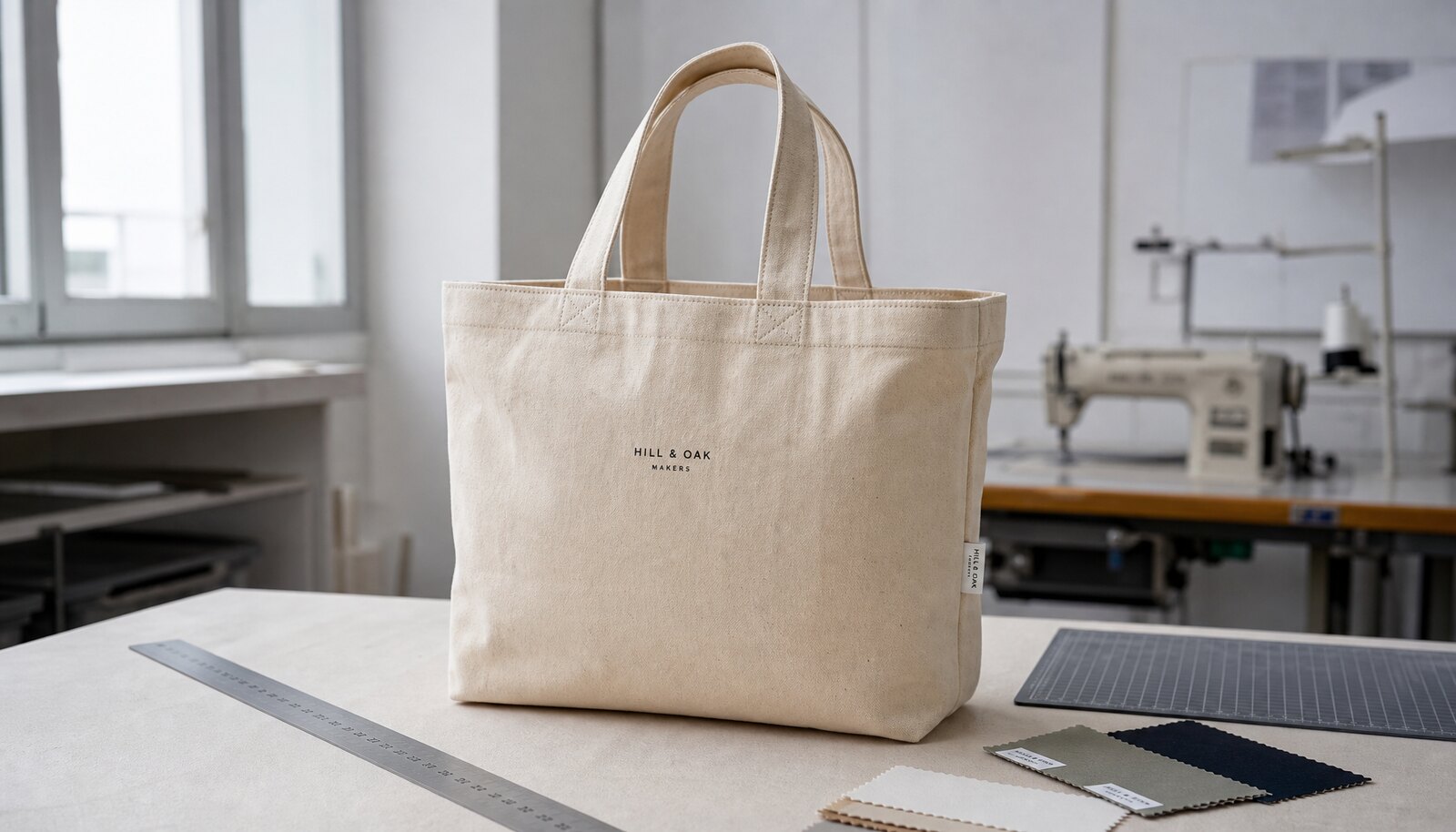
Why a reorder memo matters for boutique totes
Boutique tote reorders fail for a practical reason: the first run is remembered as a single product, while the factory sees a set of variables that can move independently. Between orders, the supplier may change fabric lot, needle setup, carton size, ink batch, or the person approving trim placement. If those details are not captured, the second order can look close in email and still arrive off-spec in hand. A reorder memo closes that gap and gives procurement, merchandising, and the factory one reference point for the next run.
For boutique buyers, the goal is not to reinvent the tote. The goal is to keep shelf appearance, customer feel, and margin stable while avoiding a full development cycle. That means the memo should define what is fixed, what can vary within tolerance, and what needs a new quote or sample. If the first run sold through cleanly, the reorder should be simpler, not more ambiguous.
A good memo also prevents scope creep. Teams often ask for a small change, then discover that the change affects fabric sourcing, print setup, pack method, or lead time. Calling out the commercial impact early keeps the order moving and makes quote comparison easier.
- Use the approved master sample as the controlling reference, not memory or a marketing image.
- Separate cosmetic changes from structural changes so a small artwork update does not become a new development project.
- Record what actually sold through: colorway, print count, pack format, and any store feedback on handle feel or bag shape.
Freeze the reference sample and the spec pack
A reorder should start with the exact tote the retailer already accepted. Lock the body width, body height, gusset depth, handle length, handle drop, seam type, and reinforcement method. If the first run used a 38 cm body width and a 10 cm gusset, write those numbers into the spec sheet and add photos of the front, back, inside, seam ends, and label area. The measured sheet matters more than the concept art because it reflects the physical bag the buyer approved.
The safest reorder changes as little as possible. If one variable must move, document whether it is a production correction or a commercial change. A buyer may accept slightly cleaner print placement or a more even stitch line, but not a different handle drop if the bag is sold as an everyday carry tote. The hero spec should stay frozen, and every deviation should be treated as a new line item rather than a casual revision.
This is also the place to define what the factory is not allowed to substitute without approval. If the bag needs the same canvas texture, the same handle material, or the same trim color, that should be explicit. Otherwise the quote may still match the art file while missing the retail look.
- Measure the master sample in flat state and note the measurement method used.
- Mark decorative elements separately from structural dimensions so the team does not confuse the two.
- Keep one retained reference sample on the buyer side and one on the factory side.
Compare supplier routes before you compare price
The same tote can produce very different buying outcomes depending on who is quoting it. A direct factory reorder is usually the cleanest path when the original spec, artwork, and packaging are already approved. A trading company may be useful when the buyer needs to consolidate several bag programs or wants one point of contact, but the commercial structure can become less transparent. A local decorator can solve a short-top-up problem quickly, although it may not match the original run closely enough for a retail program that depends on continuity.
Procurement should ask what each route is actually selling. One supplier may be offering the same line built on the same equipment; another may be offering a visually similar tote with a different cloth source or print process. That distinction matters because the cheapest quote is not always the lowest risk. For a boutique tote, the buyer is paying for repeatability as much as material.
When quotes look close, ask what is missing. Unpriced inner bags, carton marks, plate fees, label application, or sample charges can make one quote look better than it really is. The right comparison is not factory-to-factory on a single number. It is route-to-route on the full landed picture.
- Ask for the production site, not just the sales office name.
- Separate pass-through costs from markup when a trading company is involved.
- Check whether a local top-up order will still match the original retail tote in hand and under store lighting.
Choose canvas weight and construction for the way the tote is used
Canvas weight affects perceived value, seam durability, shipping weight, and unit cost at the same time, so it should be chosen for the way the tote is actually sold. For a lighter promotional program, a thinner cloth may be acceptable if the bag is not expected to carry much weight or endure repeated use. For a boutique retail item, a mid-weight cloth usually gives a better balance of body, drape, and shelf presentation. If the customer is paying for a premium accessory, the bag should feel intentional in hand, not flimsy or overbuilt.
Construction must match the weight. A heavier canvas still fails if the handle attachment is weak or the bottom seam is not reinforced. Ask the factory to show where the load-bearing stress points are stitched, whether the handle is self-fabric or webbing, and whether the bag uses single or double reinforcement on the handle joins. A simple bag with reliable reinforcement is better than a visually rich bag that fails after a few carries.
Do not let nominal ounce values become a substitute for spec control. Ask whether the quote is based on raw cloth, finished cloth, or finished bag weight, because those numbers do not always mean the same thing. If the supplier proposes an alternate cloth, ask for a comparison against the retained master sample and not just a catalog description.
- Use a lighter cloth only when the carrying load and shelf expectations justify it.
- Use a mid-weight cloth when the tote needs to stand up well and keep a clean retail silhouette.
- Use a heavier cloth when hand-feel and durability are more important than freight weight and pack efficiency.
Set the decoration rules before artwork goes back to the factory
Decoration is where reorder drift becomes visible fastest. Screen print is usually the most stable option for repeat runs with one or two solid colors because the setup is repeatable and the ink laydown is predictable. If the design uses fine type, small marks, or many color transitions, the buyer should question whether the same method will still hold up at production speed. For boutique bags that rely on a small logo or a seasonal wordmark, a woven label or sewn side label can reduce ink variation and keep the product looking clean over multiple runs.
The quote should spell out print placement, print size, Pantone target, and acceptable registration tolerance. A logo that looks clean on screen can move badly on rough canvas if the art is too small or the ink is too transparent. If the bag will be handled daily in-store, ask for a cured sample that has been rubbed or flexed. That is a better check than approving a flat print image in isolation.
If the factory says the artwork can be reproduced, ask what exactly stays constant: screen, ink formula, stroke count, curing method, and alignment rule. Those are the details that keep a repeat order from becoming a close enough version of the original.
- Use screen print when the logo is stable and expected to recur across seasons.
- Use woven or sewn branding when you want fewer ink variables and a cleaner retail finish.
- Avoid tiny reverse text or ultra-fine lines unless the factory has already proven that artwork at production speed.
Use MOQ and pricing levers intentionally
MOQ is not just a unit count. For custom canvas tote bags, the actual minimum usually comes from several setup burdens: fabric sourcing, cutting, printing, and packing. A factory may be comfortable with one style in one color and one print, but the same total becomes more expensive if it is split across multiple colors, labels, and carton configurations. Buyers should read the quote by setup burden, not by headline quantity alone.
If the buying plan needs flexibility, keep the bag itself stable and move the seasonal change into a label, insert card, or hangtag. That often protects the main production run from unnecessary setup cost. If the order is small, a single-body-color program with one decoration placement is usually easier to price than multiple variants of the same tote. If merchandising wants three boutique colorways, the quote should show where each color adds cost instead of hiding that effect in a blended average.
The most useful pricing levers are usually the least glamorous ones: fewer print colors, fewer pack versions, a standard carton, and a reusable spec pack. Late changes to the label or fold method can cost more than teams expect because they create a new approval path, not just a different look.
- Compare MOQ per style, per color, per artwork, and per packaging version.
- Ask which change triggers a new screen, a new cutting marker, or a new carton spec.
- If the order must be small, keep the fabric and packing standard and move the seasonal change into the trim or insert.
Specify packing and carton math for the receiving team
Packing can make a good tote look careless or a basic tote look organized. If the bags are sold folded on a shelf, specify the fold direction, the face that must be visible, and whether the print should be protected by tissue, a belly band, or a clear polybag. If the product ships to a central warehouse, bulk folding is often the cleanest choice because it reduces plastic and labor. If the bags are sold as giftable merchandise, the pack format may need to do more work, but the buyer should understand the added cost and carton weight before approval.
Labels matter just as much. The quote should define where the barcode goes, whether the carton needs a shipping mark, and whether the product requires an insert card, hangtag, or care label. For boutique programs, mismatched pack counts and unclear carton marks create receiving friction that is easy to avoid in the spec stage. A good packing spec reduces disputes, speeds replenishment, and keeps the bag from arriving creased in the wrong place.
If the team adds a polybag, insert, or shelf-ready presentation late in the process, that is not a small packaging change. It can affect labor, carton fit, warehouse throughput, and lead time. Decide the pack format early and hold it like any other control point.
- Specify carton count per SKU and confirm whether it changes by color or print version.
- Use barcode placement that can be scanned without opening the carton if warehouse rules require it.
- Protect printed faces from sharp folds and pressure points during export packing.
Build quality control around visible defects and function failures
QC on a tote should be practical. Buyers need to check what a customer will actually notice and what will fail in use. Start with body dimensions, then move to handle symmetry, reinforcement, print registration, and stitch quality. A slightly imperfect canvas weave is often less important than a crooked handle or a logo that sits too close to a seam. The inspection standard should reflect the selling price and the way the bag is merchandised.
The most common defects are easy to describe and easy to catch if the buyer has written them down. Examples include off-center logos, uneven handle lengths, weak bartacks, loose threads, blocked print, dye rub-off, oily residue, and carton count errors. The QC sheet should also note what is not acceptable after handling: a tote that arrives with a strong smell, a print that cracks when folded, or a seam end that unravels under light load.
Retain one golden sample from the approved run and store it with the revision date. That sample matters when a reorder arrives and the team disagrees about whether the bag is the same as last season. Without a retained reference, people end up arguing from memory.
- Check body size against the approved spec, including gusset depth and usable height after folding.
- Inspect handle symmetry, reinforcement stitching, and handle drop so the tote hangs evenly when loaded.
- Measure carton count, carton strength, and whether the fold direction protects the print surface.
Plan lead time and landed cost from the retail date backward
Lead time should be planned from approval, not from the first inquiry. A reorder sequence usually has separate clocks for sample approval, bulk production, packing, and transit. The supplier should state whether its promise assumes in-stock cloth, in-house trim, or a new material order. That matters because a quote that looks quick on paper may depend on a material assumption the buyer has not validated yet.
The schedule also needs a freeze date. If merchandising changes the artwork after the sample is signed off, the line may need a new screen, a new proof, or a new carton label. Those changes are not just clerical. They can push the bag out by days or weeks and force a more expensive freight mode to recover the calendar. The cleaner the freeze, the less the buyer pays in urgency.
Landed cost is the only number that reflects the actual sourcing decision. Ex-factory price is useful, but the buyer still needs to account for packing, freight, duty, and receiving. A slightly higher unit price can still be the better buy if it reduces rework, short-ships, or warehouse labor. A low quote that depends on a cheap carton or a lighter pack standard can reverse itself once the shipment hits the dock.
- Count backward from the in-store date and add a buffer for sample sign-off.
- Flag any change after sample approval as both a schedule risk and a cost driver.
- Ask for ex-factory, FOB, and estimated landed inputs using the same carton count and destination assumptions.
Package the RFQ so the factory can quote the right version
A strong RFQ packet turns a vague reorder into a usable production brief. Include approved sample photos, a measured spec sheet, the artwork file, the pack requirement, the target delivery window, and the forecast split by color or store program. Add one line that says what must not change from the last run. That instruction matters because it tells the supplier where to hold the line and where it may propose an alternate option.
The packet should also make quote response easy to audit. Ask the supplier to answer in writing on canvas weight, decoration method, MOQ logic, lead time, carton pack, and any assumption about material substitution or artwork revision. When those items are missing, the lowest quote is often just the least complete quote. For a boutique tote reorder, completeness is part of quality.
If merchandising wants a new label, different fold, or alternate color after the RFQ goes out, the change should be tracked as a revision rather than folded into the current bid. Otherwise the team compares unlike quotes and loses the ability to judge value cleanly. That is how a simple reorder turns into a messy sourcing loop.
- Include front, back, inside, and label-area reference images from the approved tote.
- Provide a forecast split by SKU, color, and pack format if the order is not a single style.
- State whether the supplier may propose alternate fabric, alternate handle material, or alternate packing only with written approval.
Specification comparison for buyers
| Buying decision | Best-fit option | Cost or lead-time tradeoff | What to verify before approval |
|---|---|---|---|
| Supplier route | Direct factory reorder from the same approved spec pack | Usually the cleanest path for repeat runs because the factory already has the pattern, print setup, and packing history | Confirm that the quote is for the same cloth, the same trim, and the same construction, not a lookalike substitute |
| Supplier route | Trading company or sourcing agent when the order spans several bag programs | Can simplify coordination, but the margin stack can hide where cost increases are coming from | Ask for the factory name, actual production site, and which line items are pass-through versus markup |
| Supplier route | Local decorator for small emergency top-ups | Useful for speed, but it may break visual continuity with the original production run | Check whether the print method, fabric weight, and carton pack match the retail version already in market |
| Construction | Unlined body with bottom gusset and reinforced handle points | Usually the best balance of retail appearance, carton efficiency, and unit cost | Verify bartacks, seam allowance, and where stress loads transfer into the body |
| Construction | Self-fabric handles | Lower material complexity, but depends heavily on stitching quality and fabric strength | Ask for handle attachment photos and test a loaded bag by the actual carry weight |
| Construction | Webbing handles | Can improve durability and reduce fraying risk, but may change the retail look and cost profile | Confirm handle width, color consistency, and whether webbing is in-stock or custom ordered |
| Decoration | One- or two-color screen print for stable artwork | Best when the logo is fixed and the reorder is expected to repeat | Check cure quality, registration, and opacity on the actual canvas texture |
| Decoration | Woven or sewn label for evergreen branding | Reduces ink variables, but adds trim sourcing and placement control | Lock label size, stitch position, and thread color in the spec |
| Packaging | Bulk fold with standardized carton pack | Usually the lowest labor and plastic cost, with better warehouse throughput | Confirm fold direction, carton count, and whether printed faces are protected |
Buyer checklist before sampling
- Attach the approved master sample photos and a measured spec sheet with body width, body height, gusset depth, handle length, and handle drop.
- State canvas weight in oz and gsm, and specify whether the quote is based on raw fabric, finished fabric, or finished bag weight.
- Define the decoration method, number of colors, print size, placement, and whether Pantone matching is required.
- Set tolerance bands for body dimensions, handle length, and print placement before the supplier prices the order.
- Confirm whether MOQ is per style, per color, per artwork, per carton pack, or per packaging version.
- Choose the packing format early: bulk fold, polybag, insert card, hangtag, or shelf-ready carton pack.
- Ask for sample lead time, bulk lead time, and transit time separately, and note any peak-season assumption.
- Request ex-factory and landed-cost inputs so each quote can be compared on the same basis.
Factory quote questions to send
- What exact canvas weight, weave, and finished GSM are you quoting for the body and handles?
- Is your MOQ based on total units, per color, per print setup, or per pack configuration?
- What is included in the unit price: bag, print, label, packing, inner bag, carton, and carton marks?
- Which sample will you provide before bulk production, and how many days do you need after approval?
- What tolerance do you hold on dimensions, handle length, and print placement?
- Can you reproduce the last approved spec with the same fabric source, or will any material change be proposed?
- How do you pack the bags for retail handling, and what is the outer carton size and count per carton?
- What changes the lead time: artwork changes, color matching, custom packing, or capacity constraints?
Quality-control points to confirm
- Check body size against the approved spec, including gusset depth and usable height after folding.
- Inspect handle symmetry, reinforcement stitching, and handle drop so the tote hangs evenly when loaded.
- Review print opacity, edge sharpness, cure quality, and registration on textured canvas.
- Pull a seam sample and check stitch density, back-tacking, and stress points where the handle meets the body.
- Confirm the bag has no strong smell, oily residue, loose thread, or fabric contamination from dye or finishing.
- Measure carton count, carton strength, and whether the fold direction protects the print surface.
- Verify label placement, barcode readability, and outer carton marks against the buyer artwork file.
- Retain one golden sample from the approved run for future reorders and dispute resolution.