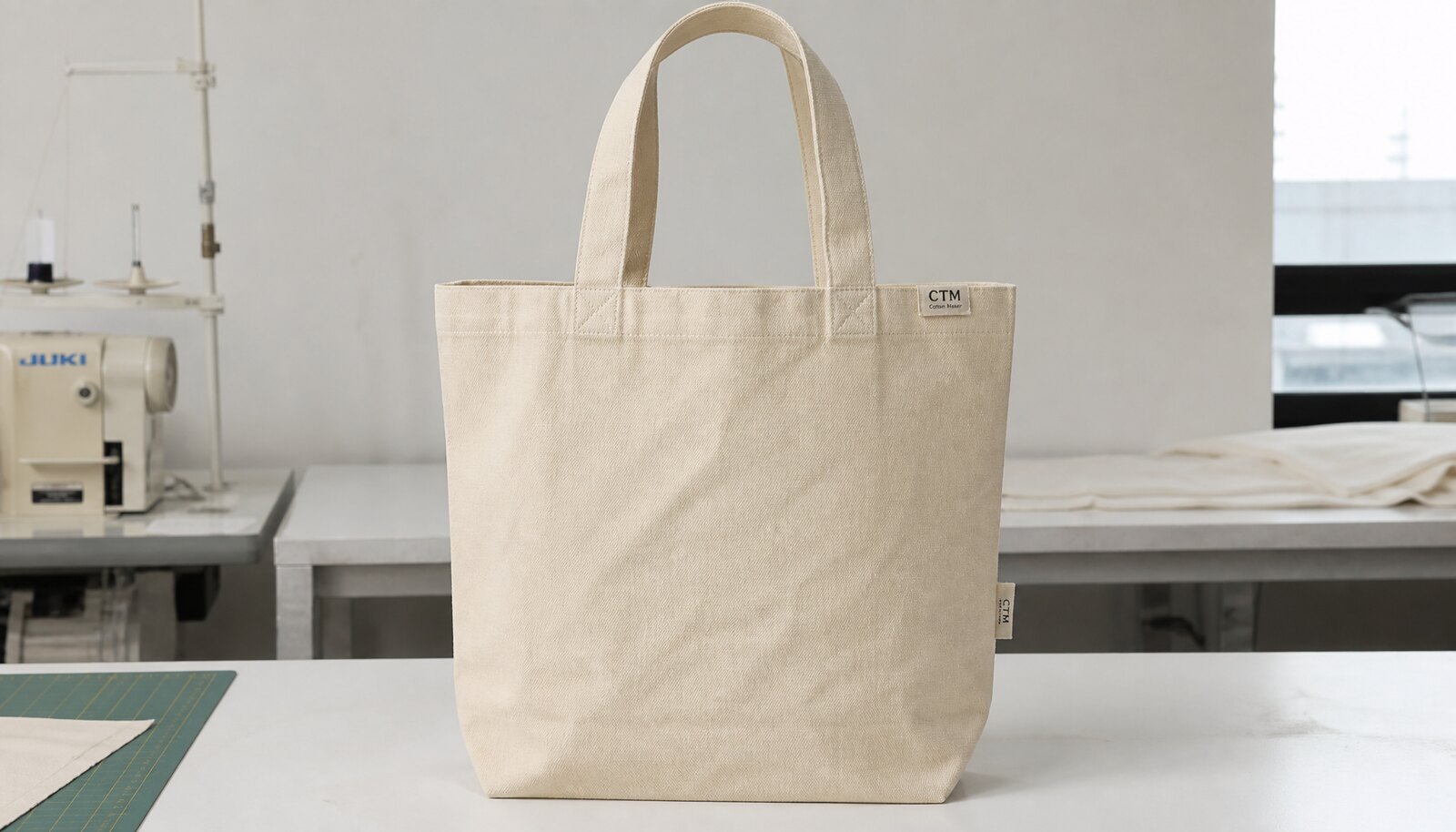
Why bookstore totes need a different buying brief
A bookstore tote is not just a branded bag. It has to carry books of different sizes, survive repeated folding, and still look presentable on a shelf or at a cash wrap. That means the buying brief has to cover function, presentation, and packaging together. If you only compare print price, you miss the real cost drivers: fabric weight, reinforcement, packing format, and how many handling steps the store team will tolerate.
For bookstore programs, the most common mistake is treating the tote like a giveaway item when the store actually needs a retail product. A checkout bag can move in bulk cartons with simple branding. A retail SKU needs cleaner finishing, a better fold, and packaging that fits a sales floor. Before you request quotes, decide whether the tote is meant to be a utility bag, a gift item, or a permanent merchandise line.
- Define the tote's primary job before you compare suppliers.
- Separate checkout use from shelf-ready retail use.
- Treat packaging as part of the product, not an afterthought.
Start with use case, not with fabric alone
The right canvas weight depends on what the store puts inside the bag. For lightweight paperbacks and small gifts, 8-10 oz canvas can be enough. For everyday bookstore use with hardcovers, journals, or bundled purchases, 10-12 oz is a safer baseline. If the bag is a premium resale item or must feel substantial in hand, 12-16 oz gives you a heavier drape and less collapse at the mouth of the bag.
In practical sourcing terms, 10 oz is roughly 340 gsm, 12 oz is around 400 gsm, and 16 oz is about 540 gsm. Those numbers are not decoration; they drive sewing difficulty, handle comfort, and freight weight. A heavier bag is not automatically better. If the customer will carry it for long periods, a very stiff canvas can feel more like a box than a tote. Balance hand feel, load capacity, and unit weight before you lock the spec.
- 10 oz canvas fits lighter resale or promotional use.
- 12 oz canvas is a common bookstore sweet spot.
- 16 oz canvas suits premium retail or heavier book loads.
Compare sustainable packaging routes before you quote the bag
Sustainable packaging is not one thing. A bookstore tote can be packed polybag-free, wrapped in a recycled polybag, held with a paper belly band, or shipped in shelf-ready cartons with no individual wrap. Each route changes labor, presentation, and damage risk. The more retail-ready the bag needs to be, the more attention you need to give to fold quality, barcode placement, and carton protection.
The wrong sustainability choice can create waste elsewhere. A bag packed too loosely can arrive scuffed and dusty. A paper band that tears in transit can turn into repacking labor at the store. A recycled polybag may be acceptable if your buyers need cleaner shelf presentation and less abrasion. Compare the packaging route on the full chain: factory packing time, warehouse intake, store handling, and likely damage rate.
- Polybag-free works best when the DC repacks or stores intake bulk cartons.
- Paper bands are stronger for shelf-ready retail but need clean fold consistency.
- Recycled polybags can be useful when dust and abrasion are bigger risks than plastic reduction.
Use the table to choose your sourcing route
The right supplier model depends on how much control you need. Direct factory sourcing usually gives the cleanest cost structure when the tote, print, and packing all live in one plant. A trading company can help if you are buying related items together and want one commercial contact, but it only works if the actual factory is identified and accountable. A local decorator or fulfillment partner can move faster, but you often lose control over base-bag consistency and total landed cost.
For bookstore buyers, the real decision is not just who sells the tote. It is who owns the fit between the bag, the artwork, the packaging, and the inbound schedule. If one vendor prints the bag and another supplies the packing band, one delay can hold the whole order. Pick the sourcing route that matches your internal bandwidth and the acceptable risk level for the launch.
- Use direct factory sourcing for repeatable programs and cleaner cost control.
- Use a trading company only when they add real coordination value.
- Use local decoration mainly for speed or urgent replenishment, not for long-term cost efficiency.
Decoration should match the bookstore's brand behavior
Screen print is the workhorse method for most custom canvas tote bags for bookstores. It is stable, economical on medium to large runs, and best when the logo has bold shapes or limited colors. If the design is simple, a one- or two-color screen print usually gives better clarity and lower quote volatility than a more complex method. For photo-like art, heat transfer or digital print can work, but those methods need tighter control on film quality and rub resistance.
Embroidery can make sense for a premium mark, a small emblem, or a side label, but it is not the default answer for a large tote graphic. It raises unit cost, slows output, and can distort light canvas if the stitch density is too high. Woven labels and sewn side tabs are often the cleaner solution when the bookstore wants quiet branding and a product that still feels understated. Before approving art, decide whether the goal is visibility, texture, or subtlety.
- Use screen print for bold logos and practical cost control.
- Use embroidery only when the design is small enough to stay flat.
- Use a woven or sewn label when the brand should be visible but not loud.
MOQ and price logic depend on how many choices you make
MOQ is rarely about the bag alone. Fabric sourcing, dye lot control, print color count, custom size, and packaging style all change the minimum. A stock bag with one-color print can often start much lower than a fully custom tote with a unique gusset, special label, and shelf-ready band. If a supplier gives you a low unit price but hides a high MOQ on the packaging or a separate charge for each print color, the quote is not really cheaper.
Ask for line-item pricing and compare the same commercial basis across suppliers. You need to know whether the price includes the bag body, printing, inner packing, master cartons, and any test or setup charge. A cleaner quote is easier to compare even if the headline number is a little higher. For procurement, that is usually the better tradeoff because it exposes where the supplier is making margin and where the factory is still flexible.
- Request MOQ per style, per print version, and per packaging format.
- Separate setup cost from recurring unit cost.
- Compare quotes on the same incoterm and the same carton count.
Sample approval should test the bag the way the store will use it
The sample process should not stop at visual approval. A bookstore tote should be checked for real carry behavior, seam strength, handle alignment, and how it folds after one or two uses. A pre-production sample is where you validate the actual fabric weight, the print placement, and the packaging format. If the sample passes only on appearance but fails on load or folding, the bulk order will repeat the same flaw at scale.
Set measurable acceptance criteria before you approve anything. A practical spec should define finished dimensions, tolerance on print placement, color match method, acceptable stitch density, and the load the bag should carry without seam failure. If you need sustainability documentation, request it now rather than after production starts. For example, if a recycled fiber claim or third-party paperwork matters to your retail buyer, make the factory show the document set with the sample package.
- Test the sample with the weight class the bookstore will actually carry.
- Measure dimensions, handle drop, and seam consistency before bulk approval.
- Reject samples that look right but fail on load, fold, or print durability.
Packing decisions affect shelf appeal and damage rate
Packing is where many tote programs lose margin. Bulk cartons are efficient, but they only work when the store or DC can accept simple intake and does not need each bag to be sale-ready on arrival. Paper belly bands, barcode stickers, and insert cards add labor, but they can cut store handling and make the product easier to display. The right answer depends on who opens the carton first and who touches the bag after that.
For bookstore buyers, carton consistency matters more than many teams expect. If the bags are folded in different directions or packed in uneven counts, store staff spend time fixing presentation before they can sell the item. Moisture control also matters on sea freight. Cotton can pick up odor or light staining if cartons are weak, so ask the factory how they protect against compression, dust, and damp conditions during transit.
- Choose the final fold and pack direction before bulk starts.
- Keep carton counts consistent so the DC can plan intake efficiently.
- Use moisture protection and stronger cartons for sea freight lanes.
Lead time risk comes from changes, not from the calendar alone
A realistic tote timeline includes sample development, artwork approval, production, packing, and shipping buffer. Simple screen-printed canvas orders can move quickly, but custom fabric, multi-step packaging, or sustainability documentation can add days or weeks. The real schedule risk is usually not the sewing line. It is late artwork changes, unclear approval ownership, or a packaging spec that was never fully locked before production began.
Build the schedule backward from the store date and protect a buffer for rework. If a tote must land before a seasonal bookstore event or a re-opening, the RFQ should state the latest acceptable ship date, not just a target date. That gives the factory a real planning constraint. When you compare suppliers, ask which items are in-house and which are outsourced. Outsourced labels, cartons, or print steps often create the longest hidden delays.
- Allow extra time if the order includes custom labels, custom cartons, or recycled-content paperwork.
- Freeze artwork before production, not during it.
- Treat shipping buffer as part of the lead time, not as optional slack.
Write the RFQ so the quotes are actually comparable
A strong RFQ does not ask for a price in isolation. It gives the supplier the exact tote size, canvas weight, print method, packaging format, carton count, incoterm, and sample expectation. That is the only way to make suppliers quote the same job. If one supplier prices a 10 oz stock bag and another prices a 12 oz custom bag with a paper band, the cheapest quote is meaningless because the scopes are different.
The best quote comparison shows the total commercial picture: unit cost, setup cost, sample cost, packaging cost, and freight basis. Then you can compare landed cost instead of just ex-factory price. For bookstore programs, that matters because a slightly heavier bag or a cleaner retail pack can reduce damage, repacking, and store labor enough to justify a higher factory number. The right brief makes that tradeoff visible before the PO is issued.
- Give every supplier the same artwork, dimensions, and packaging brief.
- Ask for separate prices for bag body, decoration, packing, and cartons.
- Compare landed cost and handling cost, not just the first unit price.
Specification comparison for buyers
| Spec decision | Recommended option | When it fits | Buyer risk to check |
|---|---|---|---|
| Direct factory with in-house printing | Use one plant for bag making, decoration, and carton packing | Best for repeat bookstore programs with a stable logo and 3,000-plus units | Lock the approved sample and confirm the same print line will run bulk |
| Trading company bundling multiple items | Use only when you need totes plus inserts, pouches, or gift packaging in one PO | Useful for smaller teams that want one contact across several SKUs | Verify the actual factory, not just the quote, and assign one owner for QC |
| Stock canvas bag with custom print | Choose a ready-made base bag and add branding | Works for test launches, seasonal events, or fast turns | Stock lots can shift in handle length, seam finish, and shade |
| Fully custom size and fabric | Specify your own dimensions, canvas weight, and reinforcement | Best for a permanent bookstore SKU or chain-wide rollout | Higher MOQ and longer lead time can delay the launch window |
| 10-12 oz screen printed canvas | Use a balanced weight for most bookstore retail bags | Good for general resale, gift, and checkout use | Check rub resistance where the bag folds and flexes repeatedly |
| 12-16 oz embroidered or mixed decoration | Use for premium positioning or a small logo mark | Fits limited editions and higher-priced retail programs | Embroidery can pucker lighter canvas and reduce daily output |
| Polybag-free carton packing | Pack folded bags directly in master cartons with moisture control | Good for DC intake and programs trying to reduce plastic | Test scuffing, dust, and carton compression before bulk approval |
| Paper belly band with barcode | Use a recyclable band instead of a plastic retail bag | Best for shelf-ready bookstore merchandising | Band placement, adhesive, and barcode scan quality must be proven on sample |
| Factory-supplied woven label or side tab | Add a small sewn brand mark instead of heavy front decoration | Fits quiet branding and reusable tote programs | Make sure the label is durable enough to survive folding and abrasion |
Buyer checklist before sampling
- Define the tote use case: checkout add-on, retail SKU, gift-with-purchase, membership item, or event giveaway.
- Confirm finished size, gusset depth, handle drop, and whether the bag must fit hardcover books or boxed sets.
- Select canvas weight in oz and approximate GSM, then state whether shrinkage is allowed and how it will be measured.
- Choose one primary decoration method and one fallback if the artwork has fine detail or small type.
- Specify the sustainable packaging route: no polybag, recycled polybag, paper band, insert card, or shelf-ready carton.
- Ask for the sample process in writing: pre-production sample, top-of-production sample, and final inspection standard.
- Require quote line items for bag body, print, label, packing, carton, testing, and freight basis.
- Set the acceptable tolerance for dimensions, color match, stitch quality, and print placement.
- Confirm carton count, outer carton strength, pallet pattern, and moisture protection for sea freight.
- Align the reorder rule now: same spec, same supplier, and what triggers a new sample.
Factory quote questions to send
- What exact finished size, gusset, handle length, and canvas weight are you quoting, and what shrink allowance did you use?
- Which decoration method is included in the price, how many colors are allowed, and what artwork file format do you need?
- Is the quote based on direct factory production, or are you reselling a stock bag from another source?
- What is the MOQ per color, per print version, and per packaging format?
- What packing method is included: folded bulk, individual paper band, recycled polybag, hang tag, or carton insert?
- What are the sample charges, sample lead time, and whether the sample cost can be credited against bulk?
- What is your standard overrun or underrun policy, and how do you handle short shipment?
- Can you separate FOB, local inland cost, carton cost, and freight so we can compare landed cost apples-to-apples?
Quality-control points to confirm
- Measure finished dimensions on the approved sample and require a clear tolerance band for body width, height, and gusset depth.
- Check fabric weight and hand feel against the approved standard, especially if the quote changes from 10 oz to 12 oz or from recycled to virgin cotton.
- Inspect handle attachment, bar-tack placement, seam density, and stress points where the bag will carry books repeatedly.
- Review print registration, ink opacity, edge sharpness, and rub resistance on fold lines and high-contact surfaces.
- Confirm color match against Pantone or the approved sample under daylight-like lighting, not only under warehouse light.
- Test loading with real product weight, not just a light dummy fill, and check whether the bag sags, twists, or opens at the top.
- Verify packing count, barcode readability, fold direction, and whether the carton arrives in the same presentation the store expects.
- For sea shipments, inspect carton crush resistance, moisture protection, and any odor transfer before the goods are released.