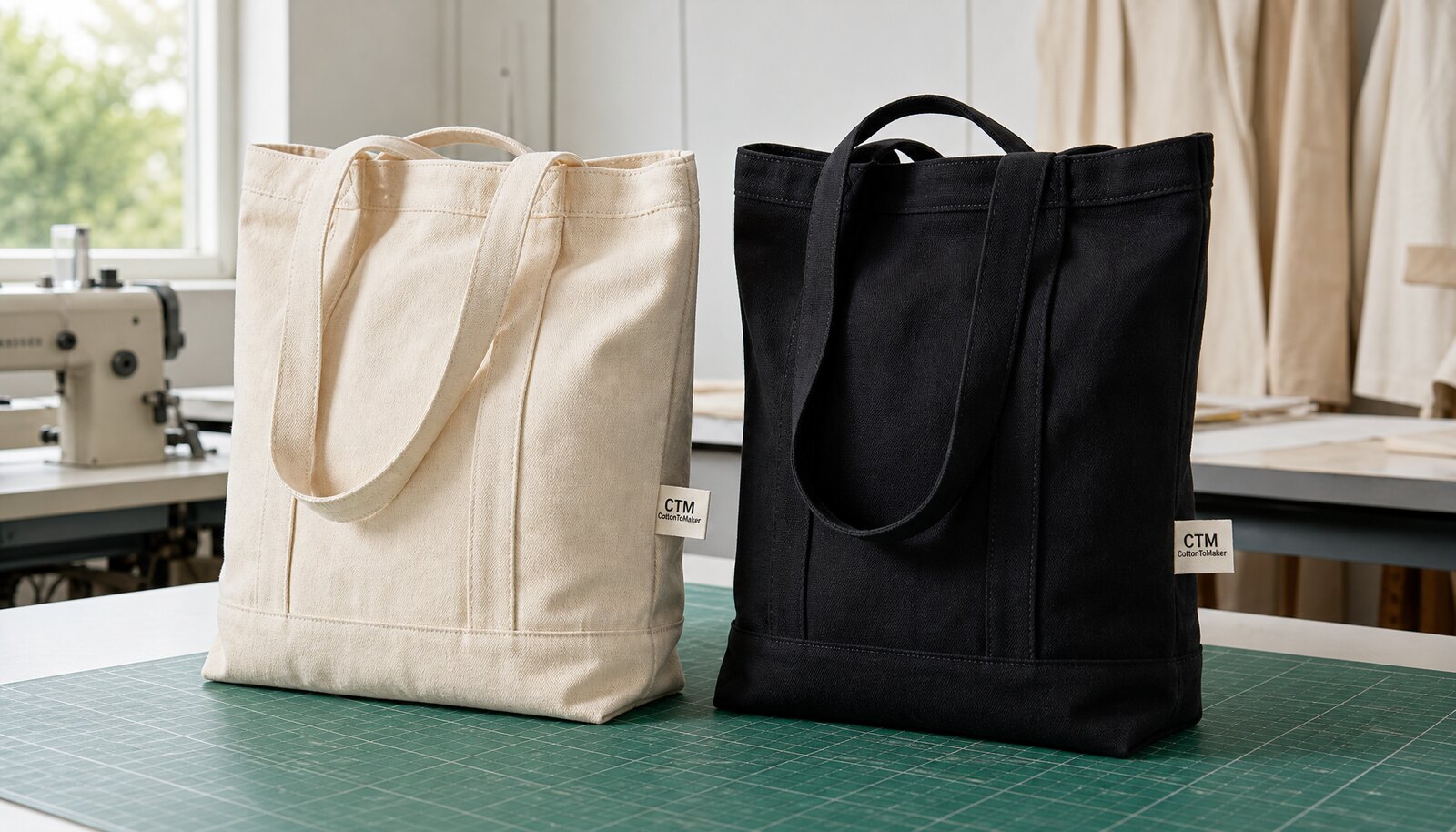
Why sample approval matters more than the first quote
For apparel brands, a custom canvas tote bag often starts as a low-risk add-on: gift-with-purchase, event carrier, retail bundle, or boutique packaging. The commercial risk appears later, when the approved sample does not match the production bag. A quote can look competitive on paper and still become expensive if the canvas feels too thin, the print cracks, or the bag ships in a packing format that increases freight and warehouse labor.
A good sample approval process protects both margin and brand presentation. The sample is not just a visual sign-off; it is the only practical place to lock fabric weight, bag dimensions, stitch construction, print method, handle reinforcement, and carton configuration before the factory starts cutting and sewing at scale.
- Treat the sample as the contract reference for fabric, print, and packing.
- Do not approve based on photos alone; physical hand-feel changes with canvas weight and finish.
- If the product is for retail, the sample should resemble the shelf version, not a promotional prototype.
Start with the right canvas weight and bag structure
Canvas tote bags for apparel brands usually land in a narrow practical range: 10 oz for light retail carry, 12 oz for the most common branded tote, and 14 oz for a more structured premium feel. In GSM terms, many buyers work around 340 to 480 GSM depending on finishing and regional supplier practice. The exact number matters less than whether the sample matches the intended use case: folded display, shopping use, or heavier garment carry.
Structure matters just as much as weight. A flat tote with simple side seams behaves differently from a gusseted bag with a reinforced bottom. If the bag is meant to hold denim, shoes, or multiple apparel items, the base and handle construction should be tested with real contents before approval. Many quote disputes start because the buyer compared only the exterior dimensions and ignored the load path.
- 10 oz: lighter hand, lower cost, better for event packs and lightweight retail items.
- 12 oz: common middle ground for apparel brands seeking durable but not bulky totes.
- 14 oz+: better for premium retail programs, heavier products, and stronger shelf presence.
- Gusset, bottom patch, and seam reinforcement add real cost but also reduce returns.
Compare supplier routes before you compare logo prices
The cheapest sample quote often comes from a supplier route that is not built for your buying pattern. A direct factory can be the best option if you are repeating the same tote across seasons and need consistent fabric, sewing, and print control. A trading company may help if you need multiple product lines, mixed carton consolidation, or support across several factories. A local decorator can work for tiny runs, but the pricing structure usually becomes unattractive as soon as you move into wholesale quantities.
What matters is not the title on the quote. It is whether the supplier can prove the fabric source, specify construction, and repeat the sample without silent substitutions. Ask for the sample route, not just the sample price. If the bag was made from one fabric lot and the bulk will come from another, approval risk goes up immediately.
- Direct factory: best for repeat orders, tighter construction control, and clearer MOQ structure.
- Trading company: useful when you need sourcing support, but verify who actually makes the bag.
- Local decorator: acceptable for very small drops, but less efficient for export cartons and recurring programs.
- Insist on a physical pre-production sample, not only a sales sample.
Use a quote comparison table to expose hidden cost drivers
When you compare supplier quotes for custom canvas tote bags for apparel brands sample approval checklist decisions, do not focus only on unit price. The bag may look cheap because the supplier excluded label sewing, inner polybags, carton print, or a correction sample after revisions. A clean quote should separate the bag body, printing, trims, packing, and sample charges. That makes the approval process easier and gives procurement a fair basis for comparing options.
A useful quote also explains what changes will trigger a price move. For example, switching from one-color screen print to two-color print may raise labor and curing cost. Adding a woven side label can change sewing sequence and minimum order logic. If those cost drivers are not explicit, you will discover them only after the sample is approved and bulk production begins.
- Ask for separate pricing on base bag, print, label, and carton packaging.
- Request the MOQ by each variable, not just the overall tote MOQ.
- Clarify whether correction samples are free or billed after the first sample stage.
What the sample should prove before you approve bulk
A sample should demonstrate how the bag performs as a finished product, not just how the logo looks. Check the body dimensions against your spec sheet with a ruler or tape measure. Inspect whether the canvas is even, whether the weave is tight, and whether the fabric has the stiffness you expect from the approved swatch. Then evaluate the print in real light, because natural canvas can change color perception and make weak ink coverage obvious.
The print must also survive handling. Fold the bag, rub the printed area, and check whether the ink cracks, smears, or feels tacky. If the bag uses heat transfer, look for edge lift. If it uses embroidery, check whether the backing creates a hard spot that distorts the bag body. For retail apparel programs, the sample should also show clean finishing: trimmed threads, straight handles, even top hem, and consistent logo placement from one side to the other.
- Measure width, height, gusset, and handle drop on the physical sample.
- Rub-test the print after folding to reveal early adhesion issues.
- Inspect both sides of the bag for logo alignment and seam symmetry.
- Confirm the approved sample includes the final label position and care mark, if applicable.
Use acceptance criteria, not vague opinions
The biggest mistake in sample approval is using language like “looks good” or “pretty close.” That creates room for interpretation during mass production. A buyer-friendly approval note should define what is acceptable and what is not. If a logo can move, set the maximum tolerance. If a canvas shade can vary, define the reference sample. If the handles must remain flat after loading, make that the criterion, not a suggestion.
For apparel brands, the best acceptance criteria are the ones the factory can reproduce in bulk without guesswork. Write them into the PO, attach the approved sample photo set, and note the physical sample code or confirmation number. When disputes happen, the issue is usually not that the factory ignored the spec. It is that the spec was never precise enough to build from.
- Define acceptable measurement tolerance for the body and handle drop.
- Name the reference sample and keep one signed physical sample in procurement files.
- Record logo color reference and print position in the final approval note.
- If the first sample needs changes, reject and resubmit rather than “conditional approve” without details.
Packing and carton specs can change your landed cost fast
Many tote buyers treat packing as a secondary detail, but packing affects both freight and receiving labor. A bag folded flat in bulk with a controlled carton count is usually more efficient than an overstuffed inner-poly format. However, if the product is intended for retail shelf presentation or a gift-with-purchase program, some protection may be necessary to avoid dust and deformation. The right choice depends on whether the buyer values lowest cubic volume or best presentation on arrival.
Make carton assumptions visible during sample approval. Check how many bags fit per master carton, what carton dimensions the supplier used for pricing, and whether the pack method matches your warehouse receiving process. A small increase in carton depth or a change in folding position can alter the chargeable volume enough to erase any savings from a lower unit price.
- Confirm bags-per-carton and outer carton dimensions before approval.
- Ask whether inner polybags are included or optional.
- Check if carton markings, barcode labels, or master case labels are part of the quote.
- Consider how the folding method affects shelf opening and crease appearance.
Lead time risk comes from revisions, not sewing alone
A tote bag lead time is not just the sewing schedule. It is sample development, art confirmation, fabric reservation, print setup, bulk production, inspection, and shipping booking. If the first sample comes back with a wrong handle length or poor print coverage, the calendar slips before bulk even starts. For seasonal apparel launches, that delay matters more than a few cents of unit price.
The safest way to manage lead time is to separate sample approval from bulk order release. Freeze the artwork, fabric color, print method, and packing spec first. Then release the bulk order with a signed sample record. This avoids the common mistake where production starts while artwork is still being adjusted, which usually creates mixed expectations and rework.
- Budget time for at least one correction cycle if the design is new.
- Do not start bulk until the final sample is physically signed off.
- Keep a buffer for inspection and freight booking, especially before peak seasons.
- If the supplier needs custom labels or custom cartons, those may add separate lead time.
A practical buyer checklist for final sample approval
Use a checklist that can be completed by procurement, merchandising, or QA without interpretation. The best approval list covers product identity, construction, decoration, and packing in one pass. It should be short enough to use on the factory table, but detailed enough to stop avoidable mistakes. For canvas totes, the key is to control what will be visible to the customer and what will affect use after purchase.
If one item fails, do not split the difference. A tote bag that meets the print spec but fails the handle reinforcement is still a reject if it will be loaded with garments. Likewise, a perfectly sewn bag with the wrong carton pack may create warehouse chaos even if the tote itself is acceptable.
- Bag body dimensions match spec and sample reference.
- Canvas weight matches approved feel and written GSM or oz target.
- Logo placement, print size, and color match the approved sample.
- Handle reinforcement, top hem, and side seams are clean and durable.
- Packing format, carton count, and labels match the order requirement.
- All sample changes are recorded before bulk release.
Specification comparison for buyers
| Spec decision | Recommended option | When it fits | Buyer risk to check |
|---|---|---|---|
| Canvas weight | 10 oz for lightweight retail giveaways; 12 oz for daily carry; 14 oz for premium structured bags | Apparel brands that want a balance of hand-feel, print clarity, and cost | Too light can look flimsy and distort after printing; too heavy can raise freight and slow sewing |
| Print method | Screen print for bold logos; heat transfer for multi-color artwork; embroidery only for small premium marks | Simple brand marks, seasonal launches, or limited drops | Check ink strike-through, cracking after fold testing, and color match on natural canvas |
| Supplier route | Direct factory for repeat programs; trading company for consolidated sourcing; local decorator for very small runs | Brands with different volume stages and internal sourcing capacity | Middleman quotes can hide fabric origin, pack-out method, and seam specs |
| Sample type | Pre-production sample with real fabric, real print, and real packaging | Any order that will go into bulk after approval | Sales samples often differ from mass production in fabric lot, thread count, or label placement |
| MOQ logic | Set MOQ by fabric color, print color count, and trim customization, not only by bag style | Brands planning multiple SKUs or seasonal colorways | A low bag MOQ may still trigger high MOQ for custom ink, labels, or carton print |
| Handle construction | Cross-stitched or box-X stitched handles with reinforced top edge | Retail bags expected to carry apparel, shoes, or catalogs | Weak handle bar-tack spacing can fail in customer use and create returns |
| Packing route | Bulk packed by quantity per export carton, with size/master carton labeling and inner poly only if required | Wholesalers and importers optimizing freight and warehouse receiving | Overpacking increases cubic volume; underpacking risks transit dirt and deformation |
| Lead time structure | Sample approval + bulk production + carton booking buffer | Seasonal apparel launches with hard delivery windows | If artwork is not frozen at sample sign-off, bulk lead time resets after corrections |
Buyer checklist before sampling
- Fabric weight is written in GSM or oz and matches the approved hand-feel sample.
- Logo placement, print size, and Pantone reference are marked on the approved sample and on the PO.
- Handle length, stitching density, and reinforcement method are visible and measured.
- Bag opening, depth, and flat width are measured against the retail spec, not estimated by eye.
- One packed sample shows final folding method, inner poly use, and carton markings.
- Supplier has confirmed whether the MOQ changes by color, print method, label, or packaging.
- Lead time includes sample revision time, bulk sewing, print curing, inspection, and sea or air booking buffer.
Factory quote questions to send
- What canvas weight are you quoting, and is it finished fabric weight in oz or GSM after shrinkage?
- Is the quote based on screen print, heat transfer, embroidery, or woven label application, and what is the cost per color or per position?
- What is the MOQ for each color, each print version, and each packaging version?
- Does the sample approval price include a corrected pre-production sample if the first version misses the spec?
- What handle reinforcement, seam allowance, and stitch count are included in the quoted construction?
- How are the bags packed per carton, what carton size is assumed, and is carton marking included?
- What is the bulk lead time after sample approval, and where does the clock start?
- Which QA checkpoints are included before shipment: measurement, print rub test, seam pull check, and needle inspection?
Quality-control points to confirm
- Fabric weight tolerance: target canvas weight within a practical range of the approved spec; reject if the feel is noticeably lighter than the sample.
- Bag dimensions: body width, height, and gusset depth should stay within agreed tolerance and remain consistent across the carton.
- Print registration: logo edges, fine text, and second-color alignment should match the signed sample; reject blur, pinholes, or offset on key artwork.
- Stitching: inspect top hem, side seams, bottom seam, and handle attachment for skipped stitches, loose thread, or uneven bar-tacks.
- Handle strength: pull-test a filled bag to verify reinforcement does not lift, pucker, or tear at the stitch line.
- Color consistency: check batch-to-batch shade against the approved lab dip or physical sample under daylight and warehouse light.
- Packing accuracy: count per carton, check folding method, polybag use if required, and make sure carton labels match the PO.
- Finish quality: inspect for oil marks, fabric snags, odor, dust, or untrimmed threads before bulk cartons are sealed.