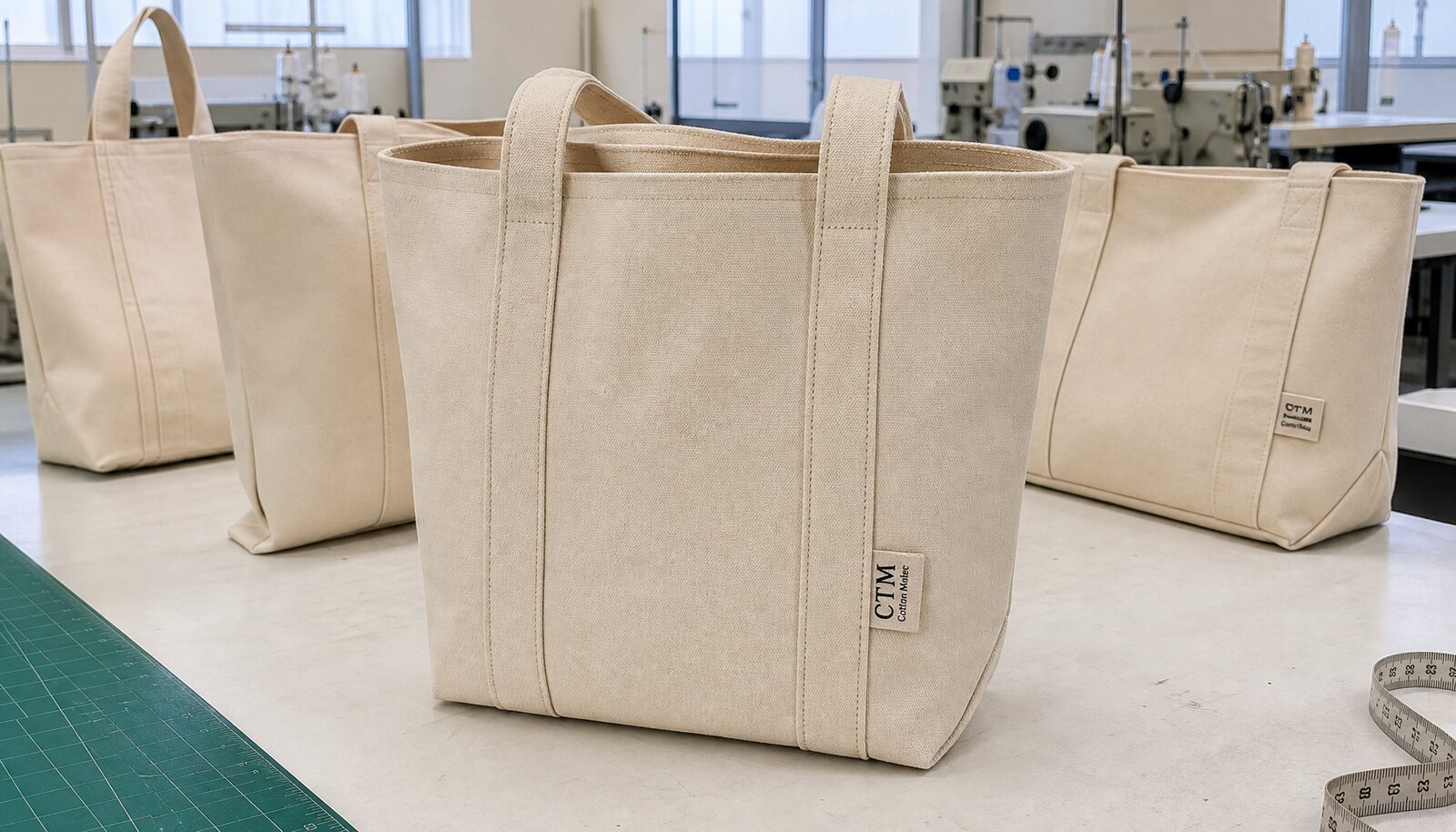
Why packaging specification matters more than artwork for charity totes
For charity campaigns, the tote bag is rarely a fashion item. It is a fundraising tool, a donor takeaway, a volunteer kit component, or a retailable item with a social message. That means the packaging spec has to protect three things at once: unit cost, usable quality, and on-time delivery. Buyers often spend too much time on the graphic and too little on how the bag is built, packed, and counted. The result is usually a quote that looks cheap at first and becomes expensive when rework, shipment delays, or carton issues appear.
The cleanest way to buy these bags is to define the tote like a production part, not a promotional idea. Your supplier should know the canvas weight, finished size, handle build, print method, packing format, and carton requirements before they price. If the campaign has donor distribution, retail resale, or event handout requirements, the packaging spec should reflect that use case. A bag that looks fine in a sample room can still fail if it arrives with poor print registration, weak handles, or packing that is too loose for warehouse receiving.
- Treat the tote as a finished packaged item, not just fabric and ink.
- Write the spec for the end use: donor gift, event giveaway, retail counter sale, or volunteer kit.
- Lock size, fabric, print, and packing before quote comparison.
Choosing the right canvas weight for campaign use
For most charity campaigns, 10 oz to 12 oz cotton canvas is the practical range. It gives enough body for screen printing, stands up better in display, and feels like a real product rather than a low-cost giveaway. If the tote is expected to carry brochures, light apparel, or a small boxed item, 10 oz is usually the lowest acceptable commercial weight. If the bag is part of a donor gift set or will be sold, 12 oz or 14 oz often improves perceived value without creating unnecessary cost pressure.
GSM and ounce weight should be written in the RFQ, because suppliers will sometimes quote a visually similar fabric that is actually lighter than expected. A lighter bag may save money on paper, but the print can sink into the fabric, the body can wrinkle badly after packing, and the handles can feel underbuilt. If the design uses large solid ink areas, a slightly heavier canvas also helps reduce show-through and improves print sharpness.
- 8 oz: acceptable only for very light handouts or short-term event use.
- 10 oz: standard value option for most charity campaign totes.
- 12 oz to 14 oz: better for donor packs, resale, or premium presentation.
- 16 oz: usually only justified when the bag is a premium retail item or carrying heavier contents.
Print method selection: cost, detail, and line speed
Screen printing is still the default choice for charity tote bags because it is economical, durable, and easy to repeat. One or two colors are ideal when you want a clean logo, campaign name, and sponsor mark. Water-based ink gives a softer hand feel on natural canvas, while plastisol can produce stronger opacity on darker fabrics or bolder artwork. If the logo is simple and the order size is meaningful, screen print usually gives the best balance of price and production speed.
The print method should be matched to the artwork, not just the budget. Fine text, gradients, or multi-color illustration often need transfer or digital printing, especially if the design has small type that must remain legible after folding and packing. Buyers should also define print location in millimeters from seams and top edge. If the logo is too close to the side seam or handle stitch, it can look crooked even when the printer did acceptable work.
- 1-2 color screen print: best for most charity campaigns and sponsor logos.
- Heat transfer or digital print: useful for small text, gradients, or complex artwork.
- Always approve a strike-off on the actual canvas weight you plan to buy.
- If the artwork includes sponsor names, state whether each name can vary by order.
Supplier routes and how they change your real landed cost
A direct factory quote is usually the best route when you need control over canvas weight, print quality, and packing consistency. The factory can advise on stitch construction, suggest a realistic MOQ, and tell you where cost jumps happen. That matters for campaign buyers because the cheapest quote often leaves out print setup, packing labor, or carton reinforcement. Once those are added later, the apparent savings disappear.
Trading companies or sourcing agents can still help when the order includes mixed products, multiple sizes, or complicated destination management. The tradeoff is that their quote may hide the actual printing plant, which makes it harder to compare quality controls. For charity campaigns, the most important question is not who is cheapest on paper; it is who will own the print registration, packing count, and carton accuracy when the deadline gets tight.
- Direct factory: better for stable specs, repeat orders, and packaging control.
- Trading route: useful if the order is part of a broader gift set or mixed basket.
- Ask who handles printing, packing, and final carton audit before comparing prices.
Comparison table: sourcing routes for charity campaign totes
The sample record for custom canvas tote bags for charity campaigns packaging specification guide should include front, back, side, seam, logo, label, inside, and packed-carton photos. For important programs, keep one signed physical sample and record the sample version in the approval file.
Approval should include the known deviations. A small accepted deviation is manageable when written down; an unwritten deviation becomes a dispute during final inspection.
- Write decisions in measurable language, not only descriptive wording.
- Ask for sample photos plus one physical approval sample for important orders.
- Keep quotation, sample approval, and inspection notes tied to the same spec version.
What to look for in the sample stage
A useful sample process has more than one step. First, review the fabric swatch or reference material so you know the hand feel and color direction. Second, approve a print strike-off on the actual canvas weight. Third, confirm a pre-production sample that includes the final handle length, seam build, and finish. If the order uses special packing, request a packed carton photo or a small pilot pack so you can see the final presentation before full production starts.
Do not approve a sample based only on appearance. Measure the finished size, check whether the tote stands upright, inspect stitch density at the handle attachment, and verify that the print is centered relative to the finished body. If the campaign has multiple distribution channels, compare a sample filled with the real contents. A tote that looks correct empty may fold badly or lose shape when brochures or boxed items are inserted.
- Fabric swatch or bulk fabric reference
- Print strike-off on final material
- Pre-production sample with finished stitching
- Packed carton photo or pilot pack if packing is non-standard
MOQ logic and how to keep the order commercially viable
MOQ for canvas totes is usually driven by fabric dye lot, print setup, and packing labor rather than by the bag shape alone. A simple one-color tote in natural canvas can often support a lower MOQ than a dyed bag with multiple print locations. If the campaign needs several sponsor names or region-specific versions, ask the factory whether the MOQ is per artwork or combined across versions. That single detail can change your cost structure more than the base unit price.
If your quantity is modest, consider simplifying the spec before you push for a lower MOQ. One handle color, one print location, and one packing method often matter more than shaving a few grams of fabric. A more disciplined spec can reduce setup waste and help the factory keep the quote stable. Buyers often get better pricing by reducing complexity than by negotiating blindly on unit cost.
- MOQ rises with more print colors, more versions, and special packing.
- Mixed sizes may be possible, but mixed artwork usually triggers separate setup charges.
- A simplified spec can be the fastest path to a workable charity campaign quote.
Packing specification: the hidden source of damage and rework
Packing is where many charity tote orders lose efficiency. Individual polybag packing looks neat, but it adds labor, plastic cost, and carton volume. Bulk packing is usually the right choice for campaign distribution, warehouse storage, and volunteer handout kits. The standard practical approach is 25 to 50 pcs per polybag or tied bundle, then export carton packing with clear quantity labels. If the bags are sold at retail or need a premium donor presentation, then you can add individual polybags, insert cards, or hang tags, but those are separate cost lines that should be quoted clearly.
Carton packing should be specified by count, carton dimensions, and net weight range. If the carton is too large, the bags can slide and crease; if it is too small, the canvas gets compressed and may wrinkle badly after unpacking. For importers, carton marks matter because warehouse teams rely on them for receiving. Put the campaign name, style, color, quantity, and ship-to code on the outer carton so the goods can be counted without opening every box.
- Bulk pack is usually best for charity distribution.
- Individual packing should be quoted separately, not buried in the bag price.
- Carton labels must match the PO and packing list exactly.
- Ask for carton size and gross weight before booking freight.
Lead time planning and schedule risk
For a standard charity tote order, production lead time after final artwork and sample approval is often around 25 to 40 days, depending on order size, fabric availability, print complexity, and packing format. That is not the whole schedule. Procurement teams need to work backward from the event date and include time for sample review, sponsor signoff, and possible artwork correction. If the order changes after the sample is approved, the schedule can stretch quickly because print plates, sewing lines, and packing instructions all need to be updated.
The biggest schedule risks are avoidable: unfinalized artwork, delayed approval, late changes to handle length or print placement, and unclear carton marks. Ask the supplier to quote based on a frozen spec, then keep the changes controlled. If your campaign has a hard ship date, build a buffer before freight booking. A bag order that is ready in the factory but missed the vessel cutoff is still a late order.
- Plan sample review before the factory starts bulk fabric allocation.
- Freeze artwork and carton marks early to avoid rework.
- Leave time for export documentation and freight booking.
- Ask the factory whether the lead time includes packing or only sewing and printing.
Quote breakdown: the data that should appear on every comparison sheet
A useful quote for charity campaign totes should not just show a unit price. It should separate the bag base cost, print setup, packing cost, sample cost if any, and export carton cost if applicable. Buyers should also see the fabric weight, print method, bag dimensions, MOQ, lead time, and packing count. Without that data, you cannot compare two suppliers on equal terms. One quote may appear cheaper because it hides the individual polybag cost or uses a lighter canvas.
When reviewing quotes, compare the total landed cost at your destination structure, not just the ex-factory price. If one supplier offers a lower bag price but requires more cartons, larger volume, or longer lead time, the real cost can be worse. For charity campaigns with strict event dates, timing is a cost driver. A late order can force air freight or emergency replacement sourcing, which makes a low unit price meaningless.
- Base bag cost
- Print setup and per-color charge
- Packing method and packing labor
- Carton specifications
- Sample cost and sample lead time
- Factory lead time and shipment readiness
Specification comparison for buyers
| Spec decision | Recommended option | When it fits | Buyer risk to check |
|---|---|---|---|
| Fabric weight | 10 oz to 12 oz cotton canvas, or 10 oz natural canvas with reinforced base | General charity merch, event giveaways, donor packs, resale at moderate price points | Too-light fabric can distort after printing and feel low value; too-heavy fabric increases cost and carton weight |
| Print method | 1-2 color screen print, water-based or plastisol depending on artwork and wash need | Simple campaign logos, short slogans, sponsor marks, repeat runs | Fine gradients, small text, or full-photo artwork may need transfer or digital print, which changes unit cost and lead time |
| Handle build | Self-fabric handles or cotton webbing handles with 2 cross stitches | Most charity programs where cost control matters and bags carry light to medium weight | Handle length and stitch density must match fill weight; weak handle ends cause field failures |
| Body construction | Side gusset with bottom gusset and folded top hem | When donors or volunteers need a bag that stands open and holds brochures or folded apparel | Flat tote is cheaper but loses usable volume and premium feel |
| Closure style | Open top unless contents are small or sensitive; add button or zipper only if campaign needs security | Event handouts, retail checkout, registration kits, simple merchandise packs | Closures add cost and can slow packing; unnecessary hardware creates procurement noise |
| Packing method | Bulk pack by 25-50 pcs in polybag, then export carton with size label and quantity mark | Large campaign orders, distributor programs, and warehouse receiving | Loose packing increases dust and count errors; overwrapped individual packing inflates labor and carton cube |
| Supplier route | Direct factory with in-house printing and packing control | Custom artwork, repeat orders, and buyers who need stable spec control | Trading routes can be useful for mixed sourcing but may hide print and QC responsibility |
| Sample approval level | Pre-production sample with fabric swatch, print strike-off, and packed master carton photo | Any order with a fixed event date or sponsor approval | Approving only a fabric sample misses print registration, handle length, and carton count issues |
| Lead time planning | 25-40 days after artwork and sample approval for standard production | Normal charity campaign calendars with confirmed PO and artwork | Lead time slips usually come from artwork delay, print plate changes, and packing instruction changes after approval |
Buyer checklist before sampling
- Confirm final tote size, gusset depth, and handle length in millimeters, not just a visual reference.
- Specify canvas weight in oz or GSM, plus whether the bag needs washing resistance, crisp print definition, or a softer hand feel.
- State artwork count, print location, Pantone references if applicable, and whether sponsor logos may be different sizes.
- Define packing format: bulk pack quantity per polybag, carton pack count, carton mark text, and whether hang tags are needed.
- Request a pre-production sample, print strike-off, and packed carton photo before mass production.
- Lock acceptance limits for stitching, print alignment, odor, stains, size tolerance, and handle pull strength.
- Clarify the target delivery date and back-plan approval milestones so the factory quote includes realistic lead time.
Factory quote questions to send
- What canvas weight do you recommend for this artwork and fill weight, and what price difference applies between 8 oz, 10 oz, 12 oz, and 16 oz fabric?
- Which print method are you quoting, and what changes in cost or lead time if the logo needs more colors or tighter registration?
- What is the MOQ by color and by print design, and can mixed sizes or mixed handle colors be combined in one order?
- Please quote separate prices for bag only, bag plus individual polybag, and bag plus retail-style insert card or hang tag.
- What sample stages are included before mass production: fabric swatch, print strike-off, pre-production sample, and packed carton sample?
- What is your normal production lead time after sample approval, and what is the fastest realistic timeline if artwork is already final?
- What carton size, carton weight, and outer packing count do you recommend for export and warehouse receiving?
- What QC checks do you perform for seam strength, print accuracy, fabric shading, and contamination such as oil marks or thread ends?
Quality-control points to confirm
- Fabric weight tolerance should stay within a practical commercial range; do not accept a quote that hides GSM or oz specification.
- Print placement should be measured from the top edge and side seam, with an agreed tolerance for left-right and top-bottom deviation.
- Handle seam reinforcement should be inspected at both ends, including stitch count and bar-tack or cross-stitch consistency.
- Bag dimensions should be measured after finishing, not just from cut fabric; confirm tolerance for body width, height, and gusset depth.
- Color consistency should be checked against approved swatches under standard light, especially for natural canvas and dyed handles.
- Packing count should be verified by carton and by inner polybag if used; charity orders often fail on count accuracy, not just appearance.
- Carton marks should match the PO and packing list exactly, including campaign name, size, quantity, and ship-to code.