Why Liquor Retailers Need a More Detailed Buying Checklist
Buying custom canvas messenger bags wholesale sounds simple until the order has to support real retail use. Liquor retailers often need one bag style to work across several functions: a branded staff carry bag for store teams, a wine club welcome kit, an account-visit bag for brand reps, a promotional gift-with-purchase item, or a durable bag for distributor sales materials. Each use case changes the right specification. A bag that works for catalogs and tasting notes may not work for glass accessories, and a bag that looks premium on a merchandising table may be overbuilt for a short seasonal campaign.
That is why procurement teams should avoid issuing vague requests such as custom canvas messenger bag with logo, 1,000 pieces. This kind of RFQ invites non-comparable quotes. One supplier may quote a light 10 oz canvas body with a fixed shoulder strap, no internal pocket, and compressed bulk packing. Another may quote 16 oz canvas, adjustable strap, reinforced stress points, branded label, and stricter export packing. Both offers may use the same bag name while representing materially different products, risk levels, and landed costs.
For liquor retail procurement, the strongest buying checklist begins with commercial purpose, daily handling requirements, and brand presentation standards. The factory needs to know whether the bag will be handed to VIP customers, shipped to store locations, used by mobile teams, or resold as merchandise. Once that operating context is clear, the buyer can translate it into measurable specifications: finished size, fabric weight, strap width, reinforcement, logo location, sample stage, inspection standard, and carton plan.
A useful custom canvas messenger bags wholesale buying checklist for liquor retailers should therefore function as a quote tool, an approval tool, and a QC tool. It should help the buyer compare suppliers fairly, reduce misunderstanding before cutting, and create objective pass-fail standards once goods are produced.
- State the business use before requesting price.
- Ask suppliers to quote against the same construction sheet, not a bag photo alone.
- Define what is mandatory versus optional so cost tradeoffs are visible.
- Use the sample approval stage to lock the specification, not to improvise design changes.
Define the Use Case Before You Define the Bag
The most common buying mistake is choosing a messenger bag shape first and only later deciding what the bag must actually do. For liquor retailers, that sequence should be reversed. Start with the end use and expected contents. If the bag is for store associates carrying tablets, tasting forms, receipts, and personal items, strap comfort and pocket layout matter more than decorative trims. If the bag is a customer gift for a wine club enrollment campaign, the exterior appearance, flap presentation, and clean branding may matter more than internal organization. If the bag is for distributor account managers, document capacity, tablet fit, and repeat durability become more important than novelty.
A short use-case brief can dramatically improve quote accuracy. For example, saying the bag must carry an A4 folder, a tablet, tasting cards, and small merchandise is more useful than saying medium size. Saying the bag may occasionally carry one boxed bottle but is not intended as a dedicated bottle carrier helps suppliers avoid underbuilding the bottom panel while also preventing incorrect assumptions about dividers or padding.
This use-case step also helps procurement separate must-have functions from optional brand details. Adjustable strap, reinforced side seams, and a closure may be functional requirements. Branded zipper pullers, woven side labels, and paper belly bands may be optional retail presentation elements. When these categories are mixed together in one loose request, the supplier often guesses what can be removed to keep price down.
For buyers coordinating internal stakeholders, use the use-case definition to align marketing, retail operations, and sourcing. Marketing may prioritize a bold front flap logo. Operations may care more about dimensions, opening access, and strap durability. Sourcing needs both sides translated into measurable requirements before negotiations begin.
- Write one sentence on who uses the bag and one sentence on what goes inside it.
- List the heaviest expected load, even if the bag is usually carried light.
- Clarify whether bottles are primary contents, occasional contents, or not part of intended use.
- Separate retail presentation features from functional construction features before quote comparison.
Bag Construction Specifications That Matter Most
Once the use case is fixed, define the physical construction in enough detail that two factories are pricing the same product. For most liquor retail programs, a practical messenger bag sits between a low-cost event tote and a heavy field bag. A common starting range is about 32-38 cm wide, 25-30 cm high, and 8-12 cm deep, but the right size should be based on the largest item the bag must hold. If A4 catalogs, promotional folders, or a tablet are required, state those dimensions directly. If the bag must fit boxed gift items or bottle accessories, include those dimensions too.
Structure affects both appearance and utility. A full front flap generally delivers the cleanest retail look and gives more area for logo placement, but it uses more fabric and can add weight. A shorter flap lowers cost and can improve quick access, yet may make the bag look more casual. A boxed bottom and side gusset help the bag sit upright on a counter and hold mixed contents more neatly. Flat construction is cheaper, but often looks less substantial and can distort once loaded.
Internal construction should be selected with restraint. One inner slip pocket is often enough for tasting notes, receipts, or a phone. Additional zipper pockets, pen loops, bottle sleeves, and organizer panels can sound attractive in concept meetings but raise sewing time and create more QC points. If the bag will be used by store teams every day, add only the features that serve a repeated need. Over-featured bags cost more and create more opportunities for inconsistency in bulk.
Strap specification deserves explicit attention. In liquor retail environments, bags are carried across stores, event venues, and account visits. A 38-50 mm cotton webbing strap with adjustable hardware is usually more appropriate than a narrow strap that saves cost but feels less stable under load. Specify whether the strap is fixed or adjustable, the adjustment range, and how the strap is anchored to the body. Reinforcement at attachment points should be named directly, such as X-stitch, box stitch, or bar tack.
- Specify size as width x height x gusset in centimeters or millimeters.
- State flap style: full flap, half flap, or short flap.
- State bottom construction: flat, boxed, or reinforced base panel.
- Name each inside feature individually instead of saying with pockets.
- Specify strap width, strap material, adjustment range, and reinforcement method.
Choosing Canvas Fabric for Retail Image and Performance
Fabric weight is one of the biggest drivers of how the finished bag feels in hand. For custom canvas messenger bags wholesale orders used by liquor retailers, 14-16 oz cotton canvas is a strong default starting point. It typically offers enough body for a messenger silhouette, supports a flap and hardware better, and helps the bag look reusable rather than disposable. By contrast, lighter 10-12 oz canvas may be acceptable for short campaigns or budget event use, but it can feel soft or collapse under documents, catalogs, or boxed accessories.
Buyers should ask for both oz and GSM and clarify how the measurement is taken. Some quotations mention only ounce weight without defining whether it refers to greige fabric, finished fabric, or a marketing approximation. For comparative sourcing, procurement should request the actual finished fabric specification and, where possible, the finished bag weight of the approved sample. This helps prevent a common issue where a production run feels noticeably lighter than the sample photography suggested.
Material type also changes sourcing risk. Natural canvas is usually the most straightforward route for MOQ, timing, and print clarity. It works well with black, burgundy, navy, dark green, or other common liquor brand colors applied by screen print. Dyed canvas can create stronger visual alignment with a brand campaign, but it adds dye-lot management, fabric lead time, and the need for lab dip or swatch approval. Recycled cotton blends may support a sustainability objective, yet buyers should sample carefully because yarn irregularity and surface texture can influence print sharpness and perceived quality.
Specialty finishes such as waxed canvas should be used only when they support the actual commercial purpose. Waxed fabric can look premium and offer some moisture resistance, but it changes hand feel, sewing behavior, packing, surface marking risk, and odor expectations. It may be suitable for premium gifting or outdoor-oriented positioning, but should not be selected casually if the program needs clean print reproduction, soft folding, or tightly compressed sea-freight packing.
- Request fabric weight in both oz and GSM.
- Confirm whether quoted weight is before dyeing, after dyeing, or finished weight.
- Approve a real swatch for dyed or recycled canvas before sample sign-off.
- Check whether the chosen fabric supports the intended print method cleanly.
- If waxed canvas is proposed, ask how surface marks and packing compression will be managed.
Logo Placement and Decoration Methods for Liquor Brands
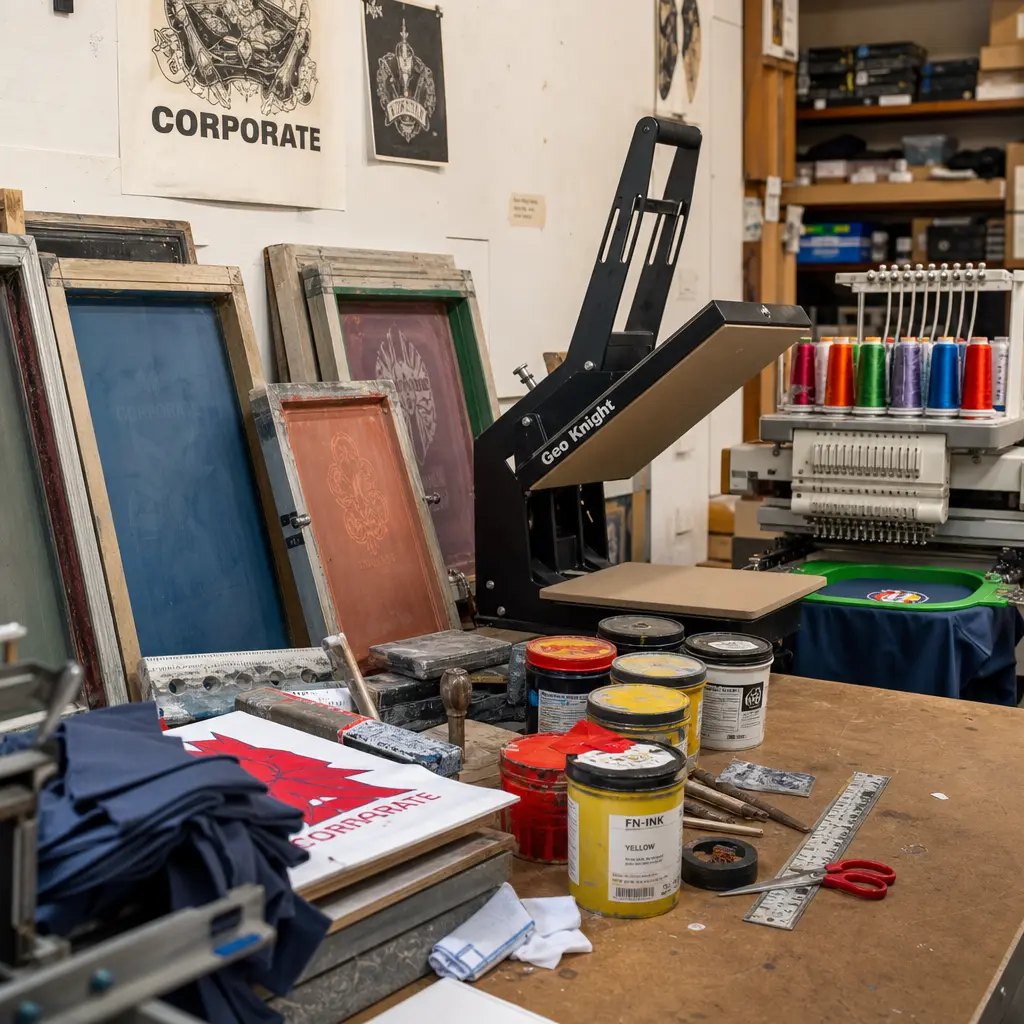
Decoration method should be selected based on artwork style, order quantity, and the role of the bag in the customer experience. Screen printing is usually the most efficient method for wholesale custom canvas messenger bags when the artwork is bold, solid, and front-facing. That makes it a common choice for liquor retailers using a single master brand, sub-brand icon, event wordmark, or store logo on the front flap or body panel. On natural canvas, one or two ink colors often achieve the best cost-to-appearance balance.
However, not every liquor logo behaves well on rough canvas. Fine serif text, tiny legal lines, and label-style heritage artwork may lose clarity if printed too small. In those cases, a woven label, printed patch, or simpler secondary mark may reproduce more reliably. Procurement should not approve decoration based on vector artwork alone. The actual substrate matters. Coarse canvas absorbs ink differently from paper or coated packaging, and the logo may visually widen, soften, or feel stiffer if a heavy underbase is used on dark dyed fabric.
Embroidery can add perceived value but should be specified carefully. Dense embroidery on a flap can cause puckering if backing, stitch density, and panel support are not balanced. For smaller premium marks, especially crest-style or initials-based logos, embroidery can work well after panel testing. Woven labels are useful when the brand wants subtle identification or when a multi-brand distributor needs a more neutral front appearance with branding moved to a side seam or inside position. Patches and labels can also help when the bag may be reordered repeatedly and the buyer wants greater consistency across batches.
Logo location should be measured, not described loosely. Saying centered on flap is not enough. The factory should receive the exact print size and the distance from top edge, side edge, flap seam, or closure point. This is especially important on messenger bags because the flap is the visual focal point. Even a small shift can look more obvious on a centered front panel than on a simple tote body.
- Use screen print for bold, simple front branding.
- Use woven labels when fine detail or discreet branding matters.
- Test embroidery on the actual flap fabric before bulk approval.
- Avoid very small text directly on textured canvas surfaces.
- Specify artwork size and placement in millimeters, not by visual estimate.
MOQ, Quote Comparison, and Cost Control in Wholesale Buying
MOQ is often misunderstood as a single factory rule, but in practice it is a combined result of material sourcing, print setup, hardware availability, sewing efficiency, and packing requirements. A natural canvas bag with a one-color screen print and standard metal slider may have a much lower practical MOQ than a custom Pantone-dyed bag with custom hardware finish, woven labels, and individual retail barcode sleeves. When a supplier states a minimum, buyers should ask what component is creating it.
For procurement teams, the best quote comparison format shows at least two or three quantity breaks. A single price at 1,000 pieces does not reveal how much of the cost is fixed setup versus variable material and labor. Seeing prices at 500, 1,000, and 2,000 pieces can help retailers decide whether a larger seasonal order or chain-wide roll-out creates better value. It also helps expose quotes that seem cheap only because key features were omitted.
Cost should be discussed at feature level rather than only at total unit price. Fabric weight and bag size generally move the base price more than a modest logo revision. Adjustable straps add usability but also labor and hardware cost. Internal zipper pockets increase both sewing time and inspection complexity. Custom labels are often inexpensive per piece at scale, but they may bring their own MOQ and lead-time implications. Packing can materially affect the landed cost through carton volume and freight mode, especially when bags are shipped individually packed to multiple stores or warehouses.
A disciplined buying checklist lets the buyer identify where to save without damaging the retail outcome. For example, changing from a zipper pocket to a slip pocket may reduce cost with limited impact. Reducing fabric weight too aggressively may save on paper while making the final product feel promotional rather than reusable. Procurement should ask each supplier to separate included features, optional upgrades, tooling or setup charges, and any assumptions about packing or inspection.
- Ask what drives MOQ: fabric, dyeing, label, hardware, print, or packing.
- Request price breaks at multiple quantities.
- Compare quotes using the same construction sheet and packing assumption.
- Identify which features are optional upgrades versus functional necessities.
- Review freight impact if individual packing increases carton volume.
Sample Development and Approval Workflow
For B2B buyers, the sample process is not a formality. It is the point where the specification becomes enforceable. A useful workflow usually begins with a material swatch or fabric confirmation, followed by a print strike-off or decoration test where needed, and then a full pre-production sample made with the intended bulk materials. If timing only allows one full sample stage, the buyer should insist that it uses the same canvas weight, same webbing, same closure type, and same branding method planned for bulk production.
A sample should be evaluated as a measurable object, not only as a visual concept. Measure width, height, gusset depth, flap drop, pocket placement, strap length at minimum and maximum adjustment, and logo placement from fixed points. Open and close the snap or magnetic closure repeatedly. Load the sample with the expected contents. Observe whether the bag keeps shape, whether the flap aligns naturally, whether the strap twists, and whether the internal pocket is actually useful. This kind of practical review catches issues that a flat approval photo never reveals.
Liquor retailers should also review the sample in the context of brand presentation. Place it on a shelf, gifting table, or account-visit setting similar to the intended use. Does the front panel stay presentable? Does the flap crease sharply? Does a dark print look crisp or too heavy? Is the hand feel aligned with the price point and brand image? A messenger bag used as a premium loyalty item should not feel like a conference giveaway once touched in person.
Keep one approved sample with the buyer and one with the supplier. The approval record should include dimensions, photos, material notes, approved artwork size, and any agreed tolerances. During final inspection, the factory and inspector should compare production against this physical standard rather than relying only on an email thread.
- Approve bulk-representative materials, not substitute sample materials.
- Measure all visible dimensions and logo positions from fixed reference points.
- Test the bag with real contents, not empty only.
- Record approval notes for hardware finish, trim color, and flap alignment.
- Retain a buyer-approved counter sample for inspection reference.
Packing, Carton Planning, and Distribution Requirements
Packing deserves more attention than many buyers give it, especially for messenger bags. Compared with flat totes, messenger bags have more bulk and more pressure-sensitive details: flap shape, shoulder straps, hardware, and printed front panels. If too many pieces are forced into one carton, the flaps can crease, the sliders can imprint the body fabric, and the logo area can develop pressure marks. These issues may not be visible in a packed factory photo but can become obvious when cartons are opened at a retail distribution center.
Retailers should decide early whether the bags are shipping in bulk, in individual polybags, in paper sleeves, or in store-ready units. Individual packing helps protect the surface and simplifies store allocation, but adds material cost, labor, and freight volume. Bulk packing may be acceptable for internal staff use or central warehouse distribution, provided the fold method is defined and moisture control is adequate. Where brand presentation matters, a simple paper belly band or insert card may be enough without moving to fully retailized packaging.
Carton specifications matter commercially as well as operationally. Procurement should ask for pieces per carton, carton dimensions, gross weight, net weight, and estimated CBM before the purchase order is finalized. This information affects warehouse handling, palletization, and freight budgeting. If the retailer runs through a third-party logistics partner or a chain distribution center, carton strength and labeling format should be validated in advance. Missing PO marks, incorrect SKU labels, or mixed quantities per carton can create chargebacks or receiving delays that exceed the savings from cutting corners on packing.
Because cotton canvas can absorb ambient moisture and odor, export packing should also address shipment conditions. Desiccants, dry packing conditions, and clean warehouse handling become more important for sea freight, especially on natural canvas. Buyers should ask how hardware is prevented from rubbing against printed areas and whether folded bags are stacked in a way that protects the visible front panel.
- Confirm units per carton and acceptable carton weight.
- Specify carton marks: PO, SKU, quantity, destination, and colorway if applicable.
- Choose packing based on final distribution route, not habit.
- Protect front logo areas from hardware pressure during folding.
- Add moisture-control measures for sea-freight shipments when appropriate.
Lead Time Planning and Supply Risk Management
A quoted production lead time is only meaningful if the start point is clear. Some factories count from sample approval, some from deposit receipt, and some from final artwork and material confirmation. Procurement teams should map the full timeline backward from the required in-warehouse date, not merely from the desired ship date. For a liquor retailer launching around holidays, tasting events, or seasonal gift programs, customs clearance, inland transport, and DC intake time may matter as much as the factory production window.
The usual chain includes artwork review, material availability check, lab dip or swatch approval if needed, sample production, sample transit, approval feedback, bulk material booking, cutting, printing, sewing, finishing, inspection, packing, and shipment handover. Delays often occur not because the sewing takes too long, but because an approval bottleneck or late spec change interrupts the sequence. A changed flap print size after bulk cutting, a revised carton label after packing, or a new closure choice after hardware has been sourced can all create avoidable schedule pressure.
The highest timing risks for these programs are usually custom-dyed fabric, hardware shortages, incomplete artwork files, delayed sample feedback, and packaging changes added late by marketing or retail operations. Stock natural canvas and standard hardware usually reduce timing risk for urgent wholesale projects. If the order requires dyed canvas or a custom label package, procurement should build additional buffer and push approvals forward earlier.
A simple schedule discipline helps. Freeze the specification before bulk cutting. Confirm who signs off on artwork, sample, and packing. Put the inspection window into the production calendar rather than treating QC as an afterthought. For repeat orders, maintain a version-controlled specification so the reorder does not restart from memory.
- Work backward from required warehouse arrival date.
- Clarify whether lead time starts from approval, deposit, or both.
- Build extra buffer for dyed fabric, custom labels, and retailized packing.
- Do not change construction after bulk material booking unless schedule impact is accepted.
- Include inspection and dispatch time in the official timeline.
Quality Control Standards for Wholesale Messenger Bag Orders
Quality control for custom canvas messenger bags should be written in operational terms that a factory and inspector can actually use. For liquor retail buyers, critical defects typically include wrong logo, wrong material, broken strap attachment, unsafe sharp hardware, mildew, or contamination. Major defects usually include visible stains on customer-facing areas, missing reinforcements, severe logo misplacement, non-functioning snaps or magnets, distorted flap alignment, missing pockets, and incorrect carton markings. Minor defects may include small thread ends or slight shade variation within the approved range.
The front flap deserves special control because it is often the key branding surface. On a messenger bag, customers see the flap first, and even a small position drift becomes visible quickly. That is why print placement tolerance should be established before production, commonly around plus or minus 3-5 mm for visible logos unless the design requires a tighter tolerance. The same logic applies to woven labels, patch placement, and snap alignment. A centered flap with an off-center closure point can make a bag appear low quality even if the sewing itself is structurally sound.
Structural QC should focus on areas likely to fail in use. Strap attachments, gusset seams, bottom corners, and pocket joins deserve close inspection. Reinforcement should match the approved method, and simple static load or pull checks should be completed where agreed. Hardware should open and close smoothly and sit in the correct position relative to the flap. Rust risk, coating scratches, or rough edges should be checked before shipment rather than discovered after retail receipt.
Appearance QC should also include odor, handling marks, fold quality, and export packing condition. Natural canvas can show dust or oil marks more easily than synthetic fabrics, so cleanliness standards should be realistic but clear. Cartons should be opened randomly to verify quantity, folding method, moisture protection, and correct shipping marks. Without written standards, disputes become subjective. With them, the buyer has a basis for approval, rework request, or claim management.
- Define critical, major, and minor defect categories before production.
- Set measurable print and label placement tolerances.
- Inspect reinforcement at strap and load-bearing seams.
- Check hardware function, alignment, finish, and rust condition.
- Open random cartons to verify packing, odor, quantity, and labeling.
Specification comparison for buyers
| Spec decision | Recommended option | When it fits | Buyer risk to check |
|---|---|---|---|
| Fabric weight | 14-16 oz cotton canvas, roughly 475-540 GSM before washing | Retail staff bags, brand gift bags, wine club welcome kits, distributor documents, and light bottle accessories | Lower GSM can look acceptable in photos but collapse under catalogues, tablets, or bottle sleeves; require sample weight and finished bag weight. |
| Bag structure | Messenger flap with boxed bottom, inner slip pocket, reinforced side seams, and bar-tacked strap points | Orders where the bag must look like a reusable retail item instead of a thin event giveaway | Flat tote-style construction sold as messenger shape may not sit well when loaded; review side gusset and bottom depth. |
| Closure | Metal snap, magnetic snap, or cotton tie depending on brand tone and safety requirement | Snap closures fit premium retail gifting; ties fit natural or organic positioning; magnets fit quick access staff use | Magnets can affect cost and require correct placement; metal hardware may trigger color consistency and rust-prevention checks. |
| Logo method | Screen print for solid liquor brand marks; embroidery or woven label for smaller premium marks | Screen print works for most wholesale orders above MOQ; labels work when artwork has fine lines or must survive heavy use | Large ink coverage on dark canvas can feel stiff; embroidery on thin flap areas can pucker if backing and stitch density are wrong. |
| Strap specification | 38-50 mm cotton webbing with adjustable slider and reinforced X-stitch or bar tack | Bags used by store staff, sales reps, or delivery teams carrying catalogs, tablets, receipts, or light accessories | Narrow straps reduce cost but feel cheap under load; confirm strap drop, slider material, and load test target. |
| Order quantity route | Factory direct for 500-1000+ pcs; trading stock route only for small urgent runs | Factory direct fits controlled branding, packaging, and repeat liquor retail programs | Stock routes may limit fabric color, pocket layout, and logo placement; repeat orders may not match the first batch. |
| Packing plan | Individual polybag or paper belly band, 25-50 pcs per export carton, moisture control for sea freight | Retailers distributing by store, franchise, event, or distributor warehouse need predictable carton counts | Overpacked cartons crease flaps and deform straps; under-specified cartons create chargeable volume surprises. |
| QC threshold | AQL inspection with critical defects at zero tolerance and major visual defects controlled by agreed sample | Useful for importers and distributors receiving goods into a 3PL or retail DC | Without written tolerances, disputes become opinion-based; define print position tolerance, stain limits, seam strength, and carton labeling. |
Buyer checklist before sampling
- Define the business use first: staff bag, loyalty gift, wine club kit, distributor sales bag, local delivery bag, or seasonal retail promotion.
- State finished size as width x height x gusset, not only capacity; include the largest item the bag must carry.
- Specify fabric weight in oz and GSM, plus whether the weight is before or after dyeing or washing.
- Confirm canvas type: natural, dyed, recycled cotton blend, organic cotton, or waxed canvas if moisture resistance is required.
- List the required strap width, strap length range, adjustment hardware, and reinforcement method at each stress point.
- Choose closure type and placement: snap, magnetic snap, zipper under flap, hook-and-loop, cotton tie, or no closure.
- Provide logo artwork in vector format with Pantone references and actual print size in millimeters.
- Decide whether the liquor brand mark sits on the flap, body panel, side label, strap, or inside label before sampling.
- Require a pre-production sample using bulk fabric, bulk hardware, bulk label, and final print method.
- Set acceptance criteria for print position tolerance, color tolerance, thread trimming, seam strength, odor, stains, and carton labeling.
Factory quote questions to send
- What exact fabric weight will be used in oz and GSM, and is that measurement before dyeing, after dyeing, or finished fabric weight?
- Is the quoted canvas in stock, greige fabric to be dyed, or custom woven, and what MOQ changes with each option?
- What finished bag size, gusset depth, flap length, strap width, and strap adjustment range are included in the price?
- Which reinforcement is included at strap joints: single row stitching, box stitch, X-stitch, or bar tack?
- Which print method is quoted, what is the maximum logo size, how many colors are included, and what is the setup cost?
- Can the factory provide a material swatch, print strike-off, and full pre-production sample before bulk cutting?
- What hardware is included: snap button, magnetic snap, slider, buckle, D-ring, zipper, or branded metal part?
- What is the MOQ for natural canvas, dyed canvas, custom Pantone fabric, embroidery, woven labels, and individual retail packing?
- How many pieces per carton are planned, and what are the estimated carton size, gross weight, and CBM?
- What are the sample lead time, bulk lead time after approval, inspection window, and earliest ship date?
Quality-control points to confirm
- Fabric GSM and finished bag weight match the approved sample within agreed tolerance.
- Finished dimensions are within normal sewn bag tolerance, typically plus or minus 5 mm for small panels and 10 mm for larger body measurements unless tighter tolerances are agreed.
- Logo position on flap or body panel is consistent within the approved tolerance, commonly plus or minus 3-5 mm for visible retail branding.
- Print color is checked against Pantone target or approved strike-off under consistent light, not only by phone photo.
- No obvious canvas stains, oil marks, mildew odor, loose threads, broken stitches, fabric holes, or severe creases on customer-facing panels.
- Strap joints use the approved reinforcement and withstand agreed static load or pull test without seam tearing.
- Hardware opens and closes smoothly, does not rust, and is aligned with the flap and receiving point.
- Inner pocket, label, zipper, snaps, and strap slider are attached in the correct orientation and location.
- Cartons use agreed units per carton, correct PO marks, moisture protection if needed, and enough strength for export handling.