Why coffee roaster buyers need a tighter messenger bag RFQ
Coffee roasters rarely buy custom canvas messenger bags as a generic fashion accessory. The order usually has a business job to do. It may support café retail merchandise, equip sales reps, thank wholesale accounts, promote a subscription campaign, reward distributors, or create staff gear for events. Those bags can look similar in a product photo, but the right specification changes quickly once the use case is clear. A retail merch bag needs consistent logo placement and neat shelf presentation. A sales rep bag needs stronger strap anchors, practical pockets, and a closure that behaves when the bag is filled. A trade show bag may need speed and cost control, yet it still has to represent the roaster well.
The most common sourcing problem starts with an RFQ that is too thin: size, logo, quantity, target price, and a reference image. One supplier may quote an unlined 12 oz canvas flap bag with a basic cotton strap. Another may quote a 16 oz body, full lining, zipper under flap, reinforced base, and antique brass hardware. Both can honestly call the product a custom canvas messenger bag. Procurement, however, is not comparing the same item. Samples then become expensive discovery tools instead of confirmation tools.
A stronger wholesale RFQ turns brand intent into measurable construction. Instead of saying the bag should feel premium, name the canvas weight, lining choice, hardware finish, strap width, pocket layout, logo method, packing format, and inspection requirements. Instead of asking for something similar to a reference photo, identify which features matter: flap shape, body size, stitch color, strap texture, label placement, or hardware style. The goal is not to over-engineer the bag. The goal is to remove guesswork before pricing, sampling, and production all start moving.
- Define whether the order is for resale, internal staff use, distributor gifting, subscription promotion, or event merchandise.
- State the intended carry load and item list, not only the outside dimensions or reference photo.
- Separate must-have specifications from optional upgrades before quoting starts.
- Treat structure, lining, strap, hardware, logo application, and packing as main cost drivers.
- Ask each supplier to list assumptions and exclusions directly in the quote.
Start with the load, size, and item-fit requirements
Begin with what the bag must carry. For coffee roasters, that list might include cupping notebooks, A4 sell sheets, tablets, a 13-inch laptop, chargers, POS cards, wholesale account forms, green coffee sample packs, or 250 g and 500 g retail coffee bags. A messenger bag for event brochures can stay lighter and simpler. A bag for reps visiting cafés needs better strap reinforcement, a secure top opening, and pockets that can be used while standing. A café retail item needs a useful shape, but it also needs to hang, stack, or display cleanly.
A practical messenger size often lands around 34-40 cm wide, 26-30 cm high, and 8-12 cm deep. That range suits notebooks, tablets, catalogs, and light merchandise without becoming a bulky courier bag. If a laptop sleeve is required, do not rely on outside dimensions. Ask for the usable sleeve width and height after padding, seams, and lining are installed. A 13-inch laptop requirement should be written as an item-fit test, with the device dimensions, sleeve opening, padding thickness, and zipper access all confirmed.
Set tolerances before the first serious sample. For many canvas messenger bags, a practical starting point is +/-1 cm on overall width and height, +/-0.5 cm on pocket openings, +/-0.5 cm on logo placement, and +/-1.5 cm on adjustable strap length. These are not universal rules. Washed canvas, curved flaps, heavy seams, and padded sleeves may need different tolerances. Still, a written starting point keeps the conversation concrete and prevents arguments later over what “close enough” means.
- Typical finished size range: 34-40 cm W x 26-30 cm H x 8-12 cm D.
- Typical body canvas range: 12 oz to 16 oz, approximately 340-455 GSM.
- Common strap width: 38 mm for standard daily carry; 50 mm for heavier loads or comfort positioning.
- Laptop requirements should specify usable sleeve dimensions, opening size, and padding thickness.
- Coffee-pack fit should specify pack size, such as 250 g, 340 g, 500 g, or 1 kg, because pack dimensions vary by format.
Specify canvas, lining, finish, and reinforcement as separate cost drivers
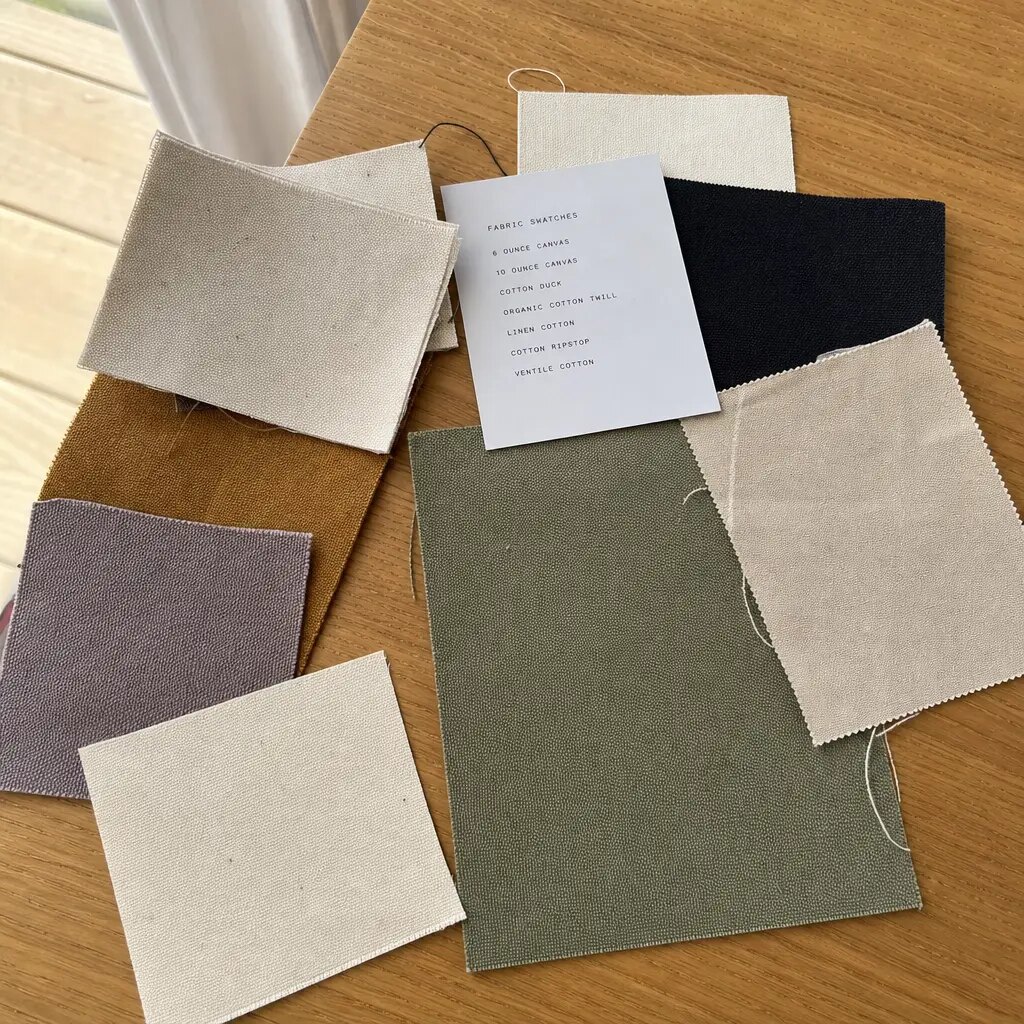
Canvas is not one decision. Unwashed natural cotton canvas gives a crisp, workwear-style structure and often accepts screen print more cleanly than washed fabric. It fits many specialty coffee brands because it feels tactile, simple, and honest. The tradeoff is visibility of handling marks, café spills, and abrasion. Washed canvas feels softer and more retail-ready, but it can bring more dimensional variation and a less sharp print edge. Piece-dyed canvas in black, charcoal, olive, brown, rust, or navy can align nicely with coffee brand palettes, but darker colors require closer shade and rubbing checks.
Ask exactly what the quoted fabric weight means. Is it greige fabric weight, finished fabric weight, or post-wash weight? A 14 oz canvas before washing may not behave like a 14 oz finished canvas. Also confirm whether every visible panel uses the same material. Some suppliers reduce cost by using lighter gussets, back panels, pocket fabric, or flap lining. That may be acceptable if it is disclosed, sampled, and approved. It should not be a surprise after the bulk sample arrives.
Lining changes function, structure, and perceived value. Full lining gives a cleaner interior, hides seam allowances, and supports pockets, but it adds material and sewing time. A partial lining or a lined laptop sleeve can be a better cost-to-use balance for many wholesale runs. No lining can work for a rugged canvas style if the inside seams are bound neatly. Reinforcement is often more important than simply increasing fabric weight. A 14 oz bag with reinforcement at strap anchors, base corners, zipper ends, and snap positions may perform better than a heavier bag with weak stress points.
- Confirm canvas weight by panel: flap, front, back, gusset, base, pockets, and lining.
- Ask whether quoted fabric is stock, fresh dyed, washed after sewing, or washed before cutting.
- Use reinforcement at stress points instead of making every panel heavier.
- For dark dyed fabric, check dry and wet rubbing risk, especially against light clothing.
- Define unacceptable fabric issues: oil marks, mildew odor, severe shade mismatch, stains in logo area, or obvious skewing.
Design pockets, closures, and strap construction for real daily handling
Messenger bags often disappoint at the handling details, not in the hero photo. The flap may look right when the bag is flat, then shift when the body is filled. A magnetic snap may feel convenient, but it can pull through canvas if there is no backing reinforcement. A zipper may be included, yet the opening may be too narrow for the intended laptop, catalog, or sample kit. These details belong in the specification before sampling, so the sample can answer real functional questions.
For most coffee roaster programs, a balanced pocket layout beats a complicated one. One internal zipper pocket, one open sleeve, and a pen or key loop are often enough. If the bag is for field sales, add a padded sleeve sized for a tablet or laptop and check that it is easy to access under the flap. If the bag is retail merchandise, extra compartments may add cost without improving sell-through. Every added pocket also adds more seams, alignment points, and chances for thread tension or fabric distortion.
Closure choice should match the security expectation. A flap-only design is simple and classic, though less secure. Hidden magnetic snaps look clean but need reinforcement behind the snap. Tuck locks create a traditional messenger look, but they require accurate alignment and can slow final inspection. A zipper under the flap improves security and perceived value, but the usable opening must be measured after sewing. For the strap, start with 38 mm webbing, an adjustable slider, and X-box or bartack reinforcement at the anchors. For laptop carry or heavier sample loads, consider 50 mm webbing, a shoulder pad, or additional anchor reinforcement before adding decorative trim.
- Require usable pocket dimensions, not only pocket names on a drawing.
- For magnetic snaps, specify backing reinforcement to reduce pull-through risk.
- For zipper-under-flap designs, measure the actual opening after sewing and after the bag is filled.
- Strap anchors should use X-box stitching, bartacks, rivets plus stitching, or another approved reinforcement method.
- Confirm strap length range, such as minimum and maximum drop, instead of saying only “adjustable strap.”
Choose logo application based on canvas texture and brand positioning
Coffee merchandise often works best when it feels useful, not overly promotional. The logo method should support that. A one-color screen print on the flap is usually the most cost-efficient option for visible branding, especially for bold marks, café names, and event graphics. It is straightforward at wholesale quantities and easy to read on a café shelf. The limitation is the canvas surface itself. Fine lines, tiny text, and large solid ink areas can show pinholes, edge breakup, or slight ink spread.
Woven labels are a strong choice for quieter branding. A small side label, flap label, or inside label can give the bag a private-label feel while reducing the risk of a large direct-print defect. Woven labels often handle detail better than direct print on coarse canvas, although very small lettering can still lose clarity. Printed cotton labels or canvas patches suit natural, craft-oriented positioning. Embroidery can look premium, but it must be sampled on the actual canvas weight because dense stitching may pucker the flap or require backing that changes handfeel.
Put artwork requirements in writing. Include file format, artwork size, Pantone or standard color reference, print or label position from edges, and acceptable placement tolerance. If the order includes multiple roaster locations, café names, event logos, or distributor versions, ask whether each artwork affects MOQ or setup charges. Mixed artwork orders can require separate screens, labels, packing lists, and inspection lots even when the bag body is identical.
- Screen print is usually best for bold one-color flap branding.
- Woven labels are safer for subtle branding and fine logo details.
- Printed cotton patches suit natural canvas and craft-style positioning.
- Embroidery must be sampled on actual canvas to check puckering and backing visibility.
- Approve a strike-off on actual or bulk-like canvas before bulk print production.
Understand MOQ, customization level, and quote comparability
MOQ is not just a quantity. It reflects material sourcing, pattern work, trim availability, printing setup, cutting efficiency, sewing line setup, and packing format. An existing messenger bag pattern with custom print, labels, stock hardware, and stock canvas may be practical around 300-500 pieces, depending on supplier capability and material availability. A fully custom silhouette with new pocket engineering, laptop padding, custom-dyed canvas, non-stock hardware, and special packaging often needs 800-1000 pieces or more to make commercial sense. Smaller runs may be possible, but the tradeoff usually appears somewhere: higher unit cost, higher sample fees, fewer choices, or longer development.
For coffee roasters testing a merchandise program, shared-pattern customization is often the lowest-risk route. Use a proven body shape, then customize what customers notice: canvas color, logo method, label, hardware finish, lining color, hangtag, and packing. This approach makes supplier comparison easier and reduces technical risk. Once reorder demand is proven, a fully custom body can be developed with more confidence.
Do not compare FOB unit price alone. Ask each factory to quote against the same spec sheet and confirm assumptions line by line. A lower price may come from lighter canvas, fewer reinforcement stitches, no top zipper, cheaper webbing, thinner lining, smaller print area, or tighter carton packing that creases the bag. A useful quote separates material assumptions, trims, logo application, sample cost, packaging, inspection support, and carton data. The factory does not need to disclose every internal cost, but procurement needs enough visibility to compare offers fairly.
- Existing pattern plus custom branding is usually the fastest and lowest-risk route.
- Fully custom pattern development often requires more sample rounds and higher MOQ.
- MOQ can vary by bag color, logo artwork, fabric finish, hardware finish, and packaging format.
- Ask suppliers to list excluded features and assumptions directly in the quote.
- Compare carton quantity, carton dimensions, and gross weight because freight can erase a low unit-price advantage.
Use sampling to approve function, measurements, and production risk
Treat a messenger bag sample as a working prototype, not a branding mockup. Fill it with the agreed reference load and handle it like the end user will. Does the flap close cleanly with a notebook and coffee samples inside? Does the strap adjust smoothly and hold its position? Can the zipper be opened easily under the flap? Does the bag sit correctly across the body? Does it collapse in a way that will look poor in retail display? These checks reveal problems that flat photos do not catch.
A disciplined sample path saves time. Start with artwork placement and material swatches. If the structure is new, request a blank construction sample first; it is cheaper to adjust size, pocket placement, and flap shape before printing. Then approve a pre-production sample using bulk-like canvas, hardware, lining, logo application, and packing. If timing allows, review a shipping sample or first-production sample pulled from packed goods. Early samples may use substitute fabric or temporary hardware, so do not treat them as final approval unless every substitution is documented.
Sample comments should be measurable. Instead of saying the flap feels wrong, say the flap should extend 2 cm lower, have firmer interlining, or align with the snap position when filled. Instead of saying the pocket is too small, provide target item dimensions and the required opening. Instead of saying the logo is not centered, give the distance from the flap edge or centerline. Factories can act on measurements and annotated photos. Vague feedback usually creates another sample round.
- Review the sample empty and filled with the agreed reference load.
- Measure outside dimensions, usable inside dimensions, pocket openings, sleeve dimensions, flap coverage, and strap length range.
- Open and close zippers, magnets, tuck locks, or buckles at least 20 cycles during sample review.
- Check logo position, flap behavior, and strap balance while the bag is worn, not only on a table.
- Record all approvals, tolerances, material codes, and change requests on a signed sample sheet.
Set quality-control criteria before bulk sewing starts
Quality problems in canvas messenger bags usually come down to repeatability. One slightly tilted label may be acceptable if it is within tolerance. A whole carton of tilted labels becomes a brand presentation problem. A loose thread may be minor; weak strap reinforcement is critical. Procurement should define defect categories before production begins, especially when the bag will be sold under the roaster’s own brand. If a third-party inspection is planned, the supplier and inspector need the same understanding of critical, major, and minor defects.
Canvas needs realistic quality rules. Cotton canvas can include slubs, small weave irregularities, and texture variation. Those may be acceptable when they do not look like stains, do not weaken the fabric, and are not in the main logo area. Oil marks, mildew odor, heavy shade mismatch, severe skewing, print smears, broken stitches, rusted hardware, and non-functioning closures should not be accepted as natural character. The highest-visibility zones are usually the flap front, logo area, front body panel, top opening, strap anchors, and any retail-facing label.
Functional QC should go beyond a visual check. Confirm strap adjustment and slider holding. Inspect X-box or bartack stitching at strap anchors. Check zipper movement and make sure it does not catch lining fabric. Test magnetic snaps or tuck locks when the bag is filled. Measure whether the intended notebook, tablet, or coffee pack fits the specified pocket. If a laptop sleeve is included, confirm usable inner dimensions after padding. For larger orders, the best inspection plan checks incoming fabric, logo application, in-line sewing, and final packed goods instead of waiting until cartons are sealed.
- Agree dimensional tolerances by feature instead of using one blanket tolerance.
- Define acceptable and unacceptable canvas slubs, shade variation, surface marks, and odor.
- Classify defects for print, sewing, hardware, contamination, measurement, and packing before inspection.
- Inspect critical stress points: strap anchors, flap corners, snap backing, zipper ends, pocket tops, and base seams.
- If using AQL, align defect classifications and sample size with the supplier before the inspector arrives.
Control packing, carton data, and retail or warehouse readiness
Packing is a procurement issue, not a clerical afterthought. It affects landed cost, product condition, warehouse labor, and retail presentation. A printed flap can crease or pick up marks if bags are compressed too tightly. Hardware can leave impressions on nearby panels without a protective layer. Foam panels can deform when cartons are overpacked. At the same time, excessive stuffing and oversized cartons increase freight cost. The right packing method depends on the route: direct-to-café retail, central warehouse, distributor shipment, trade show delivery, or promotional kit assembly.
For many coffee roaster wholesale orders, a practical format is light tissue or recycled paper stuffing to support the body and flap, optional individual polybag depending on retailer rules, and 10-20 pieces per export carton depending on bag size and padding. If the roaster has sustainability goals or retailer restrictions, state whether polybags are prohibited, required, or replaceable with paper bands. If hangtags, barcodes, assortment stickers, or care labels are needed, specify exact placement. Warehouse teams should not have to open every bag to identify color, style, PO number, or retail SKU.
Carton data belongs in the quote. Ask for estimated carton dimensions, gross weight, net weight, pieces per carton, and carton markings. If two suppliers quote the same unit price but one packs 10 pieces per carton and another packs 20, freight and handling economics may differ. Also confirm whether cartons are strong enough for export handling and whether inner packing protects the logo area. A simple packing photo at pre-production stage can prevent many arrival-condition disputes.
- Use enough stuffing to support shape without creating oversized cartons.
- Protect printed flaps and hardware contact points from transfer marks and pressure impressions.
- Define polybag, paper band, tissue, hangtag, barcode, and carton mark requirements before pricing.
- Carton marks should include style, color, quantity, PO, carton number, destination details, and country of origin if required.
- Request carton dimensions and gross weight so landed cost can be compared accurately.
Plan lead time around approvals, materials, inspection, and shipping
Lead time for custom canvas messenger bags is more than sewing time. The calendar usually includes swatch approval, artwork confirmation, sample making, fabric sourcing or dyeing, printing or label production, trim purchasing, cutting, sewing, in-line inspection, final inspection, packing, and shipment booking. A realistic wholesale calendar often includes one to two weeks for development feedback, one to two weeks for a pre-production sample, several weeks for material preparation and bulk sewing depending on complexity, plus inspection and freight time. Exact timing varies, so ask for a stage-by-stage schedule instead of a single optimistic ship date.
Schedule risk rises when the bag uses custom-dyed canvas, washed fabric, uncommon hardware finishes, multiple logo applications, or special retail packaging. It also rises when buyer approvals are slow or split across departments. If the bags are needed for a trade show, holiday retail launch, subscription campaign, new café opening, or distributor meeting, work backward from the in-hand date, not the factory ship date. Build in time for customs, domestic delivery, warehouse receiving, QC review, and repacking if the bags will be inserted into kits.
Approval discipline is one of the best schedule controls. Send sample comments in one consolidated document with photos, measurements, and priority levels. Decide who has authority to approve color, logo position, construction, and packing. If multiple departments comment separately, factories may receive conflicting instructions and development slows. Also agree on substitution rules before production. If the specified antique brass slider is unavailable, can the supplier use a similar stock slider, or must the buyer approve a photo and physical sample first? Clear rules reduce rushed decisions near the deadline.
- Stock natural canvas usually moves faster than custom-dyed, waxed, or washed fabric.
- Logo strike-offs and label production should be scheduled before bulk cutting when placement matters.
- Multiple sample revisions can add more delay than sewing itself.
- Hardware substitutions should require written buyer approval before bulk use.
- Book inspection and freight early during peak shipping periods or event-driven deadlines.
Specification comparison for buyers
| Spec decision | Recommended option | When it fits | Buyer risk to check |
|---|---|---|---|
| Canvas weight | 12 oz to 16 oz cotton canvas, approximately 340-455 GSM; state whether weight applies to greige fabric, finished fabric, or washed fabric | Best range for café retail merchandise, sales rep bags, wholesale account gifts, and daily carry of notebooks, tablets, catalogs, or light coffee samples | Suppliers may quote lighter side panels, lining substitutes, or post-wash weights. Require panel-by-panel material description and approved swatches. |
| Fabric finish | Unwashed natural canvas for crisp structure and print; washed canvas for softer handfeel; piece-dyed canvas for brand colors | Natural canvas fits specialty coffee branding; darker dyed canvas suits café handling and hides marks better | Washed goods can vary more in finished size. Dark colors need dry/wet rubbing checks and shade approval under daylight and indoor retail light. |
| Finished size | Typical practical range: 34-40 cm W x 26-30 cm H x 8-12 cm D, with usable inner dimensions confirmed separately | Good for A4 sell sheets, cupping notebooks, tablets, 13-inch laptop sleeves, chargers, and 250 g or 500 g coffee packs | Outer dimensions do not guarantee item fit. Confirm zipper opening, sleeve opening, flap coverage, and internal volume after seams and padding. |
| Bag structure | Semi-structured body with reinforced base and optional 2-3 mm foam or felt only in laptop sleeve, base, or flap | Balances daily usefulness, shelf appeal, and freight efficiency for wholesale programs | Full-body padding raises sewing complexity and carton volume. Confirm exact padding placement on tech pack and PP sample. |
| Inner organization | One internal zipper pocket, one open sleeve, one pen/key loop, and optional padded device sleeve | Practical for café managers, sales reps, wholesale account teams, and retail customers without overbuilding the bag | Too many compartments increase labor, alignment defects, and sample revisions. Require usable pocket dimensions and item-fit tests. |
| Closure type | Flap with hidden magnetic snaps or tuck locks; add top zipper under flap when security matters | Suitable for commuting, distributor visits, trade shows, café retail, and staff use | Magnets need reinforcement to prevent pull-through. Zipper opening must be measured after sewing because flap and gusset geometry can restrict access. |
| Logo method | One-color screen print for bold flap branding; woven label or printed cotton patch for subtle premium branding | Screen print fits larger front marks; labels suit specialty coffee brands wanting lower-key private-label presentation | Textured canvas can cause pinholes, ink spread, or edge breakup. Approve a strike-off on actual bulk canvas and define placement tolerance. |
| Strap construction | 38 mm cotton/poly-cotton/polyester webbing for standard carry; 50 mm or shoulder pad for heavier daily use; X-box or bartack anchors | Daily-use wholesale choice with adjustable length and reliable trim availability | Pure cotton webbing may shrink or twist. Require strap length range, webbing thickness, slider compatibility, and reinforcement photos. |
| Hardware finish | Use stock antique brass, matte black, nickel, or gunmetal hardware with matched D-rings, sliders, zipper pullers, rivets, and snaps | Antique brass and matte black often match coffee branding; stock trims reduce lead-time and replacement risk | Custom plating can delay production and vary by batch. Set written substitute approval rules before bulk purchasing. |
Buyer checklist before sampling
- Define the commercial use case first: café retail merchandise, wholesale account gift, distributor incentive, sales rep work bag, trade show item, subscription promotion, or staff uniform accessory.
- State target finished size in centimeters or inches and include usable internal dimensions. Use separate tolerances such as +/-1 cm for width/height, +/-0.5 cm for pocket openings, +/-0.5 cm for logo placement, and +/-1.5 cm for strap length unless your design requires tighter control.
- List the actual reference items the bag must carry: 13-inch laptop with dimensions, tablet, A4 catalog, cupping notebook, charger, water bottle, 250 g or 500 g coffee bag, green coffee sample packs, or POS materials.
- Specify body, flap, gusset, base, lining, pocket fabric, and webbing materials separately. Do not accept a quote that says only “canvas bag” without fabric weight and finish.
- Confirm whether canvas is unwashed, washed, piece-dyed, yarn-dyed, laminated, waxed, water-repellent treated, or untreated. Each option affects printing, lead time, colorfastness, cost, and dimensional control.
- Decide whether the bag needs full lining, partial lining, only a laptop sleeve lining, bound inner seams, or no lining. Ask how each option changes unit cost, structure, weight, and production time.
- Choose the logo method by panel and purpose: screen print for visible flap branding, woven label for subtle private label, printed cotton patch for craft feel, embroidery only after puckering is tested, or heat transfer only after adhesion is verified on canvas texture.
- Clarify artwork size, Pantone or standard color reference, print position, label dimensions, label fold type, thread color, and acceptable placement tolerance before sampling.
- Document hardware finish requirements such as antique brass, matte black, nickel, or gunmetal. Require written buyer approval before substitutions if the specified finish or component size is unavailable.
- Approve strap width, webbing material, adjuster style, anchor position, reinforcement method, and strap length range before the second sample. Late strap changes can affect balance, cost, and carton fit.
Factory quote questions to send
- What is the exact finished fabric weight for body, flap, gusset, base, lining, pocket fabric, interlining, and webbing in GSM or oz, and are these stock materials or fresh production?
- Is the quoted design based on an existing messenger bag body or a new pattern? If existing, which parts can be customized without changing MOQ, sample fee, or lead time?
- What finished size, usable inner size, sleeve size, flap coverage, and zipper opening are included in the quote? Please confirm the measurement points used for width, height, depth, flap length, and strap length.
- What load is the standard construction designed to carry, and what reinforcement is included at strap anchors, flap corners, pocket tops, zipper ends, magnetic snaps, and base seams?
- Which seam constructions are included: bound seams, overlock seams, French seams, double-needle topstitching, bartacks, rivets, X-box stitching, or edge binding?
- How many print colors are included, what is the maximum print area on the flap, what mesh or ink type is recommended for the canvas texture, and what bulk print position tolerance do you apply?
- Can you provide a print strike-off or logo panel test on the actual bulk canvas before the full pre-production sample is approved?
- What label options are included: woven label, printed cotton label, leather-look patch, inside care label, hangtag, barcode sticker, retail header card, or carton sticker?
- What is the MOQ by bag color, fabric finish, logo artwork, hardware finish, and packaging format? If mixed colors are allowed, what is the minimum split per color?
- Which hardware is included in the quote, including D-rings, rectangular rings, sliders, snaps, zipper pullers, rivets, and tuck locks, and what are the approved alternatives if stock is unavailable?
Quality-control points to confirm
- Fabric weight matches agreed specification, commonly within +/-5% of the approved bulk spec or signed sample unless a tighter tolerance is written.
- Canvas shade is consistent within the production lot, with no obvious mismatch between flap, body, gusset, base, strap, and pocket panels when viewed under daylight-equivalent and normal indoor light.
- Finished bag dimensions are within approved tolerance at width, height, depth, flap length, strap length range, pocket opening, sleeve size, and zipper opening.
- Logo placement is centered or aligned to the approved artwork position tolerance, commonly within +/-5 mm for print or label placement unless the buyer approves another tolerance.
- No obvious print cracking, excessive ink spread, pinholes, ghosting, off-register color, contamination, uneven ink coverage, or ink transfer on textured canvas.
- Woven label, printed label, or patch is placed straight, securely sewn, and aligned with the approved distance from seam, edge, flap centerline, or side seam.
- Strap length adjusts through the stated range and holds under normal carry load without slipping through the slider.
- Strap anchors use approved reinforcement such as X-box stitching, bartack, rivet plus stitching, or double-row stitching, with no skipped stitches, broken threads, or loose seam ends.
- Magnetic snaps, zippers, tuck locks, buckles, rivets, and sliders operate smoothly and align correctly when the bag is filled to the intended use load.
- Inside pocket dimensions match the approved sample and can hold intended items such as phone, cards, charger, cupping spoon kit, notebook, tablet, or coffee sample pack.