Start With the Procurement Use Case
A custom canvas messenger bag can look uncomplicated in a catalog. In production, it behaves like a small sewn goods program with fabric, trims, decoration, packing, inspection, and reorder controls. That is why the first buying mistake is asking several suppliers for a generic messenger bag price before defining how the bag will be carried, sold, stored, and shipped.
Start with the real use case. Is the bag a low-cost event giveaway, a paid retail accessory, a commuter product, a uniform piece, an ecommerce add-on, or part of an apparel launch kit? Each answer changes the spec. A bag intended for daily carry needs stronger strap anchors, a stable base, dependable closures, and usually a cleaner interior finish. A showroom giveaway may need a large print area, lighter canvas, and packing that keeps freight cost down.
For eco apparel brands, the product also has to support the brand promise. That does not mean writing broad phrases such as sustainable, premium, or high quality into the RFQ. It means translating the claim into materials and controls: fiber content, dye route, finish, packaging, documentation, and the level of acceptable variation. A custom canvas messenger bags wholesale buying checklist for eco apparel brands should turn a brand idea into measurable purchasing decisions.
- Define the use case before requesting unit price: retail, wholesale merch, event giveaway, ecommerce, employee kit, or subscription box item.
- List expected contents and target load so strap width, reinforcement, and closure are quoted consistently.
- Confirm whether the bag must stand well on a shelf, fold flat for fulfillment, or arrive ready for retail display.
- Separate must-have specs from flexible options so the factory can suggest cost-saving alternatives without changing the product's purpose.
Specify Canvas Weight, Fiber, and Finish Without Guesswork
Canvas weight is one of the first specs buyers mention, and one of the easiest to misunderstand. Suppliers may quote 10 oz, 12 oz, 14 oz, 16 oz, or GSM. Those numbers are only useful when the basis is clear. Ounces usually mean ounces per square yard, while GSM means grams per square meter. As a rough guide, 12 oz canvas is about 407 GSM, 14 oz is about 475 GSM, and 16 oz is about 542 GSM, though actual fabric can vary by mill, yarn, weave, and finish.
A practical starting point is simple: 12 oz for light promotional use, 14 oz for many retail messenger bags, and 16 oz when the buyer wants more structure and daily-carry substance. Heavier is not automatically better. A 16 oz shell can increase fabric cost, sewing difficulty, needle wear, carton weight, and freight. A well-reinforced 14 oz bag may perform better than a heavier bag with weak strap stitching or a flimsy base.
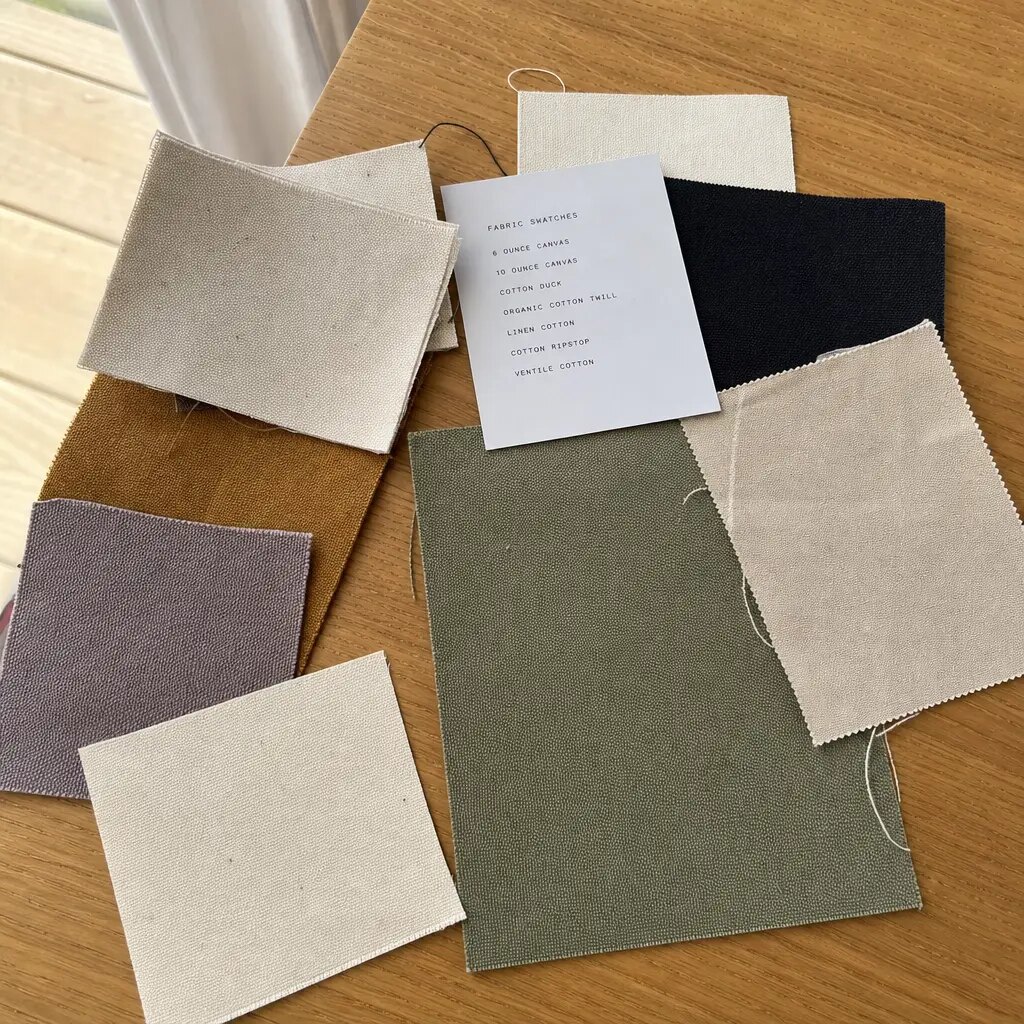
The fiber claim deserves the same precision. Cotton canvas, organic cotton canvas, recycled cotton canvas, recycled cotton blend, and cotton-poly blend are not the same in compliance or marketing. If the product page, hangtag, retailer file, or wholesale line sheet will mention organic or recycled content, ask for the document trail before you approve the claim. If the bag uses natural undyed canvas, also ask how shade variation is handled. Natural cotton can shift from cream to grey-beige across lots, and that variation may be acceptable only if the buyer has approved it.
- Ask whether fabric weight is measured before or after dyeing, washing, coating, waxing, or other finishing.
- Use lab dips for custom colors and bulk swatches for natural or washed canvas where shade variation is likely.
- Specify whether the finish is raw, washed, enzyme washed, brushed, coated, waxed, water-repellent, or uncoated.
- Request fiber-content documentation when sustainability claims are part of buyer-facing marketing or retailer compliance.
Build the Bag Around Measurable Construction Specs
A good messenger bag specification reads more like a production instruction than a mood board. The factory needs finished dimensions, panel layout, gusset depth, flap depth, strap width, strap length, closure placement, pocket construction, lining requirements, and reinforcement details. If those points are missing, suppliers use their own default patterns. Then quotes stop being comparable, and the bulk order has more room to drift.
Finished-size tolerances should be agreed before cutting starts. For many canvas bags, plus or minus 1 cm on main body width and height is a common starting point. It may not be tight enough for every program. If the bag must fit a 13-inch laptop sleeve, a specific display fixture, or a retailer's packaging template, identify the critical dimensions and set tighter control where needed. Not every measurement needs the same tolerance. Body width may be critical; the depth of a soft external pocket may have more flexibility.
Structure should also be chosen, not assumed. Partial interfacing at the flap, base, and pocket mouth can help the bag hold shape without making it stiff or expensive to freight. Reinforcement patches, bar tacks, box stitching, and rivets can strengthen stress points, but each one adds labor and affects the look. A clean eco apparel brand may prefer tonal bar tacks and hidden reinforcement. A workwear-inspired line may like visible rivets. Either choice can work if it is written into the spec.
- Specify body width, height, gusset, flap depth, front pocket size, internal pocket size, strap drop, strap width, and total strap length.
- Call out bar tacks, box stitches, rivets, reinforcement patches, binding, and seam finish by location.
- Define thread color, stitch density, and whether visible stitches should be tonal or contrast.
- If the bag is unlined, state the acceptable internal seam finish, such as bound seams or clean overlock with trimmed threads.
Choose Closures and Hardware for the Way People Will Use the Bag
Closures are more than styling details. They affect security, cost, inspection, production speed, and customer complaints. A top zipper under the flap is useful for commuting because it helps secure contents, but it adds zipper sourcing, tape alignment, end finishing, and more inspection points. Magnetic snaps keep the front clean, yet poor placement can pull the flap off-center. Buckles can make the bag feel substantial, but low-grade hardware may squeak, scratch, or misalign after sewing.
Quote hardware by material and finish, not by name alone. Ask whether buckles, D-rings, sliders, snaps, rivets, and zipper pullers are iron, zinc alloy, brass, plastic, or another material. Ask for the finish, such as matte nickel, black, antique brass, or gunmetal. If the bag may be exposed to moisture, discuss corrosion expectations and whether the trim finish is suitable. Hardware photos in catalogs often look better than the actual plating, so approve physical trim swatches whenever possible.
Hardware also introduces substitution risk. If a buckle or slider is not available at the time of bulk purchase, a factory may assume a close alternative is acceptable. It may function differently, change the color story, or cheapen the product. Add a clear rule to the PO: no fabric, webbing, closure, zipper, snap, label, patch, rivet, or other hardware substitution without written buyer approval before bulk use.
- Use top zippers for security, magnetic snaps for clean retail styling, buckles for a more utility-led look, and open flaps only for simple low-load use.
- Confirm zipper type, zipper length, tape color, puller style, and whether the zipper is nylon coil, metal, or molded plastic.
- Test closure alignment with the bag empty and lightly loaded, because flap position can change under weight.
- Require written approval for hardware substitutions before bulk production starts.
Match Decoration to Canvas Texture
Decoration is often where a simple custom canvas messenger bag becomes complicated. Coarse canvas does not print like smooth cotton jersey or coated synthetic fabric. Fine lines can break, small type can fill in, and large solid ink areas can feel stiff if the ink system is not suited to the surface. Before artwork is locked, ask the factory to review minimum line weight, minimum text size, maximum print area, and curing method for the selected canvas.
Screen printing is usually efficient for bold one-color or two-color logos. Embroidery can add texture and perceived value, but dense stitch areas may pucker lighter canvas or distort near pocket seams. Woven patches, cotton labels, leather-alternative patches, and small side labels are good options when the brand wants quieter identification. Heat transfers can work for detailed graphics or shorter runs, but the buyer should verify adhesion, flex performance, and edge feel on the actual canvas or the closest available bulk material.
Placement needs numbers. Do not approve a vague instruction such as logo on front flap. Specify that the logo is centered on the flap, with exact width and height, and a measured distance from the flap bottom edge, side seam, or pocket opening. For woven labels, state label size, fold type, stitch color, and distance from the seam. For screen print, state the color reference, print size, and acceptable placement tolerance. These details turn a subjective branding review into an inspectable standard.
- Request a decoration strike-off on bulk-correct or closest-available canvas before approving production.
- Specify print size, color reference, placement distance, and acceptable placement tolerance.
- Avoid hairline type, delicate gradients, and overly dense embroidery unless the factory proves it on sample material.
- For eco positioning, confirm whether inks, labels, backings, or trims conflict with the brand's material standards.
Make MOQ Visible by SKU, Not Just Total Units
MOQ is rarely one clean number. A supplier may say the minimum is 500 pieces, but that can mean 500 pieces per shell color, per printed artwork, per lining color, per hardware finish, or per trim combination. For a buyer planning three colors and two logo versions, that distinction changes the entire assortment. Always ask suppliers to quote the minimums by the components that actually drive material purchase and setup time.
Custom dyeing is a common MOQ driver. A stock natural canvas bag with a one-color screen print may support a smaller opening order than custom-dyed olive canvas with matching webbing, custom zipper tape, branded lining, and a woven patch. The sewing line may be willing to make fewer bags, while the fabric mill may still require a dye lot that is too large for the intended launch. That is why minimum fabric purchase quantity matters as much as the sewing MOQ.
If the first MOQ comes back too high, do not only ask for a lower number. Look for the spec decisions behind it. You may be able to reduce colorways, use stock webbing, keep one lining across all SKUs, share one patch across the assortment, or start with stock canvas and upgrade after a reorder proves demand. For eco apparel brands, tighter SKU planning often protects both cost and material consistency.
- Ask for MOQ by shell fabric color, lining color, webbing color, hardware finish, artwork, size, and total order.
- Request the minimum fabric dye lot or fabric purchase quantity behind the quoted MOQ.
- If multiple SKUs are required, ask which components can be shared to reduce setup cost.
- Confirm whether sample costs, setup fees, or lab dips are credited back after bulk order placement.
Run Sampling Like a Risk-Control Process
Sampling is not just a beauty review. In wholesale custom canvas messenger bag sourcing, it is the buyer's main way to control material, decoration, construction, and packing risk before bulk cutting. A useful sequence is material swatch or lab dip, decoration strike-off, construction sample, pre-production sample using approved materials where possible, and finally a sealed golden sample.
Each sample has a job. A lab dip proves a custom color direction before fabric is dyed in bulk. A swatch helps approve stock, natural, or washed canvas, while reminding the buyer that some lot variation may still occur. A decoration strike-off shows whether the logo works on the chosen fabric texture. A construction sample confirms pattern, pockets, flap, strap, closure, and hardware. The pre-production sample should represent the actual bulk method as closely as timing and materials allow. The sealed golden sample then becomes the physical reference for inspection and reorders.
Be clear about what a sample does not prove. If the sample uses substitute webbing or temporary hardware, approve it only with written notes. If the sample room sews with extra care that the bulk line cannot repeat, ask what will change at scale. Good approval comments are short, dated, and specific: approve body size; extend strap by 3 cm; move side label 1 cm lower; use approved lab dip B; revise zipper puller to matte nickel. Those notes should flow into the PO, tech pack, and QC checklist.
- Approve material color and handfeel before bulk fabric purchase where timing allows.
- Use a decoration strike-off to check print edge, embroidery tension, patch scale, and label placement.
- Seal one golden sample for the buyer and one for the factory, both signed and dated.
- Document every sample approval and correction so the PO, tech pack, and inspection checklist all match.
Compare Quotes on the Same Commercial Basis
The lowest unit price is not always the best buying signal. One supplier may include screen setup, individual polybags, hangtags, export cartons, and FOB delivery. Another may quote only EXW sewing cost with basic bulk packing. If procurement compares those two numbers without normalizing them, the apparent savings may disappear later through setup charges, packing changes, freight, or rework.
Ask for an itemized quote that separates shell material, lining, trims, decoration, packaging, sample charges, setup charges, and freight handoff. Not every factory will share a full cost breakdown, but a structured quote still forces assumptions into the open. It also helps the buyer see where target-cost changes are realistic. Removing a custom zipper pull may save less than simplifying packing. Moving from 16 oz canvas to a reinforced 14 oz construction may lower cost without damaging the user experience.
Incoterms need attention. EXW generally means the buyer takes responsibility at the factory or named location. FOB usually includes delivery to the port and export clearance under the seller's responsibility. DDP includes more landed service, but freight, duty, and local delivery assumptions may be hidden inside the unit price. There is no single best Incoterm for every program. The key is to compare like with like and make the handoff point visible.
- Normalize all supplier quotes to the same Incoterm, packing level, decoration method, and inspection requirement.
- Ask what is included in unit price and what is charged separately.
- Request estimated carton dimensions, units per carton, gross weight, net weight, and total CBM.
- Treat very low quotes as a reason to check assumptions, not as automatic savings.
Define QC Tolerances Before Cutting Starts
Quality control should be written before production begins. Once bulk goods are packed, phrases such as good quality or same as sample are not enough. The inspection checklist should define critical, major, and minor defects, plus measurement tolerances. Critical defects may include wrong branding, unsafe sharp metal, mold, mixed customer labels, or other issues the buyer cannot accept. Major defects may include open seams, wrong dimensions beyond tolerance, broken zippers, misaligned closures, obvious stains, or incorrect artwork. Minor defects may include small loose threads or slight natural slub variation if they do not affect saleability.
Measurement control matters because canvas is soft. It can stretch, compress, or shift during sewing and handling. Use one standard method: lay the bag flat, smooth it without stretching, measure width at defined points, measure height as specified with or without the flap, measure gusset at the base, measure strap drop from the top center, and measure pocket openings from seam to seam. If the bag must hold a specific insert, tablet, laptop sleeve, folded garment, or presentation kit, include a fit check in the inspection.
AQL inspection is common for bulk consumer goods, but the level and acceptance limits should be agreed before shipment. Many buyers use general inspection levels with separate AQL limits for critical, major, and minor defects. The exact plan depends on order size, sales channel, and risk tolerance. For first orders, retail programs, custom materials, or new supplier relationships, a pre-shipment inspection against the sealed golden sample is a practical control point.
- Set tolerances for width, height, gusset, flap depth, pocket size, strap drop, and logo placement.
- Define zero-tolerance critical defects before production, including wrong logo, mold, unsafe hardware, and mixed labels.
- Inspect stress points: strap anchors, D-ring loops, pocket corners, flap corners, zipper ends, and base seams.
- Compare bulk goods to the sealed golden sample for fabric shade, handfeel, structure, decoration, and packing.
Control Packing, Moisture, and Warehouse Receiving
Packing is part of the product, especially with canvas. A clean bag can arrive with crushed flaps, permanent fold lines, rubbed print, distorted patches, or moisture odor if packing is left vague. For a structured messenger bag, tissue or a board insert can help the flap stay flat. If the bag is folded, define the fold line so it does not run across the main logo or crease an embroidered patch. If the bag will be sold through ecommerce, think about how it will be picked, scanned, stored, and reshipped.
Individual polybags may be required by retailers, warehouses, or marketplace fulfillment rules. Eco apparel brands often want to reduce plastic, which is reasonable, but the alternative must still protect the canvas through export handling. If reduced-plastic packing is part of the brief, state the accepted option: paper band, glassine-style bag where suitable, master polybag only, recycled polybag, or no individual bag. Then confirm whether that choice protects the product from dirt and moisture during the actual transit route.
Warehouse receiving depends on clean data. Carton marks should match the PO, SKU, color, quantity, carton number, gross weight, net weight, and destination requirements. Avoid mixed cartons unless they are explicitly approved and clearly marked. Ask for the packing list format before shipment and check carton count against the commercial invoice. A tidy packing spec reduces receiving delays, chargebacks, mis-picks, and repacking labor.
- Specify fold method, insert board or tissue, individual protection, SKU label, barcode location, and carton marks.
- Ask for carton dimensions, units per carton, gross weight, net weight, and total CBM before final shipment planning.
- Use desiccants or moisture-control packing where climate, sea freight, or long storage increases risk.
- Confirm whether reduced-plastic packing still meets warehouse, retailer, and cleanliness requirements.
Specification comparison for buyers
| Spec decision | Recommended option | When it fits | Buyer risk to check |
|---|---|---|---|
| Supplier route | Direct factory for repeat custom programs; trading company for multi-category consolidation; stock supplier for urgent simple logo orders | Use a direct factory when construction, repeatability, and sample control matter more than catalog speed | Confirm who owns cutting, sewing, decoration, packing, and final inspection; ask whether QC happens at the sewing site or after consolidation |
| Canvas weight | 12 oz for light promotional use, 14 oz for most retail messenger bags, 16 oz for structured daily carry | Choose by load profile, target price, and desired handfeel instead of treating weight as a vague quality signal | Verify whether the quoted weight is oz per square yard or converted GSM, and whether it is measured before or after dyeing, washing, coating, or other finishing |
| Fabric finish | Dyed or piece-dyed canvas for consistent brand color; washed canvas for softer handfeel; untreated natural canvas for simpler eco programs | Best when the brand needs a specific shade, texture, or lower-chemical positioning | Natural color lots can vary; custom dye requires lab dip approval and may raise MOQ or lead time |
| Structure | Partial interfacing at the flap, base, and pocket mouth, with reinforcement at strap anchors and stress corners | Works for retail bags that need shape without becoming stiff, heavy, or costly to freight | Full lamination can crack, feel synthetic, or make the bag harder to fold; no structure can make the flap collapse in display |
| Closure system | Top zipper under flap for commute use, magnetic snap or buckle for retail style, open flap only for simple low-load programs | Match closure to theft risk, user convenience, and target price point | Check magnet pull strength, buckle alignment, zipper smoothness, and whether closure placement still lines up when the bag is loaded |
| Decoration method | Screen print for bold logos, embroidery or woven patch for premium detail, woven side label for subtle branding, heat transfer only when the artwork and order size justify it | Choose based on artwork complexity, canvas texture, wash expectations, and reorder consistency | Fine type can fill in on coarse canvas; dense embroidery can pucker; transfers can crack if the film and curing are not suited to canvas |
| Sampling route | Material swatch, lab dip if color is custom, decoration strike-off, pre-production sample, then sealed golden sample | Use for any custom fabric color, custom trim, retail packaging, or first-time factory relationship | Skipping a sample stage makes it harder to prove whether a bulk issue is a material, artwork, sewing, or packing deviation |
| MOQ logic | Quote MOQ by shell color, lining color, trim color, artwork, and size, not only by total units | Essential when the program has multiple colorways, brand labels, or channel-specific packaging | A supplier may accept a total MOQ but later price each SKU as a separate setup, raising the true landed cost |
| Packing spec | Defined fold method, tissue or board insert, individual polybag if required, SKU labels, master carton marks, moisture control, and carton drop-resistant packing | Needed for retail, ecommerce, warehouse receiving, and shipment inspection | Missing pack instructions can cause flap creases, rubbed prints, crushed patches, mixed SKUs, or cartons that do not match the packing list |
Buyer checklist before sampling
- Define the bag use case in the RFQ: giveaway, retail add-on, commuter product, uniform accessory, event merch, ecommerce item, or subscription box item.
- Set finished dimensions in centimeters or inches, including width, height, gusset, flap depth, pocket size, strap width, strap length, and strap drop.
- State acceptable finished-size tolerance before quoting, such as plus or minus 1 cm for main body dimensions and plus or minus 1.5 cm for strap drop unless your design needs tighter control.
- Specify canvas weight using the supplier's measurement basis, such as oz per square yard or GSM, and ask whether the value refers to raw, dyed, washed, or finished fabric.
- Confirm fiber content, such as cotton canvas, recycled cotton blend, organic cotton, or cotton-poly blend, and request supporting documentation if the claim will appear in marketing, hangtags, or retailer compliance files.
- Define fabric finish: natural, dyed, washed, enzyme washed, brushed, coated, water-repellent, waxed, or uncoated.
- Lock construction details: lining, internal seams, binding, interfacing, base reinforcement, bar tacks, rivets, webbing width, stitch type, stitch density, and thread color.
- Specify the closure system with measurable details: zipper length and type, magnetic snap size, buckle material, hook-and-loop area, button size, or open-flap construction.
- Approve logo method, artwork dimensions, placement distance from seams or flap edge, color reference, and whether decoration is applied before or after sewing.
- Request a material swatch or lab dip, decoration strike-off, pre-production sample, and sealed golden sample before bulk cutting.
Factory quote questions to send
- What exact canvas weight are you quoting, in oz per square yard or GSM, and is that raw fabric, dyed fabric, washed fabric, coated fabric, or finished fabric?
- What is the fiber composition, and can you provide documentation for organic, recycled, or other sustainability claims if they appear on our product page, hangtag, or retailer file?
- Is the fabric stock color, custom dyed, piece dyed, yarn dyed, washed, coated, waxed, or untreated natural canvas?
- What are the finished bag dimensions, gusset depth, flap depth, strap width, strap length, and expected production tolerance?
- What lining, interfacing, binding, thread, webbing, zipper, snap, buckle, rivet, label, or reinforcement materials are included in the unit price?
- Is the unit price based on EXW, FOB, FCA, CIF, DDP, or another Incoterm, and which port or delivery point is used?
- What is included in the quoted unit price: decoration, labels, hangtags, individual polybags, tissue, insert boards, barcode labels, carton marks, and export cartons?
- What costs are separate from unit price, including screens, embroidery digitizing, mold charges, sample fees, lab dips, courier fees, inspection, or special packing?
- What is the MOQ by shell color, lining color, trim color, hardware finish, artwork, size, and total order?
- What is the minimum fabric dye lot or fabric purchase quantity behind the MOQ?
Quality-control points to confirm
- Finished body width, height, gusset, flap depth, pocket opening, and strap drop should match the approved spec within the written tolerance, commonly plus or minus 1 cm on main body dimensions unless tighter retail specs are agreed.
- Canvas weight, fabric handfeel, shade, weave appearance, and finish should match the approved swatch, lab dip, or golden sample under consistent light conditions.
- Panel shade should be consistent within each bag; visible mismatch between flap, front body, back body, gusset, and pocket panels should be classified before inspection starts.
- Stitch density should be consistent with the approved sample, and seams should not show skipped stitches, broken stitches, open seams, needle cuts, loose threads, or thread nests.
- Stress points including strap anchors, flap corners, pocket corners, zipper ends, D-ring loops, and webbing joins should have the specified bar tacks, box stitches, rivets, or reinforcement patches.
- Strap width, webbing thickness, slider function, D-ring alignment, and shoulder pad placement should match the approved sample, with no twisting or weak stitching at anchor points.
- Zippers should open and close smoothly across the full travel, with even tape seating, secure end stops, no missing teeth, and pullers that match the approved trim.
- Magnetic snaps, buckles, hook-and-loop closures, and buttons should align when the bag is empty and when lightly loaded, without pulling the flap off-center.
- Logo size, placement, color, and registration should match approved artwork; common tolerances should be stated, such as plus or minus 3 mm placement for small labels or plus or minus 5 mm for larger screen prints if acceptable.
- Screen prints should show clean edges, correct curing, no pinholes beyond agreed limits, no ink smears, no cracking after reasonable flexing, and no unwanted transfer to folded areas.