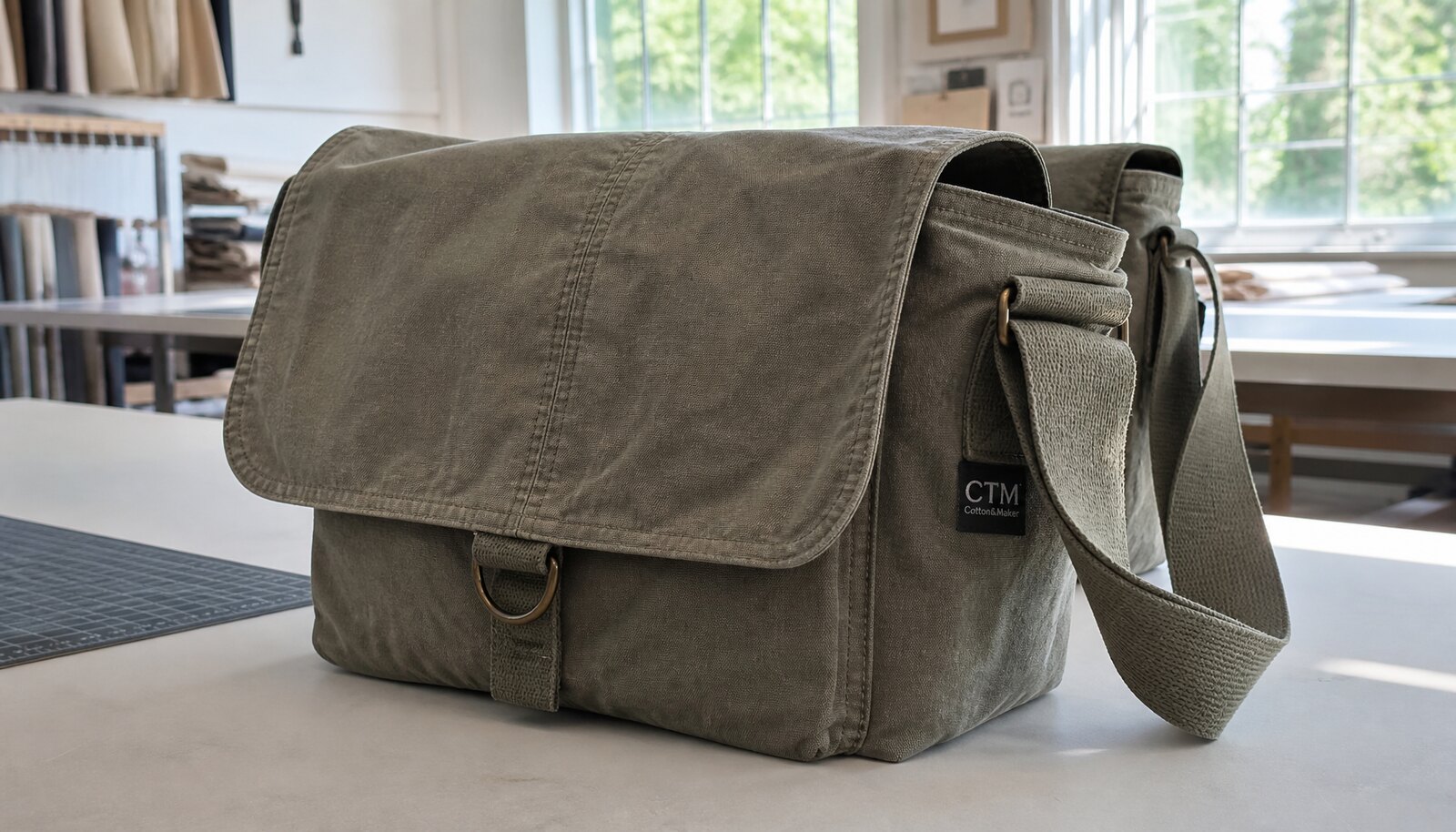
Start with the gift program, not the bag photo
Custom canvas messenger bags are common in corporate gifting because they are useful, visible, and easy to brand. They are used for onboarding kits, sales meetings, trade shows, partner gifts, campus recruiting, employee appreciation, and retail merchandise. The sourcing risk is that a familiar product can be treated too casually. A photo and a target price do not define fabric weight, reinforcement, logo placement, packing, or compliance responsibilities.
Procurement should first define what the bag must do. A lightweight conference handout may not need the same canvas, lining, or strap reinforcement as an executive laptop gift. A bag shipped into employee welcome kits may need barcode labels and carton sequencing. A retail-adjacent order may need better packaging, stronger documentation, and stricter cosmetic tolerances. These decisions affect cost before the supplier ever calculates a unit price.
A strong supplier compliance checklist gives the buyer evidence at each step: what was specified, what was quoted, what was approved, what was produced, and what was inspected. That record protects both sides. It reduces supplier guesswork and gives the buyer a clear basis for approving, correcting, or rejecting goods before they ship.
- Define the user, gift occasion, expected load, and presentation standard before requesting price.
- Treat the signed pre-production sample and final specification as the production standard.
- Keep one approval trail for artwork, fabric, trims, sample comments, packing, first-piece photos, and inspection reports.
- Separate must-have requirements from nice-to-have upgrades so cost trade-offs are visible.
Write a specification a factory can price accurately
A supplier can only quote accurately when the RFQ describes the finished product. For canvas messenger bags, include body width, height, gusset depth, flap length, flap overlap, strap width, adjustable strap range, closure type, lining, pocket count, thread color, hardware finish, logo method, and packing. If the bag is meant to carry a laptop, notebook set, sample kit, or drink bottle, state the approximate contents and load.
Canvas weight is a frequent source of misunderstanding. One supplier may quote 12 oz finished canvas while another quotes a lighter greige weight or uses a catalog term without measurement proof. Ask for both oz and GSM where possible, and require the supplier to state whether the weight is measured before or after dyeing, washing, coating, or finishing. As a rough conversion, 10 oz per square yard is about 339 GSM, 12 oz is about 407 GSM, 14 oz is about 475 GSM, and 16 oz is about 542 GSM.
Construction choices also change the price. A lined bag adds fabric, cutting, sewing, and inspection points. A laptop sleeve needs size control and reinforcement. A buckle closure can look stronger than a snap, but it adds hardware cost and alignment checks. A wide adjustable strap improves comfort but may require better webbing, stronger sliders, and reinforced attachment points. Put these details in the RFQ rather than letting each supplier assume a different product.
- Include finished measurements, tolerances, fabric basis, lining, pockets, closure, strap, hardware, reinforcement, logo method, and packing.
- State whether the logo is approved on flat fabric, a sewn flap, the finished bag, or the packed unit.
- Attach artwork at actual size with placement measured from fixed edges.
- Ask suppliers to list exclusions and assumptions in the quote.
Use realistic material and cost trade-offs
The best canvas weight depends on the program. For budget trade show distribution, 10 oz to 12 oz canvas may be acceptable if the bag is small, unlined, and expected to carry light contents. For corporate gifts intended to feel durable, 14 oz to 16 oz canvas often provides better structure and perceived value, especially on larger messenger bags. If lining, interfacing, or base reinforcement is added, the outer canvas may not need to do all the work by itself.
Cost trade-offs should be discussed openly. A buyer may reduce unit cost by choosing one-color screen print instead of embroidery, standard webbing instead of custom-dyed webbing, an unlined interior instead of a full lining, or bulk carton packing instead of individual retail-style packing. Those choices can be sensible, but they should be intentional. Cutting cost through thinner fabric, weaker strap reinforcement, or vague hardware substitutions is riskier because the buyer may not notice until bulk inspection.
MOQ also changes with choices. A stock black canvas bag with one-color print may be available at a lower MOQ than a custom-dyed bag with custom webbing, molded patch, special hardware finish, and split shipments. Ask suppliers to show MOQ by variable: bag color, canvas weight, webbing color, logo method, packing, and delivery split. This helps procurement decide whether the program should use one shared base bag with different logos or separate custom versions.
- Use lighter specifications for short-use giveaways and stronger specifications for laptop, document, or executive gifts.
- Ask what price changes if fabric moves from 12 oz to 14 oz, or if lining, zipper pockets, or individual packing are added.
- Check whether MOQ is driven by canvas dyeing, webbing, labels, decoration setup, or factory sewing minimums.
- Compare landed cost and internal handling cost, not only factory unit price.
Compare supplier types by control points
A direct sewing factory is often the best route when pattern control, reinforcement, and repeatability matter. The buyer can review first-piece photos, ask construction questions directly, and reduce the risk of messages being softened through intermediaries. The trade-off is that some factories need more instruction on export documents, branded packing, carton labels, or inspection reports.
A trading company can be practical for mixed corporate gift programs where messenger bags are one item in a larger kit. The buyer may gain consolidation, sourcing support, and simpler communication. The risk is traceability. Procurement should know where the bags are sewn, where decoration is applied, who buys materials, and who can approve corrective action if defects appear.
Specialized bag workshops are often strong for messenger bags because they understand flap balance, strap load, pocket utility, binding, and hardware attachment. They may be better than a general promotional supplier for lined bags, laptop sleeves, and reinforced straps. Their weak point can be capacity, especially before large events, holiday campaigns, or school and office return seasons. Confirm production slot, not just lead-time promise.
- Choose direct factories for construction control and repeat orders.
- Choose trading companies when consolidation value is clear and production visibility is acceptable.
- Choose specialized workshops for complex messenger bag details and reinforced designs.
- Ask who owns corrective action before the PO is placed.
Build an order-specific compliance file
Compliance documentation should match the order, destination market, and customer policy. A useful file includes the final specification sheet, approved artwork, fabric specification, trim list, decoration method, packing specification, sample approval notes, first-piece photos, inspection report, and country-of-origin support where required. For many corporate gifting programs, this is enough. For regulated customers, retailers, public-sector buyers, or cross-border distribution, the file may need more.
Examples matter. For EU distribution, buyers may ask about REACH restricted substances and, where electronic accessories are included in a broader kit, RoHS may become relevant to the total program even if the bag itself is textile. For California distribution, review whether Prop 65 warnings or supplier declarations are needed based on materials, coatings, inks, hardware, or packaging. If the item is intended for children or could be marketed for children, CPSIA considerations may apply in the U.S. Packaging rules, polybag warnings, fiber content, care labels, and country-of-origin marks may also be required by the customer or market.
Do not treat any certificate as universal. A report for a different color, fabric, coating, supplier, or previous production run may be useful background, but it may not prove the current batch. Ask whether each document is batch-specific, material-specific, color-specific, product-specific, or simply a generic supplier file. When the buyer’s customer has a formal compliance policy, share it before sampling so testing and labeling are not discovered late.
- Request documentation for fabric, dye, ink, thread, hardware, labels, and packaging where relevant.
- Match compliance requests to market: REACH for EU, Prop 65 for California, CPSIA if children’s use is relevant, and customer-specific restricted-substance policies.
- Confirm whether reports apply to this batch, this color, this material, or only historical production.
- Keep trim cards or photo records of canvas, lining, thread, webbing, hardware, labels, and packing components.
Control branding before mass decoration
Logo decoration is often the most visible failure point in corporate gifting. Canvas texture affects print edges, ink coverage, embroidery stability, heat-transfer adhesion, and patch alignment. Screen printing can be cost-effective for bold one-color or low-color marks, but fine lines may fill in, light ink may need an underbase on dark canvas, and poor curing can lead to cracking. Embroidery can look premium, but small text and dense stitch areas may distort or pucker on coarse canvas.
Labels and patches can be better for repeat consistency. Woven labels handle small details more predictably than embroidery. Faux-leather or rubber patches can create a premium look but add tooling, attachment, and color-matching questions. Heat transfers can reproduce detail but need adhesion and hand-feel checks on the actual fabric. The right method depends on artwork, brand tolerance, quantity, fabric texture, and budget.
Approve decoration on the actual canvas color and weight whenever possible. A digital mockup confirms layout, not production quality. For sensitive logos, request a strike-off before the full pre-production sample. For flap logos, approve placement after the flap is sewn, closed, and the bag is hanging naturally. A logo centered on a flat panel can look off-center once the bag is assembled.
- Use screen print for bold, simple marks when cost control matters.
- Use embroidery only after checking small text, backing, stitch density, and puckering.
- Use woven labels or patches when repeat detail and placement consistency matter.
- Set logo placement tolerance, commonly ±3 mm to ±5 mm for prominent marks.
- Reject bulk decoration if artwork, color, position, size, or method differs from approval.
Read quotes for hidden product differences
Two quotes for the same custom canvas messenger bag may describe very different products. One supplier may include 14 oz finished canvas, lining, a zipper pocket, wide adjustable strap, woven label, individual polybag, carton marks, and inspection support. Another may quote an unlined 12 oz bag with a basic print and bulk packing. The second price is not automatically better; it may simply include less product.
Normalize every quote before comparing. Confirm canvas weight and basis, finished dimensions, color, lining, pockets, closure, hardware finish, strap width, reinforcement, logo method, logo size, color count, setup fees, sample charges, packing, carton quantity, delivery term, payment term, and inspection support. For international sourcing, Incoterms matter. EXW, FOB, CIF, and DDP move freight responsibility and landed cost in different ways.
Lead time also needs structure. A supplier may say 30 days, but that may start after sample approval, material booking, artwork confirmation, and deposit. Custom-dyed canvas, custom webbing, special hardware, molded patches, and multi-color decoration can add time. Ask for a timeline by stage and identify which stages can run in parallel. For event-based gifting, build a buffer for sample revisions, inspection, and freight disruption.
- Replace vague quote language such as “standard packing,” “good canvas,” and “similar hardware” with measurable terms.
- Separate unit price from one-time costs: screens, digitizing, patch tooling, labels, samples, testing, and freight.
- Ask which changes affect MOQ, cost, or lead time.
- Compare delivery reliability and defect exposure alongside unit price.
Approve samples with measurable decisions
Sampling should answer production questions, not just provide a nice-looking reference. A practical sequence is fabric swatch or lab dip, decoration strike-off for sensitive logos, blank construction sample for a new pattern, and full pre-production sample using final or production-equivalent materials. For repeat orders, a previous signed sample can be used only if the fabric, trims, decoration, packing, and factory have not changed.
Measure the pre-production sample the same way inspection will measure bulk goods. Lay the bag flat without stretching. Check width, height, gusset, flap overlap, strap length, strap drop, pocket position, laptop sleeve fit, and logo placement from fixed reference points. Photograph the sample open, closed, hanging, filled lightly, and packed. If the bag will carry an onboarding kit or laptop, test a representative load.
Sample comments should be precise. “Approved with changes” is too loose unless every change is listed. Write comments such as “move logo 5 mm lower,” “increase bar-tack length to 18 mm,” “change thread to black,” “align magnetic snap within 3 mm,” or “fold strap inside the body before polybagging.” The supplier should confirm revised details before material cutting or decoration begins.
- Approve a physical decorated pre-production sample before bulk production.
- Record measurements, photos, deviations, and required corrections in the same approval file.
- Do not approve bulk cutting from a render, blank sample, or flat logo strike-off alone.
- Request first-piece production photos before mass sewing continues.
Set AQL rules and defect classifications
AQL inspection is useful only when the acceptance rules are clear. For many corporate gifting orders, buyers use ANSI/ASQ Z1.4 or ISO 2859-1 sampling methods with General Inspection Level II as a common starting point. Common acceptance quality limits might be 0 for critical defects, 2.5 for major defects, and 4.0 for minor defects, but the buyer’s risk tolerance, order value, customer requirements, and brand sensitivity should decide the final plan.
Defect classification should be written before inspection. Critical defects include wrong customer logo, wrong product, sharp hardware, mold, heavy contamination, missing required warning label, or a safety issue in normal use. Major defects include open seams, broken zippers, incorrect fabric, missing pockets, weak strap reinforcement, logo outside tolerance, crooked flap, visible stains, print cracking, or carton labels that prevent receiving. Minor defects may include small internal blemishes, light thread tails, or slight non-visible irregularities within tolerance.
Acceptance decisions should also be defined. If critical defects are found, shipment should be held for buyer review. If major or minor defects exceed the agreed AQL accept number for the sample size, the supplier should sort, rework, replace, or request a concession before shipment. If defects are concentrated in one color, carton range, or production lot, isolate that portion rather than treating the whole order as identical.
- Use an agreed sampling standard, inspection level, AQL limits, and defect list before production finishes.
- Inspect across cartons, colors, sizes, and production lots, not only easy-to-open cartons.
- Define who pays for reinspection after failed inspection or supplier rework.
- Hold shipment for buyer decision if critical defects or unapproved substitutions appear.
Inspect the details that affect durability
Messenger bags usually fail at stress points first. Strap attachment carries the weight and movement of the bag, so it deserves more attention than decorative seams. Depending on design, reinforcement may include box-X stitching, bar-tacks, rivets, seam-captured webbing, extra fabric patches, or a continuous webbing path. For laptop or multi-item gift kits, review the load path during sampling and inspect it again in bulk.
Flap alignment affects both function and appearance. Check whether the flap covers the front panel evenly, whether the closure aligns without pulling, and whether the logo remains visible when the bag is closed and hanging naturally. If the logo was printed before assembly, sewing variation can shift the final position. If the logo sits under the flap, confirm it is not hidden in normal use.
Interior workmanship also shapes the recipient’s impression. Lining should not twist, sag, or catch in zippers. Pocket top corners should be reinforced because they are pulled repeatedly. Zipper ends should be secure, binding should cover raw edges, and labels should sit straight. Hardware should be free of rust, sharp edges, weak plating, cracks, and inconsistent finish. Packing should protect the logo, avoid heavy creasing, and allow the receiving team to count cartons accurately.
- Check strap reinforcement, stitch tension, skipped stitches, backstitching, and loose seam ends.
- Inspect flap centering, closure alignment, logo visibility, and natural hanging shape.
- Review pocket corners, zipper ends, binding joins, lining attachment, and label placement.
- Confirm carton quantity, carton marks, inner packing, moisture control, and barcode or warning labels where required.
Specification comparison for buyers
| Supplier option | What to verify | Commercial advantage | Buyer risk to control |
|---|---|---|---|
| Direct sewing factory | hardware trim card, strap-load photo, lining close-up, approved flap sample, and first-piece production photos | Better sample-to-bulk control and faster production feedback | May be weaker on export paperwork or branded packing unless checked early |
| Trading company | Factory name, production photos, trim-source proof, and who owns QC decisions | Can coordinate small mixed orders and extra services | Markup can hide real factory capability and slow defect decisions |
| Specialized bag workshop | flap shape, strap webbing, buckle, D-ring, inner pocket, zipper pocket, seam allowance, and load path | More practical for detailed construction, trims, and repeat programs | Capacity may be limited during peak seasons |
| Low-price general supplier | 10-16 oz canvas, washed canvas, rPET canvas, lining fabric, interfacing, and hardware finish | Useful for simple promotional runs with loose specs | Material downgrades, weak packing, and vague inspection scope can erase savings |
| Retail-ready supplier | shape support, strap folding, hardware protection, individual bag, carton drop expectation, and retailer hangtag placement | Can handle labels, SKU separation, carton marks, and receiving rules | Higher unit cost must be compared against reduced warehouse work |
| Compliance-focused supplier | Fabric records, labeling review, test plan, and production traceability | Safer for retail programs and repeat brand orders | Documentation claims need evidence, not only sales language |
| Local sample room plus bulk factory | Signed sample, bulk factory handoff, first-piece photos, and deviation owner | Good for complex branding before large production | Sample room quality may not match bulk line unless handoff is controlled |
Buyer checklist before sampling
- Define finished dimensions: body width, height, gusset, flap length, flap overlap, strap width, adjustable strap range, handle drop if any, laptop sleeve size, pocket dimensions, and logo placement reference points.
- State fabric basis clearly: fiber composition, weave, color, finish, canvas weight in oz and GSM where available, and whether the weight is greige, finished, washed, coated, or supplier catalog language.
- Identify the use case before quoting: trade show giveaway, employee onboarding kit, executive gift, sales meeting pack, laptop carry, document bag, retail merchandise, or bundled corporate gift.
- Specify construction details: lined or unlined, seam finish, binding, interfacing, zipper or flap closure, magnetic snap or buckle, hardware finish, strap reinforcement, pocket count, laptop sleeve, label position, and packing style.
- Lock artwork details: final file, logo size, Pantone or brand color reference, decoration method, thread or ink color, placement tolerance, and whether approval is on flat fabric, sewn panel, finished flap, or packed bag.
- Request order-relevant compliance documents by market and customer policy, such as REACH or RoHS declarations for EU programs, Prop 65 review for California distribution, CPSIA review if the bag may be used by children, and packaging or labeling documents where applicable.
- Approve a physical pre-production sample made with final or production-equivalent canvas, lining, trims, hardware, logo method, and packing approach before releasing bulk cutting.
- Set written tolerances, such as body dimensions ±5 mm to ±10 mm, logo placement ±3 mm to ±5 mm for visible marks, strap length ±10 mm to ±15 mm, and zero tolerance for wrong logo, wrong carton quantity, or missing required labels.
- Compare quotes on the same basis: canvas weight, finished size, lining, pockets, closure, hardware, logo method, color count, packing, carton quantity, sample charge, setup charge, inspection support, lead time, and Incoterm.
- Ask for a lead-time split covering artwork confirmation, swatch or lab dip, strike-off, pre-production sample, material booking, cutting, decoration, sewing, finishing, inspection, packing, and shipment handoff.
Factory quote questions to send
- What exact canvas are you quoting: composition, weave, finished weight in oz and GSM, color, finish, and expected shrinkage? Is the stated weight measured before or after dyeing and finishing?
- What finished bag dimensions and tolerances are included for body width, height, gusset, flap overlap, strap length, strap drop, pockets, and logo placement?
- Is the bag lined or unlined? If lined, what is the lining composition and weight, and how are seams, zipper ends, pocket corners, and binding finished?
- What reinforcement is included at strap attachment points: box-X stitching, bar-tack, rivet, extra patch, seam-captured webbing, or continuous webbing path? Can you provide close-up photos of comparable work?
- Which logo method is quoted: screen print, embroidery, heat transfer, woven label, printed label, faux-leather patch, rubber patch, or a combination? What logo size, color count, and setup charges are included?
- What sample sequence do you recommend for this order: swatch, lab dip, print strike-off, blank construction sample, decorated sample, full pre-production sample, or packed sample? Which fees and freight costs apply?
- What is the MOQ for this exact construction and color? Does MOQ change if we vary logo artwork, bag color, canvas weight, webbing color, hardware finish, packing, or shipment split?
- Which compliance documents can you provide for fabric, dye, ink, thread, metal hardware, plastic buckles, packaging, and finished goods? Are they tied to this batch, this material or color, or only a previous order?
- What packing is included: individual polybag, recycled polybag option, tissue, paper band, desiccant, hangtag, barcode label, warning label if required, carton marks, carton quantity, and palletization?
- What is the standard lead time after final sample approval, and what are the separate lead times for dyed canvas, custom webbing, labels, special hardware, decoration setup, sewing, inspection, and packing?
Quality-control points to confirm
- Fabric weight should match the purchase order and approval sample. If the PO states 14 oz finished canvas, inspection should not accept a visibly lighter substitute without buyer approval; request GSM or oz confirmation from the material lot where possible.
- Fabric appearance should match the approved swatch or lab dip, with no unacceptable stains, oil marks, mildew, holes, severe barre, panel-to-panel shade mismatch, or slubs outside the approved fabric character.
- Finished measurements should be checked on a flat bag using the agreed method. Body, gusset, flap overlap, pocket placement, strap length, and strap drop should remain within tolerance.
- Logo quality should match the approved decorated sample: correct artwork, size, color, location, registration, curing, embroidery density, label alignment, and no bleeding, cracking, puckering, adhesive lift, or loose thread loops.
- Stitching should be straight and secure with balanced tension. Stress points should include the approved box-X, bar-tack, rivet, reinforcement patch, or seam-captured webbing; skipped stitches, open seams, broken threads, and loose seam ends are major defects.
- Strap construction should be symmetrical and functional. Check webbing width, adjustment range, slider direction, buckle position, D-ring attachment, twisting, edge abrasion, and whether the load path matches the approved sample.
- Flap and closure alignment should be inspected with the bag lightly filled and hanging naturally. The flap should not skew, the closure should work without force, and the logo should remain visible as approved.
- Hardware should match the approved finish and function smoothly. Reject sharp edges, rust, weak plating, broken zipper teeth, rough sliders, loose rivets, cracked buckles, misaligned magnets, or components that damage the fabric.
- Interior components should match the sample: lining attachment, laptop sleeve size, zipper pocket, pen slots, label placement, pocket depth, and top-corner reinforcement. Lining should not twist, sag excessively, or catch in zippers.
- Odor, dust, moisture, loose fibers, color transfer, and contamination should be checked before packing because canvas can absorb warehouse and finishing-room conditions more readily than coated synthetic materials.