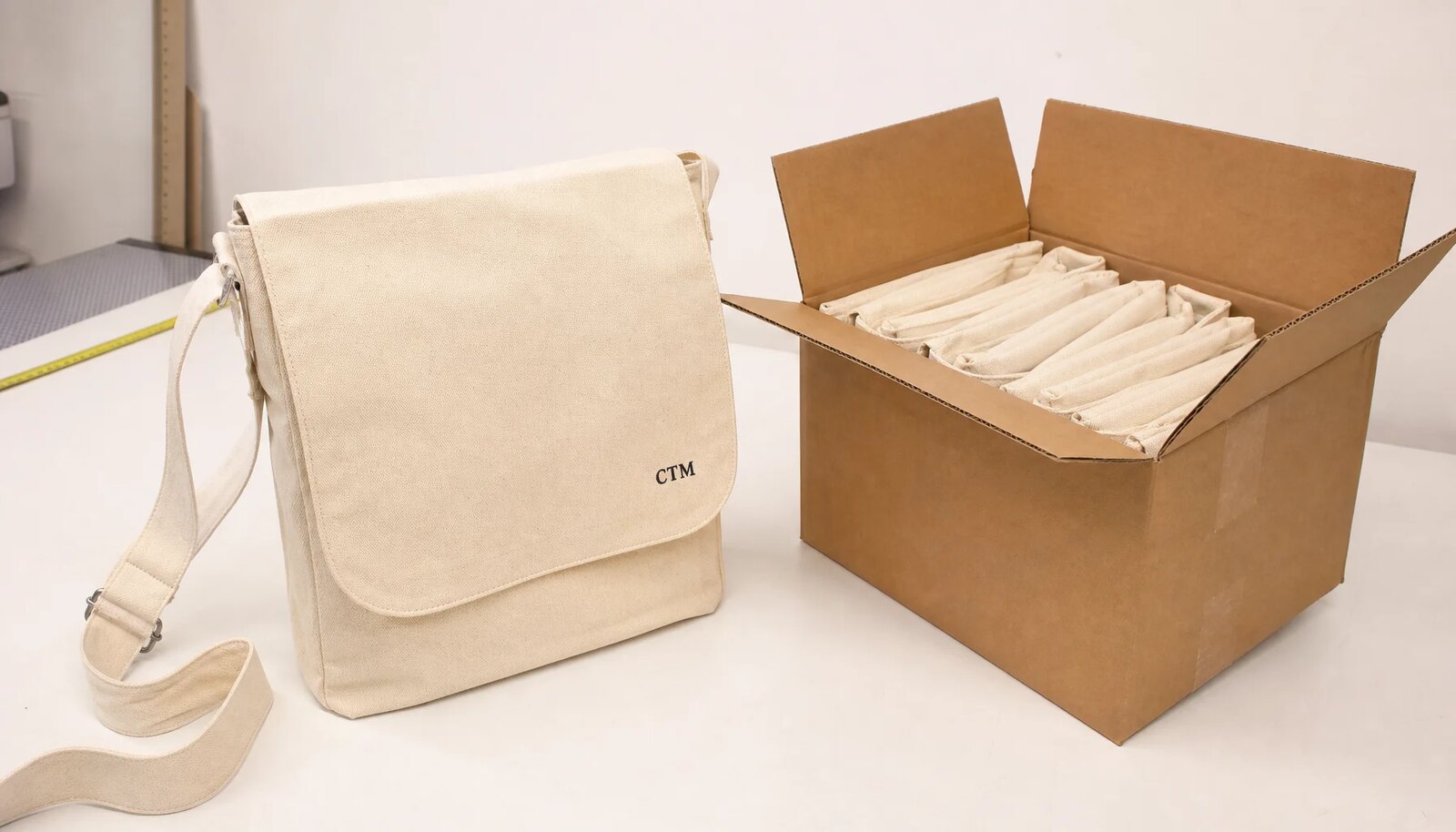
Plan the carton before the bag ships
A custom canvas messenger bag is not finished when the logo is printed. For craft fairs, the export carton becomes part of the operating plan: it is lifted by staff, counted during receiving, stacked behind booths, opened during busy selling hours, and sometimes moved again to the next event. A carton that is too heavy, poorly marked, or packed tightly through the printed flap can turn acceptable production into slow setup, damaged presentation, or shortage disputes.
Start the RFQ with carton information instead of waiting for it after the unit price. Ask for proposed pieces per carton, carton dimensions, net weight, gross weight, carton board, label format, and estimated CBM. Also state your own maximum carton weight and receiving conditions. A warehouse with pallet equipment can handle a different carton than a two-person craft fair team unloading from a van.
The practical idea behind custom canvas messenger bags shipping carton planning for craft fairs is simple: quote the product and the handling unit together. If suppliers price only the bag, buyers cannot compare landed cost, booth practicality, or damage risk.
- Set carton gross-weight limits before sample approval.
- Request CBM per 1,000 pieces with the first quote.
- Approve fold method before bulk packing starts.
- Use carton labels that match event, SKU, and destination needs.
- Treat packing photos as part of the approved specification.
Turn the event use case into a usable spec
Different craft fair programs need different messenger bags. A resale item for a maker booth may need better handfeel, cleaner stitching, and retail-ready unit packing. A sponsor giveaway may prioritize cost, schedule, and easy carton handling. A vendor kit bag may need to hold catalogs, badges, stationery, or small samples. Write the use case into the brief so suppliers are not guessing.
A useful specification names finished width, height, gusset depth, flap shape, strap width, strap adjustment range, closure type, pocket layout, thread color, branding position, and tolerances. If the bag must hold an A4 folder, tablet, brochure stack, or craft kit, include the actual item size and weight. Avoid phrases such as “standard messenger bag” or “good quality canvas” because each factory may quote a different construction.
State what can be simplified. Extra dividers, decorative trims, padded panels, metal buckles, and full lining add labor, inspection points, and packed thickness. Many craft fair orders perform well with a clean flap, reinforced strap points, one flat inner pocket, and one-color branding.
- Define whether the bag is for resale, giveaway, kit packing, or replenishment stock.
- List intended contents so capacity is not guessed.
- Use the same tech pack for every supplier quote.
- Separate must-have features from nice-to-have trims.
- Name measurement points for body, gusset, flap, pockets, and strap.
Choose canvas weight with logistics in mind
Canvas weight drives handfeel, print stability, carton weight, fold memory, and freight. A 12 oz cotton canvas, roughly 400 GSM, is a common example target for many retail-ready event bags because it gives more structure than lightweight promotional canvas while usually remaining foldable. It is not a universal rule; the final choice depends on the selling price, contents, artwork, and handling limits.
A lighter 10 oz canvas can suit lower-cost promotions or short campaigns where lower weight matters. Heavier 14 oz or 16 oz canvas may support a more rugged retail position, but it increases bulk and can make fold marks more visible, especially when the logo crosses a crease. Ask suppliers to test pack the actual construction rather than relying on a generic carton estimate.
Quote fabric in both ounces and GSM. Require a swatch or cutting from the booked fabric lot before cutting bulk. Natural canvas may show seed marks, slubs, or flecks; decide whether those are acceptable or defects for your audience. Dyed canvas needs lab dip approval, shade tolerance, and extra time for material booking and drying.
- Use supplier testing to confirm weight and carton impact.
- Write GSM tolerance into the PO when relevant.
- Approve natural canvas texture under consistent lighting.
- For dyed canvas, plan lab dips before bulk fabric is booked.
- Check shrinkage requirements if the bag may be washed by end users.
Control dimensions, straps, and closures
Small construction choices can change the carton plan. A deeper gusset improves carrying capacity but prevents the bag from packing flat. A longer flap adds coverage but may increase folded thickness. Hardware can lift perceived value but may press into canvas during compression. Decide these details before comparing prices.
A medium size such as 36 x 28 x 10 cm can be a practical starting point for notebooks, brochures, and light daily carry, but it should be checked against the actual contents. Define whether measurements are taken at the opening, body panel, seam line, or finished edge. Strap length should be stated as usable adjustment range or total assembled length, not left open to interpretation.
For messenger bags sold as merchandise, strap construction is a quality signal. A 3.8 cm cotton webbing strap often feels more consistent with canvas than narrow tape, but the right width depends on cost and positioning. Specify reinforcement at load points, such as box stitch or bartack, plus seam allowance, stitch density, and any pull-test expectation suitable for the planned use.
- Avoid deep gussets unless contents require them.
- Define strap width, adjustment range, and attachment method.
- Review flap length with the approved fold sequence.
- Protect snaps, magnets, or buckles from pressure marking.
- Check that closures function after packing and reopening.
Make branding survive folding and transit
Decoration is often the reason the bag exists, so print approval should include packing approval. One- or two-color screen print is often efficient for craft fair artwork on canvas, but the buyer still needs to define Pantone reference, logo size, placement, print-position tolerance, and curing expectation. Confirm whether printing happens before or after sewing because seams and flap shape can affect alignment.
A print that looks sharp on a flat sample can fail after folding, carton compression, freight, and booth handling. Dense ink may crack on a fold line. Poor curing may cause rub-off. Fine detail can lose clarity on textured canvas. Ask for a print strike-off, dry-rub check, and folded-and-reopened sample using the proposed mass-production method.
Other branding methods are workable when tested. Embroidery can look premium but may pucker if backing or stitch density is wrong. Heat transfers can hold fine detail but need adhesion testing on the selected fabric. Woven labels and patches add brand presence, but they introduce components, sewing alignment, and pressure-mark checks.
- Keep artwork away from fold lines when possible.
- Approve strike-offs before bulk printing.
- Ask for dry-rub and light scratch checks after curing.
- Reopen a packed sample to inspect creasing and scuffing.
- Record print placement tolerance in the approved standard.
Compare order options, not just MOQs
MOQ is a cost structure, not just a supplier rule. It may be driven by fabric rolls, cutting efficiency, print setup, trim sourcing, hardware minimums, or carton procurement. For a simple natural canvas messenger bag with one-color print, some suppliers may start around 300 to 500 pieces, but that is only an example range and may not apply to your design, material, or production line.
Craft fair demand can be uncertain, so buyers often want a controlled first run followed by repeats. Tell the supplier if repeat orders are likely. Screens, approved samples, construction notes, and packing instructions may reduce friction on future orders if they are retained. If every fair changes color, trim, or logo, each order may become a new development cycle.
Compare a consolidated run against event-specific batches. One larger run may lower unit cost and stabilize shade and sewing consistency, but it increases inventory exposure. Smaller runs reduce overstock risk but can add setup charges, more approvals, and more carton labeling complexity. Ask which constraint drives the MOQ before negotiating.
- Separate MOQ for fabric, artwork, strap color, lining, and hardware.
- Ask whether print screens and approved samples are retained.
- Limit colorways when testing demand.
- Quote repeat-order pricing separately from first-run setup.
- Confirm whether event-specific carton labels add cost or lead time.
Build landed cost from visible line items
A low ex-factory price can hide the real cost of a messenger bag order. Canvas bags are bulkier than many promotional items, so CBM, carton count, unit packing, local delivery, and damage risk all matter. A slightly higher unit price may be better if the supplier provides a safer fold, clearer carton marks, reliable weight control, and fewer receiving issues.
Ask suppliers to separate bag cost, decoration charge, screen or setup fee, unit packing material, master carton cost, sample fee, inland delivery, estimated CBM, carton gross weight, and lead time. CBM per 1,000 pieces is a useful comparison metric because it shows how fabric weight, gusset, fold method, and pieces per carton affect freight.
Do not automatically choose the smallest carton. Tight packing may reduce freight but create print creases, hardware marks, or slow booth setup. Loose packing may protect presentation but waste volume. The right carton protects sellable condition while meeting manual handling, freight, and receiving requirements.
- Request line-item quotes instead of blended pricing.
- Compare CBM per 1,000 pieces across suppliers.
- Include inspection, packing material, and local delivery in landed cost.
- Ask how lower carton weight changes carton count and freight.
- Separate first-order setup costs from repeat-order pricing.
Approve samples with packing evidence
A table-top sample proves appearance, not shipment readiness. For craft fair stock, sample approval should confirm that the bag can be produced, folded, packed, shipped, opened, displayed, and sold in acceptable condition. Review fabric, stitching, strap construction, closure function, print, fold method, unit protection, and carton loading as one approval package.
A practical sequence is fabric swatch, print strike-off, sewn pre-production sample, then packed sample or detailed packing photo set. Measure the sewn sample at the same reference points final inspectors will use. If a pocket size, fold direction, strap length, or print placement changes during development, record the accepted deviation in writing.
Packing evidence should show the fold sequence, strap placement, logo protection, unit packing material, carton loading direction, carton label, sealed carton, and reopened product after compression. If shipping a full packed carton sample is not practical, request clear photos or video from the factory. Keep one sealed approved sample and the packing images with the PO.
- Approve fabric, print, sewn sample, and packing in sequence.
- Measure samples using final-inspection reference points.
- Keep carton loading photos with the purchase order.
- Require reopened-sample photos after the proposed fold.
- Do not release bulk packing until carton marks are approved.
Set carton rules for craft fair handling
Export cartons must survive factory handling, freight movement, warehouse receiving, and event handling. For manual craft fair receiving, a practical example target is often below about 18 to 20 kg gross weight, but the right limit depends on staff, venue access, carry distance, and local handling rules. If pallet equipment handles the goods end to end, a different limit may be acceptable; write the chosen limit into the PO.
Pieces per carton should come from a test pack using the approved bag, fold, and unit packing. Fabric weight, gusset, lining, strap, hardware, and carton board all change the result. Ask for pieces per carton, net weight, gross weight, internal or external carton dimensions as required, and estimated CBM. Check whether the carton protects corners, flaps, hardware, and printed panels without crushing them.
Carton marking is critical when stock is split by event, SKU, distributor, or consignee. Labels may need SKU, color, event name, PO number, destination code, quantity, net weight, gross weight, and carton sequence. Relabeling after receipt wastes time and creates errors when the fair date is close. For humid routes or rainy seasons, discuss liners, desiccants, or other moisture-control steps suitable for the product and route.
- Set a maximum carton weight based on real handlers.
- Confirm carton board strength and sealing method.
- Use carton sequence numbers for split shipments.
- Add destination codes before bulk packing starts.
- Check cartons for moisture marks, punctures, compression, and readable labels.
Work backward from the fair date
Craft fair orders have fixed value dates. If bags arrive after the event, correct production still fails commercially. Build the schedule backward from the required receiving date and include sample development, sample freight, buyer comments, revised sample if needed, fabric booking, artwork approval, printing, cutting, sewing, trimming, packing, inspection, export handling, customs, freight, and local delivery.
Ask when production lead time officially starts. Some suppliers count only after deposit, final artwork, sample approval, and material confirmation. A short factory lead time is less useful if it excludes fabric booking, carton procurement, final inspection, or carrier handoff. Put those assumptions in writing before placing the PO.
When the schedule is tight, simplify before relying on expensive freight. Standard natural canvas, existing strap colors, one-color print, fewer SKUs, and simple carton marks are faster than dyed fabric, custom hardware, multiple colorways, and complex destination assortments. Airfreight may be necessary for a rescue shipment, but calculate the added landed cost per sellable unit before approving it.
- Start planning from the required receiving date.
- Reserve time for sample comments and revisions.
- Schedule final inspection before goods leave the factory.
- Simplify materials and SKUs when dates cannot move.
- Compare rush freight cost against expected event margin.
Specification comparison for buyers
| Option to compare | Best-fit order profile | Procurement advantage | Risks and checks before approval |
|---|---|---|---|
| Natural canvas with one-color screen print | First craft fair run, simple event logo, moderate budget, fast approval path | Usually easier to source, print, repeat, and pack consistently than dyed or multi-trim styles | Confirm actual GSM, natural flecks/slubs, print cure, fold line, carton gross weight, and repeat-order screen retention |
| Dyed canvas with matched strap | Retail-focused program where brand color is central to the offer | Stronger shelf identity and clearer SKU differentiation across events or collections | Requires lab dip, shade tolerance, dyeing lead time, booked-lot approval, and carton moisture controls |
| Unlined messenger bag with one inner pocket | Value-conscious resale or event merchandise where clean utility matters more than premium structure | Lower labor, fewer defect points, flatter packing, and simpler inspection than fully lined designs | Check seam finishing, pocket placement, loose threads, and whether the bag still feels substantial at target canvas weight |
| Lined bag with hardware closure | Higher retail price point or boutique craft fair merchandising | Improves perceived finish and may support a higher selling price | Adds sewing complexity, metal pressure marks, packed thickness, inspection time, and MOQ risk for trims |
| Polybag unit packing | Orders moving through humid routes, dusty warehouses, or multi-stop distribution | Good protection against dirt, rubbing, and carton abrasion during transit and storage | Confirm ventilation needs, sustainability policy, suffocation warnings if required, and whether print surfaces mark inside the bag |
| Paper band, sleeve, or separator packing | Plastic-reduction programs or brands with low-waste presentation goals | Cleaner retail story and faster unwrapping at booths when the fold is stable | May protect less against moisture and scuffing; test reopened samples after carton compression |
| 18-22 pieces per carton | Manual handling, small teams, upstairs venues, or mixed retail/event staff | Lower carton weight and easier booth replenishment, counting, and local delivery | Raises carton count and possibly freight cost; verify CBM per 1,000 pieces and label accuracy |
| 28-36 pieces per carton | Warehouse receiving or palletized handling with fewer manual carry constraints | Can reduce carton count and sometimes freight administration | May exceed practical lifting limits or crease printed flaps; approve only after test pack and gross-weight check |
| Single consolidated shipment | One warehouse or central event coordinator allocating stock after receipt | Simpler production release, carton marking, and freight booking | Requires downstream sorting plan and enough time before events |
Buyer checklist before sampling
- Define finished width, height, gusset depth, flap shape, strap width, strap adjustment range, closure type, pocket layout, thread color, and measurement tolerance before requesting price.
- Specify canvas weight in both oz and GSM, fabric color, acceptable flecks or slubs, shrinkage expectation, and whether pre-shrunk fabric is required.
- State branding method, logo size, print position, Pantone or color reference, curing requirement, rub-test expectation, and whether printing happens before or after sewing.
- Set carton rules: maximum gross weight, target pieces per carton, carton dimensions, board strength, carton marks, barcode labels, and pallet preference if applicable.
- Require a pre-production sample packed as mass production will be packed, including fold line, unit protection, strap placement, carton loading direction, and reopening photos.
- Ask suppliers to quote unit price, sample fee, screen or setup charge, unit packing cost, master carton cost, estimated CBM, inland delivery, and lead time as separate lines.
- Include inspection checkpoints for fabric GSM, finished measurements, stitch strength, strap pull, print rub resistance, closure function, carton count, carton condition, and moisture control.
- Confirm whether the order ships to one warehouse, multiple distributors, or separate craft fair locations, then lock carton marking rules before bulk packing starts.
- Plan approval dates backward from the required receiving date, allowing time for sample freight, comments, revised sample, final inspection, export handling, customs, and local delivery.
- Keep one sealed approved sample and one approved packing photo set for production, inspection, receiving, and any shortage or damage claim review.
Factory quote questions to send
- What canvas weight, GSM tolerance, weave type, and color standard are included, and can you provide a cutting from the booked fabric lot before bulk production?
- Which branding method is priced: screen print, heat transfer, embroidery, woven label, patch, or another method, and what artwork size and color count are included?
- Will the flap be printed before sewing or after sewing, and how do you confirm curing, dry rub, and print alignment before packing?
- What is the packed carton plan: pieces per carton, net weight, gross weight, carton size, carton board specification, and estimated CBM per 1,000 pieces?
- Can the carton gross weight be kept below our handling limit, and how would that change carton count, carton size, CBM, and freight cost?
- What are the MOQs for natural canvas, dyed canvas, custom lining, custom strap color, custom metal hardware, and repeat orders using the same artwork?
- Which sample stages do you recommend: fabric swatch, blank size sample, print strike-off, sewn pre-production sample, and packed carton sample?
- When does lead time officially start, and how many days are reserved for fabric booking, printing, sewing, carton packing, inspection, and port or carrier delivery?
- Which QC checks can you perform in-house for fabric GSM, seam strength, strap pull, print dry rub, closure function, carton compression, and carton drop handling?
- If the order ships to multiple craft fair locations or distributors, can cartons be marked by SKU, event, PO number, consignee, destination, and carton sequence without repacking later?
Quality-control points to confirm
- Fabric weight should match the approved standard within the tolerance written in the purchase order, such as ±5% when appropriate for the project.
- Fabric shade, slubs, seed marks, and surface cleanliness should be compared against the approved cutting or swatch under consistent lighting before cutting and at final inspection.
- Finished measurements should be checked flat at the same reference points used in the approved sample, with separate tolerances for width, height, gusset, flap, pocket, and strap length.
- Strap attachment points, side seams, flap edges, and bottom corners should show consistent stitch density with no skipped stitches, loose threads, broken needle marks, fabric tearing, or open seams.
- Strap strength should be verified with an agreed pull or load test suitable for the intended selling position and expected use.
- Screen print should pass dry-rub and light scratch checks after curing, with no obvious pinholes, ghosting, ink bleeding, heavy ridges, or alignment outside tolerance.
- Closures and hardware should open and close consistently and be free of sharp edges, rust marks, loose plating, weak magnets, misaligned snaps, or pressure marks on nearby canvas.
- Each unit should follow the approved fold method so the strap is contained, the logo is protected, and visible creasing does not run through the main artwork.
- Carton quantity should match the packing list exactly, with random carton count verification before sealing and during final inspection.
- Export cartons should be checked for board strength, tape quality, corner compression, moisture marks, punctures, label readability, and correct carton numbering.