Define the Buying Problem Before the RFQ
A custom canvas messenger bag RFQ for a tech startup should not begin with a vague request for a cotton shoulder bag with logo. That wording pushes suppliers to quote whatever pattern they already have, and the first price comparison becomes unreliable. The real buying problem is usually more specific: the bag must carry a laptop or tablet, look consistent with a launch kit, survive distribution, and arrive before an event or onboarding date.
Procurement teams should write the RFQ around use case, contents, and approval path. A messenger bag used for a developer conference has different requirements from a retail accessory sold through a brand store. If the bag is part of a welcome kit, it may need to hold a hoodie, notebook, bottle, adapter pouch, and printed material. Those contents affect gusset width, strap strength, carton packing, and freight volume.
- State whether the order is for giveaway, staff kit, resale, reseller bundle, or limited launch merchandise.
- Give the expected packed weight per bag, such as 2 kg of laptop accessories or 4 kg of event materials.
- List the distribution method: bulk warehouse, individual mailing, retail shelf, or event handout.
- Identify approval stakeholders early, including procurement, marketing, design, compliance, and logistics.
Set the Core Bag Specification
The cleanest RFQ starts with a target construction, not only a size. For canvas messenger bags, common structures include a flat document messenger, a boxed-bottom messenger, and a padded laptop messenger. A tech startup buying for real daily use should usually avoid the thinnest flat style unless it is only for documents and light conference papers. A boxed bottom gives more usable volume and helps the bag stand better when packed.
For dimensions, define both outside size and internal usable space. A bag listed as 40 x 30 cm may not fit a laptop with sleeve once seam allowance, flap fold, internal pocket, and padding are included. If laptop fit matters, send the actual device dimensions and ask the factory to confirm the internal pocket size after sewing. Do not rely on the phrase fits 15 inch laptop without a measurement drawing.
- Typical outside size for light tech kits: about 38 to 42 cm wide, 28 to 32 cm high, and 8 to 12 cm gusset.
- Common strap width: 3.8 cm for lighter bags and 5 cm for heavier laptop or retail bags.
- Useful internal features: slip pocket, zipper pocket, pen slot, or padded sleeve if budget allows.
- Reinforcement areas: strap anchors, flap corners, bottom corners, and top opening seams.
Choose Canvas Weight Without Overbuilding
Canvas weight is one of the biggest quote variables. Many buyers compare prices without realizing one supplier quoted 10 oz canvas and another quoted 16 oz canvas. For messenger bags, 10 oz to 12 oz canvas can work for lightweight promotional use, but it may look soft and less structured. A 14 oz to 16 oz canvas is more suitable when the bag needs a better handfeel, stronger body, and more premium appearance.
GSM should be clarified because oz and GSM are not always communicated consistently. A practical range is roughly 340 to 400 GSM for lighter canvas and 475 to 540 GSM for heavier canvas, depending on weave and finishing. If the fabric is washed, dyed, or coated, final handfeel and shrinkage may differ from the raw fabric. For color-critical startup branding, piece-dyed canvas needs lab dip approval before bulk fabric purchase.
- Light promotional option: 10 oz to 12 oz canvas, suitable for short campaigns and lower freight weight.
- Balanced option: 14 oz canvas, usually strong enough for most branded messenger bag programs.
- Premium option: 16 oz to 18 oz canvas, better structure but higher sewing difficulty and shipping weight.
- Natural canvas risk: shade variation, cotton seed specks, and possible uneven logo contrast.
Match Logo Method to Brand Artwork
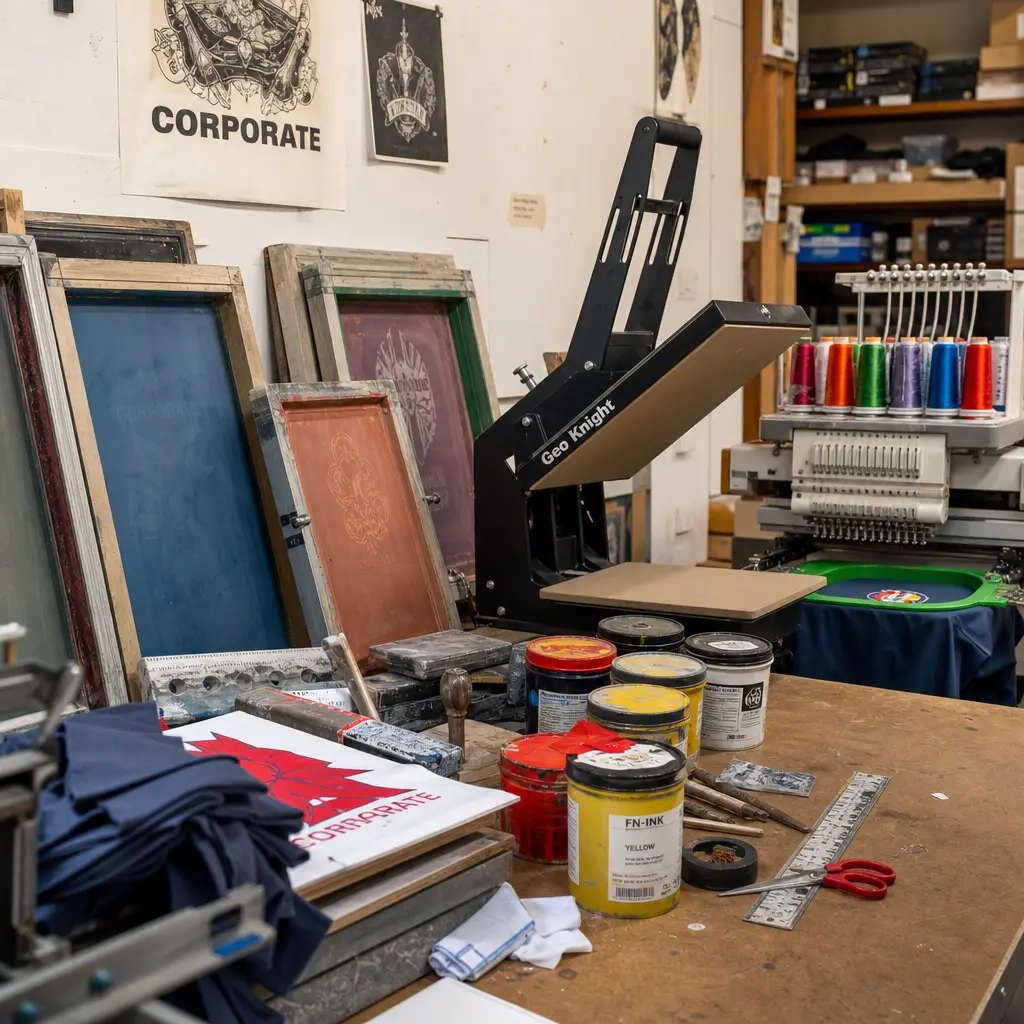
Logo method should be selected according to artwork, color count, fabric color, and required handfeel. Screen printing is usually the most economical and stable choice for bold tech startup logos with one to three solid colors. Heat transfer can handle gradients and small details, but it may feel less natural on heavy cotton canvas. Embroidery looks durable but can pull or pucker if the logo is large and the canvas is not stabilized correctly.
For a messenger bag, placement matters as much as method. A logo printed too close to the flap fold may distort when the bag is closed. A large print across seams is risky because ink coverage changes at thickness transitions. The RFQ should include artwork file, print size, Pantone colors, exact placement from edges, and acceptable tolerance. If a startup has strict brand guidelines, the factory needs those rules before sampling, not after mass production.
- Screen print works well for flat logos, slogans, QR codes with adequate size, and limited colors.
- Woven label or patch works well when the buyer wants a subtle retail-style brand mark.
- Embroidery is better for small marks than large filled areas on flap panels.
- Dark canvas with light ink may need underbase printing, which adds cost and sample risk.
Build MOQ Logic Into the Quote
MOQ is not only a supplier preference. It comes from fabric availability, dye minimums, logo setup, cutting efficiency, and sewing line changeover. If the canvas is a stock natural or black fabric, MOQ can be lower. If the buyer requests a custom Pantone dyed canvas, MOQ may rise because the mill has a minimum dye lot. Multiple logo versions also split production efficiency and can raise cost even when the total order quantity looks high.
A useful RFQ requests price breaks instead of asking for the lowest MOQ only. For example, request 300, 500, 1000, and 3000 pieces with the same specification. This shows whether the main cost is setup, fabric, labor, or logistics. If the difference between 500 and 1000 pieces is small, the buyer may prefer a lower inventory risk. If the difference is large, procurement can use the data to justify a larger launch order.
- Separate MOQ for bag body, fabric color, lining color, logo method, hardware color, and packing materials.
- Ask whether leftover fabric from a previous run can be used for sampling but not bulk approval.
- Confirm if mixed colors are allowed within one MOQ and how color splits affect delivery date.
- Treat unusually low MOQ with caution if the quote excludes sample revision, inspection, or proper packing.
Request Quote Data That Can Be Compared
A price without assumptions is not a quotation; it is only a starting number. Procurement should request a quote sheet that shows material, size, logo method, packing, sample cost, setup cost, lead time, incoterm, validity, and payment terms. This prevents a common mistake where one supplier includes individual polybags, carton marks, and screen setup while another quotes only the sewn bag.
For importers and distributors, the quote should also support landed-cost comparison. Carton size and gross weight are important because canvas messenger bags are bulky. A heavier canvas may increase ocean freight less than air freight, but it can still affect warehouse handling and courier cost if bags are shipped individually. If a tech startup needs a fixed launch date, the cheapest FOB quote may not be the best option once air upgrade risk is considered.
- Quote line should name fabric weight, composition, color, logo method, hardware, lining, and packing.
- Commercial terms should state EXW, FOB port, CIF, or DDP clearly with exclusions.
- Logistics data should include pieces per carton, carton dimensions, gross weight, and estimated CBM.
- Validity period should be long enough for internal approval, usually 15 to 30 days depending on cotton price movement.
Control Sampling Before Bulk Cutting
The sample stage should prove the specification, not only show a nice-looking bag. A proto sample can confirm shape, size, fabric handfeel, and general construction. A revised sample can correct logo placement, pocket layout, or strap length. Before bulk cutting, the buyer should approve a pre-production sample made with the intended fabric, logo method, hardware, lining, and packing method as close to bulk as possible.
Do not approve a sample only from photos if the bag has functional requirements. Photos can hide fabric thickness, strap comfort, magnet strength, odor, and internal space. If timing is tight, use video inspection for interim review, but final approval should be based on a physical sample whenever practical. For a tech startup launch, one late sample correction is still cheaper than receiving thousands of bags with a logo too low on the flap.
- Measure outside size, internal usable size, flap length, strap length range, and gusset width.
- Load the sample with expected contents and hang it for a basic stress review.
- Compare logo color under consistent light against approved Pantone or brand standard.
- Check whether the packed sample fits the planned carton and kitting workflow.
Set Workmanship and QC Thresholds
Canvas messenger bags have several failure points that should be named in the QC plan. Strap anchors are the first concern because users often overload the bag. Flap symmetry is another visible issue, especially on a clean tech brand design. Logo defects are highly visible because the flap is usually the front-facing panel. A final inspection should combine measurement, workmanship, logo, function, packing, and quantity checks.
Use acceptance criteria that a factory and third-party inspector can apply. For example, loose thread shorter than a defined length may be minor, but an open seam at the strap anchor is critical. A logo off-center beyond the agreed tolerance is major. A broken buckle, weak magnet, strong mildew odor, or dirty visible front panel should not pass. AQL levels depend on order size and buyer risk, but the defect classification should be written before production.
- Critical defects: broken strap, open load-bearing seam, sharp hardware, mold, severe odor, or unsafe component.
- Major defects: wrong logo color, obvious print damage, uneven flap, wrong size, missing pocket, or incorrect packing.
- Minor defects: small loose thread, light crease, or slight shade variation within approved tolerance.
- Functional test: load the bag to the agreed weight and inspect strap anchors, seams, and closure after hanging.
Plan Packing for Warehousing and Distribution
Packing is often treated as a final detail, but it affects cost, presentation, and damage rate. A messenger bag can be folded flat to save carton volume, but folding may crease the flap and logo. If the bag is for retail or executive gifting, a softer fold or paper insert may be needed. If the bag is used for event handout, efficient bulk packing may matter more than perfect shelf presentation.
Export cartons should be strong enough for stacking and clean enough for a branded program. Individual polybags protect against moisture and dust, but some buyers prefer recycled paper sleeves or no individual plastic for sustainability targets. Whatever the choice, it should be included in the quote. Carton marks, SKU labels, barcodes, and mixed-carton rules should be supplied before packing starts, not after the goods are finished.
- Define individual packing: polybag, paper sleeve, belly band, hangtag, barcode sticker, or no retail packing.
- Set carton limits: maximum gross weight, carton dimensions, pieces per carton, and mixed SKU rules.
- Use desiccant or moisture-control packing for long sea shipments or humid seasons.
- Confirm whether bags must be packed flat, lightly folded, stuffed, or retail-ready.
Protect the Launch Schedule
Lead time for custom canvas messenger bags is built from several steps: artwork confirmation, sample making, sample shipping, revision, fabric purchase, cutting, logo production, sewing, trimming, inspection, packing, and export. A typical RFQ should ask the factory to break these stages apart. A single statement such as production takes 30 days is not enough for a launch calendar because sample approval and fabric availability can add more time.
Tech startups often have fixed event dates, onboarding waves, investor days, or product launch schedules. The biggest schedule risks are late artwork approval, custom color fabric, revised samples, slow internal decision-making, and last-minute packing changes. Procurement can reduce risk by approving fabric and logo standards early, freezing the spec before bulk purchase, and setting a decision deadline for sample comments.
- Allow time for digital proof, physical sample, revision, pre-production sample, and courier transit.
- Ask when the factory must receive deposit and final artwork to hold the planned ship date.
- Avoid changing logo size, fabric color, or hardware after bulk material is ordered.
- Build a backup plan for air shipment only for urgent partial quantity, not the whole order if budget is tight.
Specification comparison for buyers
| Spec decision | Recommended option | When it fits | Buyer risk to check |
|---|---|---|---|
| Body fabric weight | 14 oz to 16 oz cotton canvas, usually about 475 to 540 GSM before washing | Good balance for laptop-style event bags, employee welcome kits, and retail merchandise where the bag must hold shape | Very light canvas may collapse after packing; very heavy canvas increases freight cost and can make flap turning bulky |
| Construction style | Flap messenger with boxed bottom, reinforced strap anchors, and internal slip pocket | Best for tech buyers needing a practical bag for notebooks, tablets, cables, and conference materials | Flat tote-style messenger bags look cheaper and may fail at the strap seam when loaded |
| Closure method | Hidden magnetic snap, hook-and-loop strip, or metal buckle depending on brand position | Magnetic snap suits clean brand launches; hook-and-loop suits budget events; buckles suit retail or premium gifting | Magnets can affect packing inspection if positioned poorly; hook-and-loop is noisy and collects lint |
| Logo method | Screen print for solid logos, heat transfer for fine gradients, woven patch for premium texture | Screen print is usually the safest first quote option for startup logos with limited colors | Ink cracking, poor registration, or patch color mismatch if the logo file and Pantone references are incomplete |
| MOQ logic | Quote one base MOQ and two price breaks, such as 300, 500, and 1000 pieces | Allows procurement to compare unit cost, setup dilution, and carton utilization before approving budget | A low MOQ quote may hide higher logo setup, fabric surcharge, or less favorable sample terms |
| Laptop fit | Define device size by internal usable space, not only bag outside size | Important when the bag is used for onboarding kits or conference sponsor packs | A nominal 15 inch bag may not fit a 15 inch laptop after seam allowance, padding, and flap fold are counted |
| Packing method | Individual polybag or recycled paper sleeve, export carton with moisture protection | Useful for warehouse receiving, kitting, and clean distribution to staff or retailers | Unprotected canvas can absorb odor, carton dust, or moisture during sea shipment |
| Inspection standard | AQL-based final inspection with functional load test and logo placement tolerance | Best for bulk orders where brand appearance and seam strength matter more than only quantity count | Factory photos alone may miss loose threads, uneven flap shape, and weak strap bartacks |
Buyer checklist before sampling
- Define the bag purpose first: employee kit, event giveaway, retail sale, reseller bundle, or channel partner gift.
- State the target device or contents with actual dimensions and weight, not only laptop size wording.
- Specify fabric as canvas weight in oz or GSM, color, dye method, shrinkage tolerance, and whether washed or unwashed finish is required.
- Provide logo artwork in vector format with Pantone references, print size, print position, and acceptable logo placement tolerance.
- List construction details including flap style, gusset width, lining, pocket layout, strap width, buckle type, and reinforcement points.
- Request pricing at realistic quantities such as 300, 500, 1000, and 3000 pieces if future replenishment is possible.
- Separate sample cost, mold or screen charge, pre-production sample timing, bulk lead time, and packing cost in the quote.
- Define packing method, carton quantity, carton size limit, carton weight limit, barcode or label requirements, and pallet needs if any.
- Require sample approval based on measurements, stitching, logo color, load test, odor, and hardware function before bulk cutting.
- Ask the factory to quote EXW, FOB, or DDP only if they can show what is included and excluded in the logistics cost.
Factory quote questions to send
- What canvas weight and composition are you quoting, and is the GSM measured before or after dyeing or washing?
- Is the quoted fabric stock color, piece-dyed, yarn-dyed, or custom dyed, and what is the color MOQ?
- Which logo method is included in the unit price, and what are the separate setup charges for screens, plates, patches, or labels?
- What is the maximum printable area on the flap without distortion near seams or folds?
- What stitch density, seam allowance, and reinforcement method will be used at the strap anchors and flap corners?
- Can the bag pass a load test at the buyer's intended carrying weight, and how long is the test duration?
- What is the sample timeline for proto sample, revised sample, and pre-production sample after artwork approval?
- What are the bulk lead time assumptions for fabric sourcing, logo production, sewing, packing, and final inspection?
- How many pieces fit in one export carton, what is the gross weight, and can carton weight stay within the buyer's warehouse limit?
- What quality defects are considered major for this product, and what AQL level do you recommend for final inspection?
Quality-control points to confirm
- Body measurement tolerance should normally be controlled within plus or minus 1 cm for main dimensions unless the design is washed or enzyme treated.
- Logo placement tolerance should be agreed before sampling, commonly within plus or minus 3 mm for centered flap prints.
- Strap anchor areas should include bartack, box stitch, or reinforced cross stitch suitable for the intended load.
- Flap shape should remain symmetrical after the bag is filled; twisted flaps usually come from uneven cutting or poor pressing.
- Screen print should pass dry rub and light scratch checks before bulk packing, especially on dark canvas with light ink.
- Hardware should open and close smoothly with no sharp edges, plating bubbles, or weak magnetic hold.
- Internal pockets should fit the stated device or accessory dimensions after seam allowance is deducted.
- Cartons should be dry, clean, correctly marked, and strong enough for stacking without crushing the lower bags.
- Final inspection should include quantity count, workmanship, measurement, logo, packing, odor, and functional load checks.