Start With the Event Use Case
Event planners do not buy canvas messenger bags in the abstract. They buy a carrier for a specific load: attendee kits, sponsor collateral, speaker decks, media packs, or retail-style gifts. That use case should drive the whole RFQ, because a bag that only needs to hold a notebook and badge can be lighter, simpler, and cheaper than one that must carry brochures, a water bottle, and a charger without sagging.
The RFQ should also explain how the bags will be distributed. Bags handed out at registration can be packed in bulk, while bags prepacked with inserts need count accuracy, carton marking, and a packing sequence the factory can actually follow. Include the event date, delivery city, and whether the shipment goes to a warehouse, hotel dock, expo center, or kitting partner.
- List the heaviest items the bag must hold, not just the overall bag size.
- Separate the quantity by event, by location, and by backup stock if you need reserve units.
- Name the handoff point so freight, import handling, and local delivery can be quoted correctly.
- State whether the bags will be handed out loose, prepacked, or combined with printed inserts.
Lock the Canvas Spec Before Pricing
Canvas can mean different things from supplier to supplier, so the RFQ should specify fabric weight in oz and, if possible, GSM. For event messenger bags, 12 oz or about 340 GSM works for lighter programs, 14 oz or about 400 GSM is a practical default for better structure and print clarity, and 16 oz or roughly 450 to 510 GSM is better when the bag needs more body or must carry heavier contents. Thicker fabric is not always better if the bag becomes too stiff for the intended use.
The other spec questions matter just as much. Ask whether the fabric is raw, washed, pre-shrunk, or lined, and whether the bag needs reinforcement at the base, seams, or strap anchors. A thin canvas with good reinforcement can outperform a heavy fabric with weak stitching, which is why buyers should describe the stress points instead of assuming fabric weight alone solves the problem.
- State finished dimensions and usable interior volume, not only the outside measurement.
- Specify whether the bag needs lining, binding, a gusset, or a reinforced base panel.
- Ask for fabric weight in oz and GSM so suppliers cannot quote vague canvas.
- Call out strap width, strap length, and load expectation if the bag will carry hard goods.
Choose the Branding Method That Survives Event Handling
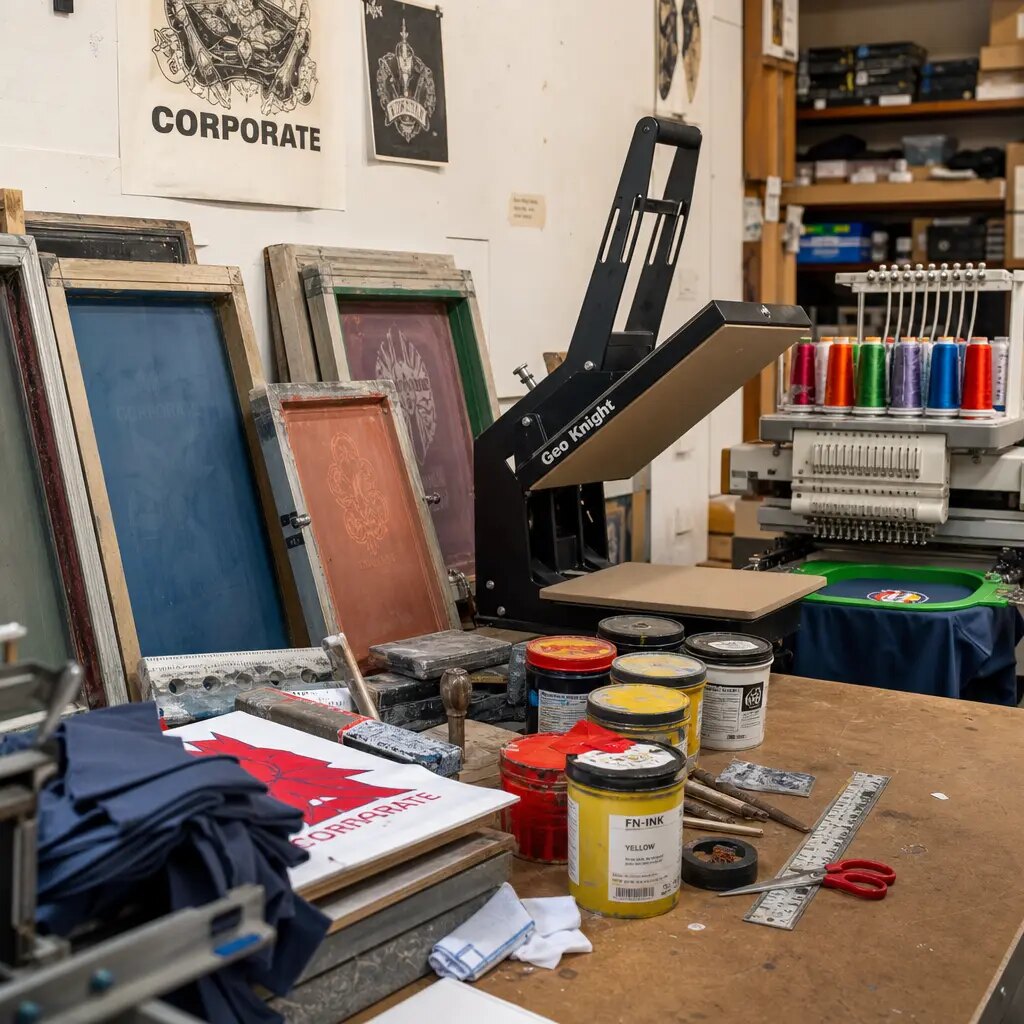
For most custom canvas messenger bags, screen printing is the best starting point when the artwork is simple and the logo uses one to three solid colors. It gives strong visual coverage and usually keeps unit cost under control on medium and large runs. If the design is full color, gradient-heavy, or very detailed, digital transfer can work, but the buyer should test the surface feel and wear resistance before approving mass production.
Embroidery and woven labels are better when the bag needs a more finished presentation or the logo must feel premium. They add texture and perceived value, but they also change cost, lead time, and sometimes the usable logo area. The RFQ should specify placement and size in millimeters, not just say front logo, because a centered print on a flat panel is much easier than a logo placed across a seam or pocket edge.
- Use screen print for simple logos, event names, and solid spot colors.
- Use transfer methods only after a rub test and a folding test on the exact canvas you plan to buy.
- Use embroidery or woven labels when the bag is a gift item, not just a carrier.
- Provide artwork in vector format with Pantone targets and an approved print size.
Understand MOQ and How Unit Price Really Moves
MOQ is rarely a single number; it changes with fabric color, print complexity, and whether the factory has to source special hardware or new materials. A simple natural-canvas messenger bag with one-color print may support a lower MOQ than a custom-dyed bag with lining, zipper pocket, and multiple logo placements. That is why buyers should ask for tiered pricing on the same exact spec, rather than accepting a quote that hides the real breakpoints.
The main cost drivers are predictable. Fabric weight, custom dyeing, number of print colors, print area, pocket count, closure type, and packing all move the price. If a supplier gives one flat number without showing what changed between 300, 500, and 1,000 pieces, the quote is not yet usable for procurement. Good buyers force a clear breakdown before they compare suppliers.
- Request pricing at the quantities you are likely to buy, not only at the smallest acceptable MOQ.
- Separate sample charges, screen charges, digitizing charges, and tooling charges from production price.
- Ask whether custom fabric color raises MOQ or extends lead time more than the print itself.
- Compare the same spec across all tiers so the unit price curve is meaningful.
Compare Sourcing Routes, Not Just Factories
For event-planner orders, the lowest factory price is not always the best route. Direct factories, trading companies, local decorators, stock-program suppliers, and hybrid kitting partners each solve a different problem. A direct factory usually gives the best control over stitching, print, and fabric, while a local decorator can rescue a short deadline if the blanks are already in country. The right answer depends on time, art complexity, and how many extra steps are involved after production.
This is where the comparison table matters. It helps buyers see the tradeoff between control and speed, and it also exposes hidden risk points such as outsourced printing, weak QC ownership, or packing responsibility that is spread across too many vendors. If the supplier cannot tell you who owns the final carton count or who answers after the PO is issued, the sourcing route is too loose for a time-sensitive event.
- Use a direct factory when you want one owner for fabric, stitching, print, and packing.
- Use a trading company when the order includes several item types and one shipment must be coordinated.
- Use a local decorator when time matters more than fabric customization and the blanks are already available.
- Use a hybrid route when event kits need local packing but the bag body should still come from a factory.
Set Sample Approval and QC Thresholds in Writing
A sample is not a courtesy item; it is the control point for the entire order. For canvas messenger bags, ask for a pre-production sample that reflects the final fabric, print, closure, and packing, not a rough mockup built from substitutes. If the supplier wants to approve art on a PDF and start mass production without a physical sample, the buyer should treat that as a risk, not a shortcut.
Write the acceptance standard before the sample ships. Define the critical measurements, acceptable seam variation, print location, and the finish quality you expect on stress points. For event bags, the usual failure is not dramatic style drift; it is loose stitching, sloppy print edges, inaccurate carton counts, or a logo that shifts because the bag panel was not cut consistently.
- Approve a physical sample or a signed golden sample before mass production.
- Set measurement tolerances on bag width, height, gusset depth, and strap length.
- Inspect print clarity, registration, and color against your agreed reference under daylight.
- Test seam strength and closure function on the exact construction you will buy.
Pack for Distribution, Not Just Shipment
Packing rules should match the real downstream workflow. If the event team will hand out the bags directly, bulk packing may be the best cost move. If the bags are going into attendee kits, the packing plan needs item counts, sequence, insert position, and carton labeling that makes on-site distribution fast. In practice, many production problems are really packing problems that were never written into the RFQ.
Ask the factory to quote packing in a way that can be audited. That means inner polybag yes or no, carton quantity, carton dimensions, master carton labels, barcode needs, and whether any inserts or swag items are placed inside the bag before carton closing. If the order will move through a kitting partner, state who is responsible for overage, underage, and replacements so there is no dispute after the goods arrive.
- Specify bulk pack, individual polybag, or retail-ready pack by use case.
- Require carton dimensions and gross weight so freight and warehousing can be planned.
- State whether labels, barcodes, and count sheets must match the receiving system.
- Define who packs inserts if the bag is part of a larger attendee kit.
Build the Lead-Time Plan Around Every Handoff
Lead time is more than the sewing line schedule. For custom canvas messenger bags, the calendar usually includes artwork approval, sample production, sample review, raw material booking, production, inspection, packing, and freight. A supplier can quote a short production time and still miss the event if they have not protected time for print approval or carton procurement. Buyers should ask for the full schedule, not just the factory sewing window.
The event date should be the anchor, not the production start date. Work backward from the delivery window and add a buffer for freight disruption, customs hold, and one round of sample revision if the print needs adjustment. If the event has a fixed launch date, it is worth asking for a fallback plan such as partial air shipment or split delivery so the organizer is not exposed to a single shipping lane.
- Separate sample lead time, production lead time, and transit time in the quote.
- Treat artwork approval and deposit timing as schedule-critical milestones.
- Ask what happens if raw materials, cartons, or printing slots are delayed.
- Keep a fallback shipping option if the event date is immovable.
Use the RFQ to Force Comparable Quotes
A useful RFQ does two things at once: it gives the factory enough detail to price accurately, and it forces every supplier to quote the same job. That means one spec sheet, one artwork file, one packing instruction, one destination, and one quantity ladder. If a buyer sends a loose email and accepts a loose reply, the quotes will not be comparable because each supplier will fill the gaps differently.
The quote should be broken into parts that a procurement team can review. Unit bag price, print cost, sample cost, packaging, freight, and any local handling fees should be visible on the same page. If one supplier includes a carton upgrade or a premium insert and another does not, the lower number is not the cheaper order. Buyers should request the same cost format from every source before making a selection.
- Attach a dimensioned spec sheet, artwork file, and packing requirement to every RFQ.
- Ask every supplier to quote the same quantity tiers and the same incoterm.
- Require a separate line for sample, tooling, print setup, packing, and freight.
- Reject quotes that omit carton size, gross weight, or production lead time.
Read the Landed Cost, Not the Unit Price
For event planners, the decision is often made too early if the buyer focuses on ex-factory price alone. The real cost includes freight, customs, inland delivery, warehouse handling, kitting labor, and any repacking needed before the event. A bag that is cheap at the factory can become expensive if the cartons are inefficient, the defect rate is high, or the packing format forces extra labor on arrival.
The better buying question is simple: which route delivers acceptable quality, on time, with the least total cost and the least schedule risk? Sometimes that is a direct factory with strong QC and efficient cartons. Sometimes it is a local decorator or a hybrid supplier that reduces last-mile risk. Buyers who compare landed cost instead of unit cost usually make fewer mistakes and get cleaner approvals from internal stakeholders.
- Add freight, duties, local trucking, kitting, and repacking to the factory price before comparing bids.
- Account for defect risk because rework costs time and cash even when the quote looks low.
- Compare carton efficiency and units per cubic meter when freight is a major cost driver.
- Choose the route that best protects the event date, not the one that only looks cheapest on paper.
Specification comparison for buyers
| Spec decision | Recommended option | When it fits | Buyer risk to check |
|---|---|---|---|
| Direct factory with in-house screen printing | Best when you want one supplier to control fabric, stitching, and print under one roof | Standard event bags with simple artwork, medium to large quantities, and enough time for sampling | Confirm whether printing is truly in-house, who signs off the artwork, and whether the print line can hit your color tolerance |
| Trading company that consolidates multiple factories | Useful when one contact must source bags, inserts, and mixed materials | Multi-item event kits or programs that need one PO and one shipping lane | Check the actual factory name, who owns QC, and how spec changes are communicated back to production |
| Local decorator using imported blanks | Good for short deadlines when bags are already near the event market | Late-stage campaigns, domestic distribution, or one-off conference runs | Watch blank bag quality, stock availability, and the margin added by domestic decoration and repacking |
| Stock-program supplier with logo application | Works when the same base bag can be reused across multiple events | Repeat orders, moderate quantities, and simple branding with low setup friction | Confirm color and size limitations, minimum logo area, and whether stock can be reserved before artwork approval |
| Factory plus local kitting and fulfillment | Best when bags must be packed with badges, inserts, or sponsor materials | Attendee kits, press packs, and venue delivery with item-by-item packing control | Define who owns the packing list, carton labels, and missing-item responsibility before production starts |
| Small-batch digital transfer specialist | Helpful for complex full-color art or low-MOQ pilot runs | When the logo includes gradients, fine type, or seasonal artwork changes | Test rub resistance, surface feel, and whether the transfer survives folding and repeated handling |
| Premium factory with embroidery or patch capability | Good when perceived value matters more than the lowest unit price | Client gifts, executive events, and bags that need a more finished retail look | Check stitch density, backing material, logo scale, and whether the patch adds bulk at the flap or front panel |
| Regional converter near the final warehouse | Best when speed, replenishment, and late changes matter more than ocean freight savings | Rush programs, domestic distribution, and unstable shipping calendars | Verify the fabric source, repeatability of trim quality, and whether the converter can hold the same spec across reorders |
Buyer checklist before sampling
- State the exact event use case, contents, and expected bag load so the supplier can size the bag and reinforcements correctly.
- Lock finished dimensions, fabric weight in oz or GSM, and whether the bag is unlined, lightly lined, or fully lined.
- Specify the branding method, logo size, print colors, Pantone target, and artwork placement with a dimensioned mockup.
- Define closure type, pocket count, strap length, strap width, and any reinforcement at stress points.
- Ask for quote tiers at the quantities you are likely to buy, not only at a single headline MOQ.
- Request sample cost, tooling cost, screen cost, digitizing cost, and whether they are refundable against production.
- Set packing rules for inner polybag, master carton, carton mark, barcode, and whether the order will be kitted with inserts.
- Confirm the approval gate: pre-production sample, photo approval, or golden sample before mass production starts.
- Ask for production lead time, freight method, ship-from port, and the latest safe arrival date for the event.
- Compare landed cost, not just unit price, including freight, local handling, and any repacking or kitting labor.
Factory quote questions to send
- What canvas weight and fabric construction are you quoting, and is that weight measured before or after finishing?
- Is the fabric stock-dyed, custom dyed, or sourced from greige canvas, and how does that affect MOQ and lead time?
- What is the MOQ by color, print method, and hardware combination?
- Please break out unit price, sample charge, screen or plate charge, digitizing charge, and any packaging surcharge separately.
- What are the finished dimensions, seam allowance, and measurement tolerance you can hold on production pieces?
- Which print method do you recommend for this artwork, and what is the expected color tolerance or registration tolerance?
- What packing is included in the quote: bulk pack, individual polybag, insert card, hangtag, or carton label?
- What are the carton dimensions, carton gross weight, and units per carton for the quoted spec?
- What inspection standard or QC report can you provide before shipment?
- What is the sample lead time, production lead time, and the latest ship date you can commit to after sample approval?
Quality-control points to confirm
- Measure the finished size, strap length, and pocket position against the approved spec, not against a visual reference.
- Inspect seam strength at strap anchors, side seams, flap edges, and any pocket joins where event bags usually fail first.
- Check print placement, print density, and color consistency under daylight, especially when the logo sits near edges or seams.
- Verify that threads are trimmed, corners are clean, and no panel has oil stains, fabric slubs, or odor from finishing agents.
- Confirm that zippers, snaps, or velcro closures run smoothly and stay aligned after repeated open-close cycles.
- Review carton labels, inner counts, and packing list accuracy before dispatch to avoid shortages at the event warehouse.
- If the bag will be reused or distributed to VIPs, run a rub or wash test on the print and inspect for cracking or transfer.