Start with the bakery job, not the mood board
A useful RFQ for custom canvas messenger bags begins with the work the bag must do. Artisan bakeries may use one messenger style for staff issue, retail merchandise, loyalty gifts, subscription kits, wholesale sales meetings, farmers market teams, new-store openings, local delivery support, or seasonal gifting. Those uses can look similar in a product photo, but they do not need the same fabric weight, strap width, closure, pocket layout, decoration method, packing format, or landed-cost target.
A supervisor bag or local delivery support bag may need darker dyed canvas, a 50 mm shoulder strap, a secure closure, reinforced strap joints, and an inside pocket for an order pad or device. A retail bag displayed beside bread, pastries, coffee, or packaged pantry items needs cleaner visible stitching, sharper branding, hangtag or barcode control, and packing that protects the front flap. A subscription kit bag should be built around the actual box or product bundle, not around a generic messenger-bag image found during concept work.
Before asking for price, write a short operational brief. Include the sales channel, expected contents, approximate loaded weight, target launch date, distribution method, and whether the bag is sold, gifted, or used internally. That one page prevents suppliers from quoting different assumptions and helps procurement reject both underbuilt low-price options and unnecessarily expensive constructions.
- State the primary use: staff carry, retail merchandise, event gift, subscription kit, wholesale sales tool, or delivery support.
- List expected contents and estimated load, such as 1-3 kg of menus, coffee bags, packaged goods, catalogues, or staff items.
- Define the appearance goal: rustic natural canvas, premium dyed canvas, washed casual finish, clean minimalist retail item, or utility staff bag.
- Tell suppliers whether bags must stand on a shelf, hang on a peg, ship flat, or move through warehouse picking.
- Split quantities by artwork, color, location, and launch phase so MOQ and print setup are quoted correctly.
- List retail or warehouse requirements such as barcode sticker, hangtag, paper band, plastic-free presentation, carton SKU separation, or routing label.
Specify canvas by weight, finish, and behavior
Do not let the fabric line in the RFQ stop at cotton canvas. Messenger bags take more stress than simple totes because the flap, bottom gusset, strap joins, and closure points move repeatedly. For bakery staff and retail programs, 12 oz to 16 oz canvas is a practical sourcing range, roughly 390-540 GSM depending on yarn count, weave density, and finishing. Lighter 8 oz to 10 oz canvas can work for a short-term giveaway, but it may collapse or feel weak when filled with boxed pastries, coffee bags, catalogues, or daily staff items.
Ask for both nominal oz and GSM. Also ask whether the weight is measured before or after washing, coating, lamination, or finishing. Two fabrics with the same nominal oz can behave very differently. A tight 14 oz canvas can feel firmer than a loose 16 oz fabric. Washed canvas may feel better in the hand, but it can introduce more shrinkage and measurement variation. Coated canvas can add stiffness and water resistance, while also affecting sewing, folding, and print adhesion.
The finish sets the visual standard. Natural unbleached canvas suits rustic bakery branding, but it brings seed flecks, slubs, shade variation, and visible handling marks. Bleached canvas gives a cleaner print ground. Dyed canvas helps with brand color planning and darker staff-friendly bags, yet dye-lot control and fabric MOQ become more important. If recycled, organic, or certified cotton is required, ask for the exact certificate scope and transaction documents rather than accepting broad sustainability language.
- 12 oz canvas: useful for lighter promotional or low-load messenger bags where foldability and price matter.
- 14 oz canvas: balanced option for many bakery staff, retail, and loyalty programs.
- 16 oz canvas: stronger handfeel and structure for premium merchandise or heavier daily use.
- Natural canvas: rustic appearance, but approve fleck level, shade variation, and acceptable surface marks.
- Dyed canvas: stronger color planning, but ask for lab dip, bulk shade tolerance, and fabric MOQ.
- Washed canvas: softer handfeel, but confirm shrinkage, twisting, shade variation, and wider measurement tolerance.
Turn size into measurable specifications
A factory-ready messenger bag specification should include finished width, finished height, gusset depth, flap drop, strap width, adjustable strap range, pocket dimensions, closure position, label position, seam finish, and reinforcement method. Many bakery messenger bags fall around 34-38 cm wide, 26-30 cm high, and 8-12 cm deep, but the right size is whatever fits the intended contents. If the bag must hold a pastry box, catalog, staff tablet, or wholesale sample set, measure that item first and allow clearance for insertion and closure.
Outer dimensions can mislead buyers. Seam allowance, fabric thickness, lining, bound seams, internal pockets, and flap angle all reduce usable capacity. A flat envelope messenger is cheaper and ships efficiently, but it carries less and may deform when filled. A gusseted or boxed-bottom construction costs more, yet it gives better load stability and a cleaner shelf shape. If the bag must stand in a bakery retail display, say so in the RFQ instead of hoping the supplier infers it.
The strap deserves the same precision as the bag body. A 25 mm strap may be acceptable for a light promotional piece, but it can dig into the shoulder when the bag carries menus, samples, or staff tools. For most B2B bakery uses, 38-50 mm cotton webbing is a stronger starting range. Define the minimum and maximum adjusted length, slider type, reinforcement length at joins, and whether the strap is fixed, detachable, or crossbody-capable.
- State finished width, height, gusset depth, flap drop, and internal usable space if a known box must fit.
- Specify strap width, webbing material, slider type, minimum strap length, and maximum strap length.
- Define pocket layout by function: phone, order pad, loyalty cards, tablet, receipt book, or simple slip pocket.
- Set flap length so the bag closes when filled, not only when empty in the sample room.
- Confirm whether internal seams are raw, overlocked, bound, lined, or finished with cotton tape.
- Include thread color, seam allowance, stitch density target, and visible topstitching expectations.
Control load points before approving artwork
Canvas messenger bags usually fail in predictable places: strap attachments, side seams, flap corners, bottom gussets, pocket openings, closure attachments, and hardware stress points. Bakery teams often focus first on the flap logo because that is what customers see. Meanwhile, the supplier may be making quiet assumptions about sewing construction. That is where risk appears later, especially if the bag is used by staff, sold at retail, or filled as a gift package.
The RFQ should define reinforcement at every stress area. Strap joins should use bar-tack, box-X, or another approved reinforcement method rather than a single straight stitch. Pocket openings may need extra bartacks. Flap corners should be symmetrical and secure. Snaps, magnets, buckles, or hook-and-loop panels need reinforcement so the closure does not tear through the canvas after repeated use.
Write load expectations in practical terms. A retail bag sold empty does not need the same test as a daily staff bag, but both need more control than a photo sample. Ask the supplier what static load check they can perform, how long the load is held, and what counts as failure. The goal is not to overbuild every bag. The goal is to match construction to real bakery use before the purchase order is placed.
- Use bar-tack, box-X, or reinforced stitching at strap joins, not single-row stitching only.
- Add reinforcement at pocket openings, flap corners, closure points, and bottom gusset stress areas.
- Request a practical load check based on expected contents, such as menus, coffee bags, small jars, or staff supplies.
- Inspect for skipped stitches, loose threads, seam slippage, torn fabric, and distorted hardware after load testing.
- Require symmetrical flap shape and controlled topstitching because these areas are visible in retail settings.
- Ask for detail photos of reinforcement methods before approving bulk production.
Match branding method to fabric reality
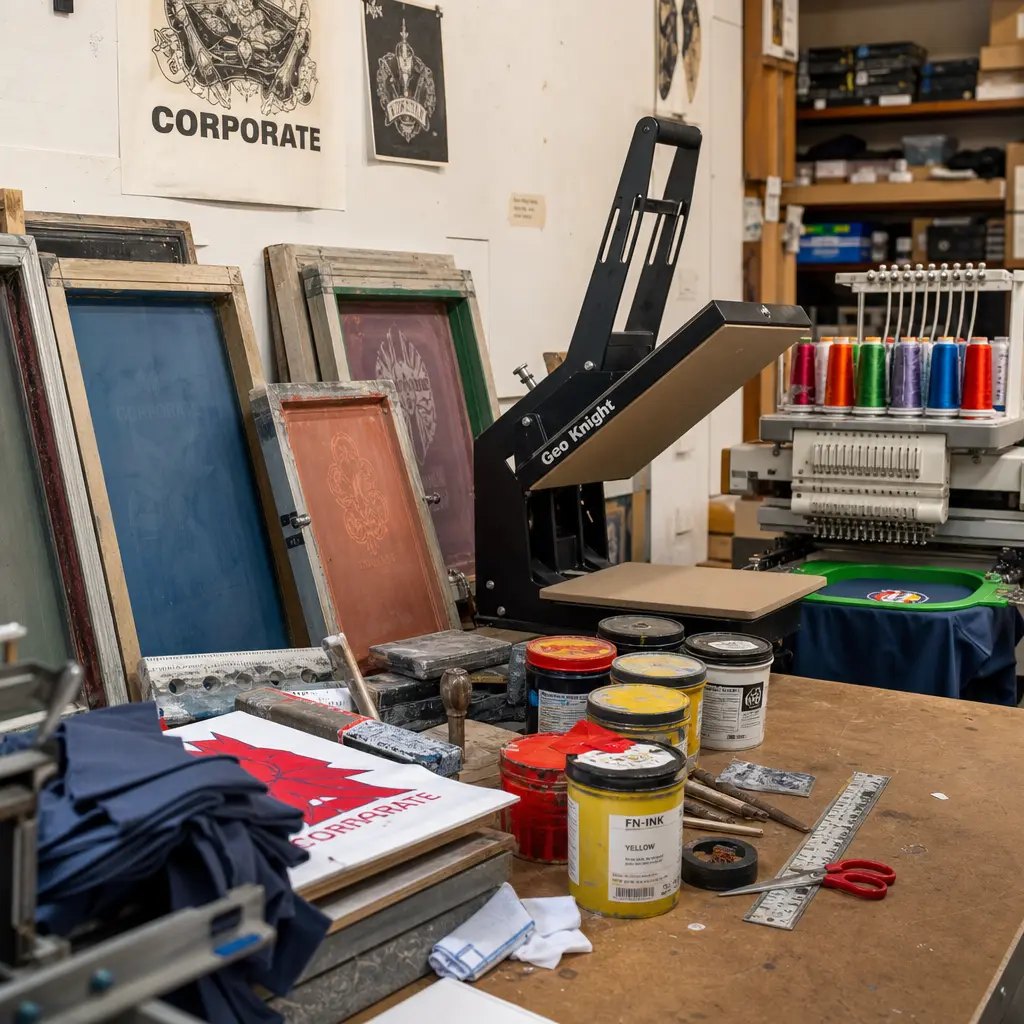
For many artisan bakery logos, screen printing is the most practical decoration method. It works well for solid marks, slogans, simple line drawings, and one to three spot colors. The RFQ should state artwork size, placement, Pantone or brand color references, number of colors, print positions, underbase requirement, ink type if specified, and whether screens and strike-off costs are included in the quoted price.
Canvas texture changes how artwork prints. Coarse yarns can break fine lines, fill in flour-dust effects, and make small type hard to read. Natural canvas can mute color because the base is not white. Dark dyed canvas often needs a white underbase, which increases cost and may make the print feel heavier. Large flap prints need folding and packing checks because hard creases across the artwork can create cracking, pressure lines, or visible gloss changes.
Embroidery, woven labels, patches, and transfers all have a place when they match the artwork. Embroidery can look premium for compact marks, but stitch density and backing must be controlled to avoid puckering. Woven labels are better for small lettering than direct print on coarse canvas. Heat transfers can reproduce full-color artwork, but they must be tested on the final fabric for cracking, edge lift, handfeel, adhesion, and rub resistance.
- Screen print: best for solid artwork, limited colors, and cost-controlled bulk orders.
- Embroidery: suitable for small premium logos, but control backing, stitch density, and puckering.
- Woven label: useful for fine text, side branding, traceability, or a retail-quality finish.
- Patch: creates a premium look, but check attachment strength, edge finish, and material claims.
- Heat transfer: useful for full-color art, but test cracking, edge lift, adhesion, and handfeel.
- Print strike-off: approve on final fabric or same-lot fabric before bulk printing starts.
Quote MOQ and cost by component
MOQ is not controlled by sewing capacity alone. It also depends on fabric availability, dyeing minimums, cutting efficiency, webbing color, hardware purchase quantity, label production, print setup, packing materials, and line planning. A simple stock natural canvas bag with standard webbing and one-color screen print may be feasible around 300-500 pieces at some factories. Custom dyed fabric, special webbing, custom plated hardware, multiple sizes, or several store logos can push the practical minimum higher.
Ask for MOQ by variable, not just total order quantity. A bakery group ordering 1,000 bags across five store logos, two fabric colors, and separate retail cartons is not placing the same production order as a single 1,000-piece SKU. Each logo may need its own screen setup. Each label may have its own minimum. Each carton SKU can add packing labor and warehouse complexity. If custom dyed fabric leaves unused material, clarify ownership, storage time, and whether it can be used for future reorders.
Unbundle the quote so comparisons are fair. Two suppliers may both quote a messenger bag, yet one price includes 16 oz canvas, adjustable 50 mm strap, metal slider, woven label, magnetic snap, inner pocket, hangtag, individual packing, and FOB charges, while another includes thinner fabric, fixed strap, no pocket, no label, bulk packing, and EXW terms. The lower price may be perfectly fine for a giveaway. It is just not the same bag.
- Request quantity breaks at 300, 500, 1,000, and 3,000 pieces if those levels match program planning.
- Separate fabric, cutting, sewing, print setup, printing, labels, hardware, packing, cartons, and export handling.
- Ask MOQ by bag size, fabric color, strap color, hardware finish, label design, print design, and packing style.
- Clarify whether custom dyed fabric or custom hardware creates leftover inventory and who controls it.
- Identify which features can be changed to reduce cost without weakening load points or brand presentation.
- Compare the same incoterm, currency, payment terms, quote validity, and included charges.
Ask for landed-cost data early
A factory unit price is only one part of the buying decision. Messenger bags can vary sharply in carton volume because of canvas stiffness, gusset structure, strap width, hardware, folding method, and retail packing. Ask for carton dimensions, pieces per carton, gross weight, net weight, estimated CBM, loading port, incoterm, packing description, and whether export cartons and carton marks are included.
Do not compare EXW and FOB prices as if they are the same. Local export charges can make an EXW price look better until freight planning begins. Also confirm whether sample fees, screen charges, custom dyeing, labels, hangtags, barcode stickers, packing materials, inspection support, and documents are included. For B2B procurement, the better comparison is landed cost plus operational fit, not the lowest visible unit price.
Carton rules affect warehouse execution. Single-SKU cartons simplify receiving and store allocation, while mixed cartons may reduce carton count. If the order includes multiple store logos, colors, or packing formats, define carton rules before production is packed. Ask for packing photos before shipment and use them to confirm fold direction, hardware protection, carton marks, SKU separation, and barcode placement.
- Request carton dimensions, pieces per carton, gross weight, net weight, and estimated CBM at quote stage.
- Ask whether the price is EXW, FOB, FCA, CIF, or another incoterm, and use the same basis for comparison.
- Confirm loading port, export carton specification, carton marks, documents, and included local charges.
- Require separate quote lines for sample fee, screens, labels, hangtags, barcode stickers, and special packing.
- Ask whether cartons are single-SKU, mixed-SKU, store-sorted, or bulk packed.
- Use carton CBM and gross weight to compare freight impact before selecting a supplier.
Use sampling to lock the standard
Sampling should prove the bag, not just decorate it. A development sample can confirm the general shape, but the pre-production sample should use final canvas, final strap, final hardware, final thread, final logo method, final labels, final closure, and final packing. Bulk production should not begin until this sample and the print strike-off are approved in writing.
Approval comments need numbers. Avoid notes such as stronger strap, better logo position, or nicer flap. Write the required strap width, reinforcement method, reinforcement length, logo distance from flap edge, print size, flap drop, stitch density, or closure position. Precise comments reduce interpretation errors between the buyer, merchandiser, sample room, printing team, and sewing line.
Review the sample as it will be used. Fill it with the intended contents, close the flap, adjust the strap, open the closure repeatedly, and check whether the body holds shape. If retail packing or fold creasing matters, leave the sample packed for several days and inspect the print again. Keep one approved sample with the buyer or inspection team and one sealed approved sample at the factory.
- Measure width, height, gusset, flap drop, strap range, pocket size, label position, and print placement.
- Check final fabric shade, handfeel, fleck level, stiffness, shrinkage expectation, and print surface.
- Open and close snaps, magnets, buckles, sliders, zippers, or hook-and-loop repeatedly.
- Inspect seam tension, stitch density, thread trimming, flap symmetry, and strap reinforcement.
- Approve packing after checking fold marks, hardware rub, barcode placement, and carton presentation.
- Use the approved pre-production sample as the physical reference for bulk inspection.
Set QC tolerances before the PO
Quality control should be agreed before the purchase order, not negotiated during final inspection. For many canvas messenger bags, workable measurement tolerances are +/-1 cm for width and height, +/-0.5 cm for gusset depth, +/-0.3-0.5 cm for strap width, and +/-3-5 mm for print placement depending on artwork size and reference point. These are not universal rules, but they are useful starting points for supplier discussion.
Defect classification should separate major defects, minor defects, and acceptable natural characteristics. Major defects may include wrong fabric, wrong color, missing label, incorrect logo, non-functioning closure, broken seam, severe stain, unacceptable shade mismatch, incorrect carton quantity, or unsafe hardware edge. Minor defects may include untrimmed threads, slight stitch waviness outside the main visible area, or small natural flecks within the approved canvas standard.
Natural canvas needs clear visual boundaries. Seed flecks, slubs, and mild shade character may be part of the approved look. Oil marks, dirty handling stains, broken yarns, holes, mildew odor, and severe panel mismatch should not pass. Bakery brands should be especially strict about visible cleanliness because these bags may sit near food retail displays or appear in product photography with packaged goods.
- Set dimension, print-placement, flap-alignment, strap-length, and strap-width tolerances before production.
- Define major defects such as wrong material, broken seam, missing label, wrong print, stain, or failed closure.
- Define minor defects such as trim threads or slight stitch waviness when they do not affect function or visible retail quality.
- Approve the acceptable level of natural flecks, slubs, and shade variation for unbleached canvas.
- Inspect filled-bag appearance because flap skew and closure strain may not show when the bag is empty.
- Compare bulk goods to the approved sample, approved strike-off, purchase order, and packing specification.
Plan packing for presentation and transport
Packing affects product condition, warehouse handling, freight cost, and retail presentation. Canvas messenger bags may be flat packed, folded once, paper banded, tissue wrapped, individually polybagged, or packed with hangtags depending on the channel. In-store bakery retail may prefer a paper band or hangtag. Distributor, e-commerce, or multi-store warehouse programs may need individual protection to reduce dust, barcode mix-ups, and handling marks.
Protect the front flap and artwork. A hard fold across a screen print or transfer can leave a permanent crease. Metal buckles, sliders, magnetic snaps, and rivets can rub against printed panels during ocean freight, trucking, or warehouse movement. Ask the supplier to show the fold direction and hardware position in packing photos. If abrasion risk is visible, use tissue, a paper sleeve, or a simple protective insert.
Cotton canvas also needs moisture control. Bags should not be packed while ink, fabric, or cartons are damp. Export cartons should be clean, dry, and strong enough for stacking. If the route, season, storage time, or destination creates dampness risk, request suitable moisture-control measures. Carton marks should match the distribution plan, especially when different stores, SKUs, colors, or artwork versions are included.
- Define flat pack, one-fold pack, flap-open pack, paper band, tissue wrap, polybag, or retail hangtag method.
- Keep closures and metal hardware away from printed panels to prevent rub marks and pressure dents.
- Avoid hard folds across flap artwork, especially for thick ink, underbase prints, transfers, or stiff canvas.
- Request clean, dry export cartons with agreed carton strength, quantity, marks, and SKU separation.
- Add moisture-control measures when route, climate, storage time, or destination creates dampness risk.
- Require pre-shipment packing photos and final carton data before freight booking or shipment release.
Specification comparison for buyers
| Spec decision | Recommended RFQ wording | Typical B2B range | Procurement risk to control |
|---|---|---|---|
| Main canvas weight | Quote 12 oz, 14 oz, and 16 oz cotton canvas options; state GSM, composition, weave, finish, and whether weight is measured before or after washing, coating, or other finishing. | 12 oz is often about 390-410 GSM; 14 oz about 450-480 GSM; 16 oz about 510-540 GSM, depending on yarn count and weave density. | Nominal oz is not enough. A loose 16 oz canvas may feel less structured than a tight 14 oz canvas, and washing can change shrinkage, handfeel, and final measurements. |
| Finished size | State finished width, height, gusset depth, flap drop, strap width, strap length range, pocket dimensions, closure position, and internal usable space. | Common bakery messenger size: 34-38 cm W x 26-30 cm H x 8-12 cm gusset; strap width 38-50 mm. | Outer size does not equal usable capacity. Seam allowance, fabric thickness, lining, pocket construction, and flap angle can reduce the space available for pastry boxes, catalogues, or staff items. |
| Construction | Require a boxed or gusseted bottom, reinforced strap joints, controlled flap alignment, finished internal seams, and an agreed pocket layout. | Bar-tack or box-X reinforcement at strap points; 8-10 stitches per inch is a common target for heavy canvas sewing. | Single-row stitching at load points, raw fraying seams, and weak pocket openings can cause returns even when the front logo looks acceptable. |
| Branding method | Specify screen print, embroidery, woven label, patch, or transfer by artwork type; provide final-size artwork and color references. | Screen print works well for 1-3 spot colors; embroidery suits compact logos; woven labels handle small text better than coarse canvas print. | Fine flour-dust textures, small serif text, and gradients may lose detail on canvas. Dark fabric often needs a white underbase, adding cost and changing handfeel. |
| Print placement | Define print size, distance from flap edge or seam, centerline reference, underbase, ink type, and acceptable placement tolerance. | Placement tolerance commonly +/-3 mm for small logos and +/-5 mm for larger flap prints, depending on fabric movement and artwork size. | Visual approval without measured reference points leads to inconsistent bulk placement, especially on folded or curved flaps. |
| Closure and hardware | List closure type, finish, diameter or size, pull strength expectation, and anti-rub packing requirement. | Magnetic snap, metal snap, buckle, hook-and-loop, or zipper; hardware finish may be nickel, antique brass, black, or custom plated. | Weak magnets open when loaded. Hardware can rust, scratch prints, create pressure marks, or vary in finish tone between batches. |
| MOQ basis | Ask MOQ by fabric color, bag size, strap color, hardware finish, print design, label design, hangtag, barcode label, and packing style. | Stock natural canvas with simple print may start around 300-500 pcs; custom dyeing, custom webbing, or custom hardware may require 500-1,000+ pcs. | A total-order MOQ hides component MOQ. Five store logos at 200 pcs each can create five print setups, separate SKU packing, and label minimums. |
| Sample approval | Require a development sample if needed, then a pre-production sample using final fabric, hardware, print, labels, thread, closure, and packing. | Sample lead time depends on material availability; custom dyed or washed fabric adds approval steps. | Approving only a shape sample is risky. Bulk production should wait until the final pre-production sample and print strike-off are approved in writing. |
| QC tolerances | Define measurement, print, stitch, hardware, shade, label, and carton acceptance before PO confirmation. | Main dimensions often +/-1 cm; gusset +/-0.5 cm; strap width +/-0.3-0.5 cm; print placement +/-3-5 mm. | Without tolerances, inspection becomes subjective and rework disputes are harder to resolve. |
Buyer checklist before sampling
- Define the bag job first: staff issue, in-store retail, event gift, subscription kit, wholesale sales kit, new-store launch, loyalty reward, or local delivery support.
- State target contents and approximate loaded weight, such as an order tablet, menu folder, coffee bags, boxed pastry, catalog, uniform item, retail purchase, or sample kit.
- Specify finished dimensions: width, height, gusset depth, flap drop, strap width, strap length range, pocket size, closure position, and internal usable space.
- Request fabric details in both oz and GSM, including composition, yarn count if available, weave, finish, shade, shrinkage expectation, and whether the fabric is stock or custom dyed.
- List construction requirements: boxed bottom, seam finish, stitch density target, reinforcement method, thread color, label placement, hardware finish, and pocket layout.
- Send vector artwork and specify Pantone or brand color references, print method, number of colors, print size, position reference points, underbase requirement, and color tolerance.
- Ask the supplier to separate costs for fabric, cutting and sewing, print setup, print running cost, labels, hardware, hangtags, barcode labels, packing, cartons, and export handling.
- Confirm MOQ by every variable: fabric color, bag size, strap color, hardware finish, print design, label artwork, hangtag, packing style, and carton SKU requirement.
- Require a pre-production sample made with final canvas, final trim, final hardware, final print, final label package, final thread color, final closure, and proposed packing method.
- Define measurable QC thresholds for dimensions, print placement, flap alignment, stitching, seam strength, hardware function, stains, shade variation, label accuracy, and carton condition.
Factory quote questions to send
- What canvas composition, nominal oz, GSM, yarn count if available, weave type, and finishing process are included in this quote? Is the fabric weight measured before or after washing, coating, or finishing?
- Is the quoted fabric stock natural canvas, bleached canvas, custom dyed canvas, washed canvas, recycled-blend canvas, coated canvas, laminated canvas, or water-repellent canvas? What material lead time applies?
- What is the MOQ per finished bag size, fabric color, strap color, hardware finish, label design, print design, hangtag, barcode label, and packing method?
- What finished-size tolerance, gusset tolerance, strap-width tolerance, print-placement tolerance, and flap-alignment tolerance can your production line hold for this construction?
- Which print method is included, how many colors and positions are included, what is the maximum print area, and does the quoted price include screens, underbase, strike-off, and curing control?
- Are the shoulder strap, slider, buckle, snap, zipper if any, inner pocket, woven label, care label, hangtag, barcode sticker, paper band or polybag, master carton, and carton mark included in the unit price?
- What reinforcement method is used at strap joints, side seams, flap corners, pocket openings, bottom gusset, and closure attachment points? Can you provide photos of these details from a similar construction?
- What stitch density, seam allowance, edge finish, thread type, thread thickness if known, and lining or binding method are included in the quoted construction?
- What sample fee, sample lead time, courier responsibility, revision policy, and approval process apply before bulk order confirmation?
- What practical load test, hardware function test, rub check, color check, and packing compression check can be performed before shipment?
Quality-control points to confirm
- Finished size should normally stay within the approved tolerance, commonly +/-1 cm for width and height, +/-0.5 cm for gusset depth, and +/-0.3-0.5 cm for strap width unless the buyer approves another standard.
- Strap length range should be measured from the approved reference points with the slider at minimum and maximum positions, because short straps create functional complaints even when the bag body is correct.
- Print placement should be checked from a defined seam, flap edge, centerline, or label reference point, with a common tolerance of +/-3 mm for small logos and +/-5 mm for larger flap artwork.
- Print color should be compared with the approved strike-off under consistent lighting, with extra checks for underbase opacity, ink buildup, edge sharpness, curing, and rub resistance on the final fabric.
- Strap joints should use approved bar-tack, box-X, or reinforced stitching with no skipped stitches, loose threads, seam slippage, tearing, or visible fabric distortion after a practical load check.
- Hardware should open and close smoothly, match approved color tone, and show no sharp edges, plating flakes, rust marks, weak magnets, loose rivets, inconsistent spring action, or pressure marks on the fabric.
- Canvas panels should be inspected for stains, oil marks, broken yarns, holes, excessive slubs, unacceptable seed-fleck concentration, dye shade mismatch, creasing, and needle damage around visible seams.
- Flap alignment should be checked on both empty and filled bags because a skewed flap is highly visible in retail displays and product photography.
- Inside seams should be checked for fraying, raw edge exposure, loose threads, seam allowance consistency, and secure binding or overlocking, especially for unlined bags.
- Labels, hangtags, care instructions, barcode stickers, SKU marks, and carton labels should match the purchase order, approved artwork, language requirements, and distribution list.