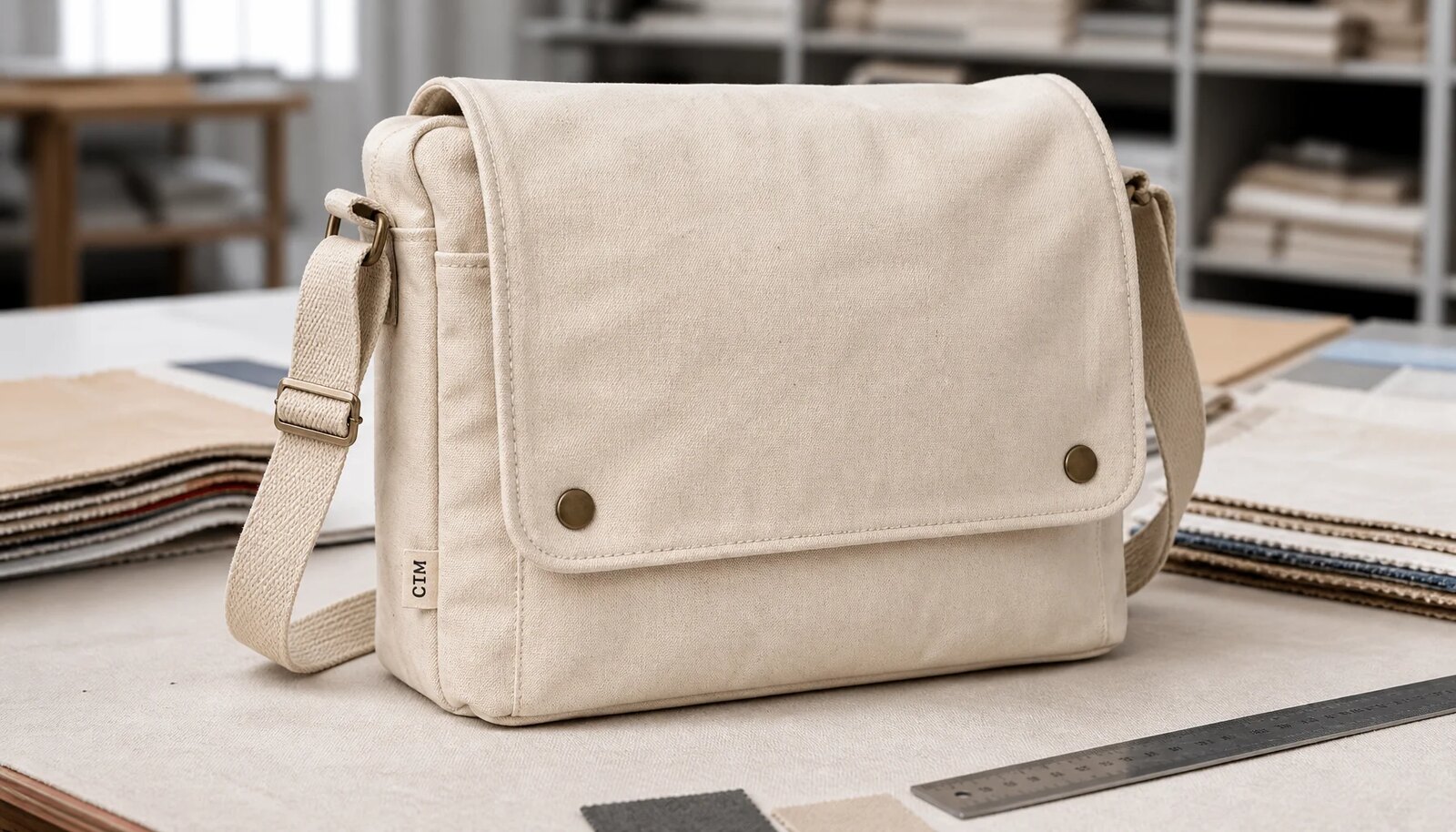
Start With the Hotel Retail Use Case
A custom canvas messenger bag for hotel retail is not the same product as a simple promotional tote. The buyer is asking guests to pay for it, carry it during travel, and associate it with the hotel brand after checkout. That means the inspection standard must cover retail appearance, carrying comfort, and repeated-use strength. A bag that is acceptable as a giveaway may look unfinished when displayed next to apparel, local gifts, or spa products in a hotel boutique.
The clearest buying problem is consistency. Hotel groups often reorder the same bag for several properties or seasons, and small changes in canvas color, flap shape, strap width, or logo placement can create visible mismatch on the shelf. Procurement teams should lock the specification before comparing quotes, because a lower price may simply mean lighter canvas, shorter strap, cheaper hardware, or less protective packing.
- Define the product role: paid retail item, guest amenity upgrade, welcome gift, conference merchandise, or resort shop accessory.
- Set the expected carrying load: light souvenir use, daily city bag use, or beach and travel use with heavier contents.
- Decide the retail look: natural canvas, dyed canvas, washed vintage finish, structured premium finish, or minimalist branded label.
- Separate must-have inspection points from nice-to-have features so suppliers quote the same bag instead of their easiest version.
Canvas Weight and Fabric Specification
Fabric weight is one of the biggest cost and quality drivers. For hotel retail messenger bags, 12 oz canvas can work for light seasonal bags, but 14-16 oz is a safer range when the bag has a flap, strap hardware, and a boxed bottom. In metric terms, that usually falls around 400-540 GSM depending on weave and finishing. Buyers should request both oz and GSM because factories, fabric mills, and merchandisers may use different references.
The hand feel matters as much as the number. A stiff canvas can make a flap look structured but may crease badly in cartons. A softer washed canvas looks more relaxed and premium for resort retail, but washing adds cost, shrinkage variation, and shade-control risk. For dyed canvas, specify Pantone target, acceptable shade range, and color fastness expectations. Natural cotton canvas should still be checked for seed specks, weaving slubs, oil marks, and yellowing.
- Recommended baseline: 14 oz canvas for standard hotel retail and 16 oz canvas for a heavier premium messenger bag.
- Useful tolerance: agree GSM tolerance before production, then compare bulk fabric against the signed swatch.
- Shrinkage control: request pre-shrunk fabric or calculate cutting size if washing is part of the finish.
- Color control: approve lab dip or bulk cutting swatch under standard light, not only through phone photos.
Construction Details That Affect Inspection
Messenger bags fail most often at stress points, not in the middle of the fabric panel. Strap ends, D-ring loops, snap reinforcement areas, flap corners, pocket mouths, and bottom gusset seams need direct inspection. A good factory quote should state whether these areas are bar-tacked, box-stitched, reinforced with extra fabric, or only sewn once. For hotel retail, visible reinforcement can also improve perceived value if the stitching is tidy.
The bag pattern should be judged with weight inside. An empty messenger bag can look square in a sample room, then collapse or twist when loaded with a tablet and bottle. Ask the factory to send loaded sample photos or test the sample yourself with a realistic weight. If the bag has a flap, check that the flap still covers the opening after loading. If it has magnetic snaps, check alignment when the bag is filled, not only when it is flat.
- Use boxed gussets if the bag must stand better on a retail shelf or carry bulky guest items.
- Add an inner slip pocket only if the stitching will not distort the outside front panel.
- Keep flap corners symmetrical; uneven flap shape is very visible in retail display.
- Avoid placing heavy embroidery on a loose flap without backing, because puckering can make the bag look second grade.
Logo Method and Retail Branding Control
For simple hotel logos, screen printing is usually the most efficient decoration method. It gives a clean flat look on natural or dyed canvas and works well for one to three solid colors. The buyer should specify Pantone colors, print size, placement, and whether the print should sit on the flap, front pocket, side panel, inside label, or strap. On coarse canvas, very fine lines can break, so the artwork should be reviewed at actual size before the print screen is made.
Embroidery, woven labels, leather patches, and sewn fabric labels can lift the retail value, but each adds a different QC point. Embroidery needs backing and thread tension control. Woven labels need edge quality and accurate fold size. Leather or PU patches need color and deboss depth control, plus a decision on whether the material is acceptable for the hotel brand. The cheapest logo option is not always the best value if it makes the finished bag look like a convention giveaway.
- Screen print: best for clean artwork and controlled cost, but inspect rub resistance and coverage on textured canvas.
- Embroidery: best for premium logos, but watch puckering, thread shine, and backing visibility.
- Woven label: good for understated boutique hotel branding, but confirm label MOQ and lead time.
- Patch branding: useful for heritage style, but define material, stitch color, edge finish, and placement tolerance.
MOQ Logic and Cost Drivers
MOQ depends less on the bag shape and more on the materials that must be purchased or customized. A simple messenger bag using stock natural canvas, standard cotton webbing, and a one-color print may be practical at 300-500 pieces. Once the buyer adds custom-dyed canvas, woven labels, special hardware plating, washed finishing, multiple logo positions, or retail barcode packing, the realistic MOQ can move toward 800-1000 pieces or more.
Procurement teams should compare quotes by cost structure, not only by unit price. One factory may include print screen setup, hangtag stringing, and export cartons in the unit price. Another may quote a low bag price and add charges later. For hotel retail, packing and display readiness have real cost. A paper belly band, hangtag, barcode sticker, or individual polybag can change labor time and carton volume.
- Main cost drivers: canvas GSM, dyeing, washing, lining, strap width, hardware quality, logo method, pocket count, and packing complexity.
- Hidden cost area: sample revisions, print screens, woven label MOQ, custom carton marks, and domestic trucking to port.
- Quote comparison rule: require the same Incoterm, packing method, and decoration details before ranking suppliers.
- Commercial tradeoff: a slightly higher unit price may reduce rejection risk if it includes stronger stitching and better packing.
Sample Approval Before Bulk Cutting
A sample is only useful if it represents the production method. Many early samples use substitute canvas, temporary hardware, or digital logo output just to show the shape. That is acceptable for first pattern review, but not for production approval. Before bulk cutting, the signed sample should use actual or approved-equivalent canvas, final strap webbing, final thread, final hardware color, and the real decoration process.
The sample review should produce written approval notes, not vague comments. If the flap is too short, record the finished measurement. If the strap is too rough, specify the required width, thickness, or supplier reference. If the logo is too low, measure from the nearest seam. Hotel retail buyers should keep a sealed golden sample and an approved packing sample. Photos are helpful, but they cannot replace a physical sample when fabric hand feel and print coverage matter.
- First sample: approve shape, size, carrying comfort, pocket layout, and general styling.
- Print strike-off: approve logo color, edge sharpness, ink hand feel, and rub performance on actual fabric.
- Pre-production sample: approve full specification before fabric cutting and trim purchasing.
- Packing sample: approve folding, label position, carton count, and whether the bag creases after compression.
Inspection Criteria for Bulk Production
Final inspection should be built around defects that affect retail sale and guest use. Critical defects include mold, sharp metal edges, broken needles, unsafe hardware, wrong logo, or wrong material. Major defects include incorrect size, poor print registration, broken stitches, weak strap attachment, visible stains, severe color mismatch, wrong packing, or hardware that does not close. Minor defects include small thread tails, slight wrinkles, or small cosmetic variation within the approved limit.
For AQL inspection, many importers use stricter judgment on visible branding and structural defects than on small natural fabric variations. Canvas is not plastic; it may have slight slubs or cotton specks. The acceptance standard should say what is acceptable and what is not. If the hotel wants a clean luxury look, fabric slubs and shade variation must be controlled more tightly. If the style is rustic natural canvas, the buyer can allow more texture while still rejecting stains, oil marks, and weaving holes.
- Measure finished size across pieces from different cartons, including flap length and strap adjustment range.
- Run a load test on selected bags using the expected carrying weight for the intended retail use.
- Rub the logo with dry and slightly damp white cloth to screen for weak ink curing or color transfer.
- Open and close snaps, sliders, buckles, zippers, and magnetic closures repeatedly to catch rough operation.
- Inspect inside seams and pockets, because hotel shoppers often check the inside before buying.
Packing Standards for Hotel Retail
Packing is part of the product for hotel retail. A messenger bag that arrives dusty, crushed, or deeply creased may pass a basic export inspection but still fail on the sales floor. The packing method should protect the flap shape, prevent hardware marks, and keep natural canvas clean. If the hotel avoids plastic, paper bands or recyclable bags can be used, but the factory must still protect against moisture during ocean freight and warehouse storage.
Carton planning affects both quality and landed cost. Overfilled cartons reduce freight volume but create pressure marks and bent hardware. Underfilled cartons waste freight cost. The buyer should set pieces per carton, carton dimensions, maximum gross weight, inner moisture protection, and carton marking format. For multi-property hotel groups, carton labels should identify SKU, color, logo version, property name if applicable, quantity, and purchase order number.
- Use flat packing when shelf display needs a smooth flap and clean front panel.
- Use tissue or a protective sheet if metal hardware can mark light natural canvas.
- Limit carton weight to a warehouse-friendly level so handlers do not drag or crush cartons.
- Add desiccant or moisture control when shipping natural cotton canvas by sea during humid seasons.
- Confirm barcode label placement if hotel retail systems require scanning without opening every bag.
Lead Time and Schedule Risk
Lead time should be calculated from approved sample and deposit, not from the first inquiry date. A realistic schedule includes artwork review, material sourcing, sample making, sample courier, sample comments, pre-production approval, fabric cutting, printing or embroidery, sewing, trimming, final inspection, packing, and export handover. If custom dyeing, woven labels, or special hardware are involved, those steps can control the entire schedule.
Hotel retail programs often have opening dates, seasonal launches, or event deadlines. The buyer should protect the schedule by freezing specifications early and avoiding late logo changes. A small artwork adjustment after screens are made can add several days. A hardware color change after trim purchase can add weeks. If the shipment is tied to a hotel opening, consider approving raw material before final sample completion only when the risk is understood and documented.
- Stock canvas and simple print usually move faster than custom-dyed or garment-washed canvas.
- Embroidery sampling can be quick, but bulk embroidery capacity may create a bottleneck in peak season.
- Woven labels need their own lead time and MOQ, so they should be approved early.
- Final inspection should be booked before the planned ex-factory date, not after all cartons are sealed.
- Air freight rescue should be treated as a cost risk, not a normal planning method.
Quote Data Needed for a Clean RFQ
A strong RFQ lets suppliers price the same product and gives the buyer a fair way to compare. Include finished size, canvas GSM, color, lining, pocket layout, strap width, hardware type, logo method, logo size, print colors, packing, MOQ, target delivery date, shipping term, and inspection requirement. Attach artwork, reference photos, and any hotel brand guidelines that affect color, label use, or sustainability claims.
The quote should return enough data for landed-cost planning. Unit price alone is not enough. Procurement teams need carton dimensions, gross weight, pieces per carton, sample charge, setup charge, payment terms, production lead time, HS code suggestion, export port, and whether the price includes inner packing and retail labels. With that information, the buyer can compare freight impact, warehouse handling, and rework risk instead of selecting a supplier only by the lowest FOB price.
- RFQ quantity: request pricing at two or three tiers, such as 300, 500, and 1000 pieces.
- Decoration data: state number of print colors and positions, then request extra cost for additional positions.
- Packing data: specify retail-ready packing and ask for carton size before freight quotation.
- Inspection data: require supplier agreement on defect classification, AQL level, and golden sample control.
- Reorder control: ask how the factory will keep fabric shade, logo position, and hardware finish consistent for repeat orders.
Specification comparison for buyers
| Spec decision | Recommended option | When it fits | Buyer risk to check |
|---|---|---|---|
| Main canvas fabric | 14-16 oz cotton canvas, about 475-540 GSM, pre-shrunk if possible | Hotel retail shops selling reusable travel, beach, or city bags at a mid-range price point | Supplier quotes may say 16 oz but use lower GSM fabric; require GSM test report or cutting-weight verification from pre-production fabric |
| Bag structure | Front flap with reinforced stress points, inner slip pocket, and boxed bottom gusset | Retail bags expected to carry tablets, guidebooks, water bottles, and guest purchases | Flat un-gusseted patterns look cheaper and deform after loading; approve a loaded sample, not only an empty beauty sample |
| Strap construction | 38-50 mm cotton webbing strap with bar-tack reinforcement and adjustable metal slider | Hotel boutiques where guests may use the bag during trips rather than only as packaging | Thin webbing and weak slider plating reduce perceived value; test strap pull strength and metal finish consistency |
| Logo decoration | Screen print for solid hotel logos, embroidery or woven label for premium positioning | Screen print fits clean one- to three-color artwork; woven label fits understated resort branding | Large prints over seams, textured canvas, or dark fabric can cause uneven coverage; request a strike-off on actual bulk fabric |
| Lining choice | Unlined for natural casual look, 6-8 oz cotton lining for premium retail SKU | Unlined works for lower price points; lined bags work for gift shop retail and corporate guest programs | Lining adds labor, shrinkage risk, and inside seam inspection points; specify lining color fastness and pocket placement |
| Hardware | Nickel-free alloy or iron hardware with agreed plating color and salt-spray expectation | Use antique brass for heritage hotels, matte black for modern brands, nickel for clean retail display | Cheap plating chips during transport; keep an approved hardware card and inspect color against it |
| MOQ logic | 300-500 pcs for simple print; 800-1000 pcs when custom-dyed canvas, custom hardware, or woven labels are included | Lower MOQ is realistic for stock canvas and standard trims; higher MOQ is normal when dyeing or weaving is needed | Very low MOQ quotes may hide fabric substitution, digital-only sampling, or high unit price; separate setup charges from unit cost |
| Packing method | Flat pack in individual recycled polybag or paper belly band, carton with moisture protection | Hotel retail needs clean shelf presentation without creased flaps or dusty canvas | Over-compressed cartons create permanent fold marks; specify carton size, max weight, and desiccant use |
| Inspection level | AQL-based final inspection plus in-line checks for fabric, print, stitching, and packing | Best for importers consolidating multiple hotel retail SKUs across a season | Only final inspection can miss early print shade or wrong GSM; require pre-production approval before cutting bulk fabric |
Buyer checklist before sampling
- Define finished bag size with tolerance, not only approximate dimensions; include width, height, gusset, flap length, and strap drop.
- Specify canvas weight in oz and GSM, fiber content, color, shrinkage requirement, and whether fabric must be pre-washed or pre-shrunk.
- Attach logo artwork with Pantone references, print size, placement from seam edges, and acceptable color deviation under standard light.
- Approve a physical pre-production sample made with actual bulk fabric, bulk trims, final stitching thread, and final decoration method.
- Set load test expectations for hotel guest use, such as carrying 5-8 kg for a fixed period without seam breakage or strap slippage.
- Inspect stress points: strap ends, flap corners, pocket edges, snap areas, D-ring loops, zipper ends if used, and bottom gusset seams.
- Confirm packing format for retail display, including folding method, hangtag, barcode label, polybag or paper band, carton quantity, and carton weight.
- Require quote data for unit price, setup charge, sample charge, mold or label cost, carton size, gross weight, lead time, payment terms, and HS code suggestion.
- Keep golden sample, print strike-off, fabric swatch, hardware card, and packing sample sealed or signed before bulk production starts.
- Book inspection before final carton sealing where possible, so rejected units can still be reworked without missing vessel or air shipment cutoff.
Factory quote questions to send
- What exact canvas weight will be used in oz and GSM, and can you provide the fabric test or mill specification before bulk cutting?
- Is the quoted price based on stock canvas color, custom-dyed canvas, or garment-washed fabric, and what MOQ applies to each option?
- Which logo method is included in the price: screen print, heat transfer, embroidery, woven label, leather patch, or another process?
- What is the maximum print area included, how many colors are included, and what is the extra charge for each additional color or position?
- Will the pre-production sample use final bulk fabric, final hardware, final strap webbing, and final packing, or only substitute materials?
- What load test, seam strength test, color fastness test, and print rub test can be performed in-house before shipment?
- How many pieces per carton, what carton dimensions, and what estimated gross weight should be used for freight planning?
- What production lead time is quoted after sample approval and deposit, and how many days are needed for fabric dyeing or label weaving if applicable?
- What defects are considered critical, major, and minor during final inspection, and which AQL level does the factory normally use?
- Can the factory provide itemized costs for bag sewing, decoration, custom label, hangtag, barcode sticker, inner packing, master carton, and sample courier?
Quality-control points to confirm
- Fabric GSM should match the approved swatch within a practical tolerance agreed before production, commonly around plus or minus 5 percent.
- Finished dimensions should stay within the approved tolerance after pressing and packing; measure several pieces from different cartons.
- Logo position should be checked from fixed seam reference points, not by visual center only.
- Screen print should pass dry and wet rub checks without obvious peeling, cracking, or heavy color transfer.
- Embroidery should have clean backing, no skipped stitches, no puckering around the logo, and thread color matching the approved sample.
- Strap attachment should be bar-tacked or box-stitched consistently, with no loose thread tails at load-bearing points.
- Snaps, buckles, D-rings, sliders, and magnetic closures should operate smoothly and match the approved plating finish.
- Inside seams should be bound, overlocked, or folded as approved, with no raw unraveling edges visible to the shopper.
- Cartons should be dry, strong enough for export handling, correctly labeled, and packed to avoid crushing the flap or strap hardware.