Start With The Real Bookstore Use Case
A university bookstore messenger bag is not judged like a simple event tote. Students may use it for textbooks, a laptop, a water bottle, sportswear, and daily campus errands. Alumni buyers may treat it as a branded keepsake. Procurement teams therefore need to control both strength and retail appearance. The buying problem is usually not whether the factory can make a canvas bag; it is whether the approved sample and the bulk shipment will survive normal use while looking clean enough for bookstore retail.
The RFQ should describe the retail use before listing decorative details. A bag for orientation week giveaways can accept lighter construction and simpler packing. A paid bookstore product needs better canvas, stronger hardware, cleaner stitching, a more controlled logo position, and carton packing that protects the front flap. When the use case is clear, supplier quotes become easier to compare because each factory is pricing the same performance target.
- For basic campus merchandise, start around 12 oz canvas if the bag is medium size and unlined.
- For heavier textbook or laptop use, consider 14 oz to 16 oz canvas plus reinforced strap anchors.
- For premium alumni or gift shop programs, add lining, inner pocket, metal hardware, and better retail packing.
- For low-cost orientation programs, reduce pockets and hardware before reducing seam reinforcement.
Fabric Weight And Canvas Handfeel
Canvas weight is one of the first quote drivers, but buyers should not rely only on the word heavy-duty. Factories may quote by ounces per square yard, GSM, yarn count, or simply by local stock fabric names. For custom canvas messenger bags, 12 oz canvas is often a workable baseline, while 14 oz to 16 oz gives a more structured retail feel. In approximate terms, 12 oz is often around 400 GSM, and 16 oz may sit above 500 GSM, but exact conversion depends on weave, yarn, and finishing.
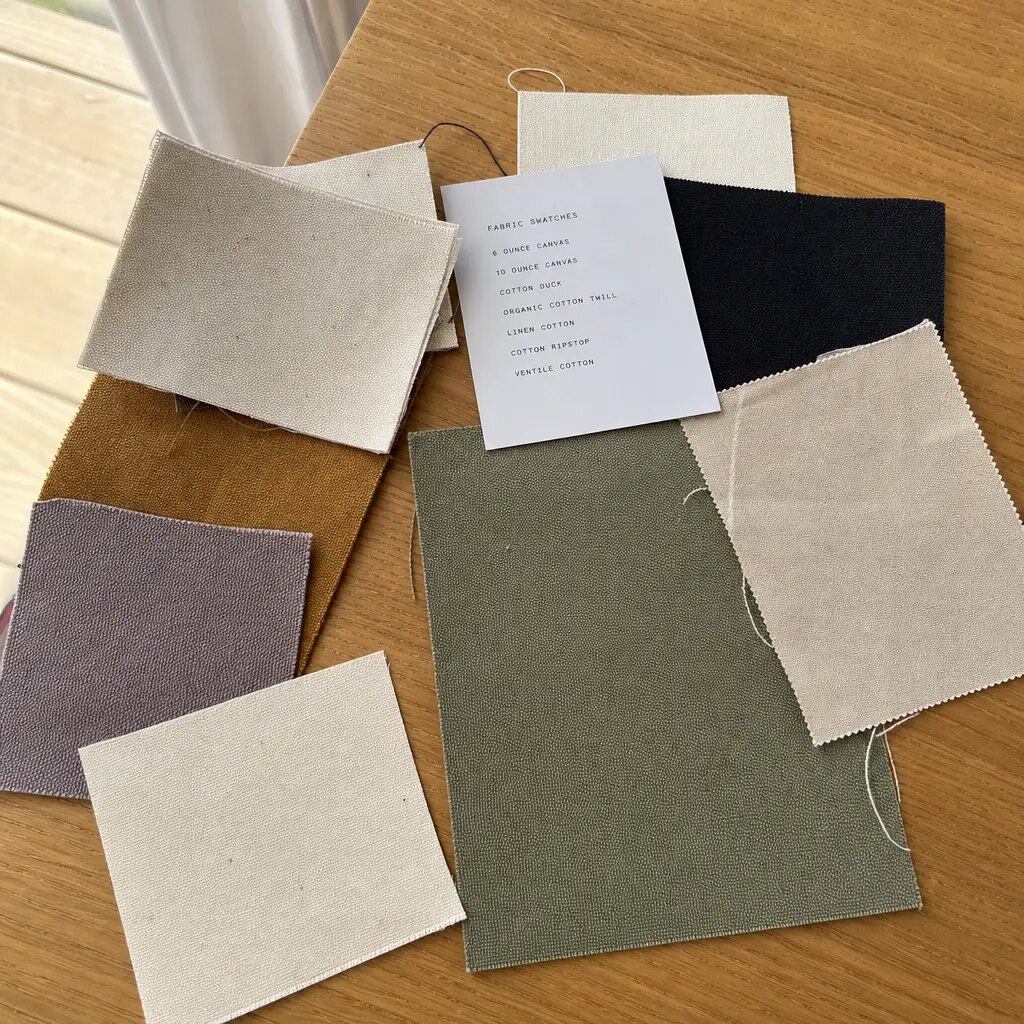
Natural canvas, bleached canvas, dyed canvas, and washed canvas do not behave the same. Natural cotton canvas has visible flecks and a warmer tone, which can be attractive for campus goods but may affect logo color perception. Dyed canvas gives school-color options but adds colorfastness and MOQ questions. Washed canvas feels softer but can shrink, wrinkle, and vary more from lot to lot. The best RFQ names the fabric weight, color, finish, and acceptable shade range, then asks the factory to attach a fabric swatch to the sample approval record.
- Good RFQ wording: 14 oz cotton canvas, approximately 470 GSM, natural color, no heavy chemical smell, medium-stiff handfeel.
- Avoid vague wording: thick cotton fabric, good quality, eco canvas, strong material.
- If the bag has a large flap, test whether the chosen canvas wrinkles heavily after folding.
- If the school logo uses white ink on dark canvas, check ink opacity on the actual fabric, not only on a paper proof.
Construction Details That Prevent Returns
Most messenger bag failures happen at stress points, not in the middle of the fabric panel. The shoulder strap anchor, flap corners, bottom corners, pocket openings, and hardware attachment points need clear reinforcement. A single straight stitch may look acceptable in a sample photo but fail when the bag is loaded repeatedly. Buyers should define the reinforcement method and require the same method in bulk production.
A bookstore bag also needs shape control. If the bottom is too flat, it will not hold books neatly. If the gusset is too narrow, the bag looks large on paper but carries poorly. If the flap is cut without enough allowance, it pulls upward when the bag is filled. These are practical sample review points that matter more than catalogue glamour. The sample should be loaded with real items and photographed from front, side, and top so the buyer can see whether the design works.
- Use cross-stitch, box-stitch, bar tack, or double-row stitching at strap anchor points.
- Specify binding or clean finishing on internal seams if the bag will be sold as a retail item.
- Require flap corners to sit evenly and cover the opening after the bag is filled.
- Check that strap width matches bag size; 3 cm to 4 cm is common, but heavier bags may need wider webbing.
Print Method And Logo Placement
University bookstore artwork often includes school names, mascots, department marks, alumni graphics, or seasonal campaign logos. For solid artwork, screen printing is usually the most stable and economical method on canvas. It gives good coverage, controlled color, and efficient bulk output. Heat transfer can work for complex color artwork or smaller runs, but textured canvas can reduce adhesion and make edges look less clean. Embroidery is possible for premium bags, but it can distort thinner canvas and adds cost and lead time.
Logo placement must be engineered around the messenger flap. A logo that is centered on the flat cut panel may shift visually after the flap is sewn, folded, and packed. Artwork should have enough distance from the seam, bottom curve, magnetic snap, buckle, or Velcro. For bulk QC, the inspector needs a measurement point, such as distance from top seam to logo top and left seam to logo edge. Without that, print position disputes become subjective.
- Screen print is usually best for 1-3 spot colors on natural or dyed canvas.
- Heat transfer needs adhesion testing on the final canvas texture and should be folded after cooling to check cracking.
- Embroidery needs backing control and should be tested for puckering on the flap.
- Keep print away from heavy fold lines, flap edge binding, and hardware pressure points.
Sample Approval Must Be More Than A Photo
A sample photo can hide fabric weight, print handfeel, stitch tension, odor, hardware quality, and true dimensions. For custom canvas messenger bags quality inspection checklist for university bookstores, the pre-production sample should be treated as the contract reference. It should use final fabric, final print method, final color, final strap, final hardware, final label, and final packing method wherever possible. If any substitute material is used, the factory should mark it clearly and send a revised sample or material swatch before bulk production.
The buyer should record sample comments in a short approval sheet. This avoids the common problem where one team approves the look, another team changes the artwork, and the factory starts production with mixed instructions. The approval sheet should include measured dimensions, fabric reference, print size, Pantone or color target, hardware finish, label position, packing method, and any changes required before bulk cutting.
- Measure width, height, gusset, flap length, strap width, and maximum strap length.
- Load the sample with books or equivalent weight and leave it hanging for a short stress check.
- Rub the print lightly with a white cloth after curing to detect poor ink fixation.
- Fold the bag as it will be packed and inspect the logo area after 24 hours.
- Keep one signed sample with the buyer and one with the factory for inspection comparison.
Inspection Thresholds For Bulk Production
Inspection works best when the buyer defines acceptance criteria before production. For bookstore merchandise, common major defects include broken stitches, open seams, wrong fabric, wrong print color, crooked logo, stained visible panels, damaged hardware, poor strap attachment, and incorrect packing labels. Minor defects may include small loose threads, slight shade variation within the approved range, or tiny non-visible fabric slubs. Critical defects are anything that creates safety risk, sharp hardware, mold, contamination, or unusable function.
Dimensional tolerance should be realistic for sewn canvas. A practical tolerance may be plus or minus 0.5 cm to 1 cm on main dimensions, depending on bag size and construction. Print position tolerance should be tighter on visible flap artwork, often within a few millimeters if the factory uses a proper jig. Stitch density should be consistent enough to prevent loose seams, and strap pull should be tested against the agreed load expectation. The exact threshold should match the retail price point and order risk.
- Critical: sharp metal edge, mold, severe odor, broken strap under light load, wrong school logo.
- Major: open seam, badly crooked print, wrong canvas weight, stained front flap, missing barcode.
- Minor: isolated loose thread, small inner fabric slub, slight carton scuffing without product damage.
- Functional test: adjust strap, open closure, load bag, hang by strap, inspect anchor stitching afterward.
Packing For Bookstore Receiving And Display
Packing is often treated as an afterthought, but it affects retail appearance and receiving cost. Messenger bags have flaps, straps, hardware, and printed areas that can be damaged by careless folding. A heavy crease across the logo can make a sellable bag look like clearance stock. For bookstore programs, the buyer should approve the folding method and decide whether the bag needs individual polybag, paper band, hangtag, barcode sticker, silica gel, tissue protection, or carton divider.
Carton planning also matters. Canvas messenger bags can become heavy quickly, especially at 14 oz or 16 oz fabric. Overloaded cartons are harder for campus receiving teams to handle and more likely to burst during transport. Underfilled cartons waste freight space. A good factory quote includes pieces per carton, carton dimensions, gross weight, net weight, barcode or carton mark format, and whether cartons are strong enough for export handling.
- Protect the printed flap with tissue or controlled folding when ink is raised or high-contrast.
- Keep metal buckles away from the printed surface during packing.
- Use carton quantities that balance freight efficiency with safe manual handling.
- Place barcode labels where bookstore staff can scan without opening every bag if retail process requires it.
- Request packed carton photos before shipment, including inner fold and outside carton marks.
MOQ, Cost Drivers, And Quote Comparison
Messenger bag pricing is affected by more than fabric area. Cost changes come from canvas weight, dyeing, washing, pockets, lining, hardware, strap webbing, print colors, logo size, labels, hangtags, packing, inspection, and carton requirements. A low quote may exclude several of these items or assume a lighter fabric. Procurement teams should compare line by line instead of looking only at unit price.
MOQ logic depends on materials. If the buyer uses stock natural canvas and standard hardware, the factory may support lower quantities. If the order requires custom dyed canvas in a school color, custom webbing, custom metal hardware, or woven labels, each material supplier may have its own MOQ. For university bookstores with multiple campuses or departments, a practical route is to standardize the bag body and change only the print or hangtag by campus. That can reduce material risk and improve delivery control.
- Main cost drivers: canvas weight, number of panels, sewing complexity, lining, pockets, hardware, and print coverage.
- Hidden cost items: screen setup, sample revisions, hangtags, barcodes, inner bags, stronger cartons, and inspection time.
- MOQ reduction method: use common body fabric and hardware, then customize print by design.
- Risky saving: reducing strap reinforcement or changing to very light canvas while keeping a large messenger size.
Lead Time And Schedule Risk
Lead time should be counted from approved sample, confirmed artwork, deposit, and material availability. Counting from the first inquiry creates false comfort. For custom canvas messenger bags, the longest-lead items may be dyed canvas, woven labels, special hardware, or revised print screens. If the bookstore launch date is tied to orientation week, homecoming, graduation, or holiday retail, the RFQ should include the required in-store date and the latest acceptable shipment date.
Schedule risk often appears during sample correction. A buyer may approve bag shape but change logo size, then request a different strap color, then add barcode packing. Each change can restart part of the sample or material process. A tighter workflow is to freeze the base construction first, then approve artwork, then approve packing. The factory should give a production calendar with material arrival, cutting, printing, sewing, packing, inspection, and shipment booking milestones.
- Freeze fabric and hardware before final artwork proof when possible.
- Allow extra time for dark dyed canvas, custom webbing, woven labels, or complex print matching.
- Schedule inline inspection after first bulk sewing, not only after all cartons are packed.
- Keep a reserve period for sample correction if the product will be sold at full retail price.
Landed Cost And Supplier Evidence
The cheapest ex-factory quote is not always the best landed cost. A weak carton may create damage claims. A poor fold may increase markdowns. Inconsistent dimensions may slow receiving and barcode application. A heavy fabric upgrade may improve retail value but also increase ocean or air freight cost. Buyers should compare the full landed picture: unit cost, setup charges, inland freight, export packing, inspection, duty category, international freight, warehouse handling, and expected retail loss from defects.
Supplier evidence should be practical. A factory can support its quote by showing similar messenger bag samples, fabric swatches, stitch detail photos, print test results, packing photos, and inspection records from comparable canvas items. Certifications can be useful where required by the buyer, but they do not replace product-level QC. For this product, evidence of sewing control, print consistency, and packing discipline is more useful than a polished brochure.
- Request close-up photos of strap anchor stitching, flap edge finishing, and inside seam binding.
- Compare packed carton data to estimate freight volume and carton handling risk.
- Review previous canvas print samples on similar fabric color and texture.
- Use a defect classification sheet so shipment release is based on measurable results.
Specification comparison for buyers
| Spec decision | Recommended option | When it fits | Buyer risk to check |
|---|---|---|---|
| Main canvas weight | 12 oz to 16 oz cotton canvas, roughly 390-540 GSM depending on yarn and finish | University bookstore bags expected to carry books, laptops, hoodies, bottles, and daily campus items | Too light will sag at the flap and strap points; too heavy may raise freight cost and feel stiff for retail display |
| Construction format | Messenger flap with reinforced shoulder strap anchors, boxed bottom, and inner binding | Retail programs where the bag must look substantial on shelf and survive student use | Flat unreinforced bottoms and single-line strap stitching often fail before fabric wears out |
| Print method | Screen print for solid school logos; heat transfer only for complex gradients or short artwork runs | Most bookstore graphics use 1-3 spot colors and need repeatable color on natural or dyed canvas | Heat transfer can crack on heavy textured canvas; screen print can bleed if ink viscosity and curing are not controlled |
| Logo placement | Front flap print with clear allowance from seams, buckles, and flap curve | Best retail visibility when bags hang on pegs or sit folded in cartons | Artwork too close to the flap edge may distort after sewing or disappear under the carton fold |
| Hardware choice | Metal slider and D-ring for premium retail; plastic adjuster only for lighter promotional orders | Bookstore retail price points where buyers expect a reusable campus bag, not a giveaway | Low-grade plated metal may rust in sea shipment; plastic can crack if strap webbing is too thick |
| MOQ logic | Combine common canvas body with school-specific print to keep MOQ manageable | Multiple campus designs, alumni events, department stores, or seasonal bookstore capsules | Dyed custom canvas, custom hardware, and woven labels may each carry separate MOQ and setup costs |
| Sample approval | Pre-production sample using final fabric weight, final print method, and actual strap hardware | Any order where retail packaging, logo color, or load-bearing performance affects sell-through | A look sample made from substitute fabric can hide shrinkage, handfeel, and print absorption problems |
| Packing format | Flat pack or controlled fold with tissue at print area; carton weight below practical manual handling limits | Bookstore DCs and campus receiving teams that need barcode-ready, shelf-friendly goods | Over-compressed cartons can crease the flap print, deform hardware, and make retail presentation poor |
Buyer checklist before sampling
- Define bag size by actual use, not only by catalogue dimensions: laptop sleeve need, textbook depth, bottle pocket, and expected retail price point.
- Specify fabric by ounce and approximate GSM, including whether natural, bleached, dyed, washed, or stiff-finished canvas is required.
- State the load expectation in kilograms and require reinforced strap anchors, bar tacks, or cross-stitching at stress points.
- Send vector artwork with Pantone references, print size, print position, and minimum edge allowance from flap seams and closures.
- Approve a pre-production sample made with final fabric, final print, final strap, final hardware, and final label placement.
- Set measurable inspection tolerances for dimensions, color, print registration, stitching density, stains, loose threads, and hardware function.
- Require packing approval showing folding method, polybag or paper band choice, barcode label placement, carton dimensions, and carton gross weight.
- Separate quote lines for fabric upgrade, extra pocket, lining, metal hardware, woven label, hangtag, individual polybag, and carton marking.
- Confirm production lead time from approved sample and deposit, not from first inquiry or artwork discussion.
- Request shipment-ready photos and an inline or final inspection report before balance payment or cargo release.
Factory quote questions to send
- What canvas weight in oz and GSM are you quoting, and is the fabric natural, bleached, dyed, or washed?
- Is the quoted fabric stock fabric or mill-order fabric, and what MOQ applies if we change color or finish?
- What reinforcement will be used at the shoulder strap anchors, flap corners, bottom corners, and pocket openings?
- Which print method do you recommend for our artwork on this canvas, and what is the expected print handfeel and wash resistance?
- Can the pre-production sample use the same fabric, ink, hardware, labels, and packing as bulk production?
- What dimensional tolerance will you hold for width, height, gusset, strap length, and flap position?
- How many pieces per carton, what carton size and gross weight, and will the flap print be protected from creasing?
- What quote items are included and which are extra: sample fee, mold or screen charge, woven label, hangtag, barcode sticker, inner bag, master carton, and inspection support?
- What is the production lead time after sample approval, and which materials are the longest-lead items?
- Can you provide inline production photos showing cutting, sewing, print curing, hardware attachment, and packed cartons?
Quality-control points to confirm
- Fabric weight within agreed tolerance and consistent handfeel across panels, flap, gusset, and strap reinforcement pieces.
- Bag dimensions within agreed tolerance after sewing, including flap symmetry and bottom depth.
- Print color matched to approved sample under standard lighting, with no obvious bleeding, cracking, pinholes, ghosting, or misregistration.
- Logo position centered and level on the flap, with agreed distance from seam, closure, and fold line.
- Stitching straight and secure, with consistent stitch density, no skipped stitches, no open seams, and trimmed thread ends.
- Shoulder strap anchors reinforced with approved stitch pattern and able to pass the agreed load test without tearing or seam opening.
- Hardware opens, closes, slides, and rotates smoothly, with no sharp edges, rust marks, weak plating, or wrong color finish.
- Interior seams finished by binding, overlock, or clean turning as approved, with no loose fabric dust or trapped threads.
- Packing follows the approved fold, print protection, barcode placement, carton mark, carton quantity, and carton weight.
- Random inspection records defects by critical, major, and minor level so the buyer can decide shipment release consistently.