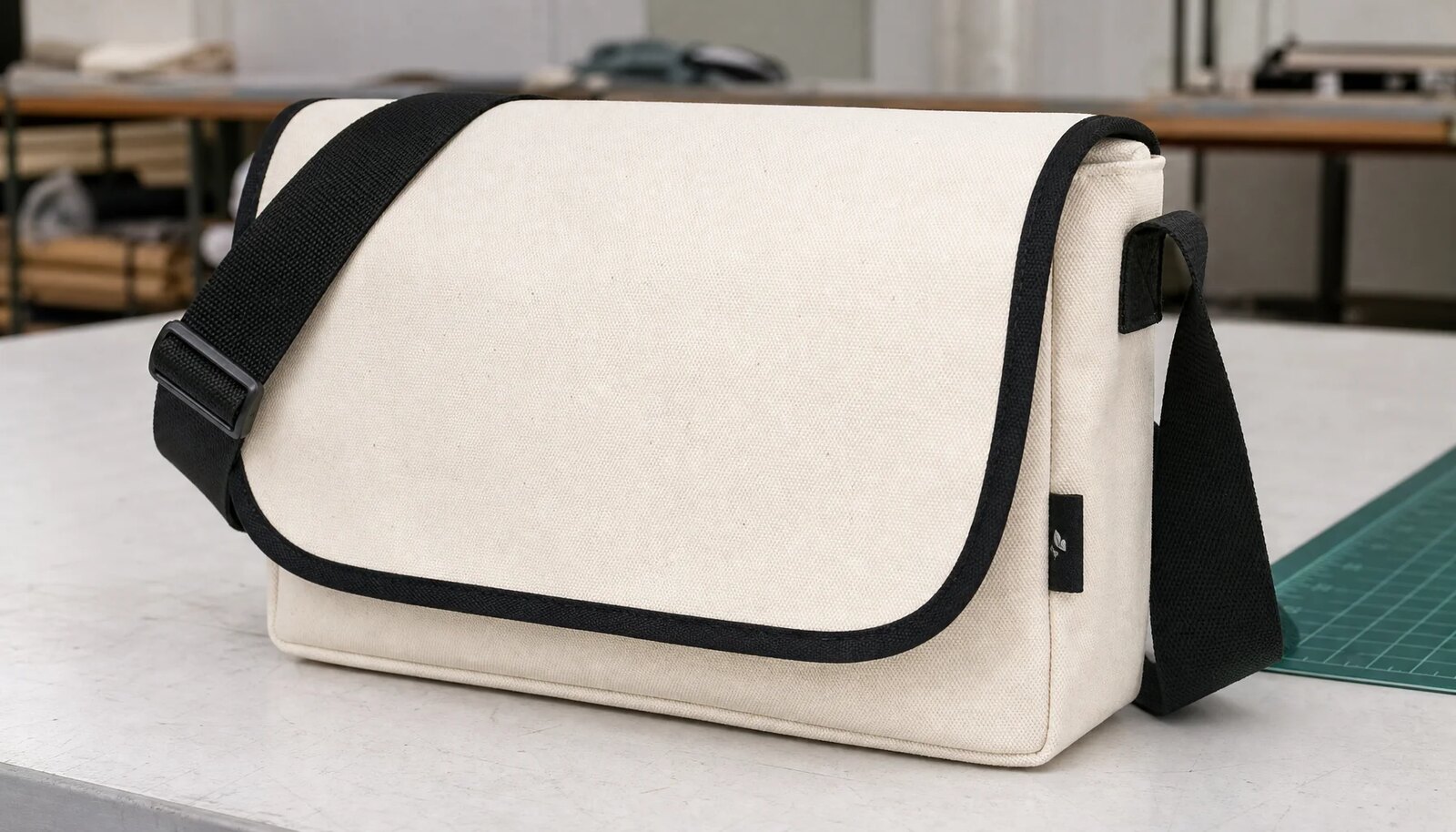
Start with the buying use
Coffee roasters rarely buy custom canvas messenger bags for one narrow purpose. One order may support cafe retail, wholesale sales visits, barista event giveaways, loyalty gifts, and limited roast launches. Those uses look similar in a product photo, but they create different proofing risks. A retail bag needs a clean folded presentation and consistent barcode handling. A wholesale kit may need to carry coffee samples, sell sheets, cupping notes, or a tablet without sagging. An event bag needs fast receiving, readable branding, and carton counts that volunteers or warehouse staff can sort without guesswork.
That is why a custom canvas messenger bags print proofing checklist for coffee roasters should begin with the buying use, not the logo file. The proof is not only an artwork approval. It verifies the finished bag shape, canvas texture under ink, flap position, closure pressure, strap strength, and packing fold. Coffee artwork often includes roast names, origin badges, tasting notes, QR codes, brew guide links, sustainability language, and seasonal marks. Those details must survive woven fabric, sewing, folding, carton transit, and normal handling in a cafe or trade-show booth.
- Separate the order by use case: cafe retail, wholesale kit, event giveaway, staff bag, loyalty reward, or limited roast drop.
- Define what the bag must carry: coffee bags, catalogs, brew tools, documents, tablet, laptop sleeve, or only light merchandise.
- Proof the sample closed, open, worn cross-body, and lightly filled with the contents closest to real use.
- Decide early whether the bag is a low-cost promotion, a sellable merchandise item, or a premium presentation piece.
Build the spec first
Artwork approval becomes unstable when the bag spec is still moving. Before asking for a print proof, put the construction details into the RFQ: finished width and height, gusset depth, flap shape, strap width, closure, lining, pocket layout, label placement, and packing method. Messenger bags can look nearly identical in a photo while using different canvas weights, different seam reinforcement, and different strap anchor construction. Those differences affect both cost and defect risk.
Canvas weight is one of the first commercial decisions. A 12 oz canvas, roughly 340 gsm, can be a practical baseline for lighter retail merchandise and promotional bags. A 14-16 oz canvas, roughly 400-450 gsm, usually gives more structure for sales kits and higher-priced merch, but it can add cost, carton weight, and sewing complexity. Buyers should ask whether sample fabric and bulk fabric will come from the same weight range, weave, and finish. A change from washed canvas to unwashed canvas, or from a tight weave to a looser weave, can change print sharpness even when the artwork file is unchanged.
Specify finished dimensions rather than only cut-panel dimensions. Finished measurements are what your customer sees and what your warehouse receives. If the front panel is too short, the flap may cover part of the artwork. If the gusset is too shallow, the bag may distort when filled with coffee samples. If the strap is too narrow or the adjustment range is wrong, the bag may feel cheap even when the print looks good.
- Write finished bag width, height, gusset depth, flap length, strap width, and strap adjustment range.
- State canvas weight in oz and gsm, plus whether the fabric is washed, dyed, natural, recycled-content, lined, or unlined.
- Mark no-print zones near seams, flap folds, buckles, zipper openings, snaps, magnetic closures, and gusset curves.
- Confirm whether custom labels, hangtags, barcode stickers, or inner pockets are included in the quoted unit price.
Proof artwork on canvas
Coffee brands often use detailed design systems: roast variant names, origin maps, tasting-note icons, farm seals, batch labels, and QR codes linking to brew guides or product pages. These elements may look sharp in a PDF and still fail on woven canvas. The fabric texture can break fine strokes, small reversed text can fill in, and a QR code can lose readability if the quiet zone is too small or the ink spreads into the grid.
Ask the supplier for a placement drawing that shows the finished bag panel, not just a rectangular art board. The drawing should include distance from the print to the top edge, side edge, flap fold, pocket seam, and closure hardware. For a front flap print, review the sample while the flap is closed and lightly filled. A logo centered on a flat panel may look too low once the bag has contents inside.
If the roast program uses multiple artwork versions, standardize the print size and position. A house blend design, seasonal espresso badge, single-origin mark, and cafe anniversary graphic can vary visually while using the same screen size, placement, and packing method. This keeps setup cost, MOQ, inspection, and reorder matching under better control.
- Use vector files with outlined fonts and avoid hairline strokes on textured canvas.
- Keep small roast text, origin names, and QR codes away from flap bends and packing crease lines.
- Name files clearly by artwork version, date, bag color, print color, and approval status.
- Print QR codes at final size on production-weight canvas and test them under normal cafe lighting before bulk starts.
Choose print method by risk
Screen printing is often the practical choice for coffee-roaster logos, one-color roast marks, and bold event graphics. It can give strong opacity and repeatability once the screen, ink color, and placement guide are approved. It is less forgiving for tiny detail, heavy texture, and artwork placed close to seams or flap folds. Buyers should ask to see the screen print on the same canvas weight that will be used in bulk, not only on smooth proofing fabric.
Heat transfer can support multicolor artwork, short runs, or detailed graphics, but it brings different risks. Check edge lift, gloss, hand-feel, cracking, and adhesion after bending the flap. Embroidery can look premium for a small logo or woven-feel badge, but it is a poor choice for QR codes, fine tasting-note text, and large filled areas because thread can distort the panel or make the flap stiff.
The proof must show the exact production route. Printing before sewing can improve flatness and access to the panel, but alignment may shift during assembly. Printing after sewing shows the finished panel more honestly, but seams, gussets, and hardware can limit the print zone. Neither route is automatically better. The buyer’s job is to approve the route the factory will actually use for bulk.
- Screen print: strong option for bold spot-color logos, event marks, and repeat programs.
- Heat transfer: useful for complex artwork, but check peel, gloss, cracking, and texture mismatch.
- Embroidery: use for small premium marks, not QR codes or fine product information.
- Woven or leather patches: good for durable brand marks, but confirm attachment strength and wash or rub behavior.
- Approve bulk only after seeing the final decoration method on production-weight canvas.
Compare supplier routes
A useful supplier comparison table should compare production routes cleanly. Direct factories, factory-plus-print-partner routes, trading companies, local decorators, and stock-bag programs can all be valid. The right route depends on order volume, deadline, customization level, and how much control the buyer needs over construction and proofing. A direct factory with in-house sewing and printing can be strong for repeat programs because fewer handoffs sit between artwork approval and final inspection. A trading company may be useful for a broader coffee merchandise program, but the buyer needs traceability to the actual sample room and bulk production floor.
When quotes are close, compare like-for-like details: same finished size, canvas weight, lining, print method, number of artwork versions, packing method, carton marks, inspection requirement, and Incoterm. A lower unit price can disappear if it excludes screens, label setup, moisture protection, carton labeling, inland freight, or export packing. Ask each supplier to quote realistic tiers such as 300, 500, and 1,000 pieces using the same spec. Then look at where the price changes. A true efficiency gain is different from a hidden spec downgrade.
Procurement buyers should also compare communication control. If the bag factory outsources printing, one party must own corrections and defects. If a local decorator prints imported blanks, ask whether future blank-bag lots will match the first run. If a supplier proposes a substitute canvas, require a new print swatch or sample because ink behavior can change with fabric finish and weave.
- Compare FOB to FOB, CIF to CIF, or DDP to DDP; do not mix trade terms in one unit-price column.
- Separate unit price, setup cost, sample cost, packing cost, carton data, and estimated freight impact.
- Ask where the sample is made, where bulk is made, and whether the same print equipment will be used.
- Confirm who pays for remake or rework if outsourced printing causes placement, curing, or color defects.
Make samples measurable
A pre-production sample should prove the finished product, not flatter the artwork. Inspect it closed, open, empty, and lightly filled. Put two or three coffee bags, a sales sheet, or event contents inside so the panel behaves the way it will in use. Check whether the front print pulls, whether the flap rolls, whether the strap anchors distort the body, and whether the closure presses into the artwork. If the bag will sit on a retail shelf, stand it as the store will present it. If it will be worn at events, check logo visibility when carried cross-body.
Use practical tolerances in the approval sheet. Finished body dimensions often use +/-5 mm as a workable starting point, but the buyer should adjust this for the design. Print placement on a main flap or front panel may use an example target of +/-3 mm to +/-5 mm from the approved reference points. Stitch density should be written as a range appropriate to the fabric and thread; about 7-9 stitches per inch is a common example for durable canvas construction, not a universal rule. Zipper or buckle checks should also be defined before inspection starts.
Document the approved sample carefully. Record the version number, date, fabric weight, trim details, print colors, placement references, packing fold, and allowed deviations. Keep the physical sample available for final inspection and reorder matching. A sample that looks good only because it was hand-adjusted outside the bulk process is not a reliable approval sample.
- Measure the assembled sample, not only the flat pattern or digital drawing.
- Photograph the sample closed, open, filled, folded for packing, and next to the approved color reference.
- Reject samples with unclear QR scans, unstable print edges, crooked flap alignment, weak strap anchors, or unexplained fabric substitution.
- Attach the approved tolerance sheet to the purchase order, not only to an email thread.
Manage MOQ choices
MOQ pressure usually comes from several places at once: canvas roll minimums, dyeing or washing, screen setup, transfer films, embroidery files, custom labels, lining, hardware, hangtags, carton labels, and individual packing. Coffee roasters with multiple roast variants can reduce pressure by standardizing the bag body and changing only the artwork. One natural canvas body with the same strap, buckle, label, and carton pack can support a house blend design, seasonal release, wholesale kit, and coffee-event graphic if the print area remains consistent.
Be careful with small custom details that create large hidden minimums. A custom zipper pull, private buckle finish, printed lining, or special woven label may look minor, but each can add setup cost, lead time, and reorder complexity. For a first run, spend the budget where buyers and recipients notice it most: clean print, durable strap anchors, a reliable closure, and packing that protects the front panel. More custom trims can be added later once reorder volume is proven.
Ask suppliers to separate MOQ by component. The bag body MOQ may be different from the print MOQ, and both may be different from label, hangtag, or retail packing MOQ. This matters when a roaster wants 1,000 total bags split across four roast artworks. The supplier may accept the body quantity but charge setup or minimums for each artwork version.
- Standardize the body spec across roast variants, cafe locations, and event graphics.
- Separate MOQ by bag body, print color, artwork version, label, lining, hardware, hangtag, and packing.
- Ask for reorder pricing using the same screens, same print position, and same canvas specification.
- Avoid custom hardware on a first run unless it supports the target selling price or a real brand requirement.
Protect print in packing
Packing is part of print proofing because a perfect logo can be damaged by a bad fold. Messenger bags often fold through the flap or front panel, which is exactly where coffee brands place the main logo, roast mark, or QR code. Ask the factory to show the packed sample, not only the finished sample. The fold should avoid hard creases through the main artwork. Tissue, a soft insert, or a controlled flat pack can help keep the front panel clean. Individual polybags may be needed for retail, e-commerce, or warehouse control, but they should not force an ugly crease just to increase carton count.
Carton controls matter for procurement teams and warehouse receivers. Each carton should show SKU, artwork version, bag color, quantity, purchase order number, country of origin, gross weight, carton dimensions, and carton sequence number. For mixed roast variants or event kits, require a carton-level packing list that matches the outer marks. If cartons are received by a 3PL, cafe chain warehouse, or distributor, the receiving label format may be as important as the bag itself.
Moisture is worth managing. Canvas can absorb humidity, and cartons can soften in transit or warehouse dwell time. Ask for dry cartons, moisture protection when the route or season requires it, and a pre-shipment check that cartons are not crushed, damp, mislabeled, or overpacked. For retail bags, also check whether the front panel picks up lint, dust, or scuff marks from packing materials.
- Approve the folding method during sample review, not after bulk production.
- Keep fold lines away from the main logo, QR code, small roast text, and transfer edges.
- Use consistent carton counts by SKU, artwork version, and color.
- Require carton marks that match the commercial invoice, packing list, and warehouse receiving rules.
Approve with evidence
Many bulk problems start when approval happens too quickly after a revised proof. A small change to logo size can require a new screen or placement guide. A switch from one canvas lot to another can alter ink absorption. A new packing method can introduce a crease that was not visible in the first sample. If the launch date is fixed, freeze artwork, construction, and packing early enough that production is not solving open questions during bulk sewing.
Before issuing the purchase order, make the supplier answer the quote questions and attach the tolerance sheet. Confirm whether the quote includes sample cost, screen or plate cost, packing, inland freight, export documents, inspection support, and the named Incoterm. For coffee roasters selling the bag beside premium beans or using it in wholesale presentations, the cost of failure is bigger than the rejected units. It includes delayed launches, extra receiving labor, rework, and merchandise that does not match the approved brand look.
A good approval file makes the order repeatable. It should include final artwork, final placement drawing, approved physical sample reference, color standard, QR test result, construction spec, packing spec, carton marks, tolerance sheet, and inspection plan. That may feel detailed for a bag, but it is the difference between buying a one-time sample and building a reorderable merchandise program.
- Approve in writing with version number, date, sample reference, and approved deviations.
- Do not let bulk start from verbal approval or an untracked chat message.
- Review landed cost and production certainty before choosing between close quotes.
- Keep the proof file, approved sample, carton spec, and QC sheet for repeat orders.
Specification comparison for buyers
| Production route | Best fit | Commercial advantage | Proofing risk to control |
|---|---|---|---|
| Direct factory with in-house sewing and printing | Repeat coffee merch, cafe retail, wholesale sample kits, and reorder programs | One supplier controls canvas sourcing, print setup, sewing, packing, and final inspection | Confirm bulk fabric lot, print method, approved sample version, tolerance sheet, and final QC responsibility |
| Factory sewing with outside print partner | Orders where the bag factory is strong but the artwork needs specialty decoration | Can pair experienced bag construction with better print capability for complex logos or transfers | Name one owner for proof corrections, print placement, curing, rub testing, and defect responsibility |
| Trading company managing multiple factories | Mixed coffee merchandise programs with bags, aprons, totes, pouches, or event accessories | Can simplify communication, consolidation, and export coordination across product types | Ask where the sample is made, where bulk is made, whether the same print setup is used, and who signs off on defects |
| Local decorator printing imported blank bags | Small domestic launches, urgent events, and low-volume artwork tests | Fast artwork changes, local meetings, and easier approval for short runs | The base bag may not match your construction spec, and repeat placement or color can shift between blank-bag lots |
| Premium custom factory route with lining and retail packing | Brand stores, gift kits, loyalty rewards, subscription gifts, and higher-priced merchandise | Better shelf presentation, cleaner interior finish, and more controlled carton packing | Lock lining, label placement, hangtag, fold method, barcode rules, and carton count before sample approval |
| Blank stock bag plus custom label only | Low-risk promotions where speed matters more than full product customization | Lower setup burden and fewer proofing variables than a fully custom body | Confirm label attachment strength, label placement, existing bag quality, and whether future stock lots will match |
| Regional cut-and-sew workshop | Small-batch premium runs, local brand stories, or programs needing frequent design changes | Closer communication and easier hands-on sample review | Unit cost may be higher, capacity may be limited, and QC criteria still need to be written clearly |
| Importer with domestic warehouse stock and overseas custom option | Buyers testing demand now and planning a later full-custom reorder | Can bridge short-term inventory needs with a longer-term custom program | Do not assume the later custom bag will match the warehouse blank unless fabric, size, trim, and print method are reapproved |
Buyer checklist before sampling
- Finished bag width, height, gusset depth, flap length, strap width, and strap adjustment range are written in the RFQ.
- Canvas weight target is stated in both oz and gsm, with any approved substitute range defined before quote comparison.
- Bag construction is specified: lining or unlined body, pocket layout, closure type, buckle or D-ring material, seam reinforcement, and label position.
- Artwork is supplied as vector files with outlined fonts, minimum line weights, named Pantone or physical color references, and separate version control for each roast, cafe, or event design.
- Print placement drawing shows center point, top edge distance, side edge distance, flap curve, seam map, closure position, and no-print zones.
- QR codes are printed at final size on production-weight canvas and scanned from several phones before bulk approval.
- Pre-production sample uses production fabric, production trims, final print method, final print position, and intended packing fold.
- Tolerance sheet covers finished dimensions, print placement, print color, stitch density, strap length, closure function, carton moisture, and carton labeling.
- MOQ, setup fees, sample fees, screen or film fees, custom label fees, packing fees, and reorder pricing are separated by quantity tier.
- Packing spec states fold direction, tissue or insert use, polybag requirement, carton quantity, carton marks, barcode rules, and receiving label format.
Factory quote questions to send
- Will the sample and bulk order use the same canvas weight, weave, finish, and fabric supplier?
- Is the print completed in-house or by an outside print shop, and who is responsible if placement, curing, adhesion, or color fails?
- What is the MOQ for the bag body, each print color, each artwork version, custom labels, lining, hardware, and retail packing?
- Can you quote 300, 500, and 1,000 pcs using the same finished spec, same packing, and same Incoterm?
- What setup charges apply for screens, plates, embroidery files, transfer films, labels, hangtags, carton marks, or sample revisions?
- What tolerances do you hold for finished dimensions, print placement, color variation, stitch density, strap length, and closure function?
- How do you test print rub resistance, zipper or buckle function, strap anchor strength, seam strength, and carton moisture before shipment?
- Can you print and scan our QR code at final size on production canvas before the pre-production sample is approved?
- Will the bag be printed before sewing or after sewing, and how does that affect placement accuracy on the flap or front panel?
- How will bags be folded so the main logo, roast mark, or QR code is not creased through the print area?
Quality-control points to confirm
- Measure finished width, height, gusset depth, flap length, and strap length against the approved spec. A practical starting tolerance is +/-5 mm for main body dimensions and +/-10 mm for adjustable strap length unless the design requires tighter control.
- Check print placement on the assembled bag, closed and lightly filled. For a main flap or front-panel logo, an example target is placement variance within +/-3 mm to +/-5 mm from the approved center and edge references.
- Review QR codes at final printed size by scanning from several phones under normal cafe or retail lighting. Keep enough quiet zone around the code and reject prints with weave gaps, ink fill, distortion, or low contrast that reduces scan reliability.
- Match print color against the approved physical standard under daylight or D65 lighting. Do not approve color from a backlit screen alone.
- Inspect print edges for bleeding, haloing, pinholes, patchy opacity, cracked ink, transfer lift, gloss mismatch, and rough line edges caused by canvas texture.
- Run dry rub testing on the printed area and a wet rub check when the bag may face damp handling, cleaning, or outdoor event use. The print should not visibly smear, peel, or transfer under normal handling pressure.
- Check stitch density at visible seams and stress points. A common example target is about 7-9 stitches per inch for durable canvas construction, adjusted to the fabric, thread, and needle selected by the factory.
- Inspect strap anchors, bar tacks, flap joins, base corners, and pocket openings for skipped stitches, loose thread, uneven reinforcement, poor symmetry, and weak load paths.
- Open and close zippers, buckles, snaps, or magnetic closures repeatedly. For zipper styles, ask for an inspection target such as 100 smooth open-close cycles with no snagging, tooth separation, or puller failure.
- Verify carton moisture control before shipment. Cartons should be dry, undamaged, correctly labeled, and packed with moisture protection when the freight route, warehouse dwell time, or season creates humidity risk.