Why print proofing matters more on messenger bags than on flat totes
Custom canvas messenger bags are not flat canvases with straps attached at the end. They are built from panels, seams, gussets, flaps, pockets, and hardware that all change where the print actually lands. A logo that looks centered in a PDF can shift once the front panel is cut, stitched, folded, and pulled into shape. That is why print proofing for this product has to check the artwork, the construction, and the finished pack-out together.
For procurement teams, the proofing step is also a practical cost gate. Catching a scale error, seam conflict, or fabric mismatch before bulk cutting saves far more than asking the factory to rescue an order after it has moved into sewing. Tech startups feel this especially hard because they often need branded bags for onboarding kits, conference giveaways, employee merch stores, or launch campaigns tied to fixed dates. When the bag slips, the campaign slips with it.
The most common mistake is approving a digital mockup as if it were a production sample. A mockup can confirm the branding direction, but it cannot show how the fabric takes ink, how the bag hangs when assembled, or whether the print collides with a pocket edge or flap fold. Treat proofing as three separate checks: artwork fit, manufacturing fit, and packing fit. If any one of those is weak, the bulk order can still go off spec even when the design file looked clean.
- Flat artwork approval is not enough for a sewn bag.
- Seams, flaps, pockets, and hardware can shift the final logo position.
- Print clarity must be judged on the actual fabric, not a screen file.
- Bulk risk rises when buyers skip the sewn sample stage.
- Procurement should align proofing with launch timing and freight dates.
Start with the fabric spec: GSM, weave, shrinkage, and body structure
Fabric spec is the foundation. For most custom canvas messenger bags, a useful starting point is 12oz to 16oz cotton canvas, or roughly 340 to 450 GSM. That range gives the bag enough structure to look substantial on a shelf while staying flexible enough for daily use. If the bag needs to hold notebooks, tablets, or a light laptop, buyers usually lean toward the middle or upper part of that range because it improves shape retention and makes the print surface more stable.
Weight alone does not tell the whole story. Weave density, yarn quality, finishing, and shrinkage all affect print results. A loose weave can absorb ink unevenly, blur small text, and make solid fills look patchy. A tighter weave usually gives cleaner edges and better registration control, but it may feel stiffer and cost more. Ask the factory to describe the canvas in measurable terms so the next reorder can match the approved sample instead of relying on a vague label like “good quality canvas.”
Shrinkage matters too, especially if the fabric is washed, pressed, or exposed to steam during finishing. If the supplier does not account for shrinkage before printing and cutting, the logo can pull slightly off position on the finished bag. Ask whether the fabric is pre-shrunk, how much shrinkage is assumed in the pattern, and whether the proof reflects the same finishing process used in bulk. For long-term programs, keep the fabric spec and finishing method on file so future purchases do not drift.
- Specify canvas weight in oz or GSM, plus acceptable tolerance.
- Ask for weave density, hand feel, and shrinkage assumption in writing.
- Confirm whether the bag will be unlined, half-lined, or fully lined before artwork approval.
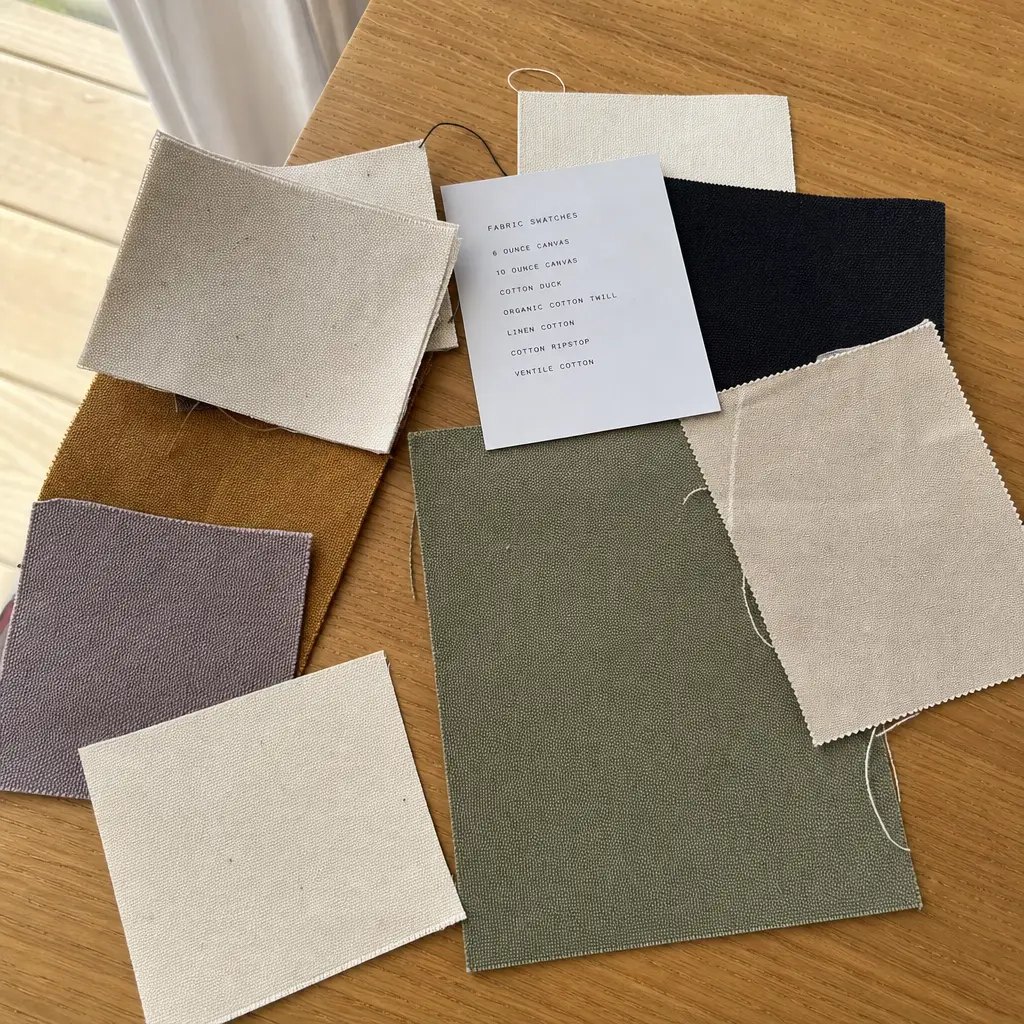
- Request a physical fabric swatch before moving to print sample.
- Verify that the chosen fabric supports the carry load and retail look you need.
Choose the print method by artwork, run size, and brand expectations
Screen print is usually the most dependable option for simple brand marks on cotton canvas. It handles solid fills well, gives strong color coverage, and often delivers the best economics once the order moves beyond very small quantities. It also tends to sit naturally on the fabric, which matters when the bag is meant to feel like a finished retail accessory rather than a temporary promo item. For one-color or two-color logos, screen print is often the safest default because it is easier to repeat consistently across a bulk run.
The right method still depends on the artwork. DTF and heat transfer can support more colors, fine detail, or campaign-specific graphics, but buyers should understand the tradeoffs. Those methods may sit on top of the canvas, which can affect hand feel, flex, and long-term wear. If the bag will live in a startup merch store or go to customer-facing retail, ask how the print will hold up after repeated handling, folding, and packing. A useful proof should answer not only “does it look right today?” but “will it still look right after transit and use?”
When comparing suppliers, make sure the same print method is being quoted by both factories. One supplier may include screen setup and one-color ink, while another is quoting transfer work because the artwork has small typography or a gradient. If the method is not standardized before pricing, the quote comparison will mislead you. The safer workflow is to lock artwork version, color count, placement, finish, and curing requirement before the supplier prepares the proof.
- Use screen print for solid brand marks and repeat orders.
- Use transfer methods only when the artwork requires it and the product use case allows it.
- Define color count, print size, and finish expectations before the quote is finalized.
- Ask whether the print sits on top of the canvas or bonds into the fabric surface.
- Confirm whether any special inks need extra curing, wash testing, or handling controls.
Map the print area to the sewn bag before you approve placement
Placement is where many messenger bag orders fail quietly. A logo positioned neatly on a flat panel can shift once seam allowance is added, once the pocket is sewn on, or once the flap folds over the front body. On a messenger bag, the usable print area is smaller than it first appears on a cutting table because the front panel needs room for construction. If the artwork is too large, the supplier may need to distort it, split it, or move it to a less visible spot.
The best practice is to define an artwork map before sample production. That map should show the exact front panel dimensions, safe margins from the top edge, side seams, zipper line, pocket edge, and any hardware. For brand buyers, that matters because a logo that sits too close to a seam can look crooked on the finished product even if the factory technically printed it correctly. Ask the supplier to confirm placement on the sewn sample with a marker or approved reference line before bulk cutting starts.
Tech startup buyers often want a clean, modern look with one centered logo and minimal clutter. That style is easiest to protect when placement rules are written down. If you are considering multiple branding options—front print, woven side label, interior label, or flap print—decide which one is primary before sampling. Otherwise the factory may build the sample around the wrong focal point, which wastes time and often triggers avoidable revisions.
- Confirm placement on the sewn bag, not only on the flat panel.
- Keep at least 20–25 mm safe margin from seams and zipper lines unless the factory approves otherwise.
- Lock one primary branding location before adding secondary labels or decoration.
- Ask for a placement diagram with exact measurements on the proof.
- Check that pocket edges and flap folds do not intersect the logo.
Use the comparison table to sort supplier routes, not just prices
A useful RFQ comparison starts with the supplier route, because not every factory is quoting the same product. One source may be using stock canvas with a single-color screen print and simple folded handles. Another may be quoting custom-dyed fabric, full lining, metal hardware, woven labels, and a heavier packing spec. Those are different production routes, so the price gap may reflect different materials and labor rather than margin. Procurement should compare like with like, or the negotiation will drift into confusion.
The comparison table in this guide is meant to translate sourcing decisions into buyer language. Instead of asking only whether a bag is cheap or expensive, ask what the quote includes, what the print proof covers, and what the factory assumes about the final package. That helps you see whether a quote is truly lower cost or simply less complete. When a supplier refuses to separate tooling, sampling, printing, sewing, and packing, the buyer has less visibility into where later cost increases may appear.
A strong comparison also protects against scope creep. If the quote says “sample included” but the factory later charges for revised screens, new packing labels, or a different lining spec, the landed cost changes fast. Ask for a quote format that shows fabric, trim, print setup, labor, packaging, QC, and freight assumptions where relevant. The goal is not to force the lowest price. The goal is to make sure every supplier is answering the same question.
- Compare spec depth, not just factory price.
- Separate tooling, sampling, and bulk production costs.
- Use the same sample basis when comparing two suppliers.
- Ask for inclusions and exclusions in writing.
- Reject quote comparisons that do not define the same bag structure.
MOQ logic: what actually drives the minimum order
On custom canvas messenger bags, MOQ is rarely set by a single factor. The real floor usually comes from a mix of fabric purchase quantity, print setup, accessory sourcing, sewing efficiency, and packing configuration. A factory may accept a smaller order if the design uses stock canvas and a one-color logo, but the MOQ can rise quickly when you add custom dyeing, extra pockets, metal buckles, magnetic closures, or branded labels. Buyers should ask which component is driving the minimum before they accept the number as fixed.
That question matters because launch strategy changes the right answer. If you are testing a new product line for a tech startup, a lower MOQ may make sense even at a higher unit price because it limits exposure while you validate demand. If the bag will become a core merchandise or retail item, a larger MOQ may improve price, color consistency, and supply stability. The key is to connect MOQ to the business goal instead of treating it as a generic barrier.
It also helps to separate first-order MOQ from reorder MOQ. Some factories quote a lower first run because setup costs are absorbed differently, but then require a larger replenishment minimum once the process is locked. That is useful to know if you expect the first shipment to sell through before the next conference season or product launch. Ask whether the quoted minimum applies to a single artwork, one colorway, or one material set, because those details change the real flexibility of the order.
- Ask which part of the bag defines MOQ: fabric, print, accessories, or sewing capacity.
- Separate launch MOQ from replenishment MOQ.
- Confirm whether the factory can hold fabric shade across repeat orders.
- Check whether MOQ changes with artwork complexity or print color count.
- Ask if stock materials can reduce the minimum without changing the bag size.
Sample approval should cover the sewn bag, not only the artwork file
A solid sample workflow starts with a placement proof and ends with a sewn pre-production sample. The placement proof confirms artwork size, safe margins, and color intent. The sewn sample confirms the real production behavior of the bag body, the stitched shape, and the way the print sits after the panels have been assembled. For buyers, the sewn sample is the real checkpoint because it shows how the product will actually arrive to the customer.
This stage should be treated as a formal approval gate. Inspect the sample under normal light, compare it to the approved artwork file, and record any adjustment to print size, fabric shade, handle position, zipper length, or pocket placement. If the factory sends a flat print sample only, ask for the assembled bag version before release to bulk cutting. A printed panel may look correct by itself while still failing once the bag is sewn and filled.
Keep the sign-off process simple but disciplined. One internal reviewer should own design accuracy, another should own sourcing or packaging requirements, and the final approver should be the person who will accept the bulk shipment. Save the signed sample, photos, and final measurement sheet in the procurement file so there is no dispute later about what was approved. That file becomes especially useful when reordering months later or when a different factory needs to match the same spec.
- Approve logo scale on the finished bag, not on a flat panel only.
- Check seam offset, zipper clearance, and flap position.
- Keep one signed sample in procurement files for bulk reference.
- Request the pre-production sample in the same materials as bulk production.
- Record any revisions as written changes, not verbal notes.
QC thresholds that prevent expensive bulk rejection
Quality control for custom canvas messenger bags should be specific enough that both buyer and factory can inspect the same standard. Define acceptable print misregistration, color variation, stitch irregularity, stain allowance, and hardware alignment before bulk production begins. Without those thresholds, each side may interpret “acceptable” differently, and disputes become likely only after the goods are packed. For procurement teams, the most useful QC standard is one the supplier can follow during in-line checking, not just at final inspection.
Because these bags are functional items, quality control should reflect how the end user will handle them. Handle reinforcement should be symmetrical and secure, seams should not pucker around the print area, and the bag should hang straight without twisting. If the messenger bag includes a zipper, flap closure, or internal pocket, those parts need to be tested for smooth operation and alignment. Even if the bag is meant for promotional distribution, obvious defects in print density or stitching can weaken brand perception immediately.
Ask the supplier what they inspect in incoming materials, in process, and at final pack-out. A good QC system does not rely on the last step only. It checks fabric shade before cutting, confirms print registration during the run, and verifies pack counts before cartons are sealed. If the factory uses AQL or another inspection framework, ask them to state the defect categories that would trigger rework, replacement, or extra sorting. That gives buyers a clearer answer than a generic promise that the factory will do “full inspection.”
- Set a print alignment tolerance in millimeters.
- Define allowed color variation against the approved sample.
- Specify acceptable stitch defects and stain limits in writing.
- Ask for in-line checks, not just final inspection.
- Confirm hardware and closure function on the assembled bag.
Packing decisions affect both damage rate and warehouse speed
Packing is not just a shipping detail; it is part of product quality. Canvas bags can pick up dust, scuff marks, and odor during transit if they are not packed correctly. Individual polybags help protect the fabric and keep the print face from rubbing against other bags in the carton. At the carton level, the packing layout should preserve the bag shape, prevent crushing at the flap or handle area, and make receiving counts easier for the warehouse team. If the bag arrives with bent corners or marked canvas, the buyer may have to spend time on repacking or complaint handling.
For ecommerce and retail distribution, label control matters as much as protection. Barcode placement, carton marks, and carton pack lists need to be consistent from unit to unit so the warehouse can identify the SKU quickly. If you are sending mixed styles or multiple colors, ask the factory to show the carton plan in advance. A clear packing spec reduces errors at receiving and can help your 3PL or DC process the goods faster.
There is also a cost side to packing. Individual inserts, hang tags, desiccants, and extra protective layers all add labor and materials. That does not mean they should be avoided. It means the buyer should choose the packing level based on channel needs. A trade show giveaway may only need a basic polybag and carton pack, while a retail order may require more robust presentation and labeling. Include the desired packing spec in the RFQ so the quote reflects the real landed condition, not a simplified assumption.
- Confirm whether each bag needs an individual polybag.
- Align barcode and carton label placement before production.
- Protect the print face from abrasion during transit.
- Match the packing spec to the selling channel.
- Ask for a carton pack plan before bulk packing starts.
Lead time risk comes from missing stage-by-stage visibility
A credible lead time should be broken into stages: fabric sourcing, sample approval, printing, sewing, packing, and final inspection. If the supplier gives only one total number, ask what happens when the sample needs revision or when an accessory is delayed. Total lead time without stage visibility hides the most common delay points. In practice, printing and sewing often move at different speeds, and the buyer needs enough visibility to adjust launch dates, freight bookings, and internal approvals.
This matters even more for tech startups that are working backward from a product launch, conference date, or onboarding event. If the bag is late by a week, the launch can still happen; if the bag is late and the artwork is wrong, the whole campaign can be compromised. Ask for a production schedule that shows when the proof is expected, when materials are due, and when the bulk run can begin. A supplier who can explain that sequence clearly is usually easier to manage than one who only quotes a single number.
Add buffer time for one controlled revision round, especially if the design includes custom hardware, a new lining, or special packing. Do not schedule freight on the assumption that everything will go right the first time. Align the final inspection window, packing completion, and ship booking so there is room for a correction if the pre-production sample reveals a problem. That simple buffer usually costs less than rushing a correction through an already full production line.
- Require stage-by-stage lead time in the quote.
- Build time for sample revision into the launch schedule.
- Leave freight booking room after final packing and inspection.
- Ask where delays are most likely to occur.
- Separate sample timing from bulk production timing.
Specification comparison for buyers
| Spec decision | Recommended option | When it fits | Buyer risk to check |
|---|---|---|---|
| Canvas fabric weight | 12oz–16oz cotton canvas, typically 340–450 GSM | Retail-ready messenger bags that need structure, print clarity, and moderate body stiffness | Ask for both nominal GSM and tolerance; fabric that varies more than ±5% can change drape and print opacity |
| Print method | Screen print for solid logos; DTF or heat transfer only for small runs or full-color artwork | Simple brand marks, conference bags, and repeat orders with stable artwork | Fine text under 6 pt, gradients, and halftones can soften, fill in, or crack after folding |
| Artwork placement | Front panel centered with at least 20–25 mm safe margin from seams, flap fold, and zipper line | Standard promo and retail styles with one main logo location | If placement is too close to seams, the sewn bag can shift 5–15 mm and distort alignment |
| Lining and pocket build | Unlined or light lining for entry/mid-tier; full lining with internal pocket for retail and laptop use | Brands that need a more finished look or better perceived value | Lining changes cut size, logo position, and sewing cost; confirm panel dimensions before proof approval |
| MOQ route | Lower MOQ for stock canvas + single-color print; higher MOQ for custom dyed fabric, extra pockets, or woven labels | Importers testing demand or launching one SKU first | Low MOQ often means higher unit price, fewer color options, and tighter artwork limits |
| Sample approval stage | Pre-production sample after artwork placement, fabric shade, print density, and stitching are locked | Any order with brand color sensitivity or repeat replenishment plans | Approving only a flat artwork proof misses seam interference, handle position, and actual print finish |
| Packing method | Individual polybag with carton pack list and barcode label, then master carton with moisture protection | Ecommerce, retail distribution, and mixed-SKU shipments | Loose packing can cause scuffing, odor pickup, label loss, and carton count errors |
| Lead time control | Factory timeline that separates fabric sourcing, print sample, bulk cutting, printing, sewing, and final packing | Orders with fixed launch dates and import booking deadlines | A single total lead time hides where delays happen, especially in printing, accessory sourcing, or sample revision |
| Quote comparison basis | Compare on landed spec: fabric GSM, print method, accessories, carton pack, and QC standard—not just unit price | Any RFQ with more than one supplier route | Low unit price can hide charges for screens, plates, labels, packaging, or color matching |
Buyer checklist before sampling
- Confirm canvas weight in GSM or oz, plus acceptable lot tolerance; do not accept “heavy canvas” as a spec.
- Lock the exact artwork version, print size, Pantone references, and safe margins from seams, zipper tape, and flap folds.
- Specify handle length, strap width, webbing or cotton tape type, zipper gauge, lining, pocket count, and closure style before sampling.
- Approve a sewn pre-production sample made with production materials, not a flat print proof alone.
- Ask the supplier to separate tooling, sampling, printing, sewing, and packing charges in the quote.
- Require a written print tolerance for registration, color variation, and edge sharpness before bulk approval.
- State carton pack, inner polybag requirement, desiccant use if needed, and barcode/label placement in the RFQ.
- Keep one signed and dated approval sample plus measurement sheet in the procurement file for reorders.
Factory quote questions to send
- What exact canvas GSM, weave density, yarn count, and shrinkage allowance are you quoting?
- What is the fabric tolerance range by lot, and how do you handle shade variation between rolls?
- Which print method will you use for this artwork, and what is the color tolerance after curing or heat pressing?
- Is the quoted MOQ based on fabric purchase quantity, print setup, or final finished bag run?
- Will you provide a sewn pre-production sample with actual materials before bulk cutting begins?
- What is included in the unit price: handles, lining, zipper, labels, polybag, inserts, and master carton?
- How many production days are allocated separately for printing, sewing, final inspection, and packing?
- What carton quantity, carton size, net weight, and gross weight should we use for freight planning?
- Which QC standard do you follow for print misregistration, stain allowance, loose threads, and stitch defects?
- What are your rework, replacement, or credit terms if the bulk run misses the approved sample standard?
Quality-control points to confirm
- Fabric weight matches the approved range, and lot variation stays within the agreed tolerance.
- Print registration stays aligned on the finished sewn bag, not only on the flat panel; set a measurable tolerance in millimeters.
- Color density is even across the full logo area with no pinholes, banding, smearing, or dry patches.
- Stitching is straight at handles, seams, and pocket edges with no skipped stitches, broken thread, or loose tails longer than the agreed limit.
- Handle attachment points are reinforced and symmetrical so the bag body hangs straight and does not twist under load.
- Zippers, sliders, snaps, and labels match the approved sample and do not interfere with artwork placement or user access.
- Carton pack count is consistent, with clean labels, moisture protection, and no crushed corners or corner splits.
- No oil stains, ink marks, fabric snags, or foreign fibers appear on visible surfaces when inspected under normal light.
- Random pull tests on handle seams and anchor points meet the buyer’s agreed functional standard before shipment.