Why MOQ Negotiation Is Different for University Bookstores
University bookstores do not buy custom canvas messenger bags the same way a fashion label buys a seasonal bag. The order is usually split between campus retail, orientation events, alumni merchandise, academic departments, and sometimes athletics or conference giveaways. That means the buyer may need several logos and delivery dates, but the total volume may still be modest. The MOQ problem is not only the number of bags; it is the number of fabric colors, print screens, trims, and packing versions inside one purchase order.
A strong RFQ should show the factory where the quantity can be consolidated and where it cannot. If the same bag body, canvas color, strap, hardware, and carton packing can be shared, many factories can negotiate a practical total MOQ with artwork splits. If every department wants its own fabric color, pocket layout, label, and hangtag, the factory must treat the project as several small production runs. That is where the quote becomes expensive and lead time becomes unstable.
- Negotiate around shared cutting and sewing, not only final logo quantity.
- Use one base bag specification for all bookstore variants when possible.
- Separate true retail needs from internal department preferences before quoting.
- Give the factory a realistic reorder forecast if the item may become a staple SKU.
Set the Base Bag Before Discussing MOQ
MOQ negotiation works better after the base construction is clear. For university bookstore use, a practical canvas messenger bag is normally sized to carry notebooks, a small laptop, course packs, and gift items without looking oversized on a retail shelf. Common finished dimensions are around 36-40 cm wide, 28-32 cm high, and 8-12 cm gusset, but the correct size depends on the store's product mix. If the bag must hold a 13 inch laptop, a binder, or a specific textbook, state the product dimensions in the RFQ instead of using a generic messenger bag description.
The main cost and MOQ drivers are fabric weight, dyed color, strap type, flap structure, inside pocket, closure, and decoration. A simple flap messenger with cotton webbing strap and one inside pocket is easier to negotiate than a bag with zipper main opening, lined interior, multiple compartments, custom metal hardware, and mixed materials. For a first bookstore run, keep the base construction stable and allow the artwork to vary. This gives the supplier a reason to produce one cutting lot and manage decoration separately.
- Recommended entry spec: 12 oz canvas, cotton webbing strap, flap closure, one internal slip pocket.
- Premium spec: 14 oz canvas, reinforced strap anchors, woven label, magnetic snap, shaped flap.
- Avoid early complexity: custom lining, special buckles, multiple zipper pockets, and rare strap colors.
- Define carrying load, such as 3-5 kg for normal student retail use, if strength matters.
Fabric Weight and Color Choices That Affect MOQ
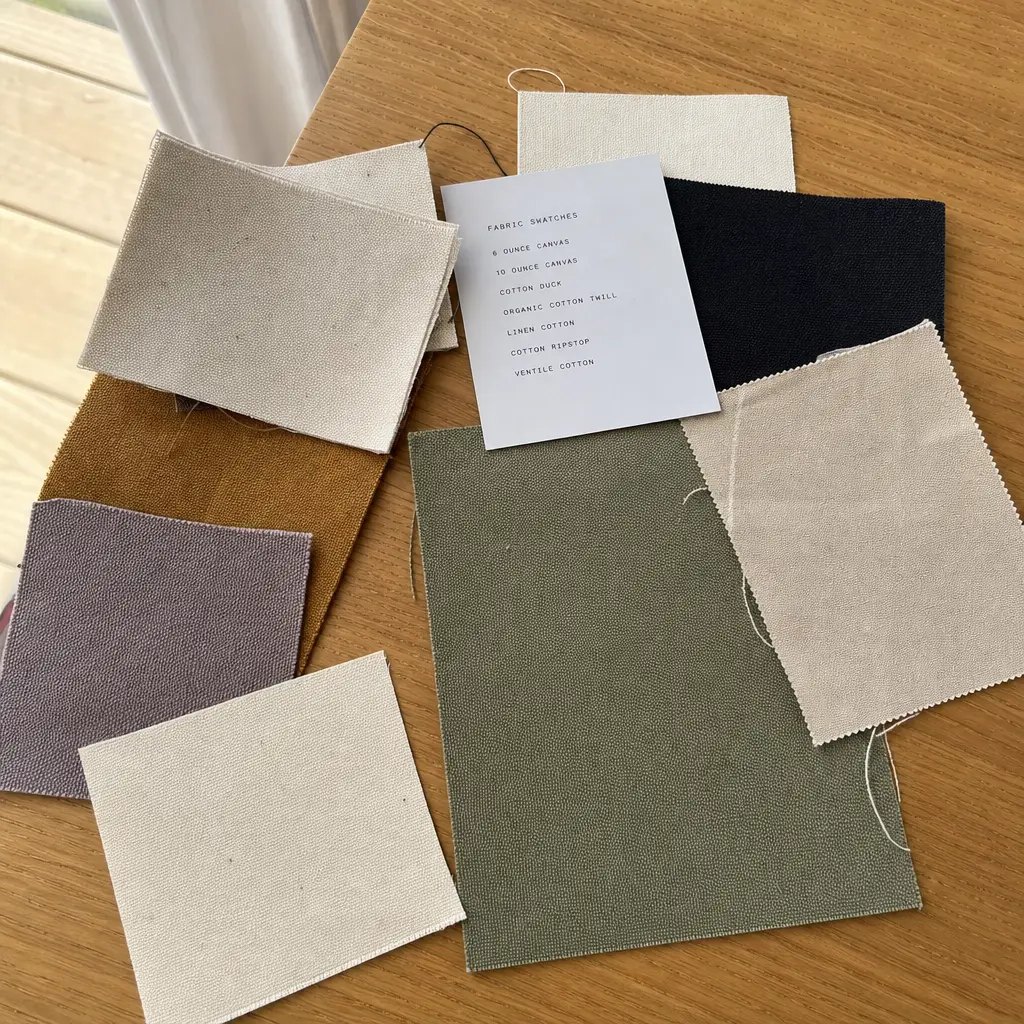
Canvas weight should be written in both ounces and GSM because suppliers may use different fabric references. A 12 oz canvas is typically around 400-420 GSM and is a common balanced choice for bookstore messenger bags. It has enough body for shelf display and daily carry without becoming too heavy for shipping. A 10 oz canvas may reduce cost, but it can look soft and may wrinkle heavily after carton packing. A 14 oz canvas feels more premium and can justify a higher retail price, but it increases material cost, sewing resistance, carton weight, and sometimes needle or seam issues.
Color is one of the fastest ways to increase MOQ. Natural canvas, black, navy, and sometimes army green are more likely to be available as stock fabric. Custom Pantone dyeing normally requires fabric MOQ, lab dip approval, and shade tolerance control. For a bookstore testing a new item, stock color plus custom print is usually safer than custom fabric color. If campus brand standards require an exact school color, negotiate whether the school color can appear in the print, woven label, or hangtag instead of dyeing the whole bag.
- Natural canvas is usually the easiest for small MOQ and fast sampling.
- Dark canvas needs stronger print opacity and better lint control during packing.
- Custom dyed canvas should include lab dip approval and shade tolerance in writing.
- Heavier fabric may reduce fold marks but can raise freight and carton handling cost.
How Factories Calculate MOQ on Messenger Bags
A factory MOQ is not a random sales number. It is tied to fabric purchase, cutting efficiency, sewing line setup, print setup, trim sourcing, packing labor, and inspection time. If the fabric is in stock and the trim is standard, the factory can sometimes accept a lower first order because the risk is manageable. If the buyer requires custom dyed fabric, custom strap, custom hardware, and five different print artworks, the supplier must protect itself with a higher MOQ or higher unit price.
The best negotiation point is to reduce the number of production variables. For example, a bookstore may want 600 bags split into 300 campus logo, 150 alumni logo, and 150 department logo. If all use natural 12 oz canvas, the same black strap, the same flap shape, and the same carton packing, the supplier can cut and sew 600 pieces as one run, then decorate in three print batches. That is different from asking for 200 natural, 200 navy, and 200 maroon bags with different labels and closures.
- Total MOQ is controlled by cutting and sewing efficiency.
- Color MOQ is controlled by fabric availability and dye lot size.
- Logo MOQ is controlled by print setup, screen cost, and decoration handling.
- Packing MOQ is controlled by barcode, hangtag, carton mark, and warehouse rules.
- Trim MOQ is controlled by strap width, hardware finish, zipper type, and label production.
Negotiation Levers That Do Not Damage Product Quality
Buyers often try to negotiate MOQ by asking for a lower number without changing the specification. That rarely works unless the supplier has idle capacity or leftover fabric. A better approach is to offer production flexibility: accept stock canvas, combine artwork under one body specification, use standard strap and hardware, approve a practical packing method, or allow the factory to produce alongside another compatible canvas order. These levers reduce the factory's risk without weakening the bag.
There are also bad ways to lower MOQ. Reducing fabric weight too far, removing reinforcement at strap anchors, using cheaper hardware, or skipping the printed pre-production sample can create complaints after the bags hit the bookstore floor. University bookstore bags are handled by students, parents, alumni, and visitors. A broken strap or crooked logo is a visible brand problem. The target is not the lowest possible MOQ; it is the lowest controlled MOQ that still supports retail sale.
- Good lever: one body construction with several print artworks.
- Good lever: stock fabric color instead of custom dyed campus color.
- Good lever: standard carton packing with printed carton marks.
- Risky lever: thinner canvas that cannot hold shape on the shelf.
- Risky lever: removing bartacks at strap stress points.
- Risky lever: approving bulk production from a digital mockup only.
Print Method Decisions for Low and Mid-Volume Orders
For custom canvas messenger bags, screen printing is usually the most practical method for bookstore quantities from a few hundred to several thousand pieces. It works well for university names, simple mascots, department names, and flat color logos. The buyer should specify print size, location, Pantone colors, number of print colors, and whether the print goes on the flap, body, strap, or inside pocket. A large front flap print is common, but artwork near seams or curved flap edges needs placement tolerance.
Digital print may help with multi-color artwork or short runs, but it is not always the best choice on coarse canvas because ink hand feel, edge sharpness, and wash or rub resistance vary by process. Embroidery gives a premium look for alumni or gift shop collections, but it can pucker heavy canvas if the artwork is large or placed too close to an edge. Woven labels are useful when several departments need small identity changes without changing the main print, but labels have their own MOQ and lead time.
- Use screen print for one to three solid logo colors and clear campus marks.
- Use embroidery for small premium logos, not large dense artwork on the flap.
- Use woven labels when identity changes are small and repeat orders are likely.
- Require the factory to state ink type, curing process, and print setup cost.
- Approve physical print color on actual canvas, not only on paper or screen.
Sample Approval Should Protect the MOQ Deal
A low MOQ agreement is only useful if the approved sample prevents rework. For bookstore messenger bags, the first sample should verify size, fabric hand feel, strap length, flap coverage, pocket usability, closure strength, and how the bag sits when filled. This can be a blank construction sample if artwork is not final. The buyer should test it with real bookstore items: notebooks, a hoodie, a water bottle, a laptop sleeve, and typical gift merchandise. If the bag fails the carry test, changing dimensions after print setup is more expensive.
The printed pre-production sample should use the same fabric, thread, strap, closure, print process, and label as bulk production. It is the control sample for inspection. Sign-off should include measurements, photo record, print placement, packaging, and carton mark. If several logos are included in one order, approve one full printed sample for the main artwork and strike-off panels or printed fabric swatches for the remaining artworks, depending on risk. This keeps sampling cost reasonable while still controlling color and placement.
- Measure width, height, gusset, flap depth, strap drop, and pocket size.
- Load the sample to the expected carrying weight and inspect strap anchor stress.
- Rub the print with dry white cloth to screen for poor curing or ink transfer.
- Photograph approved print position with a ruler for bulk inspection reference.
- Keep one signed sample at the factory and one with the buyer or inspection team.
Quote Data Needed to Compare Suppliers Fairly
A buyer cannot negotiate MOQ properly if every supplier quotes a different hidden specification. The RFQ should request unit price by quantity break, fabric weight, color, print method, print setup charge, sample charge, packing cost, carton quantity, carton size, carton gross weight, lead time, trade term, and validity period. If the buyer only asks for one price on a photo, the lowest quote may be based on thinner fabric, smaller size, no inside pocket, cheaper hardware, or missing retail packing.
For university bookstores, landed cost matters more than factory unit price alone. A 14 oz bag may look better, but carton weight and shipping volume can change the delivered cost. A lower MOQ may also carry a higher unit price because setup labor is spread over fewer pieces. Ask suppliers to quote at practical breaks such as 300, 500, 1000, and 2000 pcs using the same spec. This shows where the cost curve improves and helps the buyer decide whether to place one larger shared bookstore order or several small departmental orders.
- Require fabric weight and finished size on every quote line.
- Separate bag unit cost from print setup, sample, packing, and local charges.
- Compare carton volume and gross weight, not only piece price.
- Ask for quantity breaks using the same construction and print assumptions.
- Record MOQ by total order, color, artwork, label, and packing version.
Packing and Retail Handling for Campus Stores
Packing is often treated as an afterthought, but it affects both cost and sell-through. A bookstore may need each messenger bag in a clear recycled polybag, a paper belly band, a hangtag, or a barcode sticker. For a sustainability-focused campus, plastic-free packing may be preferred, but paper bands can scuff dark canvas and may not protect printed flaps during long transit. If bags will be displayed folded, confirm the fold line does not run across the printed logo or create a permanent crease on heavy canvas.
Export carton design should match the receiving environment. Campus stores and distributors may not want cartons above a certain weight because staff handle them manually. For canvas messenger bags, 25-50 pcs per carton is common depending on size, fabric weight, and whether the bag is folded flat or packed with flap protection. Carton marks should include PO number, SKU, color, logo version, quantity, gross weight, net weight, and carton number. Mixed logo cartons should be avoided unless the buyer's warehouse can manage sorting.
- Set a maximum carton gross weight before production, often around 15-20 kg for easier handling.
- Use separated carton marks for each logo version or SKU.
- Protect dark canvas from lint, rubbing, and carton dust.
- Avoid tight compression that bends flaps or leaves strap marks on the print.
- Confirm retail barcode placement before bulk packing begins.
Lead Time Risks When MOQ Is Split Across Designs
Lead time is not only sewing time. A realistic schedule includes artwork review, fabric confirmation, sample making, sample shipping, sample approval, material purchasing, cutting, printing, curing, sewing, trimming, inspection, packing, export booking, and freight. For a standard canvas messenger bag using stock fabric and a simple print, production may move quickly after approval, but the approval stage can still consume time if multiple campus departments comment separately on logo size or color.
When MOQ is split across several designs, the biggest delay is usually artwork approval and print scheduling. Each logo needs usable vector files, Pantone references, placement decisions, and approval responsibility. Buyers can reduce schedule risk by locking the body spec first, then assigning one decision maker for artwork approval. If the bags are needed for orientation, graduation, homecoming, or bookstore launch week, build in inspection and freight buffer. A rushed low MOQ order is where print mistakes and packing mix-ups happen.
- Freeze bag construction before collecting final department logos.
- Use one artwork approval sheet per logo version with SKU and print size.
- Keep a deadline for sample comments; late changes should move to reorder.
- Allow extra time for custom dyed fabric, woven labels, or special hardware.
- Schedule final inspection before shipment, not after cartons arrive at campus.
Specification comparison for buyers
| Spec decision | Recommended option | When it fits | Buyer risk to check |
|---|---|---|---|
| Fabric weight for bookstore use | 12 oz canvas, about 400-420 GSM, or 14 oz for premium alumni retail | 12 oz fits student daily carry and keeps freight weight controlled; 14 oz fits higher ticket gift programs | Under 10 oz can collapse at the shelf and may not hold books well; over 16 oz can push cost and needle breakage |
| Minimum order quantity structure | Negotiate one total MOQ with color and print splits, not separate MOQ for each logo | Useful when bookstores need department, alumni, athletics, and orientation versions | Supplier may quote a low total MOQ but apply hidden setup charges or require full carton quantities per design |
| Canvas color choice | Natural, black, navy, or stock dyed canvas before custom Pantone dyeing | Best when launch quantity is uncertain and bookstore wants a lower first PO | Custom dye lots usually need higher fabric MOQ and shade tolerance approval before cutting |
| Logo decoration method | Screen print for flat bookstore logos; woven label or embroidery for premium small marks | Screen print controls cost on 300-1000 pcs; woven label helps when art has fine detail | Large ink coverage on heavy canvas can crack if curing is weak; embroidery may pucker on flap edges |
| Hardware and trims | Standard cotton webbing strap, metal snap or magnetic button, inside pocket as optional add-on | Keeps MOQ flexible because trims are factory-stock items | Custom buckles, custom zipper pullers, and special strap colors can create trim MOQ separate from bag MOQ |
| Sampling path | Blank size sample first, then printed pre-production sample before bulk cutting | Reduces risk when the buyer is still confirming book fit, logo scale, and retail ticket position | Skipping the blank fit sample can leave the store with bags that look good but cannot hold textbooks comfortably |
| Packing method | One bag in recycled polybag or paper belly band, 25-50 pcs per export carton depending on size and weight | Works for campus retail receiving rooms and distributor warehouses | Overpacked cartons can crush flaps; loose packing can cause scuffing on dark canvas |
| Supplier route | Direct factory for repeat programs; trading company only when consolidating many unrelated bookstore products | Direct factory fits buyers who need MOQ engineering, sample control, and repeat reorder consistency | A consolidator may simplify paperwork but often has less leverage to adjust cutting, print, and trim MOQ |
Buyer checklist before sampling
- Define the selling channel: campus bookstore shelf, online store, orientation kit, alumni gift, or department resale.
- State target retail price and acceptable landed-cost range before discussing premium fabric or extra pockets.
- Specify canvas weight in ounces and GSM, not only the word canvas.
- List exact bag dimensions and the largest book or laptop size the bag must carry.
- Separate total order quantity, color split, logo split, and delivery split in the RFQ.
- Confirm whether the MOQ applies to total pieces, per color, per print artwork, or per shipment.
- Choose stock canvas colors unless the order can support custom dyeing and extra lab-dip time.
- Send vector artwork and require print size, position, ink type, and curing method on the quotation.
- Request a blank construction sample and a printed pre-production sample before bulk cutting.
- Set carton packing limits that your bookstore or warehouse can physically handle.
Factory quote questions to send
- What is your MOQ for this messenger bag by total order, by fabric color, and by logo artwork?
- Can you combine several university department logos within one cutting lot if the fabric and bag construction stay the same?
- Which canvas weights are stock items in your factory, and what GSM tolerance should we expect after washing or finishing?
- What is the price difference between 12 oz natural canvas, 12 oz dyed canvas, and 14 oz dyed canvas at 300, 500, and 1000 pcs?
- Which print method do you recommend for our artwork, and what is the setup cost per color or per screen?
- How many pieces are required for a printed pre-production sample, and will the sample use the same fabric, thread, strap, and hardware as bulk?
- What carton quantity and carton weight do you recommend for our bag size, and can cartons carry item code and PO number markings?
- What is the production lead time after sample approval, and which steps are on the critical path: fabric, printing, sewing, packing, or inspection?
- What AQL level or internal inspection standard do you use for stitching, stains, print defects, hardware function, and carton packing?
- Which quote terms are included: sample fee, print setup, inner packing, export carton, FOB local charges, and document charges?
Quality-control points to confirm
- Fabric weight tolerance should be stated, commonly within plus or minus 5 percent unless otherwise agreed.
- Finished bag size tolerance should be controlled, usually plus or minus 1 cm for width and height on soft canvas bags.
- Seam allowance and stress points at strap anchors, flap corners, and side seams should be reinforced with bartack or double stitching.
- Print placement tolerance should be defined before sampling, commonly within plus or minus 5 mm for front flap logos.
- Ink curing should pass a dry rub and light scratch test before bulk packing, especially on dark dyed canvas.
- Hardware should open and close smoothly without sharp edges, loose rivets, or magnetic misalignment.
- Inside pocket dimensions should match the approved sample and not interfere with the main book-carrying space.
- Cartons should not exceed the buyer warehouse handling limit and should protect flap shape during ocean or courier transit.
- Random inspection should include odor, stains, broken stitches, loose threads, print smears, wrong labels, and mixed logo cartons.