Why MOQ Is the Real Negotiation Problem
For custom canvas messenger bags, MOQ is not just the factory’s minimum number. It is the point where fabric wastage, print setup, cutting efficiency, sewing time, and packing labor become workable for the supplier. If you negotiate MOQ without understanding those cost buckets, you usually get one of two outcomes: a price that looks low but hides add-ons, or a small order that the factory treats as a low-priority run.
For B2B buyers, the real question is not 'What is the lowest MOQ?' It is 'What version of the bag can be produced cleanly at a lower risk level, and what does the factory need in exchange?' A factory can often support a smaller run if the design stays simple: one size, one canvas color, one decoration method, one strap construction, and one carton pack plan. As soon as you add multiple pockets, lining, a second print location, or hardware finishes, the MOQ starts rising because the production flow becomes less efficient.
The best negotiation is usually a trade, not a demand. If the startup wants to test market response, reduce complexity where the customer will not notice. If the bag is mainly a branded laptop carrier, the bag body, strap strength, and logo readability matter more than extra pocket features. Remove the parts that do not drive sales, and you often unlock a lower MOQ without sacrificing the commercial goal.
It also helps to think in terms of production risk. A factory does not just price the bag itself; it prices uncertainty. Unclear artwork, unstable fabric supply, too many revisions, and small quantities all increase the chance of rework. When buyers understand that pressure, they can negotiate in a way that sounds commercial instead of combative. That usually gets a better response from the supplier and a cleaner quote.
One practical tactic is to ask for two versions of the same style. A launch version can keep the simplest build and lowest MOQ, while a scale version can introduce more refined details once demand is validated. That gives procurement a path to compare not just price, but also how the supplier responds when volumes increase and the design becomes more stable.
- Use one size and one colorway to reduce cutting and fabric changeover.
- Keep decoration limited to one print position if launch demand is still uncertain.
- Ask for a cost ladder: 300, 500, 1,000, and 3,000 pcs if the factory can support it.
- Clarify whether MOQ means finished pieces, fabric yardage, or one color batch.
- Separate 'can make' from 'will make at this price' in every negotiation.
Start With the Bag Spec, Not the Price
Canvas messenger bags are usually quoted from a set of core choices: fabric weight, bag size, strap width, lining, closure type, pocket count, and print method. A 10oz promotional bag with a simple one-color logo is not comparable to a 14oz commuter bag with a padded base, internal sleeve, and reinforced strap tabs. If you do not specify the product structure, the quote will look comparable while hiding major differences in material and labor.
For most startup and retail programs, 12oz to 14oz canvas is the practical range. Below that, the bag can feel too soft when carrying samples or a slim laptop. Above that, it gets sturdier but also heavier, more expensive to sew, and more difficult to keep neat at the flap and seams. The right choice depends on whether the product is a lightweight promo item, a staff bag, or a retail-facing daily carry item.
Start by describing use, not just appearance. Tech startups should define what the bag needs to hold, how often it will be used, and how the branding should perform after repeated carrying. For example, an onboarding kit carrier for employees needs enough structure to protect contents and enough strap strength to survive commuting. A conference giveaway may only need a clean logo and a low landed cost. Those are different manufacturing targets, and they should not be quoted as if they are the same product.
Good specification writing also reduces sample churn. If the RFQ includes target measurements, pocket count, strap drop, logo placement, and packing style, the supplier can identify feasibility issues early. That avoids the common problem where a buyer approves a visually attractive sample that later proves too expensive to repeat at target MOQ. It also gives the factory a chance to suggest simpler construction before the order gets locked.
If you only remember one thing, remember this: price is a result of specification, not a replacement for it. The clearer the spec, the more useful the quote. And the more useful the quote, the easier it is to negotiate without losing time on samples that were never realistic in the first place.
- Body fabric: 12oz to 14oz canvas is the common trade-off between handfeel and structure.
- Strap: 25 mm to 50 mm webbing often improves comfort and reduces edge curl.
- Lining: partial lining can protect the inside pocket without adding full-bag labor.
- Carry use: define laptop size, kit weight, or giveaway purpose before requesting quotes.
- Construction: ask whether the base is reinforced, boxed, or flat, because that changes labor and shape.
How Fabric Weight Changes MOQ and Price
Fabric weight affects more than durability. It changes cutting waste, needle resistance, seam finish quality, and how much the bag holds shape during sewing. A lighter canvas is easier to run in small batches, but a heavier canvas often produces a cleaner retail feel. When a supplier quotes different prices for 10oz, 12oz, and 14oz canvas, they are usually reflecting both material cost and sewing speed.
Ask the factory to state the fabric in GSM or ounce weight and confirm whether the fabric is bleached, natural, dyed, piece-dyed, or washed. A 12oz natural canvas and a 12oz dyed canvas do not behave the same way after folding, printing, or exposure to moisture. If your artwork is dark and large, ask how the ink covers the weave texture, because canvas grain can make a thin print look patchy even if the logo artwork is correct.
You should also ask how the fabric is sourced. Does the factory keep the canvas in stock, or must it be woven or dyed to order? If the supplier needs to book a specific mill lot, MOQ may rise even if the bag construction itself is simple. For procurement teams, that distinction matters because one supplier may appear expensive on paper but actually offer better schedule control if the fabric is already available.
Another overlooked point is shrinkage and pre-treatment. If the canvas is not pre-shrunk or at least tested for dimensional change after washing or humidity exposure, the cut size may need extra allowance. That can affect finished dimensions, print placement, and carton fit. Ask whether the factory has already allowed for shrinkage in the cutting pattern and whether the approved sample reflects that allowance.
The most useful fabric question is usually the simplest one: what exactly will be sewn into the bag you approve? If the supplier cannot answer with a clear fabric specification, the rest of the quote is harder to trust. A clean answer should include weight, weave, color batch, treatment, and whether the same lot can be repeated for reorders.
- Request fabric swatches tagged with weight, weave type, and color batch.
- Confirm whether shrinkage has already been accounted for in the cut size.
- If the supplier uses multiple fabric mills, ask for lot consistency controls.
- Ask whether the canvas is pre-shrunk, washed, or untreated before cutting.
- Request a written statement of the fabric source if repeat orders matter.
Print Method Choices That Affect Quote and Risk
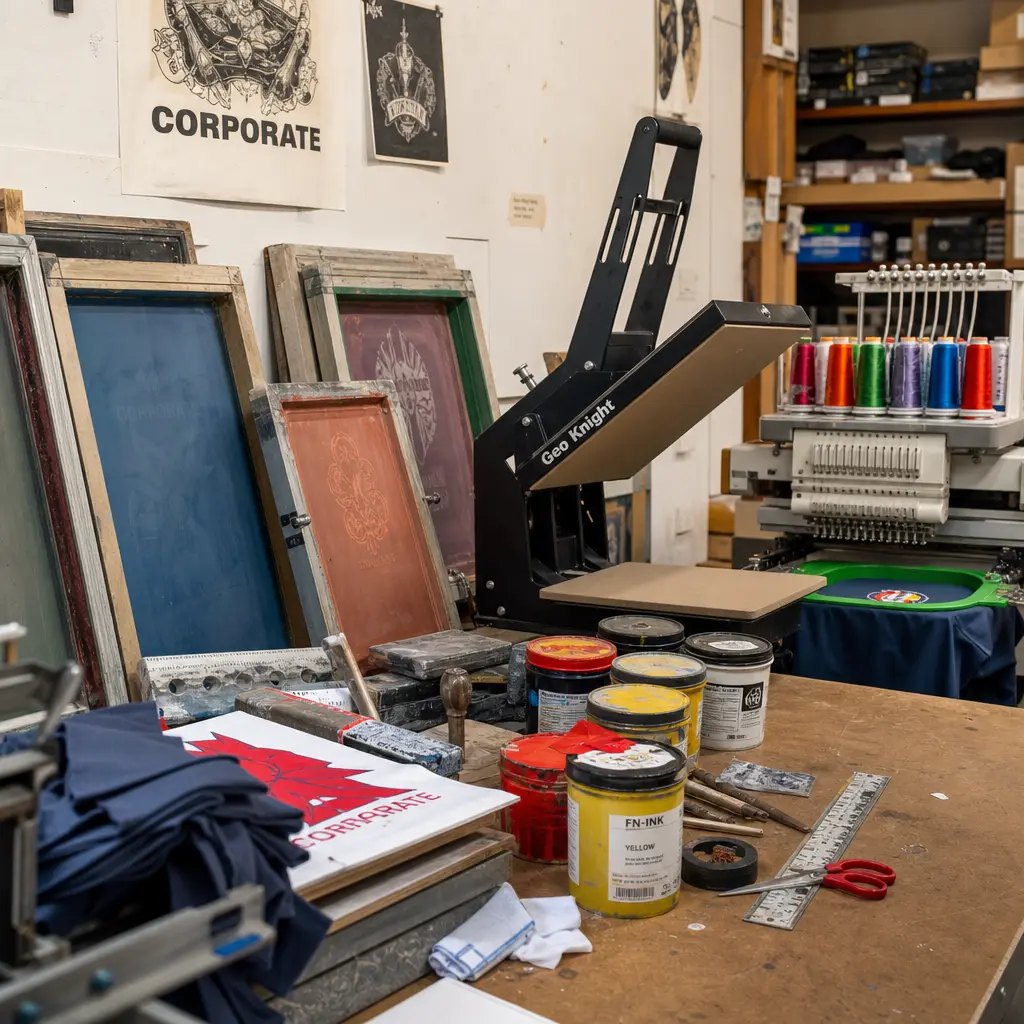
For one- to two-color logos, screen print is usually the best route on canvas messenger bags. It is stable, scalable, and easier to price once the screens are made. For small launch orders with more complex graphics, heat transfer or digital print can look attractive, but the finish must be tested on textured canvas. A clean image on a flat proof does not always survive the rough weave, fold points, and stress areas of a messenger bag.
A strong RFQ should include art size, placement distance from seams, Pantone reference, print coverage, and whether the print must be matte or slightly glossy. If the logo sits near a seam, pocket edge, or flap fold, ask the factory to send a placement photo on the actual sample. This avoids the common mistake of approving artwork that is technically correct but visually awkward once sewn.
Ask the supplier how the print will be cured and how it will be tested. On canvas, poor curing can show up as cracking, stickiness, or weak rub resistance after folding and handling. That matters particularly for tech startups that distribute bags at events, because the bag may be folded, stacked, and carried often before the end user even opens it.
Embroidery can work well for a premium look, but it is not always the lowest-risk option on canvas. Dense stitching can pucker lighter canvas or distort a fine logo. If you want embroidery, ask the supplier to show stitch density, backing method, and thread color control. A small logo on a heavy flap is easier to embroider than a large detailed graphic near a seam.
For buyers comparing print quotes, the key is to make the decoration method part of the commercial decision, not a design afterthought. Print method changes setup cost, sampling time, and reorder flexibility. If you expect repeat orders, a stable method with predictable registration is often worth more than a cheaper technique that looks good only once.
- Screen print: best for repeat orders and simple logos.
- Heat transfer: useful for short-run multicolor artwork, but test rub resistance.
- Embroidery: premium look, but check puckering on lighter canvas.
- Ask for print placement photos on the actual sample, not just the artwork file.
- Confirm curing method and rub testing for printed logos on canvas.
Comparing Supplier Routes Before You Negotiate
A low MOQ from the wrong supplier is often more expensive than a slightly higher MOQ from the right one. Direct factories usually give better control over fabric, sewing, and packing, while traders may look flexible but hide the real production site and shift responsibility when defects appear. If you are buying for a brand, distributor, or retail program, supplier transparency matters as much as unit price.
The route you choose should match the risk profile of the order. A direct factory with a sample room and production QC records is better when you need repeatability, documented inspection, and a stable replenishment path. A trading company can still be useful if you need broad sourcing support or mixed product categories, but then the buyer should be extra careful about who actually owns the spec, the sample approval, and the defect responsibility.
When comparing routes, ask not just who can make the bag, but who can keep the same result next time. Many procurement problems start when the first order is acceptable but the reorder shifts in fabric shade, seam alignment, or print position because the order was not tied to the same production records. If repeat purchases matter, insist on a named factory, approved sample archive, and clear revision history.
A useful comparison method is to score each supplier on five factors: price clarity, MOQ flexibility, sample speed, QC transparency, and replenishment reliability. This helps a startup avoid the trap of choosing the lowest headline price from a supplier who cannot provide stable follow-through after the first order. It also makes the supplier conversation more professional, because the buyer is evaluating commercial fit instead of chasing the cheapest number in isolation.
If the supplier cannot explain who owns each step of the workflow, pause before negotiating harder. Clarify who makes the sample, who approves changes, who handles QC, and who books the production slot. A clean handoff at the start saves more money than a rushed discount later.
- Write decisions in measurable language, not only descriptive wording.
- Ask for sample photos plus one physical approval sample for important orders.
- Keep quotation, sample approval, and inspection notes tied to the same spec version.
- Verify whether the supplier is the actual factory or a trading layer.
- Score suppliers on repeatability, not only on the first quote.
What to Compare in Supplier Quotes
When quotes arrive, do not compare only the unit price. Break the quote into base bag cost, decoration setup, label cost, packing cost, and any special handling. A supplier who quotes a slightly higher unit price but includes standard packing and better QC is often the lower-risk option. Hidden setup fees are common when the artwork changes or when the buyer requests an extra sample revision.
A practical quote should also show whether the MOQ is tied to one fabric color, one print color count, or one carton pack configuration. Sometimes the quoted MOQ is really a minimum by material batch, not by final finished bag count. That matters because splitting orders across colors or adding a second logo version can push you into a higher price tier even if the total quantity stays the same.
For startup buyers, the quote should make tradeoffs visible. If you simplify the bag by removing lining, pocket inserts, or a secondary print, the supplier should show exactly how much cost drops and whether the MOQ changes. That lets procurement make a controlled decision about the launch version rather than accepting a vague 'small order premium.'
Ask for a quote format that reveals assumptions. The best quotes state whether the bag is packed flat or stuffed, whether the price includes inner polybags, whether cartons are export-grade, and whether the quoted lead time starts from sample approval or deposit receipt. Without these details, two suppliers can appear to offer the same deal while actually pricing different work scopes.
The strongest commercial comparison is a quote matrix, not a single email thread. Put all suppliers against the same line items and the same assumptions. Then the differences become visible: who is charging for screens, who is including cartons, who is building in a fabric surcharge, and who is simply giving you a low number with unfinished details.
- Separate bag body cost from print setup and packing cost.
- Check whether accessories such as side labels, hangtags, or zipper pulls are included.
- Ask if carton packing changes the quoted MOQ or lead time.
- Request a line-item breakdown when comparing at least three suppliers.
- Confirm whether the quoted price assumes one fabric lot or mixed lots.
Sample Approval Should Prove More Than Appearance
The sample is not just for checking whether the bag looks right. It is your chance to confirm the dimensions, seam finish, strap reinforcement, print placement, and load behavior before mass production. For canvas messenger bags, a sample that looks good on the table can still fail when the flap sits crooked, the strap twists after weight is added, or the base collapses under a laptop and charger.
Use a measured approval process. Check the finished width, height, gusset depth, strap length, strap drop, pocket opening, and flap coverage. Test the bag with the actual contents your buyers will carry, such as a 13-inch laptop sleeve, charger, notebook, and a few accessories. If the sample cannot handle the intended load without seam stress or visible distortion, the production version will not improve on its own.
Ask for a golden sample that includes the final approved artwork placement, final label positions, final seam finish, and final packing method. Once approved, that sample should become the reference for production and inspection. If the factory is likely to adjust materials later, make the change log explicit so future orders do not drift from the approved version.
A good sample review also checks usability details that often get missed in procurement. Does the flap close without forcing the front panel? Does the shoulder strap sit comfortably on the body? Does the bag stand or collapse when placed down? These details matter because they affect end-user satisfaction, which matters as much as meeting the purchase order.
If the bag will be used in a workplace, an event, or a shipping kit, ask how it behaves in real handling. Does it keep its shape when stacked? Does the logo remain visible when the flap folds? Does the strap hardware scratch easily? These are small things, but they determine whether the finished product feels intentional or improvised.
- Approve the sample only after measuring actual dimensions and strap drop.
- Load-test the bag with real product weight, not just paper filler.
- Sign off on print placement, label position, and stitch appearance before bulk cutting.
- Keep a dated golden sample and photo record for reorders.
- Check flap closure, strap comfort, and bag shape under load.
Packing Details That Quietly Change Landed Cost
Packing is often treated as a minor line item, but it affects carton size, freight volume, and warehouse receiving speed. For custom canvas messenger bags, the supplier should state whether each bag is folded flat, polybagged, bulk packed, or tissue-wrapped. If your bag has a structured flap or thicker canvas, the folding method can change the carton count dramatically. That, in turn, changes your air freight or container efficiency.
Ask for a carton packing plan before production starts. Good packing data includes bags per carton, carton dimensions, gross weight, and whether the cartons are drop-tested or strapped for export. If you are selling to retail or fulfillment channels, a clean packing spec helps your receiving team count accurately and reduces rework when cartons arrive mixed or overpacked.
Packing also affects product presentation. A bag that arrives folded too tightly can hold creases, especially if the canvas is heavy or the flap has edge reinforcement. If the bag will be sold direct to consumer, ask whether tissue paper, insert cards, or shape retention inserts are worth the added cost. If it is for internal distribution or a conference giveaway, a simpler packout may be acceptable.
Procurement should make packing part of the commercial comparison, not an afterthought. A slightly cheaper unit price can disappear once carton volume increases or the factory adds an unexpected packaging fee. Ask suppliers to quote on the same pack count so the landed cost comparison stays honest. If one supplier uses a different fold or carton count, normalize the numbers before deciding.
When shipping timing matters, packing also influences how quickly goods can be received and redistributed. Clear carton labels, consistent piece counts, and moisture protection all reduce friction at the warehouse door. That may not sound dramatic, but it matters when bags support a launch, an onboarding cycle, or a channel shipment with a fixed deadline.
- Define bags per carton and carton dimensions before bulk packing.
- Specify polybag thickness if moisture protection is needed.
- Request outer carton marks that match your SKU and PO structure.
- Ask whether tissue, inserts, or hangtags are included in packing cost.
- Compare freight impact from folded thickness, not only unit price.
Lead Time Risk and the Real MOQ Tradeoff
A lower MOQ can be useful, but it often comes with weaker material allocation and a slower place in the production queue. If you need a launch date, ask the factory what drives the schedule: fabric booking, sample approval, print preparation, or sewing capacity. For canvas messenger bags, print and stitching are not the only bottlenecks. The real delay often comes from late artwork approval or waiting for the correct fabric lot.
The safest negotiation strategy is to align MOQ with the earliest feasible production slot. If you push MOQ too low, the factory may accept the order but delay it behind more profitable runs. If you accept a slightly higher MOQ and confirm your materials early, you may get better line priority and fewer revision cycles. That is often cheaper than trying to force a tiny run through a busy factory.
For tech startups, timing matters because bags often support a product launch, event, onboarding cycle, or partner program. In that situation, ask the supplier for a backward-planned schedule that starts from your ship date and works back through sampling, artwork approval, materials booking, sewing, inspection, and packing. This reveals whether the factory’s promise is actually achievable.
If the supplier offers a fast sample but a long bulk lead time, ask why. Sometimes the sample room is separate from production, which means the sample may arrive quickly while the factory line remains booked. That is not a deal breaker, but it should be priced and scheduled honestly so the buyer can avoid launch-day surprises. You want a calendar you can trust, not just a reassuring number in the quote.
Lead time and MOQ should be negotiated together. If the order must arrive by a fixed date, the factory may need more margin on material booking and production planning. If the date is flexible, you may have more room to push the MOQ down. Good procurement makes that tradeoff explicit instead of treating the two items as separate conversations.
- Confirm whether fabric is in stock or must be dyed or woven to order.
- Lock artwork before deposit to avoid line stoppage.
- Ask for a realistic ship window, not just a production-day count.
- Request a backward schedule from target delivery date.
- Check whether sampling capacity and production capacity are different teams.
Use This Buyer Workflow to Negotiate Smarter
A clean negotiation process usually wins better results than aggressive price pushing. Start by defining the target spec, then ask each supplier to quote the same exact version with the same pack method. Compare one supplier at a time on the same basis: fabric weight, print method, trim, packing, and lead time. If one quote is much lower, look for missing items rather than assuming it is a better factory.
For procurement teams and brand owners, the aim is not just a low unit price. It is a controlled order with predictable sample approval, repeatable production, and acceptable landed cost. When the factory understands that you are comparing complete commercial terms, not only the headline number, the quote usually becomes more transparent.
A practical workflow is to send a single RFQ pack that includes product dimensions, reference images, artwork files, Pantone numbers, pack instructions, and a short list of required QC checks. Then ask each supplier to confirm the same assumptions in writing. This reduces back-and-forth and makes it easier to compare responses without guessing what each factory meant.
For startup buyers, it helps to separate must-haves from nice-to-haves. Must-haves are the features that support function, branding, and channel fit. Nice-to-haves are the extra details that make the bag nicer but are not essential to the launch. If you know the difference, you can negotiate MOQ against the parts that actually matter to your users.
The strongest buyers stay calm about the smallest details and precise about the critical ones. That usually means being flexible on non-customer-facing items like packing style, while holding firm on strap strength, logo placement, and material weight. The factory can work with that. In fact, it often prefers that kind of buyer because the target is clearer and the risk is lower.
- Keep one RFQ version and send it to every supplier.
- Ask for separate pricing at different quantity breaks.
- Require sample photos with ruler measurements before mass approval.
- Use the same spec language in RFQ, sample notes, and PO.
- Flag must-have versus optional features before quotation.
Specification comparison for buyers
| Spec decision | Recommended option | When it fits | Buyer risk to check |
|---|---|---|---|
| Body fabric weight | 12oz to 14oz plain-weave canvas; request GSM or oz and pre-shrink status in writing | Best for everyday laptop carry, onboarding kits, and repeat orders | Too-light fabric can collapse at the flap, show seam distortion, or feel inconsistent after packing |
| Print method | 1-2 color screen print for stable artwork; heat transfer or digital only for short-run multicolor graphics | Use screen print when artwork is fixed and volume is expected to repeat | Low-cost transfers can crack or look patchy on textured canvas if adhesion, cure, and rub resistance are not tested |
| MOQ route | Single color, one size, simplified trim, and one logo position to hit the lowest practical MOQ | Useful for startup launches, pilot runs, and distributor tests | Savings disappear if the supplier splits fabric lots, adds setup charges, or charges for extra revisions |
| Closure system | Velcro or magnetic snap for fast assembly; zipper pocket only if the use case requires it | Good when the product must stay simple and keep sewing time low | More closures increase labor, raise defect points, and slow production on small runs |
| Lining choice | Unlined or partial lining with reinforced base | Works for cost-sensitive launches and lower MOQs | Unlined bags can show fibers and raw edges, so edge finishing and stitch consistency need to be cleaner |
| Strap construction | 25-50 mm webbing with bar-tack reinforcement at each load point | Best for laptop users and higher perceived value | Weak strap attachment is a common failure point in transit and after repeated loading |
| Packing method | Flat packed in polybag with carton count defined by size and weight | Best when you need controlled freight volume and easy receiving | Overstuffed bags or inconsistent folding can inflate carton size and landed cost |
| Supplier route | Direct factory with sample room, production records, and QC photos | Best when you need tighter MOQ negotiation and fewer intermediaries | Agents may hide setup costs or shift risk into unclear sampling and revision charges |
| Lead-time strategy | Pre-book fabric and confirm print proof before deposit | Useful when launch timing matters more than the absolute lowest price | If artwork or materials move late, the production slot can slip even when the PO is approved |
Buyer checklist before sampling
- Define bag size, canvas weight, strap length, closure, and intended carry load before asking for MOQ.
- Confirm whether the quote includes screen setup, plates, labels, cartons, polybags, tissue, and any export packing.
- Request a pre-production sample or a signed golden sample with measured tolerances and a clear revision log.
- State carton pack count, gross weight target, and shipping mark requirements in the RFQ so all suppliers quote the same packing basis.
- Ask the factory to separate base bag cost, decoration cost, packing cost, and special handling fees.
- Lock artwork files, Pantone references, print size, and placement dimensions before deposit.
- Ask for a cost ladder at 300, 500, 1,000, and 3,000 pcs if the supplier can support multiple breaks.
- Confirm whether the MOQ is tied to fabric color, print color count, size variant, or material batch.
- Specify the final use case: commuter laptop carry, event giveaway, retail resale, or internal staff kit.
- Require sample photos plus measured dimensions before approving bulk production.
Factory quote questions to send
- What is your MOQ by fabric color, print color count, and size variant?
- Does your quote include screen setup, digitization, plate making, or artwork preparation fees?
- What fabric GSM or ounce weight will you use for the body, flap, strap, and pocket panels?
- Can you share your seam allowance, stitch density, and strap reinforcement method in writing?
- What is the sample lead time, and will the sample charge be refunded after order confirmation?
- How many bags per carton do you recommend, and what carton size will that create?
- What are your production lead time and shipment lead time after sample approval?
- What QC report or inspection photos can you provide before balance payment?
- If we reduce MOQ, which parts of the spec change first: fabric lot, print method, or packing?
- Are label, hangtag, polybag, and carton costs included in the unit price or billed separately?
Quality-control points to confirm
- Measure finished size against the agreed spec with a real tolerance band, not a loose 'about' dimension.
- Check canvas GSM or ounce weight against the approved swatch so the bag does not arrive thinner than quoted.
- Inspect strap bartacks, stress points, and flap stitching under load, especially where the strap joins the body.
- Verify print registration, opacity, and rub resistance on the actual canvas color, not on a white proof sheet.
- Confirm label placement, side seam alignment, and top-edge finishing on the pre-production sample.
- Review carton count, polybag thickness, and moisture protection before mass packing starts.
- Test the bag with the real load you expect buyers to carry, such as a laptop, charger, notebook, or sample kit.
- Inspect the base panel and corners for twisting, bubbling, or uneven seam tension after the bag is filled.
- Check that print placement does not drift into seams, pockets, or fold lines when the flap closes.
- Confirm that any magnetic snap, Velcro, or zipper pull operates smoothly after repeated open-close cycles.