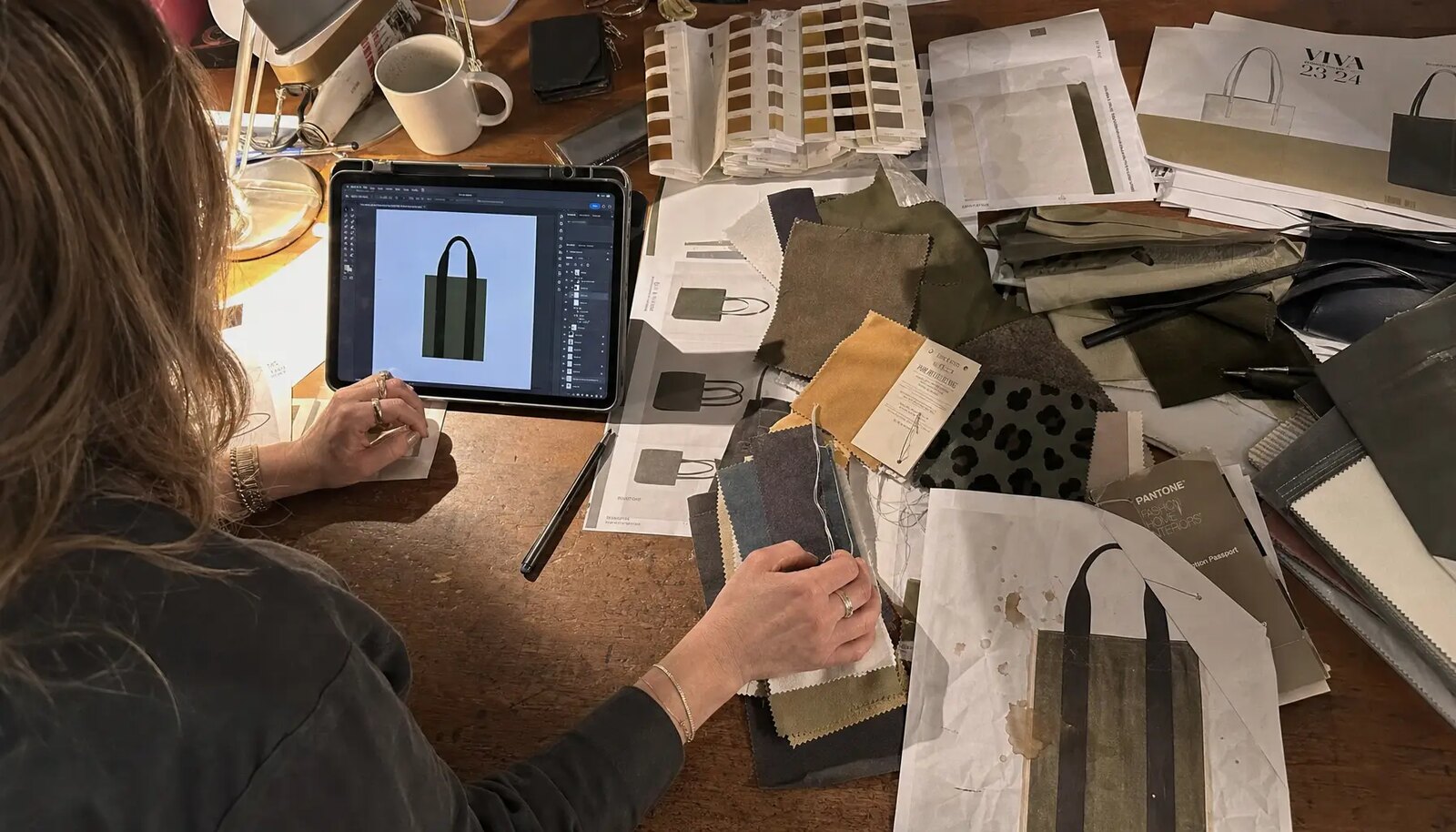
Start with the gift use case before choosing fabric
A useful custom canvas messenger bags material selection guide for corporate gifting starts with the job the bag has to do. Not the catalog image. Not the nicest mockup. A mockup can show the shape and logo, but it cannot tell a buyer whether the bag needs 10 oz or 14 oz canvas, a lined interior, a reinforced strap, a zipper, or a specific carton pack-out. Those details decide cost, durability, inspection standards, and whether supplier quotes can be compared fairly.
This is where many B2B sourcing projects drift. One factory may price an unlined 10 oz event bag with a basic front print. Another may price a lined 14 oz messenger bag with metal hardware, bound seams, and reinforced strap points. On screen, both may look close enough. In production, they are different products. The lower quote may not be more efficient; it may simply remove structure, finishing, or load performance that the buyer assumed was included.
Define the program before asking for price. A one-day conference handout usually needs low unit cost, easy distribution, and a clear logo. An employee onboarding kit may carry a notebook, handbook, bottle, charger, badge holder, and documents, so it needs better structure and stronger attachments. An executive gift calls for cleaner internal finishing, nicer hardware, and more restrained branding. A mailer campaign adds another issue: how the bag folds, how it fits fulfillment cartons, and whether the logo creases during transit.
Also decide whether the messenger bag is the gift itself or the carrier for other items. If it is mostly packaging, exterior appearance and kitting speed may matter more than pockets. If recipients are expected to reuse it for daily work, the strap, flap, closure, lining, and stress points deserve more budget. A strong buying brief lists the intended contents, expected carrying weight, distribution method, brand position, required delivery date, and approval process before suppliers quote.
- Conference handout: 10 oz to 12 oz canvas, simple print, limited pockets, bulk-friendly folding, and quick event distribution.
- Employee onboarding kit: 12 oz to 14 oz canvas, lined or bound interior, reinforced strap points, document fit, and repeatable color control.
- Executive gift: 14 oz to 16 oz canvas if seam bulk is acceptable, premium lining, subtle label or patch, better hardware, and cleaner packing.
- Document or travel pack: secure flap or zipper, gusset depth, reinforced strap anchors, hardware function testing, and carton protection.
- Mailer campaign: fold method, logo crease risk, individual packing, carton count accuracy, and compatibility with fulfillment operations.
Use the right canvas weight language: oz/yd², GSM, and finish
Canvas weight is one of the first numbers buyers ask for, and one of the easiest numbers to misunderstand. In cross-border sourcing, a supplier may describe fabric in ounces, GSM, or a local nominal code. Buyers should ask whether the quoted figure means ounces per square yard, grams per square meter, or something else. The common conversion is simple enough for quote checking: 1 oz/yd² is about 33.9 GSM. So 10 oz canvas is roughly 339 GSM, 12 oz is about 407 GSM, 14 oz is about 475 GSM, and 16 oz is about 542 GSM.
Those conversions help catch obvious quote gaps, but they do not replace a physical swatch. Two fabrics with the same nominal weight can feel different because of yarn count, weave density, finishing, washing, or coating. One 12 oz canvas may feel firm and suitable for a corporate work bag. Another may feel soft, loose, or limp. For that reason, the RFQ should state the target weight, the unit of measurement, the fabric composition, and whether the weight is measured before or after finishing.
For most corporate gifting messenger bags, 12 oz to 14 oz cotton canvas is the safest starting range. It has enough body to look substantial, usually prints well, and can be sewn at volume without excessive seam bulk. A 10 oz or 11 oz canvas can be right for light event programs, especially if the bag carries only brochures or documents for a short period. A 15 oz or 16 oz canvas can look more premium, but it should be tested carefully at folded seams, flap edges, gussets, strap anchors, and corners. Heavier material can create needle marks, thick seams, slower sewing, heavier cartons, and higher freight cost.
Finish matters too. Dyeing, washing, brushing, coating, and calendaring can change hand feel, shrinkage, print performance, and packing behavior. Ask the supplier to provide a labeled swatch, then keep the approved swatch sealed for bulk inspection and repeat orders. The label should identify supplier name, fabric code, weight, color, finish, order number, and approval date. It sounds basic, but it prevents a lot of arguments later.
- 10 oz to 11 oz, about 339 to 373 GSM: suitable for low-cost light-use programs and simple document carriers.
- 12 oz to 14 oz, about 407 to 475 GSM: common B2B gifting range for structure, print clarity, and manageable sewing.
- 15 oz to 16 oz, about 509 to 542 GSM: premium option, but test seam bulk, flap fold, needle marks, and carton weight.
- Above 16 oz: consider only when the design needs a very structured retail feel and freight cost is acceptable.
- Never compare quotes by fabric weight alone; confirm composition, weave density, finish, lining, and construction at the same time.
Specify weave, yarn appearance, finish, and color control
A buyer may write “12 oz cotton canvas” and assume the material is fully defined. It is not. Yarn thickness, weave tightness, slub level, seed flecks, bleaching, dyeing, washing, and surface finish all affect the final bag. A loose weave can absorb ink unevenly and soften logo edges. A lint-heavy surface can make the bag look dusty or interfere with printing. A rough natural canvas may support an eco-oriented brief. A smoother dyed canvas may feel more appropriate for office gifts, HR onboarding, and partner programs.
Natural canvas needs special attention because it is not pure white. It may show cotton seed flecks, small fiber variation, and slight tonal shifts. Those characteristics can be acceptable, but only when the buyer defines the tolerance. A few natural flecks are different from an oil mark on the front flap. Minor yarn character is different from a dark panel sewn next to a light panel. The standard should be written in plain inspection language so the factory, buyer, and inspector judge the same way.
For dyed canvas, do not rely on a Pantone number alone. Pantone references are useful for communication, but fabric color changes with fiber, dye process, finish, and lighting. Use lab dips or physical bulk swatches. If repeat orders are likely, ask how the supplier controls dye lots and whether visibly different lots will be separated. Mixing panels from different lots on the same bag is one of the fastest ways to make an otherwise acceptable product look inconsistent.
Finishing can also affect decoration and packing. Washed canvas feels softer, but it may shrink more and can reduce crisp logo edges. A stiffer finish can help the bag stand up, yet it may show fold marks when packed tightly. Water-resistant or wax-like finishes may alter odor, hand feel, print adhesion, and compliance requirements. If a coating is proposed, test the actual logo method on that exact fabric before approving bulk cutting.
- Use plain weave canvas for predictable sewing, stable logo placement, and straightforward inspection.
- Approve natural canvas with a physical swatch and written tolerance for flecks, slubs, and shade variation.
- Control dyed canvas with lab dip or bulk swatch approval and avoid mixing visibly different lots on one bag.
- Test washed canvas for shrinkage, panel distortion, shade unevenness, and print clarity before production.
- Check coated canvas for odor, fold marks, print adhesion, rub resistance, and recipient comfort.
Choose lining and internal construction based on contents
Lining is not only a style choice. It changes cost, sewing time, tolerance risk, internal capacity, and perceived value. An unlined messenger bag can be the right answer for budget programs, but the inside still has to be presentable. If recipients open the bag and see rough trimming, narrow seam allowance, and long loose threads, the gift feels cheaper even when the outside print is clean.
For a simple giveaway, unlined construction with neat internal seams may be enough. Bound seams are a useful middle option: cleaner than raw internal construction, less complex than full lining. For employee kits, document packs, and premium gifts, lining usually improves the unboxing impression and protects the contents. A common practical choice is 210D polyester because it gives a cleaner interior at a controlled cost and is relatively easy to wipe. Cotton lining can support a more natural material story, though it may wrinkle more and increase cost.
If the design includes a padded sleeve, specify it carefully. The quote should state foam thickness, sleeve dimensions, opening width, closure method, and the actual device or document size the sleeve must fit. Padding takes space. A bag that fits the kit when unlined may become too tight once lining, pockets, and foam are added. Do not approve the sample by outer dimensions alone; load it with the real contents or accurate substitutes.
Inspect the inside like a recipient would. Does A4 paper slide in without catching? Does the lining twist or pull when the flap opens? Are pocket openings straight? Are corners clean after turning? Does the flap still close after the kit is loaded? A lined bag can look correct from the outside while hiding caught seams, uneven pocket placement, or reduced usable volume inside.
- Unlined: lower cost and faster production, but require clean seam trimming and limited loose threads.
- Bound seams: a middle option for a cleaner unlined interior without full lining complexity.
- 210D polyester lining: practical for many corporate gift sets and document bags.
- Cotton lining: better material story, but verify wrinkling, shrinkage, and cost impact.
- Padded sleeve: specify device size, foam thickness, sleeve opening, and whether the sleeve changes usable capacity.
Engineer straps, handles, closures, and hardware for real load
Messenger bags often fail first at the strap attachment, not in the middle of the canvas panel. That is why strap construction needs to be specified as carefully as fabric weight. The RFQ should state webbing material, strap width, adjustable range, handle drop if applicable, reinforcement method, and target carrying load. A target such as 5 kg for light programs or 8 kg for heavier document and onboarding kits gives the factory a clearer basis for construction.
Webbing width commonly falls between 30 mm and 50 mm, depending on bag size and look. Narrow webbing may photograph well but feel uncomfortable under load. Wider webbing can improve comfort, but it may require larger sliders, D-rings, and attachment panels. There is no single best width for every project. The right choice is the one that matches the contents, bag size, wearer comfort, and hardware availability.
The reinforcement method should be visible and repeatable. Box-X stitching, bar-tacks, dense back-tacking, and reinforcement patches can all work when properly executed. What matters is that the approved construction is copied in bulk. Weak strap seams should be treated as critical defects because they affect safety and usability, not merely appearance. Inspectors should pull and handle the bag normally, not just glance at the seam.
Closures and hardware need the same discipline. Magnetic snaps are convenient, but they must align correctly or the flap sits crooked. Zippers improve security, but poor slider quality or uneven stitching can create complaints. Metal hardware can lift the perceived value, yet burrs, plating bubbles, rust marks, loose rivets, and mismatched finishes do the opposite. During sample review and final inspection, open and close snaps, pull zippers, move sliders, check rivets, and confirm the strap adjusts smoothly under ordinary load.
- State strap width, material, color, thickness expectation, adjustable length range, and target carrying load.
- Use box-X stitching, bar-tacks, or reinforcement patches at strap ends and handle bases.
- Check magnetic snap alignment after the bag is filled, not only when it is empty.
- Specify zipper gauge, slider type, puller style, and stitch quality if a zipper closure is required.
- Inspect metal and plastic hardware for burrs, cracks, weak plating, loose rivets, and color mismatch.
Match decoration method to artwork, canvas surface, and quantity
Branding is often where quotes stop being comparable. One supplier may include a one-color screen print. Another may assume embroidery. A third may recommend heat transfer because the artwork has gradients or small text. Before comparing prices, define the logo method, logo size, color count, placement, and approval steps. The artwork file should function as a production instruction, not just a visual idea.
Screen printing is usually the best-value method for bold one- to three-color corporate logos on canvas. It works well for volume programs, but the canvas surface still matters. Texture can affect edge definition and ink coverage. Fine text, thin lines, and tight registration should be tested on the actual fabric. A clean digital mockup does not prove that the ink will hold a sharp edge on a rough natural canvas.
Embroidery can look more premium, especially on flaps, labels, and smaller placements. It also adds technical risk. Dense embroidery can pucker thinner canvas if backing, stitch density, or thread tension are wrong. Woven labels are useful when the buyer wants subtle, repeatable branding across multiple fabric colors. Patches can create a retail-style feel and help when direct printing is risky. Heat transfer can reproduce detail, but approve it only after checking adhesion, rub resistance, wash expectation if relevant, and hand feel.
Ask for physical proof before bulk production whenever possible. Depending on the method, that may be a screen print strike-off, embroidery sew-out, woven label proof, patch sample, or transfer test panel on the same canvas. If the program includes multiple office logos, co-branded layouts, or department versions, confirm setup charges and MOQ by artwork version. Small version splits can quietly raise cost and complicate packing.
- Screen print: strong option for bold logos, controlled cost, and larger corporate gifting runs.
- Embroidery: premium appearance, but check backing, stitch density, puckering, and minimum text size.
- Woven label: repeatable across fabric colors and useful for subtle branding.
- Patch branding: helpful for retail-style gifts or textured fabrics that do not print cleanly.
- Heat transfer: suitable for detailed artwork only after adhesion, rub, and surface-feel testing.
Build an RFQ that prevents hidden product substitution
A vague RFQ makes low pricing easy and reliable sourcing difficult. If a buyer asks for a “custom canvas messenger bag with logo,” suppliers can choose different canvas weights, linings, strap widths, hardware, closures, decoration methods, and packing. The cheapest offer may simply be a lighter or less finished version of the bag. A procurement-ready RFQ makes the product measurable.
Start with finished dimensions, not cut-panel dimensions. For messenger bags, width and height are not enough. Include gusset depth, flap length, flap overlap, pocket sizes, handle drop, strap adjustable range, and where each measurement is taken. If the bag must fit A4 documents, a tablet, a notebook, or a fixed gift insert, state the item dimensions and required clearance. Then set tolerances. Many projects use ranges such as ±10 mm on larger body dimensions and ±5 mm on smaller features, but the final tolerance should match the design and supplier capability.
Next, define the construction. The RFQ should state canvas weight, composition, finish, color standard, lining, seam finish, pockets, closure, strap material, hardware finish, and reinforcement method. Attach vector artwork with logo size, placement from seams or flap edge, color reference, and decoration method. If the logo must sit centered on a flap, say centered on which panel and under what tolerance.
It helps to separate mandatory requirements from optional upgrades. Ask for a base quote, then add-on pricing for 14 oz instead of 12 oz canvas, 210D lining, zipper closure, embroidery, woven label, individual polybag, belly band, upgraded hardware, or destination-specific packing. This makes budget decisions visible. It also reduces the risk that a supplier removes lining, swaps hardware, or changes packing to hold a target price without saying so.
- Include finished size, gusset, flap coverage, pocket size, handle drop, strap range, and measurement tolerance.
- State canvas weight, composition, finish, color standard, and whether fabric is stock, dyed, washed, or coated.
- Define lining, seam finish, pockets, closures, strap material, hardware finish, and reinforcement method.
- Attach production-ready artwork with logo size, location, color reference, and decoration method.
- Request itemized add-on prices so quality upgrades and cost reductions are visible rather than hidden.
Understand MOQ, lead time, and split-order complexity
MOQ is rarely just a random number. It is usually shaped by material purchasing, dye lot size, decoration setup, hardware sourcing, packing requirements, and sewing line efficiency. A simple unlined messenger bag in stock natural canvas with one screen print has fewer constraints than a custom-dyed, lined bag with several logo versions and special hardware. The important question is not only “What is the MOQ?” It is “Which part of the specification is creating the MOQ?”
If custom dyeing is the driver, a stock canvas color may solve the issue without weakening the bag. If embroidery setup makes a small order expensive, a woven label or one-color print may be more practical. If multiple office logos create many small production lots, consolidating artwork can reduce setup charges, inspection complexity, and packing errors. These changes often protect value better than cutting canvas weight until the bag feels flimsy.
Clarify the unit of MOQ. Some suppliers mean per style. Others mean per color, per logo version, per lining option, or per shipment destination. A 2,000-piece order split across four logos may behave like four 500-piece orders for decoration, labeling, and packing. That affects price and lead time. It also increases the chance of carton marking mistakes if the packing plan is vague.
Split shipments need early planning. If bags ship to several offices, ask whether the factory can pack by destination, logo version, SKU, or event location. Confirm carton marks, carton quantities, inner labels, and any fulfillment instructions before production. Local sorting and repacking can erase the savings from a low unit price, especially when cartons are large or deadlines are tight.
- Ask whether MOQ applies per style, color, logo version, lining option, hardware option, or destination.
- Use stock canvas and standard hardware when quantity is tight or schedule is urgent.
- Limit logo positions and artwork versions if the program has many departments or offices.
- Avoid custom molds, special zipper pulls, and custom-dyed webbing unless quantity supports them.
- Confirm split packing, carton labels, and destination sorting before comparing landed cost.
Use sampling to prove production readiness, not just appearance
A sample is not only a sales photo in physical form. It should prove that the supplier can make the product to the agreed specification. For custom canvas messenger bags, a solid approval path usually includes a fabric swatch, trim card, decoration proof, and pre-production sample. The fabric swatch confirms hand feel, shade, and finish. The trim card confirms webbing, lining, zipper, hardware, label, thread, and other components. The decoration proof confirms print, embroidery, label, patch, or transfer execution. The pre-production sample brings everything together.
Handle the sample the way the recipient will. Measure the finished bag after pressing. Load the intended contents. Close the flap, zipper, or snap. Adjust the strap. Carry it for a moment. Check whether it twists, bulges, collapses, or feels uncomfortable. Look at the logo from normal viewing distance and close range. Then open the bag and inspect lining corners, pocket function, seam trimming, threads, and hardware backs.
Packing should be tested at the sample stage too. Fold or pack the bag the way it will ship. A crease across a screen-printed logo, a bulky flap fold, or a metal buckle pressing into the canvas may appear only after packing simulation. If the program includes individual polybags, belly bands, tissue, inserts, carton labels, or destination sorting, include those details in the packing approval.
Sample comments must be precise. Avoid vague feedback such as “improve quality” or “make it more premium.” Say what has to change: move the logo 8 mm lower, change strap reinforcement to box-X stitch, increase flap length by 15 mm, use the approved lining color, trim thread tails below 3 mm, replace the sharp-edged slider, or reduce embroidery density. Clear comments reduce rework and prevent different interpretations during bulk production.
- Approve fabric, trims, decoration, construction, and packing as separate checkpoints.
- Measure the sample against the finished-size spec, not against a photo or drawing only.
- Load the sample with intended gift contents and confirm shape, comfort, and closure function.
- Check internal seams, lining, pockets, threads, and hardware backs before approval.
- Keep one signed approval sample for final inspection and one reference record for reorders.
Set QC and packing controls before production starts
Quality control should be planned before cutting, not after cartons are sealed. If inspection begins only at the end, the factory may have already used the wrong fabric, placed the logo incorrectly, mixed dye lots, or packed the bags in a way that damages presentation. A practical QC plan for canvas messenger bags covers incoming materials, in-line sewing, decoration, function, and final packed-carton checks. Every stage should reference the signed sample and written spec.
Incoming QC should verify fabric weight, shade, width, finish, odor, and visible defects before cutting. Inspectors should separate visibly different fabric lots instead of mixing panels on one bag. In-line checks should review seam allowance, strap position, reinforcement stitching, pocket placement, flap alignment, and finished dimensions. These checks catch problems while rework is still realistic.
Decoration QC deserves its own checklist. Screen print should show clean edges, correct color, acceptable opacity, full curing, and no ink transfer after stacking or packing. Embroidery should have correct thread color, stable backing, trimmed threads, no skipped stitches, and no excessive puckering. Labels and patches should be straight, centered, securely attached, and free from frayed edges or glue stains. Function checks should cover snaps, zippers, buckles, sliders, rivets, and strap adjustment.
Agree defect classification before inspection. A small cotton fleck on natural canvas may be acceptable. An oil mark on the front flap should not be. A 3 mm logo shift may pass under a ±5 mm tolerance. A 20 mm shift should not. A loose internal thread may be minor on a budget unlined bag, but a weak strap seam is critical because it affects use and safety. For large or high-visibility programs, buyers may use a third-party inspection with an agreed AQL sampling plan. Even when factory QC is used, the defect list should be clear enough to support fair rework, acceptance, or rejection.
Packing is part of the product experience. A well-made bag can arrive looking poor if the fold line crosses the logo, hardware dents the canvas, cartons are overfilled, or moisture protection is inadequate. Confirm individual polybag needs, tissue or paper inserts, carton quantity, carton dimensions, gross weight, destination labels, and whether the goods must be packed by logo version or office location. Corporate gifts are judged twice: when they are used, and when they are first unpacked.
- Incoming QC: check fabric weight, shade, finish, visible defects, and lot consistency before cutting.
- In-line QC: check dimensions, seam quality, strap reinforcement, pocket placement, and flap alignment.
- Decoration QC: check logo color, size, placement, curing, embroidery tension, label position, and rub resistance.
- Function QC: test snaps, zippers, sliders, buckles, rivets, and strap adjustment under normal handling.
- Final QC: verify count, packing, carton marks, destination split, fold method, carton strength, and moisture protection.
Specification comparison for buyers
| Spec decision | Recommended option | When it fits | Buyer risk to check |
|---|---|---|---|
| Bag body canvas weight | 12 oz to 14 oz cotton canvas, roughly 407 to 475 GSM when measured as oz/yd² conversion | Most corporate gifting, onboarding kits, conference document bags, and reusable branded work bags | Confirm whether the supplier states oz/yd², linear yard weight, or GSM. A quote that drops from 14 oz to 10 oz can look cheaper but reduce structure and perceived value. |
| Budget body fabric | 10 oz to 11 oz cotton canvas, roughly 339 to 373 GSM | Light event handouts, simple folder bags, and short-use promotional programs | May collapse when loaded. Require load testing and check if an unlined interior exposes rough seam allowances. |
| Premium body fabric | 15 oz to 16 oz canvas, roughly 509 to 542 GSM, only after seam bulk testing | Executive gifts, retail-style programs, or bags expected to carry heavier contents | Higher sewing difficulty, thicker folded seams, more needle marks, heavier cartons, and higher freight cost. |
| Canvas construction and finish | Plain weave cotton canvas with controlled yarn evenness and approved finish | Programs where print clarity, repeat orders, and consistent appearance matter | Loose weave, lint, heavy slubs, or mixed dye lots can distort print edges and create panel shade differences. |
| Lining choice | Unlined for budget programs; 210D polyester or cotton lining for premium presentation; padded sleeve only when required | Unlined suits simple giveaways. Lined suits employee kits, documents, tablets, accessories, and higher-value gifts | Lining adds labor and tolerance risk. Inspect corners, caught seams, pocket alignment, and whether internal capacity still fits the intended contents. |
| Logo method | Screen print for bold 1-3 color artwork; embroidery, woven label, or patch for premium branding; heat transfer only when artwork detail requires it | Screen print suits volume and clean logos. Embroidery suits smaller premium placements. Labels and patches suit subtle repeatable branding. | Fine text can fill in during printing. Embroidery can pucker thinner canvas. Transfers require adhesion, rub, wash, and hand-feel checks. |
| Strap and handle build | 30 mm to 50 mm webbing depending on design, with box-X stitching or bar-tack reinforcement at load points | Programs where recipients may carry notebooks, drink bottles, brochures, tablets, or daily office items | Narrow webbing, weak stitching, and missing reinforcement can fail even when the bag looks acceptable at final packing. |
| Closure and hardware | Magnetic snap, zipper, buckle, slider, and D-ring specified by size, finish, and function | Travel packs, document kits, employee welcome sets, and retail-style corporate gifts | Weak magnets, low-grade sliders, sharp burrs, plating defects, loose rivets, and inconsistent flap alignment drive complaints. |
| Dimension control | Finished size tolerance commonly ±5 mm for logo placement and small features; ±10 mm to ±15 mm for larger body dimensions, if agreed | Any project with fixed inserts, A4 documents, laptop accessories, belly bands, or multi-item kitting | Cut-panel measurements are not enough. Measure after sewing, pressing, decoration, and packing because canvas can shrink or distort. |
Buyer checklist before sampling
- Define the use case: conference handout, employee onboarding kit, executive gift, document carrier, campus program, retail-style bundle, or mailer campaign.
- List the intended contents with approximate weight and size, such as A4 documents, notebook, bottle, charger, tablet sleeve, brochure set, or apparel item.
- Specify finished bag dimensions after sewing and pressing: width, height, gusset depth, flap length, flap overlap, handle drop, and acceptable tolerance.
- State canvas weight in oz/yd² and/or GSM, and confirm whether the value is fabric weight before finishing, after finishing, or supplier nominal weight.
- Confirm fabric composition, weave, yarn appearance, finish, color standard, acceptable natural flecks, shrinkage expectation, and whether stock fabric or custom dyeing is required.
- Decide whether the bag is unlined, bound-seam, 210D polyester lined, cotton lined, padded, or reinforced at the base.
- State strap material, strap width, handle drop, adjustable strap range, reinforcement stitch type, and target carrying load in kg or lb.
- Specify closures and hardware by type and size: zipper gauge, magnetic snap diameter, buckle, slider, D-ring, rivet, plating color, and plastic or metal grade expectation.
- Provide vector artwork with logo size, decoration method, position from seams or flap edge, color references, and a signed placement diagram.
- Define decoration approval steps: screen print strike-off, embroidery sew-out, woven label proof, leather or PU patch sample, or heat-transfer test panel.
Factory quote questions to send
- What exact canvas weight, composition, weave, yarn appearance, and finish are included in your quoted price? Please state oz/yd² and GSM if possible.
- Is the quoted fabric weight measured before dyeing/finishing, after finishing, or based on supplier nominal specification? Can you provide a material test report or fabric weight check during production?
- How does the unit price, MOQ, cutting loss, and carton gross weight change if we compare 10 oz, 12 oz, 14 oz, and 16 oz canvas in the same design?
- Is the fabric in stock, custom dyed, or made to order? What color standard will be used for lab dip, bulk approval, and reorder matching?
- What finished-size tolerances are included for bag width, height, gusset, flap length, handle drop, strap length, pocket size, and logo placement?
- Which lining material is included? Please state denier or GSM, color, seam finish, pocket construction, and whether internal seams are bound, overlocked, or hidden.
- Which logo method is included, how many colors or stitch locations are priced, what is the maximum logo size, and what setup, screen, digitizing, mold, or label charges apply?
- Can you provide a logo strike-off or embroidery sew-out on the same canvas before the pre-production sample is approved?
- What strap material, width, thickness, adjustable range, hardware finish, and reinforcement stitching are included in the quoted construction?
- What zipper gauge, slider type, magnetic snap diameter, buckle material, D-ring size, and plating color are included if closures and hardware are specified?
Quality-control points to confirm
- Fabric weight should be checked against the approved specification using agreed units, with spot checks recorded before cutting and compared with the signed swatch.
- Bulk fabric shade should match the approved swatch or lab dip within the agreed commercial tolerance, with panels from visibly different lots separated rather than mixed on one bag.
- Visible panels should be free from oil marks, heavy slubs, holes, needle damage, weaving bars, stains, shade panels, mildew odor, and obvious thin streaks.
- Finished dimensions should be measured after sewing, pressing, decoration, and packing simulation, not only at the cutting table.
- Logo placement should stay within the agreed tolerance, commonly ±5 mm for small logos and ±10 mm for larger flap or body placements unless the buyer approves another range.
- Screen print should show clean edges, correct color, correct opacity, full curing, no pinholes beyond approved standard, and no ink transfer after stacking or packing.
- Embroidery should have correct thread color, stable backing, trimmed threads, no skipped stitches, no excessive density, and no puckering around the logo area.
- Woven labels and patches should be centered, straight, securely stitched, and free from frayed edges, glue stains, crooked corners, or color mismatch.
- Stitching should be even, with secure back-tacking, box-X stitching, bar-tacks, or reinforcement patches at strap ends, handle bases, flap points, and stress areas.
- Seam allowance should be consistent and not too narrow at load-bearing areas. Unlined bags should not expose rough trimming or long loose threads.