Why material selection is the main buying problem for coffee roaster messenger bags
Coffee roasters rarely buy messenger bags as generic fashion goods. They usually buy them as retail merchandise, staff carry gear, wholesale add-ons, event giveaways, or premium gifts that need to reinforce a brand built around quality, origin, and craft. That creates a double requirement. The bag must work in real use, and it must look like it belongs to a specialty coffee brand rather than a low-cost promo program. Procurement teams are not only selecting a product. They are deciding how the brand will show up in the customer’s hands, on a shelf, and in product photography.
The first place quotes go wrong is the material stack. One supplier may price a soft 12 oz shell with simple webbing and no reinforcement. Another may price a 16 oz body with lining, bound seams, and antique brass hardware. Both can be described as a custom canvas messenger bag, but they are not equivalent. Canvas weight, weave, finish, lining, strap build, and decoration method all affect durability, print quality, freight cost, and the chance of sample revision. If the material choice is wrong, the rest of the order usually follows it into trouble.
- Material choice changes shelf appearance as much as durability.
- Heavier canvas improves structure but raises sewing effort and carton weight.
- Natural cotton supports coffee branding but brings shade variation and visible fiber marks.
- Print results on textured canvas differ from flat paper proofs and should be approved on fabric.
Start with the use case before choosing canvas weight
The right canvas weight depends on what the bag must carry and where it will be sold. A café counter retail bag needs better shape retention than a trade show giveaway. A subscription gift bag may only need to hold a printed insert, a retail item, and a few coffee samples. A wholesale accessory sold into specialty stores may need cleaner stitching, stronger seams, and a more defined flap profile because buyers will compare it against other branded goods on a shelf. The answer starts with use case, not with the word premium.
For many coffee roaster programs, 14 oz canvas, or about 475 GSM, is the practical middle ground. It holds shape better than 12 oz, handles screen print well, and avoids some of the sewing and freight penalties that often come with 16 oz. If the bag should read as more premium, more structured, or more gift-worthy, 16 oz can be the right call. If the bag is intended as a lower-cost promotional item, 12 oz can work, but only if the buyer accepts a softer body and does not market it as a rugged daily carry bag. A procurement team should make that tradeoff explicit before quoting starts.
- 12 oz or about 405 GSM: lower cost, softer body, more promotion-oriented.
- 14 oz or about 475 GSM: balanced option for resale and branded merchandise.
- 16 oz or about 540 GSM: firmer silhouette, higher perceived value, higher sewing cost.
- Ask for finished GSM tolerance, not only nominal fabric weight.
Choose the canvas build, not just the marketing label
Terms like heavy-duty, premium, and rustic do not tell a buyer enough. What matters is how the canvas is built. A tight plain weave or duck canvas usually gives a cleaner print surface and a more stable bag body than a looser weave. That tighter structure also helps the flap hold its shape and reduces the chance of the front panel looking distorted after packing or folding. When you are ordering custom canvas messenger bags for coffee roasters, that stability matters because the bag is part of brand presentation, not only a utility product. You want repeatability, not a sample that looks better than bulk.
Fiber content and finishing change the result too. A 100 percent cotton canvas is the most natural fit for specialty coffee branding, but it can vary in shade and can show small neps or slubs. That is not automatically a defect. It is a material characteristic that should be agreed upfront. If the bag is prewashed, softened, or coated, the hand feel and size stability change. Buyers should treat fabric finish as part of the spec, not an afterthought. The real question is whether the fabric can be sourced consistently for the full order and still match the approved sample after production.
- Tight weave improves print edges and body shape retention.
- 100 percent cotton fits coffee branding but needs shade and neps tolerance defined.
- Washed or softened canvas changes hand feel and may affect shrinkage.
- Request a physical swatch card and a bulk-matching sample before approval.
Natural, dyed, or coated: pick the surface that matches the brand story
Natural canvas is usually the first choice for coffee roasters because it supports an earthy, small-batch look. It pairs well with one-color dark print, woven labels, leather-look patches, and antique brass hardware. It also photographs well in a product lineup because the neutral base does not fight the artwork. The tradeoff is consistency. Natural cotton can vary from panel to panel, and the shade may shift slightly between mill lots. If the brand can accept that organic look, it becomes part of the appeal. If the brand needs uniformity across every unit, the team needs to define the acceptable range before buying.
Dyed canvas gives stronger control over the brand palette. Espresso, charcoal, olive, navy, and clay can all work for coffee merchandising if the color is stable and the print still reads clearly. Dyed fabric should be checked for crocking, colorfastness, and whether the dye affects print contrast. Coated canvas or a light PU backing can improve resistance to damp conditions, but it can also make the fabric stiffer, reduce the soft textile feel, or introduce odor concerns. For procurement buyers, the right answer is rarely the most dramatic finish. It is the finish that supports the brand while keeping the quote, sample, and bulk run aligned.
If the bag needs to be reordered later, color strategy matters. Natural and undyed-looking fabrics are generally easier to source repeatably than a custom dyed shade tied to a specific mill lot. Dyed and coated options may be better when the bag is meant to sit alongside a product family with strict palette rules. Ask whether the fabric is stock-supported, how the supplier handles lot-to-lot shade control, and whether the sample came from the same source as the bulk reservation.
- Natural canvas: best for artisanal positioning, but define shade variation limits.
- Dyed canvas: stronger color control, but higher attention to colorfastness and matching.
- PU backing or coating: useful for wet-weather use, but verify odor and hand feel.
- Ask whether the submitted sample is prewashed, dyed, or a greige reference.
Structure details that change both cost and perceived quality
Messenger bags are trim-sensitive products. A small change in lining, seam finish, or reinforcement can move the cost more than buyers expect. A fully lined bag feels more finished inside and can protect contents better, but it adds fabric, labor, and inspection points. An unlined body with bound seams is often the better compromise for coffee roaster merchandise because it looks deliberate, reduces cost, and still gives a cleaner interior than raw seams. If the bag needs to carry a laptop or fragile gear, partial lining, pocket backing, or a padded sleeve may be worth the added complexity. The point is to match the build to the use case instead of defaulting to every possible feature.
Reinforcement should be tied to real use, not habit. Bottom inserts, gusset reinforcement, and bartacked stress points can matter if the bag is expected to carry heavier loads or be used daily by staff. If the bag is just for merch or events, adding every structural feature can inflate the bag without improving satisfaction. The same logic applies to pockets. A phone pocket, pen pocket, or zip pocket can be useful, but every added compartment changes sewing time and defect risk. Buyers should decide early whether the priority is premium presentation, utility, or lower landed cost, because the internal build will follow that decision. A simple build with well-controlled seams often beats a complicated build with inconsistent workmanship.
- Partial lining or seam binding can deliver a cleaner interior without full lining cost.
- Reinforcement should match the actual load case, not a generic premium list.
- Extra pockets increase sewing time and inspection complexity.
- Ask for inside photos and a construction sketch before sample approval.
Logo method should follow the canvas texture and artwork, not the other way around
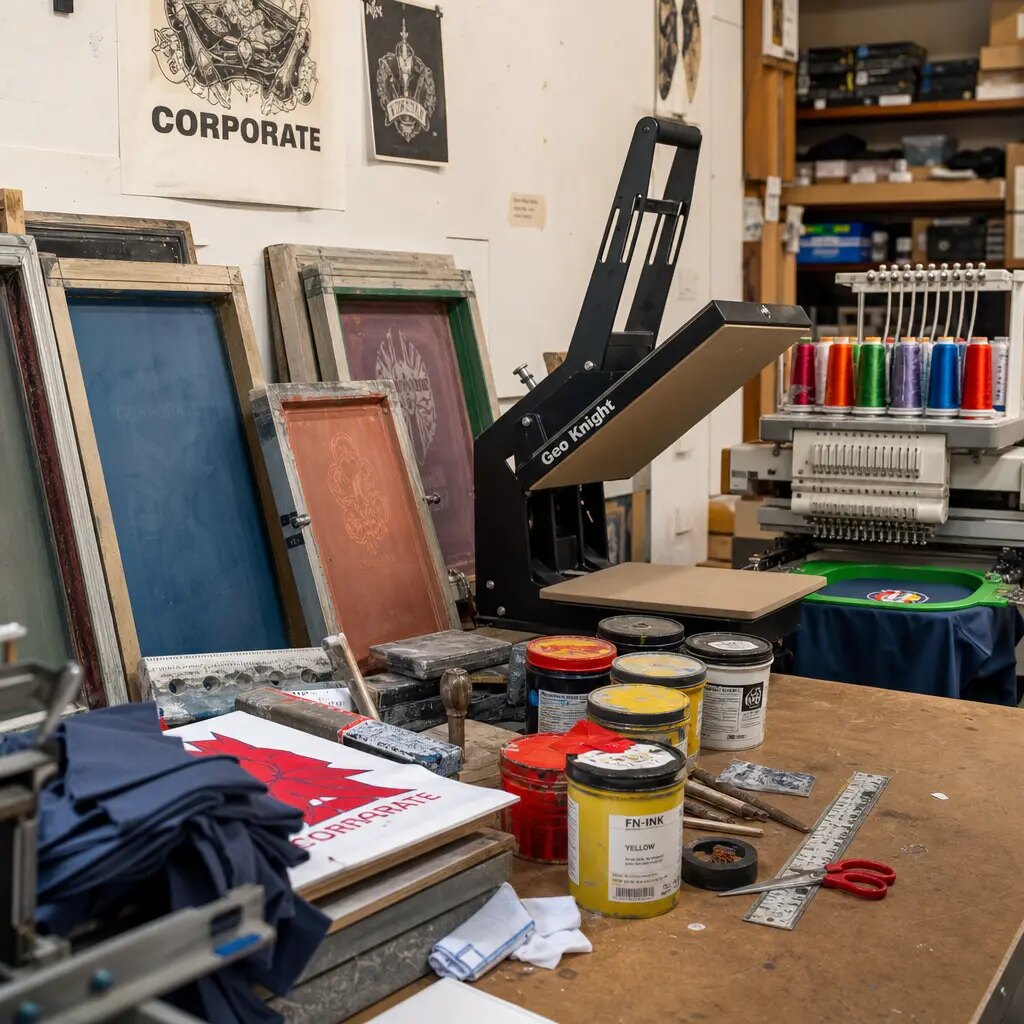
Coffee roaster branding is often simple in shape but demanding in execution. Clean wordmarks, origin marks, roast icons, and small-batch graphics can all look good in theory and fail on textured canvas if the wrong decoration method is chosen. Screen print is usually the best value for larger front flap graphics because it works well with bold artwork and keeps the bag price under control. The limitation is texture. Heavy texture can break the ink edge slightly or leave tiny pinholes in solid fills. That is not always a defect, but buyers need to know how much texture they can accept. A supplier should say whether the ink sits on top of the weave, penetrates lightly, or requires a higher-opacity formulation.
For smaller or more refined branding, a woven label often gives a more controlled result than print. It avoids ink coverage issues and can feel more premium on natural canvas. Embroidery is durable and tactile, but it can pull lighter fabric, add stiffness, and distort fine lines. A patch can work when the brand wants a deliberate, apparel-like look. The most important rule is to approve decoration on actual fabric, in the actual placement, at the actual size. A paper proof is not enough. Buyers should also confirm Pantone references, print opacity, label border color, and whether the artwork needs a stroke or simplified detail before it goes to production. If the design includes thin lines, tiny type, or fine registration, the buyer should ask the factory to flag it before sampling starts, not after the strike-off fails.
When the artwork is part of a larger branded range, ask how the factory will control repeat orders. A good supplier should keep the artwork file, print screen count, thread colors, and label construction on record so the second order matches the first. For procurement, that matters as much as the first approval.
- Screen print: strongest value for bold 1 to 3 color artwork.
- Woven label: better for smaller premium branding and fine detail.
- Embroidery: durable but can distort thin canvas and small lettering.
- Approve a strike-off on actual fabric in the exact placement, not only a digital mockup.
Straps, hardware, and closures need to be specified like functional components
The strap system often determines whether a messenger bag feels cheap or credible. Cotton webbing usually fits a canvas bag better than shiny polyester because the texture and visual tone are closer to the body fabric. Width matters. A strap that is too narrow will dig into the shoulder and can twist under load. A strap that is too wide may look heavy or bulky on a small bag. For many coffee-roaster projects, a 1.5 inch to 2 inch strap is the usable range, with the final choice driven by the bag size and expected carry weight. If the bag is meant to carry a laptop or heavier retail stock, ask for a wider strap, a shoulder pad, or both.
Hardware should support the brand aesthetic and the usage pattern. Antique brass and matte black usually fit specialty coffee better than bright nickel because they look less retail-generic and hide minor wear. But the plating quality matters more than the color name. Buyers should ask how the hardware will be checked for edge finish, plating consistency, and fit with the strap width. Closures also matter. A snap closure is simple and fast. A magnetic closure can feel premium but may not suit every contents profile. A zipper pocket adds value but also adds labor and defect points. If the bag is intended for resale, the supplier should confirm that hardware will not mark the canvas during packing and that straps will not twist excessively after load testing. The quote should state whether the webbing is cotton or polyester, whether the adjuster is cast or stamped, and whether corrosion resistance is expected for the intended market.
The buyer should also define whether the strap connection is sewn or riveted, because that changes both appearance and repairability. If the bag will be sold into premium channels, ask for clean cover stitching, symmetrical bartacks, and no exposed sharp edges on the back side of the hardware. Those details are easy to miss in a flat mockup and expensive to correct after bulk production starts.
- Cotton webbing usually matches canvas better than glossy synthetic webbing.
- 1.5 inch to 2 inch strap width is common, but the load should drive the final choice.
- Antique brass and matte black usually fit coffee branding better than bright nickel.
- Ask for a strap load test and hardware finish reference before bulk approval.
MOQ and quote structure are driven by more than sewing capacity
MOQ on custom canvas messenger bags is usually shaped by fabric sourcing, trim sourcing, print setup, and colorway planning. Buyers often assume that because the bag shape stays the same, MOQ should be easy to split across several colors. In practice, multiple colorways can quickly raise the minimum because each fabric color, webbing color, label variant, and print setup may carry its own minimum. Natural canvas with one-color print is usually the easiest route for lower MOQ because it can often use stock-supported material and standard trims. The moment you ask for custom dyed canvas, custom webbing, or a special lining color, the economics change. That is not the factory being difficult. It is the reality of sourcing separate components in a low-volume build.
This is why quote comparison has to be itemized. A strong supplier quote should separate shell fabric, lining, webbing, hardware, decoration, and packing. That makes it clear what is changing the unit price. It also helps the buyer understand where to trade down without harming the brand. For example, a coffee roaster may keep the same canvas and hardware but swap embroidery for a woven label, or keep the same bag body and change the logo color rather than the entire fabric colorway. That approach is usually better than chasing the lowest FOB number without looking at fabric weight, trim quality, and carton efficiency. A low quote that hides downgraded materials tends to cost more later in sample revisions, claims, and weak sell-through. Buyers should also ask whether the quote includes testing fees, logo setup charges, or tool charges for custom hardware, because those are often omitted from the first draft.
If the order is likely to repeat, the quote should also state what can be held constant on reorder and what may shift with material market conditions. That protects the buyer from a second order that is technically the same product but no longer matches the first run.
- MOQ is often driven by fabric and trim minimums, not sewing time alone.
- Custom dye, custom webbing, and special labels can each create separate minimums.
- Ask for an itemized quote so shell, trims, decoration, and packing are visible.
- Compare landed cost, not only FOB unit price.
Sampling and QC should remove material risk before bulk production
The sample stage is where a buyer should remove uncertainty, not discover it. For a canvas messenger bag, the most important sample is the pre-production sample made with the actual bulk fabric, actual hardware, and final decoration method. A fit sample can still be useful for shape and pocket placement, but it should not be treated as final approval for material, print, or hardware. Buyers should review measurements, flap drop, gusset width, strap adjustment range, label placement, and inside finishing. If the approved sample uses substitute fabric, that fact should be documented clearly so nobody mistakes it for the final bulk standard. The sample approval should state exactly what is frozen and what is still open.
A realistic sample test matters as much as the visual review. Put in the bag the contents it is expected to carry: a notebook, brewing tools, coffee retail goods, or a laptop if that is part of the use case. Check whether the flap sits flat, whether the closure closes cleanly, whether the strap hardware shifts, and whether the print looks acceptable over folds and seams. For QC, the production run should be checked against measurable tolerances, not vague impressions. Buyers should ask for line-by-line control on size, print placement, seam finish, color consistency, strap strength, odor if the fabric is coated, and carton condition after packing. The goal is simple: no surprises when the shipment lands. If the factory offers top-of-production or shipment samples, use them to confirm that the bulk run did not drift after approval.
A buyer also benefits from asking for defect examples. If the supplier can show how it classifies skipped stitches, loose threads, crooked labels, or visible glue marks, the QA conversation gets more useful. That matters when a bag is going into retail, where the customer will inspect it closely before buying.
- Approve a pre-production sample in actual fabric and trims, not a substitute build.
- Check size, flap drop, gusset, strap range, and interior finish against the spec.
- Test the bag with real contents before sign-off.
- Ask for measurable tolerances on dimensions, print placement, and color.
- Include odor, edge sharpness, and hardware finish in the final inspection checklist.
Packing and lead time decisions affect the real cost of the order
Packing is not a side note. Messenger bags have straps, buckles, and flap edges that can mark the fabric if they are folded badly. If the carton is packed too tightly, hardware can rub the body fabric and create visible pressure marks. If the carton is packed too loosely, freight becomes inefficient and the order costs more to move. The right method depends on whether the bags are going to a retail warehouse, a kitting operation, or direct to a store network. For many coffee roaster orders, a simple folded pack with hardware protected by tissue or paper is enough. Individual polybags may still be needed for dust or moisture control, but if the team wants to reduce plastic, the carton and inner protection plan need to compensate. Packing should be designed around the receiving process, not just the factory line.
Lead time is usually affected more by approvals than by sewing. Fabric booking, dyed color approval, print strike-off revisions, and custom hardware all introduce schedule risk. Buyers who are working toward a launch date should plan backward from the warehouse arrival date, not the factory completion date. Ocean freight, customs clearance, and inland delivery can erase the margin very quickly. The safest way to keep a custom canvas messenger bag project on schedule is to freeze the material stack early: canvas weight, base color, strap material, hardware finish, and logo method. Once those are locked, the remaining decisions are easier to approve and the supplier can move faster with less rework. If the launch date is fixed, it is better to simplify the spec than to force a complex build through a short timeline.
For repeat buying programs, packing should also be standardized. Ask for the exact carton count, carton dimensions, and gross weight target so the inbound team can plan storage and handling. Small differences in pack-out can create avoidable warehouse issues later.
- Protect the flap print and hardware contact points during folding and packing.
- Set carton dimensions and weight limits that fit warehouse handling and freight planning.
- Confirm whether the order needs polybags, tissue wrap, or no unit packing.
- Plan from in-warehouse date, not only from factory completion date.
- Freeze the material stack early to reduce sample revision delays.
Specification comparison for buyers
| Spec decision | Recommended option | When it fits | Buyer risk to check |
|---|---|---|---|
| Outer fabric weight | 14 oz canvas, about 475 GSM | Balanced for retail resale, staff carry, and branded merchandise that needs body without feeling overbuilt | Some mills quote greige weight instead of finished weight; ask for finished GSM, test method, and acceptable tolerance |
| Premium structure upgrade | 16 oz canvas, about 540 GSM | Best for premium gifting, higher shelf presence, and bags that need a firmer silhouette | Heavier canvas increases sewing difficulty, seam stress, and carton weight; ask for bartack photos and a load test description |
| Entry price fabric | 12 oz canvas, about 405 GSM | Works for promotional runs and lighter carry when the bag is mainly a brand item | The body may sag and print texture will show more; request a physical wear sample and confirm whether that weight is acceptable for retail |
| Weave density | Tight plain weave or duck canvas | Helps with cleaner print edges, better shape retention, and a more premium hand feel | Loose weave can look rustic in a way that may not fit the brand; inspect actual swatches, not paper color chips |
| Fiber content | 100% cotton canvas | Fits artisanal, specialty coffee, and natural-material brand positioning | Natural cotton can vary in shade and include neps; define acceptable variation before bulk approval |
| Surface finish | Natural unwashed or lightly washed | Good for an earthy retail look and softer drape without an artificial shine | Washing can change size and print sharpness; confirm shrinkage and whether the sample is prewashed |
| Lining choice | Partial lining or bound seams | Useful when you want a cleaner inside finish without full lining cost | Interior construction can vary by factory; ask for inside photos, seam finish details, and lining GSM if used |
| Water resistance route | PU backing or light coating | Helpful if the bag may carry brew gear, notebooks, or samples in wet weather | Coating can change hand feel, odor, and print behavior; verify odor acceptance, cracking resistance, and whether the coating is visible at cut edges |
| Logo method | Screen print or woven label | Screen print works for bold artwork; woven labels work for smaller premium branding | Fine detail can break on textured canvas; insist on a strike-off on actual fabric and confirm Pantone targets if color accuracy matters |
Buyer checklist before sampling
- Define the end use first: retail merchandise, staff bag, event giveaway, subscription insert, or wholesale accessory.
- State the expected contents and load: laptop size, A4 documents, brew tools, coffee samples, or a mix of items.
- Specify finished bag dimensions, gusset depth, flap drop, pocket count, and closure type in the RFQ.
- Ask for finished canvas GSM or ounce weight, not only broad terms like heavy-duty or premium.
- Confirm whether natural shade variation is acceptable or whether dyed color matching is required.
- Choose the branding method based on artwork size and line detail: screen print, woven label, embroidery, or patch.
- Set strap width, adjustment range, and hardware finish before sample approval.
- Decide whether the bag needs full lining, seam binding, bottom reinforcement, or a water-resistant backing.
- Request a pre-production sample made from actual bulk fabric and trims, not a substitute material.
- Confirm pack-out method: individual polybag, tissue wrap, carton count, and carton weight limit.
Factory quote questions to send
- What is the exact outer fabric specification, including finished GSM, weave type, and cotton content?
- Is the canvas greige, dyed, washed, pre-shrunk, or coated, and what shrinkage should we expect after production?
- Does the quote include lining, inside pocket, seam binding, bottom reinforcement, or just the shell construction?
- Which logo method is included, how many colors or positions are allowed, and are screen setup charges separate?
- What is the MOQ by size, color, and logo design for this messenger bag construction?
- Can MOQ be split across multiple fabric colors if the hardware and artwork stay the same?
- What sample stages are available: blank fit sample, printed sample, pre-production sample, and shipment sample?
- What is the standard production lead time after sample approval and deposit, and what usually extends it?
- What are the planned carton size, units per carton, net weight, and gross weight for this spec?
- Which quality points are checked in-line and at final inspection for strap strength, print placement, and hardware finish?
Quality-control points to confirm
- Check that the approved finished GSM matches the bulk fabric and that the hand feel does not drift toward a lighter substitute.
- Verify bag body dimensions, gusset width, flap drop, and strap length range against the signed spec sheet; set a tolerance target such as plus or minus 0.5 cm on key dimensions if the factory can hold it.
- Inspect the print for placement, edge sharpness, opacity, and orientation on the flap or front panel; ask whether the factory has an acceptance standard for pinholes or minor texture breaks.
- Confirm that stitch density is consistent and that bartacks at strap and stress points are clean, tight, and symmetrical.
- Check for loose threads, skipped stitches, seam puckering, and visible seam strain at corners and pocket joins.
- Review hardware finish consistency across buckle, adjuster, snap, and D-ring, with no flaking plating or sharp edges.
- Inspect interior construction for seam binding, pocket placement, lining color, and exposed raw edges if unlined.
- Confirm that strap webbing width and thickness match the approved sample and do not twist excessively under load.
- If coated fabric is used, check for odor, tackiness, cracking, or peeling at fold lines.
- Run a load test with expected contents to confirm closure security, strap comfort, and body shape retention.