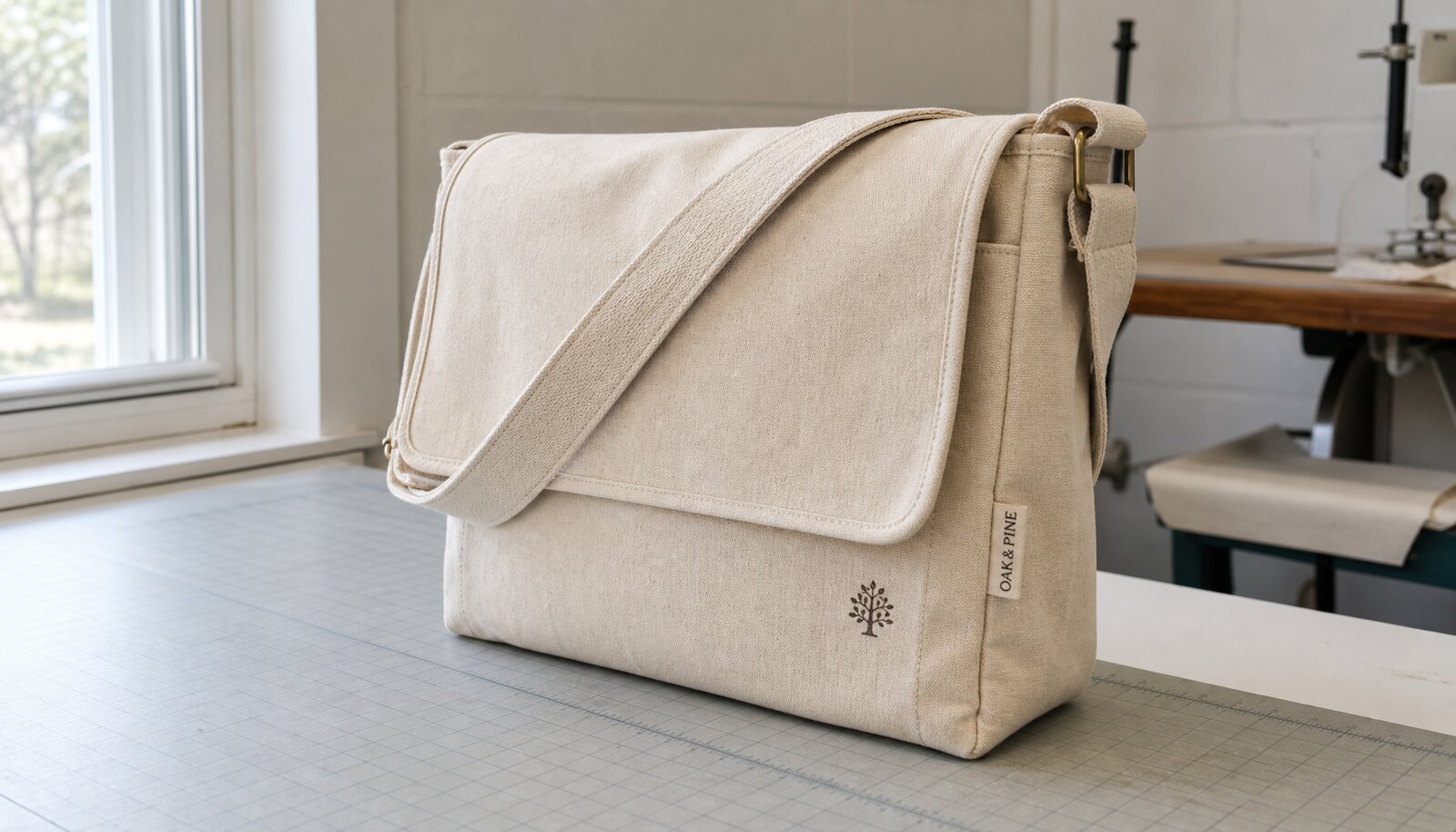
Plan Backward From the Gift-Shop Selling Date
Gift-shop buyers rarely lose time because canvas messenger bags are hard to make. They lose time because the order starts too late, the shelf date is treated as a loose target, or the factory is asked to quote before the spec is stable. The real deadline is not the day the bags leave the factory. The real deadline is the day they must be on shelf, in a warehouse, or at a seasonal reset with enough time left for receiving, ticketing, and merchandising.
For gift shops, that selling date is often tied to a holiday floor change, tourist season, museum exhibit opening, pop-up launch, or trade-show sell-in. Those calendars are less forgiving than a normal replenishment order. If the bags arrive on the official ship date but the store has already set its seasonal display, the order is late. A good lead-time plan counts the days needed for receiving, unpacking, sorting, and price marking, not just the factory transit time.
A useful planning method is to work backward in four blocks: sample and approval, material booking and production setup, sewing and packing, and freight plus receiving. For a simple repeat order, a 30-50 day production cycle may be realistic if the factory already has the fabric and pattern. For a first custom order with new artwork, special hardware, or retail-ready packing, 45-75 days is more common, and 60-90 days is safer when the calendar is fixed. The right number is the one that still leaves room for a problem you do not yet know about.
Gift-shop teams also need to think in assortment windows, not only in PO deadlines. If the bag is part of a coordinated table display, ask when the other gift items land. If the bag is meant to support a seasonal gift basket or a museum exhibition theme, the delivery window should align with the display build, not the grand opening after the display is already full.
The first control point is simple: if the in-store date is known, the lead-time plan should include a buffer before that date, not after it. A tight retail calendar cannot absorb optimism.
- Work backward from shelf date, display reset, or event open date.
- Reserve time for receiving and merchandising, not just factory completion.
- Treat the first custom order and the repeat order as different schedules.
Freeze the Spec Before You Request a Quote
A quote is only useful if suppliers are pricing the same bag. If one factory assumes a 12 oz unlined messenger bag and another assumes a 16 oz lined bag with a zipper and woven label, the unit price comparison is meaningless. Before the RFQ goes out, the buyer should lock the essentials: bag dimensions, canvas weight, closure type, strap construction, pocket layout, branding method, and pack format.
Gift-shop programs often drift because the changes sound small. A zipper replaces an open top. A lighter lining is added to improve presentation. A logo moves half an inch to clear a seam. A barcode sticker is added for warehouse handling. Each change can alter cutting, sewing, sourcing, or inspection. The more custom the build, the more every change becomes a schedule event. If the quotation is based on a moving target, the lead time cannot be trusted.
The fastest orders are usually the boring ones. Not because the product is unimportant, but because the buyer has already made the hard decisions before the RFQ. A stable spec gives the supplier a clear material plan and reduces the chance of a second sample round. It also lets the buyer compare lead time honestly instead of comparing different interpretations of the same bag name.
For procurement teams, the practical rule is this: if any of the following are still open, the order is not ready to quote yet. Which canvas weight? Which closure? Which logo method? Which label type? Which carton count? Which retail pack? Those are not design niceties. They are the core of the schedule.
If you need to test the market, keep the first order conservative. A simpler build can protect the launch date. The more premium version can come later as a replenishment or expanded assortment line.
- Lock size, fabric weight, closure, label type, artwork version, and packing before the RFQ.
- Do not ask for broad ranges unless you are prepared to manage multiple SKUs and timelines.
- Use the first order to prove the assortment; use the second order to refine it.
Choose the Sourcing Route That Fits the Retail Calendar
The right sourcing route is not the cheapest one on the spreadsheet. It is the one that matches how fixed the gift-shop date really is. A direct cut-and-sew factory gives the buyer the most control over construction, which matters when the bag needs a specific silhouette, lining, or merchandising presentation. A local decorator using stock blanks can move fast when the store needs quick replenishment, but the product may look generic and the construction choices are limited. A trading company can help coordinate several steps, but the buyer needs clarity on where the actual bag is made and who owns the schedule.
Direct factory sourcing is usually the best route for a repeatable retail line. It is also the best route when the buyer wants to control canvas weight, stitching details, pocket configuration, and label placement. The tradeoff is that the first order takes longer because the factory may need to source materials, prepare a pattern, and lock the sample path. For a first-time custom bag, the buyer should expect a more disciplined approval cycle than for a stock blank.
Stock-blank decoration is faster because the blank already exists. That speed is useful when a museum shop, tourist shop, or gift counter needs a seasonal item now. The risk is that the bag may not feel distinctive enough on shelf, and the print area, size range, and color range are limited by the blank supplier's inventory. If the exact blank is out of stock, the lead time can change overnight.
Trading-company sourcing can be a practical option when one order contains multiple bag types or when the internal team does not have the bandwidth to manage factory communication. It works best when the sales office names the factory, confirms how samples are handled, and shows how QC decisions will be made. Without that transparency, the buyer may be buying convenience at the cost of schedule control.
A simple decision test helps. If the launch date is hard and the design is not simple, avoid routes with extra handoffs. If the timeline is flexible and the buyer wants deeper control over the build, direct factory sourcing is usually safer over the full program life.
- Compare sample lead time, bulk lead time, and repeat-order lead time separately.
- Ask who actually sews the bag and whether sampling runs in the same facility as production.
- Use stock blanks only when the brand can live with standard construction and fewer custom options.
Ask for a Quote That Exposes the Real Calendar
A useful quote should show more than a price. It should reveal what work is hiding inside the lead time. Ask the supplier to break the timeline into stages: first sample, revised sample, pre-production approval, bulk material purchase, mass production, packing, final inspection, and shipment readiness. If the supplier only gives one number, the buyer cannot see where the schedule is fragile.
This matters even more for gift-shop buying because timing is usually tied to commercial moments, not just inventory need. A holiday assortment, an opening promotion, or a tourism season can collapse the value of the order if the bags arrive a week late. Stage-by-stage timing lets the buyer see whether a custom label or special carton is worth the extra days. It also makes it easier to compare two suppliers whose quotes may look similar but whose setup speed is very different.
The quote should also separate cost drivers that often affect timing. Material cost, print setup, embroidery setup, label development, and special packing should be visible if possible. That way the buyer can decide whether a woven label, custom zipper pull, or insert card is worth the extra schedule load. A small branding change can be the difference between making the opening date and missing it.
For procurement clarity, ask what happens when artwork changes after sample approval. Ask the same question for fabric changes and pack-out changes. A supplier who can explain the impact in days, not just in vague terms, is much more useful than one who says the schedule is flexible. Flexibility is not a plan.
The goal of the RFQ is not just to get prices. It is to make the supplier show the true path from approval to shipment so the buyer can compare lead time risk, not just unit cost.
- Require timing by stage instead of one all-in number.
- Separate sample fee, tooling or setup fee, and unit price where possible.
- Ask how a change to art, fabric, or packing affects both schedule and cost.
Use Sampling as a Production Gate, Not a Courtesy
A sample should prevent surprises, not create them. For custom canvas messenger bags, the sample process is most useful when it has three clear checkpoints: a first proto sample, a corrected sample if needed, and a pre-production sample or sealed sample that matches the final build. The buyer does not need a long parade of samples. The buyer needs one clear set of comments, one correction path, and one final reference that production can actually follow.
The first sample should prove the structure. Check body size, gusset depth, strap length, strap drop, closure function, and pocket layout. If the bag is meant to carry books, boxed gifts, bottles, or small retail items, test it with those items rather than only measuring the empty bag. If the bag includes a lining, look at how the shell and lining sit when the bag is turned and folded for packing. This is where many messenger bags reveal whether the construction is efficient or awkward.
The pre-production sample matters most for schedule control because it should match the final fabric, final logo version, final label, and final packing method. If the buyer approves a sample before the factory has the actual bulk materials in hand, the approval is weak. A sample can look right and still miss the exact canvas lot, zipper color, or label finish that will be used in production. That gap is where gift-shop delays often start.
To keep sampling useful, the buyer should send one comment list, not a chain of competing edits from merchandising, marketing, and operations. If the sample needs correction, the answer should be specific: what changed, what stays the same, and what must be resubmitted. The factory can work faster when the revision path is clear.
For repeat programs, keep a sealed reference sample on file and use it as the comparison standard on the next reorder. That protects both the timeline and the consistency of the shelf presentation.
- Approve the sample against a written reference, not memory.
- Use one comment list so design feedback and factory feedback do not compete.
- Do not sign off pre-production until label, artwork, packing, and material all match the bulk plan.
Set QC Rules at the Factory Level, Not Just the Order Level
QC is strongest when the factory knows exactly what to inspect and exactly what counts as a failure. For canvas messenger bags, the buyer should define checks for the fabric, dimensions, stitching, print or embroidery, hardware, and packing. Broad statements like "good workmanship" are too vague to protect a retail shipment. The inspection plan should be detailed enough that a line lead can apply it without guessing.
A good defect framework helps. Critical defects are anything that makes the bag unsafe or unusable, such as a failed strap attachment, missing closure function, or severe seam failure. Major defects are problems that affect saleability or structure, such as a crooked front panel, badly misregistered logo, or size outside tolerance. Minor defects are cosmetic issues that do not stop the bag from being sold, such as a loose thread that can be trimmed or a tiny label alignment shift within the agreed limit. If the factory knows the severity level, it can prioritize the right fixes during production.
For print, the buyer should check registration, ink coverage, edge sharpness, and placement relative to seams or pocket lines. For embroidery, check stitch density, pull distortion, thread trimming, and backing visibility. For labels, check weaving clarity, stitch alignment, and edge finish. For hardware, check operation, alignment, and whether any sharp edges are exposed. These are factory-level checks, not after-the-fact warehouse complaints.
The best workflow uses several steps. First article approval confirms the sample basis. Pre-production approval confirms the exact bulk materials. In-line checks catch issues before the batch is complete. Final inspection confirms the shipment is acceptable. If the order is the first run for a gift-shop program, insist on photo evidence from at least one inspection stage if the factory can provide it.
One more point: packing defects are still defects. A bag can be sewn well and still arrive poorly if the fold, polybag, barcode, or carton marks are wrong. Gift-shop buyers often need retail-ready goods, and the pack-out is part of the quality standard.
- Use critical/major/minor defect levels before production starts.
- Check print, stitching, hardware, label, and packing as separate acceptance areas.
- Use first article, pre-production, in-line, and final inspection as distinct gates.
Build the Calendar Around the Slowest Component
The bag ships at the pace of the slowest item in the order. If the canvas is available but the zipper, lining, or woven label is not, the build waits. If the artwork is approved but the factory is still sourcing the correct hardware finish, the schedule slips. A practical lead-time plan starts by identifying the longest procurement item first, because that item sets the floor for the whole order.
This is where gift-shop planning differs from a generic product order. Retail buyers are often managing assortment timing, shelf space, and promotion windows at the same time. A bag line may need to land with matching stationery, apparel, or souvenir items. If one component is slow, the whole display can be delayed. That is why the buyer should ask the supplier which item is most likely to control the date before the PO is issued.
Quantity also matters. A 500-piece run and a 3,000-piece run are not the same schedule if the factory has to break the order into multiple lots or if the line capacity is already committed. Ask whether the order will run in one continuous production block or in phases. If the factory plans to split the run, the first carton out may not tell you the real shipping date. The whole order is only as fast as the final lot.
For first-time custom messenger bags, the longest part is often not the sewing itself. It can be material sourcing, artwork approval, or a new label finish. For repeat orders, the slow step is often simpler: the factory must fit your order into existing line capacity. The calendar should reflect which of those two situations you are in.
A strong buyer does not ask, "How fast can you make it?" The stronger question is, "Which step is most likely to delay this order, and how do we protect against that?"
- Identify the slowest material or process before promising the ship date.
- Treat first-time custom and repeat order calendars as different planning models.
- Ask whether the order runs in one lot or multiple lots, because that changes the shipment date.
Make Packing Useful for the Warehouse and the Shelf
Packing affects both lead time and the customer experience. A gift shop may need bulk-packed bags for efficiency, or it may need retail-ready packing so store staff can merchandise quickly. Both are valid, but they are not interchangeable. The wrong pack plan can turn a finished order into extra labor at receiving, which is expensive when the store team is already busy with a seasonal reset.
The packing spec should be written in operational language. State the fold method, whether each bag goes in a polybag, whether tissue or an insert card is required, where the barcode should sit, and how many units should be in each carton. If the order will travel by sea, moisture protection should be considered. Light-colored canvas is particularly sensitive because scuffs and transit marks show quickly.
Gift-shop buyers should also think about how the bag opens in store. If the bag is being sold as a premium gift item, an over-compressed fold can leave sharp creases that make the product look tired on shelf. If the bag is sold as a value item, the priority may be compact packing and fast warehouse handling. The right choice depends on the retail role of the bag, not on what is easiest for the factory.
Do not leave folding to chance. A different fold can change carton utilization, surface appearance, and how quickly the bag recovers after unpacking. If the product is meant to sit in a display basket or on a hanging rack, the pack-out must support that use.
The buyer should also confirm carton marks, barcode readability, and any outer labeling needed by the receiving warehouse. A clean sewing job can still create delay if the goods need relabeling at arrival.
- State whether the bag should arrive bulk packed, retail packed, or e-commerce ready.
- Include fold method, barcode location, carton count, and carton marks in the quote request.
- Ask whether the factory uses moisture protection for sea freight or humid lanes.
Plan Fallbacks Before the Schedule Breaks
The best fallback plan is one that is already approved before the order is released. If the first sample misses the target, the buyer should know whether to approve a minor correction, request a second sample, or simplify the spec to protect the launch. If the fabric is delayed, the buyer should know whether an alternate canvas weight or color is acceptable. If freight slips, the buyer should know whether part of the order can move by air while the rest ships by sea.
This is especially important for seasonal gift-shop programs. Holiday and tourism calendars do not pause for manufacturing delays. If the primary launch is at risk, a split shipment can protect the opening date. The first drop covers the shelf launch, and the second drop covers replenishment. That only works when the product is simple enough to repeat without introducing a second spec. If the first run requires corrections, the second run should not be built until the correction is proven.
Ask the supplier who owns the schedule if something slips. The answer should not be vague. One person should be responsible for sample delay notifications, material substitution approval, and freight coordination. A clear escalation path reduces the chance of discovering the problem only when the shipment misses the intended window.
Buyers often overestimate how much can be fixed after the PO. In practice, lead-time rescue usually comes from simplifying, splitting, or substituting early enough to preserve the launch. The sooner the fallback is decided, the less expensive it is to use.
That does not mean every order needs a contingency tree. It means the most time-sensitive orders should have one. The plan can be brief, but it should be written before the clock starts running.
- Reserve a decision path for sample failure, material shortage, and freight rollover.
- Ask for the escalation contact who will own schedule issues.
- Use split shipments only when the style is repeatable and the retailer can receive them in stages.
Know When the Quote Is Good Enough to Release the PO
A quote is not ready just because the price looks fair. It is ready when the buyer can see the whole chain from spec to shelf and there are no hidden assumptions left in the schedule. Before releasing the PO, confirm that the approved sample matches the bulk spec, that the pack-out is written in operational terms, that the lead time includes material sourcing and inspection, and that there is a clear answer for what happens if the plan slips.
A useful release check is straightforward. If any of these are still unsettled, hold the PO: artwork file, fabric weight, closure type, label type, pack format, MOQ by color, ship term, or inspection method. Rushing the PO rarely saves time. It usually pushes the uncertainty into production, where changes are slower and more expensive.
For gift shops, the most valuable order is not always the lowest unit price. It is the order that lands on time, arrives packed the way the warehouse expects, and can be reordered without a new round of assumptions. That is what makes custom canvas messenger bags workable as a retail program rather than a one-off purchase.
If the launch date is tight, protect the launch spec first. Optimize the second order. That is often the best procurement tradeoff because it preserves the sell date while leaving room to improve the assortment later.
The final question before PO release should be simple: if the sample, materials, or freight slip, do we still know exactly what we will do? If the answer is no, the order is not ready yet.
- Release the PO only after the approved sample matches the bulk plan.
- Use a fixed decision list so no one reopens the spec after sign-off.
- When the date is tight, protect the launch spec first and optimize the replenishment order later.
Specification comparison for buyers
| Sourcing route | Typical lead-time range | Best use in gift shops | Tradeoffs and risks | Buyer checkpoints |
|---|---|---|---|---|
| Direct cut-and-sew factory | First custom order: 45-75 days; repeat order: 30-50 days | Best for a branded retail assortment where you control canvas weight, pocket layout, strap build, and shelf-ready packing | Usually the best balance of quality and repeatability, but the first run is slower if fabric, lining, or hardware are custom | Confirm the actual factory, sample line, and QC ownership; ask whether material booking starts before or after sample approval |
| Local decorator using stock blanks | 7-20 days for blank-based decoration, depending on stock and artwork | Useful for urgent seasonal replenishment, museum shops, and small promo drops | Fastest route, but the look is often generic and size/color/construction choices are limited | Check blank inventory by color and size, decoration method, and whether the blank can support the final logo placement |
| Trading company coordinating multiple factories | 35-80 days for custom programs, depending on sourcing complexity | Helpful when one PO covers several gift-shop SKUs or the buyer lacks sourcing staff | Can add handoffs; if the sales office is not aligned with the factory, timing and QC can drift | Ask which factory will sew the bag, who inspects it, and how change requests are logged and approved |
| Stock body + custom logo + standard packing | 20-45 days | Good for opening orders, event shops, and lower-risk assortment tests | Faster than full custom, but the bag can feel less distinctive on shelf | Verify the stock body is truly available in the required fabric weight, color, and hardware finish |
| Fully custom body, lining, closure, and pack-out | 60-90 days, sometimes longer for first-time programs | Best for premium gift lines and recurring seasonal programs that need a distinctive retail look | More control, but more lead-time risk because each added detail creates separate sourcing and approval steps | Require a stage-by-stage schedule for proto, revision, pre-production, bulk materials, assembly, inspection, and freight |
| Screen print, 1-3 spot colors | Added setup time usually 3-10 days; repeat runs are faster | Efficient for repeat artwork and clear logo merchandising | Registration and ink handfeel must be checked on the actual canvas weight; changes after sample approval can reset timing | Approve artwork size, placement, Pantone targets if used, and print tolerance before bulk release |
| Embroidery or woven label branding | Added setup time usually 5-15 days | Best for premium merchandising or smaller logos on a higher-end assortment | Setup and minimums are often higher than print; embroidery can distort on heavier canvas if not tested | Request stitch density, backing type, placement, and a sewn sample on the final canvas weight |
| 12-14 oz canvas | Usually shorter sewing time than heavier canvas | Good for lighter retail carry, tourist shops, and price-sensitive assortments | Handfeel is softer; the bag may collapse if shoppers expect it to carry books or bottles | Ask for a load-use check with the items your customers actually buy |
| 16 oz canvas | Can add a little sewing time and may increase cut-and-sew effort | Better for premium retail and a more structured shelf appearance | Heavier canvas can expose shrinkage or sewing control issues if the factory is weak | Require a size and seam tolerance check on the approved sample and one bulk lot photo set |
Buyer checklist before sampling
- Work backward from the shelf date, not the PO date; include sample review, material booking, production, freight, and receiving time.
- Freeze the bag dimensions, canvas weight, closure type, lining requirement, artwork version, and label method before requesting quotes.
- Ask suppliers to quote by stage: first sample, sample revision, pre-production approval, bulk materials, assembly, packing, inspection, and shipment readiness.
- Specify the merchandising use case: opening order, seasonal launch, museum shop, tourist shop replenishment, or evergreen assortment.
- State the expected pack format in operational terms: bulk pack, retail pack, fold method, polybag requirement, barcode location, carton count, and carton marks.
- Confirm MOQ by color, by artwork version, and by any special hardware, label, or packaging component.
- Ask whether the quoted lead time includes material sourcing or assumes stock materials are already available.
- Define acceptance criteria for canvas weight, size, seam allowance, strap drop, print/embroidery quality, hardware function, and carton pack count.
- Request in-line or pre-shipment QC photos if the supplier can provide them, especially on the first production run.
- Keep a fallback plan for a material shortage, sample miss, or freight rollover before you release the PO.
Factory quote questions to send
- What is the unit price at 500, 1,000, and 3,000 pieces, and what changes at each price break?
- Which canvas weight, lining, webbing, closure, and hardware are included in the quoted spec?
- Is the quote based on stock blank decoration, screen print, embroidery, woven label, or a fully custom cut-and-sew build?
- How many days are needed for first sample, revised sample, pre-production sample, bulk material purchase, mass production, packing, and final inspection?
- What is the MOQ by color and by artwork version, and does adding a second colorway restart the minimum?
- Are stock fabrics, custom-dyed fabrics, and custom hardware on the same timeline, or do they require separate sourcing windows?
- What packing details are included in the price: polybag, tissue, insert card, barcode sticker, carton mark, and carton quantity?
- What inspection standard is used for bulk goods, and can you share in-line or final QC photos before shipment?
- Which incoterms are included in the price, and what local charges are excluded?
- If the artwork, fabric, label, or packing changes after sample approval, how much schedule impact should we expect?
Quality-control points to confirm
- Canvas weight should match the approved swatch or technical sheet within the agreed tolerance. For gift-shop bags, the buyer should test not only the fabric number but also the handfeel and drape because shelf presentation matters.
- Finished dimensions should stay within tolerance on body width, body height, gusset depth, strap length, and strap drop. Ask the factory to measure the first piece off the line and the last packed piece in the run.
- Seam allowance should be consistent. Critical seams should not wander enough to distort the bag shape, expose lining, or reduce usable capacity.
- Bartacks or reinforcement stitching should be present at strap ends, top corners, pocket openings, and other high-stress attachment points. These are common failure points after retail handling begins.
- Use a defect severity framework before production starts: critical defects are safety or function failures; major defects affect saleability or structure; minor defects are cosmetic and do not impair use.
- For printed bags, inspect registration, ink density, edge sharpness, and placement against the approved sample on the actual canvas weight and color.
- For embroidery, inspect stitch density, pull distortion, thread trimming, backing visibility, and logo alignment. A logo that looks acceptable on flat artwork can pucker on heavy canvas.
- For woven labels, inspect edge sealing, weave clarity, stitch alignment, and placement consistency from bag to bag.
- Hardware such as zippers, snaps, and magnets should operate smoothly and attach cleanly, with no sharp edges, skipped stitches, or crooked placement.
- Color consistency should be judged against the sealed reference sample or approved strike-off, especially when the body, straps, lining, and labels come from different suppliers.