Start With the Retail Role
Custom canvas messenger bags for hotel retail should be treated as merchandise, not generic promotional giveaways. The same basic shape can become a resort souvenir, boutique accessory, amenity resale item, business-travel bag, conference shop product, or multi-property distributor SKU. Each role changes the right fabric, closure, logo method, packing, inspection level, and reorder plan.
Begin the buying brief by naming where the bag will sell and how a guest will use it. A resort shop may need natural canvas, relaxed destination artwork, and enough gusset for sunscreen, a guidebook, and a bottle. A city hotel boutique may prefer darker canvas, quieter branding, cleaner hardware, and a slimmer profile. A conference hotel may care more about barcode handling, fast replenishment, and consistent carton allocation.
Display method also matters. A bag that must stand on a shelf needs more structure than a flat peg-hung souvenir. A bag shipped to several properties needs property-level SKU splits, carton marks, and barcode accuracy. These details keep suppliers from quoting bags that look similar in photos but perform differently in retail.
- Souvenir role: control artwork, visible destination branding, price point, barcode accuracy, and shelf presentation.
- Boutique role: prioritize canvas handfeel, lining, hardware finish, refined stitching, and subtle brand placement.
- Amenity resale role: focus on secure closure, useful pockets, stain control, and immediate guest usability.
- Business-travel role: confirm tablet capacity, zipper security, strap comfort, interior organization, and understated styling.
- Distributor role: standardize base construction while splitting logos, hangtags, barcodes, carton labels, and replenishment quantities.
Convert Use Into Specifications
A strong RFQ turns guest use into measurable details. Avoid broad phrases such as medium size, premium quality, or laptop style unless they are backed by dimensions and component choices. State finished width, height, gusset, flap depth, strap width, adjustable strap range, pocket dimensions, closure type, lining, hardware finish, logo method, and packing format.
Capacity should be described in plain language as well as measurements. If the bag must hold a tablet, folded map, room welcome materials, travel documents, wallet, phone, or water bottle, include that information. A flat messenger and a boxed-bottom messenger can look similar from the front, but practical capacity and retail feel are very different.
Separate required features from optional upgrades. Quote one base version with the core construction, then price adders for zipper closure, lining, inside zipper pocket, embroidery, woven label, patch, hangtag, barcode label, sleeve, and individual packing. This makes supplier comparisons cleaner and protects margin decisions.
- Use finished outside dimensions, not only pattern dimensions, catalogue references, or photos.
- Define flap coverage, including whether the flap hides a zipper or stops above the lower front panel.
- Specify target contents and a normal load expectation for hotel guest use.
- Confirm strap material, width, slider type, attachment angle, and adjustable length range.
- Request front, side, bottom, interior, logo close-up, and worn-position photos during sample review.
Choose Canvas by Function
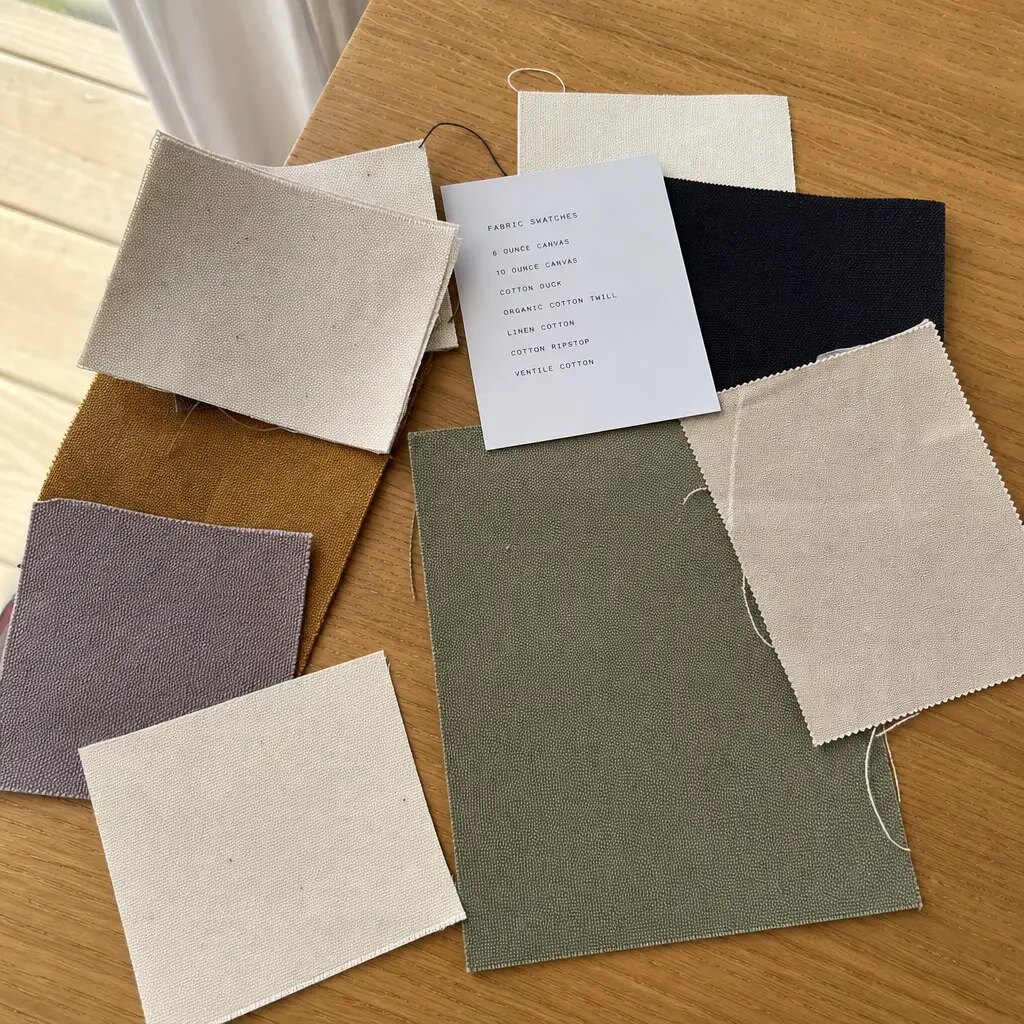
Canvas should be specified by composition, ounce or GSM basis, weave, handfeel, color, finish, and approved swatch. Ounce labels alone are not enough because fabric construction and finishing vary between mills. For standard hotel retail, many buyers evaluate 12-14 oz cotton canvas or supplier-confirmed equivalent GSM, then approve the exact handfeel and finished bag weight by sample.
Heavier fabric can improve structure and perceived value, but it can also create seam bulk, stiff flap edges, higher carton weight, and slower sewing. Lighter canvas can reduce cost and freight, but it may sag on display or feel too promotional. Match fabric to retail price tier, bag size, lining, hardware, and expected contents.
Finish matters as much as weight. Natural canvas often suits resort and destination retail and may support faster sampling if stock fabric is available. Dyed canvas supports brand color and boutique styling, but it requires lab dip approval, bulk shade tolerance, and reorder planning. Washed, coated, or water-repellent canvas needs checks for odor, handfeel, colorfastness, logo adhesion, and destination-market requirements.
- Value styles: approve the lightest acceptable fabric by physical sample, not by price alone.
- Standard retail styles: compare 12-14 oz or supplier-confirmed equivalent GSM for structure and cost balance.
- Premium styles: test heavier canvas for seam bulk, flap shape, hardware setting, and carton weight.
- Dyed canvas: require lab dip timing, bulk shade approval, shade tolerance, and reorder-risk notes.
- Coated canvas: test smell, handfeel, print adhesion, color transfer, and compliance needs before approval.
Specify Construction and Hardware
Messenger bags usually fail at stress points, not in the middle of the panel. The shoulder strap, side seams, flap corners, closure points, zipper ends, bottom gusset, and pocket openings need defined reinforcement. Instead of writing strong stitching, state whether the supplier should use bartacks, box stitching, rivets with backing, extra seam allowance, or hidden reinforcement panels.
Choose the construction tier before comparing prices. A simple unlined flap bag may suit a seasonal souvenir. A lined zipper messenger may be better for boutique retail, amenity resale, or business-travel positioning. Lining improves perceived value but adds hidden inspection points such as trapped fabric, weak pocket zippers, loose threads, uneven corners, and shade mismatch.
Hardware should be quoted by material, size, finish, placement, and function. Snaps, buckles, sliders, D-rings, rivets, zipper pulls, and metal labels can raise perceived value, but they also create rust, sharp-edge, plating, noise, and staining risks. On natural canvas, hardware marks are easy to see; on dark canvas, alignment and function still matter.
- Value tier: unlined or self-lined body, simple flap, standard webbing, basic pocket, and controlled print.
- Retail tier: boxed bottom, adjustable strap, slip or zipper pocket, cleaner seams, and approved hardware finish.
- Premium tier: lining, zipper under flap, reinforced strap joints, upgraded hardware, subtle branding, and individual packing.
- Stress points: document reinforcement at strap joints, flap corners, zipper ends, side seams, and bottom gusset.
- Hardware: approve finish, edge smoothness, rust expectation, alignment, pull strength, and operation before bulk assembly.
Match Branding to Canvas
Hotel branding should feel integrated into the product. Screen printing is practical for larger destination graphics, bold hotel marks, and controlled-color programs. On textured or washed canvas, approve a strike-off for opacity, edge sharpness, ink curing, and flex behavior, especially when the logo sits on the flap.
Embroidery works best when the logo is compact and stitch coverage is controlled. Dense embroidery can pucker the flap, expose backing, create needle holes, or make the front panel too stiff. For premium hotel retail, embroidery often performs better as a small crest, monogram, or side mark than as a large front graphic.
Woven labels and patches are useful for understated branding and repeat programs. A side label, front flap label, or interior label can let several properties share one base bag while keeping brand presentation consistent. Patches may add perceived value, but leather, PU, rubber, cork, or metal patches bring additional MOQ, compliance, color-transfer, and attachment questions.
- Screen print: best for destination graphics, bold solid marks, and economical repeat orders.
- Embroidery: best for small premium marks with limited stitch coverage and approved backing.
- Woven label: best for subtle branding, multi-property consistency, and clean reorders.
- Patch: approve material, edge finish, stitching method, compliance status, colorfastness, and component MOQ.
- Placement: measure from flap edge, seam, centerline, or pocket reference, not from a photo alone.
Separate Price From Landed Cost
The unit price is only one part of the buying decision. A custom canvas messenger bag’s real cost includes fabric, lining, hardware, logo method, labor, packing, carton volume, inspection, inland movement, freight, duty, customs handling, and destination delivery. A low FOB price can lose value if the bag is bulky, overpacked, poorly allocated, or delayed by unclear approvals.
Request the base product and optional adders separately. Typical adders include lining, zipper under flap, inside zipper pocket, embroidery, woven label, patch, hangtag, barcode label, paper sleeve, individual polybag or reduced-plastic packing, custom dyeing, upgraded hardware, and special carton labeling. This lets procurement decide which upgrades support the target retail price.
Incoterms and payment milestones should be written before order confirmation. Confirm whether the quote is EXW, FOB, CIF, DAP, or another term, and state the port or destination. The buyer should also confirm deposit, sample charges, balance timing, inspection release, and document requirements in writing.
- Material cost: canvas GSM, dyeing, washing, coating, lining, webbing, zipper, hardware, and trim.
- Branding cost: logo size, color count, screen setup, stitch count, label MOQ, patch material, and placement.
- Labor cost: boxed bottom, flap construction, lining insertion, pocket count, zipper sewing, bartacks, and trimming.
- Packing cost: fold method, sleeve, barcode label, hangtag, inner pack, moisture protection, and carton mark.
- Landed cost: Incoterms, port, CBM, carton weight, inspection fee, freight mode, duty, taxes, and local delivery.
Check MOQ by Component
MOQ depends on component availability, not only sewing capacity. Stock natural canvas with standard webbing and common hardware can often support more flexible quantities. Custom dyed canvas, special webbing colors, custom lining, zipper tape, plated hardware, woven labels, patches, molded parts, or metal trims may each carry separate minimums.
A low finished-bag MOQ should be explained. It may be possible because fabric is in stock, because the factory is using a standard construction, or because leftover material is available. That can work for a one-time retail drop, but it may create shade inconsistency, repeat-order difficulty, or component substitution risk. Identify every component MOQ before issuing the purchase order.
Hotel groups can reduce MOQ pressure by sharing one base bag across several properties. The same canvas, construction, lining, strap, zipper, and hardware can support different prints, woven labels, hangtags, barcodes, and carton marks. Confirm the minimum quantity per logo and whether property-level packing is included or charged as an add-on.
- Stock canvas: fastest route for lower MOQ, shorter sampling, and simpler replenishment.
- Dyed canvas: confirm lab dip timing, dye lot minimum, shade tolerance, and reorder risk.
- Custom webbing: check MOQ, lead time, width tolerance, color tolerance, and shrinkage behavior.
- Custom hardware: confirm mold fee, plating sample, component MOQ, spare percentage, and replacement process.
- Multi-logo orders: quote setup cost, minimum per logo, barcode split, property allocation, and carton labeling.
Control Samples Before Bulk
Samples should prove function, not only appearance. A messenger bag sample should confirm canvas handfeel, flap shape, strap comfort, pocket access, closure alignment, logo quality, lining finish, hardware operation, and packing method. A flat artwork proof cannot reveal flap curling, embroidery puckering, rough zipper pulls, weak snaps, bulky seams, or twisting straps.
Use the sample sequence that fits order risk. A blank construction sample checks size, sewing, pocket layout, hardware, and carrying comfort. A logo strike-off checks print color, ink opacity, embroidery density, label quality, or patch appearance. A pre-production sample should use final fabric, final dimensions, final hardware, final logo method, final lining, and final packing wherever possible.
Keep comments disciplined. Each note should state the issue, required correction, tolerance, and whether a revised sample is needed. Keep one approved reference with the buyer and one with the factory. During inspection, compare bulk goods against the approved sample, specification sheet, artwork proof, packing instruction, and purchase order.
- Measure sample size, gusset, flap depth, strap range, pocket dimensions, and logo position.
- Load the sample with realistic guest items and check strap comfort, closure security, and hanging angle.
- Rub, flex, and review the logo area after curing, embroidery finishing, or patch attachment.
- Open and close zippers, snaps, buckles, magnets, and sliders repeatedly before approval.
- Pack the sample using the proposed fold method and review creasing, abrasion, and shape after storage.
Write Inspectable QC Standards
Quality standards must be measurable. Words such as premium, durable, or retail quality are not enough for production teams or third-party inspectors. The purchase order should define tolerances for dimensions, flap alignment, logo placement, stitch quality, color, reinforcement, hardware function, barcode accuracy, carton quantity, and carton marks.
Hotel retail is sensitive to visible defects because guests compare units side by side. Crooked logos, dirty panels, mixed shade parts, oil marks, loose threads, scratched hardware, and barcode errors can make a bag unsellable even when it is structurally usable. Natural canvas shows dirt and stains quickly, so fabric checks should happen before and after sewing.
Final inspection should be planned before shipment booking. Some buyers use ISO 2859-1 sampling with buyer-defined AQL levels, while others use their own sampling plan. Either approach should be written in the PO with defect classification. Define critical, major, and minor defects, and state who can release shipment after the inspection report is reviewed.
- Dimensions: use buyer-written tolerances, such as plus or minus 1 cm on main body where suitable.
- Critical defects: include safety issues, sharp hardware, mold, wrong logo, wrong barcode, or mixed property allocation.
- Major defects: include open seams, broken bartacks, severe stains, crooked logo, failed closure, or wrong dimensions.
- Minor defects: include small thread ends, slight allowable shade variation, or non-retail-facing cosmetic issues within tolerance.
- Inspection release: confirm sampling level, AQL or buyer rule, report photos, measurement table, carton count, and corrective action process.
Plan Packing and Reorders
Packing should protect the retail face and reduce receiving work. Hotel teams may not have time to steam, reshape, relabel, or sort every unit. Decide the fold method, unit protection, hangtag placement, barcode label location, inner pack quantity, carton mark, and allocation plan before bulk packing starts.
Printed or embroidered flaps should not rub against buckles, zipper pulls, rivets, or another bag’s hardware. Structured gussets may need a controlled fold line or light insert. Hangtags should not puncture visible fabric or block display. Barcode labels should scan and match the buyer’s receiving system before cartons are sealed.
Reorder planning is part of product control. If the hotel expects replenishment, keep approved swatches, lab dips, logo proofs, component references, and packing photos. Ask how long fabric, webbing, hardware, labels, and zipper tape will remain available, and whether the next order may need a new dye lot approval.
- Define fold method, flap protection, tissue, paper sleeve, individual bag, or reduced-plastic option.
- Keep logo areas away from rough hardware surfaces, dark trims, and abrasive carton contact during transit.
- Specify hangtag, barcode, SKU sticker, warning label, price label, and placement requirements.
- Request units per carton, carton dimensions, gross weight, net weight, estimated CBM, and carton numbering.
- For reorders, retain approved fabric, trim, logo, carton, and packing references with color-control notes.
Specification comparison for buyers
| Sourcing option | Best fit | Typical construction choices | Main procurement risk |
|---|---|---|---|
| Value souvenir messenger | Lobby markets, resort gift shops, destination artwork, seasonal retail programs, and lower-price hotel merchandise | Stock natural or dyed canvas, unlined or self-lined body, simple flap, one-color screen print, standard webbing strap, bulk or sleeve packing | A promotional-style bag may be quoted unless finished size, fabric basis, reinforcement, print quality, and carton packing are fixed |
| Mid-tier hotel retail messenger | Hotel boutiques, spa retail, city hotel shops, museum-hotel stores, and repeat merchandise programs | 12-14 oz canvas or supplier-confirmed equivalent GSM, boxed bottom, adjustable strap, inside pocket, zipper or magnetic closure, woven label or controlled print | Small changes in lining, zipper, pocket size, strap width, hardware finish, and stitch density can change both cost and perceived retail value |
| Premium boutique messenger | Higher-margin resort collections, business-travel accessories, branded amenity resale, and executive gift retail | Heavier approved canvas, lining, reinforced strap joints, zipper under flap, upgraded hardware, subtle woven label or small embroidery, individual retail packing | Heavier fabric and hardware can create seam bulk, flap creasing, higher carton weight, longer sampling time, and stricter inspection needs |
| Multi-property hotel group SKU | Hotel groups, regional distributors, and shared programs with several property logos, barcodes, or carton marks | Shared base fabric, construction, lining, webbing, and hardware with different logo applications, hangtags, barcode labels, and carton allocations by property | A low overall MOQ can hide minimums per logo, label, barcode, carton mark, or packing split; allocation errors create receiving problems |
| Custom dyed or specialty finish program | Brand-color collections, boutique colorways, washed canvas, coated canvas, water-repellent finish, and special trims | Lab-dip-approved canvas, color-matched trims, confirmed colorfastness, logo adhesion test, separate component lead times, approved bulk shade tolerance | Shade variation, component MOQ, reorder color drift, odor, coating handfeel, and print or embroidery performance must be approved before bulk cutting |
| Material | 10-16 oz canvas, washed canvas, rPET canvas, lining fabric, interfacing, and hardware finish | Before price comparison | Different cloth weights, backing, or certification claims make quotes hard to compare |
| Construction | flap shape, strap webbing, buckle, D-ring, inner pocket, zipper pocket, seam allowance, and load path | Before sampling | Weak stress points create returns and failed inspections |
| Decoration | embroidery, woven patch, leather patch, metal label, or print placed away from flap folds and hardware pressure | Before artwork approval | The wrong method can crack, bleed, pucker, or fail on the chosen fabric |
Buyer checklist before sampling
- Define the retail role first: souvenir, boutique accessory, amenity resale, business-travel item, staff gift, event resale, or multi-property distributor SKU.
- State finished dimensions as width x height x gusset, plus flap depth, strap width, adjustable strap range, pocket size, and intended contents.
- Specify canvas by composition, ounce or GSM basis, weave, handfeel, finish, color, shrinkage expectation, and approved swatch or lab dip reference.
- Choose the construction tier: unlined value bag, self-lined bag, lined retail bag, zipper-secured bag, or premium reinforced messenger.
- List closure details: zipper under flap, magnetic snap, buckle, Velcro, button, or combined closure, including hardware material, finish, size, and placement tolerance.
- Provide vector artwork with Pantone, thread, or label references, logo size, color count, placement drawing, and measurement reference point.
- Request separate pricing for lining, zipper, inside pocket, embroidery, woven label, patch, hangtag, barcode label, individual packing, and upgraded hardware.
- Confirm MOQ by component, including fabric color, webbing, hardware finish, zipper tape, lining, woven label, patch, hangtag, barcode label, logo version, and carton mark.
- Set the sample path: construction sample, logo strike-off, pre-production sample, revised sample if needed, and retained approved reference sample.
- Include landed-cost details in the RFQ: Incoterms, port, carton dimensions, units per carton, gross weight, net weight, CBM, payment milestones, inspection standard, and shipment-ready date.
Factory quote questions to send
- What fabric composition, ounce weight, GSM basis, weave, finish, stock colors, shrinkage range, and swatch options are included in this quote?
- Is the canvas natural, bleached, dyed, washed, coated, or water-repellent, and is it in stock or produced after order confirmation?
- What finished dimensions, gusset, flap depth, strap width, strap length range, pocket dimensions, and estimated finished bag weight are quoted?
- Is the bag unlined, self-lined, cotton-lined, or polyester-lined, and what lining weight, pocket layout, zipper type, seam finishing, and reinforcement are included?
- Which branding method is priced, what logo size and color count are included, and what setup charges apply for screens, embroidery tape, labels, patches, or molds?
- What hardware material and finish are quoted, and how are snaps, buckles, sliders, D-rings, rivets, zipper pulls, and metal parts checked for rust, sharp edges, scratches, and function?
- Where are strap joints, flap corners, zipper ends, pocket openings, side seams, and bottom gusset corners reinforced, and can you provide close-up photos or a sewing diagram?
- What MOQ applies separately to fabric color, logo version, webbing, hardware finish, lining, zipper tape, woven label, hangtag, barcode label, and carton mark?
- What sample options are available, what do they cost, and how many working days are needed for a blank sample, logo strike-off, pre-production sample, and revised sample?
- What are the Incoterms, payment milestones, production lead time after sample approval, inspection point, shipment-ready date, carton data, and documents provided before final payment?
Quality-control points to confirm
- Finished bag dimensions measured against the approved specification, using buyer-written tolerances such as plus or minus 1 cm on main body dimensions where appropriate.
- Canvas checked against approved swatch, lab dip, or bulk shade standard, with no unacceptable shade mixing, oil marks, stains, holes, severe slubs, weaving defects, or visible dye lot mismatch.
- Logo checked for color, size, position, opacity, edge sharpness, curing, embroidery density, thread trimming, label alignment, and placement from the agreed reference point.
- Screen print adhesion checked by the agreed rub, tape, or flex method, with no excessive ink lift, chalking, cracking, poor opacity, bleeding, or transfer onto packing material.
- Embroidery checked against the approved sample for puckering, loose top threads, exposed backing, sharp backing edges, broken stitches, excessive needle holes, and flap distortion.
- Seams checked for straightness, skipped stitches, open seams, broken threads, visible raw edges, seam allowance consistency, loose threads, uneven flap edges, and weak bartacks.
- Stress points checked at strap joints, D-rings, flap corners, zipper ends, pocket openings, side seams, and bottom gusset corners according to the approved reinforcement method.
- Closure hardware checked for alignment, smooth operation, secure attachment, no sharp edges, no rust marks, no weak magnets, no plating scratches, and no staining on light canvas.
- Packing checked for correct SKU, logo version, barcode, hangtag, carton quantity, carton mark, property allocation, moisture protection, retail-face protection, and carton gross weight.
- Inspection report checked against the purchase order for sampling level, AQL or buyer-defined acceptance rules, defect classification, photos, measurements, carton count, and shipment release status.