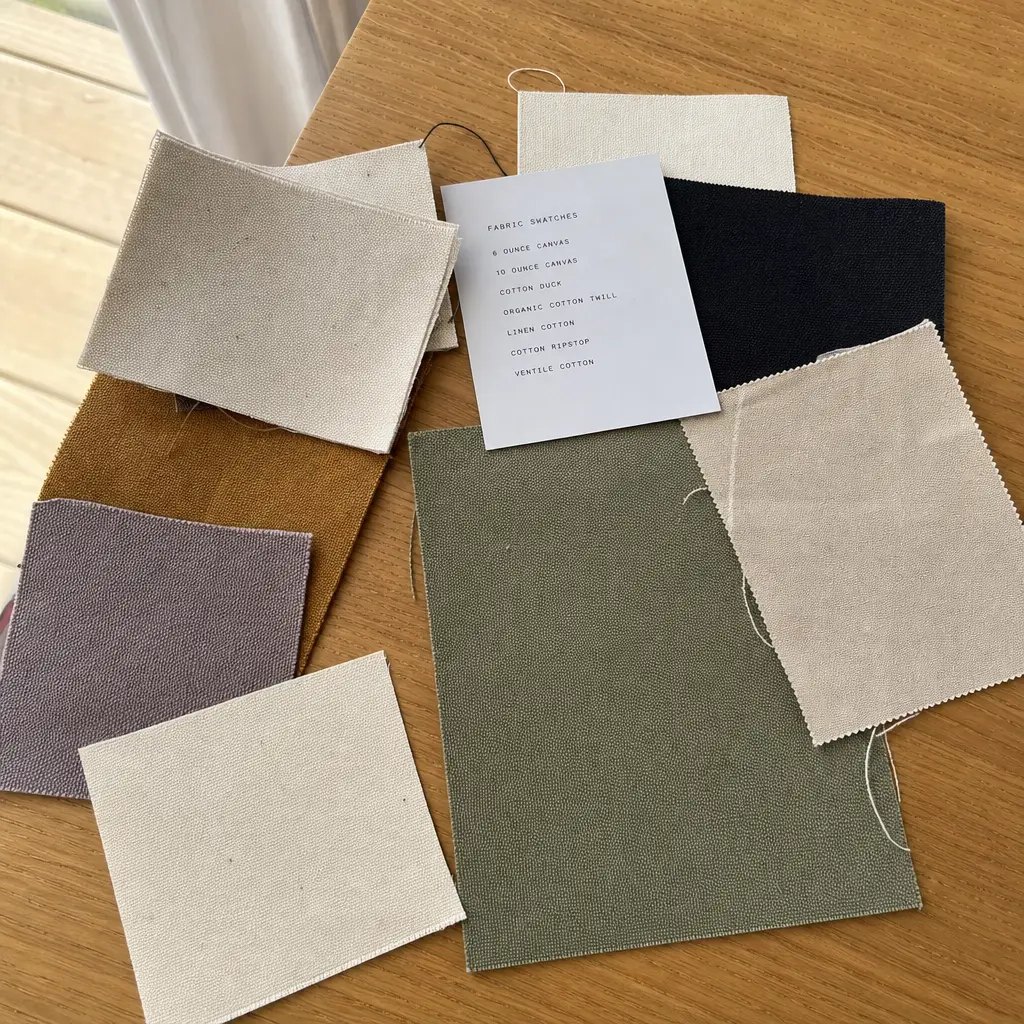
Start With the Bakery Use Case, Not the Fabric Number
For an artisan bakery, a custom canvas messenger bag sits very close to the customer experience. It may carry a loaf box, a pastry carton, a staff notebook, a catering menu, or a retail purchase from the counter. It also carries the bakery's visual identity. If the bag feels flimsy, wrinkles badly, or collapses into a shapeless tote after one use, the brand message suffers even when the logo is attractive.
That is why fabric weight matters, but it should not be treated as the only decision. Procurement teams often ask for heavier canvas when what they really need is better shape retention, cleaner stitching, or a more stable gusset. A 14 oz cloth will not fix a weak strap anchor. A 12 oz cloth with a tight weave and good finishing may perform better than a heavier but looser canvas.
Before requesting prices, define the use. Is this a paid retail item, a loyalty gift, a staff carry bag, a seasonal promotion, or a practical pickup bag? Paid merchandise needs stronger perceived value and cleaner finishing. Staff bags need comfort and durability. Giveaway programs may need cost control, but they still should not fail under normal carry. Write the use case in plain language so suppliers understand what the bag must do.
The usual starting range for bakery messenger bags is 10 oz to 14 oz canvas. Around 10 oz, or roughly 340 GSM, can work for light-duty promotional use. Around 12 oz, or roughly 400-420 GSM, is the practical middle ground for everyday retail and customer-facing programs. Around 14 oz, or roughly 470-500 GSM, gives a firmer hand and better shelf presence, especially when the bag must carry boxed goods or look more premium.
Avoid vague RFQ language such as thick canvas, strong bag, or premium quality. Those words leave too much room for interpretation. Ask instead for a target fabric weight, finish state, expected load, finished dimensions, and acceptance criteria. That turns a general idea into a quote suppliers can price accurately.
- Use 10 oz only for light-duty, price-sensitive programs.
- Use 12 oz for most bakery retail, loyalty, and staff-carry applications.
- Use 14 oz when structure, shelf presentation, or boxed-goods carry matters.
- Define the required outcome, not just the word heavy.
Oz, GSM, and Why the Same Weight Can Feel Different
GSM is usually the cleanest way to specify fabric because it gives buyers and factories a common measurement: grams per square meter. Ounces are still widely used for canvas, so many RFQs include both. For example, a 12 oz canvas often falls near 400-420 GSM, while a 14 oz canvas often sits around 470-500 GSM. Treat those figures as practical buying references, not a substitute for testing the actual cloth.
Two fabrics with the same nominal weight can behave differently. One may be tightly woven and stable. Another may be looser, softer, or more prone to sagging. Finishing also changes the handfeel. A pre-shrunk canvas can feel more controlled than raw greige cloth. A washed canvas may feel softer but show more shade variation. A dyed canvas introduces color-control questions that natural canvas does not.
For bakery buyers, the right fabric is usually the one that supports both function and brand feel. Natural cotton canvas with visible texture can reinforce a handmade, craft bakery identity. A cleaner, denser canvas may suit a premium patisserie or gift program. Neither choice is automatically better; the right one is the material that performs consistently and looks intentional.
When comparing quotes, ask suppliers how they measure fabric weight and whether the quoted GSM refers to the fabric before or after finishing. Also ask for a physical swatch from the intended production lot if possible. A PDF spec sheet is helpful, but it will not show drape, texture, stiffness, or print uptake. A swatch lets your team judge whether the bag will feel substantial enough for retail sale.
It also helps to connect weight to the actual contents. If the bag will carry a loaf, a small pastry box, a menu set, and a receipt envelope, state that. If it must look tidy when empty on a bakery shelf, state that too. The supplier may suggest a denser weave, reinforced bottom, or small construction adjustment rather than simply pushing fabric weight higher.
- Ask for GSM, ounces, and the measurement method used by the supplier.
- Request a physical swatch, ideally from the intended production lot.
- Do not approve by weight alone; check weave, finish, drape, and shrinkage.
- Tie the fabric choice to real contents and real display conditions.
Choose the Canvas Fiber and Finish Deliberately
Canvas is not one fixed material. Fiber content and finishing affect print clarity, shrinkage, handfeel, durability, and the way customers read the product. For artisan bakery programs, 100% cotton is often the most natural fit because it gives a craft-oriented texture and a familiar feel. It also works well with simple bakery logos and understated brand marks.
Poly-cotton can still be useful in some programs. It may improve crease recovery, drying speed, or cost control. The tradeoff is that the bag may feel less natural and may not support the same artisan message. If your bakery brand sells the bag as part of a carefully curated retail range, this difference matters. Confirm the exact composition in writing so a supplier cannot substitute a blend without approval.
Finish state deserves equal attention. Raw or greige canvas can look organic, but it may shrink more and behave less predictably in printing. Pre-shrunk canvas is easier to manage when finished dimensions matter. Dyed canvas can support brand colors, but shade control and lot matching become critical. Washed canvas gives a softer, more lived-in look, though it may add lead time and create acceptable shade variation that must be defined before production.
If sustainability language is important, ask for documentation before using claims in your own catalog or store materials. Cotton, recycled cotton, organic cotton, and blended canvas are not interchangeable claims. A supplier should be able to state what the material is and what documents support the claim. If they cannot, keep the marketing language conservative.
The most useful RFQ wording is specific: fiber content, finish state, color standard, shrinkage expectation, and acceptable natural characteristics. For example, natural flecks may be acceptable on an undyed cotton canvas, but dark oil marks, heavy slubs across the logo area, or obvious shade panels may not be. Put that distinction in writing.
- State fiber content clearly: 100% cotton, poly-cotton, recycled, organic, or another blend.
- Specify whether the canvas is raw, pre-shrunk, dyed, washed, coated, or softened.
- Approve shade range and visible fabric character before bulk production.
- Use sustainability claims only when documentation supports them.
Match Construction to Bakery Loads
A messenger bag usually fails at its stress points long before the main fabric wears out. For bakery use, watch the strap anchors, top edge, gusset corners, bottom seam, and any closure points. These areas carry the load when a customer adds boxed pastries, jars, packaged coffee, or staff materials. If the reinforcement is weak, even a heavier canvas can distort or tear.
A strong bakery messenger bag does not need to be complicated. A single main compartment, a practical gusset, reinforced strap attachments, and clean edge finishing are often enough. Bar-tacks or box-x stitching at the strap base are worth specifying. Seam tape or binding may be useful where raw edges could fray or where the bag needs a cleaner interior. The goal is not to overbuild the bag; it is to reinforce the places that actually work hardest.
Gusset depth is especially important for bakeries. A shallow gusset may look neat in a photo but fail to hold a pastry carton or loaf box comfortably. A very deep gusset may add fabric cost and make the bag bulky. Measure the common items the bag will carry, then specify the gusset around those dimensions. If the bag must stand upright, say so, because that may require a denser fabric, a reinforced base, or a different bottom construction.
The strap also needs real testing. Buyers should confirm strap width, total length, shoulder drop, and whether the bag is meant for shoulder or cross-body use. A narrow strap can dig into the shoulder under load. A long strap can make the bag swing and feel sloppy. A short strap can make it hard to use over coats or uniforms. Test a sample with real contents, not just tissue paper.
Closures should be added only when they serve a purpose. Open-top styles are efficient for retail programs and easy for customers to use. A flap, snap, or zipper can help with dust control or security, but each adds cost, production steps, and potential failure points. If you add hardware, include it in the QC plan.
- Specify bar-tacks or box-x reinforcement at strap anchors.
- Size the gusset around actual bakery boxes and retail items.
- Test strap length and comfort with a loaded sample.
- Add closures only when dust control, privacy, or security justifies the complexity.
Print and Branding: Keep It Clear on Textured Canvas
On a custom canvas messenger bag, the print is usually the part customers notice first. For bakery brands, simple artwork often performs best. A one-color wordmark, line illustration, or short message can look more premium than a busy multi-color layout, especially on natural textured canvas.
Screen print is the usual commercial choice for repeat orders with simple logos. It gives good opacity, repeatability, and reasonable unit cost once screens are made. It also suits natural canvas well when the artwork is prepared with the fabric texture in mind. Thin strokes, tiny type, and tight negative spaces can fill in, so artwork should be reviewed at actual print size before approval.
Heat transfer can make sense for short runs, complex color artwork, or seasonal designs that do not justify screens. It should be tested on the actual canvas weight. The transfer layer may feel different from ink, and buyers should ask about cracking, peeling, abrasion, and folding performance. DTG may reproduce fine detail, but textured canvas can make results less predictable and may require pretreatment that changes the surface feel.
Procurement should quote the print as a complete specification: method, ink or transfer type, color count, print dimensions, placement, color reference, and durability expectation. If a logo is printed on a flap, across a seam, or near a gusset, check how it looks when the bag is loaded. Artwork that appears centered on a flat panel may shift visually once the bag has volume.
Labels and patches are part of the same branding decision. A woven side label, cotton label, leather-style patch, or printed neck label can all affect unit cost and MOQ. Decide these placements before sampling. Otherwise, the first sample may look approved but fail to represent the final retail product.
- Use screen print for simple repeat logos and stable commercial programs.
- Review artwork at actual size on the chosen canvas weight.
- Avoid very fine type unless the factory proves it can print cleanly.
- Include woven labels, patches, hangtags, and barcode labels in the branding quote.
Understand MOQ Before Design Work Goes Too Far
MOQ is rarely just one number. A supplier may say the minimum is 500 pieces, but that figure might apply only to a stock natural canvas bag with standard trim and one print. Custom dyeing, special hardware, lining, labels, or individual retail packaging can each create separate minimums. If those minimums appear late, the program can become more expensive than expected.
The simplest way to control MOQ is to stay close to standard materials. Natural canvas, standard webbing or self-fabric straps, one- or two-color screen print, and bulk flat packing usually keep the project more flexible. Custom color canvas, unusual strap material, metal hardware, multiple print locations, or retail-ready packing may still be worthwhile, but each should be chosen for a clear reason.
Ask suppliers to break MOQ down by fabric, color, print, trim, label, and pack-out. This helps procurement see the real commercial floor. It also makes supplier comparison fairer. One quote may look cheaper because it excludes custom labels or assumes bulk packing. Another may look higher because it includes retail inserts, barcodes, and export cartons. Without the breakdown, you are not comparing the same bag.
Reorders are another important point. Some factories can reuse patterns, screens, and approved construction references, which may simplify repeat production. Others still require the same material minimum every time because fabric and trim must be purchased in new lots. If the bag is part of a recurring bakery merchandise line, reorder stability can matter more than a slightly lower first-order price.
If you plan multiple versions, ask whether they can share the same base fabric run. For example, two print designs on the same natural canvas body may be easier to manage than two different dyed fabrics. Put that agreement in the quote so it does not become a production dispute later.
- Request MOQ by fabric, print, trim, label, and packing format.
- Use stock natural canvas and simple print to keep MOQ manageable.
- Ask whether repeat orders can use existing screens and patterns.
- Do not approve design details until the MOQ consequences are clear.
Sample Approval Should Feel Like a Mini Inspection
A pre-production sample is not just a visual mockup. It is the contract reference for size, fabric feel, stitching, print placement, strap comfort, and packing method. Treat it seriously. Measure it. Load it. Photograph it. Record what is approved and what must change before bulk production begins.
For a bakery program, the load test is especially useful. Put in the items the bag will actually carry: loaf boxes, pastry cartons, menus, packaged coffee, staff notebooks, or retail extras. Then check whether the gusset is deep enough, the strap sits comfortably, the opening is easy to use, and the printed panel still looks right. Many design problems only show up once the bag has real volume.
Approval notes should be measurable. Instead of saying the sample is good, state the accepted body dimensions, gusset, strap length, print size, print placement tolerance, reinforcement method, fabric weight, and any accepted natural fabric characteristics. If the canvas has small flecks that are acceptable, note that. If heavy slubs in the logo area are not acceptable, note that too.
The pack-out should also be sampled. If the bag is retail-ready, check folding direction, hangtag position, barcode scanability, polybag size, and insert cards. If the bag ships in bulk, check whether the print is protected from scuffing and whether the fold creates hard creases across the logo. A good bag can still arrive poorly if packing is not controlled.
Keep a signed control sample with the buyer and another with the factory. If any change is made after approval, issue a revised approval note. Do not rely on scattered email comments or marked photos without a final written record.
- Measure and load-test the sample before approval.
- Approve fabric, dimensions, stitching, print, strap, and packing together.
- Keep signed control samples at both buyer and factory level.
- Sample every major version if fabric, print, strap, or construction changes.
QC Checks That Protect the Purchase Order
Quality control should begin before cutting, not after cartons are packed. The first checkpoints are fabric identity, weight, shrinkage, shade, and finish. Confirm that the bulk fabric matches the approved sample and falls within the agreed tolerance. A common buyer target is plus or minus 5% on fabric weight, unless the order requires tighter control.
Dimension checks should be done across a sampling plan. Measure body width, height, gusset depth, strap length, and flap length if used. A single perfect sample does not prove the batch is consistent. For many canvas bags, buyers use a tolerance around plus or minus 0.5 cm on main dimensions, but you should set the tolerance based on how the bag will be used. If a pastry box must fit, the interior dimension matters.
Stitching inspection should focus on stress points. Look for skipped stitches, loose threads, uneven stitch density, broken thread, narrow seam allowance, and poorly centered bar-tacks. Strap anchors deserve extra attention because they carry most of the load. If the bag has a zipper, snap, or buckle, test operation repeatedly on loaded samples.
Print QC should compare the bulk bag with the approved physical reference. Check position, color, opacity, registration, curing, and surface marks. A visual tolerance of about 3 mm to 5 mm for logo placement is common, but it should be agreed in advance. Color should be judged against the approved swatch or print sample, not a monitor image.
Final inspection should include packing. Count the pieces, check carton marks, inspect moisture condition, confirm labels and barcodes, and make sure the bags are dry before sealing cartons. If the shipment has multiple artwork versions or store allocations, carton labeling must prevent mix-ups at receiving.
- Inspect bulk fabric before cutting.
- Measure dimensions across a sampling plan, not one piece.
- Check strap anchors, gussets, top edge, and bottom seam carefully.
- Compare print and packing against approved physical references.
Packing, Cartons, and Import Handling
Packing affects landed cost as much as it affects appearance. Flat bulk packing is usually the most efficient choice for canvas messenger bags because it reduces carton volume and helps the bags travel without unnecessary deformation. It is also easier for distributors and warehouses to receive, count, and allocate.
Individual polybags should be used when there is a real need: retail-ready presentation, barcode control, moisture protection, or cleaner handling through multiple distribution points. They add material, labor, volume, and unpacking time. If your bakery sells the bag directly from shelves, individual packing may be justified. If the bags are distributed to stores for staff use, bulk packing may be enough.
Moisture and ink transfer are practical risks. Bags should be fully dry before packing, especially if they are washed, dyed, or printed with heavier ink coverage. Transit friction can also mark prints if bags are packed too tightly or folded poorly. Ask the factory how prints are protected in the carton and whether separators are needed for darker prints or heavier coverage.
Carton details should be included in the quote. Ask for pieces per carton, carton dimensions, gross weight, net weight, and whether export-grade cartons are used. Oversized cartons may crush or become hard to handle. Very low carton counts can increase freight cost. The best carton plan balances protection, receiving efficiency, and shipping volume.
Clear carton marks are not optional. Each carton should show style code, color, quantity, purchase order reference, and any allocation information needed by the warehouse. If barcodes are used, approve the format and placement before production reaches pack-out. Re-labeling packed cartons is slow and expensive.
- Use flat bulk packing unless retail-ready presentation is required.
- Quote carton dimensions, piece count, gross weight, and net weight.
- Confirm bags are dry before packing to reduce odor, transfer, and moisture risk.
- Mark cartons clearly by style, color, quantity, and PO reference.
Lead Time: Where Bakery Bag Orders Usually Slow Down
Lead time is shaped by fabric sourcing, sample approval, print setup, sewing capacity, packing, and inspection. A stock natural canvas bag with simple screen print can move faster than a custom-dyed, washed, lined, multi-color version. Ask the factory to separate sample lead time from bulk production lead time so your launch calendar is realistic.
Artwork is a common source of delay. Files may need cleanup, line-weight adjustment, color separation, or placement changes. If screens are made and then the buyer changes the logo size, both time and cost can increase. Freeze artwork before screen preparation or plate work begins. For multi-location branding, build in more setup time.
Labels and packing can also hold finished goods. Barcodes, hangtags, carton marks, country-of-origin labels, and retail inserts should be approved early. If they are still undecided at pack-out, finished bags may sit while the factory waits for instructions. That delay is avoidable with a complete production file.
Seasonal bakery programs should work backward from the in-store date. Include time for sample revisions, purchase order approval, raw material booking, production, final inspection, freight booking, customs or domestic receiving, and store allocation. The earlier details are frozen, the easier it is to protect the launch.
A useful RFQ asks the supplier to break the schedule into stages: sample, material purchase, printing, sewing, packing, inspection, and dispatch. This shows where the critical path lives and where a faster alternative might be possible if the deadline tightens.
- Separate sample lead time from bulk production lead time.
- Freeze artwork before screens, plates, or transfers are prepared.
- Approve barcodes, labels, hangtags, and carton marks before pack-out.
- Plan backward from the in-store or campaign launch date.
Specification comparison for buyers
| Spec decision | Recommended option | When it fits | Buyer risk to check |
|---|---|---|---|
| Fabric weight | 12 oz canvas, about 400-420 GSM, for most bakery retail programs; 14 oz, about 470-500 GSM, when the bag needs more body or must carry boxed goods | Retail messenger bags, customer loyalty gifts, staff carry bags, and premium branded merchandise | Weight alone does not prove strength; loose weave, unstable finish, or weak seams can still lead to sagging and distortion |
| Canvas fiber blend | 100% cotton with a stable weave and pre-shrunk finish; poly-cotton only when crease recovery, drying speed, or cost outweigh a natural handfeel | Artisan brands that want a textured, craft-oriented look and predictable print uptake | Fiber blend changes touch, print behavior, shrinkage, and brand perception; confirm exact composition in writing |
| Print method | One- or two-color screen print with properly cured ink for repeat orders; heat transfer only for short runs or detailed artwork that screen print cannot handle cleanly | Simple bakery logos, wordmarks, seasonal messages, and natural canvas branding | Fine type can fill in on textured canvas; ask for rub, fold, and wash-resistance expectations if the bag will be handled often |
| Body construction | Single main compartment with reinforced gusset, seam tape where needed, and bar-tacks or box-x stitching at stress points | Everyday carry, boxed pastries, menus, staff notes, and light retail goods | Weak gussets, narrow seam allowances, or unstabilized bottoms create sagging, seam stress, and poor shelf presentation |
| Closure style | Open top for easy retail use; flap, snap, or zipper only when dust control, privacy, or security is part of the use case | Front-of-house bags, pickup orders, branded giveaways, and merchandise displays | Zippers and snaps add cost and failure points; test them on a loaded sample before approving bulk production |
| Handle drop | Shoulder or messenger strap with confirmed loaded-sample drop; many designs land near 55-65 cm total strap length depending on bag body and carry style | Customer carry, staff use, and short-distance merchandising bags | Too-short straps reduce comfort; too-long straps swing, twist, and make the bag look less controlled |
| MOQ route | Use stock natural canvas, standard trim, and one or two print colors for lower MOQ; custom dye, lining, specialty hardware, or retail packing raises it | Programs that need faster sampling, simpler replenishment, and easier supplier comparison | Fabric MOQ, screen MOQ, trim MOQ, and packing MOQ can differ; ask for each component, not only the finished bag count |
| Packing method | Flat packed in bulk with carton marks and size/style labels; individual polybag only for retail-ready or extra-protection programs | Import shipments, distributor receiving, warehouse replenishment, and store allocation | Overpacking increases freight and storage cost; underpacking raises scuffing, moisture, and sorting risk |
| Supplier route | Factory-direct for repeat programs and tighter QC; trading house or agent when you need consolidation, mixed sourcing, or smaller test orders | Annual rollouts, private label bakery merchandise, and controlled reorders | Intermediary layers can obscure fabric substitutions and slow claim resolution unless responsibilities are written clearly |
Buyer checklist before sampling
- Confirm the target fabric weight in GSM or ounces and ask the factory to state the tolerance in writing before cutting.
- Define the actual use case: retail merchandise, staff carry, customer giveaway, loyalty reward, or pickup bag. The right spec changes with the use.
- Approve finished dimensions, gusset depth, flap size if any, and strap length. State acceptable cut and sewing tolerances before sampling.
- Specify fiber content, finish state, and whether the canvas is raw, pre-shrunk, dyed, washed, coated, or treated for softness.
- Lock the print method, number of colors, print size, placement, artwork file, minimum line thickness, and color reference before quoting.
- State the expected load and whether the bag must stand upright when empty, sit neatly when filled, or simply carry light items comfortably.
- Ask for stitching, seam allowance, reinforcement, and pull-test details, especially how the strap anchors are built.
- Set carton count, carton size limit, barcode needs, carton marks, retail labeling, and polybag requirements before production starts.
- Ask for the supplier's QC plan, inspection standard, sampling level, and what defect rate triggers rework, sorting, discount, or replacement.
- Confirm whether reorders will use the same fabric lot code, same screens, same trim code, and same pattern, or whether substitutions are allowed only after approval.
Factory quote questions to send
- What is the measured GSM or ounce weight of the bulk canvas, and what tolerance will you accept at incoming inspection?
- Is the canvas raw, pre-shrunk, washed, dyed, coated, or otherwise finished, and what shrinkage should we expect before and after production?
- What weave or yarn specification is available, and can you send a swatch that matches the intended production lot rather than a generic reference?
- What finished-size tolerance do you quote for body width, body height, gusset depth, flap length if used, and strap length?
- Which print method is included in the price, what ink or transfer system is used, and what cure, adhesion, rub, or wash test do you run?
- How many setup charges apply for screens, plates, artwork edits, woven labels, hangtags, barcodes, carton marks, or special packing?
- What is the MOQ by fabric color, print color count, trim type, label type, and packing format, not only by finished bag total?
- Can you show close photos of stitching, bar-tacks, gusset corners, top edge finishing, and strap attachments from a similar construction?
- What inspection standard do you use for major and minor defects, such as AQL 2.5/4.0 or your internal equivalent?
- What packing format is quoted, how many pieces go into each carton, and what are the carton dimensions, gross weight, and net weight?
Quality-control points to confirm
- Agree a fabric weight tolerance in writing before cutting. A common buyer target is plus or minus 5% on the approved GSM or ounce target unless the program requires tighter control.
- Check shrinkage on the approved fabric before bulk cutting. For pre-shrunk fabric, many buyers ask for maximum first-wash shrinkage of about 3-5%, or the supplier's stated limit if it is lower.
- Measure finished dimensions using a sampling plan, not a single handpicked piece. State tolerance on body width, body height, gusset, flap if used, and strap length. A common buyer target is plus or minus 0.5 cm for key bag dimensions, with tighter control where fit is critical.
- Inspect seam allowances and stitch consistency at the gusset, top edge, bottom seam, and strap anchor. Load-bearing seams should show even stitch density, no skipped stitches, and no thread breaks at stress points.
- Require bar-tacks or box-x reinforcement where the strap joins the body. Reinforcement should be visible, centered, clean, and consistent across production pieces.
- Check print placement against the approved sample. Logo position should stay within an agreed visual tolerance, often about 3 mm to 5 mm, and color should match the approved physical reference rather than only a screen preview.
- Test the bag with a real load that mirrors the intended bakery use, such as loaf boxes, pastry cartons, menus, loyalty materials, or staff supplies. The bag should not tear, twist, or distort under the agreed load.
- Inspect the handle drop and how the bag sits on a shoulder or across the body when loaded. The strap should not dig in, twist excessively, or pull the bag into an awkward angle.
- Review carton pack-out for count accuracy, dryness, label correctness, and protection against scuffing. Cartons should be clean, dry, export-ready where required, and marked with style code, color, quantity, and purchase order reference.
- Use a pre-production sample and a sealed control sample for comparison. If the bulk lot differs in fabric feel, shade, print placement, trim, or construction, hold shipment until the difference is explained and approved.