The Carton Problem Behind Hotel Retail Messenger Bags
Custom canvas messenger bags for hotel retail are not difficult to sew, but they are easy to mispack. The buyer usually focuses on the logo, fabric color, and handle feel, then discovers later that the carton cube is higher than expected or that flap creases appear after shipment. A messenger bag has more bulk variation than a flat tote because the flap, strap, buckle, slider, inner pocket, and possible lining all affect how the bag nests inside a carton.
For hotel retail, carton planning matters because stock often moves through several handling points before reaching the shop floor: factory warehouse, forwarder, ocean container, destination warehouse, hotel group distribution center, and individual property receiving room. If the carton is too heavy, poorly filled, or loosely packed, the bags can arrive wrinkled, scuffed, or difficult for store teams to count. A practical RFQ should therefore treat carton planning as part of the product specification, not as a warehouse detail decided after production.
- State whether the bags will ship flat, lightly folded, or nested with the flap closed.
- Decide if the strap is packed inside the bag, wrapped around the body, or laid between layers.
- Confirm whether hardware needs tissue, paper sleeve, or separate protection from printed panels.
- Set a target carton gross weight that receiving staff can lift safely and repeatedly.
Start With the Bag Construction Before Estimating Cartons
Carton quantity cannot be calculated from finished width and height alone. A 38 x 30 cm messenger bag in 10oz canvas may pack very differently from the same size in 16oz canvas with a padded flap and heavy metal hardware. The factory needs the flat packed thickness, not just the visible front panel size. If a supplier gives carton details before seeing the pocket layout and strap construction, the number is usually a placeholder.
For hotel retail, a common starting spec is 12oz cotton canvas, approximately 400 GSM, with a flap closure, adjustable cotton webbing strap, one inner slip pocket, and reinforced stress points. This gives enough perceived value for retail sale without becoming too stiff for carton efficiency. If the buyer wants a premium resort feel, 14oz or 16oz canvas can work, but the RFQ should expect fewer pieces per carton and higher freight per unit.
- Light retail style: 10oz canvas, simple flap, cotton webbing strap, minimal hardware.
- Balanced hotel shop style: 12oz canvas, reinforced strap points, one inner pocket, screen-printed flap.
- Premium style: 14oz to 16oz canvas, cotton lining, metal buckle, woven label, lower carton quantity.
- Conference retail style: 10oz to 12oz canvas, wider print area, simpler closure, higher packing efficiency.
Fabric Weight, GSM, and Folding Behavior
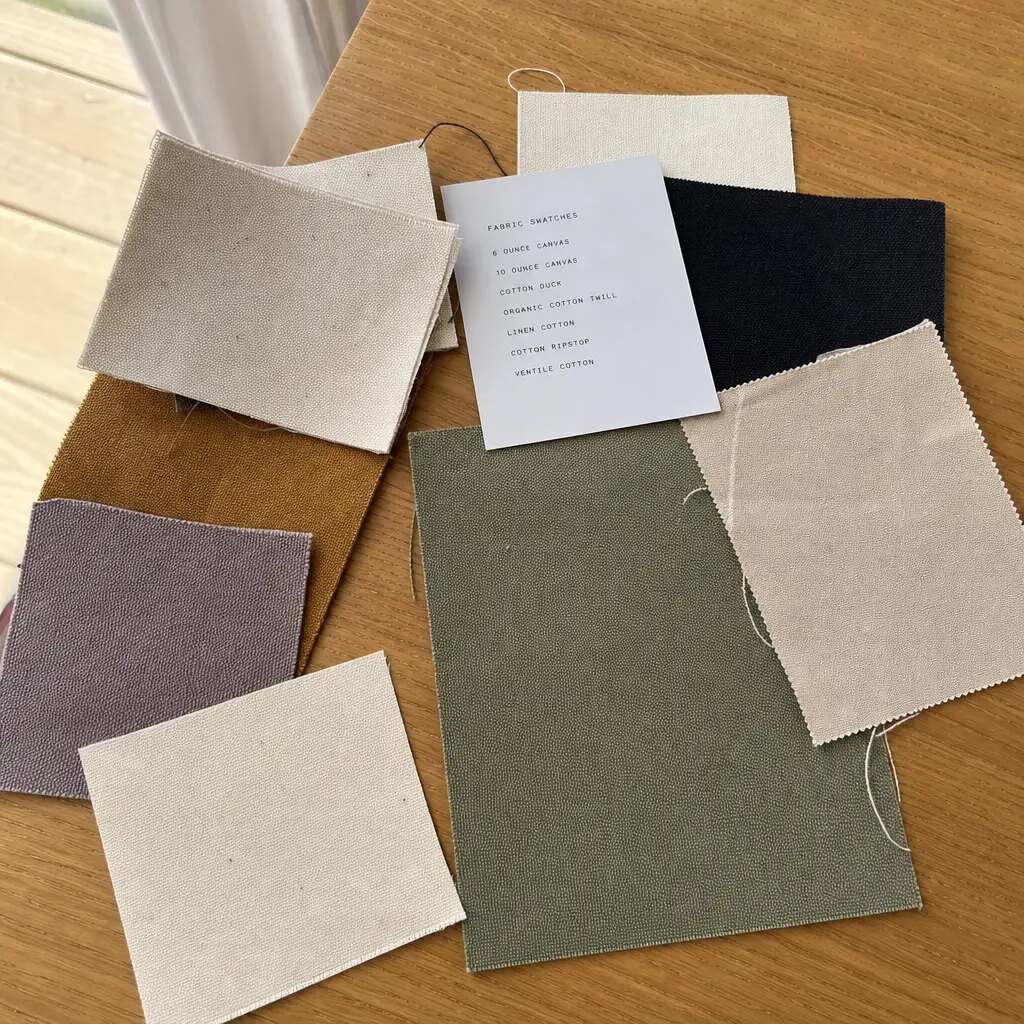
Canvas weight affects more than product feel. It changes sewing tension, fold memory, carton fill, and how the printed flap looks after shipment. Many quotes only say cotton canvas or heavy canvas, which is not enough for comparison. A buyer should request both ounce weight and GSM, because some suppliers use local canvas descriptions that do not match the buyer’s expectation. For example, 12oz cotton canvas is often around 400 GSM, but actual fabric can vary by construction and finishing.
Pre-shrunk canvas is worth discussing when the bag may be washed, enzyme finished, or steamed after sewing. Shrinkage changes finished measurements and can distort print position. For hotel retail, most messenger bags are not laundered by the end user before sale, so a clean, stable, unwashed canvas may be enough. The key is to approve the exact fabric finish during sampling and use the same finish for bulk production.
- 8oz to 10oz canvas improves carton yield but can feel less structured on a retail shelf.
- 12oz canvas gives stronger hand-feel while still allowing practical folded packing.
- 14oz to 16oz canvas supports premium positioning but increases carton volume and sewing cost.
- Washed canvas looks softer but may show shade variation and needs tighter measurement control.
Print and Branding Choices That Affect Packing
The print method should be chosen with carton handling in mind. Screen printing is usually the most stable option for solid hotel logos, destination names, or simple graphics on the flap. It keeps the bag flexible and allows predictable cost at volume. Heat transfer can handle detailed multi-color art, but buyers should test adhesion on textured canvas and check whether the transfer film leaves a glossy patch that feels wrong for a natural canvas messenger bag.
Embroidery, woven labels, and leather or PU patches are common for higher-end hotel retail. They can improve perceived value, but they change the packing risk. Embroidery adds thickness and may create pressure marks when stacked. A raised patch can emboss into the opposite layer if bags are packed too tightly. The sample approval should include the printed or branded area after being folded and packed for at least one day, not only a fresh sample laid flat.
- Screen print works best for one to three solid colors and medium to large flap logos.
- Embroidery should be tested for puckering, thread color accuracy, and pressure marks in packing.
- Woven side labels reduce artwork risk and keep the main canvas surface clean.
- Large flap prints need slip sheets or careful layer direction if ink rub is possible.
Carton Quantity and Export Carton Design
A realistic carton plan begins with a packed sample, then scales into the carton. For many canvas messenger bags, 20 to 40 pieces per carton is a workable range. The right number depends on bag thickness, retail packaging, hardware, and the buyer’s maximum gross weight. A carton that looks efficient on paper can fail in practice if buckles stack in the same area or if straps create uneven pressure points.
The export carton should be strong enough for the shipping route. Hotel retail orders are often not full-container loads, so cartons may be consolidated with other goods and handled more often. Double-wall cartons are safer for heavier messenger bags or long ocean freight routes. Carton dimensions should also fit pallet and warehouse handling, but the first priority is protecting the product shape, print surface, and retail packaging.
- Target carton gross weight should usually stay manageable for manual handling, often below about 18 to 20 kg.
- Use a carton liner when bags are natural canvas or light color to reduce dust and moisture contact.
- Avoid placing metal buckles directly against printed flaps without paper or layout control.
- Record final carton dimensions after packed sample approval, not before the packing method is tested.
MOQ Logic and Why Carton Planning Changes Small Orders
MOQ for custom canvas messenger bags is driven by fabric, dyeing, printing, accessories, and cutting efficiency. A stock natural canvas bag with a one-color screen print can often be quoted at a lower MOQ than a custom-dyed canvas bag with lining, metal trims, and several logo placements. If the buyer also requires custom retail packing, hangtags, barcode labels, and special carton marks for multiple hotel properties, the setup work becomes more significant.
Small orders are where carton planning is most often ignored. A buyer may request 300 pieces for a trial hotel retail program, then compare quotes only by unit price. The lower quote may use thin cartons, loose bulk packing, or no individual protection. For a trial order, the buyer should still require final carton count, carton dimensions, and packed photos, because the shipment will be used to evaluate whether the product is ready for repeat distribution.
- Stock natural canvas lowers material MOQ and reduces dyeing lead time.
- Custom color canvas usually needs higher MOQ and lab dip approval.
- Multiple hotel logos in one order may create separate screen charges and packing segregation work.
- Retail-ready packaging can raise labor time even when the bag construction is simple.
Sample Approval Should Include a Packed Carton Check
A normal sample approval covers size, fabric, color, logo, stitching, and hardware. For this product, that is not enough. The buyer should approve how the messenger bag is folded and how many pieces fit into the carton. A factory can make a good bag and still damage it during packing if the strap is twisted, the buckle presses into the print, or the flap crease is too sharp.
The most useful sample stage is a pre-production sample using the final fabric weight, final artwork, final hardware, and proposed retail packing. If a full carton sample is not practical before bulk production, request photos and measurements from a packing trial with several pieces. The buyer should review side profile thickness, layer direction, protection method, carton fill, and whether the carton bulges after closing.
- Approve the folded bag appearance after 24 hours under light carton pressure.
- Measure packed thickness with strap and hardware in the final position.
- Photograph the first layer, middle layer, and top layer of the carton.
- Seal one trial carton and check whether the surface remains flat without bulging.
Factory Quote Data Needed for Real Landed Cost
A useful quote for hotel retail should separate product cost from packing and logistics data. Unit price alone does not show whether one supplier is more economical after freight. A messenger bag with a slightly higher ex-factory price may cost less landed if it uses a better folding method and reduces carton cube. The buyer should compare pieces per carton, carton CBM, gross weight, and retail packaging cost together.
Quote sheets should include finished size, fabric weight, print method, number of print colors, accessory details, individual packing, export carton details, sample cost, tooling or screen fees, lead time, and Incoterms. If the supplier only gives FOB unit price and says carton details will follow after production, the buyer cannot calculate warehouse space, freight, or receiving workload. Carton data is part of the commercial quote, not a late-stage shipping note.
- Request CBM per 1,000 pieces for landed-cost comparison.
- Ask for carton dimensions in centimeters and gross weight in kilograms.
- Separate screen charge, label charge, hangtag charge, and barcode sticker labor.
- Compare FOB and EXW carefully if inland freight and export handling are not included.
Lead Time Risks From Materials, Artwork, and Packing
Lead time should start after final sample approval, not after the first inquiry. For a standard canvas messenger bag using stock fabric and a simple screen print, production can be planned more smoothly. Custom-dyed canvas, special webbing color, metal hardware finishing, and printed retail packaging add approval steps. Each step can delay cutting or packing if the buyer changes artwork, barcode data, or hotel property allocation late in the process.
Carton planning can also affect schedule. If the approved carton quantity changes after production because the bags are thicker than expected, the factory may need extra cartons, revised shipping marks, and updated forwarder booking data. This is especially risky for seasonal hotel retail programs tied to resort openings, holiday shops, conferences, or destination events. Locking the packing method before bulk sewing reduces last-week changes.
- Allow time for lab dip approval when canvas color is custom dyed.
- Freeze logo size and position before screen making or embroidery programming.
- Approve retail barcode data before packing materials are printed or labeled.
- Confirm carton cube before freight booking to avoid shipment rework.
Receiving and Retail Shelf Requirements
Hotel retail receiving teams need cartons that are easy to count, identify, and open without damaging the product. Master carton labels should show item name, color, quantity, gross weight, net weight, carton size, purchase order number, and destination if the order is split by property. If the hotel group uses barcode receiving, the carton label format should be provided before production packing starts.
Shelf presentation also affects packing decisions. Some hotel shops want each messenger bag in a clear bag to keep dust away. Others prefer paper belly bands or hangtags to reduce plastic and improve natural branding. The buyer should decide this early because individual packaging changes carton quantity and labor cost. A good factory quote will show the difference between bulk-packed, polybagged, and retail-banded options.
- Use carton marks that match the buyer’s warehouse receiving system.
- Keep color and logo variants separated by carton unless mixed cartons are explicitly approved.
- Add desiccant only when appropriate and compliant with the destination market requirements.
- Avoid overcomplicated retail packaging if hotel staff must unpack and merchandise quickly.
Specification comparison for buyers
| Spec decision | Recommended option | When it fits | Buyer risk to check |
|---|---|---|---|
| Canvas body weight | 12oz cotton canvas, about 400 GSM, pre-shrunk if washing is required | Good balance for hotel retail gift shops where the bag must feel substantial but still fold into cartons efficiently | Light 8oz canvas may look soft and collapse on shelf; heavy 16oz canvas increases carton volume and freight cost |
| Bag structure | Soft messenger body with flap, inner pocket, and reinforced strap joints | Fits casual resort retail, conference merchandise, and destination souvenir programs | Too much padding or stiff board makes carton utilization poor and can create crease marks during ocean freight |
| Print method | Screen print for solid hotel logos; heat transfer only for small multi-color artwork; embroidery for premium labels | Screen print controls cost and keeps the bag flat for packing; embroidery works when the brand wants texture | Thick ink on the flap can crack if bags are folded tightly; embroidery may pucker lighter canvas |
| Retail packing | Individual recycled polybag or paper belly band, plus carton liner | Suitable when hotel shops need clean receiving and easy shelf handling without excessive packaging | Unprotected metal buckles can rub against printed flaps; paper bands can scuff dark canvas if cartons shift |
| Carton size | Export carton around 55 x 45 x 35 cm, adjusted after packed sample test | Works for many soft canvas messenger bags without exceeding common manual handling limits | A carton planned only from bag dimensions often misses strap bulk, flap thickness, and inner pocket seams |
| Carton quantity | 20 to 40 pieces per carton depending on bag size, hardware, and retail pack | Useful range for hotel retail replenishment because cartons remain movable and stock counts stay simple | Overpacking can deform flaps, bend zipper pulls, and make carton compression failures more likely |
| MOQ logic | 500 to 1,000 pieces per color for custom-dyed canvas; lower MOQ may be possible with stock fabric | Best for importers consolidating multiple hotel properties or seasonal retail drops | Small orders with custom color, custom lining, and several prints may carry hidden setup and material surcharges |
| Supplier route | Factory-direct production with a carton-packed pre-production sample | Fits buyers who need control over carton cube, artwork position, and export packing before bulk production | Trading quotes may omit carton gross weight, carton strength, and final packed quantity until after deposit |
Buyer checklist before sampling
- Define finished bag size, flap size, strap length range, pocket layout, and hardware before asking for carton estimates.
- State fabric weight in oz and GSM, not only the word canvas, because carton bulk and freight cost change with weight.
- Request packed sample photos showing folding method, carton layer count, strap placement, and protection around buckles.
- Approve artwork on the actual canvas color, including print size, ink hand-feel, and position after the flap is folded.
- Set carton acceptance limits for gross weight, carton dimensions, pieces per carton, and carton compression condition.
- Confirm whether hotel retail requires individual packaging, barcodes, hangtags, price stickers, or master carton labels.
- Separate product cost, mold or screen charges, packing cost, inland freight, and export document charges in the quote.
- Build lead time from approved pre-production sample, not from first inquiry or artwork submission.
Factory quote questions to send
- What canvas weight, GSM, yarn construction, and shrinkage range are included in this quote?
- Is the price based on stock canvas color or custom-dyed canvas, and what MOQ applies to each color?
- What is the finished bag size tolerance and strap length tolerance after sewing and pressing?
- Which print method is quoted, how many colors are included, and what is the maximum print area on the flap?
- How many pieces are packed per export carton, and what are the carton dimensions, gross weight, and net weight?
- What retail packing is included: polybag, paper band, hangtag, barcode sticker, silica gel, or carton liner?
- Will you provide a carton-packed pre-production sample or at least packed sample photos before bulk packing?
- What carton board grade or burst strength is used, and is it suitable for palletized ocean freight?
- What quality inspection standard is used for stitching, print defects, stains, measurement, and carton damage?
- What is the production lead time after sample approval, and which materials or accessories can delay the schedule?
Quality-control points to confirm
- Canvas weight should match approved sample within a reasonable production tolerance, normally verified by GSM test and hand-feel comparison.
- Finished dimensions should stay within agreed tolerance, commonly plus or minus 1 cm for body size and plus or minus 2 cm for strap adjustment range.
- Stitching at strap anchors, flap corners, and pocket openings should be secure with no skipped stitches, loose threads, or weak backtacks.
- Print position should match the approved sample after the flap is closed, not only while the bag is laid flat.
- Ink coverage should be even on textured canvas, with no heavy bleeding, cracking, offset marks, or color contamination.
- Metal hardware should be free from rust, sharp edges, plating bubbles, and obvious color inconsistency between buckles and sliders.
- Individual packing should prevent hardware from pressing into printed panels during carton stacking.
- Export cartons should arrive square, dry, correctly labeled, and within the approved gross weight and carton dimension limits.