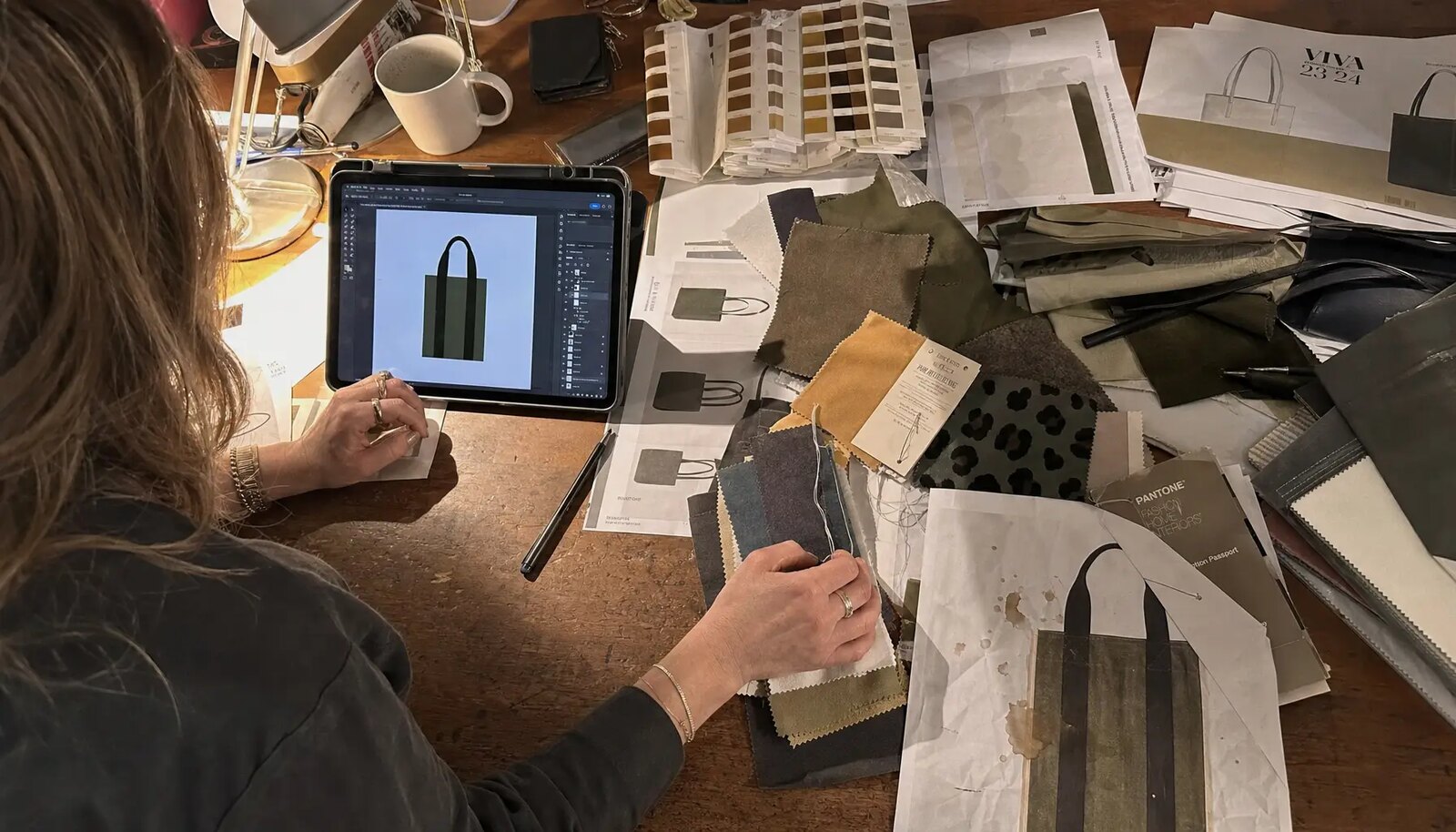
Start with the vendor use case, then design the bag
A custom canvas messenger bag for farmers market vendors is not the same as a loose promotional tote. Vendors may carry market permits, receipt books, aprons, price labels, pens, small tools, tablet accessories, cash pouches, samples, and flyers. The bag moves from vehicle to stall and back into storage many times during a season. It must look branded, but it also needs enough structure and reinforcement to survive regular handling.
Procurement teams should define that use case before asking factories for prices. A messenger bag has flaps, gussets, straps, sliders, pockets, closures, and often a printed front panel. These features affect unit cost, carton count, print protection, and receiving labor. If packing is left as “standard export packing,” the result may be cartons that are too heavy, too compressed, poorly marked, or difficult to sort by market location.
The buying target is a shipment that can be produced consistently, inspected clearly, received quickly, and distributed without rework. For seasonal farmers market programs, delays are visible: vendor onboarding, opening weekend, sponsor events, and regional distribution dates are fixed. A sound carton plan protects the schedule as much as the bags.
- Treat packing as part of the product specification, not a warehouse afterthought.
- Define what the vendor will carry before selecting canvas weight, reinforcement, pockets, strap, and carton quantity.
- Avoid vague terms such as “premium canvas” or “standard carton”; write measurable specifications.
- Use SKU-level carton marks when orders include different logos, colors, regions, sponsors, or vendor groups.
Specify canvas weight, size, and construction in measurable terms
For many farmers market vendor programs, 12 oz to 14 oz cotton canvas, approximately 340-400 GSM, is a practical starting point. It has more body than 8 oz promotional canvas but still folds and stacks efficiently. A 16 oz canvas can feel more substantial, but it raises unit weight, reduces pieces per carton, and may show stronger crease memory if packed too tightly.
State the material clearly: greige cotton canvas, dyed cotton canvas, washed canvas, recycled cotton blend, cotton-poly canvas, coated canvas, or lined canvas. Each option changes shade control, shrinkage, print behavior, hand feel, weight, and packing volume. If the flap, gusset, lining, pocket, bottom reinforcement, or strap anchor uses a different material, list it separately in the tech pack and RFQ.
Finished size should be written as width x height x gusset, with measurement method. Soft sewn bags change shape depending on whether they are empty, filled, stretched, laid flat, or measured with the flap open. A common commercial tolerance for major dimensions on soft canvas bags is about plus or minus 0.5 inch, but the supplier should confirm feasibility before the PO is issued.
- Record finished size in the quote sheet, sample approval, and PO.
- State whether the bag must fit a tablet, folder, POS reader, or cash pouch.
- Confirm fabric weight tolerance and whether GSM is measured before or after finishing.
- Require supplier approval before any fabric-weight change because freight cube and gross weight may change.
Control stress points without overbuilding the bag
The highest construction risk on a messenger bag is usually the shoulder strap attachment. Vendors may carry uneven loads while walking between vehicles, stalls, and storage. Strap anchors should use bartacks, box stitches, or another approved reinforcement pattern. Decorative topstitching alone is not enough for a working vendor bag.
Bottom construction is another cost and packing decision. A soft reinforced bottom panel improves durability while keeping the bag stackable. A rigid insert may help the bag stand upright, but it adds thickness, creates pressure edges, and often lowers carton count. For many B2B programs, soft reinforcement is the better balance unless the bag must carry heavier items or present upright at the booth.
Hardware should be chosen deliberately. Metal buckles, magnetic snaps, rivets, shoulder pads, and zipper pulls can improve function, but they increase inspection points and create pressure marks in cartons. If hard components are required, the packing method must prevent the same buckle or slider from pressing into the same printed area across the full stack.
- Use reinforced strap anchors, a 38-40 mm adjustable strap, secured flap, and reinforced bottom area as a practical baseline.
- Inspect load points for skipped stitches, broken thread, weak back-tacking, and needle damage.
- Revalidate packing whenever padding, rigid inserts, metal hardware, or large closures are added.
- Specify stitch color, seam finish, and edge treatment if sponsor presentation standards are strict.
Choose logo methods with packing damage in mind
Screen printing is often efficient for one-color or two-color logos on canvas messenger bags. The key risks are under-curing, tackiness, rub-off, print-to-print contact, and scuffing under carton compression. Buyers should approve a strike-off and ask how curing temperature, dwell time, and drying time are controlled before packing.
Heat transfer and digital print can support gradients, small artwork runs, or detailed sponsor graphics, but they require checks for edge adhesion, cracking, and hand feel. Embroidery is durable, though raised thread can leave impressions on nearby canvas if cartons are packed too tightly. Woven labels and sewn patches are useful for multi-market orders because the same base bag can carry different regional branding with less print setup complexity.
The PO should not say only “logo on flap.” It should define artwork size, placement from fixed reference points, ink colors, coverage, tolerance, and whether artwork may cross a fold line. For simple flap placements, plus or minus 3-5 mm may be workable; confirm this against the fabric movement and production method.
- Approve print strike-off for color, registration, coverage, edge quality, and hand feel.
- Check screen print or heat transfer after stacking, not only as a loose panel.
- Use tissue or kraft interleave when printed surfaces may touch under pressure.
- For multiple market names, compare full print versions against woven labels, sewn patches, hangtags, or carton-only differentiation.
Set MOQ and SKU rules before the factory quotes
Farmers market programs often involve city names, sponsor logos, seasonal colors, or vendor tiers. Low MOQ per version sounds attractive, but every split adds artwork control, print setup, carton marking, inspection sampling, packing-list detail, and warehouse sorting. When splits become too fragmented, factories may suggest mixed cartons or uneven carton counts to finish the shipment.
For custom canvas messenger bags, 500-1000 pieces per colorway or artwork is a useful planning range for efficient production. Lower quantities may be possible when fabric is stocked and branding is simple, but setup charges and unit price usually rise. Ask whether MOQ applies to total order quantity, bag size, fabric color, logo version, logo method, or carton mark.
Receiving rules should be explicit. If the warehouse needs one SKU per master carton, state it in the PO. If assortment cartons are required, define the exact ratio and carton mark. Random mixed cartons can create costly counting work when specific logos must go to specific markets.
- Use one bag body and carton size when only the logo changes.
- State “one SKU per master carton unless approved in writing” if segregation is required.
- Define over/under shipment tolerance by SKU, not just by total PO quantity.
- Require the packing list to map carton number to SKU, color, logo version, quantity, and destination.
Build a quantified carton packing plan
A useful carton packing plan connects pieces per carton, carton dimensions, net weight, gross weight, cube, compression risk, and receiving limits. More pieces per carton is not automatically better. Tight cartons may crease flaps and scuff prints; loose cartons waste chargeable volume and allow shifting. Heavy cartons slow manual receiving and may exceed warehouse preferences.
For many medium soft canvas messenger bags, 20-40 pieces per export carton is a realistic validation range. The correct count depends on finished size, gusset, canvas GSM, lining, hardware, strap bulk, fold method, and carton strength. A 5-ply corrugated export carton is a common baseline, but long inland trucking, parcel handling, high humidity, or heavy hardware may require stronger board or pallet controls.
Worked example: assume a medium bag at 14 in W x 11 in H x 3.5 in gusset, 12 oz canvas, webbing strap, simple flap, one-color screen print, no rigid insert. If the approved fold produces about 14 in x 11 in x 0.75 in per bag, a 30-piece carton may be estimated at 23 in x 15 in x 17 in. If each finished bag weighs about 0.48 kg, net weight is about 14.4 kg. Add roughly 1.2-1.8 kg for carton and inner materials, giving an estimated gross weight of 15.6-16.2 kg. Cube is 23 x 15 x 17 in, or about 5,865 cubic inches, equal to about 0.096 CBM. On a 1.0 x 1.2 m pallet, carton footprint and stack height must be checked; if the warehouse limits cartons to 15 kg, reduce to 25-28 pcs or confirm approval before production.
- Request carton L x W x H, net weight, gross weight, CBM, and pieces per carton in the quote.
- Share warehouse receiving limits for maximum carton weight and preferred carton size.
- Check that printed flaps, sliders, and buckles are not forced against carton walls.
- Approve pallet pattern, maximum stack height, stretch wrap, pallet labels, and corner boards when palletizing.
- Use sample packing data to finalize freight booking, not only theoretical carton dimensions.
Use inner packing only where it solves a real risk
Individual polybags protect against dust, support barcode labeling, and may help where goods are handled many times before final distribution. They also add material cost, unpacking labor, and carton cube if trapped air is not pressed out. For natural canvas bags with small labels and minimal hardware, controlled flat stack packing with selective tissue or kraft paper may be enough.
Inner packing should focus on contact points. Printed flap against printed flap creates blocking and abrasion risk. Metal slider against canvas creates a pressure mark. Dark dyed fabric rubbing against natural canvas can show lint or scuffs. Loose straps can tangle during receiving. These issues are often controlled by consistent fold direction, planned strap placement, and selective interleave rather than adding material everywhere.
If polybags are required, specify thickness, vent holes, warning text where applicable, sealing method, barcode location, recycling mark, and whether air must be pressed out before loading. If paper is used, define recycled tissue, kraft paper, or another interleave and where it is placed.
- Low-risk: natural canvas, small label, no heavy hardware, flat stack, minimal paper.
- Medium-risk: printed flap, dyed body, adjustable strap, tissue between logo-facing layers.
- High-risk: large ink coverage, heat transfer, dark fabric, hardware, barcode requirement, individual polybag or stronger interleave.
- Document fold direction, strap position, first layer, middle layer, bottom layer, and interleave method with photos.
Approve a packing sample, not only a PP sample
A pre-production sample proves how one bag looks when handled alone. It does not prove that 20, 30, or 40 bags can sit compressed in a carton for weeks without print offset, flap creasing, strap tangling, or hardware marks. For a new design, logo method, fabric weight, or supplier, a true packing sample is one of the most useful approval steps.
The packing sample should use bulk-equivalent bags, actual fold method, planned interleave or polybag, intended pieces per carton, selected carton board, carton marks, and barcode labels if used. Open it the way the warehouse will open it. Check whether the SKU is obvious, straps are controlled, the logo area is clean, and lower layers still look acceptable.
For repeat orders using the same design, carton, logo method, and route, previous packing approval may be enough. Any change to canvas weight, hardware, print size, fold method, carton quantity, or warehouse requirement should trigger a fresh packing review.
- Approve fold direction, flap position, logo protection, strap placement, carton count, and carton mark together.
- Photograph carton exterior, opening view, top layer, middle layer, bottom layer, and inner packing.
- Confirm carton gross weight and dimensions before final freight estimate.
- Give approved packing photos to the inspector as the reference for inline and final QC.
Inspect the bag and the shipment condition
Quality control should cover both product construction and packed condition. Product checks include fabric GSM, dimensions, shade, seams, bartacks, hardware, strap length, pocket construction, and logo execution. Packed-condition checks include fold consistency, print rub, carton count, carton board, carton marks, compression marks, moisture signs, barcode readability, and whether the bag looks presentable after unpacking.
Use measurable tolerances to reduce disputes. Fabric GSM is often controlled within plus or minus 5% to 7% unless another tolerance is specified. Major dimensions on soft canvas bags are commonly about plus or minus 0.5 inch. Logo placement needs a stated millimeter or inch tolerance. Strap width, strap length range, slider type, and closure details should match the approved sample.
Inspection should include cartons from different parts of the packed lot, not just top cartons. Inspectors should verify piece count, SKU details, carton marks, barcode scans, carton dimensions, and gross weight. Ask the supplier or inspection agency to open cartons and review top, middle, and bottom layers.
- Request the AQL level and defect classification before inspection is booked.
- Check strap anchor strength by agreed pull test or practical load review when required.
- Inspect printed flaps after unpacking from stacked cartons.
- Reject major oil stains, broken stitches, exposed raw edges, severe skew, and non-functioning hardware.
- Verify PO number, SKU, logo version, color, quantity, carton number, total carton count, and destination on carton marks.
Protect the market-season timeline
Lead time includes more than sewing. The critical path may include artwork approval, fabric sourcing, lab dips, print strike-off, label production, hardware sourcing, PP sample approval, packing sample approval, bulk cutting, printing, sewing, QC, carton production, final packing, inspection, freight booking, customs, inland delivery, and regional redistribution.
Carton planning is often underestimated. If the buyer needs exact carton dimensions, stronger board, printed marks, pallet labels, barcode labels, or SKU-segregated packing, cartons should not be treated as generic final materials. At the same time, ordering cartons before the packing sample is approved can lock the supplier into the wrong size.
Set decision deadlines in writing: artwork final date, lab dip approval, PP sample approval, packing sample approval, bulk release, inspection booking, shipment cutoff, warehouse arrival, and regional distribution date. Ask suppliers to quote sample lead time and production lead time separately so the schedule is visible.
- Allow time for lab dips when dyed canvas must match a sponsor or repeat color.
- Allow time for print strike-off and curing review when the logo is large or on the flap.
- Do not release bulk carton production until pieces per carton and fold method are validated.
- Prepare carton marks and SKU packing list before packing begins.
- Build buffer for inspection findings, rework, freight booking, customs, trucking, and market redistribution.
Specification comparison for buyers
| Packing or carton decision | Best-fit option | When to use it | Procurement control to request |
|---|---|---|---|
| Flat stack, no individual polybag | Bags folded consistently, straps tucked, selective paper only where needed | Natural canvas, small woven label, no metal hardware, low dust risk, warehouse distribution rather than retail display | Packing photos showing top, middle, and bottom layers; confirmation that straps do not tangle and flap edges are not crushed |
| Flat stack with tissue or kraft interleave | Paper between printed flaps or hardware contact points | Screen-printed flap, dark dyed canvas, moderate logo coverage, adjustable strap with slider | Specify interleave location, paper type, and whether every layer or only logo-facing layers are protected |
| Individual polybag packing | Each bag in a clear or printed bag before master carton packing | Barcode requirement, retail handling, dusty route, moisture concern, mixed handling after receipt | Polybag thickness, vent holes, warning text if required, barcode placement, air pressed out before carton loading |
| 20 pcs per carton | Lower compression, easier manual handling, more cartons and higher cube | Heavier 14-16 oz canvas, padded sleeve, rigid bottom, metal hardware, or strict receiving weight limit | Carton dimensions, gross weight, cube, and confirmation that freight cost impact is accepted |
| 30 pcs per carton | Balanced count for many medium soft messenger bags | 12-14 oz canvas, 3-4 in gusset, webbing strap, simple flap, limited hardware | Packed-carton sample with measured net weight, gross weight, carton dimensions, and compression review |
| 40 pcs per carton | Lowest carton count but higher compression risk | Lightweight or very flat design, small gusset, no padding, no large print area, strong carton board | Bottom-layer unpacking check, print rub check, and maximum carton gross weight approval |
| 5-ply export carton | Baseline for most sea or truck shipments when palletized or handled normally | Standard B2B bulk distribution with master cartons | Board specification or ECT/bursting strength, tape method, carton mark artwork, and drop-test or handling-test records if available |
| Stronger carton or pallet controls | Higher board grade, corner boards, pallet pattern, stretch wrap, pallet labels | Long inland transport, humid storage, parcel handling, heavy cartons, or strict warehouse receiving rules | Pallet pattern, max stack height, gross weight per pallet, carton orientation, and photos before dispatch |
Buyer checklist before sampling
- Define finished size as width x height x gusset and state the measurement method: empty bag, laid flat, flap closed, not stretched.
- List intended contents: tablet, POS reader, cash pouch, receipt book, market permits, aprons, labels, small tools, sample packs, or promotional cards.
- Specify canvas weight in both oz and GSM; common working range is 12-14 oz, approximately 340-400 GSM, for many vendor messenger bags.
- Separate material specs for body, flap, gusset, lining, pockets, strap anchors, bottom reinforcement, and strap if they differ.
- State fabric tolerance, color tolerance, acceptable natural slub level, and whether shrinkage after washing or finishing must be controlled.
- Define logo method, artwork size, placement from fixed points, color references, print coverage, and position tolerance.
- Require print strike-off approval before bulk printing, especially for screen print, heat transfer, or large flap artwork.
- Confirm seam finish, bartack or box-stitch locations, strap width, strap length range, slider type, closure type, and bottom reinforcement.
- Approve inner packing method: no polybag, selective tissue, kraft interleave, individual polybag, barcode label, or retail-ready packing.
- Set master carton quantity, carton dimensions, net weight, gross weight, carton board grade, carton marks, and one-SKU-per-carton rule if needed.
Factory quote questions to send
- What exact canvas are you quoting: 100% cotton canvas, recycled cotton blend, cotton-poly canvas, washed canvas, coated canvas, or lined canvas?
- What is the quoted fabric weight in oz and GSM, and what tolerance do you control in bulk production?
- Is fabric weight measured before or after dyeing, washing, coating, printing, or finishing?
- For dyed canvas, what lab dip, shade band, and batch-control process is included?
- What finished size tolerance are you quoting for width, height, gusset, flap length, pocket opening, and strap length?
- Which reinforcement points are included in the base price: strap bartacks, box stitches, bottom panel, side seam reinforcement, or flap reinforcement?
- What logo method is included, how many colors are included, what maximum print area is assumed, and are screen or setup charges separate?
- For screen print or heat transfer, what curing, adhesion, dry rub, or crocking checks do you perform before packing?
- What is your proposed fold method, inner packing, pieces per carton, carton dimensions, net weight, gross weight, and CBM per carton?
- Can you provide packing sample photos, carton mark artwork, PP sample approval sheet, AQL inspection level, and carton drop-test or handling-test records if available?
Quality-control points to confirm
- Fabric GSM checked against the approved PO range, commonly plus or minus 5% to 7% unless another tolerance is specified.
- Finished width, height, gusset, flap length, pocket opening, strap width, and strap length measured using the agreed method.
- Canvas shade checked against approved lab dip, bulk swatch, or PP sample under consistent lighting across body, flap, gusset, strap, and pocket panels.
- Natural canvas appearance reviewed against approved standard; minor slubs may pass, but oil stains, severe shade bands, large weaving faults, and dirty handling marks should fail.
- Strap attachment points checked for complete bartacks or box stitches, secure back-tacking, no skipped stitches, no broken thread, and no needle damage.
- Seam allowance, binding, turned edges, pocket openings, flap edges, and bottom corners checked for raw edges, fraying, seam grin, twisting, and uneven topstitching.
- Closure hardware, slider, buckle, zipper, magnetic snap, hook-and-loop, or rivet operation checked against approved sample if included.
- Logo size, color, placement, orientation, and registration checked against artwork and approved strike-off, with placement tolerance recorded.
- Screen print or heat transfer checked for tackiness, cracking, pinholes, bleeding, ghosting, blocking, and offset after stacked packing.
- Carton inspection includes piece count, SKU mark, carton number, board condition, carton dimensions, gross weight, barcode scan, and top/middle/bottom layer unpacking review.