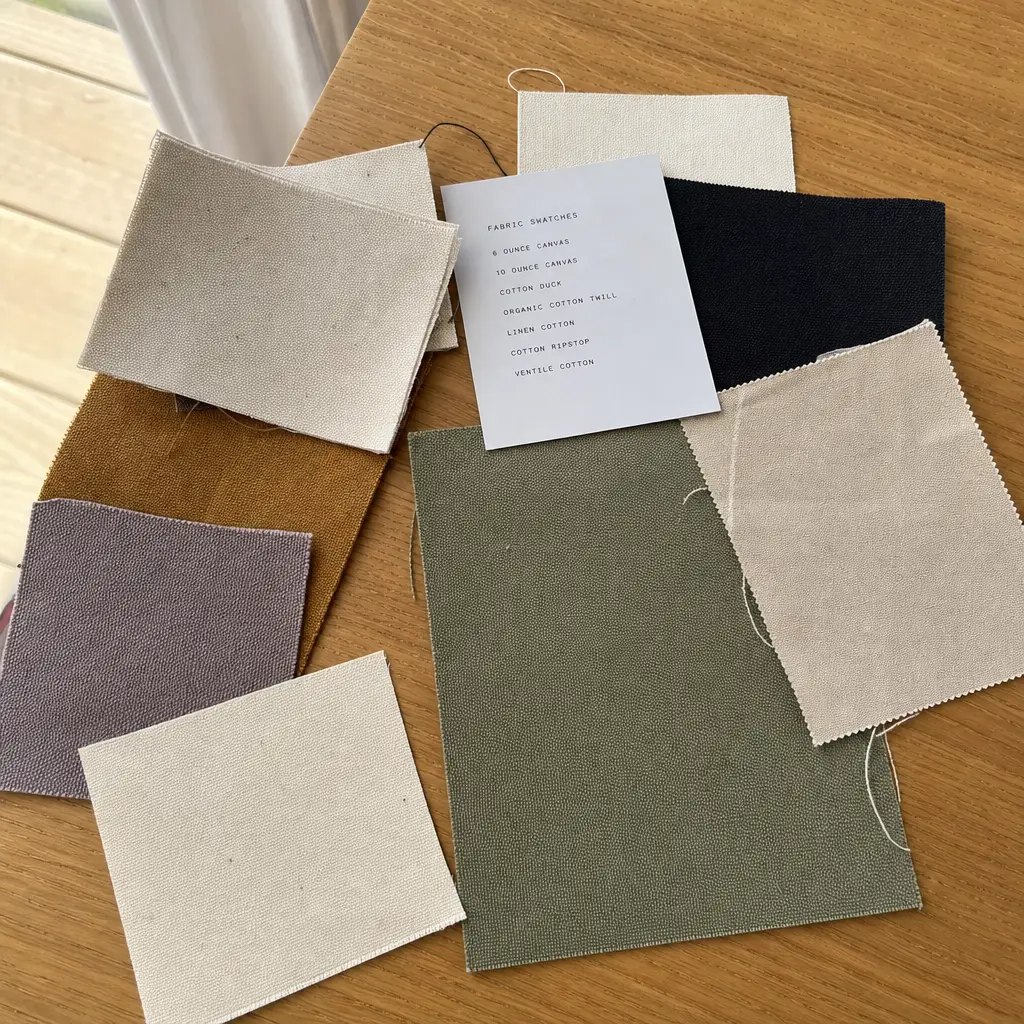
What tech startup buyers are actually paying for
When a startup buys custom canvas messenger bags in bulk, the price is rarely driven by the bag shell alone. The quote is usually a bundle of fabric choice, construction complexity, decoration method, trim sourcing, packing labor, and the supplier’s ability to absorb change requests without resetting the line. That is why two bags that look similar in a catalog can land at very different prices once the buyer asks for logo placement, laptop fit, and warehouse-ready packing.
For procurement teams, the key is to price the use case rather than the object. A bag for onboarding kits can stay simple if it only carries notebooks, a charger, and a welcome insert. A bag for commuter use or resale needs stronger seams, cleaner finish work, and a more disciplined QC standard because the cost of a visible defect is higher than the cost of a slightly heavier canvas body. The right brief should tell suppliers how the bag will be used, how it will be packed, and what kind of brand presentation it must support.
This is also where cost confusion starts. Buyers often request one quote and then compare it to another quote that uses a different canvas weight, a different lining assumption, or a different print method. That makes the lower number misleading. A better approach is to define the same base spec for every supplier and then compare how each one prices the same materials, same decoration, and same packing standard.
- Define the end use before asking for pricing
- Normalize fabric, print, and packing across suppliers
- Treat setup fees and packing labor as part of the real unit cost
Choose canvas weight and structure around actual carry load
Canvas weight is one of the easiest ways to control cost, but it should not be chosen in isolation. A light bag that works for paper goods can fail visually once employees stuff it with a laptop, adapter, notebook, and water bottle. In practice, buyers need to ask how the bag will hang when filled, whether the base should be reinforced, and whether the gusset should be flat or deep enough to hold everyday carry items without twisting.
For many startup programs, 12 oz canvas is the practical middle ground because it offers enough body for routine carry without pushing sewing cost too high. If the bag is meant to support a premium retail line or daily commuter use, 14 oz canvas can be a better fit because it resists collapse and makes print placement look more stable on the finished panel. By contrast, 10 oz canvas is best reserved for lighter event use, internal giveaways, or paper-based kits where structure is less important than unit price.
Finish matters as much as weight. Natural canvas usually quotes more consistently because the look is straightforward and there is less shade management. Washed canvas can feel softer and more premium, but buyers should expect more batch-to-batch variation unless the supplier has clear dye-lot control. If your brand needs a consistent visual standard across repeat orders, ask for an approved bulk swatch and confirm whether the production lot will be matched to the same mill and finish process.
- 10 oz: lighter, cheaper, and better for giveaways or document carry
- 12 oz: balanced option for most startup onboarding and conference programs
- 14 oz: stronger body, better shape retention, and higher sewing load
- Washed canvas: better hand feel, but tighter shade control is needed
Build the pricing plan around the quote lines that actually move cost
The most useful pricing plan is not a single unit number. It breaks the order into the bag shell, decoration, packing, and freight assumptions so the buyer can compare vendors without hidden gaps. If one factory gives a low quote for the bag but separately charges for label attachment, tissue, and carton conversion, that quote may end up more expensive than a more complete offer from a different supplier.
A strong RFQ should therefore ask for line-item pricing. That means the supplier should state the base bag construction, the decoration method and setup fee, the packing format, and any one-time tooling or sample charges. This is especially important for tech startups because the first order is often smaller than a mature retail program, so setup costs make up a larger share of the landed unit price. If the order is only a few hundred or a few thousand pieces, a modest difference in screen setup, carton density, or label application can materially change the real per-bag cost.
For simple logo work, screen printing is often the lowest-cost route when the artwork is bold and limited to one or two colors. If the design includes fine text, gradients, or a more premium brand mark, the buyer should test whether woven labels, embroidery, or a simplified one-color print will protect quality without creating rework. The goal is not to force the cheapest decoration; it is to buy the decoration method that matches the artwork and does not inflate scrap or lead time.
- Ask for separate pricing on bag, decoration, packing, and freight assumptions
- Check one-time setup charges for screens, plates, labels, or dies
- Use the artwork that best fits the production method, not the other way around
Supplier routes differ more than buyers expect
The cheapest supplier route is not always the best one for bulk canvas messenger bags. A direct factory with in-house sewing and printing often gives the strongest process control because the same site can manage cutting, seam construction, logo placement, and carton packing. That usually makes defect ownership clearer and shortens the back-and-forth when samples need adjustment.
Trading companies can still be useful, but buyers should be cautious about how much of the order is being coordinated rather than physically made. If the office that quotes you is not the site that sews, prints, or packs the goods, then a problem in one step can become a finger-pointing exercise across vendors. That matters for startup buyers because the order may be tied to a launch date, conference, or employee shipment window that has little tolerance for delays.
There is also a useful middle route: a supplier that manages a stable factory but still handles the commercial coordination in-house. This can work well if the production site is transparent and the supplier will disclose who owns sewing, who owns printing, and who sources trim. The main check is simple: can they show the actual production floor, and can they explain exactly which tasks are done where? If the answer is vague, the quote is harder to trust.
The best route depends on internal bandwidth. A procurement team that can manage samples, artwork approval, and packaging details can usually extract more control from a direct factory. A lean startup team that needs a single point of contact may prefer a coordinator, but only if the supplier gives clear line-of-sight into the real manufacturing chain.
- Direct factory: strongest visibility into the real production line
- Trading company: easier coordination, but harder to trace responsibility
- Hybrid supplier: workable if factory identity and process ownership are disclosed
How to compare quotes without comparing the wrong bag
A useful comparison only works when every supplier is quoting the same product. That means the same canvas weight, same dimensions, same gusset depth, same strap construction, same print area, and same packing count. If one supplier quotes a 12 oz bag with a simple one-color logo while another quotes a 14 oz bag with a woven label and reinforced base, the price difference is not commercially meaningful until it is normalized.
Procurement teams should build a simple comparison framework that includes more than unit price. You need to know whether the supplier included tooling, whether the sample cost is refundable, whether the decoration is in-house, whether trims are standard or sourced to order, and whether the carton spec fits your warehouse receiving process. A low ex-factory price can still create higher inbound cost if the cartons are oversized or if the supplier requires multiple print passes.
The comparison table below is useful because it drives a buying decision rather than just listing specs. It shows where cost is likely to land, what control each route offers, and which commercial risk should be checked before you move forward. In supplier selection, clarity about risk is often more valuable than a slightly lower quote.
If you are comparing factories, ask each one to annotate the quote with included and excluded items. That should cover fabric, cutting, sewing, print setup, print run, labels, inner packing, outer cartons, and any export document fee. Once those lines are visible, buyers can compare the total landed cost per usable bag instead of arguing about which supplier’s base price looks cheaper on paper.
- Compare only matched specs and matched packing assumptions
- Ask suppliers to flag all excluded costs in writing
- Normalize to landed cost per usable delivered bag
Set MOQ expectations early, but test the reasons behind them
MOQ is one of the most misunderstood parts of custom canvas messenger bag sourcing. Suppliers often quote MOQ as a single number, but the real constraint may sit in the fabric dye lot, the print screen setup, the label run, or the carton pack pattern. A factory might accept a total order of 2,000 pieces but require 1,000 pieces per color because the fabric is cut and dyed in separate batches. Another supplier may be able to make a smaller run but charge more per unit because the setup cost has fewer pieces to absorb it.
For tech startup buyers, the best response is not to fight MOQ blindly. It is to ask what drives the MOQ and whether some parts can be standardized. For example, you may be able to hold one neutral base bag across colors and vary only the print or label. Or you may decide to make the same body across multiple programs and change only a removable insert or woven side tag. That lowers complexity and can help the supplier keep the order closer to a reasonable production batch.
A good MOQ conversation should also cover repeat orders. If the order is likely to recur, ask whether the supplier can hold blank bodies, keep the same screen file, or preserve the same trim specification for the next purchase order. That matters because the first order often includes setup costs that should not be repeated if the spec stays unchanged.
- Ask what drives MOQ: fabric, color, print, trim, or packing
- Check whether MOQ is per style, per color, or per artwork version
- Negotiate repeat-order continuity for screens, trims, and body patterns
Sampling should prove construction first, then decoration
A sample program should answer different questions at each stage. The first sample, often called a proto sample, should confirm the shape of the bag, the panel proportions, strap length, pocket access, and whether the bag can carry the intended load. This is where buyers catch problems like a gusset that is too shallow, a strap that sits awkwardly on the shoulder, or a pocket that is too tight for the charger and cable kit the startup actually wants to distribute.
The pre-production sample is the more important commercial checkpoint because it should use final fabric, final labels, final print method, and final packing method. If the supplier shows you a clean sample made with substitute material or temporary trims, that sample should not be treated as production approval. A visual prototype can still hide shrinkage, color mismatch, or print adhesion issues that appear only when the final materials are used together.
A shipment sample is the last useful step before balance payment or release of the shipment. Procurement teams should use that sample to verify that the bulk run still matches the approved dimensions, decoration placement, and carton presentation. For small startup orders, this extra check is usually worth the time because one bad production batch can consume a large percentage of the year’s merch budget.
It helps to write down what each sample must prove. Construction sample: size and usability. Material sample: fabric and color. Pre-production sample: final execution. Shipment sample: bulk consistency. That sequencing keeps the process from becoming a generic sign-off exercise and helps the buyer stop defects earlier, when they are cheaper to fix.
- Proto sample: validate size, carry comfort, and pocket layout
- Pre-production sample: validate final fabric, print, and labels
- Shipment sample: validate bulk consistency before final payment
Quality control needs concrete limits, not general promises
QC for canvas messenger bags is most effective when the buyer gives measurable acceptance criteria. General language like “good stitching” or “high quality print” is not enough. The supplier should know which dimensions matter, what defect counts as minor, and which issues cause rejection. That is especially important for startup buyers because quantities are often modest, which means a handful of bad bags is visible enough to create complaints immediately.
The first checks should be dimensional. Bag width, height, gusset depth, strap length, and pocket placement should be measured against the approved sample. A reasonable tolerance depends on the construction, but it should be agreed before production starts. Buyers commonly use tighter tolerances on visible dimensions and looser tolerances on non-critical internal seams. If the strap drop or body width drifts too far, the bag may still function, but it no longer matches the approved merchandising look.
Next comes seam and stitch inspection. Bartacks should be present at the main stress points: strap joins, pocket corners, gusset ends, and other load-bearing intersections. Stitch density should be even, with no skipped stitches, seam puckering that weakens structure, or loose thread tails left on the face of the bag. If the bag includes hardware, it should be checked for rust, bent edges, or loose attachments that could scratch the canvas or damage adjacent bags in the carton.
Decoration inspection should be just as strict. Print placement should sit within the approved zone, and the logo should be evaluated for opacity, edge clarity, and registration. A little print drift may be acceptable on a woven label, but it is much more visible on a large front panel. For startup programs that use the bags as brand assets, the visual standard should be closer to retail than promotional giveaway quality.
A practical lot standard is more useful than vague inspection language. Many buyers use an AQL-style inspection plan for incoming goods and then add specific reject conditions for visible cosmetics. Typical reject examples include oil stains, broken stitches, crooked labels, major print shift, and weak bartacks. Acceptable examples can also be written down: for instance, very short thread trimming may be allowed if it does not affect appearance, while any seam that opens under light pull should fail. This kind of clarity helps factories self-check before inspection and reduces avoidable disputes.
- Measure bag dimensions, strap drop, and pocket placement against the approved sample
- Reject skipped stitches, weak bartacks, broken seams, and visible contamination
- Define acceptable print drift, shade variation, and thread trimming before mass production
Packing choices affect freight, damage rate, and warehouse labor
Packing is often treated as a minor line item, but it can change both landed cost and receiving speed. Bulk packing usually costs less and uses less carton space, which helps when the bags are going to warehouse distribution or internal kitting. However, bulk-packed canvas bags can crease if cartons are overfilled or if the bags contain rigid trim or hardware that presses against the fabric during transit.
Individual polybags give a cleaner presentation and can help retail or ecommerce programs, but they add material and labor cost. They also create more waste and may slow down unpacking if your team does not need each bag individually wrapped. For tech startup buyers, the right format depends on whether the bags will be handed out from storage, shipped to remote teams, or placed directly into customer-facing channels.
The packing spec should also address carton count and protection. A good spec tells the supplier how many bags go into an inner pack, whether tissue should separate logo faces, whether a barcode sticker is needed, and what the carton size should be. That matters because carton dimensions affect pallet efficiency and the ease of receiving at your warehouse. If the bags are over-compressed, the print face can rub, the edges can crease, and the carton may arrive looking tired even if the product itself is fine.
A practical rule is to make the packing job reflect the channel. Retail-ready products need cleaner presentation. Internal distribution can tolerate simpler packing if the goods still arrive clean and undamaged. The buyer should not pay for unnecessary presentation work, but should also not save a few cents on packing only to spend time reworking damage at arrival.
- Bulk pack for lower cube and warehouse distribution
- Use polybags only when presentation or fulfillment requires them
- Specify inner pack count, carton size, and surface protection in writing
Lead time should be broken into stages, not one vague promise
Lead time on custom canvas messenger bags is usually driven by more than sewing capacity. The hidden delays often come from fabric booking, dye-lot approval, print setup, label sourcing, and sample sign-off. A supplier that quotes only one production window without explaining the steps may still be honest, but the buyer has no way to see where the schedule can slip. That is a problem when the bags are tied to a launch event, a conference date, or an employee onboarding calendar.
The best schedule is written by stage. It should show how long the sample takes, when raw materials are locked, how long printing and sewing take, how long inspection takes, and when export packing and dispatch occur. If the supplier sources multiple trims from different vendors, the buyer should ask which item is longest lead. In many programs, the trim is not the bag body; it is the label, zipper, snap, or special canvas finish that extends the timeline.
Buyers should also ask for a realistic buffer. Rework after pre-shipment inspection is common, and a good supplier should acknowledge that. If the delivery date is fixed, the purchase order should communicate the latest acceptable ship date and the consequences of missing it. That is not about threatening the supplier; it is about making sure the quote reflects the real commercial need rather than a generic factory lead time.
For repeat orders, ask whether the schedule gets shorter after the first run. If the fabric, screen, and labels are already approved, the answer should usually be yes. That kind of continuity is one of the clearest indicators that the supplier actually controls the production workflow instead of only coordinating it.
- Ask for lead time by stage: sample, materials, production, inspection, packing
- Confirm whether trims or labels are the long-lead items
- Build a buffer for rework and final sign-off before ship date
Specification comparison for buyers
| Supplier route | Typical price position | Control over sewing and print | Best use case | Commercial tradeoff to check |
|---|---|---|---|---|
| Direct factory with in-house sewing and printing | Usually lowest to mid-range on repeat orders | High, if the factory truly owns fabric cutting, sewing, printing, and packing | Recurring startup kits, onboarding programs, and simple retail runs | Lower price only matters if the same factory controls the actual production line and not a subcontractor |
| Trading company managing one factory | Often mid-range with more markup embedded | Medium, because coordination may sit outside the production floor | Mixed merch programs or buyers who need one point of contact | You may pay for convenience and lose visibility on who owns print, trim sourcing, and defect correction |
| Trading company coordinating multiple factories | Usually highest quote spread and more variable | Low to medium, depending on how many vendors touch the order | Complex programs with bags plus accessories or non-standard packaging | Different factories can mean color variation, inconsistent stitch quality, and harder claim handling |
| Domestic decorator on imported blank bags | Can be competitive for smaller runs, but freight and labor vary | High for decoration, low for bag construction | Short-run brand launches or regional fulfillment | Good for speed, but blank-bag supply, shrinkage, and color match can be harder to normalize |
| Fully custom OEM with dedicated spec control | Mid to high on first order, better on repeat programs | Highest, if the spec is locked and samples are controlled | Private-label programs, retail merchandising, and standardized employee kits | Higher setup time and sample effort, but fewer surprises in repeat purchase orders |
| Material | 10-16 oz canvas, washed canvas, rPET canvas, lining fabric, interfacing, and hardware finish | Before price comparison | Different cloth weights, backing, or certification claims make quotes hard to compare | |
| Construction | flap shape, strap webbing, buckle, D-ring, inner pocket, zipper pocket, seam allowance, and load path | Before sampling | Weak stress points create returns and failed inspections | |
| Decoration | embroidery, woven patch, leather patch, metal label, or print placed away from flap folds and hardware pressure | Before artwork approval | The wrong method can crack, bleed, pucker, or fail on the chosen fabric |
Buyer checklist before sampling
- Confirm the end use first: laptop carry, onboarding kit, conference giveaway, retail shelf item, or distributor pack.
- Lock bag dimensions, gusset depth, strap length, and laptop fit before asking for a price.
- Specify canvas weight in oz or GSM, plus finish type, dye method, and whether the fabric should be washed or raw.
- State the decoration method, print size, artwork color count, and exact placement zone with vector artwork.
- Require the supplier to identify who owns cutting, sewing, printing, label application, and carton packing.
- Ask for a sample chain: proto sample, pre-production sample, and shipment sample, with dates for each.
- Request a written QC standard with tolerance ranges for size, stitch, print alignment, and stain control.
- Normalize all quotes to the same packing count, carton size, and freight assumption before comparing.
- Ask whether MOQ applies per color, per style, per artwork, or per trim package.
- Confirm whether packaging is bulk, polybagged, tissue-wrapped, barcode-labeled, or retail-ready.
Factory quote questions to send
- What exact canvas construction are you quoting, including weight, weave, finish, and expected shrinkage after cutting or washing?
- Is the price based on in-house sewing and printing, or are any steps subcontracted? If subcontracted, which ones?
- What is the MOQ by color, by artwork version, and by trim package? Can blank bodies be held for repeat decoration later?
- Which sample is included in the schedule: proto sample, pre-production sample, color swatch, or shipment sample?
- What are the setup charges for screens, plates, embroidery files, woven labels, or dies, and are they one-time or recurring?
- How are strap reinforcement, bartacks, seam allowance, and corner stress points controlled in bulk production?
- What measurement tolerances do you accept for bag width, height, gusset, strap drop, and pocket placement?
- What is your defect threshold for print misalignment, skipped stitches, loose threads, oil marks, shade variation, and broken hardware?
- What carton size, gross weight, inner pack count, and pallet pattern do you recommend for export or warehouse receiving?
- Can you share photos of a recent bulk run with the same canvas weight and decoration method?
Quality-control points to confirm
- Canvas weight should be checked against the agreed spec, with a practical tolerance often set around plus or minus 5% to 8% depending on the mill and finish.
- Fabric shade should be compared against the approved standard under consistent light; a visible mismatch between panels, pockets, and straps should be rejected.
- Cut size should stay within an agreed tolerance, commonly about plus or minus 0.25 in to 0.5 in for bag dimensions, depending on size and construction complexity.
- Strap length and strap drop should be measured from finished bag to finished attachment point so shoulder fit stays consistent across cartons.
- Bartacks should be present at strap joins, stress corners, handle ends, and pocket openings where load transfer is highest.
- Stitch density should be even and secure, with no skipped stitches, seam puckering that weakens structure, or loose thread tails that affect appearance.
- Print placement should be centered or positioned within the approved tolerance band; visible drift is less acceptable on a large front panel than on a small woven label.
- Print opacity and edge clarity should be checked for pinholes, bleeding, smudging, or ghosting, especially on dark canvas.
- Hardware, if used, should be free of rust, burrs, bent components, and loose rivets or snaps.
- Bags should be inspected for stains, oil spots, broken needles, fabric snags, or contamination from cutting and packing operations.