Start With The Real Landed Cost
A custom canvas messenger bag for a farmers market vendor is not a decorative tote. It carries cash pouches, card readers, notebooks, tape, produce labels, gloves, seed packets, small tools, and a phone through a long market day. That makes the buying decision less about the cheapest quote and more about the cost to land a bag that will not fail under daily use.
The first mistake is comparing unit prices without matching the spec. A lighter bag with a looser strap, thinner canvas, or simpler packing can look cheaper on paper and still cost more after replacements, complaints, and freight surprises. A usable pricing plan starts with one approved build, then separates factory price, setup, packing, freight, duty, inspection, and domestic delivery.
If the supplier is quoting a different bag than the one you want, stop the comparison. Ask for a revised offer on the same measurements, canvas weight, decoration method, and packing standard. That one discipline removes most of the noise from buyer-supplier conversations and makes the numbers usable.
- Compare only like-for-like specs, packing, and Incoterms.
- Treat missing details as risk, not savings.
- Use the approved sample as the commercial reference.
- Keep setup and freight separate from unit price.
- Ask what changed if one quote is much lower than the others.
Use A Tiered Pricing Plan Buyers Can Audit
A good bulk pricing plan should show where cost falls as quantity rises and which items stay fixed. For a mid-spec bag with 12 oz canvas, one-color screen print, lined pocket, reinforced base, and basic bulk packing, the buyer should see the difference between a first run and a volume run. The point is not to predict every supplier quote. The point is to make the cost structure visible before a PO is issued.
Illustrative planning model, not a supplier quote: | Quantity | Factory unit | Setup amortization | Packing | Freight | Landed planning total | | --- | ---: | ---: | ---: | ---: | ---: | | 300 | $4.95 | $1.05 | $0.42 | $1.25 | $7.67 | | 500 | $4.30 | $0.70 | $0.38 | $1.00 | $6.38 | | 1000 | $3.75 | $0.40 | $0.34 | $0.78 | $5.27 | | 3000 | $3.18 | $0.18 | $0.28 | $0.55 | $4.19 |
The fixed part of the cost sits in pattern work, sample development, screen setup, woven labels, and carton marks. The variable part sits in canvas, trim, sewing time, packing labor, and freight cube. When the volume grows, the fixed part shrinks per unit; when the spec gets more complex, the variable part rises. Buyers should ask suppliers to separate those two layers in writing.
- Ask suppliers to show unit price and setup cost as separate lines.
- Request the same tiering at 300, 500, 1000, and 3000 units.
- Track which costs dilute with volume and which do not.
- Keep sample fees and artwork work in a separate budget line.
- Use the landed total, not factory price, as the award number.
Build The Bag Around Market-Day Use
Farmers market vendors move differently from office users. They stand, bend, reach across a stall, hand products to customers, and keep money and tools within quick reach. A bag that opens awkwardly or collapses under weight creates friction all day. Design should start with that workflow, not with a generic messenger silhouette.
Write a short use profile before quoting. Does the bag need to hold a tablet, card terminal, envelopes, or a printed price sheet? Is it worn crossbody for six hours or only carried between the car and the stall? Does it need to fit a legal pad, an A4 folder, or a small water bottle? Those answers drive gusset depth, closure choice, pocket placement, and shoulder comfort.
The product tier also matters. A vendor work bag should favor access, strap comfort, and reinforcement. A staff bag can be simpler if it will not be resold. A retail bag needs cleaner finishing and more consistent presentation because customers judge it by stitching, label placement, and carton appearance before they ever use it.
- For vendor use, prioritize access, comfort, closure security, and strap reinforcement.
- For retail resale, prioritize finish consistency and presentation packing.
- For promo use, prioritize simple construction and controlled decoration cost.
- If the bag must hold a tablet or payment terminal, specify the internal clearance directly.
- If the bag must carry 3 to 5 kg routinely, state that load requirement in the RFQ.
Write A Spec Sheet That Leaves No Guesswork
Factories price cleanly when the spec is measurable. Include finished body width, height, gusset depth, flap length, opening width, strap length or adjustment range, strap width, pocket count, pocket dimensions, lining requirement, reinforcement panels, hardware finish, thread color, label type, decoration size, and packing method. A sketch helps, but the written measurements are what make inspection possible.
Use one measurement system and keep it consistent. Canvas is usually discussed in oz/yd2 or gsm. As a practical reference, 10 oz canvas is about 340 gsm, 12 oz is about 407 gsm, and 14 oz is about 475 gsm. If you need the bag to fit a tablet, recipe binder, or cash tray, state the internal clearance requirement instead of hoping the supplier will infer it.
Tolerances should be written into the spec before sampling starts. A common starting point is about plus or minus 1 cm on the finished body and about plus or minus 5 mm on logo placement, but the final tolerance should match the construction and artwork. If a supplier cannot quote from a measurement sheet, the quote will not be reliable in production either.
- Measure the finished bag, not just the pattern pieces.
- Specify canvas weight, fiber content, weave, finish, and color reference.
- State what the bag must hold and how it will be used.
- Define tolerances for dimensions and logo placement.
- Ask suppliers to confirm every deviation before final pricing.
Choose Fabric, Structure, And Trim With Purpose
Canvas weight affects both cost and behavior. A 10 oz canvas can work for lighter-duty promotional runs or simple vendor use. A 12 oz canvas is often the most practical middle ground for a market vendor bag because it feels structured without becoming too stiff. A 14 oz canvas and heavier can make the bag feel more substantial, but they also increase material cost, sewing effort, needle wear, and freight weight.
Weight alone does not tell the full story. Two fabrics at the same nominal weight can behave differently because of weave density, yarn quality, finish, dye method, and whether the fabric is washed, coated, or stabilized. If you plan repeat orders, ask how the supplier controls dye lot drift and whether approval is by swatch, lab dip, or production fabric. A shade that looks fine in one carton can become a problem when the same order is reordered six months later.
Trim choices change price quickly. Wider webbing, better zippers, metal sliders, lined pockets, internal dividers, base stiffeners, binding tape, and woven labels all add material and labor. None of them are wrong. The buyer just needs to price them intentionally. A farmer-facing work bag may benefit more from reinforcement and clean access than from decorative hardware that does nothing in use.
- Use 10 oz canvas for light-duty or cost-sensitive programs.
- Use 12 oz canvas for a balanced vendor work bag.
- Use 14 oz canvas when structure and retail feel matter more.
- Ask whether fabric is pre-shrunk, washed, coated, or untreated.
- Quote lining, zipper pocket, divider, base board, label, and hardware as separate items.
Branding Should Survive Daily Handling
A farmers market messenger bag gets rubbed by hands, seat belts, carts, counters, and other bags. Branding has to survive that abuse without bleeding, cracking, or turning fuzzy on the canvas weave. A mockup is not enough. The buyer needs to know how the mark behaves on actual fabric after curing, folding, and handling.
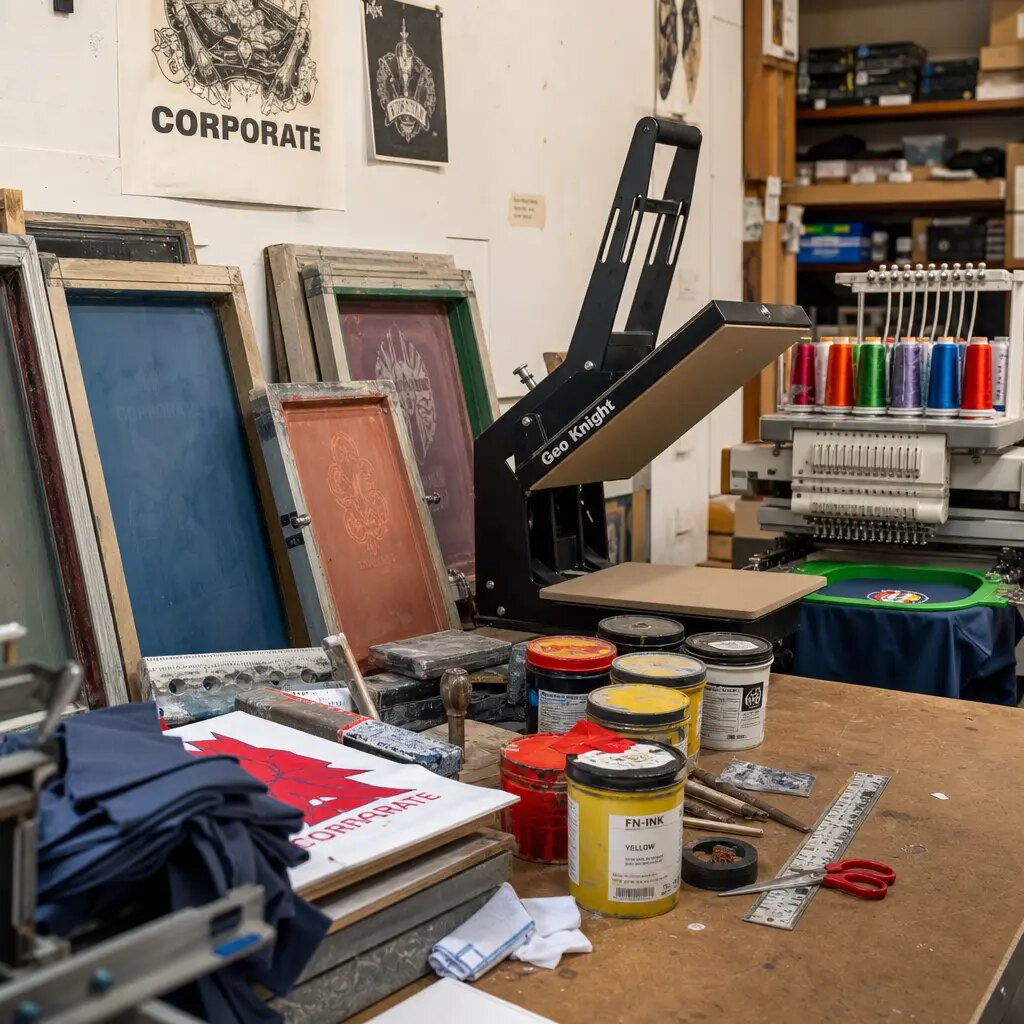
Screen print is usually the best value for simple logos and repeat volume because setup can be spread across the order and the result is durable when cured correctly. Digital print or transfer methods are better when artwork is detailed or color-heavy, but the buyer should check handfeel and rub resistance. Embroidery looks premium on some bags, but dense stitching can pucker heavy canvas and blur small lettering. For tiny text, a woven label or stitched patch is often cleaner than forcing too much detail into thread or ink.
Treat artwork placement as a measurement, not a suggestion. Define the print area, color count, Pantone or color target if needed, and placement tolerance. Ask whether printing happens before or after assembly, because that affects both cost and accuracy. If a pocket seam or flap edge cuts into the logo area, the supplier should flag it before sampling rather than improvising in production.
- Use screen print for simple logos and repeat orders.
- Use digital or transfer print when the artwork truly needs more complexity.
- Use embroidery only when the artwork is large enough to stay legible on canvas.
- Use woven labels or stitched patches for small, durable branding.
- Approve decoration on a physical sample made from production-like canvas.
Sampling Should Have A Clear Gate
Sampling is where the buyer catches expensive mistakes early. The first prototype should prove shape, proportions, pocket placement, strap comfort, and basic construction. It does not need to be the final material set if everyone agrees that it is only a development sample. The pre-production sample is different. It should show the final fabric, trim, hardware, label, decoration method, and packing plan.
That approved pre-production sample becomes the golden sample. Both sides should keep a documented copy with photos, measurements, and notes. Bulk production should be judged against that sample, not against a memory of a phone call. If the supplier wants to cut bulk fabric before sample approval, the buyer should treat that as a risk signal. Any late change at that point can become rework, waste, or a dispute.
Sampling terms should be commercial terms, not casual favors. Ask whether sample fees are credited against the order, how many revisions are included, what changes trigger a new fee, and how long each stage takes. If multiple colors are involved, decide whether the buyer needs one construction sample plus color swatches or separate physical samples for each version.
- Use the prototype to validate shape, dimensions, pocket placement, and strap comfort.
- Use the pre-production sample to validate final materials and decoration.
- Do not release bulk production until the golden sample is approved in writing.
- Photograph the approved sample from front, back, side, inside, strap, closure, and logo views.
- Record measurements and tolerances on the same document used for inspection.
Verify The Supplier Before You Award On Price Alone
The cheapest quote is only useful if the supplier can actually make the bag they priced. Direct factory and trading company both can work, but the buyer should know which one is speaking and who is doing the real production. Ask for the business license, factory address, recent production photos, and a recent audit report or inspection summary. If the supplier uses subcontractors, ask for disclosure before the order is placed, not after the first defect appears.
A direct factory usually gives better technical clarity and faster correction on repeated orders, but only if they are truly running the line themselves. A trading company can help coordinate multiple materials or easier communication, but the buyer needs to see the real factory relationship in writing. Ask for reference orders or customer categories where confidential names are removed if necessary. You are checking capability, not collecting marketing claims.
A useful verification step is to ask for a live production photo set or a short video of the sewing, printing, or packing line with the date visible. If the supplier cannot show how the bag is actually made, the buyer should assume that the quote is less mature than it looks. Verification is cheaper than correcting a bad order after goods are in transit.
- Request the business license and factory address.
- Ask for recent production photos and a recent audit or inspection summary.
- Confirm whether any work is subcontracted.
- Ask for reference orders or customer categories.
- Request line photos or a dated video when the quote feels unusually low.
Quality Control Has To Be Measurable
QC should read like an inspection sheet, not like a general promise. Start with dimensions, strap length, pocket size, logo placement, and material verification. Then inspect construction: stitch density, seam alignment, bar-tacks, thread trimming, zipper insertion, lining fit, closure alignment, and bottom reinforcement. If the supplier cannot tell the inspector what a pass or fail looks like, the factory does not really have a QC standard yet.
Function matters as much as appearance. Fill a few bags to the agreed working load and check strap anchors, bottom sag, closure behavior, and pocket usability. Open and close zippers repeatedly. Adjust the strap slider. Confirm the flap still closes cleanly when the bag is full. A bag can pass a flat-table review and still fail in actual market use if the load points were not reinforced correctly.
For an organized inspection program, many buyers use AQL 2.5 for major defects and 4.0 for minor defects, while treating critical defects as zero tolerance. Major defects might include wrong fabric weight, open seams, broken zippers, incorrect logo placement outside tolerance, or missing reinforcement at load points. Minor defects might include small thread ends or light shade variation within the approved band. Use the same definitions on every order so the factory cannot reinterpret them later.
- Measure dimensions and logo placement against the signed spec.
- Inspect bar-tacks, seam ends, gusset joins, zipper ends, and flap corners.
- Reject open seams, skipped stitches at load points, and weak reinforcement.
- Test zippers, snaps, buckles, and sliders for repeated function.
- Check for odor, stains, mildew, glue marks, contamination, and visible damage.
Packing, Cartons, And Freight Can Decide The Winner
Packing is not a small detail. Flat packing is efficient for redistribution and can reduce carton volume. Retail-ready packing may require folding rules, tissue, insert boards, hangtags, barcodes, polybags, or carton separation by color. Each of those choices affects labor, material cost, carton size, and receiving time. Buyers should ask for packing options as separate line items instead of accepting one vague note.
Carton data should be visible before award. Ask for carton dimensions, units per carton, net weight, gross weight, carton marks, and moisture protection if needed. Canvas can pick up odor or moisture if it is packed poorly or stored in a humid warehouse. For ocean freight or longer storage, ask whether desiccant or stronger carton board is included and whether the packing format is stable in transit.
A landed-cost worksheet should look like this: factory unit price plus setup amortization plus decoration plus packing plus freight plus duty plus brokerage plus inspection plus domestic delivery plus a reserve for rework. At 300 units, setup and freight may dominate. At 1000 units, setup dilution usually improves the quote. At 3000 units, the real swing often comes from material spec, carton volume, and how efficiently the bag is packed.
- Request bulk pack, individual polybag, and retail-ready packing as separate options.
- Confirm carton dimensions, units per carton, gross weight, and carton marks.
- Include barcode, hangtag, insert board, tissue, or desiccant only when needed.
- Compare freight using the same Incoterm and delivery point.
- Add duty, brokerage, inspection, and domestic delivery to the landed cost model.
Specification comparison for buyers
| Procurement path | Best fit | Typical MOQ band | Lead time impact | Setup cost exposure |
|---|---|---|---|---|
| Direct factory cut-and-sew | Stable specs, repeat orders, and buyers who can approve samples quickly | 300-3000+ pcs | Moderate; faster on reorders once the spec is locked | Medium, but efficient when spread across repeat volume |
| OEM factory with in-house decoration and packing | Orders that need sewing, logo application, labels, and export packing under one roof | 500-5000+ pcs | Lower handoff risk and often smoother scheduling | Medium to high, but easier to manage as one program |
| Trading company or sourcing agent | Programs with multiple materials, colors, trims, or buyers who need one coordinator | 300-10000+ pcs | Can add communication time and one extra approval layer | Higher and less visible because margin may be embedded |
| Stock canvas body plus custom logo | Fast launch tests, seasonal pilots, or first orders with limited design risk | 100-1000 pcs | Shortest lead time because the base bag already exists | Low setup cost, lower development effort |
| Fully custom retail-grade bag | Resale programs or long-term brand work where finish matters | 1000-5000+ pcs | Longer sampling and production cycle | Highest due to pattern, decoration, and approval work |
| Nearshore emergency run | Urgent replenishment or a missed season where time is more important than unit cost | 100-2000 pcs | Fastest when logistics, not tooling, is the main constraint | Often higher unit price but lower stockout risk |
Buyer checklist before sampling
- State the use case before asking for price: vendor work bag, retail resale item, promo giveaway, staff bag, or paid add-on.
- Lock finished body dimensions, gusset depth, flap length, opening width, strap length, strap width, closure type, and pocket count.
- Specify canvas weight in oz/yd2 or gsm, fiber content, weave, finish, color, and whether lining or reinforcement is required.
- Define the expected carry load so strap anchors, bar-tacks, base panels, and hardware can be quoted correctly.
- Provide logo artwork, decoration method, color count, print or label size, and acceptable placement tolerance.
- Confirm MOQ by style, color, decoration method, and material change; do not assume one MOQ applies to the whole program.
- Ask for price breaks at realistic quantities such as 300, 500, 1000, and 3000 units, and require the same spec at each tier.
- Separate sample fees, pattern fees, print screens, label setup, packing upgrades, and freight from the unit price.
- Confirm packing style, carton size, units per carton, and whether bags must arrive retail-ready or bulk packed.
- Request pricing under a clear Incoterm and keep freight, duty, brokerage, inspection, and domestic delivery separate in the landed cost model.
Factory quote questions to send
- Is this a direct factory quote or a sourced program? If any work is outsourced, who handles cutting, sewing, printing, labels, and packing?
- Can you share your business license, factory address, recent production photos, and a recent audit report or inspection summary?
- Which subcontractors are involved, and will you disclose any change in subcontracting before production starts?
- What exact canvas weight, fiber content, weave, finish, color, and shrinkage range are included in the quote?
- Which items are included in the unit price: lining, zipper, divider, base board, labels, hangtag, polybag, tissue, and export carton?
- What setup charges are separate: pattern making, sample development, print screens, embroidery setup, woven labels, die cutting, or artwork cleanup?
- What MOQ applies by style, canvas color, lining color, decoration method, hardware finish, and packing format?
- What are the sample fee, sample lead time, revision cost, and approval stage before bulk production can start?
- Will the pre-production sample use the same fabric, trim, thread, hardware, and decoration process planned for bulk?
- What carton dimensions, units per carton, net weight, gross weight, and carton marks are assumed in the packing quote?
Quality-control points to confirm
- Use an agreed inspection standard such as AQL 2.5 for major defects and 4.0 for minor defects, with zero tolerance for critical defects unless your internal standard is stricter.
- For a first order or a new supplier, inspect 100 percent of the first carton or the first 20 to 50 units before switching to lot sampling.
- Check finished body width, height, gusset depth, flap length, strap length, strap width, pocket size, and logo placement against the signed spec sheet.
- Perform a working-load test at the agreed daily carry weight, then add a small safety margin for a short hang or shoulder test; reject strap-anchor movement, seam creep, or visible distortion.
- Open and close zippers, snaps, buckles, hook-and-loop closures, and magnetic closures repeatedly; reject snagging, misalignment, broken teeth, or loosening hardware.
- Inspect bar-tacks, seam ends, bottom reinforcement, gusset joins, zipper ends, and flap corners for skipped stitches, open seams, or weak stress points.
- Confirm print, embroidery, or label color, edge clarity, opacity, placement, and rub resistance against the approved physical sample.
- Check for shade drift between cartons, fabric defects, contamination, odor, stains, glue marks, mildew, broken needles, and loose thread bundles.
- Verify packing count, carton marks, carton strength, moisture protection, and whether the packing format matches the purchase order.
- Record defect photos and a corrective action note for every rejection so the supplier cannot treat quality issues as verbal feedback only.