Start with the craft fair business model, not the bag name
A custom canvas messenger bag can mean several things in a craft fair program. It may be a low-cost giveaway, a paid merchandise item, a workshop kit bag, a vendor supply product, a subscription-box component, or a distributor stock SKU. Those uses should not share the same sourcing brief. A giveaway can usually accept simpler construction, limited pocketing, one-color decoration, and bulk carton packing. A resale item needs cleaner sewing, steadier print placement, better closure performance, clear unit identification, and a presentation that still looks good when the bag comes out of a carton and lands on a booth table.
Before requesting custom canvas messenger bags bulk pricing, define the expected load, target selling price, display method, reorder plan, and delivery deadline. If the bag only carries brochures and light purchases, a 10 oz canvas body with a simple flap and one-color screen print may be enough. If customers will carry catalogs, notebooks, class tools, fabric bundles, yarn, or packaged goods for several hours, the build needs more attention: 12 oz canvas, a 32-38 mm adjustable strap, reinforced strap tabs, and a practical gusset. Price follows use. Every feature changes fabric consumption, labor minutes, inspection time, carton volume, and reorder consistency.
- Giveaway program: simple flap, economical closure, one-color screen print, minimal pocketing, and bulk carton packing.
- Retail craft fair merchandise: cleaner seam finishing, adjustable strap, controlled artwork placement, hangtag, barcode, and careful unit presentation.
- Workshop kit bag: 6-8 cm gusset, inner slip pocket, strong strap tabs, and tested capacity for class materials.
- Artist merchandise: accurate print color, careful flap packing, premium hand feel, and physical strike-off approval where possible.
- Distributor stock: standardized shell bag, consistent print area, repeatable carton quantity, and SKU labels that make reordering simple.
Translate fabric language into GSM, processing, and approved shade range
Words like heavy, durable, eco, or premium are not enough for procurement. A factory quote should state fabric weight in both ounces and GSM. For canvas messenger bags used in craft fairs, 10 oz to 12 oz cotton canvas, approximately 340-410 GSM, is a practical middle range. It gives more body than lightweight tote fabric without the sewing bulk, carton volume, and freight impact of very heavy canvas.
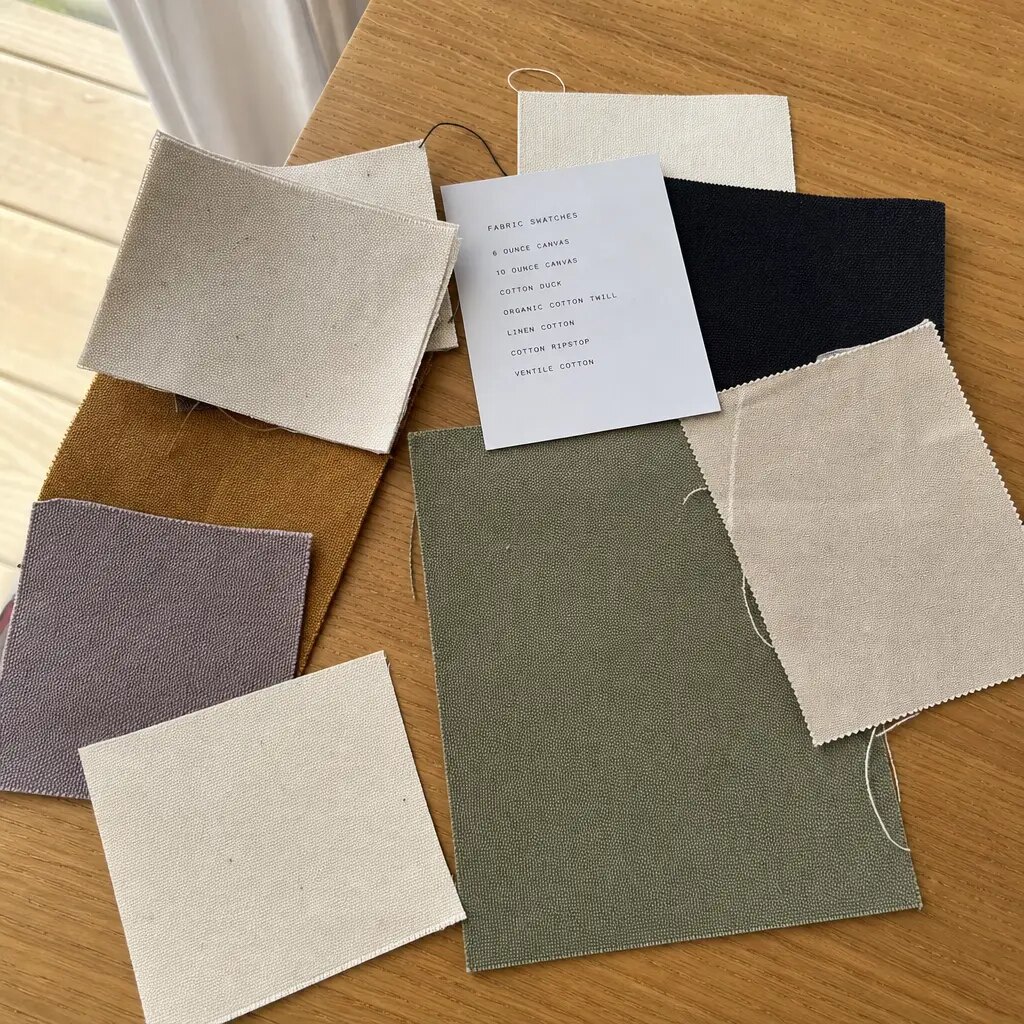
Fabric processing changes both price and performance. Natural unbleached canvas may suit a handmade or eco-style craft fair aesthetic, but the buyer must approve the acceptable range for seed flecks, slubs, and shade variation. Dyed canvas gives stronger brand control but needs lab dips or swatch approval, especially for repeat orders. Washed or enzyme-treated canvas can feel softer, yet shrinkage and distortion may differ from unwashed fabric. If a development sample uses substitute fabric, do not treat it as the final approval standard. The pre-production sample should be made from confirmed bulk fabric before cutting starts.
- 8 oz canvas: economical and easy to fold, but often too soft for a structured messenger shape.
- 10 oz canvas: practical value option for promotional, light retail, and fair supply programs.
- 12 oz canvas: stronger hand feel and better flap structure for paid merchandise.
- 14 oz and above: premium appearance, but higher seam bulk, carton CBM, sewing difficulty, and freight cost.
- Natural canvas: approve acceptable slubs, seed flecks, and shade range before production.
- Dyed canvas: request lab dip, bulk shade standard, and tolerance for shade variation between lots.
- Washed canvas: confirm shrinkage, hand feel, and whether dimensions are measured before or after washing.
Build the base technical spec before discussing artwork
Many price gaps happen because suppliers are not quoting the same bag. One quote may include an inner pocket, bound seams, and an adjustable strap. Another may assume a plain body, basic webbing, and no closure. A useful RFQ should define finished size, flap construction, gusset, closure, pocketing, strap, seam finishing, label positions, and packing method before comparing unit prices.
Finished dimensions must be separated from cutting dimensions. If the bag needs to hold a notebook, catalog, tablet sleeve, or kit contents, measure those items and test them inside the sample. A common craft fair range is about 30-38 cm wide by 25-32 cm high with a 6-8 cm bottom gusset. That is not a rule; it is a starting point. A no-gusset bag is cheaper but loses usable capacity and wrinkles when loaded. A deeper gusset improves function, but it increases fabric use, sewing time, and carton space. Flap length also matters. Artwork placed too close to the fold line may crack, distort, or disappear when the bag is closed.
- Specify finished body width, body height, gusset depth, flap length, pocket size, strap width, and strap-length range.
- Use dimensional tolerances such as +/-1 cm for body width and height unless the program needs tighter control.
- Define whether seams are folded, bound, overlocked, or enclosed inside the bag.
- State whether the flap edge is hemmed, bound, lined, or double-layered.
- Confirm pocket count, pocket mouth reinforcement, and whether the pocket must fit a phone, notebook, flyer, or kit card.
- Define label location: side seam tab, inner care label, woven front patch, printed neck-style label, hangtag, or barcode sticker.
Treat strap and closure choices as durability decisions
The strap is not a small trim. It is one of the first places a messenger bag fails when customers load it with books, tools, samples, or purchases. For unisex craft fair use, a 32-38 mm strap is usually more comfortable than a narrow promotional strap, especially over jackets or layered clothing. Cotton webbing has a natural look that pairs well with canvas. Polyester webbing may offer stronger color consistency and abrasion resistance. Either choice still needs compatible slider hardware and secure attachment.
Closures deserve the same attention. Hook-and-loop is economical and fast to sew, but visible hook-and-loop can make a resale bag look more promotional. Magnetic snaps give a cleaner retail appearance, yet they need backing washers, fabric reinforcement, and pull checks so the snap does not tear through the flap. A zipper main compartment improves content security but adds labor and inspection points. Poor zipper alignment, rough pullers, or weak tape quickly become customer complaints.
- Ask for strap material, width, thickness, color standard, slider material, and adjustment range.
- Require reinforced strap attachment using box stitch, bartack, dense backstitch, or patch reinforcement.
- Check whether the slider slips under load during sample review and final inspection.
- For magnetic snaps, confirm backing reinforcement and inspect for tearing around the snap.
- For hook-and-loop, define size, placement, color, and whether it is hidden under the flap.
- For zipper closures, specify zipper length, puller type, tape color, stitch alignment, and smooth opening/closing.
- Avoid decorative buckle details unless the extra labor and inspection time fit the retail margin.
Match decoration method to artwork, quantity, and canvas texture
Screen printing is usually the most predictable bulk method for one to three spot colors, especially once setup cost can be spread across 500 pieces or more. It works well for bold logos, event names, sponsor marks, and simple craft fair artwork. The RFQ should state artwork size, position from measurable edges, Pantone references, ink coverage, and whether the buyer prefers a soft hand or stronger opacity.
Heat transfer can reproduce detailed illustrations, gradients, and multi-color artist work, but it must be tested on the actual canvas. A transfer that looks sharp on a flat sample can lift at the edge, crack after folding, or feel too glossy on natural cotton. Embroidery works for small premium marks, woven patches, or minimal logos. It is rarely the best choice for large illustrated flap panels because dense stitches can pucker lighter canvas and stiffen the flap.
- Use screen print for simple logos, line art, event names, and sponsor marks.
- Use heat transfer only after adhesion, rub, flex, and edge-lift checks on the selected canvas.
- Use embroidery for small logos or patches, not large full-front art panels.
- Specify artwork size, print location, color count, Pantone references, and maximum placement tolerance.
- Avoid placing detailed artwork across flap folds, closure hardware, side seams, or thick gusset transitions.
- Ask whether screen charges, artwork separation, transfer setup, and embroidery digitizing are included or separate.
- For multi-artist orders, keep print size and location consistent to reduce setup errors and packing mix-ups.
Plan MOQ and bulk tiers around the actual SKU split
Bulk pricing depends on production efficiency, not just the total purchase order quantity. A 1000-piece order with one construction, one fabric color, one print, one label, and one packing method is efficient. A 1000-piece order split into ten artworks, three strap colors, two closures, and mixed carton assortments is not. Cutting, printing, sewing, labeling, inspection, and packing all become more complex, so suppliers may treat the order as several small lots.
For craft fair buyers, the cleanest way to protect price is to standardize the shell bag and vary only the artwork. Keep the same fabric color, dimensions, strap, closure, pocket, label, and packing method. Then ask for artwork splits with the same print size and position. If seasonal editions or artist versions need different labels or carton marks, include that detail in the RFQ. It is cheaper to price complexity before sampling than to discover setup charges after the PO is nearly ready.
- Ask for MOQ per fabric color, artwork, strap color, closure type, label, and packing method.
- Quote realistic tiers: 300, 500, 1000, 3000, and 5000 pieces.
- State whether tiers are per SKU, per artwork, or total order quantity.
- For a new program, consider one core SKU at 500-1000 pieces and smaller tests for special designs.
- For repeat programs, lock a standard shell bag and update artwork seasonally.
- Ask suppliers to show below-MOQ surcharges separately instead of hiding them in unit price.
- Use a SKU matrix listing color, artwork, label, closure, packing, destination, and quantity.
Separate base cost, upgrades, setup charges, and landed cost
A serious bulk pricing plan should not stop at one FOB unit price. Break the quote into the base bag, decoration, optional upgrades, setup charges, sample charges, packing, and estimated freight impact. That structure helps procurement decide which upgrades create value. A 12 oz body may justify the extra cost for resale. A zipper, metal slider, second pocket, custom dust bag, and printed sleeve may push the item beyond the target margin.
Landed cost matters because canvas bags are affected by both weight and carton volume. A heavier bag may show only a modest FOB increase but create a larger freight impact. Ask for pieces per carton, carton dimensions, gross weight, net weight, and total CBM for each option. Confirm Incoterms as well. EXW, FOB, CIF, DDP, and domestic delivered prices are not directly comparable unless freight, duty, customs clearance, inland transport, warehousing, and compliance costs are modeled in the same way.
- Separate base construction from upgrades such as zipper, metal slider, second pocket, woven patch, hangtag, barcode, and individual packing.
- Show setup charges for screens, transfers, digitizing, labels, lab dips, and samples.
- Compare suppliers only after GSM, dimensions, strap, closure, print method, packing, and Incoterm are aligned.
- Request carton dimensions, carton quantity, gross weight, net weight, and total CBM.
- Include duty, freight, customs brokerage, inland delivery, warehouse handling, and retailer compliance labels in the final model.
- For craft fair deadlines, compare cost savings against the risk of missing the event season.
- Ask whether production lead time starts after deposit, artwork approval, sample approval, or bulk material arrival.
Use samples and strike-offs to lock the approval standard
A development sample is useful for shape and concept. A pre-production sample has a different job: it should represent the bulk order. It needs the confirmed fabric, actual strap webbing, final hardware, approved decoration method, final label, and intended packing fold. If the first sample uses available sample-room fabric or substitute trims, the supplier should identify every substitution in writing and make a final approval sample before bulk cutting.
Approval should be documented with measurements and photos, not a vague statement that the sample looks fine. Record fabric GSM, finished dimensions, print location, strap length range, pocket size, closure type, label placement, color standard, and packing method. For decorated bags, request a print strike-off or decorated panel before full production, especially if the artwork has fine lines, heavy ink coverage, multiple colors, or heat transfer details.
- Measure sample width, height, gusset, flap, pocket, strap width, and strap length range.
- Load the sample with intended contents such as catalogs, tools, yarn, class cards, or packaged goods.
- Wear the bag to check strap comfort, slider slippage, flap behavior, and closure access.
- Open and close snaps, hook-and-loop, and zippers repeatedly during sample review.
- Fold the bag as it will be packed and inspect whether print creases, cracks, or sticks.
- Photograph front, back, inside, strap tabs, closure, label, print close-up, and folded packing view.
- Do not approve bulk cutting until material, construction, decoration, and packing are all confirmed.
Write QC criteria before production starts
Quality control for canvas messenger bags should be defined before the purchase order is released. Many buyers use an AQL inspection plan with defect classifications, but the plan should also include product-specific checks. Critical issues include unsafe hardware, broken straps, wrong SKU, mold or mildew odor, incorrect artwork, and major functional failure. Major defects include wrong dimensions outside tolerance, weak stitching, visible stains, misaligned print, defective zipper, loose magnetic snap, and incorrect packing. Minor defects may include small thread ends, slight natural slub variation within the approved range, or minor wrinkles that do not affect saleability.
Inspection should combine visual review, measurement, and functional testing. Measuring the flat body is not enough. Inspectors should also check gusset depth, flap length, pocket placement, strap attachment, closure strength, print quality, shade, label accuracy, barcode readability, carton marking, and packing fold. For decorated craft fair bags, print and packing deserve special attention because booth presentation often depends on a clean front flap.
- Use the signed pre-production sample as the reference standard.
- Set body width and height tolerance, commonly +/-1 cm unless otherwise agreed.
- Set print placement tolerance, commonly +/-0.5 cm to +/-1 cm depending on artwork and construction.
- Check stitch security at strap tabs, flap corners, pocket mouth, and gusset corners.
- Perform functional checks on slider, snap, hook-and-loop, zipper, and strap attachment.
- Separate acceptable natural canvas slubs from stains, holes, dye spots, oil marks, and print smears.
- Check dry rub, tape adhesion, curing, and registration for screen prints.
- Check transfer edge lift, cracking after flexing, adhesion, and hand feel for heat transfers.
- Confirm unit count, SKU assortment, barcode, hangtag, carton mark, and carton sequence before shipment.
Control packing and lead time because the selling window will not move
Packing affects presentation, receiving accuracy, freight cost, and damage risk. Bulk packing is cost-effective for event supply orders. Retail programs may need individual polybags, paper bands, hangtags, barcode labels, or retailer carton labels. Canvas messenger bags should not be compressed so tightly that the decorated flap develops hard fold lines. During sample approval, confirm how the strap is tucked, whether the flap is folded, whether interleaving is needed, and how many units can be packed safely per carton.
Plan lead time backward from the warehouse receiving deadline, not the craft fair opening date. The calendar should include artwork approval, lab dip or swatch approval if needed, sample making, sample correction, pre-production approval, material booking, cutting, printing, sewing, finishing, inspection, packing, export documents, shipping, customs clearance, inland delivery, warehouse receiving, and allocation to booths or vendors. Air freight can rescue a late program, but it may erase margin from a low-priced canvas item. Earlier approvals are usually the better cost-control tool.
- Choose bulk pack for wholesale supply when unit presentation is less important.
- Use individual polybag, paper band, hangtag, or barcode only when resale or receiving accuracy requires it.
- Confirm carton marks: PO, SKU, design name, color, quantity, gross weight, carton number, and destination.
- Avoid folding large prints across hard crease lines, especially heat transfers or heavy ink coverage.
- Schedule inspection before cartons are sealed and released to the forwarder.
- Build buffer for dyed fabric, custom labels, special hardware, and multi-artwork printing.
- For urgent launches, simplify canvas color, strap color, closure, and artwork splits to protect delivery timing.
Specification comparison for buyers
| Spec decision | Recommended option | When it fits | Buyer risk to check |
|---|---|---|---|
| Canvas fabric weight | 10 oz to 12 oz cotton canvas, approximately 340-410 GSM; request the actual mill spec and confirm whether the finished bag is washed or unwashed | Most craft fair retail programs, workshop kits, artist merchandise, and event bags that need more structure than a tote without the cost and bulk of heavy canvas | Under 10 oz may collapse on a messenger shape; over 14 oz can increase needle breaks, seam bulk, carton CBM, and freight cost |
| Finished size and gusset | Common B2B range: 30-38 cm W x 25-32 cm H with 6-8 cm bottom gusset; confirm these as finished dimensions, not cutting dimensions | Bags intended to hold catalogs, notebooks, class handouts, yarn, tools, small packaged goods, or a tablet sleeve | No-gusset or shallow-gusset bags reduce usable capacity; missing tolerances make inspection disputes more likely |
| Strap system | 32-38 mm cotton webbing or polyester webbing with adjustable slider, reinforced strap tabs, and an approved strap-length range | Unisex use at fairs where customers may carry the bag for several hours over clothing or outerwear | Thin straps can cut into the shoulder; weak sliders can slip; strong webbing still fails if attachment stitching is poor |
| Closure choice | Hidden hook-and-loop for economy, magnetic snap for a cleaner retail look, zipper main compartment for higher content security | Giveaways can use a simple closure; paid merchandise often benefits from magnetic snap or zipper depending on price point | Magnets need backing reinforcement and pull checks; zippers add labor and inspection points; visible hook-and-loop can look promotional rather than retail |
| Decoration method | Screen print for 1-3 spot colors; heat transfer for detailed multi-color art after testing; embroidery for small marks only | Craft fair logos, artist artwork, sponsor versions, and seasonal designs on the flap or body panel | Large ink areas can stiffen the flap; transfers need adhesion and flex checks; embroidery can pucker lighter canvas |
| MOQ and price tiers | Quote 300, 500, 1000, 3000, and 5000 pieces by exact SKU split; state MOQ per fabric color, artwork, label, and packing method | Buyers testing a craft fair line, scaling a seasonal program, or consolidating distributor stock | A 1000-piece order split into 10 artworks may price like multiple small runs because of setup and handling |
| Packing format | Bulk pack for event supply; individual polybag, paper band, hangtag, barcode, and carton labels only when required | Wholesale craft fair supply can often use bulk cartons; retail resale programs usually need unit identification and clean presentation | Over-compression causes flap creases; missing SKU or barcode labels slows receiving and may create chargeback risk |
| Quote basis | Compare EXW, FOB, CIF, DDP, or domestic delivered only after specs, packing, carton data, and inspection scope are aligned | Procurement teams comparing direct factories, trading companies, and domestic distributors | Lowest unit price can exclude freight, duty, setup, sample charges, packing labor, or compliance labels |
| Quality control plan | Approved pre-production sample, written AQL, defect classification, inline check if needed, and final inspection before shipment | Any craft fair program with a fixed selling window and limited time for replacement stock | If tolerances and defects are defined after production, the buyer has less leverage on size, print, shade, stitching, or packing errors |
Buyer checklist before sampling
- Define the commercial purpose before quoting: giveaway, paid merchandise, workshop kit bag, artist vendor supply, subscription kit, retail item, or distributor stock SKU.
- Choose a target fabric range such as 10-12 oz cotton canvas, approximately 340-410 GSM, and ask suppliers to state the quoted weight in both oz and GSM.
- Specify fabric status: natural, bleached, dyed, washed, unwashed, pre-shrunk, cotton blend, or recycled-content canvas if applicable.
- State finished dimensions in centimeters or inches: body width, body height, bottom gusset, flap length, flap width, inner pocket size, strap width, and adjustable strap length range.
- Define construction details: seam finishing, binding if any, reinforcement at strap attachments, bartacks or box stitching, pocket count, closure type, and label placement.
- Provide artwork files with print size, print position from measurable edges, color count, Pantone references, decoration method preference, and acceptable placement tolerance.
- Decide whether decoration appears on flap, front body, back body, strap, pocket, lining, woven label, hangtag, or care label.
- Separate must-have requirements from upgrades so suppliers can quote base, good, and premium versions without changing every variable.
- Request price breaks at 300, 500, 1000, 3000, and 5000 pieces, and state whether each tier is per artwork, per color, per SKU, or total order quantity.
- List the planned SKU split by canvas color, strap color, print design, label type, closure, packing method, and destination warehouse.
Factory quote questions to send
- What fabric weight are you quoting in oz and GSM, and is it cotton canvas, cotton-poly canvas, dyed canvas, bleached canvas, washed canvas, or natural greige canvas?
- Is the quoted fabric pre-shrunk, garment washed, enzyme washed, unwashed, or only mill-finished, and what shrinkage tolerance or test data can you provide?
- What finished dimensions are included in the quote for width, height, gusset, flap length, pocket size, strap width, and adjustable strap range?
- What dimensional tolerances will you accept for bulk production: body width/height, gusset, flap length, strap length, print placement, and pocket placement?
- Which seams are folded, bound, overlocked, or raw-edge enclosed, and what stitch type is used at side seams, flap edge, pocket, and strap tabs?
- What reinforcement is used at strap attachment points: box stitch, bartack, cross stitch, dense backstitch, rivet, or fabric patch reinforcement?
- Which closure is included in the base unit price: no closure, hook-and-loop, magnetic snap, zipper, button, buckle detail, or combination closure?
- Which decoration method is included: screen print, heat transfer, DTG, embroidery, woven label, patch, or mixed method, and what maximum artwork size is included?
- Are screen setup charges, artwork separation, transfer setup, embroidery digitizing, sample charges, lab dips, custom label setup, or barcode setup included or separate?
- What price breaks can you provide at 300, 500, 1000, 3000, and 5000 pieces for the exact same fabric, construction, artwork size, and packing method?
Quality-control points to confirm
- Finished body width and height should normally be controlled within +/-1 cm unless the design requires a tighter commercial tolerance.
- Gusset depth and flap length should be measured separately because a correct body size can still have poor usable capacity or a flap that does not cover the opening.
- Strap width tolerance should normally be within +/-0.2 cm, and strap length must stay within the approved adjustable range.
- Print placement tolerance should be agreed before production, commonly +/-0.5 cm to +/-1 cm depending on artwork size, seam location, and flap fold line.
- Print color should be checked against approved Pantone, physical strike-off, or signed pre-production sample under consistent lighting.
- Strap attachment points should use agreed reinforcement such as box stitch, bartack, cross stitch, or dense backstitching, with no skipped stitches at stress areas.
- Seam allowance, stitch density, and thread trimming should be checked at flap, side seams, gusset corners, pocket mouth, and strap attachment points.
- No loose threads longer than the agreed trimming limit should remain on visible front, flap, strap, pocket, or side seam areas.
- Canvas shade should be controlled by approved swatch, lab dip, or signed pre-production sample, especially for dyed canvas across multiple lots.
- Natural slubs and minor cotton texture should be distinguished from unacceptable oil stains, mildew odor, heavy dirt marks, holes, dye spots, and print smears.