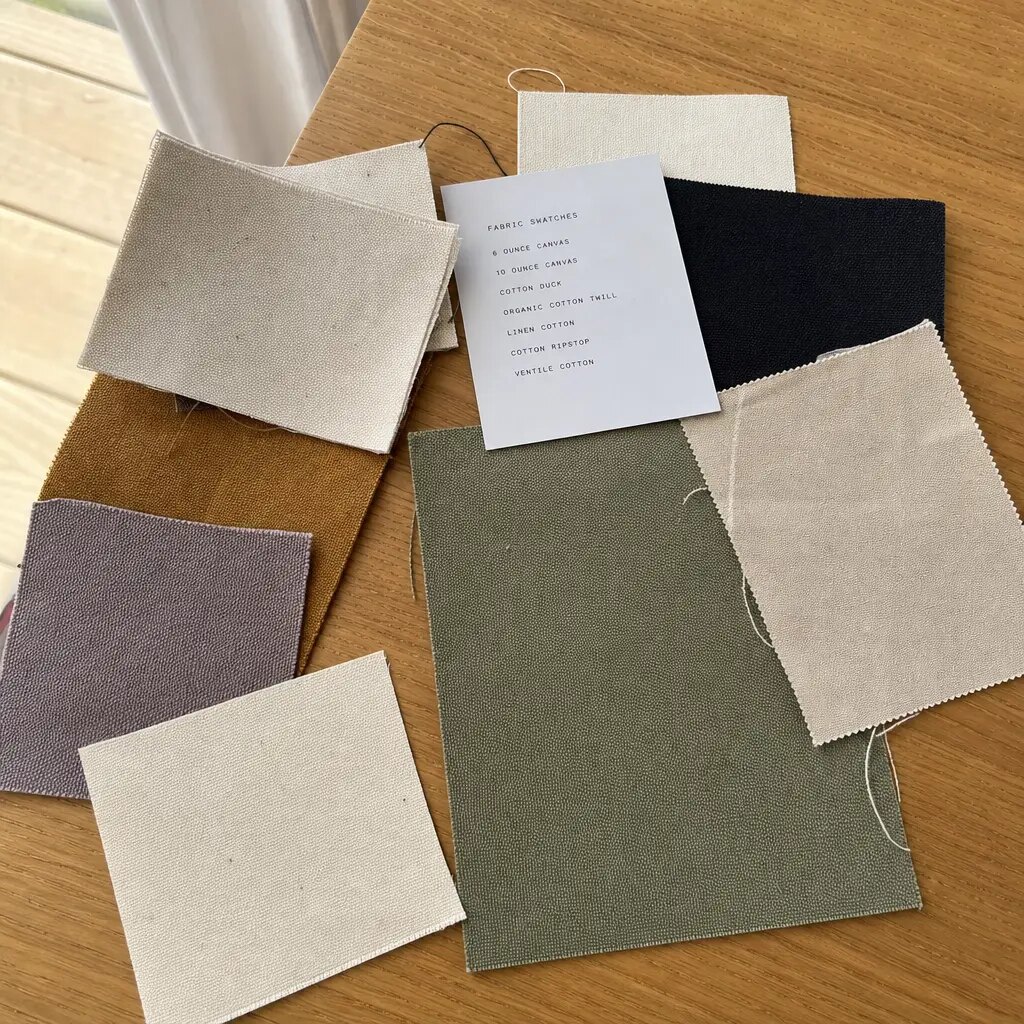
Why logo placement belongs in the product spec
For hotel retail, a canvas messenger bag has to pass two tests. The hotel buyer must see a branded product that feels right for the property, and the guest must see a bag worth buying, gifting, or using during the trip. Logo placement has a direct hand in both decisions. A small lower-right mark can read like lifestyle merchandise. A centered destination graphic can work for a resort shop. A tonal patch under the flap can feel boutique and quiet. The same canvas, strap, and hardware can shift from premium to promotional when the logo size moves by a few centimeters.
Many sourcing teams start with unit price, MOQ, and fabric weight, then leave the logo to a flat PDF mockup. That is where trouble starts. A messenger bag is not a tote panel. The flap bends over the gusset, closures create pressure points, buckle straps cross the front, and the shoulder strap may fall over the display face. Cartons add another risk: metal sliders, snap backs, or buckles can press into a print before the bag ever reaches the hotel store.
Write logo placement as a procurement specification, not as a design note. The RFQ should state logo size, position, reference points, clearance from hardware, application method, tolerance, inspection method, and sample approval steps. This matters most when bags are sold side by side in hotel gift shops, resort boutiques, spa retail areas, conference stores, or in-room amenity programs. One crooked logo may be missed on a single giveaway. On a retail shelf, inconsistency is obvious.
- Treat logo placement as a measurable construction requirement, not a note on a mockup.
- Use a real sample, pattern drawing, or measured photo to mark the approved logo zone.
- Keep the primary logo away from flap folds, binding, snap backs, buckle paths, rivets, and strap pressure points.
- Decide the retail intent first: subtle boutique branding, visible destination branding, or event-promotional branding.
- Review the logo from the display angle: shelf, wall hook, peg, mannequin, registration table, or in-room amenity setup.
- Ask whether the logo is applied before panel assembly, after flap assembly, or after the complete bag is sewn.
Start with the bag shape before placing the logo
The safe logo zone depends on the construction. A flat rectangular flap gives the cleanest branding area because it can be marked, printed, and inspected against clear edges. A buckle-front satchel divides the flap into smaller zones, so the logo may need to sit between straps, above the buckle line, or in a lower corner. A zipper-top messenger with a short decorative flap may brand better on the lower front panel. A laptop-style messenger may look flat in a photo, but padding and internal seams can make the flap curve forward when the bag is filled.
A practical hotel retail messenger bag often uses medium-weight cotton canvas, a front flap, adjustable cotton webbing shoulder strap, internal pocket, and magnetic snap, buckle, or zipper-assisted closure. Each choice changes the placement rules. Magnetic snaps are hidden, but the snap back can create a pressure point or interrupt printing. Buckle tabs add stitching, rivets, leather or PU pieces, and a moving strap path. Zippers under the flap can raise the flap angle and reduce the visible logo area when the bag is closed.
Before approving the artwork position, define what the bag is expected to carry. A resort map and beach-item bag may need a deeper gusset, which makes a low logo roll out of view. A conference messenger for folders may need a wide, flat front and a more prominent logo. A laptop-friendly messenger may require padding and reinforced seams that reduce the printable zone. Put these details in the RFQ so the factory can align cutting, sewing sequence, logo application, and QC measurement from the start.
- Front flap logo: strongest retail visibility, but sensitive to skew, flap curve, closures, and packing pressure.
- Lower front panel logo: useful for zipper-top or short-flap styles, but may be partly covered by the flap.
- Side seam woven label: low-risk secondary branding and suitable for boutique positioning.
- Strap logo: visible when worn, but subject to twisting, abrasion, and inconsistent display alignment.
- Interior label: useful for care, compliance, material details, or distributor identity, but not a primary shelf-facing logo.
- Back panel logo: subtle, but usually hidden against the body or shelf wall.
Canvas weight and surface change the branding result
Hotel retail messenger bags are often quoted from 12 oz to 18 oz cotton canvas, roughly about 400 to 610 GSM depending on weave and finishing. A 10-12 oz canvas can lower cost and carton weight, but it may collapse unless lined, reinforced, or designed as a lightweight souvenir style. A 14-16 oz canvas, about 475-545 GSM, is a strong starting point for resale because the flap has enough body for merchandising while still being practical to sew and ship. An 18 oz canvas can look rugged, but it brings more seam bulk, needle wear, packing weight, and freight cost.
Weight is only part of the decision. Natural cotton canvas has texture, seed flecks, and slubs, which can soften fine lettering. Dyed canvas can improve contrast, but dark shades need strong ink opacity or a patch-based logo. Washed canvas suits resort, beach, and lifestyle retail, yet washing can change shrinkage, handfeel, and final logo position. Pigment-dyed canvas can give a vintage look, but shade variation and rub/colorfastness checks become more important. Laminated or coated canvas may need extra print-adhesion testing before production.
Avoid vague terms such as heavy canvas, premium canvas, or eco canvas unless the supplier also gives measurable detail. Ask for oz, GSM, finish, shrinkage expectation, shade approval method, and whether branding happens before or after any washing process. If the hotel logo includes thin serif type, small stars, a crest, or a detailed map icon, request a strike-off on the actual canvas. Paper proofs and polished mockups cannot show how a coarse weave will hold small artwork.
- 10-12 oz / about 340-400 GSM: lighter, lower-cost, best for simple souvenir or event bags with reinforcement if needed.
- 14 oz / about 475 GSM: good mid-weight retail handfeel for many hotel messenger bags.
- 16 oz / about 545 GSM: stronger flap structure and durable impression, but higher material and freight weight.
- 18 oz / about 610 GSM or above: rugged look; check sewing bulk, needle marks, seam thickness, and carton weight.
- Natural canvas: attractive organic look; confirm shade range, print opacity, stains, and acceptable slubs.
- Dyed or dark canvas: test ink opacity, rubbing, and logo contrast on actual fabric.
- Washed or pigment-dyed canvas: approve shrinkage, shade variation, and post-wash logo position before bulk.
Practical logo placement rules for hotel retail
The safest visible position is usually the front flap, either centered or lower-right. Centered branding works when the bag is sold as a destination souvenir, resort shop item, or conference merchandise. A lower-right mark, often 80-120 mm wide on a medium bag, tends to feel more like retail apparel branding and less like a giveaway. A small woven side label can add a polished secondary detail, but it is rarely enough when the hotel identity must be visible at shelf level.
Measure from stable sewing references. For a centered flap logo, define the artwork center point against the finished flap side edges and the top stitch line or upper binding. For a lower-right logo, define the distance from the logo's lower-right corner to the finished flap side edge and lower binding. Do not rely only on a flexible curved edge. Keep at least 25 mm clearance from stitching, binding, snap backs, buckle straps, rivets, and flap folds. Increase that clearance for large graphics, thick patches, washed goods, or any construction with a pronounced flap curve.
Review the logo in use, not only on a flat table. Fill the bag lightly, close the flap, hang it by the strap, place it on a shelf, and wear it crossbody. Some logos are clean on the sample table but covered by the strap when hanging. Others sit too low once the flap rolls over the gusset. If the hotel shop stacks bags flat, protect the artwork from strap sliders and buckles. If the shop hangs bags vertically, make sure the logo reads from a slightly downward viewing angle.
- Subtle hotel retail mark: 80-120 mm wide, lower-right flap, small woven patch, or flap mark plus side label.
- Visible resort or destination mark: 130-170 mm wide, centered on flap or front panel depending on construction.
- Large souvenir graphic: 180-220 mm wide only when the flap size, artwork style, and retail positioning support it.
- Premium boutique mark: 40-80 mm woven, leather, or PU patch with controlled stitching and clean edge finish.
- Minimum clearance: start with 25 mm from seams and hardware; increase for large artwork or washed finishes.
- Avoid logo placement over fold radius, dart seams, thick seam allowances, zipper ridges, snap backs, and buckle paths.
Choose the logo method around artwork and shelf price
Screen printing is the standard option for many custom canvas messenger bags because it is efficient for simple one-color or two-color marks and works well on flat flap panels. For better control, the flap panel is often printed before final assembly while it can still lie flat. Printing after the full bag is sewn may be possible, but seams, hardware, and curved surfaces restrict access and usually increase placement variation. Confirm the print sequence before pricing and before PP approval.
Embroidery, woven patches, leather or PU patches, and heat transfers each solve different problems. Embroidery can look premium for a compact monogram or simple icon, but dense stitching across a large flap can pucker the canvas and make the panel stiff. Woven patches handle small lettering, crests, and multi-color detail better than embroidery. Leather or PU patches can support boutique resort positioning, but thickness, color, deboss depth, edge finish, and stitch color need approval. Heat transfers can reproduce gradients or detailed art, yet textured canvas requires adhesion, bend, and rubbing tests.
The best method protects the brand and matches the target retail price. A conference messenger may only need a crisp one-color screen print. A destination store may choose a larger high-contrast print. A boutique hotel may prefer a tonal debossed patch so the bag does not feel overly promotional. When comparing quotes, do not ask only which application is cheapest. Ask which method keeps the logo legible, survives packing and handling, and supports the intended shelf position.
- Screen print: best for simple solid logos, medium to large quantities, and clear front flap branding.
- Embroidery: use for small marks; avoid large filled areas that may pucker the flap.
- Woven patch: best for fine text, crests, multi-color marks, and multi-property programs.
- Leather/PU patch: premium look; check material thickness, deboss depth, color, edge finish, and stitch security.
- Heat transfer: useful for gradients; require adhesion, bend, rub, and blocking tests on the actual canvas.
- Woven side label: good for subtle secondary branding, but specify label size, fold type, seam position, and visibility.
RFQ details that make supplier quotes comparable
A useful hotel retail bag quote separates the base bag from branding, labels, and packing. If everything is bundled into one number, one supplier may look cheaper simply because screen charges, patch setup, barcode application, hangtags, carton segregation, or sample costs are missing. The RFQ should define finished dimensions, canvas oz/GSM, finish, lining, strap width, closure type, hardware finish, logo method, logo size, logo placement, quantity per design, retail packaging, and inspection requirements.
MOQ logic matters for hotel groups and distributors. A factory may accept one total MOQ for the bag body but require separate minimums or setup charges for each property logo, woven label, patch, embroidery tape, or hangtag. If five properties share the same natural canvas body, strap, lining, hardware, and packing, the program is easier to manage. If every property changes canvas color, strap, patch material, lining, hangtag, and carton mark, the order becomes several smaller runs with more handling and more QC exposure.
Ask for price breaks at realistic quantities, and provide the real assortment. A total order of 2,500 pieces across five logos is not the same as 2,500 pieces with one logo. The supplier must manage separate artwork approvals, print setup, patch lots, label inventory, packing groups, and carton marks. These costs and tolerances should be visible before the PO is issued, not discovered when production is already underway.
- Ask for base bag price, logo setup, logo application, woven label, patch, hangtag, barcode, packing, sample, and inland freight as separate lines.
- State total quantity and quantity per property logo or artwork.
- Request practical price breaks such as 500, 1,000, 2,500, and 5,000 pieces.
- Confirm MOQ per base bag, per fabric color, per print artwork, per patch, per woven label, and per hangtag.
- Keep construction, canvas, strap, lining, hardware, and packing common when running multiple hotel logos.
- Ask whether over/short shipment tolerance applies and how mixed-logo cartons will be controlled.
- Confirm who pays for rework or replacement if one logo version fails QC while the base bag is acceptable.
Sampling should move from material to finished PP sample
Digital mockups help teams discuss logo scale, but they should not release bulk production for a hotel retail messenger bag. A mockup cannot show canvas texture, ink opacity, flap bend, stitch bulk, hardware pressure, strap fall, odor, shrinkage, or packing marks. The buyer needs to see the actual logo method on the actual fabric, especially for natural canvas, dark canvas, washed canvas, fine lettering, or multi-color artwork.
A clean sampling sequence starts with material approval, then logo strike-off, then full PP sample. The strike-off confirms screen print, heat transfer, embroidery, patch, debossing, or woven detail on the actual material before the full bag is made. The PP sample should use bulk canvas, final lining, final strap, final hardware, final closure, final label placement, final logo position, hangtag or barcode if required, and final packing. Substitute materials, paper patch mockups, or approximate hardware should be labeled as non-final and should not release bulk production.
Treat sample review like a small inspection. Measure the logo from the agreed reference points. Compare color to the approved standard. Fill the bag lightly and close the flap. Hang it by the strap and check whether the strap covers the logo. Bend the flap several times. Rub the printed area with a dry white cloth after curing. Check whether hardware presses into the artwork when packed. Photograph the sample from the same angle the hotel store will use, and keep one physical reference sample.
- Approve canvas swatch, color, finish, shrinkage expectation, strap, lining, and hardware before PP sample.
- Request a logo strike-off on actual canvas for screen print, heat transfer, embroidery, or patch materials.
- Do not approve production from a flat mockup alone.
- Measure logo placement and record the exact tolerance in millimeters.
- Review the bag empty, lightly filled, closed, open, hanging, worn crossbody, and packed.
- Check for ink cracking, transfer edge lift, patch corner lift, puckering, strap interference, and hardware pressure marks.
- Approve the PP sample with dated photos, written comments, and one retained physical reference sample.
QC standards for logo, sewing, and retail presentation
QC turns appearance into measurable decisions. For a stable non-washed flap panel, a common logo placement target is +/-5 mm from the approved position. For hand-positioned patches, embroidery, or washed products, a practical tolerance may be +/-5 to +/-8 mm or wider depending on construction. The key is to agree the limit before production. Inspectors also need fixed references, such as flap side edge, top stitch line, center line, snap center, or lower binding.
Inspection should happen before and after branding. Before printing or patching, the logo zone should be free from oil, dirt, heavy slubs, hard creases, holes, and shade defects. After application, check position, color, opacity, registration, edge clarity, stitch security, puckering, lifted patch edges, rub transfer, and cracking after bending. Final inspection should also cover finished dimensions, flap alignment, strap anchors, hardware function, pocket construction, zipper operation, loose threads, stains, odor, and packing presentation.
Define defect severity in advance. A logo 20 mm off position, a crooked front patch, ink transfer to a white cloth, a broken strap anchor, sharp hardware, mildew odor, or the wrong property logo in a carton should usually be treated as major or critical depending on the buyer's standard. A small internal thread that can be trimmed may be minor. Clear classification helps the factory inspect consistently and gives the buyer an objective basis for accept, rework, or reject decisions.
- Logo position: inspect against a signed PP sample and written measurement tolerance.
- Print quality: no major smudge, missing ink, pinholes in visible areas, poor registration, edge bleeding, or incorrect color.
- Patch quality: even stitch line, secure corners, no puckering, no lifted edge, no wrong material shade, and no loose thread nests.
- Flap alignment: check closed and lightly filled; a skewed flap makes centered logos look defective.
- Sewing: inspect strap anchors, gussets, flap corners, binding, zipper ends, buckle tabs, and pocket seams for skipped stitches or weak seams.
- Hardware: snaps, buckles, sliders, rivets, and zippers should function smoothly and not scratch the logo.
- Cleanliness: no oil stains, chalk marks, needle rust, dirty polybags, carton dust, mildew odor, or strong chemical odor.
- Carton audit: verify logo version, property name, barcode, hangtag, inner quantity, carton mark, and packing direction.
Packing should protect the logo until store receiving
Packing can make or damage the final retail impression. A printed flap should not be folded so a crease runs through the artwork. Flat packing with light support under the flap is usually safer than tight rolling. Shoulder straps should be folded or tucked so buckles, sliders, snap backs, and adjusters do not press into the printed area. If individual polybags are required, the ink or transfer must be fully cured before packing to avoid blocking, sticking, gloss marks, or transfer.
Hotel retail programs may also need hangtags, price stickers, UPC/EAN barcodes, property-specific carton marks, or inner packs that match store receiving. These details affect labor and should be part of the RFQ and PP sample. A barcode label placed over the logo or a hangtag tied where it scratches the flap can weaken the retail presentation. For multi-property orders, carton segregation must be clear enough that warehouse teams do not mix logos or ship the wrong property name to a hotel outlet.
Carton size and weight affect landed cost. A 16 oz or 18 oz messenger bag with lining and hardware can add significant gross weight and CBM compared with a lightweight canvas style. Request estimated carton quantity, carton dimensions, net weight, gross weight, and total CBM before confirming the PO. The goal is simple: protect the logo without creating unnecessary freight volume.
- Specify flat pack, fold point, strap position, and flap protection with a packing diagram or approved PP sample photo.
- Keep metal hardware, buckles, sliders, snap backs, and rivets away from printed or debossed logo surfaces.
- Use tissue or interleaving if logo-to-logo contact creates rubbing, gloss marking, or transfer risk.
- Confirm carton quantity, carton dimensions, net weight, gross weight, total CBM, and carton marks before freight booking.
- Provide barcode, price sticker, hangtag, and carton label files before PP sample if retail labeling is required.
- Define whether cartons are one logo per carton, mixed assortments, or property-specific allocations.
- Avoid over-compression that bends the flap, dents patches, or creates permanent creases across the artwork.
Lead time risks and decision freeze points
Lead time usually starts after deposit, artwork approval, material approval, and PP sample approval, not after the first inquiry. Delays appear when the buyer approves the bag body but not the logo method, or approves artwork but not the measured position on a sewn sample. Custom-dyed canvas, washed finishes, woven patches, leather or PU patches, embroidery tapes, heat-transfer films, and multi-property labels can all add approval steps before cutting and sewing.
A reliable schedule separates artwork, material, logo strike-off, PP sample, bulk production, inline inspection, final inspection, and packing. Repeat orders using the same fabric and logo can move faster than first orders with new artwork and custom materials. Still, leave time for sample corrections. Moving a logo 20 mm, improving ink opacity, adjusting snap position, or revising patch size may require a second PP sample. That extra step is usually cheaper than reworking finished bags.
Freeze decisions in the right order. First approve construction and dimensions. Then approve canvas, color, strap, lining, closure, and hardware. Then approve logo method, size, and placement on actual material. Finally approve the PP sample and packing. If logo size changes after flap panels are cut, screens are made, patches are produced, or bulk bags are sewn, cost and delivery can both change.
- Artwork freeze: vector file, logo size, Pantone/material references, placement drawing, and property-specific versions.
- Material freeze: canvas oz/GSM, finish, color, shrinkage, lining, strap, closure, hardware, and label materials.
- Logo test: strike-off or patch sample on actual canvas or approved patch material.
- PP sample: final bag with final logo, closure layout, labels, hangtag/barcode, and packing.
- Bulk production: confirm logo application sequence, inline inspection timing, and segregation rules for multiple logos.
- Final inspection: inspect packed goods, not only loose bags before carton closure.
- Reorder file: keep approved artwork, measurements, shade standards, supplier notes, and physical reference sample.
Specification comparison for buyers
| Spec decision | Recommended option | When it fits | Buyer risk to check |
|---|---|---|---|
| Front flap logo zone | Mark a primary logo zone on the paper pattern or approved sample; keep at least 25 mm clearance from bound edges, stitch lines, snap backs, buckle straps, rivets, and flap fold radius | Best for hotel gift shops because the logo remains visible on shelves, pegs, wall displays, mannequins, and in-room amenity setups | A flat artwork proof can miss flap curvature, buckle path, hidden snap pressure, and strap fall; require a measured placement drawing before PP sample |
| Logo size on medium bag | 80-120 mm wide for subtle retail branding; 130-170 mm for visible hotel or resort marks; 180-220 mm only for souvenir or destination graphics on larger flaps | Useful for 12-15 inch casual messenger bags sold as spa retail, destination souvenirs, conference merchandise, loyalty gifts, or lobby boutique items | Oversized logos can look promotional; very small fine-line logos can disappear on 14-16 oz textured natural canvas |
| Placement tolerance | Screen print on a stable flat flap: target +/-5 mm. Sewn patch: target +/-5 to +/-8 mm depending on hand positioning and seam references. Washed-after-sewing goods may require a wider agreed tolerance | Gives the buyer and supplier an objective inspection standard for retail-facing appearance | If tolerance is not written, a logo can be visibly inconsistent across a shelf display while still being treated as acceptable by the factory |
| Fabric weight | 14-16 oz cotton canvas, approximately 475-545 GSM, with shrinkage-controlled or tested fabric; specify whether greige, dyed, washed, pigment-dyed, or laminated | Balanced for hotel retail: durable handfeel, printable flap, enough structure for merchandising, and manageable carton weight | 18 oz+ canvas may increase needle breakage, seam bulk, slower sewing, and freight weight; 10-12 oz may collapse unless lined or reinforced |
| Canvas shrinkage and shade | Ask for expected shrinkage after washing or steaming, commonly controlled within about 3-5% depending on finish; define shade approval by lab dip or approved bulk swatch | Important for natural, dyed, washed, and pigment-dyed canvas where logo position and color contrast can shift | Uncontrolled shrinkage can move the logo relative to the flap edge; natural canvas can vary from cream to oatmeal between lots |
| Logo method | Screen print for solid hotel marks; woven patch for fine crests or small text; leather/PU patch for boutique resort positioning; embroidery only for compact simple marks | Matches method to artwork and shelf-price positioning instead of selecting by unit cost alone | Embroidery can pucker dense canvas; heat transfers need adhesion and bend tests; patches need stitch security and edge-lift checks |
| Interior and secondary branding | Use a small woven label inside the seam, under the flap, or at the side seam; keep compliance/care labels separate from decorative branding | Useful for distributor identity, material details, care information, or subtle premium branding | Labels placed near laptop sleeves, zipper seams, binding, or comfort areas can rub, twist, or be hidden |
| MOQ for multiple hotel properties | Keep the same bag construction, canvas color, strap, lining, hardware, and packing; vary only the logo, patch, hangtag, or barcode when property names differ | Good for hotel groups, resorts with multiple outlets, or distributors serving several properties | Each artwork may carry separate screen, patch, woven label, embroidery tape, QC segregation, and carton-labeling cost |
| Retail packing | Flat pack with flap protected, strap tucked away from artwork, and metal hardware isolated from the print; individual polybag only if required by retailer/importer | Protects the printed flap and supports hotel store receiving, barcode scanning, and shelf replenishment | Rolling or over-compression can crease the flap, mark coated ink, dent patches, or imprint buckles onto the logo |
Buyer checklist before sampling
- Define the commercial use: hotel gift shop resale, lobby boutique, room package amenity, conference merchandise, spa retail, destination souvenir, beach club retail, or loyalty gift.
- Confirm the expected contents: tablet, 13 inch laptop, resort map, guidebook, water bottle, travel documents, conference folder, beach items, or spa merchandise.
- Specify finished dimensions in millimeters or inches, including body width, body height, gusset depth, flap height, pocket size, and strap length adjustment range.
- State the canvas weight in both oz and GSM, for example 14 oz / about 475 GSM or 16 oz / about 545 GSM, and confirm whether the value is before or after finishing.
- Specify canvas finish: natural unbleached, bleached, reactive-dyed, pigment-dyed, enzyme washed, garment washed, laminated, waxed, lined, or shrinkage-controlled.
- Define acceptable fabric performance: shade standard, expected shrinkage, odor requirement, colorfastness need, and whether the bag can tolerate light rain or only dry use.
- Send final artwork in vector format with Pantone, CMYK, thread, deboss, patch yarn, or material color references as applicable.
- Mark the logo position on a bag diagram using fixed reference points: flap side edge, top stitch line, center line, lower binding, snap center, buckle strap, rivet, or shoulder strap anchor.
- Define logo size in finished measurement, not only by percentage on a mockup; include maximum width, height, and orientation.
- Confirm clearance: at least 25 mm from seams and hardware for most screen prints, more for large artwork, thick patches, or washed products.
Factory quote questions to send
- What exact finished bag dimensions, flap size, gusset, strap width, strap length range, pocket layout, lining, closure, and hardware are included in the quoted unit price?
- What canvas weight are you quoting in oz and GSM, and is that before washing/finishing or after finishing?
- Is the canvas natural, bleached, reactive-dyed, pigment-dyed, enzyme washed, garment washed, laminated, waxed, or standard dyed canvas?
- What shrinkage range do you expect for this canvas and finish, and how will it affect finished bag dimensions and logo placement?
- What shade standard will bulk fabric be matched to: lab dip, approved swatch, Pantone reference, or previous production lot?
- What is the maximum stable logo area on the flap after allowing for seams, binding, flap curve, snaps, buckles, rivets, and handling tolerance?
- Which logo method do you recommend for this artwork: screen print, heat transfer, embroidery, woven patch, leather/PU patch, woven side label, debossed patch, or mixed branding?
- For the recommended logo method, what are the setup charges, per-piece application charges, color limits, minimum line width, minimum text size, and maximum artwork size?
- Will the logo be applied before flap sewing, after flap assembly, or after the full bag is sewn, and what risks does that create?
- What is the MOQ for the base bag, and what is the MOQ per logo design, per hotel property logo, per print color, per patch artwork, and per woven label?
Quality-control points to confirm
- Logo placement tolerance should be written before production. A practical target is commonly +/-5 mm for screen print on a stable non-washed flap panel and +/-5 to +/-8 mm for sewn patches, depending on pattern references and manual positioning.
- Logo position must be measured from fixed reference points such as finished flap side edge, top stitch line, flap center line, snap center, lower binding, or patch stitch border, not from a flexible distorted edge only.
- Before logo application, inspect the logo zone for oil marks, weaving slubs, holes, chalk, creases, dirt, mildew odor, and obvious shade variation.
- Screen print should be checked for opacity, registration, pinholes, smudging, edge bleeding, color match, cure, rub resistance, and cracking after repeated flap bending.
- Heat transfers should be checked for adhesion, lifting corners, film edge visibility, cracking after bending, gloss change, and sticking or blocking after packing.
- Embroidery should be checked for thread shade, stitch density, backing, trimming, puckering, loose thread ends, and whether needle penetration weakens the canvas near folds.
- Woven or leather/PU patches should be checked for patch size, material shade, deboss or weave clarity, stitch spacing, corner security, edge lift, and flap puckering around the patch.
- Front flap alignment should be checked with the bag empty and lightly filled. A skewed flap can make a correctly placed centered logo look defective.
- Finished dimensions should be measured after sewing and before packing, including body width, body height, gusset, flap width, flap drop, strap length range, pocket opening, and strap drop if applicable.
- Stitching should be inspected at stress points: strap anchors, gussets, flap corners, zipper ends, buckle tabs, rivets, handle joins, binding, and pocket seams.