Start With the Load Case
A durable messenger bag starts with a procurement definition, not a style reference. The factory needs to know what the bag will carry, how often it will be used, and where the stress will land. A bag sold as an eco-apparel add-on for folded garments has a very different durability requirement from a commuter bag meant for a laptop, charger, bottle, and notebooks. If the load case is vague, the supplier will optimize for appearance and price instead of real use.
Write the use case into the RFQ in plain terms. Include the maximum expected load, the common contents, the target channel, and whether the bag needs to survive daily carry, travel, or occasional promo use. For eco apparel brands, durability is part of the brand story: a product that fails early creates waste and weakens the sustainability message. The goal is not to overbuild every order. It is to match the construction to the actual service life you want the customer to experience.
- State the intended channel: retail sale, staff issue, event giveaway, e-commerce bundle, or commuter bag.
- Define the maximum carry weight before you choose fabric weight or strap width.
- Note whether the bag must fit a laptop or only apparel, documents, and small personal items.
- Use the same load case language in every supplier comparison so quotes stay comparable.
Specify Canvas and Eco Documentation
Canvas weight is useful, but only when it is tied to finished fabric and finishing method. A 12 oz canvas is often acceptable for lighter promotional messenger bags. A 14 oz canvas is a practical middle ground for retail. A 16 oz to 18 oz canvas is a better starting point for daily-use bags where structure, abrasion resistance, and shape retention matter. Ask whether the number refers to greige fabric or finished fabric after dyeing, washing, or coating. Those are not interchangeable.
Eco sourcing needs documentation, not just a claim line. If the order uses organic cotton, recycled cotton, or other certified inputs, ask for scope certificates, transaction certificates, or equivalent proof tied to the order lot. Also ask which finishes are being used. Buyers in the eco apparel space often need restricted azo, heavy metal, and formaldehyde limits, and many brands now exclude PFAS-based water repellency unless it is explicitly approved. If traceability matters, request the fabric mill, dyehouse, and sewing lot references before production starts.
- Ask for finished GSM or ounce weight after finishing, not only nominal fabric weight.
- Request a fabric swatch from the actual bulk lot or a controlled lab-dip approval set.
- Require certification proof for any organic or recycled claim before sample approval.
- State dye and finish restrictions in the RFQ so the factory cannot swap chemistries later.
Build Reinforcement Into the Load Path
Most messenger bag failures happen at stress points, not in the middle of a clean canvas panel. Strap anchors, pocket mouths, flap corners, zipper ends, gussets, and bottom corners are where load and flex concentrate. A strong shell does not help if the strap is only caught in a shallow seam or the pocket mouth opens after repeated use. Reinforcement should connect to the load path. That means the bar-tack, box stitch, reinforcement patch, or extra seam pass must actually carry the force.
Ask the factory to show where each reinforcement lives on the bag. For a 38 mm to 50 mm webbing strap, the anchor should usually pass through the load-bearing layers, not only through the face fabric. Pocket mouths should be locked down because they are pulled constantly. Flap corners and zipper ends need controlled stitch density because they flex every time the bag opens. Bottom corners need more than cosmetic stitching if the bag is expected to hold books, tools, or a laptop sleeve. These are design decisions, not afterthoughts.
- Mark reinforcement points on the tech pack or sample photos.
- Require bar-tacks or box stitches at strap ends and pocket mouths.
- Check that anchors pass through the correct layers, not just the top fabric.
- Review gusset and bottom construction if the bag will carry dense contents.
Choose Closures, Hardware, and Lining by Channel
Closure choice affects durability as much as style. A flap with a hidden snap can be clean and low cost, but the snap must be backed properly so it does not distort the canvas. A zipper top improves security for commuter use, yet the zipper tape, slider quality, and end finishing become new QC points. Buckles feel rugged and fit some heritage looks, but they add cost and can slow daily access. Magnetic snaps are convenient, but they need correct reinforcement because repeated opening can tear the surrounding shell.
Hardware should be specified by material, size, finish, and function. Metal parts can give a premium look, but poor plating can scratch, corrode, or transfer marks onto light canvas. Plastic parts may reduce weight, but cheap adjusters can slip under load. If the bag is lined, treat the lining as a structural component. It should be securely attached, resist twisting, and survive use longer than the outer fabric in normal handling. If you do not need lining, leave it out rather than adding unnecessary material and failure points.
- Match closure type to the security level and user behavior of the channel.
- Cycle-test zippers, snaps, buckles, and adjusters during sample review.
- Specify hardware finish and surface quality, not just the part name.
- Inspect lining attachment, pocket edges, and seam allowance if the bag is lined.
Lock Decoration Before You Approve the Bag
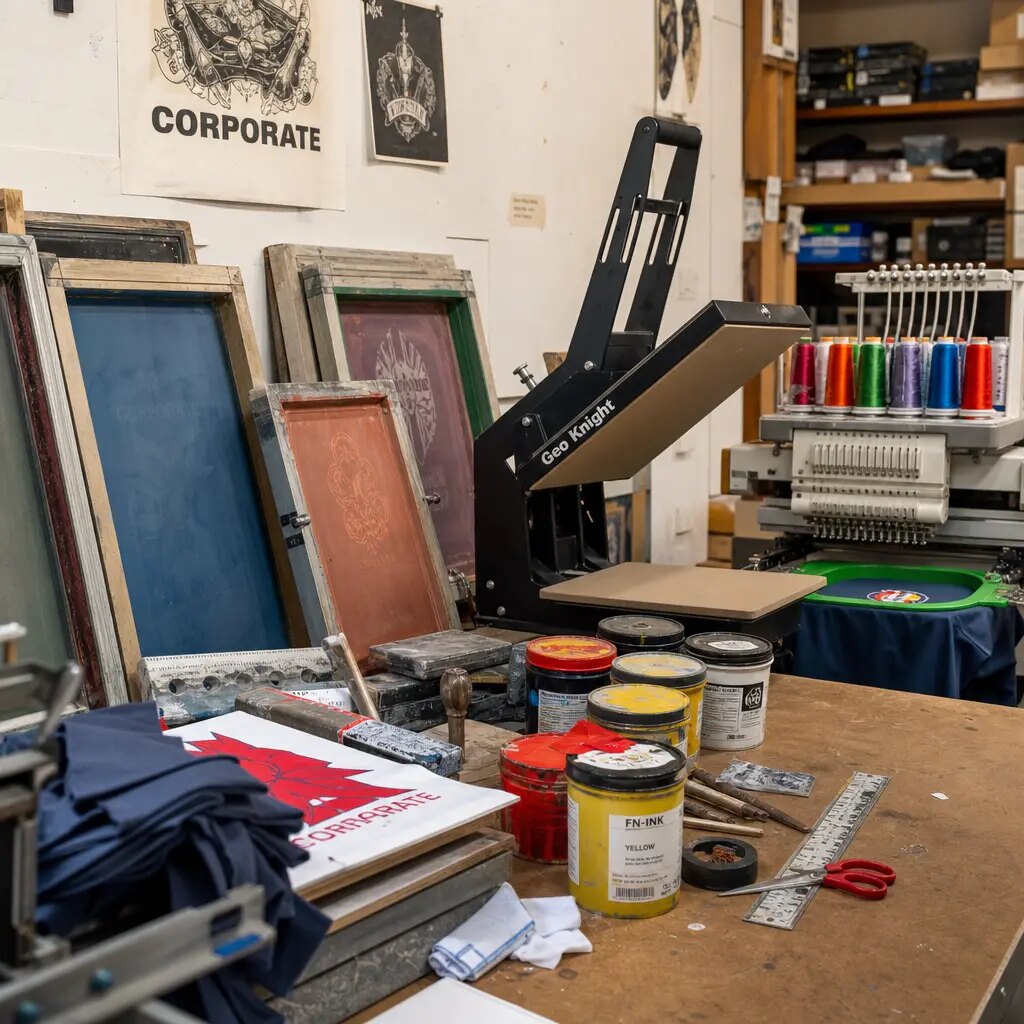
Branding on canvas messenger bags is a durability decision, not only a visual one. Screen print is usually the best option for flat artwork and controlled quantities, but it needs the right ink system, cure method, and placement. Large prints across flap folds or stitch lines are risky because flex can crack the print or make the canvas feel stiff. Woven labels often work well for eco apparel brands because they hold up to abrasion and fit a quieter retail look. Patches can work too, but the attachment stitch must be part of the durability review.
Embroidery can look premium, but dense embroidery on heavy canvas may pucker or distort the panel if it sits near a stress zone. If the logo is placed near a seam, pocket mouth, or bend line, ask for a handling sample that includes real flex. Approve art size, placement tolerance, color reference, and cure or attachment method before bulk production. Decoration is one of the easiest places for a bag to drift from durable to disposable in the eyes of the customer.
- Use screen print for simple artwork when rub resistance and placement can be controlled.
- Use woven labels for durable branding and a lower-risk eco-apparel look.
- Avoid large prints across folds, seams, or strap zones unless the sample proves them stable.
- Approve placement tolerances and cure or attachment method before production starts.
Turn the Sample Into a Validation Step
A pre-production sample should prove that the factory can build the order with the exact fabric, trim, decoration, seam construction, and packing method intended for bulk. A showroom sample made with substitute canvas or alternate hardware is not a valid durability reference. If the sample differs from the bulk plan, ask the supplier to document each difference and state whether it affects cost, load performance, or appearance. That record matters later if a bulk issue appears.
Use one sample as the sealed master and one as the working test piece. Load the working sample with the real contents or a realistic weight, carry it repeatedly, open and close the closures, and inspect the strap anchors and pocket mouths after handling. Rub the decoration with a clean cloth to check for crocking or cracking. Check seam movement, zipper alignment, and flap registration. This is not a lab test, but it will expose obvious construction errors before the order is released. For buyers managing multiple SKUs, that small investment usually prevents bigger claims later.
- Require production fabric, production trim, final artwork, and final packing for pre-production approval.
- Keep one sealed master sample and one working sample for handling review.
- Document approved deviations and any remaining risks in writing.
- Do not approve bulk production from a sample that hides material or construction substitutions.
Use Practical Durability Tests with Thresholds
Durability testing should be simple enough to repeat and strict enough to matter. For messenger bags, the most useful checks are loaded carry, strap pull, seam strength, hardware cycling, colorfastness, abrasion, and packing simulation. Use the test level that matches the sales channel. A low-cost promo bag may only need a buyer-side handling review and a short load test. A retail bag sold under an eco apparel brand should get more structured testing because returns, reviews, and replacements are costly.
For midweight retail programs, a useful internal benchmark is no seam opening at 300 N on body seams and no strap-anchor failure at 500 N, with a higher 700 N target for heavy daily-use or laptop bags. On a 5-point colorfastness scale, aim for at least grade 4 dry crocking, 3 to 4 wet crocking, and grade 4 lightfastness for dyed canvas. For abrasion, set a benchmark around 10,000 Martindale cycles for the body and 15,000 for strap-contact areas, with no yarn rupture or coating failure. If the bag uses zippers or snaps, ask for 100 to 200 cycles without binding or disengagement. These are practical procurement targets, not universal laws, but they give buyers something operational to put in the spec.
Also decide what you will accept as a sample failure. Visible seam opening, stitch rupture, strap slippage, heavy crocking, exposed yarns after abrasion, or hardware that sticks under normal use should all be treated as rejects. If the factory has stronger internal standards, use them. If it does not, set your own and make them part of the purchase order.
- Match the test load to the real contents, not a random lightweight fill.
- Use explicit thresholds for seam strength, strap pull, colorfastness, abrasion, and hardware cycling.
- Treat visible seam opening, heavy crocking, and hardware failure as hard rejects.
- Ask whether the factory can support in-house tests or needs a third-party lab.
Compare Quotes on One Spec, Not One Price
A messenger bag quote is only useful when every supplier is pricing the same construction. One factory may quote 12 oz unlined canvas with basic stitching and screen print. Another may quote 16 oz canvas with lining, strap reinforcement, woven label, and individual packing. The lower price is not necessarily the better value. Build a comparison grid that fixes fabric, dimensions, lining, closure, hardware, reinforcement, decoration, packing, inspection scope, and freight assumptions before unit price is discussed.
Split the quote into base construction and options. Ask for separate pricing on lining, zipper top, shoulder pad, reinforced strap anchor, woven label, hangtag, insert card, dust bag, and plastic-free packing. This makes it easier to protect durability where it matters and avoid spending on features that do not improve use. MOQ should be shown by color and by logo version, since fabric dyeing, label weaving, and print setup can create different minimums. If the supplier cannot explain those breakpoints, the quote is too vague for procurement to rely on.
Ask for tiered pricing at 300, 500, 1,000, and 3,000 pieces. Also ask which items change with quantity: fabric source, trim source, decoration method, inspection scope, or packing method. For eco apparel brands, this is where traceability can get lost. A lower price may mean stock fabric, weaker certification control, or subcontracted finishing. The quote should make those tradeoffs visible before you commit.
- Compare suppliers against one locked spec, not against different interpretations of the product.
- Separate base bag pricing from options that change durability or sustainability.
- Request MOQ by color, logo version, and fabric type.
- Compare certification, packing, inspection, and freight assumptions in the same sheet.
Control Bulk Production, Packing, and Traceability
Bulk quality can drift even after a good sample. Fabric lots vary, operators interpret reinforcement differently, and packing teams may fold bags in ways that create permanent creases. Use a first-piece check before the line runs, then in-line inspection while rework is still cheap, then final inspection before shipment. The checklist should separate critical, major, and minor defects so the factory knows what must stop the line and what can be reworked. If everything is written as a generic quality issue, nobody can act quickly.
Set the final inspection rules in advance. AQL 0 is appropriate for critical issues such as wrong fabric claim, unsafe hardware, mold, or severe contamination. Use 2.5 for major defects and 4.0 for minor defects unless your retailer requires stricter terms. Measure body width, height, gusset, flap drop, strap length, pocket opening, and logo placement from fixed reference points. For eco claims, verify label copy, hangtags, and packaging text against approved artwork. If the order uses certified materials, keep the certificate numbers, lot references, and subcontractor list in the file so traceability is not lost after shipment.
Packing should protect the sellable product, not just fill a carton. Light canvas can crease, printed surfaces can rub, and hardware can mark the fabric if the bag is packed carelessly. Approve the fold or flat-pack method, carton count, carton dimensions, and protection method before production begins. Plastic-free packaging is fine if it still protects the bag from dust, compression, and rub damage. That balance is especially important for eco apparel brands that want lower waste without increasing receiving damage.
- Use first-piece, in-line, and final inspection for new products or new suppliers.
- Set AQL 0 critical, 2.5 major, and 4.0 minor unless the buyer requires tighter control.
- Track fabric rolls, cut bundles, sewing line, packing lot, and carton numbers for traceability.
- Approve packing materials and fold method before the line starts bulk packing.
Specification comparison for buyers
| Procurement decision | Recommended specification | What to verify before approval | Buyer risk if skipped |
|---|---|---|---|
| Target use case | Daily retail carry, staff issue, commuter bag, event kit, or laptop messenger | Write the expected contents, maximum load, and channel into the RFQ | The factory may quote a bag that looks right but fails in real use |
| Canvas weight | 12 oz promo, 14 oz midweight retail, 16 oz to 18 oz daily-use | Confirm finished GSM after dyeing or washing, not only greige weight | Quotes will not be comparable and durability may be overstated |
| Eco fiber proof | Organic, recycled, or certified cotton only if the order can be documented | Request scope or transaction certificates, lot references, and claim wording | Sustainability claims can become unverified marketing copy |
| Finishes and dye limits | No PFAS water repellent unless approved; restricted azo, heavy metals, and formaldehyde limits stated up front | Ask for dyehouse and finish declarations plus test reports if available | A compliant-looking bag may still fail brand or retailer chemical rules |
| Strap system | 38 mm to 50 mm webbing, reinforced shoulder contact, anchored through the load path | Check anchor stitch pattern, reinforcement layer, and strap pull target | Straps can tear out while the body fabric still looks strong |
| Seams and reinforcement | Bar-tacks or box stitches at strap ends, pocket mouths, flap corners, and gussets | Review stitch density, seam allowance, and load-bearing layer attachment | Small construction gaps turn into early customer returns |
| Branding method | Screen print, woven label, patch, or embroidery selected by flex zone and durability needs | Check rub resistance, cure method, placement tolerance, and artwork size | Decoration can crack, pucker, or fail before the bag wears out |
| Inspection standard | Pre-production, in-line, and final inspection with AQL 0 critical, 2.5 major, 4.0 minor | Define defect classes, measurement points, carton sampling, and rework rules | Receiving teams cannot enforce quality consistently |
Buyer checklist before sampling
- State the bag's real load case in the RFQ: expected contents, maximum carry weight, and whether the bag must fit a laptop, documents, or apparel.
- Specify finished canvas weight, construction, and finish, including whether the fabric is stock, custom-dyed, organic, recycled, or blended.
- Ask for fiber-certification evidence before sampling if the order uses certified cotton or recycled content.
- Declare any dye or finish restrictions up front, including banned chemicals, water-repellent treatment limits, and brand-approved colorants.
- Map every reinforcement point: strap anchors, pocket mouths, flap corners, zipper ends, gussets, and bottom corners.
- Choose the closure and hardware before quote comparison, not after sample approval.
- Ask for a pre-production sample built with production fabric, production trim, production decoration, and proposed packing.
- Run a buyer-side handling test on the sample: load, carry, open and close, rub decoration, and inspect seams under tension.
- Require a written QC sheet with pass/fail criteria for dimensions, seam strength, strap pull, colorfastness, abrasion, and packing.
- Compare all quotes on the same basis: fabric, lining, closure, reinforcement, decoration, packaging, certification documentation, and inspection scope.
Factory quote questions to send
- What is the finished fabric weight in GSM or ounces after dyeing, washing, or finishing, and what tolerance will you hold in bulk production?
- Is the canvas stock, custom-woven, organic, recycled, or certified, and what proof can you provide for the claimed fiber content?
- Which finishes are included or excluded, and can you confirm restricted chemical compliance for dye, coating, and print systems?
- What is the exact reinforcement plan at strap anchors, pocket mouths, gussets, flap corners, and zipper ends?
- What strap width, webbing composition, adjuster type, and anchor construction are included in the quote?
- What test targets can you support for seam strength, strap pull, colorfastness, abrasion, and hardware cycling?
- Can you supply AQL levels, defect definitions, and sample size rules for pre-production, in-line, and final inspection?
- Does the price include lining, closure hardware, woven label, hangtag, insert card, dust bag, or individual packing?
- What is the MOQ and price at 300, 500, 1,000, and 3,000 units, and what changes at each tier?
- Which processes are in-house, and which are subcontracted, including dyeing, printing, embroidery, label production, and packing?
Quality-control points to confirm
- Fabric must match approved composition, finished weight, shade, hand feel, and surface appearance, with no visible weaving defects, oil stains, or shade bands across panels.
- Finished dimensions should stay within plus or minus 0.5 cm for body measurements and plus or minus 1 cm for strap length unless the tech pack sets tighter limits.
- Main body seams should not open under a 300 N pull test for light and midweight retail bags, and load-bearing strap anchors should withstand 500 N without stitch rupture or fabric tear.
- Strap anchors should be sewn through the correct layers, with no skipped stitches, loose bar-tacks, or anchor movement after repeated lifting and carry handling.
- If the bag is built for heavier daily use or laptops, set the seam target higher: 400 N for main seams and 700 N for strap anchors as an internal benchmark.
- Dry crocking should reach at least grade 4 on the 5-point scale, wet crocking at least 3 to 4, and lightfastness at least grade 4 for dyed canvas.
- For washable bags, wash colorfastness should be at least grade 4 and there should be no visible transfer onto light cotton after the approved wash cycle.
- Body fabric should show no yarn rupture or coating failure before 10,000 Martindale cycles for daily retail bags; strap-contact areas should target 15,000 cycles.
- Zippers, snaps, buckles, and adjusters should complete 100 to 200 open-close cycles without binding, cracking, disengaging, or finish loss.
- Final inspection should use AQL 0 for critical defects, 2.5 for major defects, and 4.0 for minor defects, with traceable carton sampling and photo records.