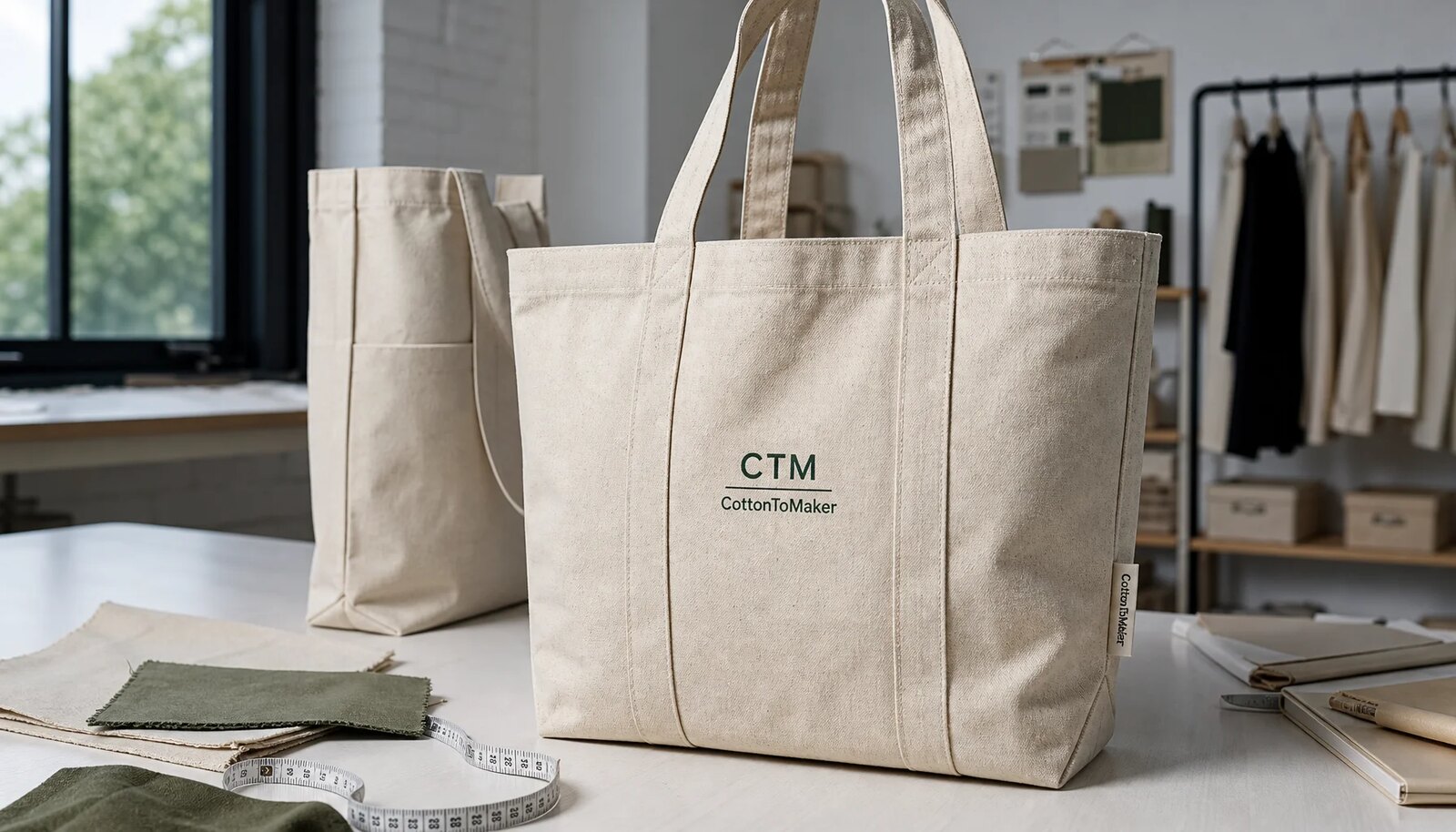
Start With the Hotel Retail Use Case
A custom canvas grocery tote for hotel retail is not the same product as a free conference bag. It sits on a shelf, carries a selling price, and becomes part of the guest’s memory of the hotel. The buying problem is to balance retail appearance, load strength, packable logistics, and repeat-order consistency without overspecifying the bag into an expensive boutique item.
Before sending an RFQ, decide whether the tote will be sold in a lobby shop, bundled with a resort market purchase, used for in-room amenities, or offered by a hotel group across multiple properties. Each use changes the correct fabric, handle length, decoration method, packing, and MOQ plan. A grocery tote used for wine, snacks, and beach items usually needs a gusset, reinforced handles, and a print that survives folding and handling.
- For hotel market sales, prioritize gusset depth, shelf display shape, and barcode-ready packing.
- For resort or beach retail, prioritize shoulder carry comfort and darker print colors that hide handling marks.
- For welcome amenities, prioritize neat folding, consistent logo position, and clean individual packing.
- For multi-property hotel groups, prioritize a shared base bag with property-specific print changes.
Choose Canvas Weight by Carry Load and Shelf Feel
The fabric decision drives both perceived value and shipping weight. Many buyers write only “canvas tote” in the RFQ, then receive quotes for different materials that cannot be compared. A practical hotel retail grocery tote usually falls between 10 oz and 12 oz cotton canvas, roughly 340 to 407 GSM. Lighter 8 oz canvas can work for low-price souvenir totes, but it may feel thin when the guest loads bottles, packaged foods, or pool items.
Heavier canvas improves handfeel and structure, but it also increases unit cost, carton weight, freight cost, and sometimes sewing difficulty at seams. If the tote has a large gusset and long handles, moving from 10 oz to 12 oz may be justified. If the hotel wants a foldable bag for travel convenience, a medium-weight canvas with good stitching can be more useful than a very stiff fabric.
- 8 oz / about 270 GSM: useful for lighter retail bags, but confirm load expectations.
- 10 oz / about 340 GSM: balanced option for most custom canvas grocery totes.
- 12 oz / about 407 GSM: stronger retail feel, better body, higher landed weight.
- 14 oz and above: premium structure, but may be too bulky for hotel shop storage.
Lock the Bag Shape Before Comparing Prices
A grocery tote should not be judged only by front panel size. Finished capacity depends on width, height, gusset depth, bottom construction, seam allowance, and how the handles are attached. Two suppliers may quote the same visible dimensions while one uses a shallow side gusset and another uses a real boxed bottom. The second bag will cost more because it uses more fabric and sewing time, but it may sell better in a hotel retail environment.
For procurement comparison, state finished size and tolerance clearly. A common range for hotel grocery totes is around 38 to 45 cm wide, 35 to 40 cm high, with an 8 to 15 cm gusset, but the right size depends on the product mix in the shop. If the tote is expected to hold wine bottles, snacks, towels, or packaged gifts, the bottom width matters more than a large flat print area.
- Define finished dimensions after sewing and pressing, not cutting dimensions.
- Require handle drop measurement, not only total handle length.
- Specify whether the gusset is side only, bottom only, or boxed side-and-bottom construction.
- Set a realistic size tolerance, such as plus or minus 1 cm for most dimensions unless the program needs tighter control.
Match Print Method to Artwork and Retail Durability
Screen printing remains the most practical decoration method for many custom canvas grocery totes because it handles solid hotel logos, simple line art, and moderate print areas at efficient wholesale cost. It works well on natural canvas when the artwork uses one to three colors and the buyer accepts normal ink feel. For a large front panel print, screen print usually gives a better balance of cost, coverage, and durability than heat transfer.
Heat transfer can be useful for small multi-color graphics, photo-style artwork, or short runs where screen setup cost is high. The risk is handfeel and cracking, especially on a bag that will be folded, packed tightly, or used repeatedly. Embroidery can look premium on a small logo, but it is slower and may pucker if the canvas is too light or the design has dense fill. For hotel retail, the safest artwork is often a clean logo, a local landmark line drawing, or a property name printed with enough margin from the seams.
- Screen print: best for solid logos, larger runs, and clean retail graphics.
- Heat transfer: useful for detailed colors, but review flexibility and wash resistance.
- Embroidery: premium for small marks, but avoid large dense fills on soft canvas.
- Woven label or side label: good for subtle hotel branding without a large front print.
Understand MOQ by Component, Not Just Total Order Quantity
MOQ is often misunderstood because a tote bag has several MOQ layers. The factory may be able to sew 500 pieces, but fabric dyeing, print setup, woven labels, individual packing, and carton printing may each have their own minimum. If a buyer requests six hotel property designs at small quantities, the cost problem is not only sewing. It is also print screens, artwork handling, sorting, and packing control.
A practical way to lower risk is to use one standard bag body across several hotel properties and change only the print or label. For example, the same natural 10 oz canvas tote can be produced in one cutting batch while the print changes by property name. This can reduce fabric waste and sewing setup, but the buyer must still separate the MOQ and price impact for each print design.
- Body MOQ: minimum quantity for cutting and sewing the same size and fabric.
- Fabric MOQ: minimum for custom dyeing, custom width, or special canvas finish.
- Print MOQ: minimum per artwork, per color count, or per screen setup.
- Label MOQ: minimum for woven labels, printed labels, or branded care labels.
- Packing MOQ: minimum for printed belly bands, barcode stickers, or retail cartons.
Read Supplier Quotes for Hidden Cost Drivers
A low unit price can be correct, but it can also mean important details are missing. The first quote should not be accepted until it states fabric weight, finished size, construction, print method, print size, color count, packing, carton quantity, Incoterms, and sample cost. Without that data, procurement teams may compare a flat 8 oz tote against a boxed 12 oz grocery tote and think they are the same product.
Quote data is also where landed-cost problems start. A heavier canvas tote may have a slightly higher factory price but a much higher freight impact if packed inefficiently. Individual retail packing, paper bands, hangtags, barcode labels, and inner cartons all add labor and volume. For hotel retail, those details may be necessary, but they should be priced as visible line items so the buyer can decide what supports the selling price.
- Separate bag unit price from print setup, sample charge, packing charge, and mold or label setup.
- Request carton dimensions and gross weight before approving the supplier route.
- Compare FOB, EXW, and DDP quotes carefully; they include different cost responsibilities.
- Confirm whether quote validity covers cotton price movement and exchange-rate changes.
- Require a clear revision price if artwork changes after sample approval.
Use Samples to Freeze the Real Product
A sample is not only a sales tool. It is the physical contract for fabric handfeel, stitch quality, logo position, handle comfort, folding method, and packing appearance. For custom canvas grocery totes, the buyer should separate a development sample from a pre-production sample. A development sample proves structure and size. A pre-production sample should be made with final fabric, final decoration, final label, and final packing.
Do not approve bulk production from photos alone unless the order is a low-risk repeat. Phone images can hide shade difference, print thickness, seam puckering, and fabric slubs. If time is tight, the factory can send detailed measurements, fabric GSM test photos, print close-ups, and packing photos first, but the signed or written approval should still define what will be accepted in bulk.
- Measure finished width, height, gusset, and handle drop against the RFQ.
- Load test the sample with realistic hotel retail contents such as bottles, snacks, or folded towels.
- Fold and unfold the printed area to judge cracking, ink feel, and crease behavior.
- Review inside seams for fraying, skipped stitches, and loose thread ends.
- Approve a packing sample if the bag will be sold with barcode, belly band, or hangtag.
Set QC Thresholds Before Production Starts
Quality control becomes easier when the purchase order contains acceptance criteria. Canvas is a natural fabric, especially in unbleached or natural color, so some seed flecks and yarn variation can be normal. Stains, oil marks, heavy weaving defects, broken stitches, severe print misalignment, and wrong handle length should not be treated as normal. Define what is acceptable before the inspection team opens cartons.
The most common quality disputes in canvas grocery totes involve fabric weight, print color, print position, handle strength, and dirty packing. For hotel retail, visible defects matter because guests inspect the product before purchase. A tote that is structurally usable but has a crooked logo or stained front panel may still be rejected by a hotel shop.
- Fabric weight: test bulk fabric and compare against the approved range.
- Size tolerance: measure bags flat after pressing, not wrinkled from cartons.
- Print position: define maximum deviation from center and top edge.
- Stitching: reject broken stitches, skipped stitches at handles, and loose reinforcement.
- Cleanliness: reject oil stains, shoe marks, heavy dust, and visible carton transfer marks.
- Packing count: verify pieces per polybag, inner pack, master carton, and SKU label.
Plan Packing for Retail Handling and Freight
Packing is not a minor afterthought for hotel retail. A tote may pass sewing inspection and still arrive unsuitable for sale if it is crushed, dusty, folded across the logo, or mixed by SKU. The correct packing method depends on whether the hotel shop wants open display, back-room storage, barcode scanning, or direct distribution to multiple properties.
Individual polybags protect against dirt and moisture but may conflict with sustainability goals. Paper belly bands look retail-ready but can tear in export cartons if the packing is too tight. Bulk packing lowers cost and waste, but staff may need extra time to sort, label, and display the bags. The RFQ should state the preferred folding method, whether the logo can be folded, and how cartons will be marked.
- Use individual packing when the product must remain clean for shelf display.
- Use paper belly bands when the buyer wants a retail presentation with reduced plastic.
- Use bulk packing only when the receiver can handle dust control and SKU sorting.
- Add desiccant or moisture-control planning for humid shipping routes where appropriate.
- Place carton marks on at least two sides with item number, color, quantity, gross weight, and destination code.
Build a Schedule That Includes Approval Risk
Lead time should be counted from final approval, not from the first inquiry. A realistic workflow includes RFQ clarification, artwork setup, sample making, sample shipment, buyer comments, revised sample if needed, bulk fabric purchase, cutting, sewing, printing, trimming, inspection, packing, export documents, and vessel or courier booking. If the hotel retail launch is tied to a season, resort opening, or brand campaign, the schedule should include decision deadlines.
The biggest preventable delays are late artwork, unclear Pantone references, changing bag size after sampling, missing barcode data, and slow sample approval. For repeat orders, production can move faster if the factory already has approved patterns, print screens, and packing instructions. For first orders, procurement should protect the launch date by approving the base construction before arguing over minor label or packing changes.
- Reserve time for artwork conversion and print proof review before sample production.
- Do not allow bulk fabric cutting until size, fabric, and handle construction are approved.
- Confirm whether printing happens before or after sewing, because it affects reject handling.
- Schedule inspection before final carton sealing when possible.
- Keep a buffer for export booking, customs documents, and peak-season factory capacity.
Specification comparison for buyers
| Spec decision | Recommended option | When it fits | Buyer risk to check |
|---|---|---|---|
| Fabric route | 10 to 12 oz cotton canvas, about 340 to 407 GSM, natural or dyed | Hotel retail totes expected to carry groceries, towels, wine, souvenirs, or beach items without looking disposable | Some quotes may use lighter cotton duck or plain cotton and still call it canvas; require GSM, oz, weave, and shrinkage data |
| Bag construction | Boxed bottom with side gusset, inside overlock, handle cross-stitch reinforcement | Retail shelves need a tote that stands better and carries bulky purchases from hotel market areas | Flat totes cost less but collapse on display and hold less; compare finished size after gusset, not only panel size |
| Handle specification | Self-fabric or cotton webbing handles, 60 to 70 cm length, bartack or cross-stitch at stress points | Guests may carry the tote over shoulder while walking through resort, airport, or city retail areas | Short handles reduce use value; weak stitching causes early failure even when fabric is heavy |
| Print method | Screen print for solid hotel logos; heat transfer only for small multi-color artwork; embroidery for premium small marks | Most hotel retail programs need clean branding on natural canvas with controlled cost at wholesale quantity | Large heat transfers can feel plastic and crack on folded bags; embroidery may pucker if the canvas is too light |
| MOQ logic | Consolidate one bag body with several print designs or colorways when possible | Hotel groups, distributors, and retail buyers need SKU variety without paying separate cutting and sewing setup each time | Suppliers may quote low MOQ per design but load setup cost into unit price; separate body MOQ, print MOQ, and carton MOQ |
| Supplier route | Direct factory for custom size and repeat orders; trading company for mixed-category consolidation | Canvas tote bags with custom structure, labeling, and export packing benefit from direct technical control | Mixed suppliers can hide fabric substitution; direct factories still need proof of capacity, QC records, and clear sampling workflow |
| Retail packing | Individual recycled polybag or paper belly band only when required; master carton with carton marks and moisture protection | Hotel shops need clean presentation but also efficient back-room storage and barcode handling | Over-packing increases landed cost and waste; under-packing creates dust marks, crease lines, and barcode handling problems |
| Lead time plan | Approve pre-production sample before bulk fabric cutting; reserve 30 to 45 days for normal production after approval as a planning example | Seasonal hotel retail launches and resort openings need a locked schedule with artwork, sample, fabric, and vessel milestones | Fast quotes often ignore sample revision time, fabric dyeing, carton booking, inspection, and export document review |
Buyer checklist before sampling
- Define the selling use first: grocery tote, beach market tote, souvenir tote, welcome amenity, or reusable retail bag.
- Specify finished size with tolerance, including width, height, gusset depth, handle drop, and acceptable shrinkage after pressing.
- State fabric in both ounce and GSM, such as 10 oz / about 340 GSM or 12 oz / about 407 GSM cotton canvas.
- Require fabric composition, weave description, dyeing route, and whether natural canvas contains visible cotton seed flecks.
- Choose handle type and reinforcement before comparing prices; handle length and stitch method change both cost and failure risk.
- Provide artwork in vector format with Pantone references, print size, print placement, and minimum margin from seams.
- Separate MOQ by bag body, fabric color, print design, label, and packing method so quotes can be compared fairly.
- Request one prototype or fit sample, then a pre-production sample made with final fabric, print, stitching, and packing.
- Set QC tolerances for size, fabric weight, print position, color variance, seam strength, stains, loose threads, and carton condition.
- Confirm retail packing, carton quantity, carton dimensions, gross weight, barcode labels, carton marks, and pallet requirements.
Factory quote questions to send
- What exact fabric will be used: composition, ounce, GSM, weave, natural or dyed finish, and expected shrinkage?
- Is the quoted size measured before or after sewing and pressing, and what finished tolerance do you allow?
- What is the MOQ for the bag body, each fabric color, each print design, each label type, and each packing style?
- Which print method is included in the unit price, how many colors, what print area, and what setup charges apply?
- Can the factory provide a pre-production sample using final fabric, final print ink, final handle reinforcement, and final packing?
- What stitching method is used on side seams, bottom seams, and handle joints, and is bartack or cross-stitch included?
- What are the carton dimensions, pieces per carton, estimated gross weight, and loading quantity for a 20-foot or 40-foot container?
- What inspection standard do you support, and can you share an internal QC checklist for fabric, sewing, printing, packing, and metal detection if applicable?
- What is the production lead time after sample approval, and which steps can delay it: fabric dyeing, printing, sewing capacity, or carton supply?
- Which Incoterms are quoted, what export documents are included, and what costs are excluded from the factory price?
Quality-control points to confirm
- Fabric GSM should be tested from bulk fabric, not only from the sales sample; allow a practical tolerance stated in the PO.
- Finished size should be measured on pressed bags laid flat, including gusset depth and handle drop.
- Handle joints should show consistent bartack, cross-stitch, or reinforced box stitch with no skipped stitches or loose ends.
- Print position should stay within the approved tolerance from top edge, side seam, and bag center line.
- Print color should be compared against approved Pantone or signed sample under consistent light, not phone photos.
- Natural canvas should be reviewed for acceptable seed flecks, yarn slubs, stains, oil marks, and weaving defects.
- Side seam and bottom seam should resist normal pulling without seam slippage, fraying, or broken stitches.
- Cartons should be strong enough for export handling, with dry bags, correct counts, readable marks, and no compression damage.