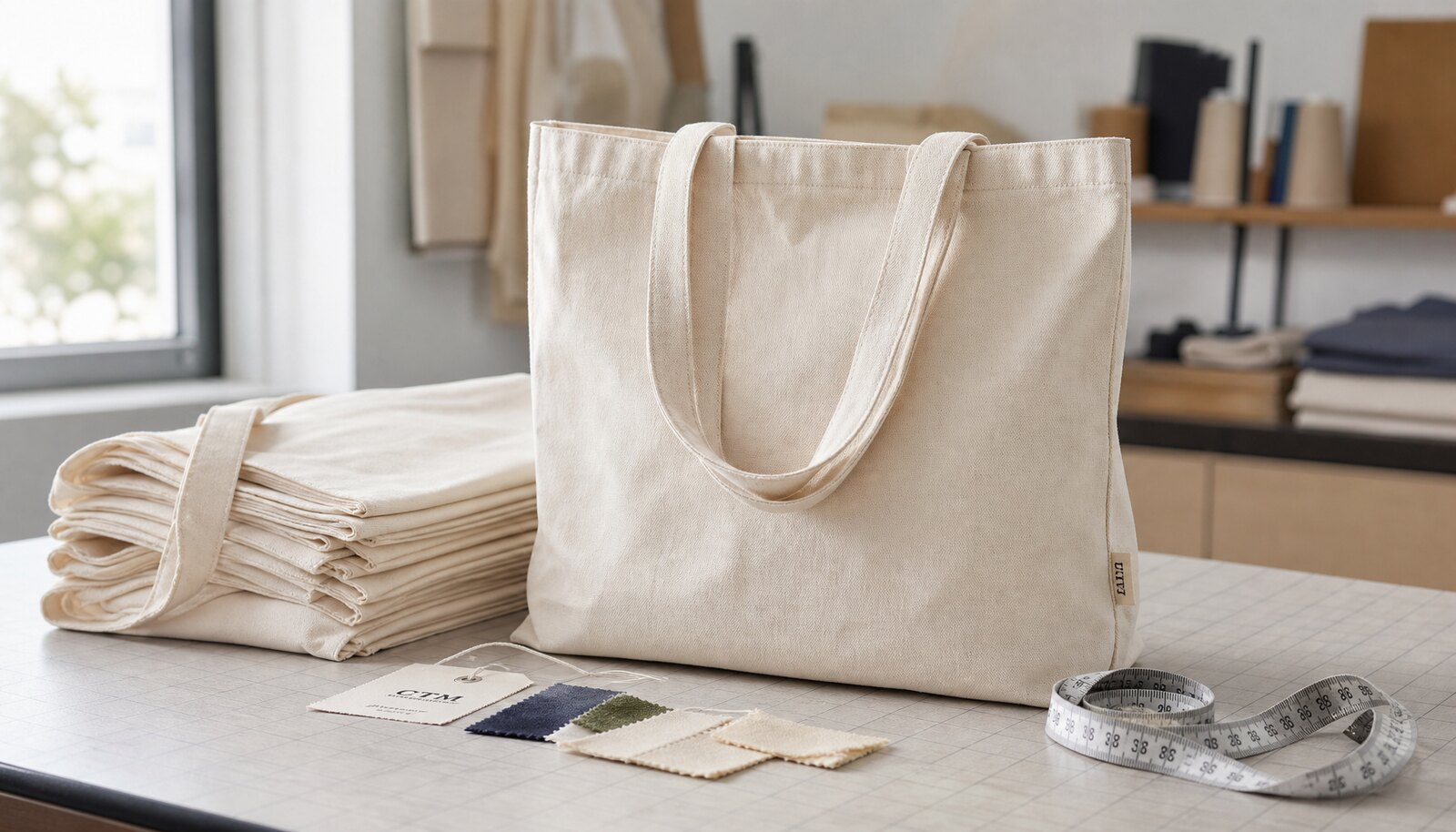
Why boutique wineries buy canvas totes differently
A grocery tote for a boutique winery is not a generic promo bag. It has to work as carry gear, retail merchandise, and brand packaging at the same time. That means the buying decision is not only about price per unit. It is about whether the bag can survive repeated use, show the label cleanly, and still look presentable when a customer pulls it off a shelf or receives it with a purchase.
The winery use case changes the sourcing logic. If the tote is part of a tasting-room bundle, it needs shelf appeal. If it is sold as a retail SKU, it needs enough quality control to avoid returns and complaints. If it is meant for wine-club shipments or event resale, the packing and carton plan matter as much as the artwork. A bag that carries produce and a bottle may need more reinforcement than a plain giveaway tote, even when the logo is the same.
That is why the first step is not artwork approval. It is defining the tote's job. Once the use case is clear, the rest of the spec falls into place: canvas weight, handle drop, gusset depth, decoration method, and carton format. For custom canvas grocery totes wholesale programs, the buyers who do best are the ones who turn a brand idea into a measurable product definition before they ask for quotes.
- Start with use case, not artwork.
- Treat the tote as retail merchandise if it is sold or bundled with wine.
- Define the carry load before you compare suppliers.
Define the tote's job before you price it
A winery tote should be specified around the real load it will carry. A light grocery tote can live at 10 oz canvas with a simple flat body. A tote that will routinely hold bottles, jars, and pantry items usually needs 12 oz canvas, a gusset, and stronger handle attachment. If the bag is meant to sit upright in a tasting room or on a retail shelf, the body shape should hold itself without collapsing into a pile.
The handle is the other major use-case decision. A short handle works for hand carry but becomes awkward once the bag is full. A longer handle can feel better on the shoulder, but only if the drop is set correctly and the seam reinforcement can handle the load. Buyers often notice the handle length too late because the sample looked fine on a table. The better check is to fill the bag with the same kind of items customers will carry and then test comfort in motion.
A clean spec also separates must-haves from nice-to-haves. Closures, interior pockets, bottle dividers, or bottom boards can improve presentation, but they add cost and more failure points. For most boutique winery grocery programs, a straightforward open-top bag with good fabric, clean stitching, and a stable print is the most commercially durable choice. If the bag is being sold as a premium gift item, add extras only when they support that positioning.
- Match fabric weight to the actual load, not the marketing story.
- Test handle comfort with real contents, not an empty sample.
- Avoid decorative features that do not support the tote's use.
Choose fabric weight and reinforcement
Canvas weight is the first material decision because it affects structure, print behavior, and freight. For most boutique winery grocery totes, 10 oz to 12 oz canvas is the most practical range. Ten ounce canvas is lighter and more economical. Twelve ounce canvas gives a more substantial feel, better print backing, and more confidence when the bag is expected to carry heavier mixed purchases. If the tote regularly carries bottles, ask for reinforcement at the handles and bottom seam in addition to the base fabric weight.
Weight alone does not solve the quality problem. A loosely woven canvas can still feel flimsy, even if the seller calls it premium. Ask for the fabric basis weight, weave count if available, width, and finishing method. Also confirm whether the weight is measured before or after finishing, because that changes the real comparison between suppliers. If a factory cannot state those numbers cleanly, it is harder to trust the quote.
Reinforcement should be visible in the sample. Look at the handle attachment, top hem, side seams, and bottom seam. Bar-tacks are common for a reason: they concentrate strength where the bag gets stressed. For a winery tote that will be used repeatedly, the goal is not overbuilt stiffness. It is a structure that stays neat, supports load, and does not fall apart after the first few heavy uses.
- Use 10 oz for lighter use and 12 oz for a more premium, durable feel.
- Ask for the exact basis weight and whether it is measured before or after finishing.
- Inspect handle reinforcement and bottom seams on the sample, not just the fabric swatch.
Pick artwork and branding format
The branding method should follow the artwork, not the other way around. A simple winery logo usually works best as one-color or two-color screen print. That method is durable, legible, and efficient for reorder programs. It also suits natural canvas well because the fabric texture becomes part of the look instead of fighting it. If the logo has fine script, gradients, or a more intricate label layout, a transfer print, woven label, or sewn patch may be a better fit.
The right branding format also depends on how the tote will be used after purchase. If the bag is a retail item, the logo needs to remain clean after folding, handling, and repeated use. If it is a club gift, the bag can be more restrained and focused on brand recognition rather than large artwork. A premium winery tote often performs better when the front panel stays simple and the brand detail is concentrated in a small, well-made label or patch.
Before approving the artwork, ask for placement drawings and a physical sample. A logo that sits too close to a seam can warp when the tote is sewn and folded. A two-color mark can look sharp on screen and drift in production if registration is not controlled. The buyer should define acceptable placement drift and color variation in writing so the inspection team is not forced to guess later.
- Use screen print for simple repeatable logos.
- Use a woven label or patch when the brand needs a quieter, more premium look.
- Approve artwork placement with a drawing and a physical sample.
Shortlist supplier routes and regions
Supplier route matters because tote quality is shaped by how much of the process the seller actually controls. A direct factory that cuts, sews, prints, and packs the bags in one place usually gives better visibility into quality and timing. A trading company can be useful when you need to source several items at once or when the order is small, but it may not have direct control over seam discipline, print curing, or packing consistency. If the buyer needs repeatability, the most important question is who owns the line that will actually make the bag.
Region tradeoffs are real, but they should be treated as tradeoffs, not stereotypes. Coastal China and Vietnam often have deep tote manufacturing experience and can handle coordinated sewing, printing, and export packing at scale. India can be a strong option for natural canvas and cut-and-sew work. Mexico or domestic factories can make sense when shorter transit, faster replenishment, or lower inventory risk matters more than the lowest ex-works price. The right choice depends on the order pattern, not a blanket assumption about one country being best.
Compliance expectations also vary by market and channel. A good supplier should be able to explain what documentation they routinely provide: material composition, country-of-origin marking support, restricted substance statements, and any retailer-specific paperwork. If the bags will enter a regulated retail channel, ask for the documents before you issue the PO. A factory that cannot support the paperwork you need may be cheap on paper but expensive once the shipment is held or reworked.
- Direct factory sourcing usually gives better process control than layered trading routes.
- Choose region based on lead time, compliance needs, and order size.
- Ask early for the documents your sales channel expects.
Build a quote packet that removes ambiguity
A clean RFQ starts with the bag, not the logo file. The supplier needs finished dimensions, handle drop, gusset depth, fabric weight, decoration method, and packing format before it can price accurately. If the size is still open when the artwork is approved, the quote will often need to be revisited later, which wastes time and creates room for scope creep. Lock the bag geometry first, then send the art.
The quote packet should also define the comparison rules. If one supplier quotes a 10 oz canvas body and another quotes 12 oz, the offers are not interchangeable. If one includes sample fees and carton labeling while another omits them, the unit price is misleading. For custom canvas grocery totes wholesale orders, the best comparison sheet breaks out the same components for every supplier: fabric, print setup, sample cost, inner packing, master cartons, freight assumptions, and any compliance documents required by the market.
Do not accept vague answers. Ask the supplier to explain how MOQ changes when a second print location, woven label, different handle length, or different canvas color is added. A competent factory can identify the cost driver. That answer matters because it tells you whether the supplier understands the production constraints or is only repeating standard pricing language.
- Lock dimensions before you finalize artwork.
- Compare suppliers on the same cost components, not only unit price.
- Ask how the price changes when you add a second print or a label.
Approve samples against use, not just appearance
A pre-production sample is useful only if it matches the planned bulk order. It should use the same fabric, thread, decoration process, handle construction, and packing method that will be used in production. If the sample comes from a different fabric lot or a cleaner decoration method, it can hide problems that appear in the bulk run. A sample that looks right but is built differently is not a reliable approval tool.
The sample also needs a use test. Put in the same kind of items customers will carry and see how the tote behaves. Check handle comfort, bag stability, print distortion when folded, and whether the bag holds its shape after loading. For a winery program, the sample should be tested with bottles or other realistic retail contents rather than a generic hand feel check.
If the order is new or the artwork is complex, a small pilot run is worth asking for before full release. One carton or roughly 20 to 50 units is often enough to expose print drift, seam issues, or packing mistakes before the whole batch is committed. Keep one approved sample labeled with the order date, supplier name, and artwork version. That sample becomes the reference point when you place the reorder.
- Approve a sample built from the same process as bulk production.
- Test the tote with realistic contents before sign-off.
- Keep one labeled reference sample with the purchase order file.
Set QC thresholds, sample sizes, and AQL
Quality control should be written in measurable terms. For canvas tote bags, the defects that matter most are wrong size, weak handles, open seams, crooked print, stains, odor, and poor carton counts. The fix is to define critical, major, and minor defects before production starts and tie them to an inspection method the supplier understands. AQL only works when everyone agrees on the defect definitions first.
A practical baseline is ANSI/ASQ Z1.4 General Inspection Level II with 0 critical, 2.5 major, and 4.0 minor defects. That is a common default for tote orders, but buyers of premium retail bags may tighten the limit to 0 critical, 1.0 major, and 2.5 minor. For most lots, Level II will produce a sample size somewhere in the 80 to 125 unit range depending on lot size. Use the actual AQL table, not a guess.
The defect thresholds should also be specific. A size outside tolerance by more than your allowed window is a reject. A print shift greater than 3 mm on the front panel is usually a major issue on a logo bag. An open seam longer than 5 mm, a missing handle, a strong odor after airing, or mixed SKUs in one carton should be treated as critical. If the supplier knows the thresholds in advance, the inspection conversation becomes much cleaner.
- Use AQL with explicit critical, major, and minor defect definitions.
- Keep the inspection baseline at General Inspection Level II unless you need tighter control.
- Write exact tolerance values for size, print placement, seam quality, and odor.
Specify packing, carton counts, and freight
Packing can change the real cost and the retail look of the bag. Flat packing is usually the best default for grocery totes because it keeps freight efficient and receiving simple. But flat packing should not be done carelessly. If the cartons are over-compressed, the canvas can crease hard, the print can scuff, and the tote may look worn before it ever reaches a customer. The supplier should explain the fold method and carton loading plan before production is approved.
Ask for the basic carton data in the quote: bags per inner bundle, bundles per master carton, carton dimensions, gross weight, and carton marks. If there are multiple sizes or print variants, each must be labeled clearly. Mixed cartons are a receiving risk, especially when a winery is distributing the bags to different stores, events, or club shipments. The more precise the packing spec, the less time the warehouse spends sorting and counting.
Freight should be reviewed alongside packing. A slightly denser flat pack may save enough volume to justify a better fabric or better reinforcement. If the bags are traveling a long distance or through humid conditions, ask whether the cartons need liners or moisture protection. Those details are minor until the shipment arrives with scuffed, damp, or poorly folded bags. Then they become the most expensive line in the order.
- Ask for carton size, bundle count, gross weight, and fold method in writing.
- Keep variants separated and labeled so receiving does not have to sort them.
- Balance freight efficiency against retail presentation and crease control.
Plan reorders and seasonal variants
Boutique winery tote programs often come back as seasonal or event-based reorders. That is where a disciplined spec file saves time. Keep one master spec, one approved sample, one art version code, and one packing standard. If the winery needs a holiday edition or a harvest event version, change only the elements that need to change. The body, handle, and carton logic should stay stable whenever possible.
Version control matters because small changes can quietly break the repeat order. A different logo file, a slightly longer handle, or a new canvas color can shift cost, alter lead time, and create inventory leftovers. It is usually better to keep one core tote and vary a label, hangtag, or print panel than to redesign the bag every season. That approach makes it easier to forecast demand and easier to compare the next quote against the last one.
The cleanest reorder programs are the ones where the buyer can answer three questions fast: what changed, what stayed the same, and which approved sample is the reference. If those answers are hard to find, the next buy will take too long and the supplier may quote it like a new project. For custom canvas grocery totes wholesale buying, the best savings often come from repeatability, not from squeezing the first order by a few cents.
- Keep one master spec and one approved sample for future orders.
- Change artwork or a label before you change the bag body.
- Use version codes so seasonal reorders do not become new sourcing projects.
Specification comparison for buyers
| Decision area | Good procurement target | Pass/fail threshold to request in RFQ | What can go wrong if it is vague |
|---|---|---|---|
| Supplier route | Direct factory with in-house cutting, sewing, printing, and packing. For export sourcing, coastal China and Vietnam often offer strong tote specialization; India can be strong on natural canvas cut-and-sew; Mexico or domestic factories can help when lead time and inventory risk matter more than the lowest unit price. | Pass if the supplier can name the factory site, explain which steps are in-house, and show production photos from the same line that will run your order. | Trading layers and subcontracted decoration can hide seam variation, print drift, and unclear accountability when defects appear. |
| Fabric weight | 10 oz to 12 oz canvas for most boutique winery grocery totes; heavier if the bag regularly carries bottles or bundled retail purchases. | Pass if the supplier states oz/yd2 or GSM, fabric width, and whether the weight is before or after finishing. Ask for a tolerance window, not just a target. | Thick canvas is not a spec. A supplier can quote loosely woven cloth that feels soft but does not hold shape or print cleanly. |
| Stitch construction | Reinforced handle attachment with bar-tacks or equivalent reinforcement, a clean top hem, and controlled side and bottom seams. | Pass if the supplier provides stitch density, reinforcement detail, and a photo or annotated sample of the seam structure. | Weak shoulder points, skipped stitches, and crooked seams usually show up only after the bags are filled. |
| Print method | One- or two-color screen print for simple logos; transfer, woven label, or sewn patch when the art is complex or the brand wants a more premium finish. | Pass if the supplier can match PMS or spot color targets, provide a placement proof, and explain how the method behaves after folding and handling. | A factory that promises every artwork on every method may be overselling what the process can hold at scale. |
| Bag geometry | A stable shopper shape with a finished width, height, gusset depth, and handle drop that fit grocery and tasting-room use. | Pass if the RFQ lists all dimensions, the measurement point, and the tolerance for each dimension in writing. | If the bag is only described as small, medium, or large, quote comparison and inspection both become unreliable. |
| MOQ strategy | One base bag body with limited variation, such as one canvas color and one handle construction, while changing only the print or label. | Pass if the supplier quotes a base MOQ and a separate price for a second print location, woven label, or handle change. | Too many body colors or trim changes increase setup cost and make inventory harder to reorder cleanly. |
| Packing format | Flat-packed with counted inner bundles and labeled cartons unless retail presentation requires a different fold or wrap. | Pass if carton count, carton size, gross weight target, bundle count, and fold method are defined before production starts. | Loose packing raises freight cost; over-compression can crease the canvas and make the product look used on arrival. |
| Inspection standard | AQL-based incoming or pre-shipment inspection with measurable defect rules and photo references. | Pass if the supplier accepts ANSI/ASQ Z1.4 General Inspection Level II, with a default target of 0 critical, 2.5 major, and 4.0 minor defects unless you tighten it for a premium retail program. | Without a threshold, the supplier and buyer will argue about whether a seam mark, print shift, or odor is acceptable. |
| Landed cost basis | Compare ex-works, sample fees, printing, packing, freight, and any regional compliance documents so the real landed cost is visible. | Pass if every quote separates product price from setup, packaging, documentation, and logistics charges. | A low headline unit price can turn into a higher landed cost once cartons, freight, and rework are added. |
Buyer checklist before sampling
- Define the tote's real job before requesting quotes: tasting-room retail, wine-club gift, grocery add-on, event merchandise, or resale SKU. Each use case changes fabric weight, handle comfort, and how much the bag needs to stand up on a shelf.
- Write one primary load case and one secondary load case. A tote that should carry produce plus one or two bottles needs different reinforcement than a bag that only holds light retail purchases.
- Lock finished dimensions before artwork review. If the size moves after the logo is approved, the supplier may need to rework print placement and the quote may change.
- Specify the bag in finished dimensions and measurement points. State width, height, gusset depth, handle drop, and whether the measurement is flat or assembled.
- Choose canvas weight in oz/yd2 or GSM and ask for the exact fabric lot used for the sample. Do not accept 'heavy' or 'thick' as a substitute for a measurable specification.
- Ask whether the canvas is natural, bleached, dyed, or piece-dyed. Color and finish affect print contrast, dirt visibility, and lot-to-lot shade variation.
- Decide whether the bag needs a gusset, a stable base, or a simple flat body. A gusset is usually worth the cost if the tote must carry groceries or stand upright during retail display.
- Define handle requirements: width, length, attachment style, and whether the bag should feel comfortable by hand, on the shoulder, or both. Handle drop matters more than many first-time buyers expect.
- Choose the decoration method after reviewing the artwork. A simple winery mark usually prints best as one-color or two-color screen print; more complex art may require transfer, patch, or woven label treatment.
- Ask for a pre-production sample made from the same fabric, thread, decoration method, and packing plan as bulk production. A showroom sample is not a valid approval standard.
Factory quote questions to send
- What factory site will produce this order, and which steps are in-house versus subcontracted?
- What is the exact canvas weight in oz/yd2 or GSM, and is that measured before or after finishing?
- What is the fabric composition, weave, width, and finishing method?
- What are the finished width, height, gusset depth, and handle drop, and what tolerance do you hold on each dimension?
- How are the handles attached, what stitch density do you use, and do you reinforce the stress points with bar-tacks or another method?
- What print method do you recommend for this artwork, how many colors are included, and what is the placement tolerance?
- Can you provide a pre-production sample built from the same material and process as the bulk order, and what is the sample fee?
- What is your MOQ for one body color and one print, and how does MOQ change if we add a second print location, woven label, or different handle length?
- What monthly tote capacity does the factory currently run, and what is the realistic lead time for a repeat order after the first approval?
- What compliance documents can you supply for our sales channel, such as restricted substance declarations, country-of-origin labeling support, or retailer-specific documentation?
Quality-control points to confirm
- Fabric verification: confirm the approved fabric weight, weave appearance, and surface cleanliness against the signed sample. A practical tolerance is usually plus or minus 5 percent on fabric weight unless you define something tighter.
- Measurement tolerance: require a written tolerance for finished width, height, gusset, and handle drop. For premium retail bags, many buyers hold the finished dimensions within plus or minus 1/4 inch (about 6 mm); for standard programs, plus or minus 3/8 inch (about 10 mm) is a more realistic ceiling.
- Seam and reinforcement checks: inspect side seams, bottom seam, top hem, and handle attachment points for skipped stitches, open seams longer than 5 mm, loose ends, puckering, or bar-tacks that are incomplete or misaligned.
- Print quality: verify placement, registration, edge sharpness, ink density, and curing. A useful rule is to keep placement drift within 3 mm on the front panel and color registration within 2 mm for multi-color art.
- Load test: fill the tote with the heaviest normal use case, such as groceries plus bottles, and check for handle stretch, seam opening, or permanent deformation. The bag should not fail under ordinary retail use.
- Odor and cleanliness: bags should arrive dry, free from oil marks, loose fibers, stains, and persistent solvent smell. If the product still smells strongly after 24 hours of airing in a ventilated room, treat it as a defect.
- Packing count accuracy: verify the number of bags per inner bundle, inner bundle count per carton, and the total carton count. Mixed variants should be separated and labeled clearly.
- Carton condition: cartons should arrive dry, intact, and not crushed. If the cartons show compression damage, inspect the bags inside for fold cracks, print scuffing, or seam distortion.
- Inspection standard: use ANSI/ASQ Z1.4 General Inspection Level II as the baseline for pre-shipment checks, with 0 critical defects, 2.5 major defects, and 4.0 minor defects unless your program needs tighter limits.
- Sample size: for most tote lots, Level II inspection will usually land in the 80 to 125 unit range depending on lot size. For a new artwork or a premium retail run, add a small pilot of 20 to 50 units or one full carton before mass release.