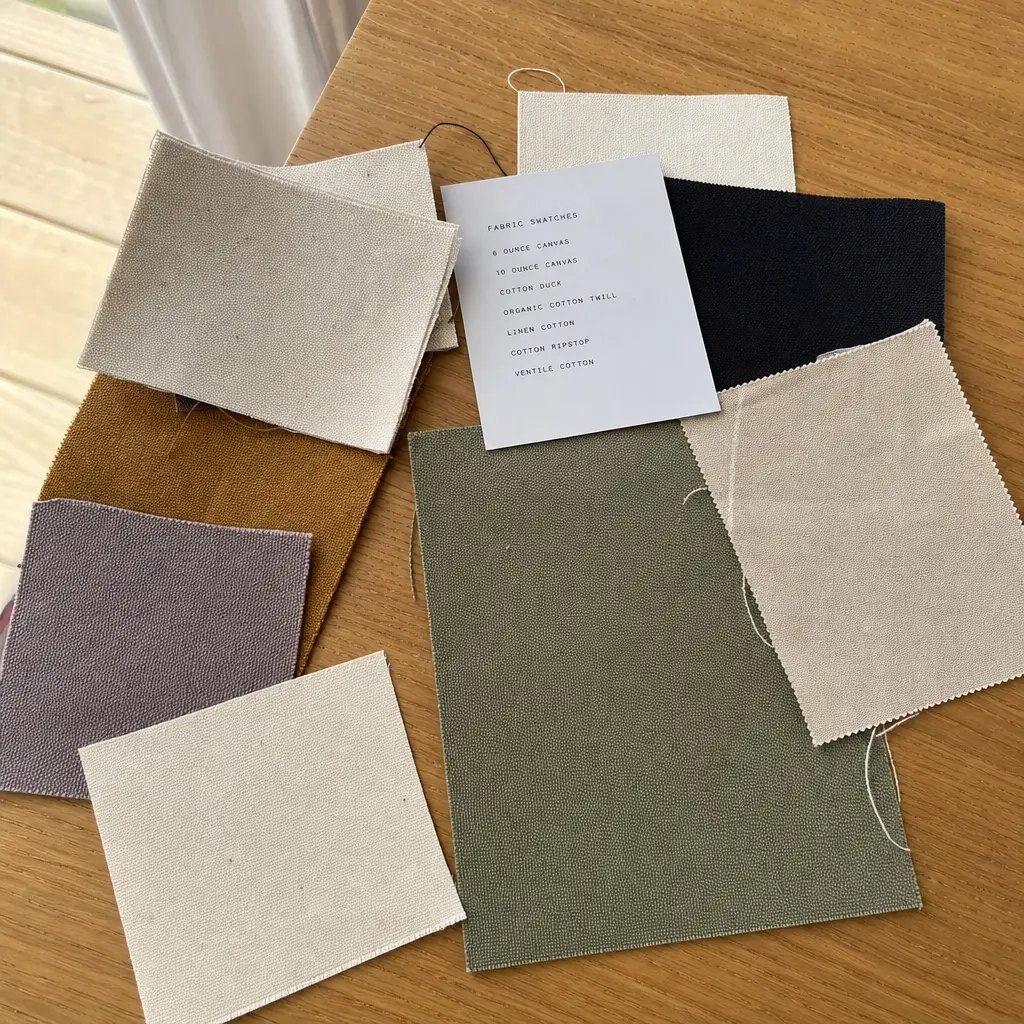
Why Supplier Compliance Matters for Canvas Grocery Totes
A custom canvas grocery tote looks simple until a startup buyer has to compare three quotes that describe the same bag in completely different language. One supplier may quote 12 oz canvas, another may quote 340 GSM cotton, and a third may quote only “heavy canvas” with no construction details. The lowest unit price can be the least useful number if the quote does not identify fabric weight, finished size, print method, packing, and inspection responsibility.
For tech startups, the risk is rarely just a bad tote. The bags may be used for a product launch, investor event, customer onboarding kit, retail partnership, conference booth, or employee welcome program with a fixed delivery date. If the order arrives with weak handles, muddy logo color, excessive creasing, or missing carton labels, procurement has little room to recover. A supplier compliance checklist turns the RFQ from a loose request into a controlled production brief.
That matters because tote sourcing sits between merchandise buying and light manufacturing. The product is soft goods, but the commercial risk is real: one unclear artwork file, one missed fabric substitution, or one poorly packed carton can create rework, freight delay, and brand damage at the exact moment the startup wants a polished presentation.
- Treat the tote as a load-bearing sewn product, not a blank promotional item.
- Use one spec sheet for all suppliers so quotes can be compared line by line.
- Require factory evidence before deposit, not after production problems appear.
- Separate commercial compliance from product compliance because both affect delivery risk.
Write the Spec Around Use, Not Just Size
Canvas grocery totes for tech startups are often used for more than groceries. They may carry boxed devices, onboarding kits, notebooks, cables, water bottles, apparel, retail samples, or trade show giveaways. The fabric weight should match the expected load and brand position. A 6 oz cotton bag can work for a light giveaway, but it usually does not feel like a proper grocery tote. A 16 oz heavy canvas bag feels premium but adds fabric cost, sewing difficulty, and freight weight.
For most custom canvas grocery totes, 10 oz to 12 oz canvas is a practical starting range. In GSM terms, that is often around 280-340 GSM depending on weave and finishing. Buyers should request both oz and GSM if suppliers quote in different measurement systems. GSM is a fabric weight per square meter, while ounce canvas references weight per square yard in many markets. The numbers are not always converted consistently, so the approved sample becomes the final commercial reference.
The better sourcing question is: what will the tote carry, how often will it be reused, and what image should it project? If the bag goes into a retail program or long-lived customer welcome kit, the spec should support repeated handling, sharper stitching, and better print durability. If it is a one-time conference handout, procurement can spend less on fabric and focus on consistent packing and branding clarity.
- Light event tote: 8 oz to 10 oz canvas when load is low and budget is tight.
- Reusable grocery tote: 10 oz to 12 oz canvas with reinforced handles and a gusset.
- Premium retail tote: 12 oz to 16 oz canvas when structure and hand feel matter more than freight cost.
- Custom dyed canvas: allow extra lead time and confirm colorfastness expectations before bulk cutting.
Construction Details That Change the Quote
Two suppliers can quote the same dimensions and still not be making the same bag. A flat tote with no gusset uses less fabric and sews faster than a grocery tote with a boxed bottom or side-and-bottom gusset. A narrow handle uses less webbing than a wide self-fabric handle. A simple folded top hem is not the same as a bound, reinforced opening. These details decide load performance, appearance, and sewing time.
The RFQ should describe finished dimensions, not only approximate size. For example, write body width, body height, gusset depth, handle length, handle width, and handle drop. If the tote must fit a specific retail box or shipping insert, send the item dimensions and target loading direction. A factory can adjust gusset and seam allowance early, but after bulk cutting, size correction is expensive or impossible.
Procurement should also name the stitching standard where the bag will take stress. Handle seams often need bartack, cross-stitch, or box reinforcement. Inside seams may be left raw on low-cost promo bags, but that can shed threads and look unfinished in retail use. If the tote will be sold rather than handed out, the buyer should inspect the inside finish, top hem, and handle join as carefully as the front logo.
- Specify whether the bottom is flat, boxed, or gusseted.
- State handle reinforcement: bartack, cross-stitch, box stitch, or another approved method.
- Confirm inside seam finish, especially if loose threads would look poor for retail resale.
- Require finished-size tolerance, such as plus or minus 1 cm for body size and plus or minus 1.5 cm for handle drop.
Materials, Finish, and Performance Evidence
The fabric spec should go beyond the word canvas. Ask for fiber content, weave type, approximate yarn count if available, fabric weight, and any finishing applied after weaving. A bleached canvas may appear cleaner for retail display, while a natural canvas can show more cotton flecks and slubs. That is not automatically a defect, but it should be visible in the approved sample so the buyer can decide whether the look fits the brand.
If the tote is expected to hold heavier items, ask the supplier how the handle area is reinforced. Many bags look identical on a quote but behave differently in use because one has an extra patch, tighter seam allowance, or denser stitch pattern near the stress point. Buyers should ask to see close-up photos of the handle join, bottom corners, and top hem before approving the production standard.
When a supplier offers recycled cotton or blended fabric, procurement should ask for the exact blend, any shade variation expected, and whether the recycled content changes hand feel or print consistency. A plausible sustainability story is not enough. The buyer needs a written material declaration linked to the actual order so internal records and customer-facing claims are consistent.
- Ask for fiber content and any finish used on the canvas, not just the bag color.
- Request close-ups of handle joins, corners, and top hems from a similar production run.
- If recycled content is used, ask for the exact blend and the lot-level material declaration.
- Use the approved sample as the reference for texture, shade, and surface variation.
Print Method Selection for Startup Branding
Most tech startup logos work well with screen printing on canvas, especially when the artwork uses one to three solid colors. Water-based ink is often preferred for natural canvas because it gives a softer hand feel and looks less plastic. For dark dyed canvas, the supplier may need an underbase or a different ink system to keep the logo visible. That changes cost and production time, so it should be priced before sample approval.
Heat transfer can reproduce gradients and complex artwork, but it can feel less integrated with the fabric and may not suit a rugged grocery tote. Embroidery gives a premium detail for a small mark, yet it is slower and can distort thin canvas if the logo is large. Woven labels, side labels, and inside care labels are useful when a startup wants subtle branding without a large front print. The best route depends on artwork, fabric color, target price, and expected washing or rubbing.
For procurement, the evidence standard should be a printed strike-off or a correctly made pre-production sample, not a generic digital mockup. Ask the supplier to show print edge sharpness, color match under neutral light, and any ink build-up at the edges of fine lines. If the brand has a strict visual identity, require the supplier to confirm the allowed Pantone variation in writing before bulk production starts.
- Provide vector artwork in AI, EPS, or PDF format with Pantone references.
- Define print size in centimeters and placement from the top seam or center line.
- Approve ink hand feel, not only color, because thick ink can make canvas look cheap.
- Use a strike-off or printed panel when logo color accuracy is more important than sample speed.
MOQ Logic and Quote Structure
MOQ is not one number. A supplier may have one MOQ for natural canvas, another for stock dyed canvas, another for custom dyed fabric, and another for print setup efficiency. A buyer asking for 1,000 totes across four colors may think the order is simple, while the factory sees four fabric lots, four cutting plans, and possibly four shade-control risks. The correct compliance question is not “What is your MOQ?” but “What drives the MOQ for this specification?”
For first orders, a startup may want a lower MOQ to reduce inventory risk. That is reasonable, but the quote should show the cost impact. Below efficient MOQ, the supplier may add fabric surcharge, machine setup cost, print screen cost, sample cost, or inland freight allocation. Procurement should compare the total landed cost per usable bag, not only the visible unit price.
The quote should also identify whether accessories, labels, inserts, barcode stickers, and export documents are included. A quote that omits packing or document charges can look cheaper than it is. For a startup shipping to a warehouse or 3PL, receiving requirements often matter as much as bag price. Ask for one quote line that reflects product cost and another that reflects operational cost so the real comparison is visible.
- Natural canvas usually offers more flexible MOQ than custom dyed canvas.
- Multiple logo colors increase screen setup and print alignment work.
- Split shipments may solve schedule pressure but can raise freight and document cost.
- A reorder plan can help negotiate better MOQ after the first approved production run.
Supplier Evidence Before Purchase Order Release
A compliant supplier should be able to prove that it understands canvas tote production, not just send a catalog. Useful evidence includes production floor photos, sewing line capacity, sample room capability, fabric storage conditions, needle-control practice, inspection templates, and export packing examples. For a factory-direct order, the buyer should know whether cutting, sewing, printing, and packing are in-house or subcontracted.
Certificates can help, but they should not replace product-level checks. A broad factory audit does not prove that the exact tote fabric is safe, the logo ink is suitable, or the carton can survive export handling. When documentation is required, match it to the production lot and product type. If the supplier provides a material declaration or dye statement, it should identify the fabric, color, supplier, and date clearly enough for procurement records.
A strong document set also shows who owns decisions. Ask who signs off if the factory needs to substitute a fabric roll, change a carton size, or split production between lines. If the supplier cannot name the person responsible for deviation approval, the compliance chain is too weak for a time-sensitive startup order.
- Request photos of similar canvas grocery totes with comparable weight and construction.
- Confirm whether printing is done in-house or by an outside print partner.
- Review a blank inspection report before production starts so defect categories are agreed.
- Keep supplier documents in the PO file with version date and product reference.
Sample Approval That Prevents Bulk Mistakes
A showroom sample is useful for judging general workmanship, but it is not enough for purchase approval. The pre-production sample should use the actual or equivalent bulk canvas, the correct handle material, the approved print method, and the intended packing style if creasing is a concern. If the bulk fabric is not ready, the supplier should state what differs from the sample and when the final production reference will be confirmed.
The sample review should be written like an acceptance decision, not a casual photo approval. Measure the tote, load it with a realistic weight, inspect the handle stitching, rub the print with a dry white cloth, and compare logo color under neutral light. If the startup has brand guidelines, record the acceptable Pantone deviation or approve the physical print as the working standard. Ambiguous approvals create disputes when mass production looks slightly different.
A practical approval file should include the signed sample, the artwork version used, measurement notes, approved packing method, and any deviations the buyer accepted. If the supplier changes anything after approval, the revised version should be called out explicitly. This is especially important for first orders, where the team may want to move quickly and skip one approval step too many.
- Approve size, fabric hand feel, color, stitching, handle drop, print position, and packing fold.
- Photograph the approved sample from front, back, inside, handle close-up, and carton view.
- Seal one approved sample at the factory and keep one with the buyer or inspection agent.
- Do not release bulk cutting until sample deviations are listed and accepted in writing.
QC Thresholds for Grocery Tote Performance
Canvas grocery totes need practical QC thresholds because they are handled repeatedly and often photographed in public. Common defects include uneven handles, skipped stitches, open seams, dirty panels, shade variation, print pinholes, print misalignment, loose threads, and carton crushing. The front branding panel deserves stricter visual standards than hidden inside seams because it carries the buyer’s logo.
AQL inspection can be used, but the defect definitions must fit the product. A minor loose thread is not the same as an open handle seam. A small natural slub in canvas may be acceptable, while an oil mark across the logo area should be rejected. Procurement should define critical, major, and minor defects before production, then require inspection photos and carton sampling records before shipment release.
The most useful QC language is operational. For example: no open seam longer than a stated limit; no misprint that shifts beyond the logo bounding box; no visible stain on the front panel; no handle stitch skip within the reinforced area; no carton damage that would affect retail presentation. That level of detail helps the factory and the inspector make the same decision the buyer would make at receiving.
- Critical defects: broken needles, mold, severe odor, unsafe metal parts, or handles detaching under reasonable load.
- Major defects: open seams, wrong size, wrong logo color, heavy stains, print cracking, or missing labels.
- Minor defects: small loose threads, slight wrinkles, or minor natural cotton specks outside the logo area.
- Functional check: load a sample tote with a realistic weight and inspect handle seams after carrying.
Packing, Carton Data, and Warehouse Readiness
Packing can make a good tote look poor on arrival. Canvas holds creases, especially when cartons are overfilled or compressed for long transit. Flat packing usually gives the cleanest presentation but increases carton volume. Folding reduces freight volume but can create permanent-looking fold lines if the canvas is heavy or the carton is stacked under pressure. The right packing method depends on whether the totes go directly to an event, a retail store, a distributor warehouse, or a fulfillment center.
Carton data should be part of the quote, not an afterthought. Procurement needs pieces per carton, carton dimensions, gross weight, net weight, carton marks, pallet requirement, and whether barcodes or SKU labels are needed. Importers and distributors also need packing consistency for receiving. A carton packed with 80 pieces in one batch and 120 pieces in another creates counting and warehouse errors.
If the totes are for a launch event or showroom handout, the buyer may want a cleaner presentation and fewer fold marks. If the totes ship to a 3PL, the receiving team may care more about SKU count, carton labeling, and easy pallet breakdown. Packing requirements should therefore be written as an operational rule, not a vague preference.
- Avoid individual polybags unless required for retail, ecommerce, or warehouse protection.
- Use moisture protection for sea freight, especially during humid seasons or long storage.
- Confirm carton strength if the tote uses heavy canvas or metal accessories.
- Include carton mark artwork in the approval file before mass packing begins.
Specification comparison for buyers
| Supplier option | What to verify | Commercial advantage | Buyer risk to control |
|---|---|---|---|
| Direct sewing factory | fabric swatch, approved sample, seam close-ups, logo test photos, packing pilot, and final inspection evidence | Better sample-to-bulk control and faster production feedback | May be weaker on export paperwork or branded packing unless checked early |
| Trading company | Factory name, production photos, trim-source proof, and who owns QC decisions | Can coordinate small mixed orders and extra services | Markup can hide real factory capability and slow defect decisions |
| Specialized bag workshop | bag size, gusset, handle drop, seam allowance, stitch density, reinforcement patch, and loading expectation | More practical for detailed construction, trims, and repeat programs | Capacity may be limited during peak seasons |
| Low-price general supplier | 8-12 oz cotton canvas, 120-220 gsm cotton, recycled cotton, or blended fabric selected by use case and target price | Useful for simple promotional runs with loose specs | Material downgrades, weak packing, and vague inspection scope can erase savings |
| Retail-ready supplier | fold method, inner bundle, carton count, carton mark, moisture protection, SKU separation, and warehouse receiving needs | Can handle labels, SKU separation, carton marks, and receiving rules | Higher unit cost must be compared against reduced warehouse work |
| Compliance-focused supplier | Fabric records, labeling review, test plan, and production traceability | Safer for retail programs and repeat brand orders | Documentation claims need evidence, not only sales language |
| Local sample room plus bulk factory | Signed sample, bulk factory handoff, first-piece photos, and deviation owner | Good for complex branding before large production | Sample room quality may not match bulk line unless handoff is controlled |
Buyer checklist before sampling
- Define the actual use case: grocery load, event giveaway, retail resale, employee welcome kit, or distributor promotion.
- State the expected load, not just the bag size. For example: carry notebooks, a boxed device, water bottles, produce, or a full grocery basket.
- Specify finished dimensions, gusset depth, handle length, handle width, and handle drop with a written tolerance.
- Name the fabric clearly: natural canvas, bleached canvas, dyed canvas, recycled cotton canvas, or a cotton blend if allowed.
- Ask for both fabric weight systems if suppliers use different standards: ounces per square yard and approximate GSM.
- Provide vector artwork, Pantone references, print size, print location, and whether one side or both sides need decoration.
- Define the exact print method you are willing to accept, or require the supplier to quote each option separately.
- Request a breakdown of bag cost, print setup, sample fee, test fee, packing cost, and export document cost.
- Ask for actual sample photos that show seams, handle reinforcement, inside finishing, logo edge sharpness, and carton packing.
- Set pre-production sample approval rules before bulk cutting, especially for a first order or any new artwork.
Factory quote questions to send
- Are you quoting as the sewing factory, a trading company, or a sourcing office using an outside production workshop?
- What exact canvas weight are you quoting in oz and approximate GSM, and is that measurement before or after washing or finishing?
- Is the fabric greige, natural, bleached, stock dyed, or custom dyed, and what MOQ applies to each fabric color?
- What is the finished tote size, gusset depth, handle size, seam allowance, and handle reinforcement method included in the quote?
- Which print method is included, how many logo colors are priced, and what is the maximum print area without an upcharge?
- If the bag uses dark fabric, what underbase or special ink treatment is required, and how does that change cost or lead time?
- Can the pre-production sample be made with bulk fabric and the same print process planned for mass production?
- What are the sample lead time, bulk lead time, and the exact conditions that could change the schedule?
- What packing method, carton quantity, carton size, gross weight, and carton marks are included in the price?
- Which checks do you perform during cutting, sewing, printing, packing, and final inspection, and can you share the form you use?
Quality-control points to confirm
- Fabric weight should match the approved sample within an agreed tolerance, commonly plus or minus 5 percent unless another tolerance is written into the purchase order.
- Finished dimensions should be measured flat after sewing, with separate tolerance for body width, body height, gusset, and handle drop.
- Handle attachment should use bartack, cross-stitch, or reinforced box stitching suited to the expected load, not only a single straight seam.
- Main seams should be straight, secure, and free from skipped stitches, loose threads, broken threads, or open seam gaps.
- Print should pass a practical dry-rub check and tape adhesion check, with no heavy bleeding, cracking, pinholes, or misregistration beyond the approved sample.
- Natural canvas should be free from major stains, oil marks, mold odor, and visible weaving defects on the front branding area.
- Dyed canvas should not show obvious shade variation between panels, handles, and gussets within the same carton unless the buyer approved a natural variation range.
- Metal accessories, if used, should be checked for rust, sharp edges, secure attachment, and no staining on the canvas.
- Cartons should be export strength, dry, correctly marked, and packed to prevent crushing, heavy creasing, or moisture damage.
- Final inspection should document the AQL level, sample size, defect classification, carton count, photo set, and shipment release decision.