Why This Checklist Matters Before You Buy
A trade show tote is a small item with a large failure rate because everyone focuses on the logo and ignores the build. Buyers usually have one deadline, one booth, and very little tolerance for surprises. The real problem is not finding a supplier that can sew a canvas bag. It is finding one that can match the fabric weight, print method, packing format, and delivery window without changing the quote halfway through the order. This checklist is built to reduce that risk before you spend money on samples or commit to a PO.
For canvas grocery totes, compliance is broader than legal paperwork. It includes the practical requirements that keep a shipment usable: the right fabric GSM, a print process that survives folding, carton packing that arrives clean, and evidence that the supplier understands your market. If you only send artwork and a bag size, you will get a quote, but it may not be a quote you can compare. A better brief gives the factory enough information to price the same product across multiple sourcing routes.
- Treat the tote as a finished retail item, not a blank promotional bag.
- Lock the spec before asking for pricing, or each supplier will price a different product.
- Use the checklist to compare production risk, not just unit cost.
Lock the Bag Spec Before You Compare Suppliers
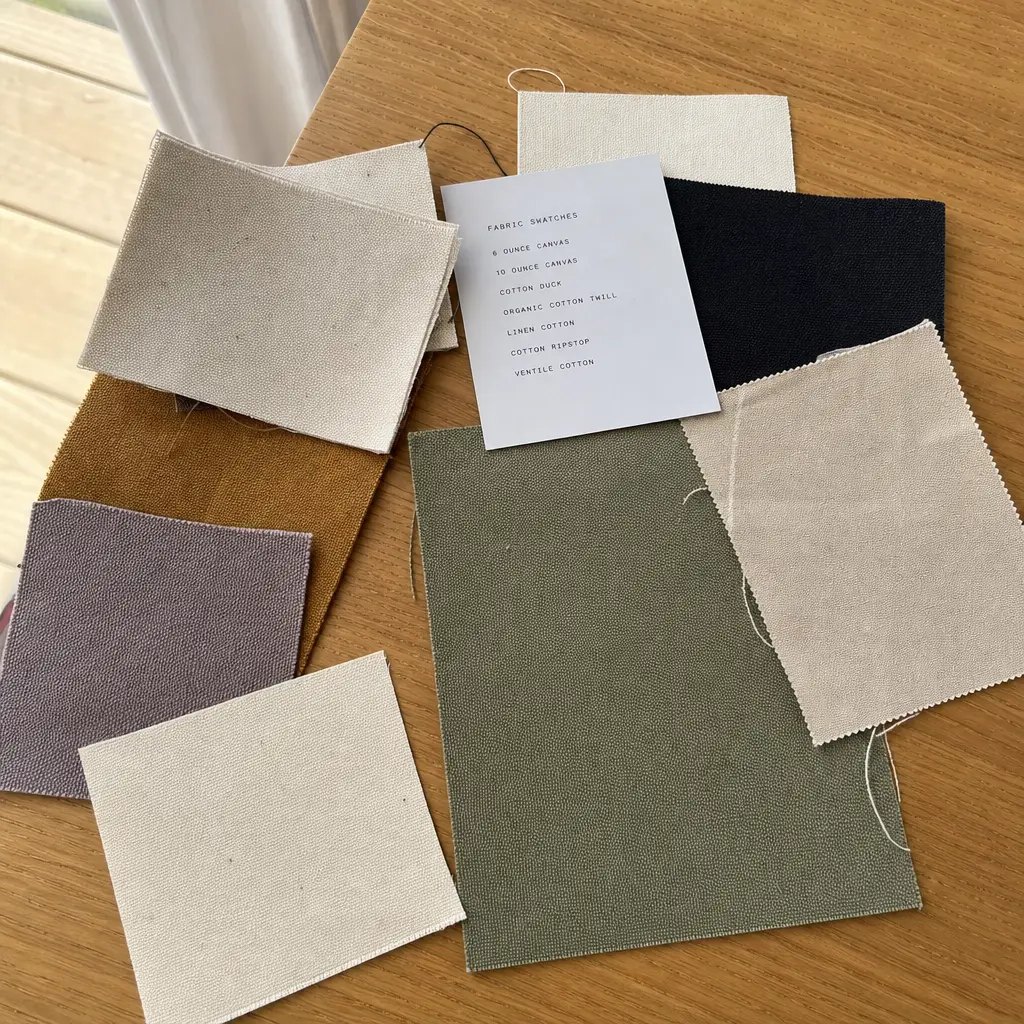
The first compliance decision is the bag build itself. For canvas grocery totes, the most common buyable range is roughly 8 oz to 12 oz, or about 280 GSM to 410 GSM, depending on how rigid you want the body to feel. An 8 oz bag is lighter and cheaper to ship, but it can look thin under retail lighting and may wrinkle more after folding. A 10 oz or 12 oz canvas gives better body and a stronger shelf impression, but sewing cost and freight cube usually rise with it. If the tote will carry catalogs, product samples, or heavier show giveaways, do not underspec the fabric just to save a small amount on the unit price.
The rest of the bag spec should be written in numbers, not adjectives. State the finished width, height, gusset depth, handle drop, handle width, seam allowance, and any reinforcement you expect at the stress points. If the bag is natural canvas, say whether you want unbleached, bleached, dyed, or enzyme-washed cloth. If the print is more than one solid color, define the artwork placement and whether you accept registration variation. A supplier can work from a vague brief, but a buyer who wants comparable quotes needs a spec that closes the interpretation gap.
- Common starting points are 8 oz for light handouts and 10 to 12 oz for grocery-style use.
- Use exact dimensions and handle drop rather than relying on photo references alone.
- Write the print method into the spec if the design is sensitive to coverage or alignment.
Compare Supplier Evidence, Not Sales Claims
A serious supplier should be able to show how the tote is made, not just say they can make it. Ask for photos or a short video of the sewing line, the print area, and the packing table. If they claim in-house screen printing, you want to know whether the print room is part of the same factory or a nearby subcontractor. That detail matters because subcontracting adds a handoff, and handoffs are where schedule drift and color mismatch usually start. If your compliance needs include restricted substances, country-specific labeling, or social audit documentation, request the current documents that actually apply to your market instead of generic certificates.
Look for evidence that the supplier understands repeat production, not only one-off sampling. A good factory will tell you what they keep as a master reference: approved swatch, approved print strike-off, approved packed sample, or a sealed golden sample. That tells you how they will handle consistency when the bulk order starts. If the factory cannot explain their sample-to-bulk control path, they may still be able to sew the tote, but they are less likely to keep it consistent across hundreds or thousands of pieces.
- Request factory photos, line videos, and the name of the process owner for sewing and print.
- Ask which documents are current for your destination market, not which certificates they have ever held.
- Confirm whether the approved sample will be sealed and used as the production reference.
Read Quotes as Landed-Cost Documents
Most quote problems come from buyers comparing incomplete numbers. One supplier may include cutting, sewing, print setup, carton packing, and export marks. Another may quote only the bag and leave sampling, packing, and plate costs outside the number. A third may price a different canvas weight or a different carton count while using the same product name. When that happens, the lowest quote is often the least complete quote. To compare suppliers properly, force every offer into the same structure: fabric, sewing, print, packaging, inspection, shipping basis, and quote validity. Only then can you see the real cost difference.
For example, a tote quoted at one price with 8 oz canvas and bulk packing is not comparable to a tote with 10 oz canvas, a tighter print tolerance, and retail-ready polybagging. The first may look cheaper on paper, but the second may be the only one that arrives in saleable condition. Ask for unit pricing by MOQ tier, setup charges for print or embroidery, sample fees, carton charges, and whether the quote is FOB, EXW, or DDP. If the supplier cannot separate those elements, you are looking at a sales number, not a buying number.
- Compare unit price by MOQ tier, not one headline number.
- Separate setup fees, sample fees, and packing fees from the bag price.
- Confirm the incoterm before you compare freight exposure.
Set QC Thresholds That Fit Promotional Totes
A tote bag does not need the same inspection logic as a technical garment, but it still needs measurable acceptance limits. For a simple canvas grocery tote, hold body dimensions within a small tolerance and keep handle drop consistent so the bag hangs the same way in every carton. Reinforced handles matter more than decorative stitching. If the stress point is weak, the bag may pass a visual check and still fail after a few fills. The same logic applies to print. On natural canvas, a slightly imperfect edge is usually less damaging than a weak cure or a print that cracks at the fold line.
Write the reject conditions into the purchase order before production starts. Common issues are skipped stitches, thread tails, asymmetrical handles, print misregistration, stain marks, oil spots, and carton count errors. If the tote will be distributed to retail buyers rather than only at a booth, tighten the visual standard and inspect more aggressively. If your own team does not have inspection staff, ask the supplier to quote to a named quality standard and to provide photos of critical defects. You do not need a perfect bag. You need a bag that fits the channel it is being sold into.
- Use tight but realistic dimension tolerances so the supplier knows what can be accepted.
- Define visible defect limits for stitches, stains, print alignment, and thread cleanup.
- If the bag is retail-facing, tighten the inspection standard before mass production.
Approve Samples in the Right Sequence
A single sample is rarely enough when the bag has custom print, custom packing, or a specific market requirement. The safer path is a sample sequence: development sample, pre-production sample, then bulk reference sample. The development sample proves the structure. The pre-production sample should use final fabric, final print, and final pack. If the supplier sends a sample made from different cloth or a different print method, do not treat it as approval. It is only a concept sample. Your approval should be tied to the exact production configuration, or the bulk can drift while still being technically close to the first sample you saw.
The sample review should include more than appearance. Fold the bag, load it, inspect the print at the fold line, and look at the handle stitching after stress. If the design uses dark print on natural canvas, confirm whether the ink opacity is strong enough to avoid a washed-out look. If the bag uses a bottom gusset or board, confirm the finished fold is still practical for trade show handout cartons. A useful sample process prevents the classic surprise where the product looks correct in a photo but behaves differently when packed and handled at scale.
- Approve a pre-production sample made from the final fabric and final print method.
- Load-test the sample and fold it before giving final signoff.
- Keep one sealed reference sample for production comparison.
Pack for Trade Show Receiving, Not Just for Shipping
Packing can change the economics of the order more than buyers expect. For exhibitor use, bulk packing is often the cleanest option because the bags are handed out immediately and do not need retail presentation. But bulk packing still needs discipline: a folded size that fits the carton, an accurate count, a carton spec that survives transit, and a master mark system that lets your team receive the shipment quickly. If the bags are overfolded, crushed, or packed too tightly, the canvas can pick up permanent creases and the print can mark against itself. That is avoidable if the packing instructions are written into the order.
If the channel needs shelf-ready presentation, then polybags, barcode labels, and stronger master carton marking become part of the cost structure. Do not assume the supplier will choose the right carton count by default. The best count depends on finished size, fabric thickness, and carton weight. A carton that is too heavy invites damage in transit and handling delays at receiving. A carton that is too small raises freight cube and packing cost. The right answer is the one that matches your warehouse process, not the one the factory uses for every order.
- Write the folded size and carton count into the packing instruction.
- Keep carton weight practical for manual handling and receiving.
- Confirm master marks, SKU labels, and whether polybags or barcodes are needed.
Build the Schedule Around Print and Transit Risk
Lead time on a canvas tote order is usually split into more than one phase, and that is where many trade show plans go wrong. The supplier may need time for sample development, fabric booking, print setup, bulk sewing, packing, and then transit. If you only hear one flat lead time, the supplier is probably compressing several risks into one number. That can work if the order is simple and the factory is idle, but it becomes fragile when the bag needs a custom fabric lot or a complex print. A better schedule starts from the event date and works backward through sample approval, material lock, and ship date with buffer time at each step.
The strongest schedule control point is the approval deadline. Once the sample is signed off, any change to the artwork, fabric, or carton spec can move the bulk plan. That is true even when the supplier says the change is small. Small changes at this stage often mean a different screen, a different cutting lay, or a revised carton count. For an exhibitor order, schedule risk is usually more expensive than a small unit cost premium. If the tote is not on the booth floor when the show opens, the price difference is meaningless.
- Separate sample lead time, bulk production time, and transit time in the plan.
- Freeze artwork and carton spec before bulk starts.
- Build a buffer because print and packing changes consume time fast.
Compare Sourcing Routes by Total Control, Not Only Price
Different sourcing routes solve different problems. A direct tote factory usually gives the best process control because sewing, print, and packing sit closer together. A trading company can help when you need multiple products on one shipment, but the handoff may make color and packing control less transparent. A local decorator can be ideal when you are late and the order is simple, yet the blank bag may not be as tightly controlled as a true custom build. The right route depends on what you are trying to protect: unit price, speed, consistency, or the number of suppliers your team has to manage.
Landed cost should include more than the bag price. Add sampling, packaging, inspection, freight basis, duty exposure, and the cost of rework if the print or carton spec misses the target. A slightly higher quote from a factory with better process control can be cheaper than a lower quote that forces rework or air freight. For repeat trade show orders, consistency matters because your next order is only as easy as the first one you approve. That is why the smartest buyers compare routes as systems, not just as vendors.
- Use direct factory sourcing when you want the most control over sewing and print.
- Use a trading company when consolidation matters more than process visibility.
- Include rework, freight, and packing differences in landed-cost comparison.
Send an RFQ Packet That Gets Usable Quotes
The best RFQ packet is short, but it leaves little room for interpretation. Include a technical drawing or dimension sheet, artwork files, target canvas GSM, preferred print method, destination market, carton requirements, and your target ship date. Add the MOQ you want quoted, plus the next higher quantity tier, because the price break often changes the decision. If you are comparing suppliers, ask every bidder to quote the same incoterm and the same packing format. That prevents the common problem where one offer looks cheaper only because it leaves out the work you actually need.
The RFQ should also say what a good response looks like. Ask the supplier to return any assumed changes in writing if they cannot match the spec exactly. That simple instruction surfaces hidden substitutions early, such as a lighter canvas, a different print process, or a simpler pack plan. For a canvas grocery tote program, the quality of the quote is often a better predictor of the production result than the headline price. If the supplier can quote clearly, they are more likely to build clearly.
- Attach a dimension sketch, artwork, target GSM, carton spec, and ship date.
- Ask for the same incoterm and packing format from every supplier.
- Require the supplier to flag any spec substitutions before quoting.
Specification comparison for buyers
| Supplier option | What to verify | Commercial advantage | Buyer risk to control |
|---|---|---|---|
| Direct sewing factory | fabric swatch, approved sample, seam close-ups, logo test photos, packing pilot, and final inspection evidence | Better sample-to-bulk control and faster production feedback | May be weaker on export paperwork or branded packing unless checked early |
| Trading company | Factory name, production photos, trim-source proof, and who owns QC decisions | Can coordinate small mixed orders and extra services | Markup can hide real factory capability and slow defect decisions |
| Specialized bag workshop | bag size, gusset, handle drop, seam allowance, stitch density, reinforcement patch, and loading expectation | More practical for detailed construction, trims, and repeat programs | Capacity may be limited during peak seasons |
| Low-price general supplier | 8-12 oz cotton canvas, 120-220 gsm cotton, recycled cotton, or blended fabric selected by use case and target price | Useful for simple promotional runs with loose specs | Material downgrades, weak packing, and vague inspection scope can erase savings |
| Retail-ready supplier | fold method, inner bundle, carton count, carton mark, moisture protection, SKU separation, and warehouse receiving needs | Can handle labels, SKU separation, carton marks, and receiving rules | Higher unit cost must be compared against reduced warehouse work |
| Compliance-focused supplier | Fabric records, labeling review, test plan, and production traceability | Safer for retail programs and repeat brand orders | Documentation claims need evidence, not only sales language |
| Local sample room plus bulk factory | Signed sample, bulk factory handoff, first-piece photos, and deviation owner | Good for complex branding before large production | Sample room quality may not match bulk line unless handoff is controlled |
Buyer checklist before sampling
- Define finished size, gusset depth, handle drop, and target canvas GSM before requesting prices.
- State the destination market and any compliance rules that matter for that market or channel.
- Specify print method, number of colors, placement, and whether you need spot color matching.
- Ask for fabric composition, yarn count or fabric weight, and whether the canvas is bleached, dyed, or natural.
- Request sample photos, pre-production sample timing, and the exact sample charge policy.
- Set carton pack quantity, carton size limits, master mark format, and whether polybags are allowed.
- Clarify MOQ by color, print version, and whether the supplier can combine styles on one run.
- Ask for lead time split into sample, material purchase, production, and shipping transit.
- Require quote validity, Incoterms, and what is excluded from the unit price.
- Decide your acceptance standard for stitching, print alignment, and fabric variation before mass production starts.
Factory quote questions to send
- What exact canvas weight are you quoting, and is that finished GSM or a fabric mill spec before sewing loss?
- Is the print done in-house, and if not, who is responsible for color approval and rework?
- What is the MOQ by color and by print version, and how does the unit price change at higher quantities?
- What sample stages do you offer before bulk, and which sample is based on final fabric and final print?
- What is included in the quote: cutting, sewing, print setup, carton pack, inner packing, and export marks?
- Can you quote separate pricing for bulk pack, polybag pack, and retail-ready pack?
- What are the estimated lead times for sample approval, bulk production, and shipping under our target incoterm?
- What inspection standard do you use, and can you share a recent inspection report format?
- What documents will you provide with shipment: packing list, commercial invoice, country of origin marking, and test reports if required?
Quality-control points to confirm
- Hold finished dimensions within plus or minus 0.5 cm on body size and plus or minus 1 cm on handle drop unless the pattern is intentionally oversized.
- Require reinforced handle attachment points with no skipped stitches, loose thread tails over 1 cm, or visible seam puckering at load points.
- Set print registration tolerance at no more than 1.5 mm shift for simple one-color logos, and reject smudging, pinholes, or weak ink coverage.
- Agree on acceptable fabric variation before production, especially for natural canvas where slub, shade, and fiber speckling can be normal.
- Use AQL 2.5 major and 4.0 minor for a standard promotional run, or tighten the plan if the bags will be sold at retail.
- Check odor, tackiness, and rub transfer after packing so the tote does not arrive with solvent smell or uncured ink issues.
- Verify carton count accuracy, master mark correctness, and carton strength before booking the shipment release.
- If the bag has a gusset or bottom board, confirm that fold lines do not distort the print or weaken the seam after packing.