Why liquor retailers need a procurement-grade RFQ
Custom canvas grocery totes for liquor retailers are closer to reusable carry equipment than simple promotional merchandise. The bag may carry two glass bottles, boxed gift sets, mixers, canned beverages, loyalty inserts, and grocery add-ons in the same trip from checkout to car. That creates concentrated weight at the bottom panel and repeated stress at the handle joins. If the RFQ only says "canvas tote with logo," factories will price different products while appearing to answer the same request.
The usual sourcing failure is not that suppliers cannot make the bag. The problem is that buyers compare quotes before the construction has been normalized. One supplier prices 8 oz cotton, another prices 12 oz canvas, another includes a side gusset, and another uses a flat body with short handles. The lowest unit price may simply reflect a weaker item. A strong RFQ removes that ambiguity by defining load case, fabric, construction, artwork, sample approval, packing, QC, and commercial basis.
For liquor retail, the RFQ should also account for how the tote will be distributed. A bag used behind the checkout counter can be bulk packed simply. A paid reusable bag sold at store level may need a barcode, belly band, hangtag, country-of-origin label, and better folding presentation. A seasonal gift-with-purchase program may need tighter delivery timing and stricter shade consistency because all stores display the bags at the same time.
- Start with the selling or operating purpose, not only the artwork
- Separate paid reusable bags from giveaways because quality expectations differ
- Write bottle load and grocery load assumptions into the RFQ
- Require all suppliers to quote the same fabric weight, gusset, handle, print, seam, and packing standard
Define the load case before choosing the tote design
The first RFQ line should explain what the bag must carry. For liquor retail, a useful load case might read: reusable checkout grocery tote for two 750 ml wine bottles plus small grocery items, routine load 6-8 kg, occasional peak load 10 kg, shoulder carry preferred. That single sentence gives the factory more engineering context than a page of brand language. It tells them that the bottom panel, gusset, handle reinforcement, and seam strength must be treated as functional requirements.
Bottle format matters because weight is not spread evenly. Two wine bottles create pressure points at the lower corners. A 1 L spirits bottle may be taller and heavier, affecting bag height and handle clearance. Canned cocktails or mixers create a blocky load that may need a wider bottom footprint. If the tote is expected to stand upright at checkout, the gusset and boxed bottom become more important than they would be for a flat event tote.
Buyers should avoid vague language such as "strong enough for groceries" unless it is paired with a target weight. A factory can interpret grocery use in many ways. A procurement-ready phrase is better: "The tote must support a 6 kg routine load and pass a 10 kg short-duration carry test using two bottles and mixed goods." This creates a measurable standard for sample review and final inspection.
- State routine load, peak load, and test duration if your team has a standard
- List bottle types: 750 ml wine, 1 L spirits, sparkling wine, six-pack cans, or mixed purchases
- Mention whether the tote must stand upright when filled
- Define hand carry or shoulder carry because handle length changes usability
- Reject quotes that do not acknowledge the load requirement
Specify canvas fabric in a way suppliers can quote consistently
Fabric weight is one of the largest cost and performance drivers in a custom canvas grocery tote. For many liquor retail programs, 12 oz canvas, about 340 GSM, is the practical starting point. It gives a stronger hand feel than light promotional cotton, supports repeat use, and remains printable at commercial volume. Around 280 GSM can work for lighter promotions or limited-use campaigns, while 400 GSM can support a more premium retail feel. The heavier choice also increases carton weight, shipping cost, and sometimes sewing difficulty.
The RFQ should say "finished GSM" rather than relying only on ounce descriptions. Ounce ratings can be interpreted differently by market and supplier, while finished GSM gives procurement a clearer inspection target. Ask for tolerance, commonly plus or minus 5 percent, and ask whether the weight is measured before or after washing, dyeing, coating, or finishing. If the supplier cannot explain the quoted fabric, the quote is not ready for final comparison.
Color route also belongs in the fabric specification. Natural canvas is often the safest route for lower MOQs and faster sampling because factories may have stock fabric available. Bleached canvas gives a cleaner ground for bright printing but can look less natural. Dyed canvas may align better with a retailer's brand palette, but it introduces dye-lot control, higher minimums, possible crocking tests, and longer lead time. For chain programs, shade consistency across stores may be more important than the visual impact of a custom color.
- 280 GSM: lighter promotional use, lower cost, less structure under bottle load
- 340 GSM: common reusable grocery tote level for liquor retail applications
- 400 GSM: premium hand feel and stronger body, with higher freight and carton weight
- Natural canvas: lower MOQ risk and faster sourcing
- Dyed canvas: stronger brand color control but more shade and lead-time risk
Build the RFQ around usable dimensions and gusset capacity
A liquor tote should be specified by usable capacity, not only by flat width and height. A common starting range is 35-40 cm wide, 35-42 cm high, and 10-14 cm deep. The correct size depends on the bottle mix, whether the bag needs to fit a boxed set, and whether customers are expected to add grocery items on top. A 12 cm gusset can change the tote from a decorative bag into a functional grocery carrier.
Measurement method must be written into the RFQ. Some suppliers quote flat panel size before expansion. Others quote finished outside dimensions. A few may measure the gusset at the seam rather than at its maximum usable depth. These differences can make two quotes look equivalent while the finished bags fit different contents. Ask suppliers to confirm width, height, side gusset, bottom gusset, and usable bottom footprint after sewing.
Construction choices should match the retail job. A flat tote is acceptable for a low-cost event handout, but it tends to twist and sag when loaded with bottles. A side-and-bottom gusset gives the tote a boxier shape, improves stability at checkout, and helps printed branding face outward when the bag is filled. Boxed bottom corners can improve presentation, while a simple bottom gusset may be enough when budget is tighter.
- Define finished external dimensions in centimeters
- Ask for usable bottom footprint after sewing
- State whether the tote needs side gussets, bottom gusset, boxed corners, or a flat body
- Test the pre-production sample with the actual bottle formats before approval
- Do not compare quotes until every supplier uses the same measurement basis
Treat handles and seams as failure points, not minor details
Handle failure is the most visible quality issue for reusable grocery totes. In liquor retail, the handle attachment carries a heavy, shifting load, especially when customers put bottles on one side and groceries on the other. The RFQ should specify handle material, width, total length, handle drop, and attachment method. For shoulder carry, a total handle length of 60-70 cm is common, with a width of 2.5-3.5 cm depending on fabric weight and comfort target.
The attachment method should be priced explicitly. A single row of stitching is cheaper, but it is not the right default for heavier bottle carry. Box-X stitching, bartacks at stress points, or a reinforced patch should be considered for reusable retail programs. Ask the supplier to show a close-up image of the quoted reinforcement and include that construction in the approved sample file. This prevents a supplier from showing a strong sample but mass-producing a simpler stitch pattern.
Seam finishing affects both durability and perceived value. Raw inner seams may be acceptable for a giveaway, but they can fray during repeated use and look unfinished if customers inspect the inside. Overlocked seams are a practical mid-range option for many retail bags. Bound seams cost more but create a cleaner finish for premium programs, winery gift sets, or paid reusable totes displayed near checkout.
- Specify handle width, total length, and handle drop separately
- Require box-X, bartack, or equivalent reinforcement for heavier load programs
- Check handle placement symmetry during inspection
- Choose overlocked seams for standard reusable retail quality
- Use bound seams when the bag is sold as a premium item or gift accessory
Price artwork, print method, and brand details with production limits
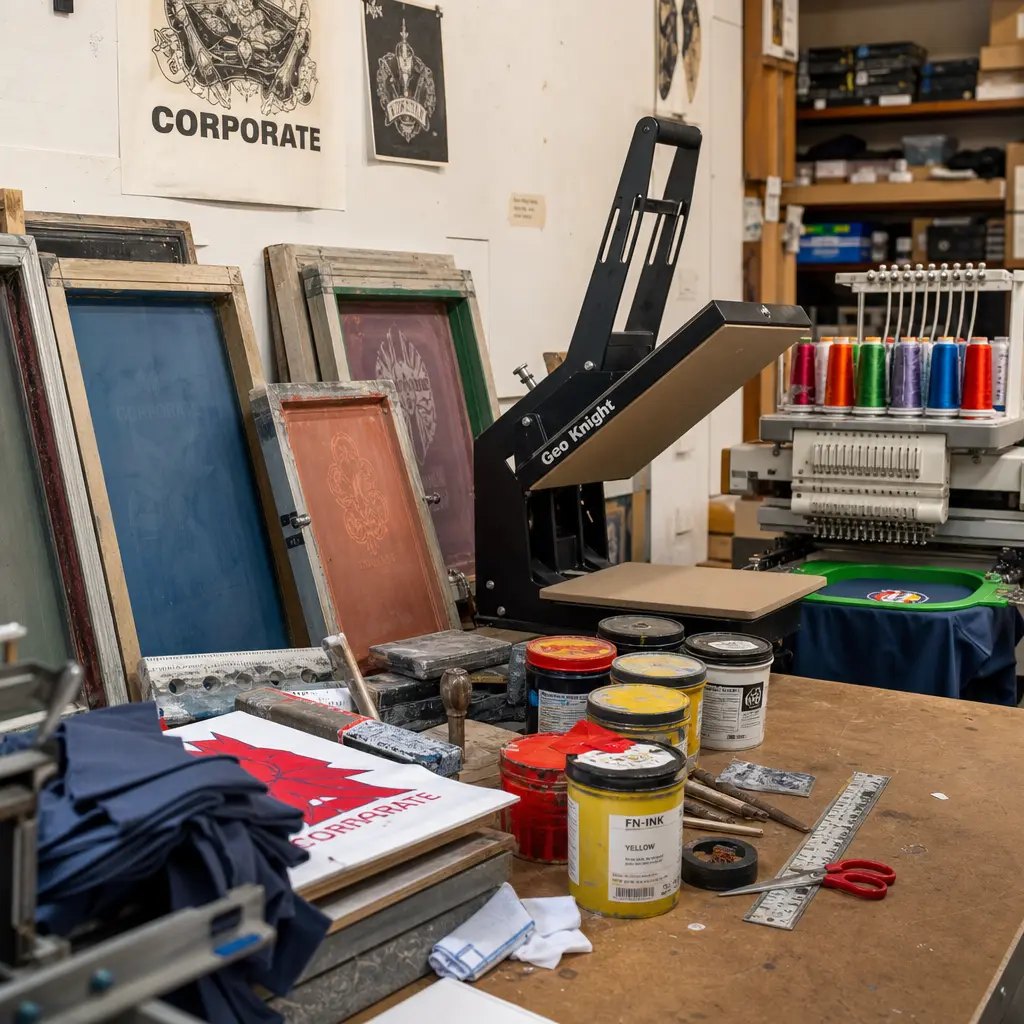
Silkscreen printing is usually the most practical method for custom canvas grocery totes with solid logos, store branding, or simple campaign artwork. It is economical at commercial quantities, works well with one- or two-color designs, and can perform reliably when cured correctly. For liquor retailers, a clean one-color logo on natural canvas is often more durable and cost-efficient than a complex full-color print that raises setup, sampling, and QC risk.
Heat transfer can be useful for short runs, fine detail, gradients, or multicolor artwork, but it should not be treated as automatically equal to printing on smooth fabric. Canvas texture can affect adhesion, edge sharpness, and long-term appearance. If a transfer is required, request a sample on the exact fabric weight and run a bend, rub, and light wash or wipe test before approval. For heavy canvas, the surface texture can make transfer edges more visible.
Brand details beyond the main print also affect price. A sewn side label, woven brand tab, inside care label, hangtag, retail belly band, or barcode sticker adds labor and may affect packing. If the tote will be sold, not just given away, these details should be included in the original RFQ. Otherwise, the first quote will look attractive and the final purchase order will grow after artwork and retail compliance teams add requirements.
- Provide vector artwork, Pantone references, print size, and print placement
- State number of print colors and number of printed sides
- Ask whether screen setup charges are included or separate
- List sewn labels, care labels, hangtags, belly bands, and barcode stickers as separate quote lines
- Approve print position with ruler measurements, not only visual review
Understand MOQ, price breaks, and repeat-order economics
MOQ for canvas grocery totes is driven by fabric, printing, labels, and packing rather than sewing alone. A factory may be able to sew a small quantity from stock natural canvas, but a dyed fabric, custom webbing color, woven label, or individual retail pack can raise the practical minimum. Procurement teams should ask suppliers to explain which element creates the MOQ instead of treating MOQ as a fixed factory policy.
The best RFQ structure requests price breaks at realistic levels such as 500, 1,000, 3,000, and 5,000 pieces. Each price break should use the same specification so the comparison is clean. If the supplier changes fabric weight, print method, or packing format at different quantities, the quote matrix should show that clearly. A lower price at 5,000 pieces is not useful if it depends on a stock fabric lot that cannot support repeat orders.
Liquor retailers should also distinguish launch-order economics from repeat-order economics. A first order may carry sample fees, screen charges, label setup, and extra review time. Repeat orders may be faster and cheaper if fabric, artwork, and packing stay unchanged. For chain retail programs, repeatability matters. A quote based on available stock may be fine for a one-time promotion, while a program expected to reorder quarterly should use a fabric and color route that can be reproduced.
- Ask what drives the MOQ: fabric, dyeing, printing, label, packing, or sewing line setup
- Request price breaks with identical specifications across all quantities
- Separate sample and setup charges from unit price
- Confirm whether quoted stock fabric can support reorders
- Use natural canvas for low-MOQ flexibility and dyed canvas for planned volume programs
Use samples to lock the specification before bulk production
A sample should answer production questions, not only show a general shape. The safest approval path is a digital artwork proof followed by a pre-production sample made from the actual intended fabric, print method, handle construction, seam finish, and packing style if relevant. A sample-room mockup made from substitute fabric can be useful early, but it should not be the final approval point for a liquor retail tote program.
Sample review should be measurable. Check width, height, gusset depth, handle drop, print size, print location, seam finish, fabric hand feel, and bottle fit. Put the intended bottle format into the bag and lift it by the handles. If the bag is supposed to stand at checkout, test that with the actual load. If the print will sit on a textured natural fabric, inspect edge sharpness and ink coverage under normal store lighting.
All sample comments should be consolidated into one approval record. Avoid separate emails from marketing, store operations, logistics, and procurement with conflicting instructions. A clear approval note might say: increase handle drop by 2 cm, move logo 1 cm lower, keep 340 GSM fabric, approve natural shade variation as sampled, change inner seams to overlock, and maintain carton gross weight under 15 kg. That record becomes the reference for the purchase order and inspection.
- Require one pre-production sample before bulk cutting
- Review the sample against a written specification sheet
- Use actual bottles or boxed sets during fit testing
- Record all revisions in one approval file
- Do not approve mass production from a sample made with substitute fabric unless the risk is documented
Make packing, carton data, and freight part of the RFQ
Packing is a commercial variable, not an afterthought. Heavy canvas totes can make cartons dense, and a carton packed only to maximize piece count may exceed warehouse handling limits. A practical RFQ asks for fold method, pieces per polybag, pieces per carton, carton dimensions, gross weight, net weight, and CBM. For 340-400 GSM bags, controlling carton gross weight can be more important than reducing carton count.
Retail presentation changes the packing plan. A tote used behind checkout may be flat packed in 25 or 50 pieces per polybag. A tote sold to customers may need individual folding, a belly band, hangtag, barcode, suffocation warning, or store-ready carton label. If the bags are distributed through a central warehouse, carton marks and purchase order references must be accurate. If they are used for ecommerce kitting, fold consistency may matter because bags need to fit inside a standard shipper.
For import buyers, carton data is essential for landed-cost comparison. Two suppliers with the same FOB unit price can produce different freight costs if one uses oversized cartons or inefficient folding. Ask for estimated CBM per 1,000 pieces and carton gross weight. Then compare unit price, setup charges, inland transport, ocean or air freight, duties, and warehouse handling together.
- Set a carton gross-weight limit based on your warehouse standard
- Request carton dimensions and CBM before quote approval
- State whether bags are bulk packed, store-ready, or individually retail packed
- Include barcode, country-of-origin, suffocation warning, and carton mark requirements
- Compare quotes using landed cost, not FOB unit price alone
Control quality with clear tolerances and inspection criteria
Quality control works best when the RFQ defines what acceptable means before production starts. For canvas grocery totes, the core inspection points are fabric weight, dimensions, gusset depth, handle reinforcement, seam strength, print position, print quality, fabric defects, labels, and packing. If these are not written down, a buyer may reject goods based on expectations the supplier never priced.
Tolerances should be practical. Finished GSM is often controlled within plus or minus 5 percent. Width and height may be set at plus or minus 1 cm, with gusset tolerance around plus or minus 0.5-1 cm depending on construction. Print position should have a measured tolerance from the top edge and side seam. Pantone matching on natural cotton canvas should allow an agreed range because the absorbent fabric and natural shade can affect the final color.
For liquor retail, inspection should include a load check on random samples. The test does not need to be overcomplicated, but it should reflect the approved use: load the bag with the intended bottle and grocery weight, lift by the handles, hold or carry for a defined period, and inspect handle joins, side seams, and bottom panel. Also check for odor, mildew, oil stains, broken yarns, severe slubs, loose threads, and print transfer. If the bags go into a controlled retail distribution system, ask the factory about needle control and metal contamination procedures.
- Define critical, major, and minor defects before inspection
- Check GSM, dimensions, gusset, handle placement, and seam finish
- Run a practical load test using the approved bottle format
- Inspect print curing, smudging, registration, and color consistency
- Verify carton labels, piece counts, polybag counts, and barcode data
Specification comparison for buyers
| RFQ decision | Recommended specification | Why it matters for liquor retail | Quote risk to control |
|---|---|---|---|
| Intended load | Routine 6-8 kg, peak 10 kg, with bottle format stated | Glass bottles create concentrated weight at the bottom panel and handle joins | If load is not stated, suppliers may price a light promotional tote that looks similar but is not built for repeat carry |
| Fabric weight | 12 oz canvas, about 340 GSM, with finished GSM tolerance | Balances durability, printability, carton weight, and retail hand feel | Some quotes use lighter plain cotton while calling it canvas; require actual finished GSM and fabric construction |
| Bag format | Gusseted grocery tote with side gussets and boxed bottom | Helps wine, spirits, mixers, and grocery add-ons sit upright at checkout | Flat totes twist under bottle load and quoted dimensions may not reflect usable capacity |
| Finished size | Common range 35-40 cm W x 35-42 cm H x 10-14 cm gusset | Gusset depth drives bottle fit more than width alone | Suppliers may measure flat, seam-to-seam, or expanded; define the measurement method |
| Handle specification | 2.5-3.5 cm wide, 60-70 cm total length, box-X or bartack reinforced | Controls comfort, shoulder carry, and failure risk under heavy loads | Short handles and single-line stitching lower cost but create retail complaints |
| Print method | Silkscreen for solid logos; transfer only when artwork demands it | Silkscreen is usually durable and economical for one- or two-color retail branding | Transfers can crack, lift, or show poor edge quality on textured canvas unless tested |
| Seam finishing | Overlocked inner seams for standard retail; bound seams for premium programs | Reduces fraying and improves perceived quality when customers reuse the bag | Raw seams may be acceptable for giveaways but should not be assumed for paid reusable bags |
| MOQ route | Stock natural canvas for lower MOQ; dyed fabric for planned volume programs | Fabric availability is often the biggest driver of MOQ, lead time, and shade consistency | Low-MOQ dyed orders can produce shade variation or unrepeatable fabric lots |
| Sample approval | Digital proof plus pre-production sample from actual fabric, print, and construction | Validates size, print, strength, and hand feel before bulk cutting | Handmade sample-room mocks can hide production fabric, print, and stitching differences |
Buyer checklist before sampling
- Define the business use: paid reusable bag, checkout carry bag, gift-with-purchase, bottle-and-grocery tote, seasonal promotion, or loyalty program item.
- State the carrying load in writing, including routine load, peak load, and expected bottle format such as two 750 ml wine bottles, one 1 L spirits bottle, or mixed grocery items.
- Specify finished bag dimensions in centimeters and identify whether width, height, and gusset are measured flat, seam-to-seam, or fully expanded.
- Call out the fabric as cotton canvas with target finished GSM or ounce weight, acceptable tolerance, color route, and whether natural slub variation is acceptable.
- Define handle width, total handle length, handle drop target, material, and reinforcement method such as box-X stitch, bartack, or box stitch plus cross stitch.
- Identify the body construction: bottom gusset only, side and bottom gussets, boxed corners, inside overlock, bound seams, or turned seams.
- Provide vector artwork and list Pantone references, print size, print location, number of sides, number of colors, and any label or hangtag requirement.
- Ask for price breaks at realistic quantities such as 500, 1,000, 3,000, and 5,000 pieces, with the same specification used for every price level.
- Require a pre-production sample made from actual intended fabric, final print method, final handle reinforcement, and final seam finish before bulk approval.
- Set inspection tolerances for GSM, size, gusset depth, handle placement, print position, shade variation, seam defects, stains, loose threads, and carton packing.
Factory quote questions to send
- What is the exact fabric construction behind the quoted canvas, including yarn count if available, weave type, finished GSM, and GSM tolerance?
- Is the material stock natural canvas, bleached canvas, piece-dyed canvas, or newly woven fabric, and what MOQ and lead-time differences apply to each route?
- Are quoted dimensions measured flat, seam-to-seam, outside finished size, or at maximum expanded gusset capacity?
- What is the actual usable bottom footprint after sewing, and will it fit the intended bottle count without tilting or stretching the side seams?
- What handle material, width, total length, handle drop, and reinforcement method are included in the price?
- Is the handle attachment single stitch, box stitch, box-X stitch, bartack, rivet, or a combination, and can you show a close-up from a recent production sample?
- Which print method are you quoting, and what are the setup charges, print color assumptions, maximum print area, curing process, and wash or rub-test expectations?
- Can you quote separate lines for one-color silkscreen, two-color silkscreen, no-print blank bags, and any sewn label or hangtag option?
- Does the sample charge cover a visual mockup or a true pre-production sample using actual bulk fabric, production print, final handles, and approved seam finishing?
- What inner seam finish is included: raw cut, overlock, binding tape, French seam, or turned seam?
Quality-control points to confirm
- Finished fabric GSM should remain within the approved tolerance, commonly plus or minus 5 percent unless the purchase order states another range.
- Bag width, height, and gusset should match approved tolerance, commonly plus or minus 1 cm for width and height and plus or minus 0.5-1 cm for gusset depth.
- Handle length, handle drop, and handle placement should be checked on random samples because small handle changes can affect shoulder carry and customer comfort.
- Handle reinforcement must show complete stitching with no skipped stitches, loose thread nests, broken bartacks, seam opening, or misaligned attachment patches.
- A practical load test should confirm the approved routine and peak load using the intended bottle format, with no handle tearing, seam separation, or bottom-panel distortion.
- Print position should stay within the approved tolerance from the top edge and side seam, with no major registration shift, smudging, pinholes, poor curing, or ink transfer.
- Pantone matching should be reviewed under standard lighting, with expected variation on absorbent natural canvas documented during sample approval.
- Fabric panels should be free of obvious holes, oil stains, severe slubs, broken yarns, mildew odor, shading mismatch on the same bag, or contamination.
- Inner seams must match the quoted finish, and overlocked or bound seams should show no loose edges, unraveling, skipped overlock, or unfinished corners.
- Labels, hangtags, barcodes, country-of-origin marks, and carton marks should match the approved artwork and placement instructions.