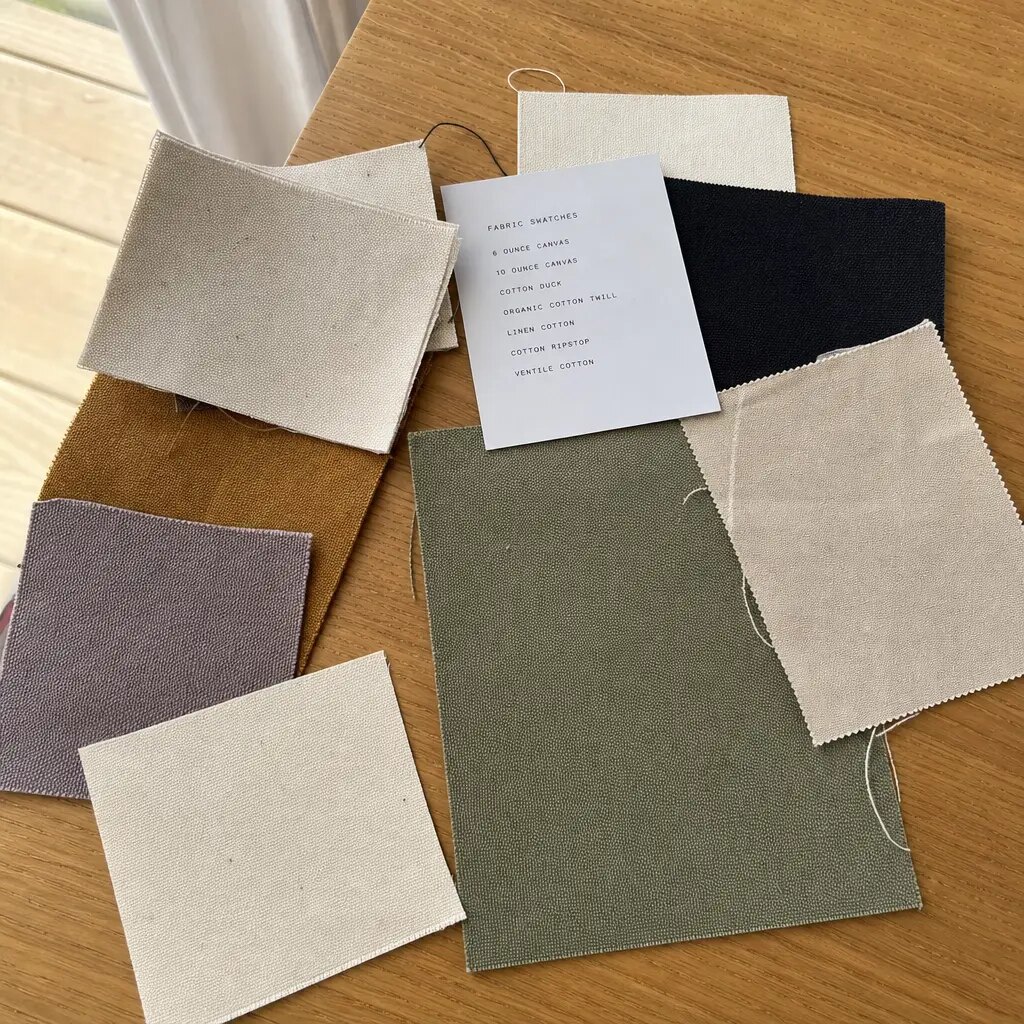
Start With the Craft Fair Use Case
A grocery-style canvas tote for a craft fair is not just a flat promotional bag with a logo. It may carry candles, jars, ceramics, books, apparel, produce, and several purchases from different booths. It may also serve as a resale item, sponsor giveaway, vendor welcome kit, or staff distribution bag. The RFQ should identify that use before asking for a unit price because the use case affects fabric weight, handle strength, packing, presentation, and inspection standard.
The same tote specification may be overbuilt for a free sponsor handout and underbuilt for a premium market tote sold at the organizer booth. A resale tote needs cleaner front panels, better print consistency, and more controlled folding. A vendor kit may need cartons sorted by booth group or destination. A multi-location fair needs carton marks that prevent allocation errors. Clear use-case language helps suppliers quote the same product instead of guessing what “canvas grocery tote” means.
- For resale, prioritize fabric handfeel, clean sewing, print finish, folded presentation, and consistent front-panel appearance.
- For giveaways, control cost but avoid fabric that feels disposable or reflects poorly on sponsors.
- For vendor kits, state whether totes are shipped empty or packed with other event materials.
- For multi-location events, require carton separation by design, destination, PO, and carton number.
- For grocery-style carrying, require reinforced handles, comfortable handle drop, and a bottom structure that supports bulky items.
RFQ Specification Block to Copy
A strong RFQ gives suppliers one measurable specification to price at every quantity break. Include finished size, fabric, color, construction, handle design, print method, artwork size, packing, samples, inspection, incoterm, destination, and required delivery date. Avoid vague phrases such as “strong handles” or “premium canvas.” Replace them with dimensions, materials, reinforcement method, and tolerance.
Measurement language matters. A size such as 38 W x 40 H x 12 D cm should say whether 12 cm is side gusset, bottom gusset, or boxed-bottom depth, and whether the measurement is flat or expanded. Handle length and handle drop should be stated separately. Print placement should use reference points, such as top edge and side seam, so the approved sample and final inspection use the same standard.
- Bag size: 38 W x 40 H x 12 D cm, boxed bottom, measured expanded, tolerance plus or minus 1 cm.
- Fabric: 10 oz natural cotton canvas, approx. 340 GSM, unbleached natural shade, GSM tolerance to be confirmed by supplier.
- Handles: 3 cm wide x 65 cm long self-fabric handles, shoulder carry, cross-stitch or bartack reinforcement at four attachment points.
- Construction: boxed bottom, overlocked or bound inside seams as quoted, natural thread, square bottom corners, loose threads trimmed.
- Print: one-color front print, 25 x 28 cm, centered, top of artwork 9 cm below opening, Pantone reference supplied.
- Packing: folded flat, bundled in 10s, 100 pcs per export carton unless carton weight exceeds the agreed handling limit.
Fabric Weight, Color, and Shrinkage
Fabric is one of the largest cost drivers. An 8 oz cotton canvas tote and a 12 oz cotton canvas tote should not be compared as equivalent products. Heavier canvas uses more material, may slow sewing, increases carton weight, and can raise freight cost. Lighter canvas can fit a budget giveaway, but may not deliver the structure or perceived value expected from a grocery-style tote at a craft fair.
Request fabric weight in both ounces and GSM because suppliers and buyers often use different references. For many craft fair programs, 10 oz to 12 oz cotton canvas, roughly 340 to 407 GSM, is a practical range. It balances durability, print surface, foldability, and value perception. If the tote must be washable, fit a belly band, or maintain a retail size, include shrinkage expectations or ask whether pre-shrunk fabric is available.
Natural canvas is not perfectly uniform. It can show yarn slubs, cream-tone variation, and small texture differences. The RFQ should state which natural variations are acceptable and which defects are not acceptable, especially on the front print panel. Dyed canvas adds shade-lot and rubbing risk, so ask for shade approval and colorfastness expectations before bulk dyeing.
- 8 oz canvas may fit low-cost giveaways but should be quoted as a lighter grade.
- 10 oz canvas is a balanced option for many craft fair grocery totes.
- 12 oz canvas supports a more premium feel but increases carton weight and material cost.
- 14 oz and heavier canvas should be justified by retail price, load expectation, and freight budget.
- Natural canvas needs shade range, slub tolerance, and stain rejection rules.
- Dyed canvas needs lab dip or shade approval, rubbing checks, and repeat-order shade expectations.
Construction Details That Affect Strength
Construction determines whether the tote performs like a grocery bag or looks like a basic event handout. A boxed bottom or bottom gusset helps the bag hold jars, books, ceramics, and mixed purchases more securely. Wider handles improve shoulder comfort. Reinforced stitching at handle attachment points reduces failure risk where stress is highest.
Instead of asking for a tote that is “very strong,” state the intended use and request the factory’s load-test method. The buyer and supplier can then agree on a practical test, such as loading the tote with a defined weight for a defined period and checking for broken stitches, tearing, seam opening, or handle distortion. Any approved test method should be written into the purchase order and inspection checklist.
Inside finishing also affects buyer perception. Overlocked seams may be acceptable for many programs. Bound seams or cleaner finishing may be worth the cost for resale merchandise. Labels, hangtags, and country-of-origin markings should be specified before sampling so they are not treated as late additions.
- Bottom: choose boxed bottom or bottom gusset when bulky goods need support.
- Handles: specify width, total length, and handle drop to avoid measurement confusion.
- Reinforcement: require cross-stitch, bartack, or another approved method at all handle points.
- Seams: state overlocked, bound, double-stitched, or standard finishing requirements.
- Labels: confirm side labels, woven labels, care labels, hangtags, and origin marking before sampling.
Artwork and Print Controls
Most craft fair totes use event logos, sponsor marks, maker-market illustrations, or simple brand graphics. For one to three solid colors, screen printing is often the practical choice because it provides repeatable coverage at meaningful quantities. Water-based ink can feel softer on natural canvas. Plastisol may offer stronger opacity but can feel heavier. Ask the supplier to state the ink type, curing method, print area, and cost impact.
Digital printing can work for gradients, watercolor effects, or many-color artwork, but canvas texture can reduce sharpness. Heat transfer can also support complex art, but large transfers may feel stiff or crease if the material is not suitable. A flat mockup is not enough for approval. Require a printed pre-production sample on the actual tote construction so placement, color, ink handfeel, folding, and edge quality are visible before bulk production.
- Send vector artwork where possible, plus a scaled placement sheet.
- Use Pantone references for solid brand colors instead of monitor color.
- State print side, size, placement, color count, ink preference, and registration tolerance.
- Limit heavy ink coverage if the tote must fold cleanly for retail display.
- Ask whether setup is per design, per color, per placement, reusable, or included.
- Approve the printed sample before bulk printing, not after blank totes are already produced.
MOQ and Supplier Quote Comparison
MOQ is tied to fixed costs: fabric sourcing, cutting setup, screens, print setup, sewing line preparation, inspection, packing, and export documentation. At 300 pcs, those costs are visible in the unit price. At 3000 pcs, they are spread across more units. Request 300, 500, 1000, and 3000 pcs using the same tote specification, artwork count, packing, incoterm, and destination.
Do not compare a 500 pc quote in 8 oz canvas with a 1000 pc quote in 12 oz canvas and individual packing. That only compares different products. Ask suppliers to separate blank tote cost, decoration cost, screen charge, sample charge, label charge, packing upgrade, and freight estimate. This format helps procurement, finance, and event operations understand true landed cost.
- Keep fabric, construction, print, packing, and incoterm identical across MOQ breaks.
- Clarify whether MOQ is per design, per print color, per bag color, per size, or total order.
- Separate one-time setup from recurring unit cost to understand repeat-order pricing.
- Ask whether stock natural canvas supports lower MOQ than custom dyed canvas.
- Request quote validity, currency, payment terms, and production start conditions.
- Compare FOB or DDP quotes only when destination and included services match.
Sample Approval Workflow
Sampling should verify construction and decoration before bulk production. A blank construction sample confirms fabric weight, handfeel, size, gusset, handle drop, reinforcement, seam finish, and folding behavior. After construction is approved, a printed pre-production sample confirms artwork scale, ink color, placement, registration, curing, and retail presentation.
The approved sample should be supported by written notes. Record final dimensions, measuring points, fabric weight, handle drop, print placement, color reference, packing method, and tolerances. Keep one approved sample with the factory and one with the buyer or inspection agent. If artwork, handle length, fabric color, label, or packing changes after approval, the supplier should reconfirm price and schedule.
- Approve construction before print setup when resale quality matters.
- Require sample photos showing measurement points, handle attachment, gusset, print placement, and folded packing.
- Do not approve bulk cutting until fabric, size, handles, print, and packing are confirmed in writing.
- State whether sample and courier charges are paid separately, credited, or included after bulk order.
- Set buyer review deadlines so internal approval does not cause missed event dates.
- Use the approved sample as the reference for both production and final inspection.
Quality Standard and AQL Terms
Quality standards should be agreed before cutting, sewing, and printing. Canvas is a natural textile, so small yarn slubs and slight texture variation may be acceptable. Mold, oil stains, holes, broken stitches, severe shade mismatch, wrong logo, and obvious print defects should not pass. A written defect classification prevents arguments after cartons are packed.
For branded craft fair totes, the front panel deserves stricter review because it is visible on display tables and around the venue. A small internal thread may be minor. A front-panel stain, crooked logo, open seam, or weak handle is more serious. Many buyers use AQL with critical defects at 0, major defects around 2.5, and minor defects around 4.0, adjusted by order value and brand sensitivity.
Inspection timing should be explicit. Check fabric before cutting, review in-line production when possible, and conduct final random inspection after packing but before shipment release. For load testing, define the weight, duration, number of samples, and pass/fail criteria. The test does not need to promise lifetime performance; it needs to confirm the order matches the agreed grocery-style use.
- Critical: wrong logo, mold, unsafe contamination, sharp object, broken handle attachment, or major fabric tear.
- Major: visible front stain, open seam, print outside tolerance, wrong size beyond tolerance, severe shade mismatch, or skipped stitches at stress points.
- Minor: small loose thread, slight natural slub, minor fold crease, or small internal irregularity.
- Measurement: use written tolerances for body size, gusset, handle length, handle drop, and print placement.
- Load test: check selected samples for broken stitches, tearing, seam opening, and handle distortion.
- Final release: verify cartons, packing, labels, quantities, and documents before shipment handover.
Packing and Carton Marking
Packing is an operational requirement for craft fairs. Goods often arrive close to setup dates, and poorly marked cartons create delays during allocation. If an order includes multiple designs, sponsors, booth areas, or destinations, cartons should be separated and marked clearly. Mixed cartons should be used only when the buyer approves the exact mix and label format.
The right packing method depends on use. Bulk folded packing is efficient for giveaways. Bundles of 10 make counting easier for event staff. Individual polybags protect presentation but add plastic and labor. Paper belly bands can improve retail display with less plastic, but they require artwork, size approval, and packing tests. Ask suppliers to quote packing upgrades separately so cost and sustainability tradeoffs are visible.
- Carton marks should show PO, item name, design code, quantity, carton number, gross weight, net weight, carton size, and destination.
- Bundles of 10 help teams count and allocate totes quickly during setup.
- Individual packing protects retail presentation but increases material use and packing time.
- Paper bands need approved artwork, band size, folding method, and carton packing confirmation.
- Cartons should be separated by design and destination unless mixed cartons are approved.
- Export cartons must be strong enough for heavy 10 oz to 12 oz canvas and long-distance handling.
Lead Time and Final RFQ Package
Craft fairs have fixed dates, so a late tote shipment can lose its value. Do not accept a vague lead time such as “30 days” without context. Ask for timing by stage: artwork review, blank sample, printed sample, sample revision, fabric sourcing, bulk cutting, printing, curing, sewing, trimming, inspection, packing, export handover, and transit if freight is included.
Work backward from the setup date, not only the public event date. Include time for warehouse receiving, carton sorting, local delivery, and booth allocation. Dyed fabric, custom labels, multiple print designs, individual packing, third-party inspection, and peak-season capacity can all add time.
The final RFQ package should include the specification sheet, artwork files, quantity breaks, packing instructions, sample route, QC standard, delivery term, destination, and quote format. Request unit price, setup charges, sample charges, packing charges, incoterm, currency, payment terms, quote validity, carton data, HS code, country of origin, and available export documents. This gives every internal team the same basis for approval.
- Set latest acceptable arrival date and latest acceptable ship date.
- Request lead time after written sample approval and deposit, not after initial inquiry.
- Ask for carton size, pieces per carton, gross weight, net weight, and total CBM.
- Confirm whether freight estimate includes pickup, export handling, import clearance, duty, and final delivery.
- Require factory confirmation that bulk starts only after final artwork, sample approval, deposit, and packing instructions.
Specification comparison for buyers
| Quote field | Supplier A | Supplier B | Buyer check |
|---|---|---|---|
| Incoterm and delivery basis | EXW, FOB, CIF, DDP, or domestic delivery stated clearly | Same field completed using the same destination | Do not compare unit prices unless the delivery term, currency, and destination are identical |
| Canvas specification | 10 oz to 12 oz cotton canvas, approx. 340 to 407 GSM, shade and GSM tolerance stated | Fabric source, stock status, and shrinkage control stated | Reject quotes that only say “canvas” or “good quality cotton” without weight and tolerance |
| Construction and handles | Boxed bottom or gusset, 2.5 cm to 3.8 cm handle width, 60 cm to 65 cm handle length, reinforced attachment | Same dimensions, seam finish, thread color, and reinforcement method priced | Small handle or bottom changes can make two quotes commercially different products |
| Decoration cost | Print method, print size, color count, ink type, screen/setup charge, and repeat-order charge separated | Same artwork count, placement, and color references quoted | Check whether setup is per design, per color, per placement, or included in unit price |
| MOQ price breaks | 300, 500, 1000, and 3000 pcs using one fixed specification | Same MOQ breaks with no hidden fabric or packing changes | Use this to see true setup impact and decide between test order and season order |
| Sample charges and timing | Blank construction sample plus printed pre-production sample, charge and courier listed | Revision cost and sample lead time stated | Confirm whether sample fees are credited after bulk PO approval |
| Bulk lead time | Timing after written sample approval and deposit stated by production stage | Peak-season variance or fabric delay risk disclosed | A single “30 days” answer is weaker than stage-based timing |
| Packing and carton data | Pieces per carton, carton size, gross weight, net weight, total CBM, inner packing, carton marks | Same packing method quoted, with mixed-carton rules if applicable | Oversized cartons can erase a low unit price through freight and handling cost |
| Quality standard | AQL level, defect definitions, inspection timing, load test, and approved-sample reference included | Same acceptance criteria accepted in writing | If QC terms are missing, disputes usually appear after goods are packed |
Buyer checklist before sampling
- Define the commercial use: resale merchandise, sponsor giveaway, vendor kit, staff bag, exhibitor wholesale pack, or multi-location event allocation.
- State finished size, gusset or boxed-bottom depth, handle width, handle length, handle drop, and measurement tolerance.
- Specify fabric in oz and GSM, color, shade expectation, shrinkage tolerance, stock or custom-sourced status, and acceptable natural-canvas variation.
- Define construction: seam finish, reinforcement method, thread color, bottom shape, side label, care label, hangtag, and country-of-origin marking if required.
- Send artwork as vector files with print size, placement from reference points, Pantone colors, ink preference, and registration tolerance.
- Request MOQ breaks at 300, 500, 1000, and 3000 pcs with the same specification, packing, artwork count, and incoterm.
- Separate unit price, setup charge, sample cost, packing upgrade, label cost, freight estimate, and any repeat-order charge.
- Require one blank construction sample and one printed pre-production sample before bulk cutting and printing.
- Set packing rules by design, destination, carton quantity, bundles, individual packing, paper bands, mixed-carton approval, and carton marks.
- Ask for lead time by stage, including artwork review, sampling, fabric sourcing, production, inspection, packing, export handover, and transit if quoted.
Factory quote questions to send
- What fabric weight are you quoting in both oz and GSM, what tolerance applies, and is the fabric stock, custom sourced, washed, dyed, natural, bleached, or pre-shrunk?
- What is the finished size tolerance after sewing, and which dimensions are measured flat versus expanded, including gusset depth and handle drop?
- What handle construction is included: self-fabric, cotton webbing, folded handle, cross-stitch reinforcement, bartack reinforcement, or another method?
- Which seam finishing is included in the unit price: overlocked seams, bound seams, double stitching, bottom reinforcement, or standard single-line sewing?
- Which print method, ink type, print area, color count, curing process, and registration tolerance are included in the quote?
- Are screen charges, setup charges, sample charges, label charges, packing charges, and repeat-order charges included or listed separately?
- Can you quote 300, 500, 1000, and 3000 pcs using the same tote specification, artwork count, packing method, incoterm, and destination?
- If there are multiple artwork designs, is MOQ calculated per design, per print color, per bag color, per size, or by total order quantity?
- What sample stages are required, how long does each stage take, and what happens if the first printed pre-production sample is not approved?
- What carton quantity, carton dimensions, gross weight, net weight, total CBM, HS code, country of origin, and export documents are included?
Quality-control points to confirm
- Inspect incoming fabric before cutting for GSM, shade, handfeel, weave defects, slubs, stains, holes, oil marks, and moisture risk against the approved sample.
- Confirm inspection timing: incoming fabric check before cutting, in-line sewing and print checks during production, and final random inspection after packing but before shipment release.
- Measure finished bag width, height, gusset depth, handle width, handle length, and handle drop against a written tolerance table, not by visual judgment.
- Use the approved sample as the reference for fabric handfeel, bottom shape, handle reinforcement, print placement, folded packing, and overall workmanship.
- Run a practical load test on selected samples using the buyer’s agreed weight and duration, then check for broken stitches, tearing, seam opening, handle distortion, or fabric stress.
- Check stitch quality for skipped stitches, loose tension, broken thread, needle damage, seam puckering, untrimmed threads, and reinforcement accuracy at stress points.
- Measure print placement from agreed reference points such as top edge, side seam, center line, or bottom fold; record skew and registration where relevant.
- Check print color against Pantone or approved sample under consistent light, and check ink curing, rub resistance, cracking, transfer risk, and folding behavior.
- Classify critical defects as wrong logo, mold, unsafe contamination, sharp object, broken handle attachment, major fabric tear, or incorrect product construction.
- Classify major defects as visible front-panel stain, open seam, print outside tolerance, wrong size beyond tolerance, severe shade mismatch, or skipped stitches at stress points.