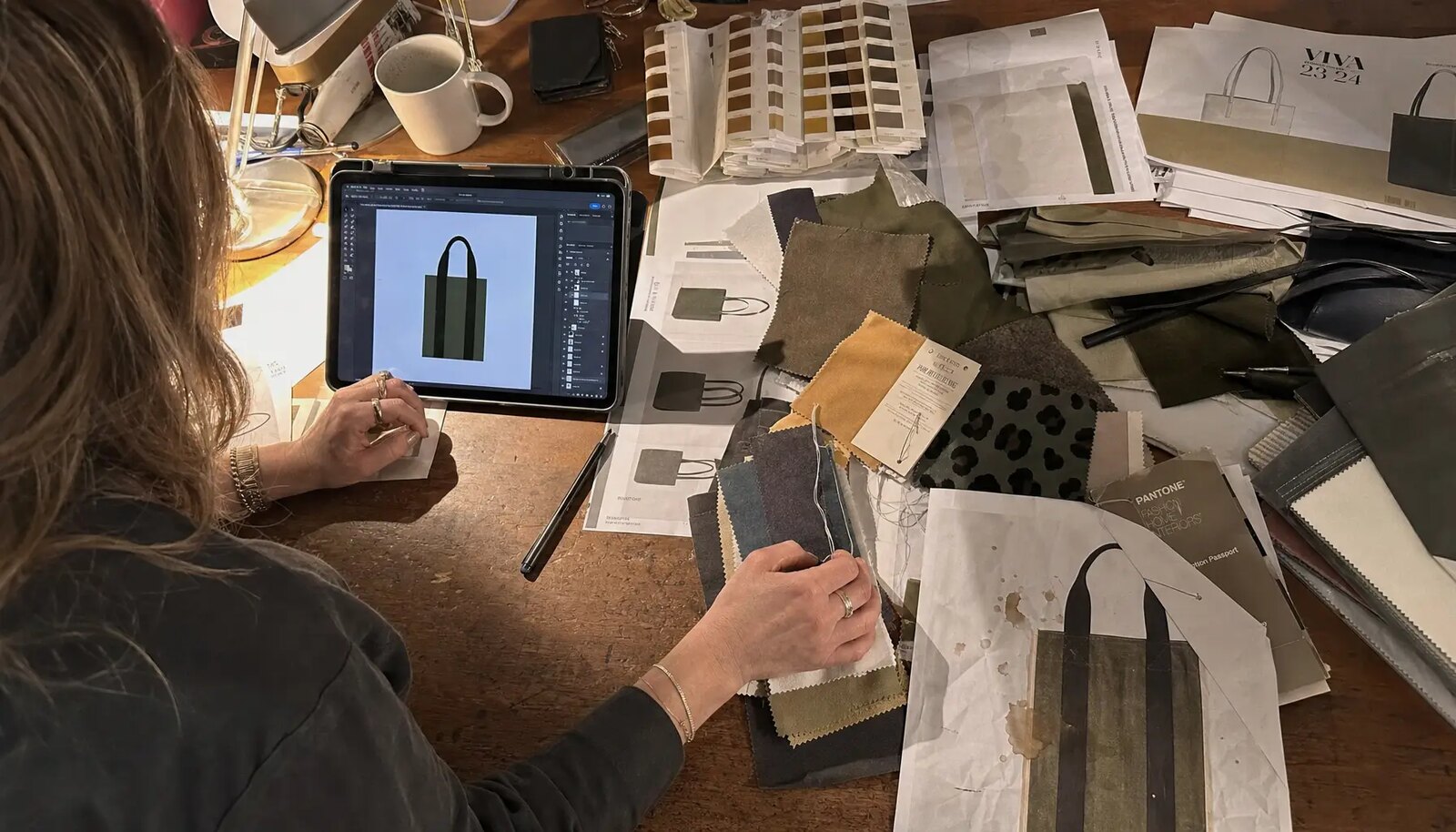
The RFQ problem: hotel retail totes are not promo giveaways
A custom canvas grocery tote for hotel retail has a tougher job than a free event bag. It may be sold beside bottled drinks in a lobby market, stacked in a resort boutique, bundled with spa products, or used by guests for local shopping. The tote has to look retail-ready, carry real contents, and support the property's brand standards after handling by guests, store staff, and warehouse teams.
The common RFQ mistake is sending only a logo, rough size, reference photo, and quantity. Suppliers then fill in the blanks differently. One quote may assume a flat 6 oz cotton tote with simple top stitching. Another may include 12 oz canvas, a boxed bottom, reinforced handles, screen setup, moisture-protected cartons, and a pre-production sample. Both may be called custom canvas grocery totes, but they are not comparable.
For procurement buyers, the RFQ should make every supplier price the same bag with the same assumptions. That means defining finished dimensions, fabric, construction, artwork, labels, packing, carton data, inspection requirements, and quote exclusions. A tighter RFQ prevents sample confusion, makes price differences meaningful, and gives the retail team a bag that can survive normal hotel use.
- Use finished dimensions and construction language instead of a reference photo alone.
- Define the retail use case and expected load before selecting fabric weight.
- Separate required specifications from optional upgrades so suppliers quote the same base bag.
- Request carton size and gross weight at RFQ stage because freight can change landed cost.
- Ask suppliers to list any deviation from the requested specification in the quote.
Start with the retail use case and capacity
The first RFQ field should describe where the bag will be sold and what it will carry. A pantry shop tote for snacks, postcards, and bottled water does not need the same capacity as a resort grocery tote used for towels, sunscreen, wine, boxed gifts, or local produce. Capacity affects the gusset, handle drop, fabric weight, seam strength, print placement, packing fold, and carton count.
For hotel retail, a practical grocery tote often sits around 35-42 cm wide and 35-40 cm high, with an 8-12 cm bottom gusset. This range is large enough for common purchases but still folds flat for backroom storage. If the tote must stand upright on a shelf, require a boxed bottom and side gusset. If it will hang folded from a peg or sit behind a checkout counter, a softer flat-pack construction may work.
The guest experience matters. A shoulder tote that feels comfortable with two bottles, snacks, and a small purchase can become frustrating if the handles are too short or the opening is too narrow. The buyer should decide whether the bag is mainly for hand carry, shoulder carry, shelf display, amenity bundling, or checkout sale. That decision belongs in the RFQ, not in a later email thread.
- Small retail tote: about 32 x 35 cm with a 6-8 cm gusset for gift shop items, snacks, and souvenirs.
- Standard grocery tote: about 38 x 40 cm with a 10 cm gusset for food, bottles, books, and boutique purchases.
- Large resort tote: about 42 x 42 cm with a 12-15 cm gusset for towels, beach items, boxed goods, and bulky retail items.
- Typical shoulder handle length: 55-65 cm, measured end to end before attachment unless the supplier uses another standard.
- Useful RFQ phrase: finished size 38 W x 40 H x 10 D cm, plus or minus 1 cm, with 60 cm handles and boxed bottom construction.
Choose canvas weight and material with cost in view
Fabric weight is one of the fastest ways to change both price and perceived quality. Many suppliers describe canvas in ounces, while others use GSM. As a working guide, 8 oz canvas is light and economical, 10 oz is a balanced retail option, 12 oz feels more substantial, and 14 oz or above becomes heavier, stiffer, and more expensive to ship. The exact GSM varies by mill, weave, and finishing, so the approved sample matters more than the number alone.
For custom canvas grocery totes in hotel retail, 10 oz to 12 oz cotton canvas is usually the practical range. It feels more substantial than a promotional bag but can still be folded, bundled, and stored. Natural canvas usually offers the most flexible MOQ and a relaxed hospitality look. Bleached canvas creates a cleaner print background. Dyed canvas can support brand color programs, but it adds lab dips, shade approval, colorfastness questions, and often higher MOQ.
Organic cotton, recycled cotton, and blended canvas can be appropriate when they match the hotel's sourcing policy, but the RFQ should ask for evidence instead of broad sustainability language. If a certification matters, name the required document. If the retail team only needs responsible material language for a hangtag, confirm what claims are supportable before artwork is printed.
- 8 oz canvas: suitable for light retail, events, and lower-load giveaway use.
- 10 oz canvas: practical balance for hotel markets, pantry shops, and mid-range boutique sale.
- 12 oz canvas: stronger hand feel for premium resort retail and heavier contents.
- 14 oz canvas: durable but increases material cost, carton weight, fold bulk, and freight impact.
- Natural canvas: flexible MOQ and warm texture, but may show cotton seed specks or slubs.
- Bleached canvas: cleaner print background, but can show dirt more easily in handling and storage.
- Dyed canvas: better brand color control, but requires lab dips, shade approval, and colorfastness checks.
Write construction details into the RFQ
Two totes can look similar in a product photo and perform very differently after loading. The RFQ should define seam construction, handle reinforcement, top opening finish, gusset style, and internal seam finish. Handle attachment is a critical risk point because guests may carry glass bottles, food, books, wet beach items, or boxed retail goods. A simple straight stitch may suit a light tote; a grocery tote should use box-X stitching, bar tacks, dense cross-stitching, or another named reinforcement method.
The top opening should usually be folded and stitched so the edge feels clean and resists fraying. Side seams can be overlocked, overlocked with a safety stitch, double stitched, or bound. Bound seams look cleaner and are often worth the cost for premium boutique totes. Clean overlock can work for cost-controlled grocery totes if stitch density, seam allowance, and thread trimming are controlled.
The gusset should also be specific. A bottom gusset creates capacity, while a boxed bottom helps the tote stand and load neatly. If the bag will be displayed filled with retail items, the boxed bottom matters. If it will be folded flat and sold at checkout, a simpler construction may be acceptable. The RFQ should state the merchandising requirement so the supplier can price the right build.
- Top opening: folded hem with straight, even stitching for a clean customer-facing edge.
- Side seams: overlock plus safety stitch or double stitching for a stronger grocery tote.
- Bottom: boxed bottom when the tote should stand, carry groceries neatly, or display filled.
- Handle reinforcement: box-X stitch, bar tack, or dense cross-stitch at each attachment point.
- Thread: matching or contrast color should be specified, including thread strength if heavy loads are expected.
- Label: woven side label, printed inside label, hangtag, retail barcode, or no label should be stated.
- Trim standard: no loose threads longer than the buyer's defined limit, especially near handles and top hem.
Specify print method, artwork, and durability tests
Most hotel retail totes use screen printing because it is reliable for solid logos, destination names, simple line art, and one-to-four-color graphics. It works well on natural or bleached canvas and is usually economical at repeat quantities. The quote should show whether screen charges are included in unit price or listed separately. For hotel groups planning reorders, controlling screens, artwork files, Pantone references, and approved placement photos helps maintain consistency.
Heat transfer or digital transfer can work for full-color destination art, gradients, small photographic details, or artwork that cannot separate into simple screens. The tradeoff is hand feel and durability risk. Transfers can crack, peel, shine, or leave pressure marks if the material, temperature, pressure, and curing process are not controlled. Buyers should test the transfer on the actual canvas, not only approve a proof on smooth fabric.
Embroidery can give a premium look for small logos or boutique details, but it is usually less practical for large grocery tote panels. It adds cost, weight, and possible puckering, especially on lighter canvas. For most RFQs, define artwork type, print size, number of colors, Pantone targets, placement from seams, and durability checks.
- Screen print: best for solid hotel logos, slogans, destination names, and simple retail graphics.
- Water-based ink: softer hand feel, but opacity should be checked on natural or darker fabric.
- Thicker ink: stronger opacity, but large coverage can feel stiff and may crease visibly.
- Heat transfer: useful for full-color artwork, but needs dry rub, damp rub, fold, adhesion, and edge-lift checks.
- Embroidery: premium for small marks, but not usually ideal for large grocery tote graphics.
- Placement requirement: specify center position, distance from top seam, print size, and acceptable deviation.
- Color requirement: provide Pantone references and approve color on production fabric, not only on screen.
Build compliance and labeling into the quote
Hospitality buyers often focus on artwork and unit price first, but compliance details can affect order release, customs clearance, retail labeling, and brand approvals. The RFQ should state the fiber content, country-of-origin marking, required care label if any, barcode or SKU rules, restricted substance expectations, and any documentation needed for organic, recycled, or other material claims.
For organic or recycled cotton, buyers should avoid unsupported wording. If the hotel intends to print a claim on a hangtag or product page, the supplier should confirm what documentation can be provided and whether the certification applies to the material, the factory, or the finished product. If the buyer does not need a certified claim, the RFQ can still request material composition and a supplier declaration without building the retail story around an unverifiable statement.
Testing should be matched to the order risk. Common checks include fiber content confirmation when claims matter, colorfastness to rubbing for dyed fabric or dark prints, dimensional stability if washing is expected, and visual inspection for odor, stains, mildew, or contamination. If the tote will not be marketed as washable, the buyer should be careful about promising wash performance.
- State required fiber content and whether a sewn label, printed inside label, hangtag, or sticker is needed.
- Confirm country-of-origin marking requirements for the destination market before artwork and labels are approved.
- For dyed canvas, request colorfastness to rubbing and shade-lot approval under consistent lighting.
- For organic or recycled claims, ask what documents support the claim and what exact wording is permitted.
- For retail SKUs, confirm barcode format, price label, item code, carton mark, and whether labels are applied at factory.
- For restricted substances, reference the buyer's policy or destination-market requirement rather than using vague safe-material language.
Compare MOQ, price tiers, and landed cost
MOQ depends on fabric availability, print setup, cutting efficiency, sewing line setup, labels, and packing method. A factory may accept 300 pieces for stock natural canvas with a one-color print because material is available and setup is simple. The same tote in dyed canvas with a custom woven label, webbing handles, full-color transfer, and barcode application may need 1,000 pieces or more to cover material and production minimums.
Hotel retail teams often test one property before rolling out across a resort group or brand portfolio. That is sensible, but the RFQ should separate pilot quantity from expected reorder quantity. Ask for 300, 500, 1,000, and 3,000 pieces using the same specification, plus separate lines for fixed setup charges. This helps procurement see whether a low initial MOQ creates an unrealistic reorder price.
A low ex-works price is not always the lowest landed cost. Canvas totes are bulky even when flat packed, so carton dimensions, gross weight, underfilled cartons, and compression risk can shift freight cost. Incoterms also matter. EXW, FOB, CIF, DDP, and delivered-to-warehouse prices are not interchangeable. The RFQ should specify the preferred Incoterm and destination market, and still request carton data so freight can be checked.
- Unit price by quantity tier, currency, Incoterm, and quote validity period.
- Fabric composition, fabric weight, color, and whether fabric is stock or custom.
- Finished dimensions, gusset style, handle length, handle width, and tolerance.
- Seam construction, handle reinforcement, internal seam finish, and top hem finish.
- Print method, print colors, print size, artwork placement, and setup charges.
- Sample fee, sample lead time, sample shipping cost, and refund policy if applicable.
- Packing method, pieces per carton, carton dimensions, gross weight, net weight, and carton marks.
- Payment terms, lead time after approvals, material price adjustment conditions, and shipment-ready date.
Use sample approval to prevent bulk mistakes
The pre-production sample should use the same canvas weight, handle construction, print method, label details, and folding method as bulk production. A fabric swatch and digital mockup are helpful during development, but they are not enough for final approval. The approved sample becomes the reference for hand feel, print opacity, seam appearance, dimensions, handle strength, and packing crease behavior.
Review the sample like a retail product. Place it on a shelf, fill it with realistic contents, carry it by hand and over the shoulder, fold it into the intended pack, and inspect the print after handling. If the tote will be sold to guests, thread trimming, odor, fabric cleanliness, print alignment, and symmetry matter. A bag can technically hold weight and still feel too unfinished for a boutique environment.
Sample comments should be measurable. Instead of saying the handle feels weak, request a defined reinforcement change. Instead of saying the logo is too low, specify the required distance from the top seam. Once approved, repeat the final specification in the purchase order so production and inspection teams are not relying on scattered email comments.
- Measure width, height, gusset, handle length, handle drop, and handle width against the RFQ.
- Load test with intended contents and inspect handle seams, top hem, side seams, and bottom corners.
- Rub the print with a dry white cloth and a slightly damp white cloth to screen for color transfer.
- Fold the bag as packed and check for print cracking, transfer marks, edge lift, or deep creasing.
- Compare fabric shade, texture, stiffness, and opacity under consistent lighting.
- Check odor, stains, loose threads, raw edges, uneven handles, twisted gussets, and print alignment.
- Photograph the approved sample from the front, back, inside, handle attachment, bottom, print close-up, and packing view.
Control packing, warehouse receiving, and replenishment
Packing affects freight, receiving labor, product appearance, and sustainability policy. Individual polybags protect each tote, but they add plastic, cost, and unpacking time. Bundle packing is often more efficient for hotel retail replenishment, especially when each carton contains 25 to 50 pieces grouped neatly. If plastic reduction is part of the hotel's policy, specify paper bands, kraft belly bands, or no individual bag in the RFQ.
The packing plan should match the sales channel. A premium gift item may need a hangtag, barcode sticker, belly band, or individual protective bag. A tote replenished to a lobby market may only need neat bundles and accurate carton labels. A distributor order may require SKU, PO number, barcode, destination, color, quantity, gross weight, and carton sequence. These details prevent receiving delays and relabeling costs.
Carton strength and compression matter. Overpacked cartons can create deep creases through the main logo or press transfer prints against adjacent bags. Underfilled cartons waste freight volume and allow goods to shift. For sea freight, cotton canvas should be protected from moisture, odor transfer, and mildew risk. Ask for carton dimensions and gross weight before order confirmation, not after production is complete.
- Common bundle pack: 25 pieces tied or paper-banded, with 2 bundles per carton if carton weight allows.
- Avoid excessive compression on large front prints, dark ink areas, and heat transfers.
- Use moisture protection for sea freight, especially natural cotton canvas and long transit routes.
- Target manageable carton weight, often below 18-20 kg unless the buyer approves more.
- Include carton marks: item code, PO number, color, quantity, carton number, gross weight, net weight, and destination.
- Confirm whether hangtags, barcode stickers, price labels, or retail belly bands are applied at factory or locally.
- Request packed-carton photos before shipment when the buyer cannot attend inspection.
Define inspection standards before production
Quality control should be defined before the supplier quotes because inspection expectations affect production behavior. For custom canvas grocery totes, inspection should cover measurements, fabric condition, print quality, seam strength, handle alignment, packing count, carton marks, and functional loading. If the buyer uses AQL inspection, the RFQ should state the inspection level and defect categories. If formal AQL is not used, the buyer should still define critical, major, and minor defects.
Critical defects are issues that make the tote unsafe, unusable, or unacceptable for shipment, such as broken handle attachment, open load-bearing seams, mold odor, severe contamination, or wrong product. Major defects are likely to cause guest complaints or retail rejection, such as wrong fabric weight, off-center print beyond tolerance, visible stains, poor ink curing, skipped stitches at stress points, or incorrect packing. Minor defects may include small trim threads or slight natural fabric variation within the approved standard.
The approved sample should guide inspection, but it should not replace written criteria. Natural canvas may have seed specks or subtle slubs, and those can be acceptable if the buyer approved that look. Oil stains, mildew odor, large weaving flaws, and dirty handling marks are different. The inspection checklist should make that distinction so the factory, inspector, and buyer use the same standard.
- Critical: broken handle, open load-bearing seam, wrong item, mold odor, severe contamination, unsafe foreign object, or missing required brand mark.
- Major: wrong fabric weight, wrong size beyond tolerance, crooked handles, off-center print, poor ink curing, visible stains, weak reinforcement, or incorrect carton quantity.
- Minor: small trim threads, slight natural cotton specks, small fabric slubs within approved range, or minor press marks that recover after unpacking.
- Measurement checks: finished width, height, gusset, handle length, handle drop, handle width, print size, and print position.
- Functional checks: loaded hanging, handle pull, seam stress, folding impact, print rub, and standing stability if boxed bottom is required.
- Packing checks: bundle count, carton count, carton labels, barcode accuracy, carton dimensions, gross weight, and moisture protection.
Specification comparison for buyers
| Spec decision | Recommended option | When it fits | Buyer risk to check |
|---|---|---|---|
| Finished size | Quote width, height, gusset, handle drop, handle width, and tolerance in centimeters | Hotel markets, resort boutiques, pantry shops, beach retail, spa retail, and guest amenity sales | Reference photos alone create non-comparable quotes; some suppliers quote flat panel size instead of finished sewn size |
| Fabric weight | 10 oz to 12 oz cotton canvas, roughly 280-340 GSM depending on mill and finish | Reusable grocery totes expected to carry drinks, snacks, towels, books, ceramics, or local goods | Below 8 oz can feel like a giveaway; above 14 oz raises sewing difficulty, carton weight, stiffness, and freight cost |
| Canvas type | Stock natural or bleached cotton canvas for flexible MOQ; dyed canvas only with lab dip and colorfastness expectations | Pilot hotel retail launches, repeatable resort graphics, and multi-property replenishment programs | Dyed fabric can require higher MOQ, longer lead time, shade-lot control, and approval under consistent lighting |
| Construction | Boxed bottom, side gusset, folded top hem, reinforced handles, and clean internal seam finish | Totes displayed on shelves or sold as retail grocery bags rather than temporary promotional bags | Flat totes may quote lower but carry less volume, merchandise poorly, and disappoint guests using the bag for real purchases |
| Handle length | 55-65 cm self-fabric or approved webbing handles with box-X, bar tack, or dense cross-stitch reinforcement | Shoulder carry for guests buying bottled drinks, towels, snacks, books, or resort merchandise | Short handles reduce usability; long handles increase stress at the top opening and need pull testing |
| Print method | Screen print for 1-4 solid colors; transfer only for full-color art, gradients, or artwork that cannot separate cleanly | Most hotel logos, resort names, destination illustrations, seasonal graphics, and retail collections | Large ink coverage can feel stiff; transfers need rub, fold, adhesion, heat-mark, and edge-lift checks on actual canvas |
| Inside finish | Bound seams for premium boutique totes; clean overlock plus safety stitch for cost-controlled grocery totes | Higher retail price points, visible interior quality, and repeated guest use | Raw edges, loose threads, low stitch density, or uneven seam allowance reduce perceived value and can trigger returns |
| MOQ route | 300-500 pcs for stock natural canvas and simple print; 1,000+ pcs for dyed fabric, custom labels, or complex trims | Single-property pilot order versus hotel group rollout or distributor replenishment | Low MOQ may hide setup cost in the unit price; custom fabric and trims may not scale without new approval |
| Packing plan | Flat packed in controlled bundles, commonly 25-50 pcs per carton plan, with moisture protection and clear carton marks | Hotel warehouse receiving, retail backroom storage, distributor handling, and replenishment orders | Over-compression can crease prints; oversized cartons increase volumetric freight; missing carton data makes landed cost unclear |
Buyer checklist before sampling
- Define the exact retail use case: lobby market, resort boutique, pantry shop, spa retail, beach shop, local souvenir store, guest amenity sale, or event merchandise.
- State finished bag dimensions in centimeters with tolerance: width, height, bottom gusset, side gusset if applicable, handle length, handle drop, and handle width.
- Specify the canvas as cotton canvas, recycled cotton, organic cotton, or blended canvas, and state target weight in oz or GSM with an acceptable range.
- Confirm whether the fabric should be natural, bleached, dyed to Pantone, or yarn-dyed, and request shade tolerance and colorfastness expectations for dyed fabric.
- Decide whether the tote must stand upright for shelf merchandising; if yes, require boxed bottom construction, side gusset, and minimum bottom width.
- Define realistic carrying load based on hotel retail contents such as bottled beverages, packaged snacks, towels, sunscreen, books, ceramics, or spa products.
- Require handle reinforcement details, not just handle length: box-X stitch, bar tack, stitch count expectation, thread type, and reinforcement position.
- Provide vector artwork and specify print method preference, print size, Pantone colors, placement from top seam and side seam, and acceptable placement tolerance.
- Ask suppliers to quote screen setup, transfer setup, label setup, sample fee, packing cost, and artwork separation charge separately from the unit price.
- Request a pre-production sample made with production fabric, production sewing method, production print method, final handle style, and intended packing fold.
Factory quote questions to send
- What finished bag dimensions are included in your quote, and what measurement tolerance applies after sewing and pressing?
- What fabric weight in GSM and oz are you quoting, and is the canvas stock fabric, made-to-order fabric, organic cotton, recycled cotton, or a blended material?
- Can you provide a fabric swatch or test reference for the quoted canvas weight, shrinkage behavior, and visible surface texture?
- Is the quoted size based on finished sewn dimensions, flat fabric panel dimensions before stitching, or a previous sample pattern?
- What seam construction is included: overlock, overlock plus safety stitch, bound seam, French seam, or double-stitched side seam?
- What reinforcement is included at each handle attachment: box-X stitch, cross-stitch, bar tack, extra canvas patch, or simple top stitch?
- What is the maximum recommended carrying load for this construction, and how do you test handle pull strength or loaded hanging performance?
- Which print method are you quoting, and how many colors, screens, transfer sheets, or digital print passes are included?
- What print area is included in the price, and what is the maximum print area before the price changes?
- Will the ink or transfer be cured or set to withstand rubbing, folding, carton pressure, and normal handling in hotel retail storage?
Quality-control points to confirm
- Finished size should be checked on a statistically meaningful sample, with common tolerance around plus or minus 1 cm for width and height and plus or minus 0.5 cm for handle width unless the buyer specifies tighter control.
- Fabric weight should be checked against the approved sample and quoted GSM or oz range; a visible downgrade from 12 oz to 10 oz changes hand feel, structure, and retail value.
- Fabric shade and surface should be compared to the approved production sample under consistent lighting, especially for bleached, dyed, organic, or recycled cotton canvas where variation may be visible.
- Handle pull strength should be tested using the target load and a defined hold time, with attention to stitch tearing, fabric distortion, and seam stress at the top opening.
- Handle placement should be symmetrical from left to right so the tote hangs straight when loaded and does not twist on a guest's shoulder.
- Print position tolerance should be defined before production, commonly within plus or minus 0.5 cm for small logos and plus or minus 1 cm for large front-panel graphics.
- Ink color should be compared to the approved pre-production sample and Pantone reference on actual canvas, not only against a digital artwork file.
- Print durability should be screened with dry rub, light damp rub, folding pressure, and visual checks for cracking, peeling, transfer marks, or ink set-off.
- Seams should have no skipped stitches, loose thread nests, broken stitches, open seams, raw edges in customer-facing areas, or uneven top hem lines.
- Bottom gusset corners should be symmetrical so the tote stands evenly, folds consistently, and does not lean or twist when filled.