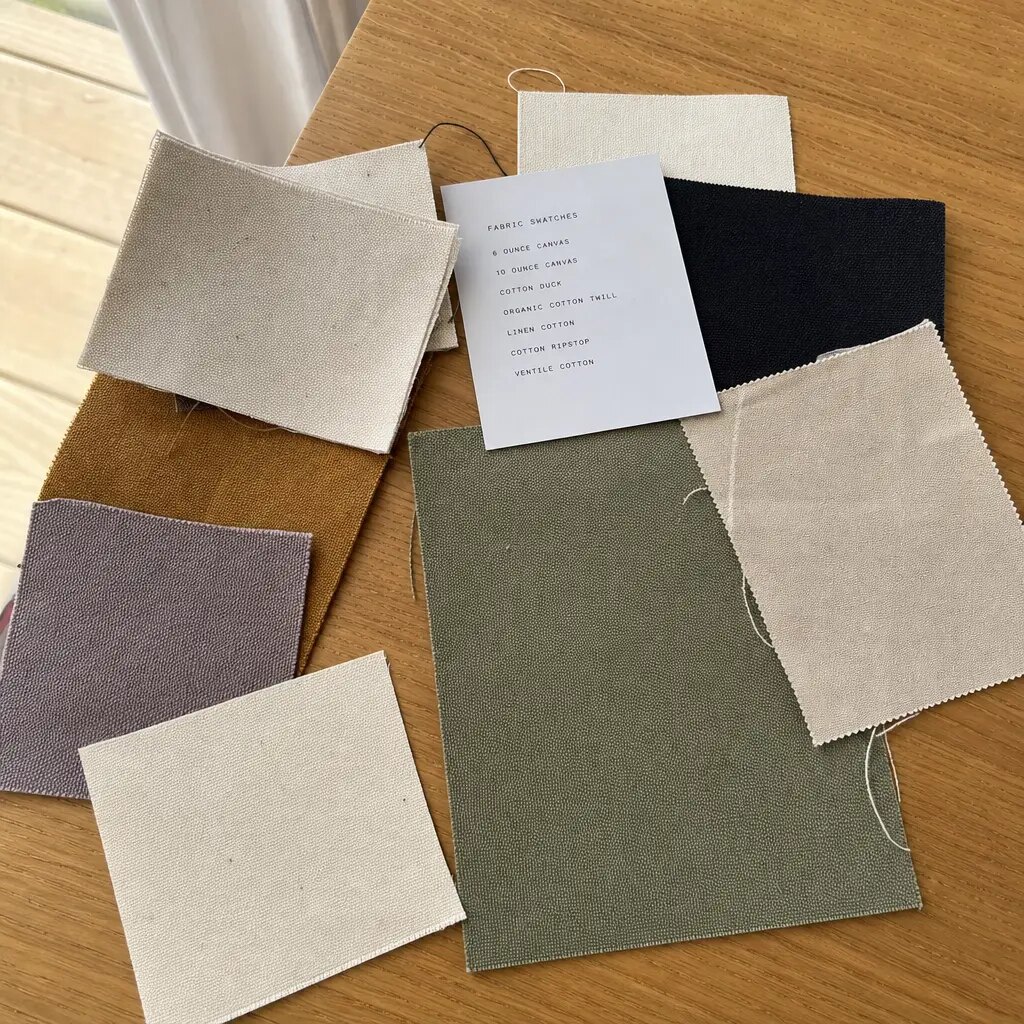
Start with the tote’s job, not the logo
A custom canvas grocery tote for a coffee roaster can serve several different jobs. It might be sold as café merchandise, used at checkout, bundled with a seasonal roast, packed into a subscription box, handed out at a farmers market, or sent to wholesale accounts as a thank-you item. Those uses sound close on a mood board. In procurement, they are different products.
A resale tote needs cleaner front-panel presentation, more controlled folding, and fewer visible workmanship issues. A checkout tote needs practical capacity, comfortable handles, and repeat-use reinforcement. A subscription insert may need compact folding, barcode accuracy, and carton data that a fulfillment partner can receive without manual sorting. Before asking for price, tell the factory what the tote must do.
Avoid broad phrases such as “strong canvas bag,” “premium tote,” or “standard grocery tote.” They invite suppliers to quote from their own assumptions. A better RFQ describes the expected load in plain terms: several 250 g, 340 g or 12 oz, 500 g, or 1 lb coffee bags; a mug; a small brewer accessory; and light grocery items. The supplier can then recommend fabric weight, gusset depth, and handle reinforcement around a real use case instead of guessing.
- State the channel: café retail, online store, wholesale gift, event giveaway, subscription insert, farmers market, or grocery checkout use.
- State whether the tote is intended for resale, included free with purchase, or used internally by staff.
- Describe the expected load without inflated strength claims, then ask the supplier what reinforcement they recommend.
- Attach photos or a measured reference sample when available, but still provide written dimensions, materials, and construction details.
Specify finished dimensions buyers can inspect
For grocery-style canvas totes, finished dimensions matter more than cutting dimensions. The customer handles the completed bag after sewing, finishing, pressing, washing if applicable, and packing. Your RFQ should name the finished width, finished height, bottom gusset depth, side gusset if any, top hem width, handle width, and finished handle drop.
A useful coffee roaster grocery tote often falls around 380-430 mm wide, 330-380 mm high, with a 100-150 mm bottom gusset. That range is not a rule; it is a practical starting point. A narrower tote may look tidy on a retail wall but load poorly at checkout. A very tall tote can swallow smaller coffee bags and make the product presentation feel lost. A deeper gusset improves capacity but increases fabric consumption, carton volume, and freight weight.
Tolerances should be part of the RFQ before sampling begins. Cotton canvas is a sewn textile, not a molded component, so a zero-variation standard is not realistic. A common starting point is ±10 mm for width and height, ±8 mm for gusset depth, and ±10 mm for handle drop. If the bag is washed, pigment-dyed, or garment-dyed, ask the factory to confirm whether those tolerances still hold after shrinkage and finishing.
- Quote finished width, height, bottom gusset, side gusset, top hem width, handle width, and handle drop.
- Define the measurement condition: completed bag, laid flat without stretching, after sewing and all finishing processes.
- Ask the factory to confirm achievable tolerances in writing before comparing unit prices.
- During inspection, measure pieces from multiple cartons instead of relying on top samples.
Treat canvas weight as a controlled spec
Canvas weight is one of the biggest drivers of cost, hand-feel, sewing behavior, and freight weight. In tote sourcing, suppliers may describe fabric in ounces per square yard, GSM, or both. As a reference, 12 oz/yd² is approximately 407 GSM and 16 oz/yd² is approximately 542 GSM. That conversion is useful, but it does not tell the whole story.
The same nominal weight can feel different depending on yarn, weave density, mill finishing, dyeing, washing, and whether the weight is measured before or after finishing. A quote for 12 oz greige canvas is not necessarily equivalent to a quote for 12 oz finished dyed canvas. Ask the supplier to state the measurement basis every time.
For many reusable coffee roaster programs, 12 oz canvas is a strong baseline because it has more body than lightweight promotional cotton while staying practical for volume. A 16 oz canvas gives a heavier retail feel and more structure, but it adds cost, carton weight, and sewing difficulty. Lighter weights can work for budget giveaways, yet they should not be compared directly with grocery-grade tote quotes.
- Ask for both oz/yd² and GSM wherever possible.
- Require the basis: greige, finished, washed, dyed, garment-washed, or completed goods.
- State composition clearly: 100% cotton canvas, recycled cotton blend, organic cotton if required, or cotton/poly blend if accepted.
- Request swatches from the intended bulk-quality fabric rather than a generic showroom material.
Choose the finish with shade, shrinkage, and print in mind
Natural unbleached canvas is common for coffee brands because it pairs well with kraft bags, café interiors, and craft-oriented packaging. It also brings normal shade variation, slubs, flecks, and visible yarn texture. That texture can be attractive. It can also become a dispute if nobody defines the acceptable range before bulk production.
Bleached canvas gives a brighter print background and can suit minimalist merchandise. Dyed canvas supports brand colors such as black, olive, navy, or seasonal campaign shades, but it needs lab dip approval and shade control. Washed or enzyme-washed canvas can feel softer, though washing may shrink the tote and change the final dimensions. Pigment-dyed goods can create a relaxed, worn-in look; the buyer should approve that effect intentionally, not discover it after production.
Connect finish decisions to QC. If the tote is natural canvas, decide what level of slub is acceptable on the front panel. Oil marks, dirt, holes, and severe stains should not be excused as natural texture. If the tote is dyed, ask about colorfastness to rubbing and water where relevant, especially for dark colors that may touch light clothing.
- Natural canvas: approve shade range, slub level, and visible front-panel standards.
- Bleached canvas: check evenness and how the brighter ground changes brand color appearance.
- Dyed canvas: require lab dips, shade tolerance, and colorfastness expectations.
- Washed canvas: approve the sample only after the same washing route planned for bulk.
Build the tote around stress points
Canvas grocery totes rarely fail in the center of a fabric panel. They fail where the load concentrates: handle ends, top hems, gusset corners, and bottom seams. A flat product mockup may look polished while the real bag struggles after a few loaded uses. The RFQ should define the construction that keeps those areas stable.
For handles, specify material, width, finished drop, attachment position, and reinforcement. Self-fabric handles create a continuous canvas look. Cotton webbing can be strong and efficient, but it may not match the body shade exactly. Bar-tacks are common and clean when properly placed. Box-X stitching gives a more visible reinforced look. Either can work; the key is that the method is sampled, priced, and inspected consistently.
A gusseted body is usually the better choice when the product is described as a grocery tote. The bottom gusset helps coffee bags sit upright and makes checkout loading easier. Side gussets can add volume but also add sewing complexity. The top hem should be folded and secured cleanly because it supports the handle area and affects the first thing a retail customer notices when picking up the tote.
- Specify top hem width, side seam type, bottom gusset, side gusset, seam allowance if required, inside seam finish, thread color, and stitch type.
- Specify handle material, handle width, finished drop, attachment position, bar-tack length or box-X dimensions, and stitch color.
- Classify missing reinforcement, broken bar-tacks, open seams, severe twisting, and out-of-tolerance handle drop as major defects.
- Review a loaded sample using realistic coffee-and-grocery contents, then inspect the handle ends and gusset seams.
Make artwork production-ready before quoting
Screen printing is often the right starting point for custom canvas grocery totes for coffee roasters. Many roaster graphics are bold, one-color, or two-color: café marks, roaster logos, blend campaign art, simple illustrations, and event graphics. Screen print can be efficient at volume and attractive on canvas, as long as the artwork respects the surface.
Canvas texture affects fine detail. Tiny type, thin strokes, halftones, gradients, and large solid ink areas all deserve review before price comparison. A supplier should confirm practical line weight, smallest readable type, and whether the artwork will need trapping, simplification, or a test print. For many designs, fine lines below roughly 0.3-0.5 mm can become risky on textured canvas, especially after washing or heavy handling.
Print placement must be defined on the finished bag. “Centered” is fine in a design conversation, but it is weak as a production instruction. Give the print size and the X/Y location from the top hem, side seam, and bottom or gusset line. For many totes, a placement tolerance around ±5-10 mm is realistic, though the supplier should confirm what is achievable for the construction.
- Provide vector artwork when possible, plus Pantone or brand color references and the number of print colors.
- Define print size, print method, ink expectations, placement from fixed finished-bag points, and placement tolerance.
- Flag artwork risks: small type, thin strokes, gradients, halftones, distressed effects, heavy ink coverage, and prints crossing seams.
- Quote woven labels, patches, hangtags, care labels, origin labels, and barcodes as separate components.
Break MOQ into the pieces that drive cost
MOQ is rarely one simple number. It may be driven by fabric availability, dye lot minimums, cutting efficiency, print setup, label production, packing method, and the number of artwork versions. A supplier might offer a low MOQ for natural canvas with one black print because the fabric is available, while dyed canvas or woven labels push the minimum higher.
Coffee roasters often want one base tote with several variations: seasonal releases, wholesale partner versions, café locations, or event graphics. That can be efficient when the body fabric, dimensions, handles, and packing stay the same. Still, each print may require its own screen setup, production scheduling, color check, label match, barcode, and carton mark.
Ask for price ladders instead of one quantity. Levels such as 500, 1,000, 3,000, and 5,000 pieces help show where setup costs are absorbed and where production becomes more efficient. Also separate the unit price from screens, sample fees, label charges, hangtags, barcode stickers, inspection, retail folding, polybags, and carton marking. A clean quote lets procurement compare the same tote, not two different cost structures hidden behind similar unit prices.
- Ask MOQ by fabric color, body size, artwork version, print color count, label version, barcode version, packing method, and carton mark.
- Request price breaks at quantities that match your buying plan, such as 500, 1,000, 3,000, and 5,000 pieces.
- Separate unit price from setup, screens, sampling, labels, hangtags, barcode stickers, packing upgrades, and inspection support.
- For repeat orders, ask which costs repeat, which are one-time, and how long screens or unused labels can be retained.
Use sampling to lock the real product
Sampling is not a courtesy step. It is the bridge between an RFQ and mass production. A digital mockup can show logo direction, but it cannot show canvas texture, shrinkage, handle comfort, stitch quality, print opacity, ink hand-feel, label placement, or fold marks. A blank sample can confirm size and sewing, but it does not prove print behavior.
A practical sample path starts with fabric swatches or lab dips. If the construction is custom, review a blank construction sample next. Once artwork and fabric are confirmed, approve a printed pre-production sample made with the same material, finish, thread, handles, print method, labels, folding, and packing planned for bulk. If the bulk tote will be washed, the sample should be washed. If the tote will be individually packed, the sample should show the final fold and pack.
After approval, create a sealed reference sample. Record finished dimensions, measurement points, print placement, label placement, approved shade, acceptable natural canvas characteristics, and packing method. Keep one sealed sample with the buyer and one with the factory. That physical standard is what turns subjective comments into inspectable requirements.
- Recommended path: swatch or lab dip, blank construction sample if needed, printed pre-production sample, sealed reference sample, then bulk production.
- Sample review should include measurements, seam inspection, load handling, print sharpness, label placement, and fold method.
- Do not authorize bulk production from a mockup alone.
- If a revision changes fabric, size, handle, print, label, finish, or packing, update the written specification before production starts.
Write QC criteria inspectors can apply
“Good quality” is not an inspection standard. Canvas is a natural textile, so some texture and shade movement may be acceptable. The goal is to stop functional failures, obvious retail defects, wrong branding, SKU mix-ups, and packing damage. Clear defect language protects both buyer and factory because it reduces argument at final inspection.
Many soft-goods inspections reference sampling plans such as ANSI/ASQ Z1.4 or ISO 2859-1. If using AQL, specify the inspection level and limits before production. A common approach is critical 0, major 2.5, and minor 4.0, but the right plan depends on order size, channel, buyer risk, and contract terms. The numbers matter less when they are added late. Put them in the purchase order or inspection brief.
For coffee roaster totes, major defects should include open seams, broken handle reinforcement, holes, severe visible stains, wrong artwork, wrong print color, missing labels, incorrect barcode, wrong carton mark, and mixed versions. Minor defects may include small thread tails, slight shade variation inside the approved range, minor recoverable creases, or acceptable slubs away from key print areas. Be stricter on the front panel and logo area than on hidden interior surfaces.
- Critical defects: serious safety, compliance, or prohibited-material failures if specified by the buyer.
- Major defects: open seam, loose handle, missing bar-tack, hole, severe stain, wrong artwork, wrong label, off-center print beyond tolerance, or mixed SKU carton.
- Minor defects: small thread tail, slight approved slub, minor fold mark, or shade variation within the sealed sample range.
- Inspection method: sample from multiple cartons, measure finished dimensions, inspect stress points, verify print and labels, and check carton marks and quantities.
Plan packing and landed cost before awarding
Packing is part of the product, especially when the tote is sold through cafés, ecommerce, or wholesale partners. Canvas can arrive crushed, dirty, creased, or distorted if packing is treated as an afterthought. Natural canvas shows soil quickly. Heavy printed areas can hold fold marks when cartons are compressed for a long transit. If the tote is retail merchandise, packing standards should be in the RFQ, not decided at the end.
Bulk packing is usually efficient for event distribution, internal use, and some café checkout programs. Retail packing may be better for ecommerce, store replenishment, or third-party warehouse receiving. If individual polybags are required, state the material, warning requirements if applicable in your market, barcode location, and whether the code must scan without opening the bag. If avoiding plastic is a brand priority, ask for alternatives and weigh the cleanliness and handling tradeoffs.
Landed cost also depends on carton data. Ask for units per carton, carton dimensions, gross weight, net weight, CBM, carton marks, and SKU separation. Two suppliers with the same unit price can have different total costs if one creates higher freight volume or requires more warehouse handling. Compare Incoterms carefully as well. EXW, FCA, FOB, CIF, and DDP quotes are not interchangeable unless freight, handling, duty, inspection, payment terms, and receiving assumptions are added.
- Packing fields: fold direction, units per carton, inner pack, polybag or no polybag, hangtag, barcode, carton mark, and SKU separation.
- Avoid hard folds through the main logo where possible, especially for heavy ink coverage or retail resale totes.
- Landed-cost fields: unit price, setup, samples, labels, packing, inspection, freight volume, duty assumptions, payment terms, and receiving work.
- Quote terms: confirm EXW, FCA, FOB, CIF, or DDP if offered, plus quote validity, production lead time, transit assumptions, and excluded costs.
Specification comparison for buyers
| Spec decision | Recommended option | When it fits | Buyer risk to check |
|---|---|---|---|
| Fabric weight | 12 oz/yd² to 16 oz/yd² cotton canvas, with GSM stated; 12 oz/yd² is about 407 GSM and 16 oz/yd² is about 542 GSM before mill and finishing differences are considered | Reusable grocery-style totes for roasted coffee bags, café merchandise, farmers market sales, subscription inserts, wholesale gifts, and retail resale | Confirm whether the weight is greige, finished, washed, dyed, or measured on completed goods. Do not compare ounce figures unless the measurement basis is the same. |
| Finished dimensions | Quote finished bag measurements, for example W 380-430 mm x H 330-380 mm x bottom gusset 100-150 mm, with agreed tolerances | Coffee roasters that need a tote to load easily with 250 g, 340 g or 12 oz, 500 g, or 1 lb coffee bags plus small grocery items | Suppliers may quote cut-panel size, catalogue size, or finished size. Require finished measurements after sewing and any washing, dyeing, pressing, or packing simulation. |
| Dimensional tolerances | Common workable target: ±10 mm for body width/height, ±8 mm for gusset, and ±10 mm for handle drop unless the factory proposes a better production tolerance | Most sewn canvas grocery totes where slight variation is normal but retail presentation still matters | Overly tight tolerances can increase rejects or cost. Loose tolerances can create inconsistent shelf presentation, awkward folding, and uncomfortable shoulder carry. |
| Canvas finish | Natural unbleached, bleached, dyed, pigment-dyed, garment-washed, enzyme-washed, or raw finish defined in the RFQ | Brands choosing between rustic natural canvas, a brighter print background, a dyed brand color, or a softer washed hand-feel | Natural shade and slubs vary by lot. Dyed goods need lab dip approval and colorfastness checks. Washed goods need shrinkage control before sample approval. |
| Bag structure | Gusseted body with folded top hem, secure side seams, reinforced handle attachment, and stable bottom construction | Grocery loading, café checkout use, wholesale gifting, seasonal merchandise, and tote-as-retail-product programs | Flat totes are cheaper but less useful for groceries. Weak gusset corners, loose top hems, and under-built handle ends are common failure points. |
| Handle reinforcement | Self-fabric or cotton webbing handles with bar-tack or box-X reinforcement; finished handle drop approved on the physical sample | Hand carry or shoulder carry with multiple coffee bags and light grocery items | Handle cut length is not the same as finished drop. Inspect stitch density, reinforcement position, skipped stitches, and handle drop variation across cartons. |
| Print method | 1-color or 2-color screen print for bold coffee logos; woven label, patch, hangtag, or small secondary print for added retail detail | Most roaster marks, blend graphics, café location logos, event graphics, and simple seasonal merchandise | Large solid ink areas, fine lines under roughly 0.3-0.5 mm, tiny type, gradients, and prints crossing seams can create coverage, registration, or hand-feel problems on textured canvas. |
| Artwork placement | Specify finished print size and X/Y placement from top hem, side seam, and bottom/gusset line; common placement tolerance is about ±5-10 mm | Retail presentation, repeat orders, multi-store campaigns, and seasonal artwork programs | “Centered” is a design note, not a production spec. Sewing variation can make a print look off-center unless the measurement points are defined. |
| MOQ route | Quote MOQ by fabric color, tote body, artwork version, print color count, label version, barcode version, packing method, and carton mark | Coffee roasters using one base tote with several seasonal prints, wholesale versions, or café location versions | A total MOQ can hide separate minimums for dyed fabric, print screens, woven labels, hangtags, SKU packing, and carton separation. |
Buyer checklist before sampling
- Define the tote’s commercial role: retail resale, café checkout bag, grocery carry bag, farmers market tote, wholesale thank-you item, subscription insert, event merchandise, or corporate gift.
- State the expected use in practical language: for example, several coffee bags plus a mug, brewer accessory, small grocery items, or café merchandise. Ask the supplier to recommend reinforcement for that load.
- Specify finished dimensions in millimeters or inches: width, height, bottom gusset, side gusset if any, top hem width, handle width, and finished handle drop.
- Set proposed tolerances in the RFQ, such as ±10 mm for body width/height, ±8 mm for gusset, and ±10 mm for handle drop, or ask the factory to state its normal tolerances in writing.
- Specify fabric weight in oz/yd² and GSM. Note that 12 oz/yd² is approximately 407 GSM and 16 oz/yd² is approximately 542 GSM, while actual finished GSM depends on mill, weave, dyeing, washing, and finishing.
- State the fabric basis: greige, finished, washed, dyed, garment-washed, or measured on completed goods. Require suppliers to identify substitutions and confirm composition, such as 100% cotton canvas or a cotton/poly blend if proposed.
- Choose and document finish: natural unbleached, bleached, dyed, pigment-dyed, washed, enzyme-washed, or raw. Request swatches for natural canvas and lab dips for dyed colors.
- Describe construction details: seam type, seam allowance if specified, inside seam finish, side/bottom gusset, folded top hem, handle attachment, thread color, stitch type, and reinforcement method.
- Define handle reinforcement: bar-tack count/position or box-X dimensions, handle material, handle width, finished drop, and whether reinforcement stitches must be visible or hidden.
- Provide artwork files in vector format when possible, with Pantone or brand color references, number of print colors, print method preference, print size, exact placement, and acceptable placement tolerance.
Factory quote questions to send
- What exact canvas weight are you quoting in oz/yd² and GSM, and is the value measured on greige fabric, finished fabric, washed fabric, dyed fabric, or completed goods?
- What is the fabric composition and weave? Is it 100% cotton canvas, recycled cotton, organic cotton if requested, or a cotton/poly blend? Please identify any certification separately and provide documentation if claimed.
- Can you provide fabric swatches for natural or bleached canvas, or lab dips for dyed canvas, before sample approval? What shade tolerance or approved range will be used for bulk production?
- What finished dimensions will you guarantee for width, height, bottom gusset, side gusset, top hem, handle width, and handle drop? What tolerances do you normally hold on sewn canvas totes?
- Are quoted dimensions before or after washing, dyeing, garment wash, pressing, and packing? How will shrinkage be controlled if washed or dyed canvas is used?
- Which seam construction is included: lockstitch, chainstitch, overlock or serged inside seams, bound seams, French seams, folded top hem, and reinforced bottom? Please specify.
- Which handle material is included: self-fabric canvas, cotton webbing, or another material? What is the handle width, finished drop, attachment position, and reinforcement method?
- Are bar-tacks or box-X stitches included in the quoted price? If bar-tacks are used, what approximate length and stitch density will be used, and where will they be placed?
- What practical load do you recommend for this construction? If the tote carries multiple coffee bags and groceries repeatedly, what changes would you suggest to fabric weight, handle attachment, or gusset construction?
- Which print method do you recommend for our artwork and why: screen print, discharge print, pigment print, heat transfer, digital print, embroidery, woven label, or patch?
Quality-control points to confirm
- Measure finished dimensions on completed bags after sewing and any washing, dyeing, pressing, or packing simulation. Record width, height, bottom gusset, side gusset, top hem, handle width, and finished handle drop against the approved tolerance.
- Use the sealed reference sample as the primary visual standard for fabric shade, hand-feel, print placement, label placement, fold method, and workmanship. Keep one sealed sample with the buyer and one with the factory.
- Classify functional failures as major or critical according to the inspection plan: open seams, broken stitches at stress points, missing handle reinforcement, holes, wrong artwork, wrong fabric color, or mixed SKU/carton data.
- Inspect handle attachments on both the front and back side. Bar-tacks or box-X stitches should be complete, consistently placed, and free from skipped stitches, thread breakage, loose ends, or needle damage.
- Check handle drop variation across cartons. A handle drop outside the agreed tolerance can make shoulder carry uncomfortable and create inconsistent retail presentation.
- Inspect top hem, side seams, and gusset transitions for straightness, puckering, twisting, seam slippage, raw exposed edges if not specified, and loose or untrimmed thread tails.
- Open the tote fully and check whether the bottom gusset sits flat. A grocery tote should load without severe distortion, twisted side panels, or base seams pulling unevenly under normal use.
- Review print placement on finished bags, not cut panels. Measure from top hem, side seam, and bottom/gusset line; compare to the approved sample and reject visible off-centering beyond the agreed tolerance.
- Check print quality for pinholes in key logo areas, smears, bleeding, ghosting, poor registration, ink transfer, cracking, uneven opacity, and excessive hand-feel if the approved sample is softer.
- For multi-color prints, verify registration and Pantone or brand color approximation against the approved production sample, understanding that natural canvas texture can affect perceived color.